
In mid-April of 1906, wealthy industrialist and US Steel chairman Elbert Henry Gary smiled for enthusiastic onlookers, raised a polished sledgehammer skyward, and proceeded to pound a ceremonial spike into the soft earth at the center of an unbuilt city that’s been known as Gary, Indiana ever since.
Located on Lake Michigan’s southernmost shore just 30 miles southeast of Chicago, the then undeveloped plot of land was just what US Steel had been looking for. Large, well-positioned and relatively inexpensive, the real estate would ultimately become home to the world’s largest single steel producer—Gary Works.
By the first decade of the 20th century, mills in the United States were collectively producing nearly 25 million tons of steel annually, but countries like Germany, Japan, and Great Britain held significant market share as well, and they wanted more. Competition was fierce, and every advantage would need to be exploited to the fullest if the country was to remain on top.
Key Takeaways
- Gary, Indiana was founded in 1906 as a company town for US Steel’s Gary Works, the world’s largest single steel producer.
- The city’s initial prosperity was marked by rapid growth, diverse immigration, and significant industrial output.
- Gary faced severe social and economic issues due to inequality, corruption, and racial segregation.
- The city’s decline began in the late 1960s due to rising costs, increased competition, and automation.
- Despite efforts at revitalization, Gary continues to struggle with poverty and abandoned infrastructure.
Gary’s proximity to raw materials like coal and iron ore, to metropolitan areas and huge industrial centers, and to rail, road and maritime transportation hubs all seemed to indicate that the proposed mill would ensure dominance well into the foreseeable future.
That said, decades after it was built, Gary was beset by a series of unforeseen forces that ultimately led to one of the most epic social and economic downfalls in American history.
Background
Between December of 1908 and January of the following year, the first dozen blast furnaces at Gary Works came online and began producing iron and steel. But though it’s most well known for its industrial output, Gary was also a groundbreaking social experiment of sorts.
With the economy booming and orders pouring in, hiring workers was a top priority. Lucky for US Steel, the country’s prevailing economic conditions couldn’t have been more favorable. Regulation was lax, labor was abundant, and wages were low. In other parts of the country hordes of workers were unemployed or underemployed, and many rural folk were selling their mules and plows and heading to cities where the future looked brighter.
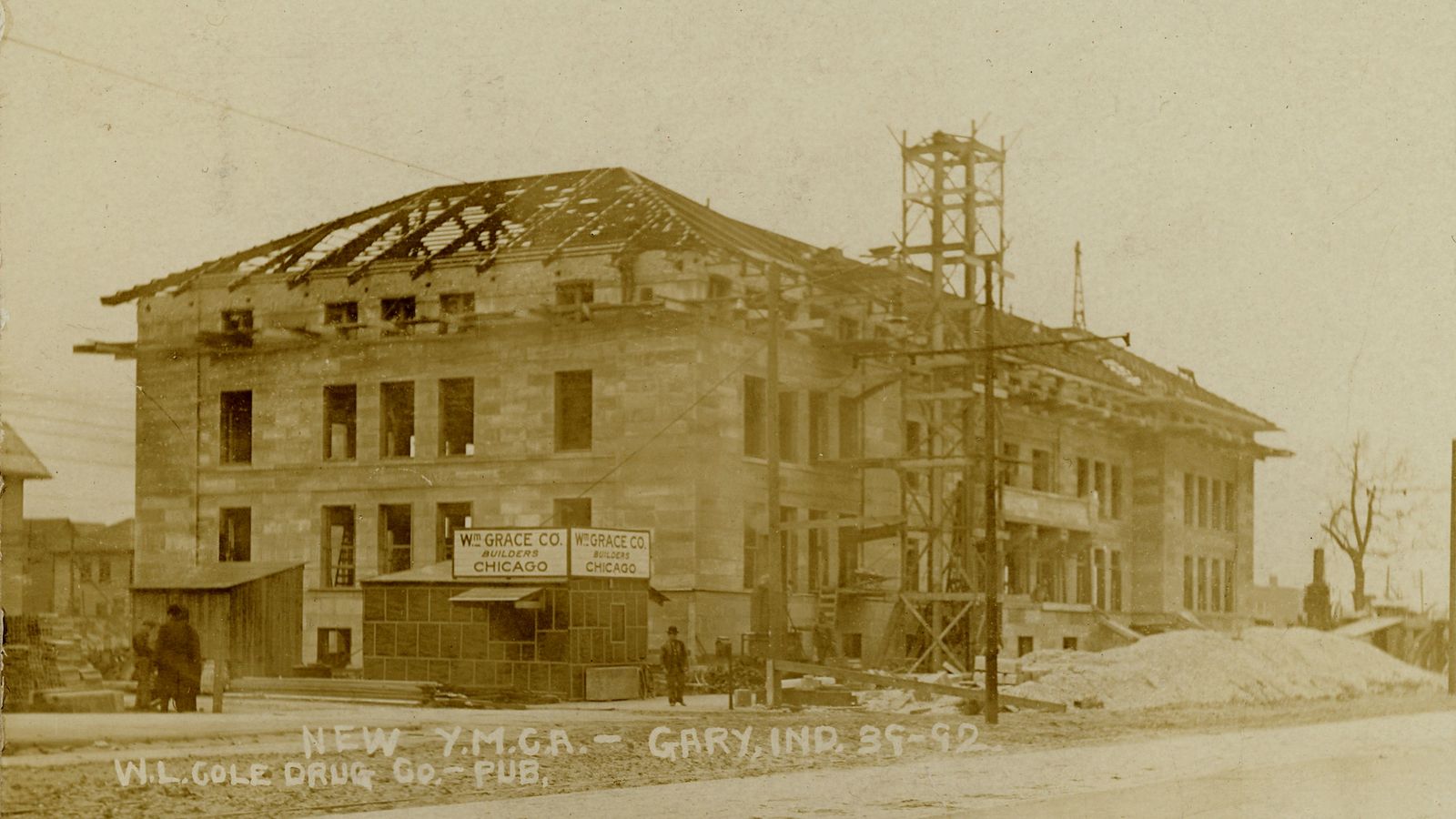
Gary ultimately became the country’s fastest growing city, and its impressive churches, schools, hospitals and civic buildings were shining examples of its prosperity.
Envisioned as a self-contained, self-sustaining company town from the get-go, US Steel established the Gary Land Company to handle planning, zoning and the sale of homes and land. Employees could purchase property from the Land Company outright or secure financing through a local bank, but to minimize speculation and keep prices steady, structures had to be erected within 18 months of signing a contract.
On the downside, ownership was generally reserved for management, foremen and skilled laborers.
Advertised as the “Magic City” and the “City of the Century,” Gary seemed to be living up to the marketing hype, but that would change.
Inequality
The lure of easy money attracted shady real estate speculators, money lenders and private developers, many of whom were intent on cashing in on the naivety and ignorance of the workers flooding into the area. And flood in they did.
By 1921 Gary’s population had topped 50,000. Just a decade later the number had doubled. By then nearly 50% of the city’s residents were first-generation immigrants and their American-born children. Most were relatively poor and unskilled workers from Italy, Greece, Poland, Russia, and the Balkans.
On the other hand, managers were generally native-born Americans, Englishmen and Irishmen.
Though their numbers were relatively low, most of the mill’s African American workers had migrated from the deep south, where thanks largely to Jim Crow laws, conditions were often nearly as deplorable as they’d been before the Civil War. This “Great Migration” accelerated during the First World War when European immigration slowed to a trickle.
In addition, the company actively recruited workers from south of the border, and by 1930 Mexicans accounted for nearly a tenth of overall population.
As business boomed, jobs were available for nearly everyone regardless of race, skill or education. Employers anxious to fill long-vacant positions often asked applicants—“Can you start today?”
The industrial behemoth was gathering strength and wealth was being spread around like never before, but in many respects US Steel’s melting pot was a giant powder keg just waiting for a spark.
In fact the city was rife with corruption, racism, and social stratification, all of which contributed to its downfall.
The south side was primarily home to Mexicans, African Americans and less educated European immigrants who held the least skilled and lowest paying jobs. Characterized by tar paper shacks, depressing dorm rooms and barrack-style tenement buildings, it rapidly devolved into a slum rivaling those in more well-known cities like Chicago and New York.
Sanitation was abysmal, alcohol use and public drunkenness were rampant, domestic violence was common, and vices like gambling and prostitution were everywhere.
Located in a marshy area with inadequate drainage, swarms of mosquitoes hung heavy in the sweltering summer air, and typhoid, malaria and tuberculosis caused untold suffering and high mortality rates.
The south side was such a trainwreck, that locals and the city’s overworked police force often referred to it as “Hell on Wheels.”
On the other hand, the north side was comparatively scenic, orderly and crime free. Known for its quaint homes, tree-lined streets and towering churches, white-collar “northsiders” spent their afterwork hours relaxing at home, strolling along wide avenues, and dining in clean, comfortable restaurants.
Facilities and Production
Less than a decade after Gary Works began producing steel it had become the largest mill in the country, and its workforce had grown to nearly 16,000.
By 1920, Gary Works consisted of 12 blast furnaces, nearly 900 coke ovens, 45 open hearth furnaces, and dozens of machine shops spread over nearly 400,000 square feet (37,160 square meters). The mill collectively produced everything from steel plate and rivets to train wheels and truck axles which were shipped to manufacturers and construction projects all over the world.
Each day the Works’ berths on Lake Michigan accepted massive freighters that unloaded tens of thousands of tons of raw materials that were moved around the sprawling facility by truck, rail and conveyor.
All told, the various facilities consisted of nearly a million tons of steel, 170 million bricks and tens of thousands of tons of concrete.
During the Second World War and well into the ’50s, America was the world’s leading steel producer, accounting for approximately 40% of global production. Of that, Gary Works regularly accounted for between 4 and 7% of domestic production, and other mills in Indiana, Illinois, and Pennsylvania weren’t far behind.
Watch the Video
Open Video
Video Briefing
Gary, Indiana: The Company Town that American Abandoned
It’s estimated that Gary Works has produced more than 400 million tons of steel since production began in February of 1909.
By the late ’50s however, the Sparrows Point mill in Baltimore, Maryland had taken over the crown as the world’s single largest steel producer. That year Sparrows Point barely edged out Gary Works by producing 8 million tons of steel.
But though domestic and international competition were increasing, Gary’s expansion continued. By 1950 the population had reached 134,000, and 20 years later it had grown to 175,000, of which about 30,000 worked at the mill.
As in steel powerhouses like Baltimore and Pittsburgh, shifts worked around the clock, and many businesses remained open 24-hours to cater to men and women with odd schedules.
Unrest
Since the advent of the industrial revolution American workers had enjoyed few protections. This was especially true for minorities and immigrants, many of whom had two choices—watch their families starve, or put up with substandard wages and deplorable working conditions.
For most the latter was by the far the lesser of two evils, but as labor markets tightened and the demand for steel continued to grow, workers began to organize.
Ultimately, this growing discontent resulted in the Great Steel Strike of 1919, in which steel workers in mills across the country—including Gary Works—walked off factory floors to take their places in long picket lines.
With nearly 400,000 workers acting in unison for the first time, production plummeted and politicians, manufacturing executives and the general public had little choice but to sit up and take notice.
Big business did make a number of concessions in Gary and elsewhere, but in addition to being corrupt and decentralized, the unions were largely perceived as nefarious Soviet-style institutions that had no place on the American landscape.
The strikes led to few lasting improvements, and in the end workers and management formed an uneasy truce and got back to the business of producing steel.
The Fall
With the strike of 1919 in the rearview mirror, few suspected that bad times were on the horizon. In fact the decades between the ’30s and ’60s were characterized by continued expansion, wage increases and relative prosperity.
However, with rising energy and labor costs, increasing competition, stagnating economies around the world and the prevalence of automation, by the late ’60s Gary was about to experience an epic reversal of fortune.
Though layoffs had been rumored for some time, when they finally came their scale and suddenness shocked workers, union representatives and mid-level managers who weren’t aware of how bad things had become.
Starting in 1971, thousands of factory workers were let go, and the slow march toward obsolescence continued into the ’80s and ’90s, ultimately setting in motion a phenomenon called “white flight.”
To fill the low-paying jobs left behind by their more mobile white neighbors, more African Americans moved to Gary from Chicago and other nearby cities that had also fallen on hard times. But though many were willing to work hard and put down roots in the community, banks wouldn’t lend them money to buy even the most modest houses, even though many of them had been abandoned.
Worse yet, the decline spread to hundreds of regional businesses that not only bought the mill’s products, but supplied it with a host of invaluable goods and services.
By 1972, an article in Time Magazine had characterized Gary as a grimy ash heap.
By the late ’80s, Indiana’s mills were still responsible for about one quarter of all steel produced in the US, but its once 30,000-strong workforce had fallen to less than 8,000.
430 miles to the east in Pittsburgh, dozens of mills were downsized, sold, or closed altogether. Things weren’t any better in Baltimore.
Across the Midwest and Mid-Atlantic regions, jobs were disappearing, union contracts were being aggressively renegotiated, businesses were closing, and a host of social ills were besetting the once thriving blue collar cities.
By the early ’90s, Indiana’s Magic City had become the per-capita Murder Capital of America. In 1993 the city of nearly 120,000 recorded 110 killings. With a murder rate of 91 per 100,000 residents, Gary made nearby Chicago—with a murder rate of “just” 30.6 per 100,000 residents—seem like a relative Utopia.
In Gary drugs, alcohol, violence and despair were ubiquitous, but at least outwardly, the hard times were most easily seen in the city’s crumbling infrastructure.
Now nearly one quarter of the city’s buildings are officially abandoned, although empty hospitals, schools, churches and museums are often the last refuges of addicts, alcoholics, and the chronically unemployed.
The Future
Ironically, Gary Works is still the city’s largest employer, and of the nearly 22 million tons of steel produced in Indiana in 2020, about 8 million came from Gary.
That year the city’s population stood at about 75,000 residents, but whereas Gary had once been nearly 80% white, it’s now nearly 80% African American.
Even now layoffs are ever-present threats, and by some accounts nearly 40% of the city’s residents live in poverty.
Despite these hard times however, many residents believe better times are ahead, if only because things can’t get much worse.
Though now deceased, Richard Gordon Hatcher served as Gary’s first African-American mayor between the late ’60s and mid-’80s. Likewise, African American attorney Karen Marie Freeman-Wilson held the position between 2012 and 2019.
Intent on attracting investment, promoting development and advocating on behalf of the hardscrabble city residents who’d weathered the proverbial storm, during her tenure Freeman-Wilson worked tirelessly just to keep the flatlining city above water.
In 2017, she made national news by pitching humble Gary as a possible site for Amazon’s world headquarters. Needless to say, Amazon politely declined.
Despite the best efforts of politicians, business leaders and civic organizations, most revitalization schemes have met with limited success.
Nonetheless, the city is home to the minor league baseball team—the Gary Railcats—who play in a modern $45 million dollar stadium. These days many derelict buildings are being demolished not only to eliminate blight, but to pave way for much-needed development, and the city is offering juicy incentives to entice new businesses and investors.
That said, most find it hard to envision a prosperous future when the current state of affairs is so bleak.
In the end, one anonymous resident may have summed the situation up best when he said that Gary was once the steel capital of the world, at least until production moved overseas to countries with far lower labor and energy costs. Then the city became the murder capital of the world, but thanks to its declining population Gary eventually lost that title too, largely because there was hardly anybody left to kill.
Key Takeaways
- Gary, Indiana was founded in 1906 as a company town for US Steel’s Gary Works, the world’s largest single steel producer.
- The city’s initial prosperity was marked by rapid growth, diverse immigration, and significant industrial output.
- Gary faced severe social and economic issues due to inequality, corruption, and racial segregation.
- The city’s decline began in the late 1960s due to rising costs, increased competition, and automation.
- Despite efforts at revitalization, Gary continues to struggle with poverty and abandoned infrastructure.
SideProjects Editors
The SideProjects editorial team researches, fact-checks, and structures explainers about the lesser-known tales, side narratives, and spin-offs behind major historical and contemporary subjects.
Frequently Asked Questions
Who founded Gary, Indiana?
Gary, Indiana was founded by Elbert Henry Gary, the wealthy industrialist and US Steel chairman.
Why was Gary, Indiana chosen as the location for the Gary Works steel mill?
Gary, Indiana was chosen for its proximity to raw materials like coal and iron ore, metropolitan areas, industrial centers, and transportation hubs, which seemed to ensure dominance in steel production.
What was the initial population growth like in Gary, Indiana?
Gary became the country’s fastest growing city, with its population topping 50,000 by 1921 and doubling to 100,000 by 1931.
What were the living conditions like in the south side of Gary?
The south side was characterized by tar paper shacks, depressing dorm rooms, and barrack-style tenement buildings. It rapidly devolved into a slum with abysmal sanitation, rampant alcohol use, domestic violence, and high mortality rates due to diseases like typhoid and tuberculosis.
What was the Great Steel Strike of 1919?
The Great Steel Strike of 1919 was a significant labor action where nearly 400,000 steel workers, including those at Gary Works, walked off the job to demand better working conditions and wages.
What factors led to the decline of Gary, Indiana?
The decline of Gary was due to rising energy and labor costs, increasing competition, stagnating economies, automation, and the phenomenon of ‘white flight,’ which led to a significant decrease in population and economic activity.
What was the population of Gary, Indiana in 2020?
In 2020, the population of Gary stood at about 75,000 residents.
What is the current state of Gary Works?
Gary Works is still the city’s largest employer, producing about 8 million tons of the nearly 22 million tons of steel produced in Indiana in 2020.
What efforts have been made to revitalize Gary, Indiana?
Efforts to revitalize Gary include demolishing derelict buildings to eliminate blight, offering incentives to new businesses and investors, and promoting development through civic organizations and political leaders.
What is the demographic makeup of Gary, Indiana today?
Today, Gary is nearly 80% African American, a significant shift from its earlier demographic composition.
Sources
- Original Side Projects video: Gary, Indiana: The Company Town that American Abandoned
- Hero image source by Steve Shook from Moscow, Idaho, USA / openverse, by.