
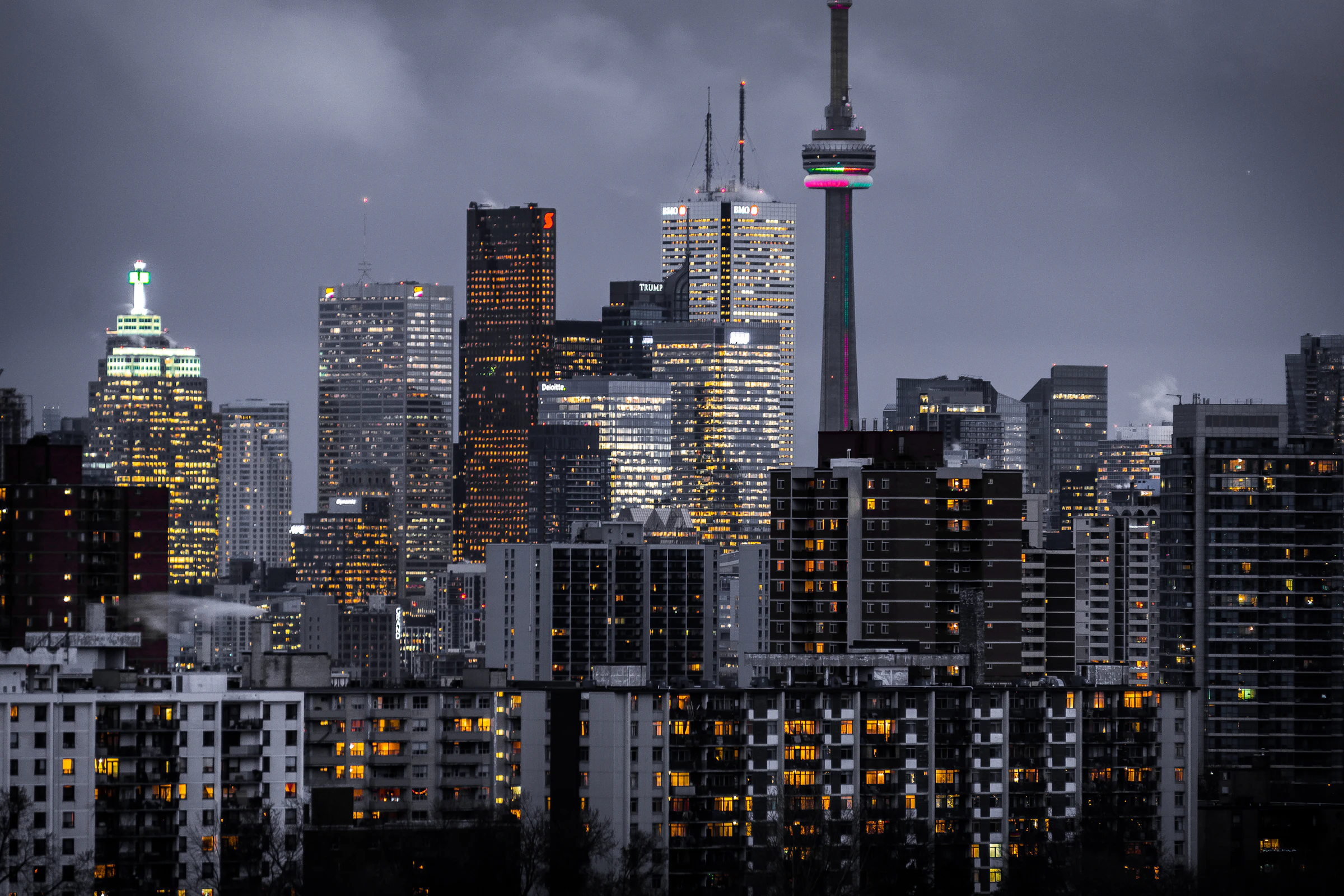
The world’s skylines are about to undergo a dramatic transformation. From Oklahoma City to Saudi Arabia, ambitious construction projects are pushing the boundaries of engineering, design, and imagination. These aren’t just buildings—they’re statements of ambition, monuments to human ingenuity, and glimpses into the future of urban living. As we approach 2030, a wave of extraordinary structures promises to redefine what we thought possible in architecture.
Oklahoma City’s Surprising Claim to Architectural Fame
When you think of North America’s most iconic skylines, Oklahoma City probably doesn’t immediately come to mind. Yet this heartland metropolis is about to claim an extraordinary distinction: home to the continent’s tallest building.
The Boardwalk at Bricktown represents a five million-square-foot development in the heart of Oklahoma’s capital, featuring four individual towers combining residential and commercial spaces. But the crown jewel of this ambitious project is undoubtedly Legends Tower. This vertical city will house 1,776 residential units ranging from affordable housing to luxury condominiums, alongside restaurants, bars, and a public observatory.
Key Takeaways
- Legends Tower in Oklahoma City will become the tallest building in the Americas at 1,907 feet when it opens in 2030.
- The Jeddah Tower will be the first building in history to surpass 1,000 meters.
- Dubai’s Al Maktoum airport will handle up to 280 million passengers per year—more than any airport on earth.
- Saudi Arabia’s Mukaab cube could fit 20 Empire State Buildings inside its interior volume.
- The Sagrada Familia, begun in 1882, finally completes in 2026—exactly 100 years after Gaudí’s death.
The tower’s height tells a story of civic pride and ambition. Originally planned at 1,750 feet (533 meters), the design was later revised to reach 1,907 feet (581 meters)—a deliberate nod to 1907, the year Oklahoma achieved statehood. When completed in 2030, this will make Legends Tower the tallest building in the Americas, a title that reflects both historical tribute and modern aspiration.
Paris Breaks Its Own Rules After Five Decades
For fifty years, the Parisian skyline remained largely unchanged, a testament to the city’s commitment to preserving its architectural heritage. That’s about to change with the Tour Triangle, Paris’s first skyscraper in half a century.
True to its name, the Tour Triangle presents a striking geometric profile: a triangle when viewed from the front or back, but an angled line ascending to a point when seen from the side. Rising to 180 meters (590.5 feet) and encompassing 91,000 square meters of floor space, the building will feature a 150-meter base dedicated entirely to retail, creating a new commercial hub for residents and tourists.
The upper levels offer a diverse mix of uses, including healthcare services, a 128-room hotel, multiple dining establishments, and a panoramic observatory providing sweeping views across Paris. When Mayor Anne Hidalgo approved the plans in 2015, the decision ignited fierce controversy. The Green Party, Conservatives, and everyday Parisians united in opposition, citing concerns about violating the city’s skyscraper ban, disrupting the pristine skyline, and creating an unnecessary structure.
Legal challenges delayed the project for years, pushing the completion date from before the 2024 Paris Olympics to 2026. Eleven years after initial approval, the Tour Triangle will finally bring the first major change to the Paris skyline since 1973.
Dubai’s Hotel That Resembles a Gaming Console
Dubai has never been shy about pushing architectural boundaries, and the Ciel Dubai Marina continues that tradition. Standing 365 meters (1,200 feet) tall with a distinctive silver façade, developers describe it as having a “statue-like appearance”—though many observers note its striking resemblance to a PlayStation 5.
Set to open in early 2025, this vertical resort will claim the title of world’s tallest hotel, featuring over 1,000 guest rooms spread across 82 floors. The building’s amenities are as impressive as its height, including four exterior pools—one of which is an infinity pool perched on the 76th floor overlooking the ocean—and a glass observation deck offering panoramic views of Dubai, Palm Jumeirah, and the Arabian Gulf.
The interior design emphasizes natural beauty with enclosed landscape terraces and a remarkable 300-meter-tall atrium containing 12 vertically stacked gardens. Perhaps most impressive is how developers achieved this on a mere 2,500 square meters of land. Compared to the Burj Khalifa’s 104,210 square meters or even the Empire State Building’s 8,100 square meters, the Ciel Dubai Marina’s efficient use of space represents a modern engineering marvel.
Tiger Sky Tower: Five World Records in One Building
Dubai isn’t stopping with just one extraordinary building. The Tiger Sky Tower aims to shatter five world records simultaneously when it reaches completion in 2029.
This $1 billion skyscraper will soar to 532 meters (1,745 feet), claiming the title of world’s tallest residential building. Spread across 122 floors, the tower will pack in every conceivable luxury amenity. An infinity pool positioned at record-breaking heights will secure the title of highest pool in the world. The Sky Restaurant will offer fine dining at unprecedented elevations, becoming the world’s highest dining establishment.
But Tiger Sky Tower’s most unique feature may be its tropical rainforest situated 447 meters (1,466.5 feet) above ground. This sky-high ecosystem will include gardens, secluded spaces for guests, wildlife, and even a zipline—creating an extraordinary experience that blurs the line between nature and vertical urban living.
Saudi Arabia’s Crystal Skyscraper in the Mountains
While many proposed projects emerging from Saudi Arabia’s Neom development have raised eyebrows, the plans for the Trojena Mountain region seem relatively grounded by comparison. This ambitious vision includes a man-made lake, a ski resort, and a 330-meter (1,083-foot) crystalline tower that evokes images from fantasy films.
The Discovery Tower is designed to resemble multiple columns of ice rising toward the sky. Upon completion in 2026, it will serve as the ultimate destination for fine dining, luxury living, and high-end shopping. The icicle-inspired skyscraper promises to become one of the world’s most visually striking buildings.
The Church That Took 140 Years to Build
Among all these futuristic towers, the Sagrada Familia stands apart as a bridge between past and future. Construction began in 1882, making it a unique entry in any discussion of buildings approaching completion.
Designed by Antoni Gaudí, who assumed control of the project in 1883, the Sagrada Familia is a Catholic church featuring neo-Gothic design mixed with natural and modernist elements. The building resembles earthen stone carved with religious scenes throughout, complemented by stained glass windows, towering spires, and flying buttresses—all set within Barcelona’s urban landscape.
Gaudí wasn’t merely an architect but a devout Catholic who envisioned creating a stone bible for illiterate members of his faith. As construction progressed, he became increasingly pious, eventually abandoning nearly all other work to focus solely on this sacred project. When he died in 1926, only the Nativity façade on the east side, the apse, and the crypt—where the architect himself was laid to rest—were complete.
His disciples continued the work over subsequent decades, though the Spanish Civil War halted construction from 1936 to 1939 and damaged many of Gaudí’s original models. The Covid-19 pandemic caused another six-month delay. Now, more than 140 years after construction began, the building approaches completion in 2026—exactly 100 years after the architect’s death.
When the final tower, the Jesus Tower, is finished, the Sagrada Familia will reach 172.5 meters (566 feet), making it the world’s tallest church, surpassing Germany’s Ulm Minster at 161.5 meters. It is the only entry on this list designated as a UNESCO World Heritage Site.
The Tower That Will Break the Kilometer Mark
When the Burj Khalifa opened in 2010 at 828 meters (2,717 feet), it left the world in awe. But in the race for architectural supremacy, that record was always destined to fall. Enter the Jeddah Tower in Saudi Arabia.
Construction originally began in the early 2010s with a planned completion date of 2020, but various complications halted production after only 63 floors were finished. While the tower’s exact final height remains officially unannounced, it will become the first building in the world to reach at least 1,000 meters (3,281 feet), potentially exceeding even that milestone.
Upon completion in 2028, the tower will serve as the centerpiece of the Jeddah economic region, encompassing an estimated 5,300,000 square meters of commercial and residential space. One of its most impressive planned features is an observation deck jutting out from the building to overlook the Red Sea, providing visitors with 360-degree views of the surrounding area. At 610 meters (2,000 feet), this will become the world’s tallest observation deck.
The Controversial Linear City
Since its 2021 announcement, The Line has become one of the most divisive architectural projects ever conceived. Original plans called for completion by 2030, with the megastructure spanning 170 kilometers (105.6 miles) and housing 1.5 million people, with capacity for 9 million.
Fluctuating oil prices, a declining economy, and the sheer impossibility of the project’s scale led to delays and widespread skepticism about whether it would ever be realized. In early 2024, Saudi Arabia officially announced a scaled-back vision, dividing the project into modules and phases.
The Line will comprise 140 modules, each measuring 200 meters wide, 500 meters high, and 800 meters long, with each module housing approximately 80,000 people. Phase 1, targeting the original 2030 completion date, will include just three of these modules, totaling 2.4 kilometers in length—a mere 1.4 percent of the entire planned project.
The interior design calls for vertically stacked infrastructure including homes, schools, public parks, and gardens serviced by robots. But whether this audacious vision will be realized remains one of architecture’s biggest open questions.
An Airport to Handle Millions More Passengers
While many entries on this list compete for superlatives like “tallest” or “biggest,” airports operate by different metrics. The King Fahd International Airport currently holds the record as the world’s largest at 776 square kilometers, yet it rarely enters discussions about major airports because it handles fewer than 10 million passengers annually. Compare that to Atlanta International Airport’s 104.7 million passengers—the world’s busiest for over two decades—and the difference becomes stark.
When finished, Dubai’s Al Maktoum International Airport will dwarf all others in passenger capacity despite occupying only one-tenth the area of King Fahd Airport. Originally opened in 2010 for cargo flights, Sheikh Mohammed bin Rashid al-Maktoum approved a $35 billion expansion in 2024.
The transformed airport will encompass 70 square kilometers with 400 aircraft gates and five parallel runways. Upon full completion in 2030, it will be five times the size of Dubai International Airport and capable of accommodating up to 280 million passengers per year.
The Cube That Could Hold Twenty Empire State Buildings
When Crown Prince Mohammed bin Salman announced the Saudi Vision 2030 program in 2016, speculation ran wild about what extraordinary projects might emerge. But no one could have imagined the sheer scale of what would be proposed for Riyadh.
Meaning “the cube” in Arabic and carrying an estimated price tag of around $50 billion, the Mukaab will be the largest and most expensive building ever constructed. To put this in perspective, the Burj Khalifa cost approximately $1.5 billion—the difference is astronomical.
Upon completion, the Mukaab will measure 400 meters on all sides, making it simultaneously a cube and a skyscraper with 2 million square meters of floor space. Its interior volume could accommodate 20 Empire State Buildings. The exterior will feature a gilded array of triangular designs incorporating giant screens similar to the Sphere in Las Vegas, topped with a rooftop garden spanning the entire building. The interior centers on an atrium with a spiraling tower.
When complete, the Mukaab will house 104,000 residential units, 9,000 hotel rooms, countless offices, restaurants, retail space, walking trails, and all the infrastructure needed for a bustling modern city—contained entirely within a cube.
SideProjects Editors
The SideProjects editorial team researches, fact-checks, and structures explainers about creative builds, unusual inventions, tools, and practical business experiments.
Frequently Asked Questions
Which of these is closest to completion?
The Ciel Dubai Marina was set to open in early 2025. The Tour Triangle, the Sagrada Familia, and Saudi Arabia’s Discovery Tower are all targeting 2026. The Jeddah Tower aims for 2028, with Legends Tower, Tiger Sky Tower, Al Maktoum Airport, and the Mukaab targeting 2029–2030.
Is The Line actually going to be built?
The original 170-kilometer vision has been scaled back dramatically. Phase 1 covers just 2.4 kilometers—three modules—by 2030. The full project’s viability remains contested given the economic and engineering challenges involved.
Why is Legends Tower in Oklahoma City notable?
It’s not just the height (1,907 feet). It’s that the tallest building in the Americas will be in a mid-sized heartland city rather than New York, Chicago, or Los Angeles. The 1,907-foot figure is also a deliberate tribute to Oklahoma’s 1907 statehood year.
How long has the Sagrada Familia been under construction?
Construction began in 1882—over 140 years ago. It will complete in 2026, one century after the death of its architect Antoni Gaudí, who is buried in its crypt.
Sources
- SideProjects editorial research, October 2025.
- Boardwalk at Bricktown developer filings, Oklahoma City.
- Saudi Vision 2030 project announcements.
- Neom project documentation for Trojena and The Line.
- UNESCO World Heritage designation records for Sagrada Familia.


