
The James Webb Space Telescope (JWST) left Earth for orbit on Christmas of 2021. After months of positioning itself into a stable orbit and carefully aligning all the components, the telescope’s first image was released to the public on July 11, 2022 and it officially entered service the next day. It’s been less than two years since then, but JWST has proven to be an endless source of incredible discoveries. From never before seen objects within our own solar system to distant galaxies that threaten to break our understanding of the universe, today we’ll be looking at five of the incredible things we’ve already discovered thanks to the JWST.
Impossible Galaxies
In July of 2022 the first images came back from JWST, and they immediately received a lot of attention. These were the most high resolution images of distant galaxies that had ever been seen, and it was difficult not to be in awe of the stark contrast between these new images and those from previous telescopes like Hubble.
However, about a week after those images came out, researchers noticed something peculiar in one of them. The image showed a red dot that was suspiciously bright. It wasn’t unusual for a galaxy to be so red or so bright, but it shouldn’t have been both. The redness is the result of redshift, which is caused by the expansion of the universe.
Key Takeaways
- The James Webb Space Telescope (JWST) has discovered galaxies that are too large to exist so early in the universe.
- JWST found the oldest known black holes, challenging current theories on black hole formation.
- JWST identified Jupiter-mass binary objects (JuMBOs) in the Orion Nebula, questioning our understanding of celestial body formation.
- The JWST accidentally discovered a small asteroid in our solar system, hinting at more such discoveries.
- JWST detected dimethyl sulfide in the atmosphere of exoplanet K2-18b, a potential biosignature.
As the universe expands the light gets stretched out, causing it to appear more red to us. This colour can be used to determine the distance of the light source from us, and by extension its age.
Just like the redshift can tell us the age of the galaxies, their brightness is used to indicate their size. As a general rule, the brighter a galaxy appears, the more stars it means that galaxy contains. And these galaxies were big, comparable in size to the Milky Way. According to researcher Ivo Labbe, “I [ran] the analysis software on the little pinprick and it [spat] out two numbers: distance 13.1 billion light-years, mass 100 billion stars, and I nearly [spat] out my coffee.”
According to the standard model of cosmology, this should have been completely impossible. And the next day, six more impossible galaxies were found. The researchers began referring to them as “universe breakers”, because they threatened to destroy our entire understanding of the formation of the universe. Since then, even more impossible galaxies have been discovered.
These galaxies are extremely old, having originated only a few hundred million years after the origin of the universe. That by itself is totally fine, as we know there were galaxies already forming that early. But they shouldn’t have been as big as they are.
Our understanding of the evolution of galaxies is that they started off small, then these smaller dwarf galaxies combined to form larger galaxies. According to the currently accepted theories, this process wouldn’t have even begun until 1 or 2 billion years after the Big Bang, hundreds of millions of years after the newly observed galaxies were already fully matured.
Not only does this timeline not make sense based on the current model, but there shouldn’t have been enough gas available to form all these stars. According to Labbe, “To produce these galaxies so quickly, you almost need all the gas in the universe to turn into stars at near 100 percent efficiency. And that is very hard, which is the scientific term for impossible.”
Though scientists have yet to reach a consensus, a couple theories have been floated to try to explain how these objects could have come into being. One theory is that they might not be massive galaxies at all, but quasars. A quasar is a galactic nucleus powered by a supermassive black hole. The most powerful quasars are thousands of times brighter than the Milky Way, so it’s possible that a quasar that was appropriately sized for how early in the universe it formed could be bright enough to appear to us as a massive galaxy.
The other possibility is a phenomenon known as “bursty star formation”, in which groups of stars suddenly spring to life in a sudden burst rather than through the slow and gradual process through which stars are normally born. These rapid bursts of star births are a phenomenon that have been observed at various locations around the universe, with the first observations going back years before JWST even launched; so this isn’t just some technically possible theory that was thrown together to force the new data to fit into our current cosmological model.
Of course, that still doesn’t fully answer the question of how these galaxies could be so massive. Even if the stars formed at a much faster rate, their calculated mass still shouldn’t be possible. The key is that, while a galaxy’s brightness has a strong correlation with its mass, it’s not entirely causal.
According to researcher Claude-André Faucher-Giguère, “Most of the light in a galaxy comes from the most massive stars. Because more massive stars burn at a higher speed, they are shorter lived…So, the brightness of a galaxy is more directly related to how many stars it has formed in the last few million years than the mass of the galaxy as a whole.”
Taking that into account, if the impossible galaxies experienced a bursty star formation of massive stars, the galaxy could have shined much brighter than would be expected relative to its mass.
Oldest Black Holes in the Universe
It’s not just JWST’s discovery of massive early galaxies that have called our understanding of cosmology into question, but the discovery of early supermassive black holes as well. In April of 2023, JWST discovered CEERS 1019, the oldest known black hole in the universe at the time.
At about 10 million times the mass of our sun, this black hole was a lot smaller than the other supermassive black holes from the early universe. However, it was also much older, dating back to about 570 million years after the Big Bang. While it may be small in comparison to other black holes that can contain billions of times the mass of our sun, it was still far larger than anything that should have existed that early in the universe. And it wasn’t alone, either.
A few months after the discovery of CEERS 1019, JWST discovered another black hole in the center of the galaxy GN-z11. This one was even smaller, only 1.6 million times the mass of our sun, but it was also even older. The new oldest known black hole in the universe goes back to just 400 million years after the Big Bang. In the case of both of these black holes, that shouldn’t have been nearly enough time to accumulate that amount of mass.
Under the traditional model, black holes are the remnants of massive stars that have burnt out and died, collapsing in on themselves. They then accrete matter around them and grow in size. Gaining this much mass in such a short time should not have been possible, and it has led to a few new theories on how these black holes came into being.
One theory is that all of that star nonsense was bypassed completely and matter directly collapsed into a black hole. This would require an incredible amount of matter piling up in an early galaxy to collapse into the black hole, far more matter than would be likely. But as unlikely as it may be, it’s not necessarily impossible. It would also be the fastest way to create a black hole, thus providing long enough for it to have accumulated so much total mass in such a short time.
Another theory requires the existence of Population III stars. These were first theorized in the 1960s as having existed in the early universe, and some indirect evidence hints that they may in fact have existed, but there is no direct evidence or observation to support the idea yet. These stars would have been made up entirely of hydrogen and helium, completely devoid of heavier elements.
Such a star could burn quickly, explode, and leave behind a black hole that may have quickly gained mass, sometimes at a “faster-than-stable rate”. This is viewed as the most likely of these theories, especially since indirect evidence hinting at the existence of Population III stars already existed.
The final theory is that these newly discovered black holes could have begun as primordial black holes. Primordial black holes are comparatively tiny objects that are theorized to have existed almost immediately after the Big Bang. In some theories, these black holes even predate the Big Bang. If that turned out to be the correct theory it would certainly raise more questions than it answered, but it would have given these early black holes enough time to accumulate the large masses observed by the JWST.
Watch the Video
Open Video
Video Briefing
5 Incredible Things We've Already Discovered thanks to the James Webb Telescope
Dozens of JuMBOs
Ground-based telescopes had hinted at the existence of something unusual floating around in the Orion Nebula for years, and the JWST finally took a look in 2023. What researchers discovered was more than a little surprising, as it again threatened to call into question everything we thought we knew about the formation of stars and solar systems.
JWST identified 40 pairs of Jupiter-mass binary objects, also known as JuMBOs. Despite having Jupiter in the name, that is just to indicate their size rather than to claim that these objects are planets. After all, you are probably a Great Dane-mass object, but you’re not a canine, you’re a human. Similarly, despite having a mass comparable to Jupiter, the jumbos don’t appear to be planets. Or stars for that matter. They may be an entirely new thing that’s somewhere in between the two.
These binary pairs of objects seem to be floating freely throughout the Orion Nebula, not actually orbiting anything. This raises questions not only about what they are, but also where the Hell they came from. According to gas physics, an object as small as Jupiter shouldn’t be able to form on its own.
It can certainly form as part of a solar system, but physics states that the jumbos couldn’t have formed from gas clouds independent of the formation of other celestial bodies. If these were created through a similar mechanism to star formation, there clearly is some missing element we have yet to identify that explains how something so small could have come into being.
But what if these objects were created through the same process that makes planets? For many of the jumbos that would be fine, as hundreds of them were discovered in the Orion Nebula. However, it’s those 40 binary pairs that make this a less satisfying solution.
Individual planets get kicked out of solar systems from time to time, and there are plenty of rogue planets roaming the galaxies. This is generally a very chaotic process, so it’s unlikely that two planets would be ejected from a solar system at the same time. Even if that did happen, how would these two planets be ejected in such a way that, through all the chaos, they managed to remain stuck to one another as a binary pair?
It’s the sort of thing that is probably not impossible but vanishingly unlikely. It’s certainly not something we should expect to discover happened 40 times in one small area of the universe, all in a very small window of time.
Thus far, we don’t have any good answers to the questions being raised by the discovery of jumbos. Since we can’t even figure out if they are closer to stars or planets, they may wind up representing an entirely new category of celestial bodies. All we know for sure is that this discovery means there is much more about the formation of stars and solar systems that we have to learn.
A Small Rock
When we think of discoveries from the JWST, we tend to think of celestial bodies in the most distant expanses of the universe. However, the telescope has shown its ability to make incredible new discoveries within our own solar system as well, even if completely by accident.
It began with a calibration of JWST’s Mid-Infrared Instrument (MIRI). The telescope was pointed at the main asteroid belt that lies between Mars and Jupiter with the goal of testing some of MIRI’s filters. But these tests were initially considered a failure by the calibration team. The images were centered on asteroid 10920, but the asteroid was too bright for the necessary calibrations to be performed.
Rather than just writing off this exercise as a waste of time, the team instead decided to use the data from MIRI to establish and test a new method of calculating an object’s orbit and size. It was while doing these calculations on asteroid 10920 that the team noticed the images taken by MIRI revealed the presence of a previously unseen asteroid in the telescope’s field of view. Most notably that asteroid was very small, estimated at only 100-200 meters long, or about the size of the Washington Monument. This was the smallest object observed by JWST, and there’s much more to the discovery than just a small, floating rock.
The main asteroid belt contains remnants from the formation of the solar system, allowing it to act almost like a fossil record for our solar system’s evolution. Over 100,000 asteroids have been found within the belt thus far, and our current models predict the existence of many small asteroids, some barely larger than a person. A great deal could be learned about the birth of our solar system from examining these objects, but small asteroids have not been studied nearly as much as their larger counterparts for one simple reason: they’re really hard to see.
Based on this accidental discovery, it’s believed that JWST will continue to make chance discoveries of previously unknown asteroids within our solar system. Unfortunately, while we know these discoveries could have huge implications for our understanding of the solar system, exactly what those implications are remains unknown. In the future JWST will undertake dedicated observations to study asteroids smaller than 1 km in size, so we’ll have to wait and see what is learned when researchers deliberately study these objects rather than just accidentally noticing their existence.
Possible Signs of Life On Another Planet
Back in 2015, the Kepler space telescope discovered the exoplanet K2-18b. The planet orbits the red dwarf star K2-18 in the constellation Leo, only 124 light years away. This has become one of the most important exoplanets, especially following a 2019 spectroscopic analysis that showed the presence of water vapour in the atmosphere. It was the first time water vapour was seen in the atmosphere of an exoplanet that wasn’t a “hot Jupiter”, the informal name for gas giant planets that have high surface temperatures due to their proximity to the stars they orbit.
Instead, K2-18b orbits within its star’s habitable zone and has an average temperature only about 20 degrees Celsius colder than Earth. It is as of yet unknown if this is a rocky planet like Earth, but it has an atmosphere rich in hydrogen and is believed to be covered in an ocean of liquid water. K2-18b has been considered so important that a new category of planet, called a hycean planet, has been defined by its very characteristics.
Despite already being heavily studied, in 2023 the JWST was able to make a new and potentially groundbreaking discovery regarding K2-18b, although it was a mix of good news and bad news. The bad news was that the atmosphere was shown to be made up of only 0.01% water vapour. This doesn’t rule out the possibility of large quantities of water on the planet, as it’s possible that the spectrographic image from JWST was only of the dry stratosphere. On Earth, our troposphere is 0.3-0.4% water vapour, while the stratosphere only contains a few water molecules per million molecules of air.
However, it was the other gases discovered that were far more exciting. There was plenty of hydrogen, which we already knew, and the presence of carbon dioxide and methane weren’t particularly unusual. However, JWST also detected the presence of dimethyl sulfide (DMS). This particular compound is extremely important because, here on Earth anyway, it is a biosignature.
All DMS on Earth is created by life, with most of it being created by phytoplankton. That doesn’t mean this has to be the case on every planet and there could be some other unknown mechanism causing it to exist on K2-18b, but it certainly warrants more research before jumping to conclusions.
Additional research would be needed anyway, as the initial results from JWST aren’t completely conclusive. The proportion of DMS in the atmosphere was very low, so additional testing is required to confirm the results. At time of writing a follow-up investigation using JWST’s MIRI spectrograph should have already been conducted, but the findings of that mission have yet to be published.
Of course, it’s worth noting that even if K2-18b is capable of and potentially supporting microbial life, it is hardly an Earth 2 candidate. That’s also a pretty big “if”, since we don’t even know if the planet has a surface you could stand on, and it’s largely believed that life would not be able to form on a gas planet. And that’s only one of many potential unknowns that could prevent life from being a possibility on this planet.
Still, the JWST reporting the presence of DMS in the planet’s atmosphere remains an incredibly exciting development. It is far too early to make bold claims about microbial life existing on the planet, but early evidence suggests that it is a very real possibility we can’t yet rule out.
Key Takeaways
- The James Webb Space Telescope (JWST) has discovered galaxies that are too large to exist so early in the universe.
- JWST found the oldest known black holes, challenging current theories on black hole formation.
- JWST identified Jupiter-mass binary objects (JuMBOs) in the Orion Nebula, questioning our understanding of celestial body formation.
- The JWST accidentally discovered a small asteroid in our solar system, hinting at more such discoveries.
- JWST detected dimethyl sulfide in the atmosphere of exoplanet K2-18b, a potential biosignature.
SideProjects Editors
The SideProjects editorial team researches, fact-checks, and structures explainers about the lesser-known tales, side narratives, and spin-offs behind major historical and contemporary subjects.
Frequently Asked Questions
What is the James Webb Space Telescope (JWST)?
The James Webb Space Telescope (JWST) is a space telescope that was launched into orbit on Christmas of 2021. It began official service on July 12, 2022, after months of positioning and alignment.
What are ‘impossible galaxies’?
‘Impossible galaxies’ are extremely old galaxies that are much larger than current cosmological models predict. They were discovered by JWST and are believed to have originated only a few hundred million years after the Big Bang.
What are some theories about the formation of ‘impossible galaxies’?
Some theories suggest these galaxies might be quasars or the result of ‘bursty’ star formation. Another theory involves the rapid formation of massive stars that make the galaxies appear brighter than their actual mass.
What are the oldest known black holes discovered by JWST?
JWST discovered CEERS 1019, the oldest known black hole at the time, dating back to about 570 million years after the Big Bang. Later, another black hole in the galaxy GN-z11 was found, dating back to about 400 million years after the Big Bang.
What are JuMBOs?
JuMBOs, or Jupiter-mass binary objects, are pairs of objects with a mass comparable to Jupiter that were discovered in the Orion Nebula by JWST. Their origin and classification are still unknown, as they do not fit typical star or planet formation models.
What small object did JWST accidentally discover in our solar system?
JWST accidentally discovered a previously unseen asteroid estimated to be only 100-200 meters long, about the size of the Washington Monument. This was the smallest object observed by JWST at the time.
What is K2-18b and why is it significant?
K2-18b is an exoplanet discovered by the Kepler space telescope in 2015. It is significant because it orbits within its star’s habitable zone and has an atmosphere rich in hydrogen, with potential signs of water and other gases that could indicate the presence of life.
What is dimethyl sulfide (DMS) and why is its detection on K2-18b important?
Dimethyl sulfide (DMS) is a compound that, on Earth, is a biosignature created by life, primarily by phytoplankton. Its detection on K2-18b is important because it suggests the possibility of microbial life, although further research is needed to confirm this.
Sources
- Original Side Projects video: 5 Incredible Things We’ve Already Discovered thanks to the James Webb Telescope
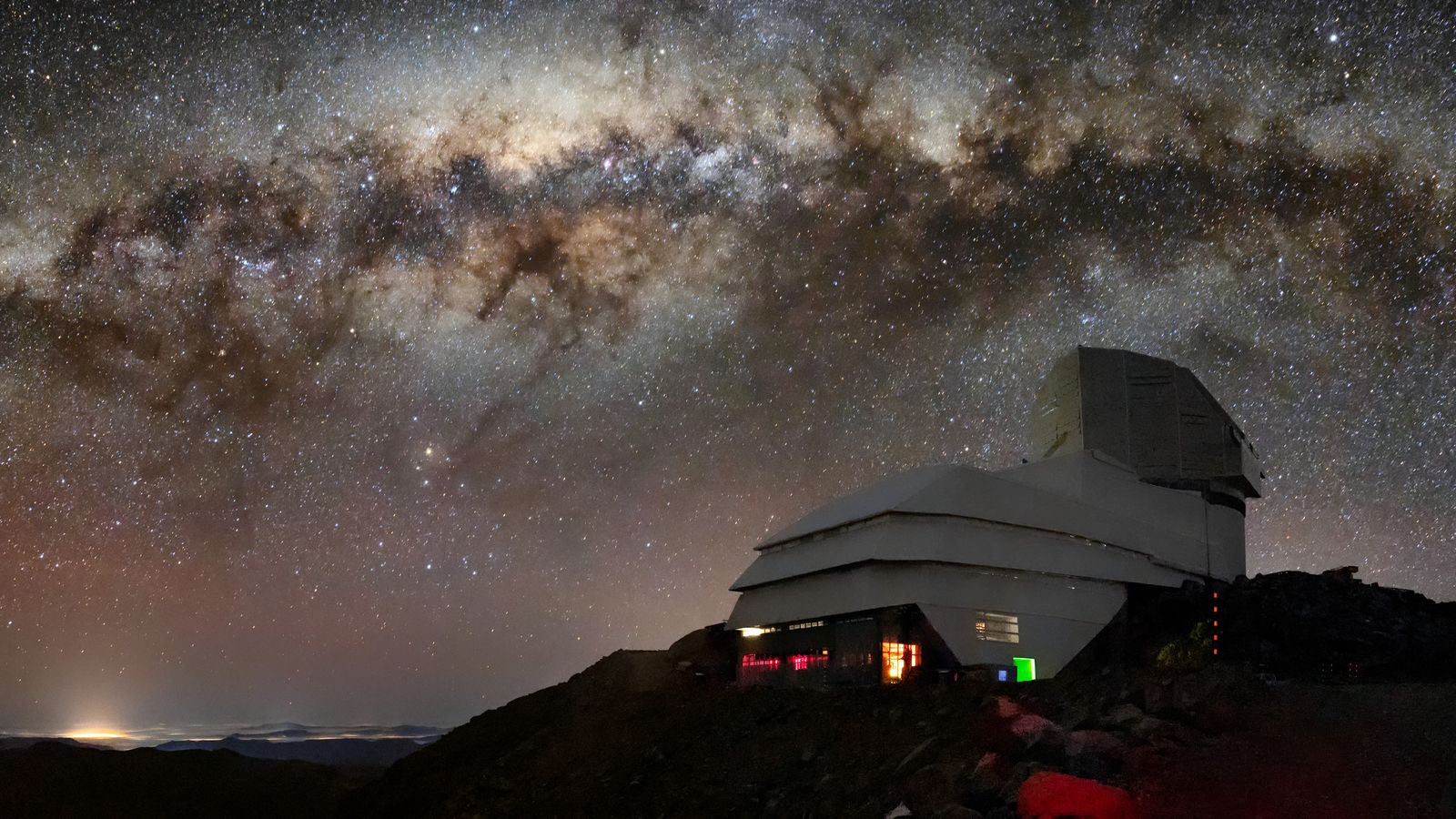
- Hero image source by Rubin Observatory/NSF/AURA/B. Quint / openverse, by.