A wise man once said: just because you’re a sceptic, it doesn’t mean they aren’t watching you. If taken by the literal meaning, it’s all but guaranteed that conspiracy theories are playing out all around us. The truth is, though, that most real conspiracies aren’t particularly interesting, involving corporate fraud, government dishonesty, and other yawn-inducing realities.
With that being said, there are a handful of truly shocking conspiracies, all having graduated from theory to reality, that fly in the face of dismissive sceptics. The following well-documented conspiracies stand as testimony to the adage that sometimes ignorance really is bliss.
Operation Berkshire
If you want fertile territory that breeds all manner of conspiracy and deception, look no further than the ruthlessly efficient world of mega-corporations. Though, in this case we’re talking about more than just common fraud, money laundering and tax evasion. There is a particular corporate conspiracy that is arguably responsible for more deaths than many of history’s wars combined: Operation Berkshire.
Key Takeaways
- Operation Berkshire involved major tobacco companies colluding to deny smoking’s health risks.
- Scientology’s Operation Snow White infiltrated governments to steal and destroy critical documents.
- Operation Condor was a coordinated effort by South American dictatorships to eliminate political opposition.
- Tobacco companies used Operation Berkshire to confuse public understanding of smoking’s dangers.
- Operation Condor resulted in tens of thousands of deaths and hundreds of thousands imprisoned.
By the 1950s, the link between smoking and adverse health effects had more or less been confirmed, with a number of health and research groups putting forward damning evidence. Fearing for their bottom line, tobacco companies took the only stance they could: denial. Cigarette sales did indeed begin to drop, but this being the 50s information didn’t exactly spread like wildfire. Thus, although tobacco companies were sweating, they were able to move forward by adopting the tried and trusted defence strategy of “la la la, I can’t hear you.”
However, as the decades drew on, and more health organisations came forward to demonise smoking, the tobacco companies decided it was time to adopt a more active defensive strategy. Thus Operation Berkshire was born.
Thanks to documents declassified during the eventual legal action, we now know that American tobacco giants including Philip Morris, R.J. Reynolds, British-American Tobacco, Rothmans and Reemtsma, as well as UK companies Gallaher and Imperial, all blatantly colluded to keep customers in the dark about the reality of smoking. Working under the codename Operation Berkshire, the companies actively sought to undermine credible medical research, thereby reassuring tobacco addicts that smoking wasn’t harmful.
The declassified documents, dating back to the mid-1970s, reveal that Philip Morris President Hugh Cullman set up a covert meeting with Imperial Tobacco Chairman Tony Garrett. The pair discussed, in a nutshell, that if medical institutes continued to find a link between smoking and poor health that the tobacco industry would soon be brought to its knees. The pair therefore agreed that maintaining a stance of scepticism was best, regardless of growing concerns among their customer base. The biggest fear of the corporate millionaires was, as you might have already guessed, a belief that their companies may be held liable.
In the years that followed a number of other tobacco companies jumped on board Operation Berkshire, with the cohort deciding to name their group the International Committee on Smoking Issues (ICOSI), later changing the name to the International Tobacco Information Centre (INFOTAB). The purpose of the group, initially, was to simply coordinate the efforts between each company in maintaining a stance of scepticism, with a special focus on refusing to accept smoking-related medical research. But this was only the start of what would become one of the biggest, and perhaps most damning corporate conspiracies in history.
In 1981 the World Health Organisation launched their “Smoking or Health – The Choice Is Yours” campaign, and you can bet that the tobacco companies didn’t take the attack lying down. INFOTAB responded with a counter operation, codenamed Mayfly.
Mayfly involved the members of Operation Berkshire setting up a number of so-called “steering groups.” Each steering group was tasked with attending smoking and health conferences in an effort to explicitly undermine credible information linking smoking and poor health. Importantly, the tobacco companies knew they could never completely banish all negative smoking information, so their goal was instead to confuse the issue, deliberately breeding doubt and misunderstanding.
After more than a decade of targeted public manipulation, Operation Berkshire officially came to an end in 1998. Forty-six American states brought a combined Medicaid lawsuit against the biggest US tobacco companies, including Philip Morris, R.J. Reynolds, Brown & Williamson, and Lorillard. The millions of documents uncovered detailed the Operation, providing all the evidence needed to hold the mega-corporations accountable.
For their crimes, the tobacco companies agreed to pay out a minimum of $206 billion over the first 25 years of a multi-decade agreement.
A particular document from British American Tobacco, dated 16 May 1980, puts into perspective just how coldly and ruthlessly the companies dealt with knowing that their product caused ill health. The document reads:
“The company’s position on causation is simply not believed by the overwhelming majority of independent observers, scientists and doctors … The industry is unable to argue satisfactorily for its own continued existence, because all arguments eventually lead back to the primary issue of causation, and on this point our position is unacceptable … our position on causation, which we have maintained for some twenty years in order to defend our industry is in danger of becoming the very factor which inhibits our long term viability.”
The document goes on, in a similarly emotionless and calculating corporate tone, to discuss whether the company would benefit from admitting that there might be some adverse health effects in a small percentage of heavy smokers. Truly, there is no entity more ruthless than a mega-corporation protecting its bottom line.
Operation Snow White
The Church of Scientology, although still very much alive, is far less prominent than it once was. Thanks to the spread of information via the internet, plus thanks to unapologetic shows like South Park, most are now aware of how unethical, and how downright peculiar Scientology is. But Xenu wasn’t always a household name, and back in the 1970s the Church of Scientology was far more aggressive about protecting its image.
Thus we have Operation Snow White, an astounding, brass balls effort by Scientology to infiltrate global governments and private agencies, steal or destroy hundreds of confidential documents, and otherwise undermine state efforts to regulate the organisation. During the operation Scientology managed to infiltrate 136 government agencies, foreign embassies and consulates, with around 5,000 covert Scientology agents taking part. To this day Operation Snow White is amongst the biggest, if not the biggest security breach that the United States has ever dealt with.
In 1979, as part of the United States versus Mary Sue Hubbard, during which Mary Sue, third wife of L. Ron Hubbard, plead guilty, the extent to which Scientology disrupted government offices was revealed.
Confiscated documents confirm that L. Ron Hubbard himself proposed infiltrating government offices as early as 1960, suggesting that Scientologists take menial jobs in government agencies, including secretarial, bodyguard, or other minor positions. Hubbard didn’t act on the proposal yet, but as government scrutiny of Scientology increased, including a raid by the Food and Drug Administration in 1963, so too did Hubbard’s determination to fight back. Most incensing to Hubbard was the IRS, which insisted that Scientology owed millions of dollars in back taxes.
Watch the Video
Open Video
Video Briefing
3 More Conspiracy Theories That Are True
Thus, in 1966 Hubbard established the Guardian’s Office, assigning Mary Sue Hubbard “Commodore Staff Guardian.” The express purpose of the Guardian’s Office was, and probably still is, to protect the interests of Scientology, with a special focus on correcting “misinformation” regarding L. Ron Hubbard and the organisation. It is worth noting, however, that Hubbard’s intention seems to have been to achieve all of the above “legally,” and Scientology to this day maintains that Operation Snow White was intended to be a legal operation.
It certainly wasn’t.
By 1973 the Guardian’s Office went into full swing, managing with seemingly little effort to plant a spy in Interpol. The agent was tasked with stealing documents linking L. Ron Hubbard to criminal activity, and succeeded in that mission.
Following the first successful infiltration, the Guardian’s Office followed by planting additional agents in the DEA, the US Coast Guard Intelligence Offices, the National Institute of Mental Health, and the American Medical Association. This flagrant espionage was achieved without raising any alarms, or triggering any red flags, raising a few questions about how secure government institutes were at the time. To make matters worse, the agents were ordered to not only steal and destroy documents critical of Scientology, but also sometimes to replace destroyed documents with false information. All of this was particularly egregious, given that this was the 70s and entire arms of the government still operated exclusively on a pen and paper system.
The full scope of Operation Snow White is a vast, cavernous rabbit hole, well beyond the scope of a single episode. And all of this isn’t even taking into account some of the other, equally as sinister operations perpetrated by the Guardian’s Office, including the targeted harassment of journalists, an effort to ridicule the American justice system by planting bizarre information, an effort to cause chaos in the DEA, a planned operation to take control of the Clearwater Sun newspaper, and much more.
After years of spying and espionage, Operation Snow White finally came to a dramatic climax in 1976. Two of the organisation’s most prolific spies, Michael Meisner and Gerald Wolfe, were caught copying documents at the US Courthouse of the District of Columbia. Although not arrested at the time, this was the tipping point that ultimately led to the downfall of the entire operation. Wolfe was eventually arrested for using a forged pass, which in turn saw a full investigation.
Meisner, still not in custody at the time, was initially put into hiding by the Guardian’s Office. He later escaped, turned himself in to the FBI, and made a full confession. What followed is the now infamous raid on Scientology headquarters in 1977, exposing the full extent of Operation Snow White.
Mary Sue Hubbard versus the United States concluded in 1979, with a total of 9 defendants signing full confessions. Mary Sue herself was sentenced to 5 years imprisonment and was forced to pay a $10,000 fine. Following the ordeal L. Ron Hubbard went into hiding; his name wasn’t mentioned by Scientology again until his death 6 years later.
Operation Condor
A cornerstone of many conspiracy theories is the notion that a mysterious group of persons can, with a snap of their fingers, make opposition “disappear.” A seemingly farfetched idea to some, but Operation Condor was a government-backed network that did precisely that.
A combined effort by the governments of Argentina, Chile, Bolivia, Paraguay, Brazil and Uruguay, Operation Condor was a coordinated effort to make political opposition to the country’s dictators vanish without a trace. Some of those targeted included trade-unions, student activists, religious leaders and many, many more.
The operation kicked off in October 1975, with intelligence representatives from the Southern Cone South American countries coming to an agreement. A cooperative effort was proposed as, very specifically, a combined information exchange in order to deal with extreme left terrorists. Though, “terrorist” in this case ultimately came to mean not only those taking violent action against the dictatorships, but anyone that so much as expressed sympathy towards left-leaning ideologies.
The first phase of Operation Condor involved creating a database of all local guerrilla movements, as well as recording any activity involving left-leaning groups. The second phase saw military forces taking action on the identified enemies, meaning that those persons were either arrested and detained, or were outright assassinated. The third phase of Operation Condor focused on identifying enemies on foreign soil, mainly in the United States and Europe. The foreign threats were likewise to be eliminated.
The ruthless network of government-sanctioned suppression and assassination operated between 1975 and 1983, a period now referred to as the Dirty War. The true scope of the Dirty War still isn’t fully understood, but documents uncovered in 1992, known as the Archive of Terror, reveal the horrendous acts of kidnapping, torture, and assassination committed by participating Operation Condor countries. It’s estimated that between 60,000 and 80,000 were killed, and around 400,000 imprisoned.
Perhaps the most controversial aspect of Operation Condor is, keeping in mind that the details here are often heavily diluted with speculation, that the United States is accountable to some degree. Looking at the facts: there is no evidence that the CIA, or any other American organisation, were involved, but plenty of evidence that the United States was aware of what was going on to some extent, and did nothing to intervene. Countless declassified documents reveal that US intelligence knew Operation Condor existed, knew that it involved torture and human rights violations, and had some suspicion it involved assassinations. As to whether the US should have intervened is a complicated debate all of its own, but one event in particular is often the focus of heated political debate.
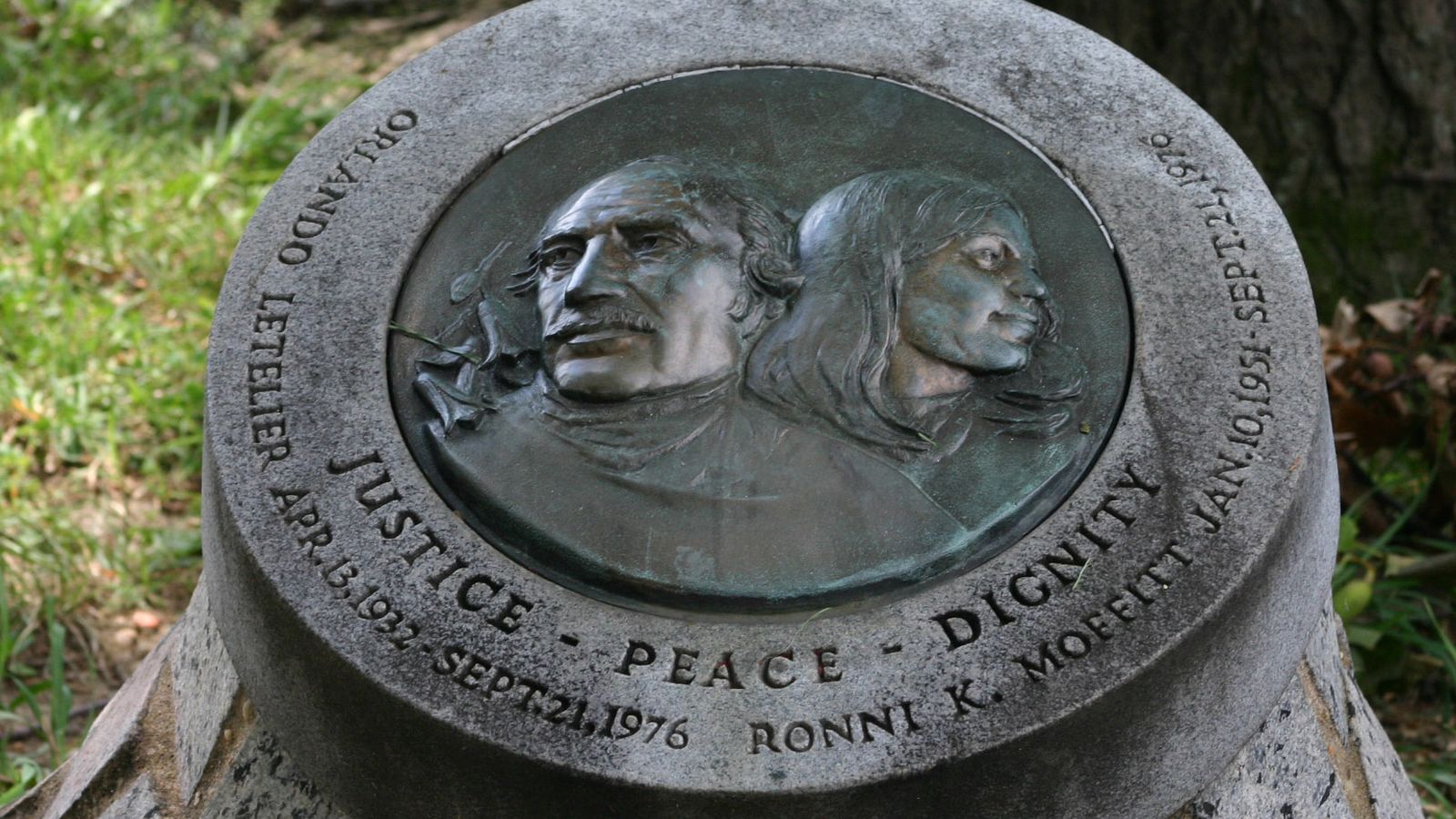
The assassination of Orlando Letelier and his work associate Ronni Karpen Moffitt took place on September 21st, 1976 in Washington DC. Letelier, widely recognised as the voice of the Chilean resistance, was the exiled left-leaning political opponent to then Chilean dictator Augusto Pinochet. Declassified documents reveal that, just weeks prior to Letelier’s assassination, an attempt had been made by Secretary of State Henry Kissinger to inform Operation Condor countries that he was concerned about rumoured assassination.
His written and approved demarche was ultimately never delivered due to diplomatic concerns, and that lack of action may have sealed the fate of Letelier. It is now widely speculated that had the demarche been delivered, it may have prevented the assassination.
It is accepted that Operation Condor came to an official end after Augusto Pinochet was overthrown in 1978. But the effects of the horrific “Dirty War” are still felt to this day. It was only decades later, after multiple lengthy legal hearings, and Pinochet being stripped of his initial immunity from prosecution, that he finally stood trial for multiple crimes against humanity, as well as tax fraud and embezzlement. At the time of his death in 2006, Pinochet had over 300 unresolved charges against him.
Key Takeaways
- Operation Berkshire involved major tobacco companies colluding to deny smoking’s health risks.
- Scientology’s Operation Snow White infiltrated governments to steal and destroy critical documents.
- Operation Condor was a coordinated effort by South American dictatorships to eliminate political opposition.
- Tobacco companies used Operation Berkshire to confuse public understanding of smoking’s dangers.
- Operation Condor resulted in tens of thousands of deaths and hundreds of thousands imprisoned.
SideProjects Editors
The SideProjects editorial team researches, fact-checks, and structures explainers about the lesser-known tales, side narratives, and spin-offs behind major historical and contemporary subjects.
Frequently Asked Questions
What was Operation Berkshire?
Operation Berkshire was a conspiracy involving major tobacco companies that colluded to undermine medical research linking smoking to health issues, aiming to keep customers in the dark about the dangers of smoking.
Which companies were involved in Operation Berkshire?
American tobacco giants including Philip Morris, R J Reynolds, British-American Tobacco, Rothmans and Reemtsma, as well as UK companies Gallaher and Imperial were involved in Operation Berkshire.
What was the purpose of Operation Snow White?
Operation Snow White was an effort by the Church of Scientology to infiltrate government agencies, steal or destroy confidential documents, and undermine state efforts to regulate the organization.
How many government agencies were infiltrated during Operation Snow White?
Scientology managed to infiltrate 136 government agencies, foreign embassies, and consulates during Operation Snow White.
What was Operation Condor?
Operation Condor was a coordinated effort by the governments of Argentina, Chile, Bolivia, Paraguay, Brazil, and Uruguay to eliminate political opposition through kidnapping, torture, and assassination.
When did Operation Condor take place?
Operation Condor operated between 1975 and 1983, a period known as the Dirty War.
What was the estimated number of people killed during Operation Condor?
It is estimated that between 60,000 and 80,000 people were killed during Operation Condor.
What was the outcome of the legal action against the tobacco companies involved in Operation Berkshire?
The tobacco companies agreed to pay out a minimum of $206 billion over the first 25 years of a multi-decade agreement as part of the legal settlement.
What was the result of the legal case against Mary Sue Hubbard for Operation Snow White?
Mary Sue Hubbard was sentenced to 5 years imprisonment and was forced to pay a $10,000 fine.
What was the significance of the assassination of Orlando Letelier in relation to Operation Condor?
The assassination of Orlando Letelier in Washington DC is often cited in debates about the U.S.’s knowledge and potential intervention in Operation Condor, as declassified documents suggest that a demarche from Secretary Of State Henry Kissinger was not delivered, which might have prevented the assassination.