
History is one of those subjects that you either think is amazing, or think is amazingly boring. We here at SideProjects are firmly in the former category, and not just because it’s what helps us keep the lights on. History gives us context and helps us understand how we got to where we are today, or why a historical event happened the way it did; how little changes here or there could’ve resulted in massively different outcomes.
Of course, that really only works if we know what actually happened. Unfortunately, there are many events throughout history where the historical records that could tell us exactly what happened are either gone or hidden away; being lost to history is a real concern, which is why things like the Library of Congress exist – to catalogue everything, so that nothing else is ever lost to history again.
Unfortunately, the Library of Congress is only 200 years old, so anything that was lost before that is basically unrecoverable. Even so, that doesn’t stop historians and archaeologists from trying, and since the Industrial Revolution there’s been a concerted effort to patch up the gaps in the historical record as best we can. With that in mind, we’ve got five ancient mysteries that, even today, we still haven’t fully solved.
Key Takeaways
- History provides context and helps us understand how we arrived at today’s world.
- Many historical events and figures remain shrouded in mystery due to lost or hidden records.
- Zoroaster’s exact birthplace and timeline are uncertain, with estimates ranging widely.
- The Bronze Age Collapse saw the sudden disappearance of major empires around 1200 BCE.
- The Nazca Lines’ purpose remains unknown, but they are believed to have religious significance.
Zoroaster
The first mystery on our list is not a strange event or a lost city, but a person about whom the only thing we know with absolute certainty is that he existed. Zoroaster, also known as Zarathustra, was a man who lived in what is today eastern Iran. Born to nomadic parents, he supposedly became a priest as a young man before he had a divine revelation at the age of thirty.
We won’t bore you with the extensive theological details, but what he learned from this revelation would eventually become the basis for the religion known as Zoroastrianism, famously practiced by the ancient Persians and the not-so-ancient Freddie Mercury. But it’s not just powerful empires and world-famous musicians that illustrate Zoroaster’s reach: tenets of Zoroastrianism are believed by some historians to have influenced other religions, including the Abrahamic faiths of Judaism, Christianity, and Islam. Zoroastrianism, incredibly, is still practiced in Iran and India today, making it one of the oldest contiguous religions on Earth.
So Zoroaster and his theological ideas were, in historical terms, a really big deal. What else do we know about him? The answer: not much.
Though we have a decent picture of Zoroaster’s religious ideas, the man himself is almost as legendary as the gods he spoke of. Historians don’t know exactly where he was born, or even when. The more orthodox historical conclusion is that Zoroaster lived at around the same time as Cyrus the Great, founder of the first (Achaemenid) Persian Empire, which would put his life at around the 7th century BCE.
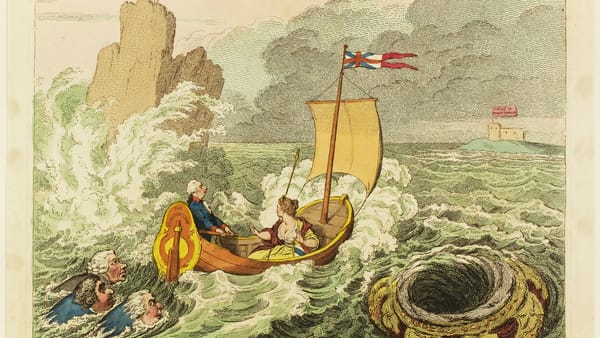
But Cyrus has a few historical blank spots, too. With both him and Zoroaster, it’s difficult to disentangle the legend surrounding these two with the actual historical fact, which is a tendency you will notice a lot if you study ancient history. Case in point, here is a drawing of Cyrus the Great.
With wings. With that in mind, some scholars think that Zoroaster could’ve lived as far back as the 6th millennium BCE. That’s some serious guesstimation, but it really is the best we can do with the information we have available.
If we want to know more, we’ll probably have to go to Iran to get it. …Yeah, that’s probably not happening.
The Bronze Age Collapse
The next entry on this list is one that, if you have watched any history channels on YouTube, you will be familiar with: the Late Bronze Age Collapse. Now, we won’t spend too much time on this one because there are a billion videos about the Bronze Age Collapse that go into far more detail than we could with just a couple of paragraphs. So with that in mind, we’ll give you the Cliff Notes version, and then you should go and read or watch more about the Bronze Age Collapse because it truly is one of the greatest mysteries in history. Poetry not intended.
So here’s the deal: in the year 1200 BCE, there were several huge empires in the Eastern Mediterranean and Mesopotamia. You may recognize the names of some of them: the Hittites, the Babylonians, the Mycenaean Greeks, and so on. These empires were large, populous, and powerful. Fifty years later, they were gone.
According to archaeological evidence, almost every single major city in the Eastern Mediterranean was violently destroyed, never to be occupied again. What happened to these most powerful states on the planet?
We don’t know. Well, when we say we don’t know, what we really mean is, “we don’t know for sure”. Progress has since been made in researching the Bronze Age Collapse, and historians have settled for now on something known as the “Systems Collapse Theory”. Basically, everything stopped working, all at the same time. Imagine, like, the internet goes out, then the TV, then all the Starbucks close up shop; the world would basically collapse overnight.
There were probably famines, natural disasters, tin shortages – tin being a necessary component of bronze, which makes it a vital resource for, y’know, the Bronze Age. In addition to this, there is a good deal of evidence for a group of people that historians refer to rather blandly as the “Sea Peoples”. A lot of information about them is still shrouded in mystery, but here’s what we know for sure.
First, they were an ethnically diverse confederation of peoples originally from the Western Mediterranean. Second, they migrated, via sea, to the Eastern Mediterranean, either to find wealth or to escape hardship in their original homes. And third, they were really good at winning wars.
It’s not known for sure how much of an impact they had, but there is historical precedent for armies of unified groups conquering vast swathes of territory and annihilating entire towns. Thinking of you, Genghis Khan.
The Tomb of Genghis Khan
Genghis Khan is remembered as history’s greatest conqueror. He unified the disparate nomadic tribes of Mongolia into a unified force of unmatched warriors, and then led them on a military campaign across Asia, conquering the steppes of Central Asia, northern China, and northern Persia. His successors would go on to continue his conquests, creating the largest land empire in history and conquering lands in Russia, the rest of China, and the Middle East. Descendants of Genghis would famously create their own empires, including Timur and Babur who founded the Timurid and Mughal empires, respectively.
Nobody is immortal – at least not yet, we’ll see what science can do about that – and as such Genghis Khan died in August of the year 1227. We don’t know exactly how he died; could have been illness, injuries from hunting, being killed in battle (X to doubt), or simply passing away quietly in his sleep. His body was taken back to Mongolia, where a giant mausoleum was constructed as his tomb, becoming a place of reverence for Mongols everywhere: a fitting resting place for the Great Khan.
At least, it might have been, if that’s where he was actually buried. Because this mausoleum isn’t Genghis Khan’s resting place. It’s a memorial, but it is not a tomb.
Where was Genghis Khan buried? To put it simply: not a clue. Genghis Khan requested for his body to be buried quietly, without any markings or sign.
Since you don’t disobey the Great Khan even when he’s dead, that’s exactly what was done. His body was returned to Mongolia after his death, and the best guess that we can make from there is that he was returned to Khentii in the east of the country, where he was born, and that he is buried somewhere close to the Onon River. That’s really the best we can do without churning up every square foot of dirt in Mongolia looking for the guy.
According to legend, 2000 people attended to his funeral, who were then killed by one of his armies, who were then killed by his escort, who then killed everyone they found along the way, who then committed suicide when all was said and done. Now in terms of historical authenticity, that maybe (probably) isn’t what actually happened, but we get the gist that Genghis wanted his body hidden away from the world after he was dead, which is an oddly humble end for a man who wrote himself into history with so much blood and conquest. Much like where he is buried, we can only speculate about his intentions.
Legio IX Hispana
Going back about a millennium, we come to the Roman Empire. Rome is the time period where history starts becoming less messy – no winged Cyrus the Greats to pick apart or anything like that. There were still legends, but at least compared with ancient history, it’s relatively easy to separate them from historical fact.
But… Roman history still has its breaks. One of the most head-scratching is the ultimate fate of the 9th Legion. The story of the 9th begins with Julius Caesar, who inherited the legion when he became governor of Cisalpine Gaul, today’s northern Italy. Caesar led the legion throughout the Gallic Wars and the Roman Civil War.
After Caesar won that Civil War, he disbanded the legion and settled the veterans in the Italian countryside. But those veterans were later recalled by Caesar’s adopted son, Octavian, to fight another Civil War and make Octavian into the emperor we know today as Augustus.
The legion spent some time flitting around between Spain, Germany, Macedonia, all over the place, before it was finally stationed on the island of Britain. This legion was present during Boudicca’s rebellion in 61 CE, where it suffered a disastrous defeat against her. Afterwards, the legion was reinforced, but the string of bad luck continued when in the year 82 CE the Roman general Agricola had them invade Caledonia, a mythical and legendary place, known today by the name of Scotland.
Watch the Video
Open Video
Video Briefing
5 Ancient Mysteries We Still Haven't Solved
Long story short, the Caledonians nearly destroyed the legion in a surprise nighttime attack, but the men fought them off and later won a resounding victory at the Battle of Mons Graupius. With yet another victory under their belts, the men of the 9th returned to Roman territory – where they promptly disappeared from the historical record. No, really. We don’t know what happened to them.
After Agricola’s invasion, there is one stone tablet which states that the 9th was present at York rebuilding a fort in the year 108. After that, they just… aren’t mentioned again. There are inscriptions of them afterwards that were found in the Netherlands, but some scholars argue that these were just detachments of the 9th, rather than the entire legion itself. So, what happened to the 9th Legion?
The most dramatic telling is that the 9th marched once more into the Scottish frontier, where it was never heard from again. This theory of annihilation in northern Britain was thought to be supported by the discovery of a damaged Roman eagle sculpture in the town of Silchester, which was believed to possibly be the eagle standard of the 9th Legion. Unfortunately, we here at SideProjects have to do our due diligence and let you know that some archaeologists think that this eagle is just scrap metal and has nothing to do with the 9th Legion.
Stupid historians have to take the fun out of everything. Other theories for what happened to the 9th include destruction in Judea during the Second Jewish Revolt against the Romans (132-135), while yet another offers that the 9th was destroyed by the Parthians during the reign of Marcus Aurelius. But these theories are not air-tight, and there’s a lack of evidence that the 9th was even in the eastern part of the empire during these two time periods.
Whatever the case, we know for a fact that around the year 200 CE the 9th Legion did not exist, as it is not included in two independent, but identical, lists of the 33 existing legions at the time. So for now, at least, what ultimately became of the 9th Legion is just lost to history. As one historian so succinctly put it, “further evidence is needed before more can be said.”
The Nazca Lines
Our last entry on the list takes us to South America, in the country of Peru. In 1553, a Spanish conquistador published a book that described a set of “trail markers” in southern Peru, high on an arid plateau in the Nazca desert. Although they were visible from nearby hills, it wasn’t until the 20th century when airplane pilots flew over them that people realized they were far more than trail markers.
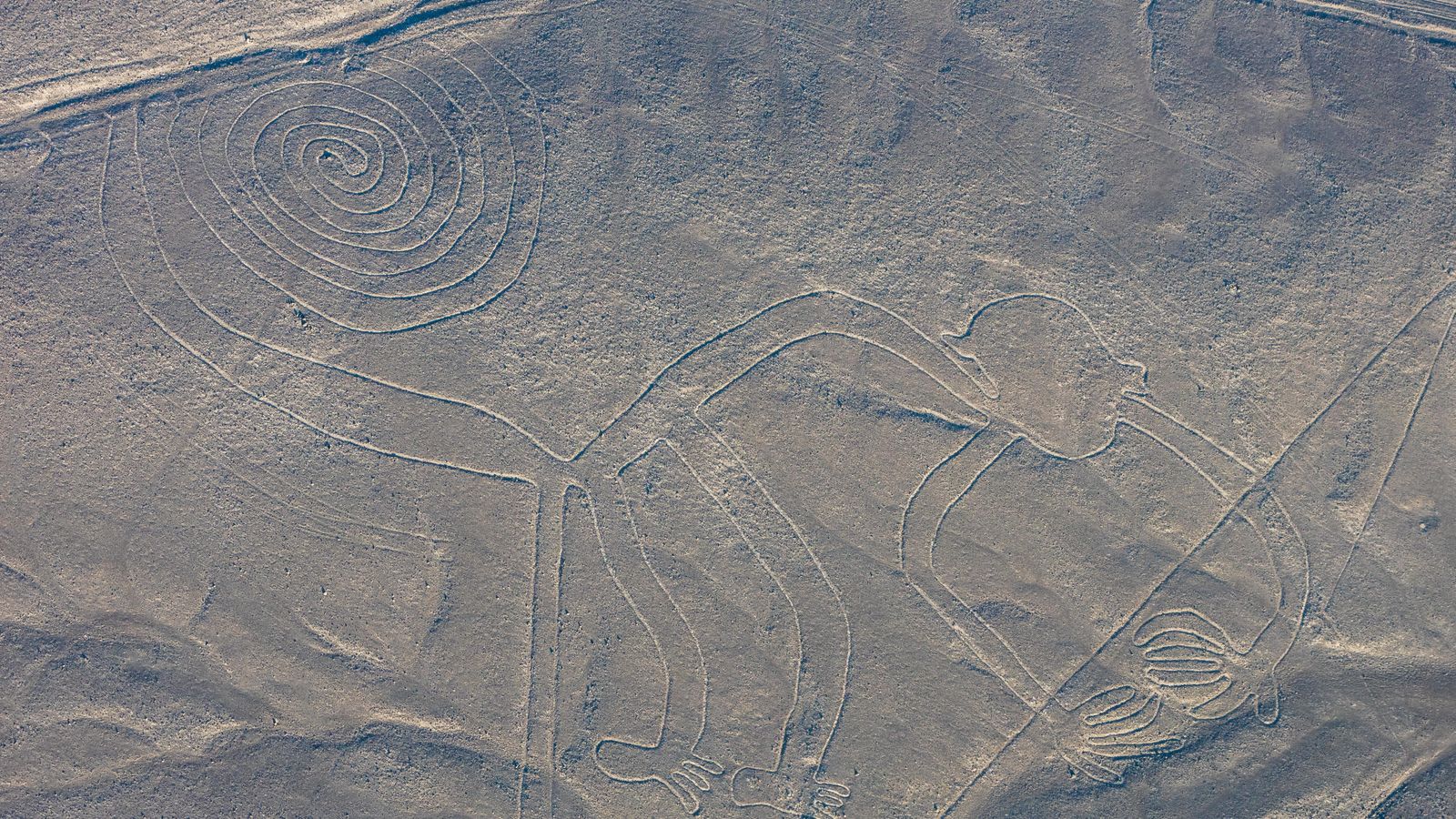
The Nazca Lines are a group of huge geoglyphs, created somewhere between 500 BCE and 500 CE. That’s a big range, but given the lack of written records for Andean cultures, it’s our best guess. The vast majority of the lines are simple geometric shapes, but many of the glyphs depict various designs of plants and animals. They’re quite aesthetically pleasing on their own, but what’s even more impressive with these designs is how they were created.
Are you ready for this? Okay. They were created, quite simply, by drawing lines in the sand and exposing different colored sand underneath.
I know what you’re thinking. “Simon, that’s lame, what’s the big deal?” First of all, you’re lame. Just kidding, I love you. Second, what’s absolutely amazing about these lines is that even though they’re nothing more than drawings on the ground, they have existed for over a thousand years at the earliest. That is absolutely insane; we can barely get buildings to last that long.
The secret behind their preservation is the incredibly stable climate of the plateau they’re located on. There’s no wind, rain, or any kind of natural erosion, really. Walking here is like walking on the Moon – your footprints will be there basically forever. In fact, if you want to visit the Nazca Lines in person, you will be required by the guides to put on special shoes to ensure that you don’t mess up the delicate ground.
As we said before, some of these inscriptions are absolutely enormous. Many of them are made from one continuous line, with the largest ones around 370m long. What that means is that these weren’t created by some bored guy with nothing better to do… probably, I mean stranger things have happened, but anyway, it’s more likely that the creation of these lines was an organized effort by a large group of people, using a lot of math. Which begs the question: why?
Why create these glyphs, and why make them so large to the point that nobody even knew what they were until the invention of the airplane?
You know the drill by now: we don’t know for sure. In general, scholars believe that there’s a religious significance behind the Nazca Lines. Beyond that vague assertion, however, there really is no way to tell because of the aforementioned lack of written records. Some have hypothesized that they were created to be seen by deities in the sky; others believe astronomy and constellations may have played a role, which, considering the existence of the Mayans, would not be implausible.
Still others have posited that they may have even served as a kind of calendar for agricultural purposes. There are several more outlandish theories and explanations regarding the Nazca Lines, but honestly, we just think they’re awesome to look at. Look at this hummingbird, seriously! It’s so cool!
Conclusion
So there you have it, five ancient mysteries that we haven’t yet been able to solve. While no doubt some of these, like the Nazca Lines, will remain mysteries for the foreseeable future, historians do research, too. There has been an incredible amount of progress made over just the last twenty years in regard to events like the Bronze Age Collapse. Even as we speak, historians are no doubt making progress and piecing together the story of how we got here, and perhaps very soon, this list will have to be updated.
Until then, thanks for reading; remember to like, comment, and subscribe – thus spake Zoroaster.
Key Takeaways
- History provides context and helps us understand how we arrived at today’s world.
- Many historical events and figures remain shrouded in mystery due to lost or hidden records.
- Zoroaster’s exact birthplace and timeline are uncertain, with estimates ranging widely.
- The Bronze Age Collapse saw the sudden disappearance of major empires around 1200 BCE.
- The Nazca Lines’ purpose remains unknown, but they are believed to have religious significance.
SideProjects Editors
The SideProjects editorial team researches, fact-checks, and structures explainers about the lesser-known tales, side narratives, and spin-offs behind major historical and contemporary subjects.
Frequently Asked Questions
Who was Zoroaster?
Zoroaster, also known as Zarathustra, was a man who lived in what is today eastern Iran. He became a priest and had a divine revelation at the age of thirty, which formed the basis for the religion known as Zoroastrianism.
What is the Bronze Age Collapse?
The Bronze Age Collapse refers to the sudden disappearance of several major empires in the Eastern Mediterranean and Mesopotamia around 1200 BCE. Almost every major city in the region was violently destroyed, and the cause remains uncertain.
What happened to the 9th Legion (Legio IX Hispana)?
The 9th Legion disappeared from the historical record after being stationed in Britain. There are various theories about their fate, including annihilation in Scotland, destruction in Judea, or defeat by the Parthians, but no definitive evidence supports any of these theories.
What are the Nazca Lines?
The Nazca Lines are a group of huge geoglyphs located in the Nazca desert in Peru. Created between 500 BCE and 500 CE, they depict various designs of plants and animals and were likely created for religious or astronomical purposes.
Where is Genghis Khan buried?
The exact location of Genghis Khan’s burial is unknown. He requested to be buried quietly without any markings, and his body was returned to Mongolia. The best guess is that he is buried somewhere near the Onon River in Khentii.
What is Zoroastrianism?
Zoroastrianism is a religion based on the teachings of Zoroaster. It was famously practiced by the ancient Persians and is still practiced in Iran and India today, making it one of the oldest continuous religions on Earth.
What is the Systems Collapse Theory related to the Bronze Age Collapse?
The Systems Collapse Theory suggests that the Bronze Age Collapse occurred because multiple systems failed simultaneously, leading to widespread chaos and the fall of major empires.
What is the significance of the Nazca Lines?
The significance of the Nazca Lines is unclear due to the lack of written records. Scholars believe they have religious significance, but theories range from being seen by deities in the sky to serving as an agricultural calendar.
What is the historical context of the 9th Legion?
The 9th Legion was formed by Julius Caesar and participated in various wars and campaigns. After being stationed in Britain, it disappeared from the historical record around the year 108 CE.
What are the Sea Peoples?
The Sea Peoples were an ethnically diverse confederation of peoples from the Western Mediterranean who migrated to the Eastern Mediterranean, either to find wealth or to escape hardship. They were known for their military prowess and may have contributed to the Bronze Age Collapse.