
Humanity’s past has been speculated about in the name of propaganda, politics, and entertainment alike. Spend twenty minutes online diving into the topic and you’re going to learn more than you ever wanted to know about lizard people and alien-engineered pyramids. But that’s just the tip of the iceberg…
Welcome to the world of alternative archaeology where research can range from a cautious step outside peer-reviewed studies, to religious fever dreams and government cover-ups. A niche topic where natural rock formations are actually the skeletons of melted buildings and the ancient Egyptians painting their hieroglyphics by the glow of electric light bulbs. Here’s five currently-debated theories that scientists are exhausted by, but the internet can’t get enough of:
Ancient Apocalypse By Massive Flood
There’s a growing contingent of armchair archeologists that theorize there was once a technologically-advanced, globe-spanning, civilization that fell before recorded history. It’s the root of most online conspiracies surrounding ancient history and thanks to recent popularity, it’s on the rise.
Key Takeaways
- Alternative archaeology theories often lack scientific evidence and are driven by speculation.
- The theory of an ancient, advanced civilization wiped out by a flood is popular but unproven.
- Natural formations are often misinterpreted as man-made structures in alternative archaeology theories.
- The Great Sphinx of Giza’s age is debated, with some claiming it predates known civilizations.
- Ancient people were capable of significant achievements without modern technology.
Researchers interested in this theory place this lost civilization’s collapse at the end of the last ice age, around 12,000-13,000 years ago. However, no one has discovered any material culture or DNA evidence of this missing population; not a single pottery shard or human bone fragment.
Proponents of this theory believe that any proof of their existence was lost in a massive, continent-altering flood in the wake of a massive meteoric impact. Modern archeologists are skeptical of such theories. Here’s why:
There is plenty of evidence that a climate-altering impact did occur approximately 12,850 years ago that caused the planet-wide cooling event known as the Younger Dryas Period. It’s one of the most studied climate events in scientific history. It’s also the likely explanation for the extinction of ice-age megafauna and some paleolithic humans.
So, a comet hitting the planet and causing cataclysmic change isn’t being debated. The theory that it erased any and all evidence of a highly-advanced civilization possibly associated with Atlantis, is where the controversy lies.
This forgotten civilization supposedly predated Sumeria (the oldest civilization currently accepted by anthropologists) by 6,000 years, placing it at the time of hunter-gatherer tribes, making it highly improbable. Which isn’t to say there weren’t advanced and capable hunter-gatherers at the time.
As recently as the 1990’s, structures such as Gobekli Tepe in Turkey have been discovered dating back 11,000 years ago! It’s an amazing discovery, the oldest man-built structure ever unearthed, but so far any proof that the builders of this prehistoric temple sailed the globe teaching the ancestors of the Egyptians and Aztecs to build pyramids, eludes us. As well as any evidence that they ever existed was lost in a giant flood.
We have much to uncover about our past that was lost to global flooding. During the Younger Dryas, sea levels rose dramatically as ice trapped in glaciers melted. Entire coastlines changed, islands sank, and the planet’s climate changed drastically.
We also have several cultures around the globe that share flood myths in their history. Tales such as the Epic of Gilgamesh and Noah’s Ark speak to world-altering floods; it is understandable why an ancient apocalypse by water is an easy story to sell. Most of us have heard some version of it since we were children.
However, despite the claims of pseudo archaeologists there isn’t any scientific evidence that this colossal flood happened. In truth, during the peak of sea-level rising, the most drastic risings maxed out around 3.8 cm (1.5 inches) in a single year, but generally averaging around 2cm (0.8 inches) a year. And while any humans living near coastlines would certainly notice more and more of the shore slipping underwater over 30-50 years— it’s nothing along the mass catastrophic scale of a society-wiping great flood.
People adapted, migrating in many cases, and were able to continue with their regular lives, politics, work, and entertainment without fleeing from an epic flood hitting their ancient skyscrapers with a giant tsunami, as some conspiracies claim.
Melted Buildings Theory
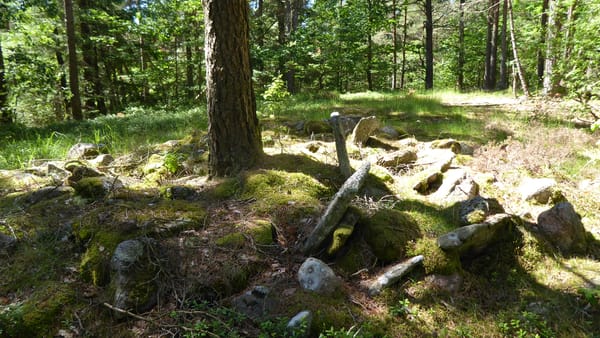
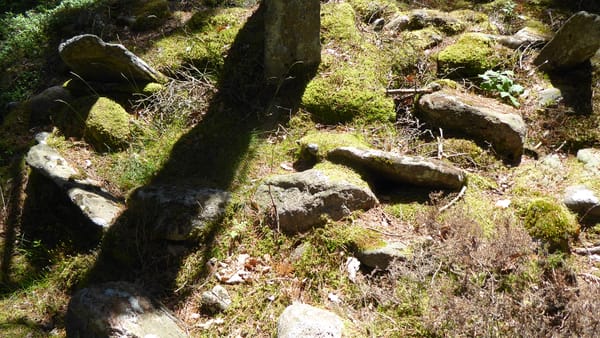
There’s a growing contingent of believers that many natural formations aren’t natural at all, but instead the melted remains of stone and concrete buildings destroyed in an ancient, cataclysmic-heating event - possibly being covered up by the US government. Enter: The Melted Buildings Theory.
This theory purports that throughout human history, many indigenous peoples and ancient civilizations around the world have been known to carve dwellings into rock walls and mountain sides. This is true, and from the Hopi Tribes of North America to underground cities in Turkey - past civilizations spanning thousands of years have created living spaces alongside natural occurring cliffs, mountains, or carved into the bedrock itself.
Where this theory becomes controversial is their belief that geological formations across the globe we accept as naturally occurring are actually the ruins of structures built by the ancestors of Pre-Mesopotamian cultures. That these stone-age people managed not only to travel the globe 5,000 years before the invention of agriculture and writing, but somehow also constructed pyramids everywhere from Egypt to North America’s national parks. Their evidence: certain natural formations look like they might have been buildings.
For example, take the formation known as Gebel Dist. It is a conical-shaped mountain in Egypt. It consists of layers of rock worn and shaped by erosion over millions of years and is loaded with fossils, which have been recorded in various layers of dated sedimentation. However, believers of the melted buildings theory refuse to accept that something that looks so much like a man-made structure could be the result of nature and time.
To strengthen their argument they compare it to structures like the failed Black Pyramid of King Amenemhet III, which was poorly constructed and its mud-brick foundation began collapsing due to Nile flooding shortly after it was built. Archeologists have tried to explain that something “looking like” a building is not evidence it was one, regardless of how many truly man-built structures may look like a pile of rocks now due to human error.
But the melted-buildings believers carry on, and point to formations in the American southwest that resemble tombs and pyramids, especially at the base of the Grand Canyon…
If you’re asking “what sort of ancient apocalypse wiped out entire advanced civilizations and melted their dwellings into mountains?” Good question! Believers purport that a “planet-altering heating event” decimated ancient cities through inconceivably powerful electrical storms. An example: the Grand Canyon wasn’t formed by the Colorado river, but instead a massive lightning strike, because when photographed from above, the canyon resembles a Lichtenberg figure, the branching discharge patterns lightning leave behind.
This is a big swing to make, but especially in a place like the Grand Canyon, where the geology of the landscape has been studied and peer-reviewed for centuries. We know the history of sediment and stratification, and while there are some awesome geological formations that do resemble pyramids and buildings at the base of the canyon, that doesn’t mean the ancestors of the pharaohs invented world travel and built pyramids in Arizona.
Age of the Sphinx
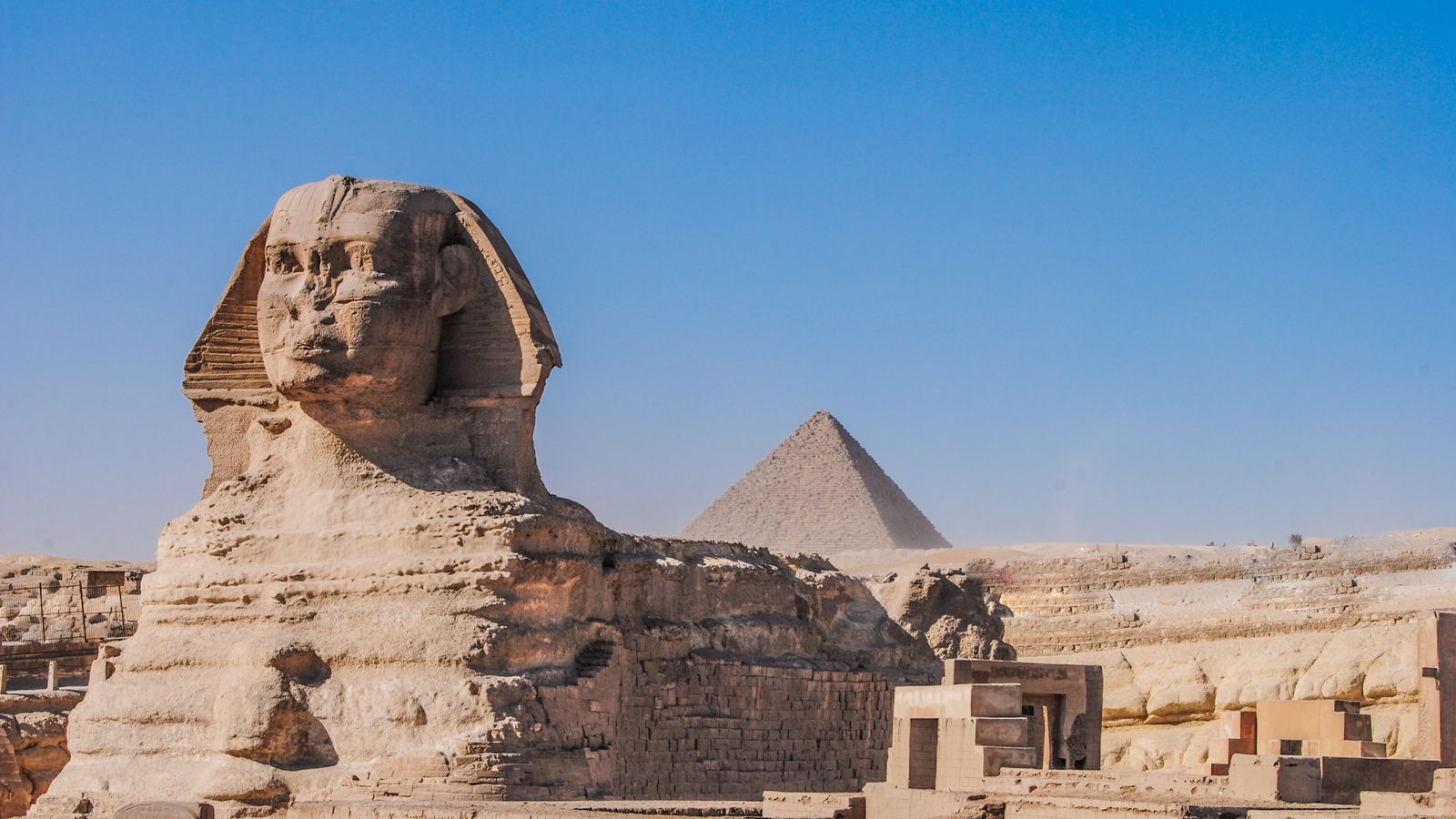
The Great Sphinx of Giza rests in the shadow of the pyramids. It’s been a source of fascination and mystery since it was carved back in 2500 BCE for the Pharaoh Khafre, who ruled during the 4th Dynasty/Old Kingdom period. Most people are familiar with the monolith, but you might be less familiar with how it was built.
Unlike the pyramids, which were famously constructed from the ground up, the Sphinx was carved from the ground down, right out of the bedrock. Its limestone body was uncovered from the sands, excavated and shaped while the stone around it was quarried for the pyramids’ construction.
Watch the Video
Open Video
Video Briefing
5 Controversial Theories about Ancient Civilizations
Some Archeologists believe the Sphinx started out as a yardang, which is a natural formation that happens when exposed bedrock is carved by wind and weather into forms that can resemble familiar shapes, such as the hull of a boat or a human face. The monolith’s head was most likely carved above ground. This would also explain why the head is so small in proportion to the rest of the body, as the sculpture was started before the original builders understood the extent of limestone beneath it.
For most of the Sphinx’s known history, it was buried under the sand from the neck down, only to be uncovered when humans were feeling exceptionally industrious. There’s a monument between the paws, placed back in 1400 BCE, explaining that in the first year of the Pharaoh Thutmose IV’s reign, the then thousand-year old Sphinx dug from obscurity then.
Which is why back in the mid 1800’s, when photography was first invented, the first pictures taken of the Sphinx were of only the head, the rest once again buried. It wasn’t until fairly recently, 1925, that it was excavated to the point that geologists with a more complete understanding of earth science could start dating it.
This is where the controversy about the age of the Sphinx began. It was during the 1925 uncovering that scientists could study the weathering and damage done to the monument over the years. They noted the erosion to the body was a natural consequence for a 4,000 year-old-statue, caused by occasional Nile flooding, wet sand, wind and time. But recently some alternative archeologists feel that the entire timeline is wrong.
That the Sphinx isn’t 4,500 years old but predates the earliest known human civilizations by 5,000 years.
These folks believe that the erosion of the Sphinx’s body, and its surrounding enclosure, dates back to a period when Egypt was not the desert we know today, but instead a lush landscape commonly flooded by heavy rains, about 15,000-10,000 years ago. And for the monument to be damaged by that level of water erosion, it had to be constructed before the time of great floods, during the end of the last ice age.
This theory persists online because of the popularity of the “lost advanced civilization theory”, which will carry through several of these debated topics. Pseudo scientists are trying to make a case, again, that before known history, around 12,000 years ago, there was a globe-spanning, advanced ancient civilization that disappeared forever in a catastrophic flood brought forth through meteor impact. Admittedly, a far sexier theory than 4,000 years of occasionally wet sand.
Credible archeologists do not believe this pre-ice-age Sphinx theory. They theorize that the damage to the Sphinx is related to water damage, but more likely from slow natural changes to the porous limestone from dew and sporadic rainfall, or perhaps layers of wet sand collecting around the buried beast for thousands of years.
Others suggest the limestone is damaged from Egypt’s prehistoric past, but it happened to the bedrock before the Sphinx was ever built, and the reason the entire lower section was formed and shaped by bricks to create the legs, paws, and tail was to make up for the faults in the naturally-crumbling and weak limestone from the jump.
While it is impossible to tell the age of the construction of the Sphinx based on the geology of the landscape, the theory that the Sphinx is over 10,000 years old remains fringe.
Creationist Foot Prints
Taking an entertaining pivot: As recently as 2021, fossilized human footprints were discovered in White Sands National Park, New Mexico. These remnants of early humans have been dated back 22,000 years. This was an amazing discovery for historians and scientists of all disciplines, and proof humans were strolling around North America long before we previously thought.
This is how science works. A discovery is made, research is conducted, peer-reviewed, and consensus forms when enough evidence supports it. However, if you want to prove that the planet is just slightly older than the building of the great pyramids, you’re going to need to support a different theory.
Enter; young earth creationists. These are people that believe earth is roughly 10,000 - 6,000 years old, in accordance with the Bible. This is a pretty controversial hill to die on, but young earth creationism isn’t the theory being covered in this chapter. Human fossils found in a rock dated to the Triassic Period are.
The alleged fossil was originally reported in the New York Sunday American, on 8 October 1922. Alfred Knapp discovered a fossil in Fisher Canyon, Nevada, of what he believed was a human shoe print. In his own words:
“It is a layer from the heel of a shoe which had been pulled up from the balance of the heel by suction, the rock being in a plastic state at the time.”
Assuming the pattern he found in the rock was shoe because it mildly resembled one, was a hell of a theory, considering the limestone in the canyon was dated back to the Triassic, over 225 million years ago and the “fossil” imprint was at least 15 million years old. And instead of accepting it was impossible that human beings existed at that time, he instead theorized that the rocks themselves weren’t that old. And therefore human beings have always been on the planet since the 6th day of creation, as recorded in Genesis.
The Fisher Canyon print of Knapp’s wasn’t the only example of an oopart (out of place artifact) that served as a hotbed of alternative archeology theories. Since its discovery there have been other examples of fossilized human prints alongside the time of dinosaurs, such as the tracks found near the Paluxy river in Texas, where many real dinosaur tracks have been discovered and studied.
However, a few of the tracks seemed to be in the shape of human footprints, which got creationists excited for more “evidence” that man and dinosaurs lived at the same time. The “human” prints turned out to be smaller dinosaur prints in which the toe forms didn’t imprint or fossilize completely in perfect outline. Easily proved by the fact that the average man, despite not existing at the same time as these fossils, didn’t have the weight to leave the same depth of an impression as the sauropods amongst them.
Lost Advanced Technology
There is a term used by academics called The Historian’s Fallacy. It’s a reasoning fallacy, and it’s committed when someone judges the past according to present standards. It’s a bias we all have, and recently it’s become the cornerstone of many arguments surrounding alternative archeology, usually boiling down to this: If we can’t conceptualize how something was achieved without modern technology, it must have been achieved using it.
For example, some people believe the artwork inside the temple dedicated to Hathor, at the Dendera Temple Complex, Egypt, must have used electric lights to carve and paint inside the dark hallways. This assumption is based on lack of soot stains from torches on the upper walls and ceiling and four wall reliefs. The reliefs in question loosely resemble a gigantic monofilament light bulb. These reliefs and the lack of soot stains lead some people to jump to the conclusion Egyptians used electricity.
Enter the Dendera light bulb.
The Dendera light bulb, while comically resembling a giant monofilament light bulb of the early 20th century, is actually a depiction of the Egyptian creation myth in which the god Atum, in the form of a snake, emerges from a lotus bud. We know this because that’s what the inscription beside it says.
In reality, there’s zero evidence of ancient electricity used in the temple’s construction. Archeologists know for the majority of buildings raised at this time, workers installed the roof last. Meaning, they had the wherewithal to use daylight to their advantage while decorating the temple during the non-rainy season, and capped it off when the internal work was completed. If detailed work was done after the roof was installed, it was done by olive oil lamp, which doesn’t leave soot stains.
When it comes to ancient construction practices, the simplest answer is usually right.
Despite a lack of evidence, ancient lost technology theories persist. Everything from the construction of the pyramids to how slabs of granite were cut and polished for sarcophagi… it all must be the work of a lost advanced civilization with access to power tools, or if not power tools like the ones we’re familiar with, an equally successful alternative lost to time.
In reality, ancient people were entirely capable of moving inconceivably heavy stones for monoliths thanks to physics. And they understood how to saw through granite with less-than ideal cutting tools such as saws and drills that still got the job done within 0.005 mm of flat-surface accuracy.
People of the past were clever and capable, and didn’t need ancient Atlantians or aliens to help with their progress anymore than us modern humans did when men landed on the moon whose grandparents went to work on horseback.
Key Takeaways
- Alternative archaeology theories often lack scientific evidence and are driven by speculation.
- The theory of an ancient, advanced civilization wiped out by a flood is popular but unproven.
- Natural formations are often misinterpreted as man-made structures in alternative archaeology theories.
- The Great Sphinx of Giza’s age is debated, with some claiming it predates known civilizations.
- Ancient people were capable of significant achievements without modern technology.
SideProjects Editors
The SideProjects editorial team researches, fact-checks, and structures explainers about the lesser-known tales, side narratives, and spin-offs behind major historical and contemporary subjects.
Frequently Asked Questions
What is the Ancient Apocalypse by Massive Flood theory?
The theory suggests that a technologically-advanced, globe-spanning civilization fell before recorded history due to a massive, continent-altering flood caused by a meteoric impact around 12,000-13,000 years ago.
What evidence supports the idea of a climate-altering impact around 12,850 years ago?
There is evidence of a climate-altering impact that caused the planet-wide cooling event known as the Younger Dryas Period, which is believed to have led to the extinction of ice-age megafauna and some paleolithic humans.
What is the Melted Buildings Theory?
This theory proposes that many natural formations are actually the melted remains of stone and concrete buildings destroyed in an ancient, cataclysmic-heating event, possibly covered up by the US government.
What is the Age of the Sphinx controversy?
The controversy surrounds the age of the Great Sphinx of Giza, with some alternative archaeologists suggesting it predates the earliest known human civilizations by 5,000 years, while credible archaeologists believe it was built around 2500 BCE.
What are Creationist Foot Prints?
These are alleged fossilized human footprints found in locations like Fisher Canyon, Nevada, and near the Paluxy River in Texas, which young earth creationists use to support their belief that humans and dinosaurs coexisted.
What is the Historian’s Fallacy?
The Historian’s Fallacy is a reasoning fallacy where someone judges the past according to present standards, often leading to the belief that ancient achievements required modern technology.
What is the Dendera light bulb theory?
This theory suggests that the artwork inside the temple dedicated to Hathor at the Dendera Temple Complex in Egypt must have used electric lights, based on the lack of soot stains and reliefs resembling light bulbs. However, the reliefs actually depict the Egyptian creation myth.
What is the significance of the Gobekli Tepe discovery?
Gobekli Tepe in Turkey is the oldest man-built structure ever unearthed, dating back 11,000 years. However, there is no evidence that its builders sailed the globe teaching the ancestors of the Egyptians and Aztecs to build pyramids.
What is the evidence against the massive flood theory?
During the peak of sea-level rising, the most drastic risings maxed out around 3.8 cm (1.5 inches) in a single year, which is not enough to cause a mass catastrophic flood. Humans adapted and continued their lives without fleeing from an epic flood.
What is the theory about the construction of the Sphinx?
The Sphinx was carved from the ground down, right out of the bedrock. Some archaeologists believe it started out as a yardang, a natural formation carved by wind and weather, and the head was carved above ground.