
The world’s borders are constantly shifting. In fact, a full third of the current borders around the globe are less than 100 years old, formed from treaties, decolonization, and unification. Many of these new borders arose during the decolonization of Africa, but they’ve also popped up in Europe, with the breakup of Yugoslavia in the 1990s, for example. And things continue to change.
The youngest country officially recognized by the UN is South Sudan, whose borders officially began to appear on maps quite recently, in 2011. But South Sudan might not be the world’s youngest country for long, as there is no shortage of regions around the world vying to become the next sovereign state. Here are five of them that could make the cut in the next few years.
Republic of West Papua
The Republic of West Papua, or Papua Barat, is a proposed nation comprised of several provinces that are currently part of Indonesia, located in the Western New Guinea region. Despite being a part of Indonesia, many people in this area strongly feel that given their different ethnic and cultural background, the region deserves to govern itself and have undisputed control over its natural resources.
Key Takeaways
- Many of the world’s borders are relatively new, formed through decolonization and unification.
- Several regions, including West Papua, Bougainville, New Caledonia, Catalonia, and Ambazonia, are actively seeking independence.
- Bougainville is set to become an independent nation in 2027, following a referendum and agreement with Papua New Guinea.
- Catalonia’s push for independence faces significant international resistance due to similar internal issues in other countries.
- Ambazonia’s struggle for independence from Cameroon has led to widespread violence and human rights abuses.
Like many similar places around the world, the calls for West Papua’s independence stem from a rather complicated history. For many years, the area was under Dutch colonial control, and was called Dutch New Guinea. At the time, Indonesia was also under Dutch control, and when it gained independence in 1949, the Netherlands recognized that Dutch New Guinea was ethnically and culturally different enough to warrant not being a part of Indonesia. And as the region was yet to be heavily industrialized, the Dutch stated that they would continue to administer West Papua until the people were ‘mature enough’ to govern themselves.
But the Indonesian government wasn’t satisfied with the negotiations. Over the years and throughout many meetings, they made it clear that they wanted all former Dutch colonies in the area, including West Papua. They even took their concerns to the United Nations, arguing that they were the sole successor state of the Dutch East Indies, and that, as such, were the rightful heirs of the territory of West Papua.
The UN was split on the subject, with Europe, North, and South America largely on the side of the Papuans, and Asia and Africa largely on the side of Indonesia.
So, in a bit of a hurry to secure independence before it was too late, West Papua declared itself a sovereign nation in 1961, and raised a new flag, called the Morning Star. It seemed that everything was in place to begin their new history as a newborn country, but it only lasted a few months.
Indonesia had lost hope with the UN negotiations and had begun to prepare for an invasion of West Papua, purchasing large amounts of Soviet weaponry and making threats. The United States was concerned about this, not just because they were concerned about a brewing war in Oceania, but also because if conflict in West Papua were to break out, a successful, but resentful, Indonesian government may see the protesting western powers as a threat, and align itself instead with the communist bloc. As this was the height of the Cold War, nothing could have been scarier than losing another nation to the influence of the Soviet Union and China.
Looking at all of this, John F. Kennedy decided that appeasement was the best solution, and began top-secret negotiations with the Netherlands and Indonesia, eventually convincing the Dutch to hand over West Papua. It was decided that West Papua would be under Indonesian rule until 1969, at which point an official independence referendum would be held.
Immediately following the announcement, rebel Papuan forces began clashing with the Indonesian military, beginning an insurgency which would last for decades to come.
When 1969 finally arrived, the referendum was snubbed: instead of allowing the 816,000 Papuans to vote, only 1,022 chosen representatives were allowed to voice their decision, resulting in an overwhelming vote for integration with Indonesia.
The insurgency has since raged on, with various rebel groups fighting a guerilla warfare against Indonesian police. In response, Indonesia has cracked down on the locals over the years, imprisoning and interrogating anyone who might have a connection with the guerilla fighters. In 2007, professor Ronald Crocombe estimated that since integration, as many as 300,000 Papuans have been killed by state forces. Some organizations have called it a genocide, and others have called for a peacekeeping mission, but the reality of what is happening there is quite muddy as journalists and foreigners are barred from the area due to security concerns.
In recent years, the fire of Papuan independence has swelled. In 2014, the various groups fighting for independence announced that they were now all a part of the United Liberation Movement for West Papua. Likewise, in 2019, all the various militant groups announced that they had united, and were now fighting the insurgency with a coordinated, nationwide approach. The country of Vanuatu has been a huge supporter of Papuan independence for years now, with the government’s official position supporting the Papuan cause, and voicing their support for a recent announcement that West Papua was installing its own provisional government and drafting its own constitution.
In 2023 alone, there have been more than 2 dozen instances of fighting with officials, with many killed, several hostage situations, and even a hijacking of a passenger jet. If the fighting and the protests continue, the scene could come to a head in the next few years, and Indonesia may have to decide if it wants to continue the brutal fight, or let West Papua, and its resources, slip out of their hands.
Bougainville
Compared to West Papua, the situation for Bougainville is looking a lot more optimistic. Bougainville Island is currently an autonomous region of Papua New Guinea, and part of the Solomon Islands archipelago.
Bougainville’s modern history begins in 1899, when the German Empire arrived and laid claim to the island. Over the next few decades, it changed owners more than a few times, with Australia taking it at first, but then being invaded by Japan during World War 2. It was even on Bougainville Island that famed Japanese Admiral Isoroku Yamamoto died when his plane was shot down by Allied fighters, crashing into the island’s dense jungles.
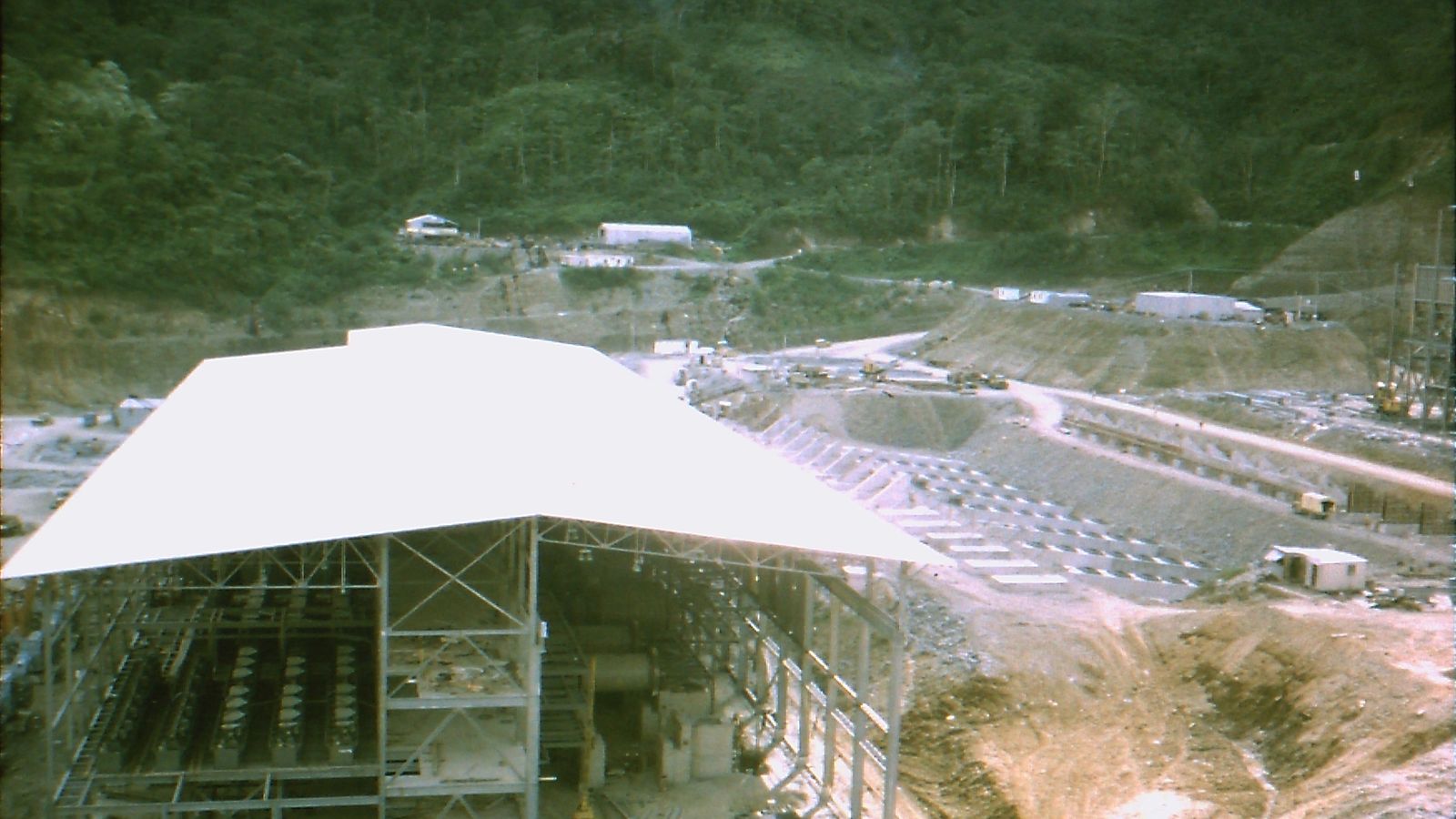
Following the war, Bougainville once again fell under Australian administration, where it remained until the island was transferred to Papua New Guinea when it gained independence. There had been some small attempts made to gain sovereignty over the years, but Papua New Guinea’s government forgot all about those when gold and copper reserves were discovered on Bougainville. A huge mine was set up, with thousands of workers pouring in from Australia, New Zealand, and Papua New Guinea, all of which upset the natives of Bougainville, who felt that the resources, and profit from it, were rightfully theirs, and not the property of Papua New Guinea.
While conflict brewed for quite some time, violence officially erupted in 1988. Papua New Guinea Defense Force arrived on the scene, and began battling with the Bougainville Revolutionary Army, or BRA. During this fighting, there were human rights accusations on all sides, with villages being burned down, kidnappings, and torture. Eventually the government forces withdrew, and the BRA declared independence.
While Papua New Guinea set up a blockade and prepared their next move, the BRA established an interim government and a quick election, but the power vacuum on the island was too much to bear, and chaos soon erupted. The BRA looted villages as they pleased, and the island broke into several battling factions, mostly drawn up along traditional clan lines.
The civil war continued until 1998, by which point at least 15,000 people had lost their lives. By the 21st century, peace talks had finally gotten somewhere, and the conflict largely came to an end, mostly thanks to an agreement that in 20 years, a referendum would be held regarding Bougainville’s independence.
Those 20 years came and went, and in 2019, the referendum was held, with the natives of Bougainville voting overwhelmingly in support of independence. Papua New Guinea has acknowledged these results, and, to everyone’s pleasant surprise, has announced that, following the official stamp of approval from the government, Bougainville will be granted its independence in 2027.
So, it seems that in just a few short years, we very likely will have a new youngest nation.
New Caledonia
Watch the Video
Open Video
Video Briefing
5 Countries that Might Exist Before 2030
New Caledonia is an archipelago in the Pacific Ocean, to the east of Australia. But don’t let its location fool you, these islands are French soil. New Caledonia was annexed by the French Empire in 1853, and soon became a penal colony where prisoners were sent to settle. But there wasn’t much interest in the territory at first, and out of 4,000 or so prisoners sent, less than 100 actually remained on the island, with the rest returning to France.
That all changed when nickel was discovered in 1864, and mining ventures were quickly set up, bringing in foreign workers to dig up the islands’ huge profits. But excluded from these profits were the native Kanak people, who were outlawed from most employment and confined to small reservations. Many Kanak tribes ultimately united and began fighting a war of independence against France, but they were unsuccessful against the mighty empire.
In 1946, New Caledonia officially became an overseas French Territory, granting automatic French citizenship to everyone on the island, but this wasn’t the desire of many, and the 1960s and 1970s saw periodic violence, resulting in France negotiating and agreeing to an eventual independence referendum. But the violence returned in the 1980s, ultimately leading to roadblocks, gunfights, and a hostage crisis that left 24 people dead.
Things have since calmed down significantly, and authority over the island has been slowly shifting away from Paris and into the hands of the local government. But as for outright independence, things aren’t so clear.
Among the Kanak people, the overwhelming majority want New Caledonia to be independent from France, but, while they do make up more than 40% of the islands’ inhabitants, they aren’t the only ethnicity present there. There are many of European, Vietnamese, and Indonesian descent, most of whom aren’t too passionate about losing their close economic ties with the European Union and the benefits that accompany being French.
But, in accordance with negotiations made during the crisis many years ago, independence referendums have been held. In 2018, the results were close, with 56% voting to remain a part of France. A second referendum in 2020 closed the gap even further, with 53% voting against independence. The trend may have continued, but the third referendum in 2021 was boycotted by pro-independence groups, resulting in the lopsided result of 96% against independence.
The boycott was called for out of an abundance of caution during the pandemic, as many Kanak people had lost loved ones to the virus. However, anti-independence groups accused the Kanak of trying to postpone the vote not because of the pandemic, but because they were scared to lose.
Regardless, the previous referendums show that New Caledonia is split almost 50/50 on whether or not to break away from France, and this percentage is possibly shifting. If the pro-independence groups continue to gain traction in the coming years, we may see New Caledonia officially cutting ties and starting fresh as an independent nation.
Catalonia
Catalonia is an autonomous community of Spain, located in the northeast of the country. It’s well known for its largest city, Barcelona, and that many residents here not only speak Spanish, but also Catalan, a distinct language in the Latin family. Catalonia has wrestled with independence for hundreds of years, first revolting against Spanish rule in the 17th century during the Franco-Spanish War, declaring itself a sovereign republic under French rule. This only lasted for a short time until the Spanish reconquered it, but the sentiment that Catalonia is in some way separate from Spain has stuck around over the years, and has gained particular support since 2010.
Following the election of politicians from several pro-independence parties, such as the Republican Left of Catalonia, in 2013 Catalan leaders drafted the Declaration of Sovereignty and of the Right to Decide of the Catalan People, essentially a proclamation that Catalonia was its own nation and deserved the right to vote on such an outcome.
When it reached the Spanish government, it was struck down as unconstitutional, and in protest an estimated 1.6 million people took to the streets and formed a massive human chain, called the Catalan Way. The chain stretched for over 400 kilometers, or 250 miles, almost rivaling the huge human chains that were formed in places like the Baltics or Ukraine as they fought for independence from the Soviet Union.
A few weeks later, it was announced that a referendum would be held, which was barred by the Spanish government but went ahead regardless, and when the votes were counted up 81% were in favor of independence.
Things fizzled out for a bit as the pro-independence parties struggled with some infighting, but another big moment was the 2016 election of Catalonian president Carles Puigdemont, who, while taking his oaths, omitted the oath mentioning loyalty to the Spanish crown and government.
He then announced that with or without the Spanish government’s permission another referendum would be held. The government of course responded by saying “that referendum will not take place because it is illegal.” But the Catalonian parliament approved it regardless and the voting was underway on October 1st, despite the Spanish government’s attempts to close down polling stations and arrest its organizers. Reportedly, this referendum showed a 90% support for independence, an increase of 9% in just a few years.
Things really came to a head in 2018, when several independence leaders were suddenly arrested and tried by the Supreme Court of Spain, charged with rebellion and misuse of public funds. The president and his cabinet fled into exile, and when several of the politicians were found guilty on these charges in 2019, massive protests erupted.
Tear gas was fired at protestors, only enraging more citizens who began swarming Barcelona. On October 18th, more than 500,000 protestors were counted throughout the city. For several days, the peaceful protests morphed into riots as the sun went down. Eventually the protests died down, and a couple years later the jailed politicians were pardoned by King Felipe VI.
In the 2021 election, pro-independence parties won a majority of the vote, and now control 70 of the 74 seats in the Catalonian parliament. It’s highly likely that in the coming years, more referendums will be introduced, as the push for sovereignty does not seem to be dying down.
But Catalonia faces an uphill battle, especially in the international scene. Several countries refuse to support the cause, not because they don’t sympathize with the Catalan people, but because many have somewhat similar situations within their own borders. A prime example of this is the United Kingdom, who, if they were to support Catalonia, would be opening a quick door for, say, Scotland to declare independence on similar grounds.
But for the majority of nations around the world not facing such issues, the topic of Catalonia has been regarded as an issue purely up to Spain, with nearly every UN member around the globe releasing a statement saying that they respect the sovereignty of Spain and hope for a peaceful agreement to be reached. The only international support has been from breakaway republics, like South Ossetia and Abkhazia, and regional governments, like Canada’s Quebec and Italy’s Sardinia.
Ambazonia
Our final region vying for independence takes us to central Africa, to the nation of Cameroon, specifically, Cameroon’s western provinces. It is here that the majority of people speak English, as opposed to the rest of the country, which is dominated by French. The reasons for this, of course, date back to colonialism, when the French controlled the majority of the country, called French Cameroon, while the British administered just a small strip of territory in the west, called Southern Cameroons.
In 1961, during decolonization, the people of Southern Cameroons were given two options by the United Nations: join French Cameroon to the east, or join Nigeria to the west. What they didn’t know was that the UN had also listed a third option, outright independence, which had been removed from the polls by the British organizers. They voted to unite with the rest of Cameroon, but only under the condition that they would receive some autonomy.
The Francophone government quickly agreed to this, as they feared a secession and the loss of the region’s natural resources. However, this autonomy was eroded during a tumultuous 1970s in which a new constitution was adopted in Cameroon, stripping the provinces of their autonomous status and putting more power in the hands of the country’s president.
In 1993, representatives from Southern Cameroons met and declared that if the previous federal republic was not restored in a timely manner, that the Anglophone regions would secede and declare independence. The organizers claimed an overwhelming majority vote and even wrote a letter to the UN stating that the move was in protest to what they viewed as an annexation of their territory and the suppression of their rights that they had been promised in the 1960s. A common sentiment is that Ambazonia was decolonized by Europeans, only to be recolonized by fellow Africans.
The largest rebelling group at the time was the Southern Cameroons National Council, or SCNC, which quickly became a target for the federal government. Several raids, shootouts, and imprisonments later, the SCNC had been crushed, and the organization was declared illegal.
But this wasn’t the end. Soon, a new group rose from the ashes, declaring the region independent, and now officially under the name Ambazonia. In 2016, protestors fighting for the Ambazonian cause organized mass demonstrations and workers’ strikes, crippling the economy in the resource-rich areas. Cameroon shut this down as best it could, but the situation quickly devolved into violence as Cameroonian troops clashed with the Ambazonia Defense Forces.
Martial law was implemented, curfews, and strict no-travel policies in an attempt to contain the rebellion. At one point, the government shut down the internet in the Anglophone areas for more than three months in an attempt to cut off their communication.
And there doesn’t seem to be much of an end in sight. Both sides have been accused of various human rights abuses, to such an extent that the United States and Germany have withdrawn the majority of their military cooperation with Cameroon, which included intelligence sharing and counter-terrorism training.
As it stands right now, supporters of Ambazonia assert that the region is rightfully governed by an Interim Government, while Cameroon continues to ramp up their efforts to quell the movement. And despite the federal efforts, most of the English-speaking territory is currently under the de facto control of Ambazonian forces. In the coming years, there are 3 likely outcomes for the conflict: 1, the region is recaptured by Cameroon, and strict laws are implemented to prevent another uprising. 2, the conflict reaches a sort of stalemate and negotiations lead nowhere. Or 3, Ambazonia manages to secure some foreign support, enough to negotiate independence with Cameroon, and the conflict can come to an end with a brand-new nation in central Africa.
Key Takeaways
- Many of the world’s borders are relatively new, formed through decolonization and unification.
- Several regions, including West Papua, Bougainville, New Caledonia, Catalonia, and Ambazonia, are actively seeking independence.
- Bougainville is set to become an independent nation in 2027, following a referendum and agreement with Papua New Guinea.
- Catalonia’s push for independence faces significant international resistance due to similar internal issues in other countries.
- Ambazonia’s struggle for independence from Cameroon has led to widespread violence and human rights abuses.
SideProjects Editors
The SideProjects editorial team researches, fact-checks, and structures explainers about the lesser-known tales, side narratives, and spin-offs behind major historical and contemporary subjects.
Frequently Asked Questions
What is the Republic of West Papua?
The Republic of West Papua, or Papua Barat, is a proposed nation comprised of several provinces that are currently part of Indonesia, located in the Western New Guinea region.
Why do people in West Papua want independence?
Many people in West Papua feel that given their different ethnic and cultural background, the region deserves to govern itself and have undisputed control over its natural resources.
What is the history of Bougainville’s struggle for independence?
Bougainville’s modern history begins in 1899 with German colonization, followed by changes in ownership and conflicts, including a civil war from 1988 to 1998. A referendum in 2019 overwhelmingly supported independence, with Papua New Guinea acknowledging the results and planning to grant independence in 2027.
What is the current status of New Caledonia’s independence movement?
New Caledonia is split almost 50/50 on whether to break away from France. Recent referendums have shown close results, with the most recent one boycotted by pro-independence groups due to the pandemic. The future of New Caledonia’s independence depends on the shifting percentages and potential future referendums.
What is the significance of Catalonia’s Declaration of Sovereignty?
The Declaration of Sovereignty and of the Right to Decide of the Catalan People, drafted in 2013, proclaimed that Catalonia was its own nation and deserved the right to vote on independence. This led to several referendums and protests, with a significant portion of the population supporting independence.
What are the main issues facing Catalonia’s independence movement?
Catalonia faces an uphill battle, especially internationally, as many countries refuse to support the cause due to similar situations within their own borders. The Spanish government has also taken legal actions against independence leaders, leading to protests and riots.
What is the background of Ambazonia’s struggle for independence?
Ambazonia, located in Cameroon’s western provinces, is predominantly English-speaking, unlike the rest of the French-dominated country. The region was promised autonomy during decolonization but saw this eroded in the 1970s, leading to a declaration of independence in 1993 and ongoing conflicts.
What are the potential outcomes for the conflict in Ambazonia?
There are three likely outcomes: 1) Cameroon recaptures the region and implements strict laws, 2) the conflict reaches a stalemate with no negotiations, or 3) Ambazonia secures foreign support to negotiate independence.