

We tend to think of humans as being a unique species. Humans are part of the Great Ape family, with humans and chimpanzees having evolved from a shared ancestor. While it’s easy to think that this evolution into modern humans was a linear progression, it was actually anything but. It’s been over 6 million years since the first primitive hominins were born, representing the first human species to walk the Earth. Since then, there have been at least 20 different species of humans that existed.
The exact number is difficult to pin down, both because of scientific disagreement on how much variety is necessary for something to be considered a different species and because newly discovered fossils are continually showing new, unidentified species of humans. But while there is some debate on the total number, there are 21 different species of humans on whom scientists almost universally agree.
While some of these died off millions of years ago, there were actually 8 different species of humans that shared the Earth with modern Homo sapiens. Although these other human species lived alongside modern humans, we can’t say that they coexisted with one another. After all, we’re the only species left, and it’s believed that the expansion of modern humans out of Africa and into other parts of the world is what resulted in the extinction of many other species of human life on the planet.
Key Takeaways
- Humans evolved from a shared ancestor with chimpanzees, with at least 21 species identified.
- Eight human species coexisted with modern Homo sapiens, but all others went extinct.
- Neanderthals and Denisovans interbred with modern humans, contributing to our genetic makeup.
- Homo erectus was an early human species with a significant brain size increase and tool use.
- Flores Man, or Homo floresiensis, was a small-statured human species with advanced tool use.
Today we’ll be looking at five species of humans who once lived alongside us, some of whose DNA has continued to be passed down to present day.
Homo erectus
Though a dozen or so species of humans predate Homo erectus, it is one of the most well known early species from the genus Homo. Though the first Homo species, Homo habilis, evolved in Africa, it is unclear where Homo erectus originally developed. The oldest known fossils of Homo erectus date back just over 2 million years, with similarly aged remains having been found in both Africa and Eurasia.
This was an important species in the evolutionary chain for humans, as their brains doubled in size compared to Homo habilis, something that happened in a relatively short period of time. They were also the first human species to have a flat face with a prominent nose, and they may have been the first to see a dramatic reduction in body hair compared to other members of the Great Apes family.
Many of the details surrounding Homo erectus remain matters of debate, thanks to limited evidence from millions of years ago. For example, although it is almost universally accepted that Homo erectus was the first species of humans to use fire, the extent to which fire was utilized and the effects it had on human development are much more contested. Some experts credit the use of fire to cook meat with the increased brain size, as well as using it to explain how the species could have survived in Eurasia during the ice age.
While this is a plausible explanation, cooking doesn’t seem to have become more common until around 400,000 years ago. Before that, it is possible that Homo erectus had designated “fire keepers”, people who kept naturally occurring fires burning as long as possible. Even the earliest Homo erectus sites that have been claimed to show fire usage only date back about 1.5 million years, 500,000 years after this large brained species was spread across Africa and Eurasia, so it’s hard to say if fire was the cause. Admittedly, it is notoriously unlikely for something like a fire pit to actually remain identifiable for millions of years, which is why there’s so much debate.
However, something that is not debated is that Homo erectus were not just hunters, but apex predators. Though they engaged in both hunting and gathering, there is abundant evidence showing that they hunted the largest animals available for food. It’s possible that they even hunted animals to extinction, as the exodus of Homo erectus from the Eastern Mediterranean Region lines up with the extinction of the straight-tusked elephant.
As for how these humans functioned socially, we aren’t really sure. They lived in groups, and evidence suggests they may have had a division of labour based on sex, with hunting parties being entirely male. This is despite the fact that there was minimal sexual dimorphism between the sexes, with males and females being the same size. There’s no way to know from fossil records alone, but the fact that they were the same size implies that Homo erectus may have been monogamous. After all, it’s a lot harder for males to keep a harem under control if they aren’t bigger than the females.
But while Homo erectus may have first appeared millions of years ago, they stood the test of time far better than any other human species. The most recent remains of these early humans appeared on the island of Java, dating back only a little over 100,000 years ago. Java was also the location of the first Homo erectus fossils ever discovered, back in the late 1800s.
Their presence on islands suggests that these may actually have been a seafaring people as well, and those living on Java may have outlasted the rest of the species thanks to their isolation from other humans. But for a good 200,000 years or so, Homo erectus and modern humans walked the same Earth.
Homo naledi
Homo naledi is the most recently discovered human species, and the discovery has raised a lot of questions. Despite existing at the same time as modern humans, Homo naledi and Homo sapiens couldn’t possibly be more different, to the point that some have even called into question whether this species should be part of the Homo genus.
The discovery was made in 2013, at the bottom of a 40 foot vertical drop in the Rising Star Cave system in South Africa. Despite the species having never been known before, there were a total of 1,550 bones from at least 15 different people, containing all manner of bones from complete skulls and feet to inner ear bones. These specimens ranged from infants to adults, both male and female, making it the most comprehensive fossil record of any hominin species ever found.
Because the discovery is so new, and there was only the one large cache of bones found in a single location, not much is yet known about the Homo naledi. But perhaps the most interesting elements about these remains is how much they resembled more primitive human species, like Australopithecus africanus, rather than other members of the Homo genus. It’s unclear exactly where their evolution diverged, with them possibly being a sister species to either Homo habilis or Homo erectus.
Either way, there are two key physiological differences that set them apart from other, more modern human species. One is that their brains are comparatively very small. While Homo erectus saw a sudden doubling in the size of the human brain, Homo naledi’s brain was only about a third the size of modern humans. Despite this, their skeletal structure shows that their hands were adapted for making and using tools, indicating a level of human intelligence. There is also a rather controversial belief that the abundance of bones in a singular location is because the cave was used as part of ritual burials. Such a theory would have massive implications with regards to the mental capacity of these humans, but it is essentially just speculation at this point.
The other interesting difference is that their anatomy suggests this was a species of tree-dwelling humans. Humans are unique, as we are the only mammals that are primarily bipedal, with the only other bipedal animals being birds. Bipedalism, while having its disadvantages, is extremely energy efficient and makes humans exceptionally suited for long-distance running and traveling. Though Homo naledi was capable of humanlike walking, their anatomical structure is better designed for climbing and hanging from tree limbs rather than walking long distances.
Of course, while that’s all fascinating, it just makes them sound like a very early ancestor of modern humans, more ape than man. However, the fossils discovered were dated as being only 200,000-300,000 years old. This doesn’t give us any indication as to when the species first evolved, but Homo naledi was living in Africa at the same time that modern humans evolved there.
This potentially means that they may have survived even longer than Homo erectus did, and if not it raises a lot of questions about the evolutionary paths taken by various human species. Until we discover more examples of Homo naledi fossils, there are going to be a lot of unanswered questions that have the potential to reshape our understanding of human evolution.
Flores Man, aka The Hobbits
We generally think of humans in the past as being shorter on average. If you’re six feet tall you may have difficulty trying to walk through a house built in the 1600s, and we assume that would extend throughout all human species. This wasn’t universally true, as Homo erectus was comparable in height to modern humans, but many species of early humans were indeed smaller, with the average Homo naledi being just under 5 feet.
Watch the Video
Open Video
Video Briefing
5 Human Species Who Lived Alongside Us
But when it comes to diminutive humans, none of the other species can compare to Homo floresiensis. With adults averaging a mere 3.5 feet tall, barely over a meter, this species was quickly nicknamed the Hobbits. Just make sure to never use that word when advertising lectures or exhibits featuring Homo floresiensis, or the ghost of J.R.R. Tolkien will sue you from beyond the grave, as others have already experienced.
This species, also known as Flores Man, was discovered in Liang Bua Cave on the island of Flores, Indonesia. Some speculated that the specimens discovered were actually just a group of Homo erectus who suffered from insular dwarfism, a condition where a species rapidly decreases in size over generations. This is most common on small islands such as Flores, and the island is currently home to pygmies for this exact reason.
However, while insular dwarfism is likely the cause of Flores Man’s small stature, it is widely believed to be a separate species from Homo erectus. Aside from their height, the other most notable feature about this species of human is their small brain size, even smaller than that of Homo naledi. This supports the theory of insular dwarfism, as research into animals such as pygmy hippos has shown that the brain size decreases faster than the rest of the body under these conditions.
But that doesn’t mean these humans were stupid. The prefrontal cortex, the area of the brain associated with cognition, was the same size as in modern humans. This is further evidenced by their use of tools. All the known specimens of Flores Man were discovered in Liang Bua Cave, and the bones discovered thus far have been identified as coming from 13 different individuals.
While thirteen specimens may seem like a great start, it pales in comparison to the over 10,000 stone tools that were found in the cave with their bodies.
Most of these tools were lithic flakes, which are shards of rock broken off of a larger rock to use as tools. That may sound simple, but it required precise knowledge and control over the angle and amount of force being used to break the flakes off from the stone core. As far as Stone Age tools go, these were relatively advanced. Based on the type of tools found, it is believed that Flores Man may have hunted large animals and been skilled at butchering, cooking their meat with fire.
As with Homo naledi, it is difficult to know when this species first evolved, as the entire fossil record is from a single location. However, the fossils found on Flores Island are dated as being only 50,000-60,000 years old. Not so coincidentally, the apparent date of Flores Man’s extinction happens to line up with when modern humans first arrived in the area.
Neanderthals
Neanderthals, or Homo neanderthalensis, are perhaps the most well known species of humans who lived alongside us, and one with whom we do seem to have coexisted. This is most clearly evidenced by the Neanderthal DNA that the majority of modern day humans possess. Those descended from Europeans and West Asians average about 1-2% Neanderthal DNA, while those descended from East Asia average about 2.5%. People whose ancestors remained in Africa typically have 0% Neanderthal DNA, as Neanderthals evolved in Eurasia and never traveled to Africa.
However, we aren’t sure exactly when Neanderthals first came onto the scene. Various studies produce estimates ranging from just over 300,000 years ago to almost 800,000 years ago, but the oldest definitively Neanderthal fossils thus far discovered are only about 430,000 years old. This suggests that the majority of the time Neanderthals were around they were sharing the Earth with modern humans, though for much of that time the two species didn’t interact. It wasn’t until around 120,000 years ago when the first wave of Homo sapiens migrated out of Africa that the two would have crossed paths.
And once they did cross paths, they wasted no time in breeding with one another, hence the Neanderthal DNA in most of us. That modern humans would have had both the ability and the desire to interbreed with Neanderthals suggests that they weren’t that different from us, something that all evidence seems to support. For a long time, the largest perceived difference was that modern humans were vastly more intelligent than Neanderthals, though recent research has called this into question as Neanderthals actually had larger brains than we do. There’s nothing that suggests we were any smarter than they were, and culturally we appear to have been very similar.
The main differences between modern humans and Neanderthals were physical. Neanderthals were about 4 inches shorter on average, 5.5 feet for men and 5 feet for women, and they were stockier and more massive. This is believed to be because of the colder climate of Eurasia during the ice age. They had wider hips, larger, barrel shaped ribbed cages, and shorter arms and legs. This would have allowed them to conserve body heat better, something that was absolutely necessary in the colder climate.
DNA analysis also shows that Neanderthals had much more fast-twitch muscle fiber than modern humans, making them better sprinters. As we previously mentioned, modern humans excel at long-distance running and endurance. By having more slender bodies built for longevity rather than speed, the Homo sapiens in Africa could hunt prey by chasing them to the point of exhaustion, or even hyperthermia. This was not going to be an option in the colder climate, so Neanderthals had to be built for speed in order to survive.
But again, culturally the two species were very similar. Neanderthals lived in small groups of hunter-gatherers, used tools, cared for their sick, buried the dead, and engaged in music and art. There’s even some evidence that Neanderthals may have created abstract art, though the markings identified as such could also have been haphazardly made by a bear’s claws.
In terms of their societies, the big difference between Neanderthals and modern humans was size. Neanderthals lived in isolated groups of only about 10-30, while modern humans traveled in larger groups that were more interconnected with one another. This allowed modern humans to divide labour by sex, with men hunting and women and children foraging, while Neanderthals likely all took part in hunting, even their young.
Neanderthals shared Eurasia with modern humans until going extinct about 40,000 years ago, and the size difference of their groups may have played a big part in that. Since interbreeding was common, the isolated bands of Neanderthals may have simply been assimilated into the larger groups, with their DNA becoming diluted over time. Not only did modern humans travel in larger groups, but they were more numerous in general. Once assimilated into a uniform society, the physical traits of Neanderthals that made them better adapted to the cold may have become less appealing in the warming climate following the end of the ice age.
While aggression and competition from modern humans is believed to have caused the extinction of multiple human species, it’s quite possible that Neanderthals were just bred into extinction after the species united as one.
Denisovans
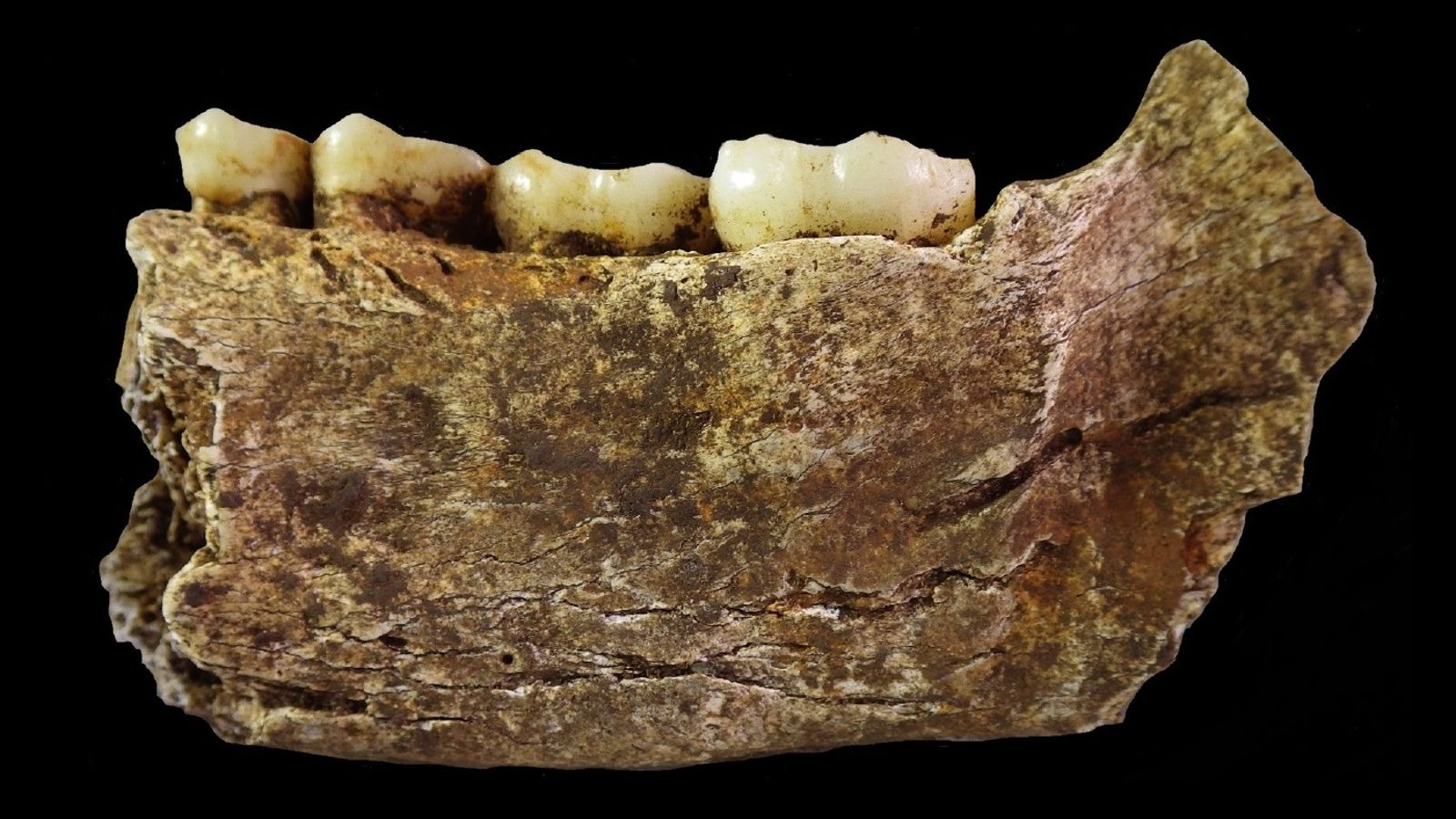
The existence of the Denisovans was only discovered recently, in 2010, and there are very few samples. In fact, there is so little to work off of that they haven’t even been given a proper taxonomic name yet. This species of humans is simply known as Denisovans, named after the Denisova Cave in Siberia where the first bones were discovered.
However, while very little is known about this species, the discovery was still incredibly important for understanding the evolution of human species. Modern day Melanesians, aboriginal Australians, and Filipino Negritos all possess roughly 5% Denisovan DNA. Most of what is known about Denisovans comes from their DNA, as samples were able to be extracted from a finger bone and analyzed.
In simple terms, if we share 99% of our DNA with Neanderthals, then we only shared 98% with Denisovans. Those two species were more closely related to each other than to modern humans, and the genetic variation indicates that our evolutionary path diverged from the Denisovans over a million years ago. More interestingly, research indicates that the Denisovans were descended from an as of yet unidentified species of ancient humans.
The presence of such a high amount of Denisovan DNA in many modern humans suggests that there was a great deal of interbreeding between this species and modern humans. However, we also know that they interbred with Neanderthals as well. This brings us to perhaps the most interesting discovery from Denisova Cave thus far. Despite knowing that interbreeding among human species was common, for the first time ever researchers found a first generation hybrid.
The specimen, nicknamed “Denny”, was a teenage girl with a Neanderthal mother and Denisovan father.
With the current samples found dating to as recently as 50,000 years ago, it’s quite possible that the Denisovans may also have been bred into extinction with modern humans. There’s so little information to go on right now that it’s hard to definitively say a lot about this species. But since the few bones we’ve found so far have revealed the discovery of a recent human species, the existence of an unknown archaic human species, and a first generation human hybrid, this is definitely a topic worth keeping an eye on for big new discoveries.
Key Takeaways
- Humans evolved from a shared ancestor with chimpanzees, with at least 21 species identified.
- Eight human species coexisted with modern Homo sapiens, but all others went extinct.
- Neanderthals and Denisovans interbred with modern humans, contributing to our genetic makeup.
- Homo erectus was an early human species with a significant brain size increase and tool use.
- Flores Man, or Homo floresiensis, was a small-statured human species with advanced tool use.
SideProjects Editors
The SideProjects editorial team researches, fact-checks, and structures explainers about the lesser-known tales, side narratives, and spin-offs behind major historical and contemporary subjects.
Frequently Asked Questions
How many different species of humans have existed?
There have been at least 20 different species of humans that existed, with 21 different species of humans on whom scientists almost universally agree.
Which human species is known for its small stature?
Homo floresiensis, also known as Flores Man or the Hobbits, is known for its small stature, with adults averaging about 3.5 feet tall.
What is the significance of the Homo naledi discovery?
The discovery of Homo naledi raised many questions due to its unique characteristics, such as a small brain size and anatomical adaptations for tree-dwelling, despite living around the same time as modern humans.
How did Neanderthals adapt to the colder climate of Eurasia?
Neanderthals had wider hips, larger barrel-shaped rib cages, and shorter arms and legs, which helped them conserve body heat. They also had more fast-twitch muscle fiber, making them better sprinters.
What is known about the Denisovans?
The Denisovans were discovered in 2010 and are known primarily through DNA analysis. They interbred with both modern humans and Neanderthals, and their DNA is present in modern-day Melanesians, aboriginal Australians, and Filipino Negritos.
What evidence suggests that Homo erectus used fire?
While it is almost universally accepted that Homo erectus was the first species of humans to use fire, the extent to which fire was utilized and the effects it had on human development are much more contested. Some experts credit the use of fire to cook meat with the increased brain size.
How did Homo erectus function socially?
Homo erectus lived in groups and evidence suggests they may have had a division of labor based on sex, with hunting parties being entirely male. Despite minimal sexual dimorphism, the fact that males and females were the same size implies they may have been monogamous.
What is the significance of the Denisova Cave discovery?
The Denisova Cave discovery revealed the existence of a recent human species, the presence of an unknown archaic human species, and a first-generation human hybrid, making it a significant find for understanding human evolution.
How did modern humans contribute to the extinction of other human species?
The expansion of modern humans out of Africa and into other parts of the world is believed to have resulted in the extinction of many other species of human life on the planet, possibly through aggression, competition, and interbreeding.
What tools did Flores Man use?
Flores Man used lithic flakes, which are shards of rock broken off of a larger rock to use as tools. These tools required precise knowledge and control over the angle and amount of force being used to break the flakes off from the stone core.