

Human psychology is a complicated and fascinating thing. Even categorizing psychology can be difficult. Is psychology a science? And if so, is it a social science or natural science? Both of those questions are the subject of a lot of debate, with some pretty heated discourse.
Of course we aren’t here to answer those difficult questions today, but what we can do is correct some misconceptions that you probably have about psychology. Psychologists and psychology have become a staple of popular media, but they often get things wrong. These mistakes are so ubiquitous that there are a lot of things people misunderstand about psychology as a result.
We’ve already discussed topics like left vs. right brain dominance, personality tests, and learning styles on this channel, so today we’ll be looking at five more things about psychology that you’re probably wrong about.
Key Takeaways
- Negative reinforcement in psychology means removing an unwanted stimulus to encourage desired behavior.
- Obsessive Compulsive Disorder (OCD) and Obsessive Compulsive Personality Disorder (OCPD) are distinct conditions.
- Therapists generally avoid giving direct advice to promote patient autonomy and critical thinking.
- Sigmund Freud’s theories are largely discredited, but he influenced the development of modern psychotherapy.
- Polygraph tests are unreliable for detecting lies due to their inability to distinguish anxiety from other emotions.
Negative Reinforcement
Most people misunderstand the concept of negative reinforcement, thanks to how the principle is presented in popular culture. It’s very common in movies and TV shows to depict the concepts of negative reinforcement and positive reinforcement as the carrot and the stick. In these examples, desired behaviour is rewarded with a treat while undesirable behaviour receives a punishment. One of the most common examples of this is the depiction of lab mice being given electric shocks as a supposed form of negative reinforcement to condition their behaviour.
However, in psychology the words “positive” and “negative” in this context aren’t referring to things that are deemed good or bad by the subject. Instead, it is referring to the addition or removal of stimuli to reward, or reinforce, desired behaviour.
As an example, let’s take a classroom of children. It is well understood that if the teacher were to give the class an ice cream party as a reward for all getting A’s on a test, this would be a form a positive reinforcement. A new stimulus that is desirable to the children and would otherwise not have been present is being introduced as a way to reinforce their behaviour of performing well in class.
On the other hand, if the teacher were to instead reward the class by not assigning any homework for the day, that would be a form of negative reinforcement. An undesirable stimulus that already existed, in this case homework, is being removed to reinforce the students’ behaviour. In short, reinforcement is always done as a reward for the desired behaviour, and whether it is positive or negative reinforcement depends on whether something unwanted is being taken away or something desired is being given.
When it comes to the pop culture depiction of things like electric shocks used to train behaviour, this is an example of punishment, not reinforcement. In psychology, reinforcement is used to encourage desired behaviour and punishment is used to train against undesired behaviour. And just like with reinforcement, there are both positive and negative forms of punishment. The electric shocks are an example of positive punishment (ironically the exact opposite of negative reinforcement), because they are introducing a new stimulus to the subject to affect their behaviour, but this time it is a stimulus that the subject wants to avoid.
Going back to the classroom example, positive punishment would be something like giving a student detention for misbehaving during class. Or, for those viewers that are old enough to have experienced this, it could have been getting violently smacked around by a nun in Catholic school. A form of negative punishment in a classroom setting would be something like canceling recess.
Even though the psychological definition for negative reinforcement may be counterintuitive for a lot of people, especially thanks to it being so commonly misrepresented in media, it does make a lot more sense when you break down the words separately. Reinforcement is always a reward whereas punishment is always a, well, punishment. Positive means adding a new stimulus and negative means removing an existing one.
Obsessive Compulsive Disorder
Characters suffering from Obsessive Compulsive Disorder (OCD) are common in media. Often the audience is simply supposed to understand that the characters have OCD, though in some cases like the TV show Monk, for example, the titular character was officially diagnosed with the disorder. However, many depictions of OCD are actually conflations of two separate and distinctly identifiable disorders.
In addition to OCD there is also Obsessive Compulsive Personality Disorder, or OCPD. So what exactly is the difference between these two conditions? To start, OCD is a mental disorder whereas OCPD is a personality disorder. That may sound like a pedantic distinction, but it really is significant.
As a personality disorder, OCPD is something that a person is likely born with. Symptoms don’t usually start to manifest until adolescence and don’t reach the level where they can be diagnosed until adulthood, but the condition was always present. OCD, on the other hand, can develop later in life as a result of certain factors like traumatic events.
While there is some overlap between the symptoms of these two conditions, they each have distinct symptoms as well. Perhaps more important is the distinction between why these symptoms occur.
OCD is now its own distinct disorder, but it was previously categorized as a type of anxiety disorder. In a person with OCD, intrusive and obsessive thoughts result in repetitive behaviours meant to alleviate the stress caused by those thoughts. This includes things like a person always needing to lock and unlock a door three times or someone washing their hands 20 times in a row because of a fear of germs.
These obsessive thoughts cause stress in the person with OCD, and they recognize that their behaviour is atypical, concerning, and is negatively impacting their social relationships (all of which can then be additional sources of stress). How intense a person’s symptoms are will fluctuate based on their overall stress levels, and individual symptoms may come or go over time.
With OCPD, however, the symptoms are persistent at a constant level. Moreover, those with OCPD don’t experience intrusive thoughts or any distress over their compulsions. While it is no less likely to hinder their social relationships, people with OCPD usually feel that there is a specific purpose to their actions.
OCPD is characterized by a strict desire for control, orderliness, and perfection. In terms of behaviour you’ve seen in media, a character who feels the need to alphabetize their soup cans would be more representative of someone with OCPD than OCD.
It is also common for people with OCPD to be extreme workaholics, though the obsessive need for perfection in every tiny detail can also hinder their ability to get things done on time. This can be made worse by the fact that they are less willing to delegate responsibilities, unless they are confident that the person will perform a task in the exact way that they want it done. People with OCPD also tend to display an inflexible adherence to rules, be they an internal code of ethics or morals, or external rules like at a job or the rule of law.
Even though they are often treated as a single condition which has resulted in a lot of confusion in the general public, OCD and OCPD are really very different. Not only do the symptoms present in different ways, but the motivation and understanding of their condition is different. People with OCD feel extreme stress over their symptoms and recognize that their behaviour is the problem, while people with OCPD are more likely to get angry at others than to recognize that they might have a problem. To be fair though, that stapler was in the optimal position for workflow efficiency, so you really should have known better than to nudge it half a millimeter to the left.
Advice From Your Therapist
People have a lot of misconceptions about exactly how therapy works and what its purpose is. Although it is much less stigmatized than it used to be and most people now understand that therapy isn’t just for crazy people, there are still a lot of misunderstandings about how the process of talking to a therapist is supposed to work. This is best exemplified by the most common complaint from new patients: “Why won’t my therapist just tell me what to do?”
What many people are unaware of is that it is not a therapist’s job to give advice. In fact, it’s generally considered unethical to do so. Obviously there are some exceptions to this when it comes to things like basic self care. There’s nothing wrong with your therapist telling you to take your medications every day as directed or that you need to get more than three hours of sleep each night, but they won’t tell you to quit your job or leave your partner, even if they really, really want to.
Watch the Video
Open Video
Video Briefing
5 More Things About Psychology You're Wrong About
There are a few reasons why therapists don’t give direct advice. To start, it’s not very effective. Think about it: back when you were a teenager, how many times did your parents tell you what to do based on their understanding of you as a person and their life experiences, and how many times did you actually take their advice? Even if people think they want to be told what to do, the reality is that they don’t.
People prefer to make their own decisions, and telling someone what to do might result in them doing the opposite.
Also, there’s no guarantee that the therapist would give good advice anyway. Therapists aren’t experts in all facets of life, and the advice they give might not lead to a good outcome. If someone were to act on bad advice from their therapist, it could easily break down the therapeutic relationship that had been built between them, and it may even result in legal action.
It’s also important for a therapist not to impose their values and beliefs on a patient. Everyone is different, and what is best for one person might not be best for another. By giving direct advice, they risk trying to impose their personal values onto a person who may have completely different values. Even if the patient and the therapist have the same values, they’re still working with limited information.
A therapist will never know everything about a patient, the people in their lives, and so on. What may feel like good advice based on the information available may not actually be when given additional context of which they were unaware.
But most importantly, giving advice is generally considered the opposite of therapy. One of the goals of therapy is to give a person a better understanding of themselves and how their mind works. This means helping someone understand why they make the decisions that they do, and giving them the ability to think critically about their own decision making process so they can guide themselves to the best possible outcomes.
Even if a therapist could reliably give someone the perfect advice, it still wouldn’t be helpful to do so. That would just take away the patient’s autonomy and create a reliance on the therapist. It’s that old “give a man a fish” adage.
It’s easy to understand why people so often get this wrong. If you get an infection, you go to the doctor and get antibiotics. If you have a leaky roof, you call someone to either come fix it or tell you how to fix it yourself. Even when it comes to a longer process like improving physical health, you can hire a trainer who will create a personalized workout regimen that tells you exactly what you need to do.
The process of improving a person’s mental health is very different from how we handle most other things, and there’s no simple, prescriptive set of steps that can be taken to help someone achieve their therapy goals.
Freud’s Legacy
Sigmund Freud is almost certainly the most famous psychologist to ever live. He created psychoanalysis, what he referred to as his “talking cure”, which led to modern psychotherapy. Thanks to terms like “Freudian slip” (what Freud called parapraxis), his name can still come up frequently in every day conversation. And the common perception is that, as the most famous psychologist ever, he must also be the most well respected.
At the very least, people believe that his research must be the foundation for all of modern psychology.
And from a historical standpoint, that latter part is certainly true. The existence of psychoanalysis certainly paved the way for the creation of psychotherapy, but Freud’s theories aren’t really the foundation of psychotherapy. And as for Freud being well respected, that couldn’t be further from the truth. That’s not to say that no modern psychologists respect Freud’s work, but Freud’s legacy is an incredibly contentious topic.
To start, the entire field of psychoanalysis has largely gone by the wayside. This is because the practice, like most of Freud’s work, isn’t supported by any empirical evidence. In fact, Freud’s work is almost entirely either unprovable or discredited. Much of what Freud theorized relied on subjective analysis of things like dreams and free association, and a lot of his theories were rather insane.
For example, take the Oedipus Complex. Freud theorized that all boys want to have sex with their mothers and kill their fathers, but that they also recognize their father as their protector so they have to subconsciously suppress their homicidal urges. It’s certainly an eye catching theory, but there is no evidence to support this is true.
Freud’s most famous case study on the topic, Little Hans, involved a five year old boy who developed a fear of horses. Freud determined that the child’s mind was using the horses to symbolize his father, and his fear of them was because of his repressed sexual desires for his mother and his hostility towards his father. That may sound like an insane conclusion to draw, and it is, but Freud was notorious for his confirmation bias, twisting any situation to somehow apply to his theories.
An alternative explanation for Little Hans’s fear of horses (that Freud completely ignored) is that he was a small child and horses are really big. If he ever saw a horse kicking, biting, or otherwise acting in an unpredictable manner, it would be pretty easy to develop a fear of such a large and seemingly violent animal.
Then there was the rather misogynistic matter of penis envy. Freud believed that all girls went through a phase of development, around ages 3-6, where they wished they had male genitalia and felt inferior to men as a result of not having a penis. Again, this theory seemed to be based on nothing at all other than Freud’s own ideas. Not all of Freud’s unprovable or ridiculous ideas were related to his notion of psychosexual development, those are just the most entertaining.
However, as problematic as Freud may have been, he didn’t get everything wrong, either. He was one of the first people to discuss the concept of a subconscious mind, or at least one of the first to do so without tying it to supernatural entities like ghosts and demons. Freud also recognized that experiences a child has early in life, even experiences that they don’t remember, can help mold their personality and behaviours later in life.
Suffice to say Freud’s legacy is complicated at best, and psychologists have a lot of strong opinions about him. But while the average person may believe Freud’s theories have been profoundly important and are still in use today, his work has been heavily criticized and modern psychology has advanced to a point where he is of little relevance other than to provide historical context for the development of the field.
Lie Detector Tests
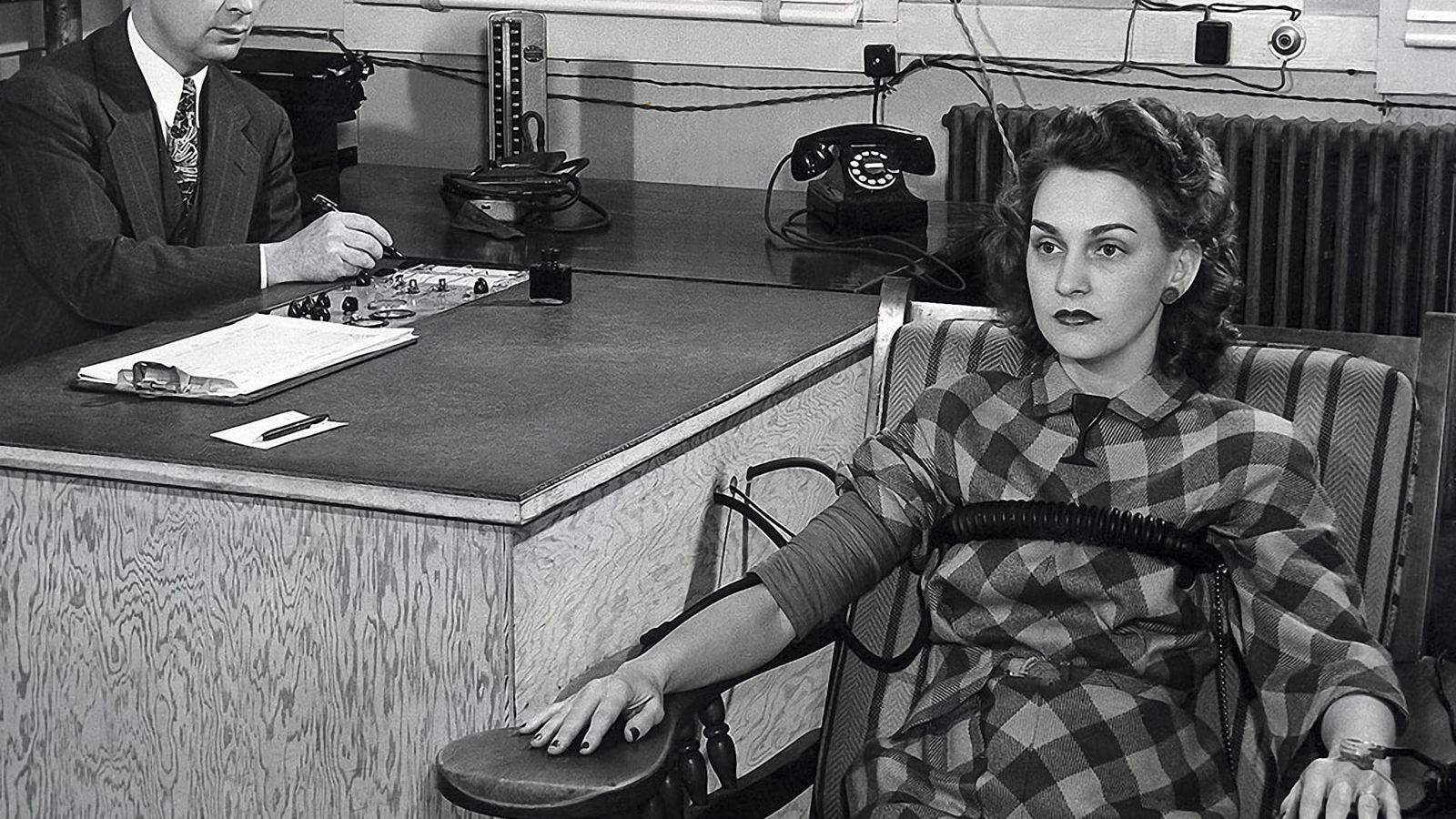
The first polygraph was created in 1921 by John A. Larson, a policeman and physiologist from California. The idea that police could use technology to determine when a person was lying was an incredibly attractive proposition, and polygraphs have been used ever since by police and employers. However, it didn’t take long for psychologists to begin to question the efficacy of these tests, with the first challenge to polygraph results as evidence in court coming in 1923, only two years after the machine was invented.
How reliable lie detectors actually were was frequently called into question, and in 1971 the first research study was published showing that they were not able to reliably tell whether or not someone was lying. Countless studies have been done since then, and they have all supported the conclusion that there is no scientific evidence that polygraph tests work. Many courts have barred polygraphs as evidence, and surveys consistently show that the general public does not find polygraph results to be convincing in a criminal trial, regardless of what the results of the test were.
That certainly makes it seem like the general public has discarded the idea that polygraphs work, but the story doesn’t end there. Other surveys showed that those who need to pass random polygraph tests at work, particularly those in which employees are required to get a security clearance, believe that these tests are an effective deterrent to security breaches. In short, it seems that the general public believes that polygraphs have at least some efficacy, just not enough to be the sole basis to convict or acquit a person on trial. So since there are still misconceptions about polygraphs, let’s address exactly why they are absolute nonsense.
To start, what does a polygraph actually do? It is designed to simultaneously monitor a number of signs of physiological arousal: heart rate, blood pressure, respiration, perspiration, and skin conductivity. The basis for measuring these functions is the belief that when a person lies it makes them anxious, and these are the physiological manifestations of anxiety. That’s all well and good, but these aren’t exclusive to just anxiety.
You can see increases in all of these metrics in a person that is angry, sexually aroused, or over-caffeinated, amongst many other possible causes. Polygraph tests do begin with a number of simple fact based questions, like a person’s name, to try to get a baseline reading to combat high numbers resulting from something like chemical stimulants, but there are still other emotions that produce these same physiological responses.
But more importantly, the main goal of a polygraph isn’t to test if a person is lying, it is to test if they are anxious on the assumption that lying makes people anxious. That may or may not be true depending on how skilled a liar the person in question is, but do you know what else makes people anxious? Being strapped to a machine and interrogated by a police officer who wouldn’t have hooked them up to the machine in the first place if they weren’t already convinced of the person’s guilt.
Unfortunately, all a polygraph can do is measure what are believed to be the physiological effects of lying while completely ignoring all other possible stimuli that could cause those same physiological responses, stimuli that include the test itself.
On the bright side, however, we will likely see polygraphs become a thing of the past within our lifetimes. Instead, we’ll have to go through this all over again with fMRI lie detectors that are designed to measure the blood flow in a person’s brain to infer (but not directly detect) whether or not a person is lying.
Key Takeaways
- Negative reinforcement in psychology means removing an unwanted stimulus to encourage desired behavior.
- Obsessive Compulsive Disorder (OCD) and Obsessive Compulsive Personality Disorder (OCPD) are distinct conditions.
- Therapists generally avoid giving direct advice to promote patient autonomy and critical thinking.
- Sigmund Freud’s theories are largely discredited, but he influenced the development of modern psychotherapy.
- Polygraph tests are unreliable for detecting lies due to their inability to distinguish anxiety from other emotions.
SideProjects Editors
The SideProjects editorial team researches, fact-checks, and structures explainers about the lesser-known tales, side narratives, and spin-offs behind major historical and contemporary subjects.
Frequently Asked Questions
What is the difference between positive and negative reinforcement in psychology?
In psychology, positive reinforcement involves adding a desirable stimulus to encourage a behavior, while negative reinforcement involves removing an undesirable stimulus to encourage a behavior. Both are used to reward desired behavior.
What is the difference between OCD and OCPD?
OCD is a mental disorder characterized by intrusive thoughts and repetitive behaviors to alleviate stress, while OCPD is a personality disorder characterized by a strict desire for control, orderliness, and perfection, without the intrusive thoughts or distress seen in OCD.
Why don’t therapists give direct advice?
Therapists generally don’t give direct advice because it’s not very effective, they might not give good advice, it could break down the therapeutic relationship, and it goes against the goal of therapy, which is to help patients understand themselves and make their own decisions.
What is the legacy of Sigmund Freud in modern psychology?
Freud’s legacy is contentious. While he is famous for creating psychoanalysis and discussing the subconscious mind, many of his theories are unprovable or discredited. Modern psychology has largely moved beyond his work, using it mainly for historical context.
Are lie detector tests reliable?
No, lie detector tests are not reliable. Numerous studies have shown that there is no scientific evidence supporting their efficacy. They measure physiological arousal, which can be caused by many factors other than lying, including anxiety from the test itself.
What is the purpose of a polygraph test?
The main goal of a polygraph test is to measure physiological arousal, assuming that lying causes anxiety. However, this arousal can be caused by many other factors, making the test unreliable.
What are some common misconceptions about psychology?
Common misconceptions include the understanding of negative reinforcement, the distinction between OCD and OCPD, the role of therapists in giving advice, the relevance of Freud’s theories, and the reliability of lie detector tests.
What is an example of negative reinforcement?
An example of negative reinforcement is a teacher rewarding a class by not assigning homework for the day after they all get A’s on a test. The undesirable stimulus (homework) is removed to reinforce the desired behavior (good performance).
What is the difference between reinforcement and punishment in psychology?
Reinforcement is used to encourage desired behavior, either by adding a desirable stimulus (positive reinforcement) or removing an undesirable stimulus (negative reinforcement). Punishment is used to discourage undesired behavior, either by adding an undesirable stimulus (positive punishment) or removing a desirable stimulus (negative punishment).
Why is the concept of negative reinforcement often misunderstood?
The concept of negative reinforcement is often misunderstood because it is commonly misrepresented in popular media, where it is depicted as a form of punishment rather than a reward for desired behavior.