
Around one in every one million people experience something colloquially referred to as savant syndrome. These savants have incredible mental abilities, usually in either math or art, despite having significant social or cognitive impairments. This condition is usually caused by some sort of neurodevelopmental disorder, with about 50% of all savants being autistic. Exactly how someone’s brain develops to be simultaneously impaired and extraordinary is unknown, with none of the possible theories achieving anything close to a consensus.
However, not all savants are born with their abilities as a result of atypical brain development. There is a small subset of savant syndrome known as acquired savant syndrome. These are people who were neurotypical until they suffered a traumatic brain injury or disease of the central nervous system, only becoming savants after experiencing brain damage.
Here are five such cases of people who became prodigious savants following traumatic injuries.
Key Takeaways
- Acquired savant syndrome occurs when neurotypical individuals gain extraordinary abilities after brain trauma.
- Derek Amato developed musical genius after a severe concussion, experiencing synesthesia that guides his piano playing.
- Jason Padgett gained mathematical and artistic abilities post-injury, seeing the world through geometric patterns.
- Orlando Serrell became a calendrical savant after a baseball hit, recalling days of the week and personal memories with precision.
- Alonzo Clemons, despite severe developmental disabilities, sculpts lifelike animals with remarkable detail after childhood brain damage.
Derek Amato
It was 2006, and Derek Amato had traveled from Colorado to his old hometown of Sioux Falls, South Dakota to see some old friends. Derek was 39 at the time, and had lived a rather quiet life up until that point. He had been bouncing from job to job for years, and at one point he spent several months sleeping in his car after he lost everything in a failed investment. Since then Derek had been working as a sales trainer for the US Postal Service, but that was about to change.
While playing around with friends, one of Derek’s buddies tossed him a football while seated inside a Jacuzzi. Derek dove in an attempt to catch the ball, his body soaring over the pool on the other end of the yard. He both missed the ball and misjudged the depth of the water beneath him, which was a mere three feet deep. He collided headfirst with the concrete floor of the pool before righting himself and standing up.
When Derek rose out of the water he was desperately clasping his head, believing that the water running down his face was blood. After walking back to the end of the pool where his friends were, Derek collapsed.
He was taken to the hospital and diagnosed with a severe concussion. Over the next few weeks, the full extent of the damage would become clear: Derek lost 35% of his hearing in one ear, suffered multiple crippling headaches each day, and experienced memory loss. However, the most notable symptom of the concussion would become apparent much more quickly.
Derek slept for nearly five days straight following the accident, presumably only waking up to take care of mandatory biological functions. On the sixth day, he finally left bed and visited his friend Rick Sturm, one of the two friends that had been present at the time of the accident. The two began talking, but Derek’s eyes noticed a dusty electronic keyboard in the corner of the room. He had learned to play rhythm guitar decently well back in high school, but that was the extent of his musical ability until that point; he hadn’t even been able to learn to read music despite his best attempts.
Once Derek sat down at the keyboard he started playing as if he had been doing so his entire life, and continued to play for six hours straight. This behaviour is pretty typical for people with savant syndrome, be it acquired or congenital. They often experience a compulsion to perform their special skill. After leaving his friend’s house, Derek immediately took his mother to a music store to show her what he could do. He purchased a keyboard of his own and immediately began composing music.
However, Derek still can’t read sheet music. His musical talent has been described as a form of synesthesia, because he claims it is the result of a series of white and black squares that appear in his field of vision at all times. Derek said that when he plays piano, he just follows the squares and they show him what to play.
While the story immediately made news in Colorado and South Dakota, eventually making headlines nationwide, this hasn’t resulted in major commercial success for Derek. He did release an album the year following his accident, and he wrote and recorded another single with deaf singer Mandy Harvey. But even if Derek didn’t become the next Beethoven, he still refers to the accident as a “beautiful disaster” (also the name of his autobiography), for showing him what he believes to be his true purpose in life.
Jason Padgett
Born in Alaska in 1970, Jason Padgett was just a regular guy with no interest in math. His parents divorced when he was 9, and Jason stayed in Alaska with his mother and brother while his father moved to Washington. Jason moved to Tacoma, Washington after high school to attend Tacoma Community College, but he dropped out to sell futons for his father’s company.
Up to that point, Jason hadn’t even passed algebra. He was of the belief that math was stupid and that there was no use for it in the real world. All he cared about was drinking, partying, and girls, and it was a night out at the bar when his life would change forever. On September 13, 2002, Jason was jumped by two men after leaving a karaoke bar.
Jason received a strong blow to the back of the head, causing him to see a flash of white light and sending him to the ground. The two men repeatedly kicked him while he was down and stole his leather jacket. After the attack Jason went to the hospital, and doctors said that he had a concussion and internal bleeding. He was given a shot of pain medication and sent home, but his life would never be the same.
Similar to Derek, Jason began experiencing a form of synesthesia. Later MRIs would show that the brain trauma had caused his visual cortex to become linked with the part of the brain that did math, but it would be years before any of this testing was done. Not only had the trauma caused synesthesia, it had resulted in OCD and PTSD. Jason became an almost complete shut in, rarely leaving his house except to buy food.
He nailed multiple blankets across all the windows to prevent light from getting in, and would wash his hands as many as 20 times in 30 minutes.
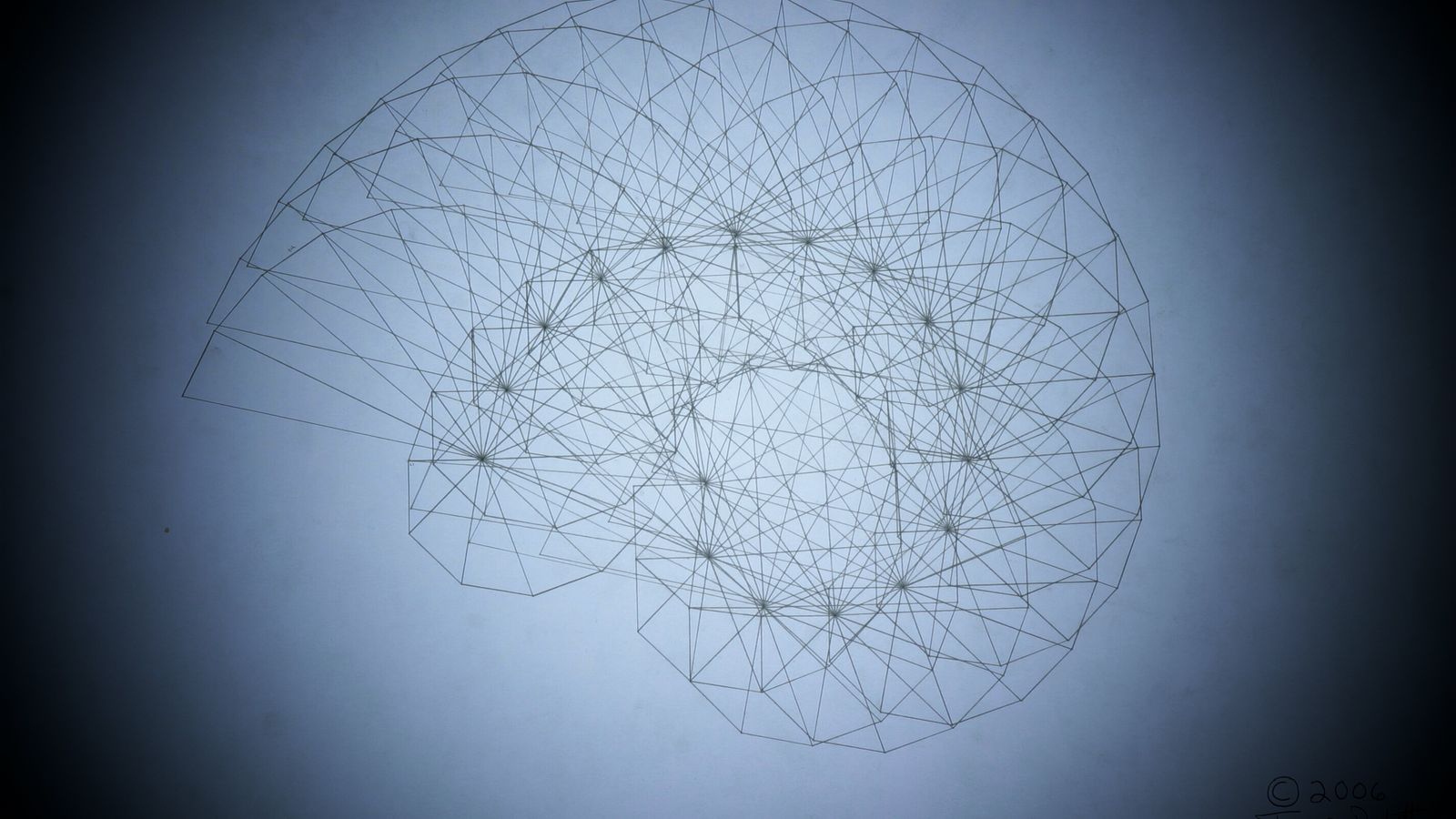
But these newfound compulsions and his fear of germs weren’t the only way that Jason’s outlook on the world had changed. His vision had changed entirely, becoming pixilated and geometrical, reminiscent of the polygons from the original PlayStation or Nintendo 64 days. The first time he really noticed it was the day after the accident when he turned on the faucet and saw the water come out not as a continuous stream, but as a series of small tangent lines pouring out of the faucet.
Jason began drawing everything he saw, a combination of shapes and mathematical equations, and did research on the internet in an attempt to figure out what it was that he was seeing. It wasn’t until about three and a half years of living like a recluse that things took a turn. Though he rarely left his house, Jason took his notebook with him everywhere when he did. He had made thousands of drawings of the mathematics that he saw in the world, many of which were fractals, extremely complex geometric structures that look kind of like snowflakes and will continue to do so even if you zoom in or out an infinite distance.
On one of these rare excursions outside his home, a man came up to Jason and asked what he was drawing. He replied, “I’m trying to describe the discrete structure of space time based on Planck length and quantum black holes.” The man happened to be a physicist, undoubtedly why the drawing had caught his attention, and he recommended that Jason take math classes at the community college to help him better understand and articulate exactly what he was seeing and drawing.
This was the real turning point for Jason, as until then his new abilities had been almost entirely a secret. While attending classes he started seeing a therapist to manage his OCD, met his wife, and, by pure chance, saw a TV show about somebody with acquired savant syndrome. This led him to seek out a doctor who later diagnosed Jason with the condition.
Since then, Jason has toured the world telling his story, given multiple TEDx Talks, and written a biography titled Struck By Genius. The book was optioned in 2014 to be adapted into a movie starring Channing Tatum as Jason, though it is unclear if the option has been scrapped. Either way, Jason continues to give talks, study number theory, and sell his artwork online.
Orlando Serrell
Watch the Video
Open Video
Video Briefing
5 People Who Became Geniuses After Injuries
Orlando was just a regular kid growing up in Virginia. He was 10 years old on the day of August 17, 1979, and he was out playing baseball with friends. During the game a baseball hit Orlando in the side of the head hard enough to knock him down. After taking a few moments to finish reeling, Orlando was able to get back to his feet and continue playing.
He had a pretty severe headache, but that was to be expected and there didn’t seem to be any other symptoms of the injury. As such, he didn’t bother telling his parents or seeking medical treatment.
The headaches persisted for a while, but once they finally subsided Orlando discovered he had a new ability: he was a calendrical savant. Calendrical savants can tell you the day of the week for any date within some period of time. For Orlando, it was every day following the accident. Interestingly, his abilities have been improving over time.
Not only does he maintain perfect recall of the day of the week for every day since the accident, his calendrical abilities have begun extending backwards before that day and even before he was born.
Calendrical savants are the most common type of savants, and it’s even an ability that anybody can learn. But while the average person will need to think for a few moments while performing calculations, savants are able to recall the information instantly, and they do so without any formulas or practice.
Orlando’s abilities go beyond just the day of the week as well, creating an essentially perfect autobiographical memory. He can recall not just the day of the week, but the weather and what he was doing on any given day since 1979 as well. His ability to recall this information has also increased over time, and his claims about the weather on any given date have been verified as 100% accurate using data from the National Weather Survey. While there’s no way to confirm for sure what he was doing every day of his life, any references in his stories to events that would have been in the news have been consistent with the actual dates of those events.
But while calendrical savants may be the most common type of savants, there’s something else about Orlando that makes his story particularly interesting. He was neurotypical before the accident, and there don’t seem to have been any negative side effects associated with the acquisition of these skills. Orlando’s social and cognitive skills remained consistent with how he was before the accident, making it a truly one of a kind story.
Unfortunately for Orlando, although the skill he acquired from the accident is absolutely remarkable, it’s not at all marketable. As of the last update available in 2020, Orlando was working as a janitor at Walmart. However, he remains one of the most famous cases of acquired savant syndrome, and since he unlocked this hidden ability without any negative consequences, Orlando’s brain may hold incredible secrets about the potential of human intelligence and memory.
Alonzo Clemons
Alonzo Clemons was born in Boulder, Colorado in 1958. There’s not much to say about his life before his accident, as it happened when he was only three or four years old. As a toddler, Alonzo had an accidental fall that caused him severe brain damage. He was left severely developmentally disabled, with an IQ measured at only about 40. Alonzo’s mental abilities would never develop beyond that of a six year old, and he is unable to read or write; even communicating through speech was challenging.
However, despite these disabilities, Alonzo also had a sudden need to sculpt animals out of clay. If there wasn’t clay available when he was a child, he would use butter, lard, broken asphalt from the sidewalk, or anything else he could get his hands on. And the sculptures themselves were remarkable. After a mere glance, even if it was just an image on TV or a photo, Alonzo could sculpt an incredibly lifelike and accurate 3D model of any animal he had seen.
This was done with no formal training, and more impressively no tools. The astounding realism of his sculptures was achieved using only clay and his hands.
For decades, Alonzo lived anonymously while making his sculptures. As an adult, he was more self-sufficient than had been expected given the severity of his brain damage. He had an apartment next to his mother’s, was able to work part time at the YMCA as a janitor, and even competed in the Special Olympics for several years as a powerlifter. But throughout all of that, he never stopped sculpting. It was a compulsion, and with most of his small works taking less than an hour, he had made thousands.
It wasn’t until the 1980s when the movie Rain Man brought attention to the world of savants that people began to take an interest in Alonzo’s work. Alonzo’s first nationwide notoriety came from an appearance on 60 Minutes, followed by numerous other TV shows and documentaries around the world. After the 60 Minutes segment, Alonzo had his first art exhibition at a local gallery in Denver, Colorado. One of his sculptures of a bull sold for $950. Since then, his art has been shown at galleries around the world and is available through his personal website as well. Though Alonzo sculpts primarily with clay, the models are then cast in metals like bronze before being sold.
Over the years, his art has expanded beyond just small figures. Though that is the vast majority of his work, Alonzo has also sculpted some life-sized animals as well as taking up painting. It’s impossible to say what would have happened to Alonzo were it not for the massive head trauma as a child, but he has stated that it was a “gift from God” and that his life would be miserable if he was doing anything other than sculpting.
Patrick Fagerberg
Born in Cuernavaca, Mexico in 1969, Patrick Fagerberg had an interesting if not bizarre life. Patrick and his eight brothers and sisters grew up homeless, traveling around Mexico and the American southwest. His father was an independent film maker and writer, who claimed in his autobiography to be the ghostwriter for the autobiography of American politician George Wallace, best known for his segregationalist views.
Despite the tumultuous start to their lives, Patrick’s brothers attended law school in Pennsylvania while Patrick enjoyed a career in Germany as a professional soccer player. In 1994 he had a career ending knee injury, so he decided to attend the same Pennsylvania law school that his brothers had. He graduated in 1998, then moved to Texas to work as a defense lawyer.
And things went well for Patrick. He was a successful lawyer, seemingly at the height of his career. Then, in 2011, he went to see the British electronic band Orchestral Manoeuvres in the Dark live in concert. Just seconds into the start of the show, a 400 pound camera boom fell onto the audience, striking Patrick directly in the head and knocking him unconscious. After being rushed to the hospital it was determined that his neck wasn’t broken by the impact, and he was released from the hospital.
But just a day or two after the injury, Patrick noticed some negative side effects, especially his ability to formulate sentences and speak. He texted a friend trying to explain the situation, eventually writing, “You don’t understand. My fucking brain is not working.” Other symptoms, such as bleeding from the ears, led Patrick to get back to the hospital for more tests where they discovered he had a fracture in the base of his skull and a traumatic brain injury.
The next year and a half was spent predominantly on various types of rehabilitation, including physical, cognitive, and speech therapy. Patrick tried to go back to work as a lawyer before eventually admitting to himself that he was no longer able to perform his previous job. During one of the cognitive therapy sessions, it was recommended that Patrick try art therapy. He had never painted before, but he described it as a “little trigger going off”, as he was struck with an overwhelming compulsion to paint.
This led to Patrick painting 20 hours a day, working in an abstract style inspired by Van Gogh and Munch. That’s a lot of hours to be awake painting every day, and it’s possible the ability to do so was fueled not only by the compulsion common in savants but by a crippling cocaine addiction. Patrick had received a large cash settlement after he sued the company whose camera boom caused his injury, and he was using so much cocaine that police arrested him on the assumption that he was part of a large distribution chain, based on the quantities he was purchasing.
But troubles with the law aside, Patrick’s art caught the attention of a fine art critic and gallery owner in Houston, Texas, with whom he has been working for over a decade to sell his art. Patrick also became a bit of an inventor, creating an electric skateboard with the wheels all placed on the back of the board, so that it could be used like an electric surfboard that can be ridden on streets. While the RodaSurf, as the invention is called, is unlikely to make waves as a new form of transportation, Patrick’s abstract paintings of grand, cosmological events continue to impress the art world.
Key Takeaways
- Acquired savant syndrome occurs when neurotypical individuals gain extraordinary abilities after brain trauma.
- Derek Amato developed musical genius after a severe concussion, experiencing synesthesia that guides his piano playing.
- Jason Padgett gained mathematical and artistic abilities post-injury, seeing the world through geometric patterns.
- Orlando Serrell became a calendrical savant after a baseball hit, recalling days of the week and personal memories with precision.
- Alonzo Clemons, despite severe developmental disabilities, sculpts lifelike animals with remarkable detail after childhood brain damage.
SideProjects Editors
The SideProjects editorial team researches, fact-checks, and structures explainers about the lesser-known tales, side narratives, and spin-offs behind major historical and contemporary subjects.
Frequently Asked Questions
What is savant syndrome?
Savant syndrome is a condition where individuals have incredible mental abilities, usually in math or art, despite having significant social or cognitive impairments. It is often caused by neurodevelopmental disorders, with about 50% of savants being autistic.
What is acquired savant syndrome?
Acquired savant syndrome is a subset of savant syndrome where individuals become savants after suffering a traumatic brain injury or disease of the central nervous system, rather than being born with the abilities.
What happened to Derek Amato?
Derek Amato became a savant after suffering a severe concussion when he dove into a shallow pool. He developed a compulsion to play the piano and compose music, despite never having been able to read sheet music before.
How did Jason Padgett’s life change after his injury?
After being attacked and suffering a concussion, Jason Padgett developed synesthesia, OCD, and PTSD. He began seeing the world in a pixilated, geometrical way and started drawing complex mathematical structures, eventually becoming a renowned artist and speaker.
What abilities did Orlando Serrell gain after his injury?
Orlando Serrell became a calendrical savant after being hit in the head with a baseball. He can recall the day of the week for any date since the accident, along with the weather and what he was doing on those days.
What is Alonzo Clemons known for?
Alonzo Clemons is known for his remarkable ability to sculpt lifelike and accurate 3D models of animals out of clay after suffering severe brain damage as a toddler. He can create these sculptures with just a glance at the animal.
How did Patrick Fagerberg become an artist?
Patrick Fagerberg became an artist after suffering a traumatic brain injury when a camera boom fell on his head. He developed a compulsion to paint in an abstract style, inspired by Van Gogh and Munch, and has since gained recognition in the art world.
What is the most common type of savant ability?
The most common type of savant ability is calendrical savant, where individuals can tell the day of the week for any date within a certain period of time.
What is synesthesia in the context of savant syndrome?
Synesthesia in the context of savant syndrome is a condition where individuals experience a blending of the senses, often resulting in unique perceptual experiences. For example, Derek Amato sees white and black squares that guide his musical compositions.
What is the significance of Orlando Serrell’s case?
Orlando Serrell’s case is significant because he acquired savant abilities without any negative side effects on his social or cognitive skills, making it a unique story in the realm of acquired savant syndrome.
Sources
- Original Side Projects video: 5 People Who Became Geniuses After Injuries
- Hero image source by Craig Talbert / openverse, by.