
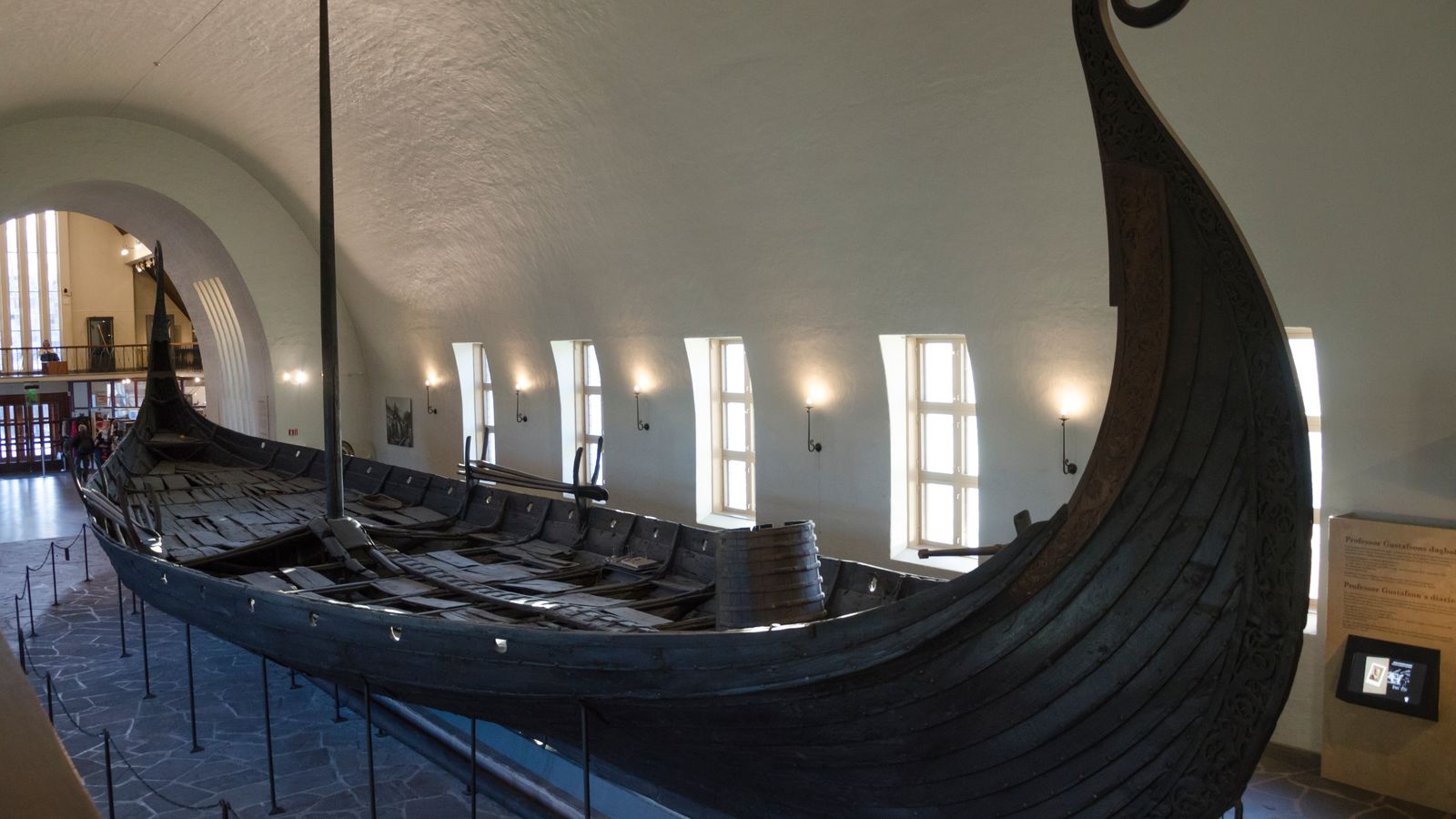
Vikings are one of the most iconic cultures in all of human history, the fearless warriors raiding coastal Europe with their telltale longships and brutal methods of warfare. But Viking culture went far beyond the beards, battleaxes, and barbaric raids. Today we’re going to bring you 5 shocking things about life in the age of the Vikings, ranging from their surprisingly good hygiene all the way to their extensive network of slave trade across Europe.
Women Were Unusually Free
Compared to the vast majority of cultures around the rest of the world, Viking women enjoyed a pleasant number of rights and freedoms, surprisingly making Scandinavia in the Middle Ages one of the most progressive places on the planet in terms of gender equality at the time.
Now, this isn’t to say that they were completely free citizens. Like most other places across Europe, women were still considered subordinate to their husbands. But there were interesting benefits. For starters, in many places, Viking women were allowed to own property, and although most marriages were arranged, women still had the freedom to initiate divorce if they were being mistreated, and were even allowed to later remarry a different man.
Key Takeaways
- Viking women had significant rights and freedoms, including property ownership and divorce initiation.
- Vikings maintained good hygiene, bathing regularly and using grooming tools like combs and razors.
- Viking society practiced infanticide and human sacrifice, valuing strength and health above all.
- Slave trade was a major part of the Viking economy, with slaves captured through raids and sold across Europe.
- Vikings were the first Europeans to reach the Americas, as confirmed by archaeological findings.
And while yes, the duties at home such as cooking and cleaning were considered the responsibility of the wife, this wasn’t all. They were also in charge of many tasks involving farms and livestock, duties which they shared alongside their husband. In the event that the husband died, the wife would inherit a large portion of his estate and belongings. In fact, if the man had no sons or close male relatives, the widow would inherit all of his property, and would be referred to as a Baugrygr, becoming the official head of the family and inheriting all the rights and powers associated with this position.
But what about if a woman wasn’t married? Once an unmarried woman reached the age of 20, she was considered an independent adult, and was allowed to decide her own place of residence and was legally considered independent of her parents, a status which was also enjoyed by widows. There is even evidence of female entrepreneurs who ran their own textile shops, and perhaps even women that fought alongside men in combat.
In folklore, these warrior women are called shieldmaidens, but their existence is seeming more likely with recent archaeological finds, such as the remains of the Birka female Viking Warrior. It is also known that women could choose to become priestesses, oracles, or seers, as well as respected poets.
All of this is in stark contrast to most other cultures at the time, which considered women to largely be the property of their parents until they were handed off to a husband, where their duties were almost entirely bound to the home and childbearing.
Examination of skeletal remains has also revealed that the nutrition of girls and boys was of relatively equal value, showing that food was evenly shared among children and not prioritized for the boys.
So, while yes, compared to western life today this is still quite restrictive, for the time this was an impressive degree of independence. Unfortunately, it wouldn’t last. Sometime around the 13th century, these practices and liberties began to fizzle out, likely due to the widespread adoption of Christianity and subsequent cultural shift. And by the late 1200s, such progressive policies were no longer mentioned in written records.
The Picture of Health?
Movies and TV shows commonly portray Vikings as barbaric, caked in blood and grime with filthy clothing and dirty hair, which is why you might be surprised to learn that they were actually quite hygienic, likely far more hygienic than other European cultures at the time. They were known to bathe regularly, and grooming tools that we’ve uncovered include combs, razors, and even ear cleaners. These tools were carved from bone and wood, and were often meticulously cleaned and kept in their own cases so they could remain usable for many years.
Another part of the average Viking that was quite clean was their hair. Blonde hair was highly valued at the time, to the point that it was commonplace to use soaps with a high lye content to brighten one’s hair color, essentially bleaching it. But not only did this make one’s mane fairer, it also had the effect of killing an age-old pest, head lice.
Most surprising of all, it seems that Vikings actually had good oral hygiene. Obviously good oral hygiene in the Middle Ages still isn’t great when compared to today’s standards, but for their time, they actually had a decent dental routine. Toothpicks or brushes were commonly used to clean one’s teeth after a meal, as evidenced by signs of abrasion on skeletal remains.
A 2023 study found that, on average over the course of their lives, adult Vikings lost around 6% of their teeth, excluding their wisdom teeth. Around half of skeletons were found to have one or more minor cavities, and while there were some remains that contained more serious damage, many of them also showed evidence of early dental procedures, such as small holes dug into the molars to relieve pressure and drain pus from infected roots. The head of the researchers, Carolina Bertilsson, noted:
“This is very exciting to see, and not unlike the dental treatments we carry out today when we drill into infected teeth.”
Overall, keeping oneself clean was a high priority in many Viking communities, and there was generally one day of the week specially designated for washing all of one’s clothing. In fact, Norse poetry at the time, such as the Havamal and the Reginsmal, highlighted the importance of starting the day combed and washed, as one’s death could never be anticipated and you wanted to look your absolute best before suddenly arriving in the presence of the gods.
The funny part of this is that much of our knowledge of Viking hygiene comes not from the Vikings themselves, but from Christian writers who weren’t too fond of it, and denounced it as a vain and pretentious practice that was done in an attempt to seduce Christians. In fact, after a Viking raid sacked the Lindisfarne Monastery in 793, Christian scholar Alcuin wrote a series of letters to English kings letting them know that Viking raids were a punishment from God sent to Britain because the people were becoming too prideful of their appearances.
However, elsewhere, these writings start to come off as less of a religious condemnation, and more like some good old-fashioned jealously. Take, for instance, a letter written after the English massacre of Danes in the year 1002, justifying the killing:
“The Danes made themselves too acceptable to English women by their elegant manners and their care of their person. They combed their hair every day, bathed every Saturday, and even changed their garments often. They set off their persons by many such frivolous devices. In this manner, they laid siege to the virtue of the married women and persuaded the daughters, even of the nobles, to be their concubines.”
So, there you have it, even their enemies were complaining about how clean they were.
Only the Strongest Survived
With the last two topics, we might have made it sound like Viking life was the high life, but we’ve yet to touch on the darker subjects, one of which was that the Viking culture as a whole had little tolerance for weakness.
Not only was infant mortality high right off the bat, but even if you survived childbirth, you had a long road ahead of you. The Vikings valued strength and health to such a degree that if you showed serious signs of weakness, either by being sickly or physically or mentally disabled, there was a high likelihood of your parents simply killing you, either by tossing you in the sea or just abandoning you in the woods.
Watch the Video
Open Video
Video Briefing
5 Shocking Things About Viking Culture
Infanticide was seen as a necessary evil, a way to ensure that the population stayed strong and didn’t need to waste resources on those who would only drag the community down. It’s a brutal way of looking at life, but that’s just the way it was.
Interestingly though, in recent years archaeologists have begun uncovering evidence that this wasn’t the only reason infants were killed. Between 1995 and 2003, excavations were carried out near lake Tissø in Denmark, and revealed some peculiar findings that reinforced older theories of human sacrifice. These were wells with human remains at the bottom, and in one of the wells, four of the five bodies were of small children aged 4 to 7.
It was known for many years that sacrifices were an important part of their religion, as they would sacrifice animals or weapons to appease the gods. However, while human sacrifice wasn’t exactly agreed upon, these newer findings are evidence that it was indeed taking place. As for why children were sacrificed, Lars Jørgensen of the Danish National Museum explains that choosing a child as the victim was rare, and likely seen as the ultimate sacrifice, something that was only done when they believed things had gone seriously awry and needed to reestablish a connection to the gods.
They Profited From Slave Trade
If the concept of child sacrifice and leaving your kid to die alone in the wilderness wasn’t brutal enough, just wait, because it gets worse.
While it is true that Viking life was one of high levels of freedom and progression, even for the women as we discussed earlier, this is only true for those who were actually free, as the Vikings were notorious for their extensive use of slaves.
Slaves were gathered on large scales through raids of European cities, oftentimes during campaigns specifically launched for the purpose of gathering them. Others were simply born into slavery, either because both of their parents were slaves, or if a free man impregnated an enslaved woman.
A slave in the Viking world was known as a thrall, and they were the lowest of the low in society, forced to undergo tasks in farmland, woodworking, or as a concubine. One of their most valuable contributions was to the building and maintaining of Viking fleets.
There are some accounts, however, of thralls with an elevated level of permission in society. You could say these people were “almost free”, certainly with more rights than other thralls, but not a fully-fledged member of the community. There is a record of a blacksmith giving his slave gold and freeing him, and another of a former thrall being released from his master and later marrying.
But as nice as this sounds, it was not the reality for most thralls. Slave labor was not only an important part of the Viking economy, but one of its driving factors, making up the labor-intensive industries of sailcloth manufacturing and tar production.
However, not all slaves captured in their horrific raids ended up in Viking territory. It’s believed that only a fairly small percentage of captives were actually taken directly back home to Scandinavia, while the rest were more than likely sold into human trafficking networks, sold at other ports across northern and eastern Europe. Thanks to this trade, prisoners had become one of the most profitable spoils of war, further incentivizing future Viking raids that would ravage and brutalize western Europe for hundreds of years.
Their Ancient Sagas Aren’t Purely Fiction
For hundreds of years, it was taught in schools that Christopher Columbus was the first European to discover the Americas, bumping into them accidentally on a miscalculated trip intended for Asia. But recently, it’s been confirmed that it was indeed the Vikings who became the first to visit the New World, meaning that at least some of their ancient sagas are actually true, and not just folklore as was long believed.
It all began with the banishment of Erik Thorvaldsson, better known as Erik the Red. Kicked out of Iceland for manslaughter, Erik traveled west and arrived at Greenland. In fact, it was Erik that named it Greenland, out of hopes that he could attract settlers to the frozen, barren island by giving it such an enticing name, but this didn’t exactly work out, and the total Norse population of Greenland at the time was only around two thousand, mostly consisting of people that exported walrus ivory, seal blubber, and narwhal tusks that they marketed as unicorn horns.
According to the ancient Icelandic text “Saga of Erik the Red”, a fleet of around 25 ships continued to sail west of Greenland, looking for more opportunity. They described three areas they found, Hellulan, or land of the flat stones, Markland, or land of the forests, and Vinland, or land of wine. Little did they know at the time, but these lands they had discovered were a part of North America. However, before planning a return trip, Erik fell off a horse and was injured, and instead elected his son, Leif, as the party’s new commander.
According to the chronicles, sometime around the year 1000 AD, Leif Erikson landed at the place they called Vinland, where they found numerous types of berries growing in the wild, hence the name Vinland, which is believed to be somewhere near Cape Bauld in Newfoundland, Canada. He spent two winters here before leaving. A couple years later, his brother visited the area with a 30-man crew, and it was during this trip that the first conflict erupted with native Americans, when they attacked a group of sleeping natives.
A third expedition was launched a few years later by a man named Thorfinn the Valiant, with a crew of 160 spread out across 3 ships. They experienced a cruel winter before allegedly establishing peaceful relations with the natives in the area, trading European food for local furs.
For many, many years, it was unclear if these stories had any semblance of truth to them, if the Norsemen had actually discovered the coast of Canada, or if they’d just made the whole thing up as an epic story. It wasn’t until the 1960s that evidence began to be uncovered adding credence to the tale. On the coast of Canada, researchers began finding tools from the time that couldn’t have possibly belonged to the local natives, such as bronze rings, stone oil lamps, and the slag by-product of iron working. And soon, the scholarly world accepted the idea that it was indeed the Vikings who were the first to set foot in the new world, with L’Anse aux Meadows currently the only confirmed site at this time.
It all paints a complex and diverse painting of life in the age of the Vikings, depending entirely on who you ask. To some, the Vikings were a barbaric menace that ransacked villages and sold women and children into slavery. To others, they instituted progressive women’s rights, and were among the most adventurous explorers in European history. Of course, the reality is that they were all of this, and more, an incredibly complex society, and one that is highly in the backdrop of human history.
Key Takeaways
- Viking women had significant rights and freedoms, including property ownership and divorce initiation.
- Vikings maintained good hygiene, bathing regularly and using grooming tools like combs and razors.
- Viking society practiced infanticide and human sacrifice, valuing strength and health above all.
- Slave trade was a major part of the Viking economy, with slaves captured through raids and sold across Europe.
- Vikings were the first Europeans to reach the Americas, as confirmed by archaeological findings.
SideProjects Editors
The SideProjects editorial team researches, fact-checks, and structures explainers about the lesser-known tales, side narratives, and spin-offs behind major historical and contemporary subjects.
Frequently Asked Questions
What rights did Viking women have?
Viking women had several rights and freedoms. They could own property, initiate divorce if mistreated, and remarry. Widows inherited a large portion of their husband’s estate and could become the head of the family if there were no male heirs. Unmarried women over 20 were considered independent adults. Some women were entrepreneurs, and there is evidence of female warriors and priestesses.
How did Vikings maintain their hygiene?
Vikings were quite hygienic. They bathed regularly, used grooming tools like combs and razors, and had a high priority on cleanliness. They used lye-based soaps to bleach their hair and kill lice. They also practiced good oral hygiene, using toothpicks or brushes after meals. One day a week was designated for washing clothes.
What was the Viking attitude towards weakness?
Vikings had little tolerance for weakness. Infants showing signs of weakness were often killed or abandoned. This was seen as a necessary evil to ensure the community’s strength and avoid wasting resources.
What role did slaves play in Viking society?
Slaves, known as thralls, were the lowest in Viking society. They performed various tasks like farm work, woodworking, and maintaining fleets. Slave labor was crucial to the Viking economy, particularly in industries like sailcloth manufacturing and tar production. Some slaves could gain elevated status, but most remained in servitude.
Did Vikings engage in human sacrifice?
Yes, there is evidence of human sacrifice in Viking culture. Archaeological findings, such as wells with child remains, suggest that children were sometimes sacrificed as the ultimate offering to the gods when things went seriously wrong.
Who was the first European to discover the Americas?
The Vikings were the first Europeans to discover the Americas. Erik the Red and his son Leif Erikson led expeditions to what they called Vinland, which is believed to be near Cape Bauld in Newfoundland, Canada.
How did Viking women contribute to the household?
Viking women were responsible for cooking, cleaning, and managing farms and livestock alongside their husbands. In the event of a husband’s death, the wife would inherit a significant portion of his estate and could become the head of the family.
What was the significance of the name ‘Greenland’?
Erik the Red named Greenland to attract settlers to the barren island. The name was intended to be enticing, although the actual population of Norse settlers was quite small, around two thousand, who primarily exported goods like walrus ivory and seal blubber.
What evidence supports the Viking discovery of the Americas?
Archaeological findings in Canada, such as bronze rings, stone oil lamps, and ironworking slag, support the Viking discovery of the Americas. L’Anse aux Meadows is the only confirmed site where these artifacts have been found.
What was the Viking view on divorce?
Viking women had the right to initiate divorce if they were being mistreated. They could also remarry after a divorce, which was a significant freedom compared to many other cultures at the time.