

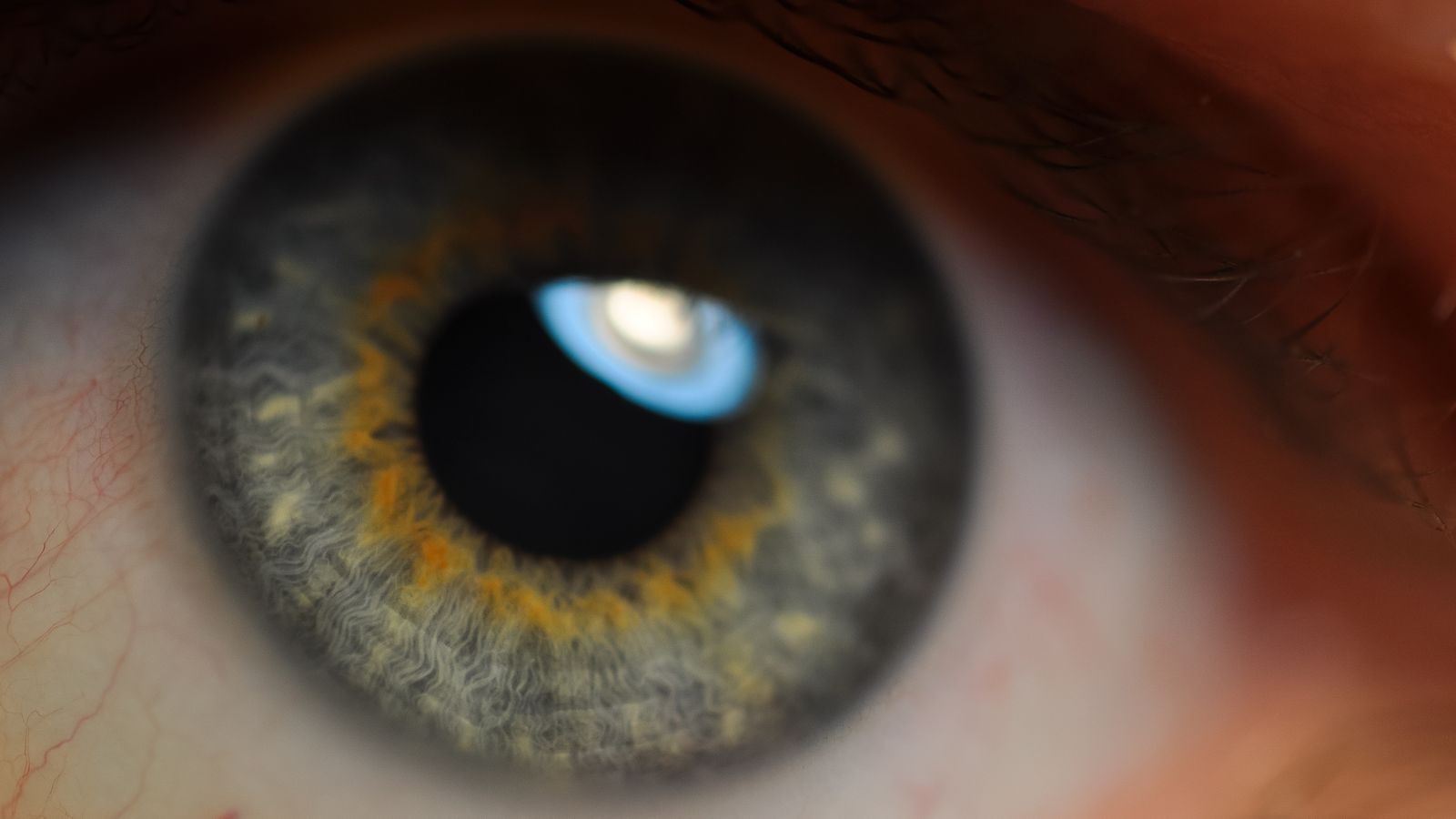
Biology: it’s what makes you “you”, instead of being like a banana or something. It’s the study of living organisms, their physiology, anatomy, evolution, and so on. The study of biology is fundamental to many facets of society, such as medical science, yet most people’s knowledge of the subject is rather limited, and in some cases incorrect.
To be fair, some of these misconceptions are the result of high school biology curriculums seemingly not having been updated since the 1800s. But we’re here to right that wrong, so today we’ll be looking at five things that you’re probably wrong about when it comes to biology, particularly human biology.
Punnett Squares
If you took a high school biology class, you’re almost certainly familiar with the concept of a Punnett Square. This is how the concept of dominant and recessive genes is generally taught in the classroom. As a refresher, let’s quickly take a look at the most commonly used example, eye colour.
Key Takeaways
- Punnett Squares oversimplify genetics, as most human traits are polygenic.
- Respiration involves energy production, not just the mechanical act of breathing.
- Humans and chimpanzees share a common ancestor, not a direct evolutionary line.
- Most of a tree’s mass comes from carbon dioxide absorbed from the air.
- Body parts like feet and hands do not reliably indicate penis size.
Blue eyes are recessive, which means that if a person has one gene for blue eyes and one for brown, they will have brown eyes. The Punnett Square shown here is used to explain that if two brown eyed parents each have one dominant and one recessive gene, there is a 75% chance that their child will have brown eyes and a 25% chance that their child will have blue eyes.
However, despite being the most commonly used example, this is total nonsense. Although they are taught to students as essentially the final word in genetics, Punnett Squares are only useful for traits that are a binary option controlled by a single gene. Eye colour is obviously not binary, as a person’s eyes can be brown, blue, green, grey, hazel, or amber. There are also 16 different genes that play a role in a person’s eye colour, making it all much more complicated than a simple 2x2 grid can represent.
That’s not to say that Punnett Squares are inherently wrong, as there are human traits for which you could use this. The presence of a widow’s peak, attached earlobes, and dimples are all examples of monogenetic traits that could be represented using these squares. But for the majority of human traits, Punnett Squares are useless.
Most human traits are controlled by multiple genes and have a lot of variation. This is still an accurate representation of how each individual gene is inherited, as each parent has two copies of the gene with a 50% chance to pass either one to the child, but the proposed outcomes in the eye colour scenario are wildly inaccurate.
Think about height, for example. At the high school level where Punnett Squares are taught, being tall is often depicted as a dominant trait. You may see identical squares to the eye colour one we previously showed depicting the probability of tall parents having a tall or a short child, but what exactly does that even mean? How tall does a person need to be to be considered tall?
If anything above average is considered tall, that means a tall male in the United States could be anywhere from 5 foot 10 to 7 feet tall. That is a huge difference, and the simplistic view provided by Punnett Squares does not account for such massive variations. In reality, height is controlled by over 700 genes, and environmental factors play a huge role as well.
Although Punnett Squares are a useful tool for teaching the very basics of genetic inheritance, schools have done the general public a grave disservice by not expanding on the ideas and creating the false impression that all genetic traits can be neatly explained by a simple 2x2 box.
Respiration vs. Breathing
Most people believe that respiration and breathing are synonymous and can be used interchangeably, and with good reason. If you look up the word “respiration” in the dictionary, the first definition you will see is “the action of breathing”. However, while that definition may represent the common usage of the term, in the context of biology this isn’t even half of the story. Looking beyond the first definition, you may see that in biology respiration is defined as “a process in living organisms involving the production of energy”, but that biological definition is rarely addressed.
Breathing is a mechanical process by which oxygen-rich air is inhaled into the lungs and carbon dioxide-rich air is exhaled. This is also known as pulmonary ventilation, which refers to the volume of air flowing into and out of the lungs.
Once the air enters the lungs, the process of external respiration begins. Even though it is taking place inside your body, it is referred to as external respiration because it’s the part of the process that interacts with the air from the external environment. During this process, oxygen is transferred from the air into the bloodstream and carbon dioxide is removed from it to be exhaled.
The blood then carries the oxygen throughout the body so it can be used in cellular respiration. This is a biochemical process by which the oxygen is used to create energy. Because it requires oxygen this is called aerobic respiration, and it is how our bodies get most of their energy. If oxygen supplies aren’t sufficient to create the amount of energy required, such as during intense exercise, anaerobic respiration can take place as well.
This process is less efficient and creates lactic acid as a byproduct, which can result in muscle fatigue and cramping.
But back to aerobic respiration, this predominantly takes place in the cells’ mitochondria, which is why they are referred to as the powerhouse of the cell. The mitochondria oxidize glucose, resulting in carbon dioxide, water, and adenosine triphosphate, or ATP. ATP is a nucleotide that provides energy to the cells so they can perform whatever specific action that type of cell is supposed to.
It is this synthesis of ATP that is the main purpose of respiration, and the mechanical act of breathing is merely a means to facilitate the biochemical process of respiration. Again though, while most people do get this wrong, it’s a very understandable mistake. Breathing is part of the respiration process, and it gets the most attention because it is the only part that is readily observable.
Human Ancestors
People love to know where they came from. For each individual person, this may relate to their family tree, the history of their nation as a whole, or even the entire human race. However, when it comes to human evolution, and evolution in general, people get a lot of things wrong.
One common mistake people make is believing that humans evolved from monkeys. More than anything, this is likely just confusion and/or apathy regarding the differences between monkeys and apes. A slightly closer (but still incorrect) belief is that humans evolved from chimpanzees.
As with most things, the truth is more complicated than that. Humans did not evolve directly from chimpanzees, instead humans and chimps shared a common ancestor somewhere between 5 to 15 million years ago. Different populations of the primitive ape evolved separately, with one lineage developing into chimps and the other evolving into humans.
So what was that shared ancestor? Well, we don’t know that part yet. There have been a few candidates, but so far the common ancestor between humans and chimpanzees has not been conclusively found. However, it gets even more complicated than that.
By this point, most people are probably aware that modern humans, or Homo sapiens, aren’t the first human species to exist. Humans have existed for millions of years now, but modern humans have only been around for the past 300,000 years or so. There have been at least 21 different species of humans, with others yet to be discovered and some candidates that have been discovered but aren’t yet officially classified as their own species.
Watch the Video
Open Video
Video Briefing
5 Things About Biology You’re Wrong About
Of course, most people would struggle to name more than one other human species, with the most well known being Neanderthals. However, there are misconceptions about this as well, much of which dates back to a single illustration from 1965, originally titled The Road to Homo Sapiens. You’ve almost certainly seen the image hundreds of times, though you probably know it better by its newer name: The March of Progress.
Although this image remains ubiquitous in classrooms, pop culture, and memes, it has received massive criticism since its creation for incorrectly implying that evolution is a linear process. While it is true that you could trace the evolution of modern humans back from one species to another until reaching that unknown ancestor we share with chimps, this ignores the majority of human species that have existed. In fact, Neanderthals wouldn’t even appear in The March of Progress, as modern humans did not evolve from Neanderthals.
Instead, both Homo sapiens and Neanderthals evolved separately from the species Homo heidelbergensis. While one could argue then that Neanderthals don’t belong in something documenting the lineage of modern humans anyway, that’s a needless oversimplification of human history. Not only are Neanderthals our closest relatives to ever exist despite being the result of branching evolution, but Homo sapiens and Neanderthals interbred, and Neanderthal DNA still exists in people today.
Where Plants Get Their Mass
Everyone knows that trees (and other plants) get their nutrients from the ground. It’s why planting in fertile soil is so important, and trees have long, sprawling root systems that they use to absorb water and vital nutrients from the ground.
But where does all of their mass come from? There’s a good chance that this isn’t something you’ve actually thought about before, though the logical answer seems to be that it too comes from the soil. However, this is not actually the case. The majority of a tree’s mass comes from the air.
One of the earliest quantitative studies on plant growth was published in 1648 by Jan Baptist van Helmont, a scientist from Brussels. Van Helmont planted a willow tree in a known, enclosed quantity of dry soil. He then watered the tree and monitored its growth for the next five years. At the end of the experiment, the tree’s mass had increased by 164 lbs, or 74 kg. However, after the soil was weighed, he discovered that in those five years the soil had only lost 57 grams.
His conclusion was that the tree’s additional weight must have come from the water, but that’s because carbon dioxide wasn’t discovered until just over 100 years later. Still, while his conclusion may have been incorrect, his experiment does show just how little of a tree’s mass is actually taken from the soil.
Instead, it comes from the carbon dioxide that trees take in to perform photosynthesis. All known life on Earth is made of carbon, and it is the carbon in carbon dioxide that allows trees and other plants to grow. That’s not to say that the nutrients in the soil aren’t still important though.
Elements like nitrogen and sulfur are needed for the formation of amino acids and proteins, phosphorous is vital for ATP and nucleic acids, and various metals like iron and copper are important for photosynthesis. And of course the water absorbed through the soil is necessary as well, as all known life requires water.
The idea that something as massive as a tree could be essentially made entirely from air seems counterintuitive, but that’s because we tend to think of air as being empty, weightless space, rather than as a collection of gasses. At sea level, one cubic meter of air weighs about 1.22 kg. That’s not a lot based on the volume, but it’s not nothing either. And each person breathes in 7 or 8 cubic meters of air every day, so with that perspective it’s not hard to see how trees could accumulate a meaningful amount of carbon each day.
You Know What They Say About Guys with Big Feet…
It’s a comment that comes up all the time, often in a joking context, but for many people it is a firmly held belief: men with bigger feet have bigger penises. Where exactly this belief originated is unclear, though it’s probably safe to assume that it can be traced back to a man with huge feet and a tiny member.
There are other variants of this saying as well, related to height, weight, hand size, and the distance from the end of the thumb to the end of another finger on an outstretched hand. Which other finger you’re supposed to measure to is unclear, as you can find different accounts claiming all four possible fingers with total certainty.
Of course, for a long time this was just speculation, perhaps supported by anecdotal evidence. Fortunately, scientists are dedicated to answering all of life’s most important questions. As such, there have been numerous studies comparing measurements of various body parts to penile length. Quite frankly, there have been entirely too many studies on the matter. But regardless of whether or not the research was necessary, it was certainly conclusive.
Across all the various studies, there was no meaningful correlation found between foot length and penis length. The same was true of hand length, though this should not be surprising since hand length and foot length have a strong correlation.
When it comes to height and weight, things get a little more complicated. Height did show a statistically relevant correlation with penis length, but it was also a very weak correlation. Although weight was not an indication of penile length, which makes sense since weight is variable anyway, there is a condition known as buried penis. Excess fat in the pubic region can essentially bury a portion of the penis.
This gives the appearance that it’s smaller because less is visible, but has no bearing on the actual size.
While people seem to have an incredibly strong desire to be able to know how much a man is packing just by glancing at other physical characteristics, all of the research indicates that this simply can’t be done. Or at least it did until a few years ago, when researchers found a correlation between penis length and nose size.
Thus far, there have been three papers published on this topic, and all of them found a correlation between larger noses and larger penises. That said, while the results are interesting, they should not be deemed conclusive yet. One of the studies only found a weak correlation, one found a moderate correlation, and the third was moderate to strong. However, the strongest correlation was found in a sample size of only 126 men, the next strongest in a sample of 377 men, and the weak correlation occurred when the sample size was increased to over 1,000.
Since the results became less convincing the larger the sample size was, there’s always the chance that this was just pure coincidence with the smaller sample sizes. Also, these studies were conducted in Japan, Korea, and China, and there are genetic traits that are more common in different areas of the world. Even if future results remain consistent across East Asia, the same may not be true across the rest of the world.
Despite the passionate desire for people to be able to tell a man’s penis size just by looking at him fully clothed, thus far there is no conclusive way to do so. But hey, if you’re that concerned you can always just ask. After all, dating apps are full of men who are listed as 6 feet tall and who would never lie or exaggerate about size.
Key Takeaways
- Punnett Squares oversimplify genetics, as most human traits are polygenic.
- Respiration involves energy production, not just the mechanical act of breathing.
- Humans and chimpanzees share a common ancestor, not a direct evolutionary line.
- Most of a tree’s mass comes from carbon dioxide absorbed from the air.
- Body parts like feet and hands do not reliably indicate penis size.
SideProjects Editors
The SideProjects editorial team researches, fact-checks, and structures explainers about the lesser-known tales, side narratives, and spin-offs behind major historical and contemporary subjects.
Frequently Asked Questions
What is a Punnett Square and what is it used for?
A Punnett Square is a diagram used to predict the genotypes of offspring from a particular cross or breeding experiment. It is used to teach the basics of genetic inheritance, particularly for traits controlled by a single gene with dominant and recessive alleles.
Are Punnett Squares accurate for all human traits?
No, Punnett Squares are only useful for traits that are a binary option controlled by a single gene. Most human traits are controlled by multiple genes and have a lot of variation, making Punnett Squares inaccurate for these traits.
What is the difference between respiration and breathing?
Breathing is the mechanical process of inhaling oxygen-rich air and exhaling carbon dioxide-rich air. Respiration, in a biological context, refers to the process of producing energy in living organisms, which includes both external respiration (gas exchange) and cellular respiration (energy production).
Did humans evolve directly from chimpanzees?
No, humans and chimpanzees shared a common ancestor between 5 to 15 million years ago. Different populations of this primitive ape evolved separately, with one lineage developing into chimpanzees and the other into humans.
How many different species of humans have existed?
There have been at least 21 different species of humans, with more yet to be discovered and some candidates that have been discovered but aren’t yet officially classified as their own species.
Where do trees get most of their mass from?
The majority of a tree’s mass comes from the air, specifically from the carbon dioxide that trees take in to perform photosynthesis. The carbon in carbon dioxide allows trees and other plants to grow.
Is there a correlation between foot size and penis size?
No, numerous studies have found no meaningful correlation between foot length and penis length. This belief is a common misconception.
Is there any scientific basis for the idea that men with bigger feet have bigger penises?
No, scientific studies have shown that there is no meaningful correlation between foot length and penis length. This idea is a myth.
What is the March of Progress and why is it criticized?
The March of Progress is an illustration that depicts the evolution of humans in a linear fashion. It is criticized for incorrectly implying that evolution is a linear process, ignoring the majority of human species that have existed and the complex nature of human evolution.
What is the role of soil in a tree’s growth?
Soil provides essential nutrients like nitrogen, sulfur, phosphorus, and various metals that are important for a tree’s growth. However, the majority of a tree’s mass comes from the carbon dioxide it absorbs from the air through photosynthesis.