

Science: it’s what makes the world go ‘round. More specifically, when the primordial cloud of gas and dust that eventually formed our solar system began to collapse under its own gravity, it started to spin. As the cloud formed concentrated eddies of swirling matter that would eventually become the planets like Earth, they continued to rotate. And it’s that initial angular momentum from the primordial cloud that makes the Earth go ‘round.
If scientific tidbits like that are what entertain you then you’re in luck, because today we’ll be looking at 50 amazing scientific facts ranging from astrology to zoology, and everything in between.
Ants Outnumber Humans 2.5 Million to 1
There are over 12,000 known species of ants in the world, and some experts believe the total number may be as high as 20,000 different species. It’s impossible to get an accurate count on exactly how many individual ants there are, but the best scientific estimates put the number at about 20 quadrillion. That’s also a conservative estimate, so it could be considerably more than that.
Key Takeaways
- Ants outnumber humans by a ratio of 2.5 million to 1.
- Humans have slightly more bacteria cells than human cells in their bodies.
- Metallic hydrogen is theorized to exist in the cores of gas giants like Jupiter and Saturn.
- Bananas produce antimatter particles through the decay of radioactive potassium.
- Humans share 99.9% identical DNA, with the remaining 0.1% accounting for individual differences.
But with that many ants in the world, it means there are 2.5 million ants for every person. You may also have heard the claim that the total mass of all ants is equal to the total mass of all humans, though this isn’t actually the case. The initial claim was based on research from 1994, and it relied on the average weight of an ant being about 10 times higher than it actually is.
The world population has also increased by over 2 billion since 1994 and the average weight of a person has increased as well, so even if it had been true at the time it would no longer be the case. Still, while humans do outweigh ants, since 71% of ant species are venomous, it would probably end poorly if every person had to fight 2.5 million ants in hand to hand combat.
Half of Your Cells Are Bacteria
The human body is a complex organism made up of tens of trillions of cells. On average men have about 36 trillion cells in their body while women have about 28 trillion, with the main reason for the difference just being the average height of men versus women. These cells create your circulatory system, nervous system, and everything else required to make your body function.
However, there’s something else required to make your body function properly, and that’s bacteria. Though the numbers aren’t quite as skewed as were once believed, there are slightly more bacteria cells on and in your body than there are human cells. These bacteria live on your skin and in your nose, mouth, and especially your gut.
The bacteria’s most obvious role is to aid in digestion, though they affect things like your appetite and immune system as well. Of course, it’s not necessarily accurate to say that you currently have more bacteria cells than human cells in your body right now. Since the bacteria are so heavily concentrated in your digestive system, a single bowel movement can be enough to temporarily shift the number back in favour of human cells instead of bacteria.
But as numerous as they are, all the bacteria cells living in and on your body only weigh about 2-6 pounds for an average person.
Metallic Hydrogen
The alkali metals are all soft, shiny, and highly reactive elements that are grouped together on the far left of the periodic table. These are elements like lithium, potassium, and sodium, and they are grouped together because they all have a single electron in their outermost shell. While all of the other alkali metals are in their solid state at normal temperature and pressure, at the very top of the list of alkali metals is hydrogen.
Obviously we don’t think of hydrogen as being a metal, as it rarely exists outside of its gaseous state here on Earth. Hydrogen doesn’t become liquid until it falls below 33 Kelvin, and it doesn’t become solid until 14 Kelvin. Those temperatures are approaching absolute zero, so creating liquid or solid hydrogen requires specialized equipment.
However, because the alkali metals have the most homologous behaviour of any group on the periodic table, the existence of metallic hydrogen has been theorized for nearly 100 years. And we might even know where it is. It is believed that at extremely high temperatures and pressures metallic hydrogen could be created, and that liquid metal hydrogen exists in large quantities in the cores of gas giants like Jupiter and Saturn.
The massive gravitational pressure on the planets’ interiors creates heat, and these conditions would be perfect for metallic hydrogen. Since metallic hydrogen is an electrical conductor, this would potentially explain the powerful magnetic fields these planets have. There is no definitive proof yet since we can’t just land on Jupiter and check, but there is a lot of evidence to support the theory of metallic hydrogen in these planets.
Bananas Produce Antimatter
To be fair, this fact isn’t exclusive to bananas. Though bananas are the traditional example, the same is true of spinach, lentils, apricots, and most other fruits and vegetables. Because the key to producing antimatter isn’t something special about bananas, it’s their potassium.
Over 99.9% of all potassium comes in the form of three different isotopes: potassium 39, 40, and 41. Both 39 and 41 are stable isotopes, with 39 being far more abundant. These two isotopes make up over 99% of all potassium, but most of what remains is radioactive potassium 40.
Of course it’s very weakly radioactive and poses no real danger, but because it’s radioactive that means that it does decay. Sometimes the decay comes in the form of positrons, a particle of antimatter. In the case of bananas, each banana will only produce one antimatter particle every 75 minutes.
When these antimatter particles come into contact with regular matter, the two particles will annihilate and release a tremendous amount of energy, relative to the amount of matter that is. So does this mean that you need to steer clear of fruits and vegetables for fear of annihilation? Not at all!
While bananas are the most common example when discussing antimatter, there’s a lot more potassium in your body than there is in a banana. There’s so much potassium in you that the average person’s body produces about 180 antimatter particles every hour.
People Are Basically All The Same (Sort of)
You’ve probably noticed throughout your life that people are very different. They come in all different heights and sizes, different skin tones, eye colours, hair textures, and so on. Going beyond just visually notable differences, some people are smarter than others while others are more athletic.
People even have different allergies and different levels of susceptibility to various diseases. It may come as a surprise then that all humans have 99.9% identical DNA. Or maybe it doesn’t, because admittedly that number is a little bit misleading.
After all, there’s a lot more to people than their hair colour or nut allergies. There are also your organs, nervous system, ideally ten fingers and toes, and all of the other things that need to be included in our DNA to create a functioning human body. From that perspective, it’s not surprising then that so much of our DNA would need to be the same.
It’s also why we have 96-99% of the same DNA as chimpanzees, depending on what metric is being used to calculate the number, since much of our physiology is the same. However, we do have 3 billion base pairs of DNA. Even if 99.9% of it is required to be identical to create the framework for a human body, that remaining 0.1% still contains 3 million base pairs.
It may not be a lot as a percentage, but it still leaves a lot of room to create individual differences.
Crows Are Amazing
Many people considered crows to be omens of bad fortune or agricultural pests. But crows are also extremely intelligent animals. They are excellent at solving puzzles, using tools, and communicating with one another.
While “birdbrain” was often used as an insult to indicate a person had a particularly small brain and was therefore dumb, it turns out that birds have better brains than mammals do. Though a crow’s brain is only about the size of a human thumb, which is still massive for the size of its body, it has over 40 times as many neurons packed into that space than the same mass of human brain would have. Their brains are also far more energy efficient, using only a third of the energy that our brains require for the same number of neurons.
That’s not to say that an adult crow is as smart as a human adult, but according to a 2014 paper published in the journal PLOS ONE, an adult crow is as smart as a human child. More specifically, a seven year old child. Crows can even understand somewhat abstract concepts, like analogies or the use of the number zero as a quantity.
They also have exceptional memories, which brings us to our next fact.
Crows Are Terrifying
Not only do crows have great memories, but they can recognize and distinguish human faces. They also never let go of a grudge. If even a single crow witnesses a human cause harm to another crow, that can be enough to condemn the person to years of harassment and attacks by crows.
Thanks to their social nature and complex communication, they are able to spread word of exactly which humans to hate. Since the best defense against future wrongdoings from that human is a good offense, crows will strike first, dive bombing the offending party. It’s not actually clear how much of the information shared is communicated through vocalizations or if they just see a crow take the offensive against a human and follow suit, but the spread of information is extremely effective.
In a sample population, a small group of crows was terrorized by a researcher wearing a gorilla mask. Once per year following this, he would go outside with the mask on to see what percentage of the crows recognized and attacked him. The first year he was recognized by 26% of the crows, but by the third year 66% of the crows immediately identified the mask.
These shared grudges can be so pervasive that it has led to speculation that there is an epigenetic component, with a generational hatred of specific individuals being passed down to a crow’s offspring through their genes, though there is no conclusive research on that matter.
It’s Raining Diamonds
The ice giant planets Neptune and Uranus don’t get a lot of attention. They’re seen as being cold and boring, and most importantly they’re furthest away. However, there may be something fascinating going on beneath the surface in the form of diamond rain.
Ice giants get their name because they are composed primarily of water, methane, and ammonia, which we most commonly see throughout the universe in ice form. However, the interior of these planets aren’t as frigid as their surface, thanks to the immense pressure. Neptune’s core is as hot as the surface of the Sun, and at these temperatures the molecules we mentioned break down.
Most importantly, methane inside the planet’s mantle breaks down into its constituent carbon and hydrogen atoms. The rogue carbon atoms link with each other to form chains as they rise to the top of the mantle, and under the intense pressure these chains will form with the structure of diamonds. As the diamonds get larger and heavier and the temperature cools higher up in the mantle, the diamonds will then rain back down through the mantle towards the core where the heat breaks them apart and the process is repeated.
We can’t see this happening as nearly all images of the ice giants have been taken from Earth, but we have recreated the conditions in a lab. Using polystyrene, which is also made up only of carbon and hydrogen but is easier to work with than gaseous methane, scientists were able to use high powered lasers to simulate the heat and pressure of Neptune. This created diamonds on the nano scale, though the lasers were only turned on for a fraction of a second.
Much larger diamonds are expected to be raining inside Neptune where the heat and pressure never get turned off.
A Cloud is Four Whales
When you look up at the sky during calm weather, there’s a good chance you’ll see cumulus clouds floating around. The clouds look so light and fluffy, like pillows or marshmallows, and they’re able to float in the air. So how much could a cloud actually weigh?
It might surprise you that the answer is actually a whole Hell of a lot. Shocking as that may be by looking at them, the math is actually quite simple. The average density of a cumulus cloud is 0.5 grams of water per cubic meter, and the average size of a cumulus cloud is 1 cubic kilometer, which is 1 billion cubic meters.
Multiply those two together, and the average weight of a cloud is 500,000 kg, or 1.1 million pounds. That means each cloud weighs approximately the same as four adult blue whales, the largest animals on the planet. They’re able to remain afloat because the weight density of the cloud is actually lower than that of the air around it.
Of course, anybody who has ever been pelted with hailstones may not be quite so surprised that clouds have some serious mass.
Gambling with the Galaxy
If you’re familiar with exponential growth, you probably know that it gets out of hand very quickly. For example, you may recognize that 2^8 is 256, which is how many different possible values one byte of binary data can have. Another similarly absurd means of growing numbers is through factorials, where you multiply a number by every number lower than it.
For example, if we wanted to know how many different ways there were to shuffle a standard poker deck, that would be calculated as 52 factorial, so 52 * 51 * 50, all the way down to 1. Usually when doing card odds you can divide by some number afterwards to lower the total result. For example, being dealt 2, 3, 4, 5, 6 of hearts is the same as being dealt 6, 5, 4, 3, 2 of hearts for the purposes of a poker hand, so the total number of possible poker hands gets divided by all the hands that contain the same cards dealt in a different order.
However, since the exact position of every unique card in the deck matters for our purposes, those tricks don’t apply in this case. That means it turns out there are roughly 8.1 * 10^67 different ways to shuffle a deck of cards. That’s more than three times as many atoms as there are in the entire Milky Way galaxy, and every time you properly randomize a deck of cards it likely ends up in an order that has never been seen before.
Turnabout is Fair Play
There’s a reasonable chance that you suffer from allergies. Estimates vary, but anywhere from 25-50% of adults suffer from some sort of allergy, even if it’s just a very minor seasonal allergy that is mildly annoying but doesn’t really impact your life. These allergies are caused by an overreaction of the immune system to various substances, such as pollen, nuts, bee venom, or animal dander.
However, this condition isn’t exclusive to humans. If you have different types of pets, such as both a cat and a dog, it’s possible that one of the animals could be allergic to the other. But something most pet owners never consider is the possibility that your pet might be allergic to you.
Like it or not, humans are still animals, which means we also produce dander that can act as an allergen. While most research suggests that the prevalence of human allergies in pets is extremely low, perhaps only 2%, it is still a very real possibility.
Are These Pants Dry Yet?
When presented with a seemingly obvious question, a person might sarcastically reply with the rhetorical question, “Is water wet?” The obvious answer is meant to be yes, though this is actually a matter of debate within the scientific community thanks to a pedantic disagreement on how exactly wetness is defined. But regardless of that debate, the question remains: is water wet?
And if so, how do you know? If you’re thinking that you obviously know whether or not something is wet because you can feel it, the truth is you actually can’t. Human skin doesn’t have hygroreceptors, the type of receptor cells that would be necessary to detect humidity.
Even though we all have a clear understanding of how it feels for us or something else to be wet, we can’t actually feel moisture in that way. Instead, our brains essentially use a combination of temperature, texture, and pressure to guess whether or not something is supposed to feel wet. You’ve almost certainly experienced your brain guessing incorrectly before as well.
If you’ve ever fallen asleep or gone to run errands while you had clothes in the dryer, when you finally checked on the laundry hours later you may have found it difficult to figure out if the clothes were still damp or just cold. Sitting on a cold metal chair is another easy way to leave your brain guessing as to whether or not you just sat on something wet.
Another Missing Sense
Not only do humans lack the hygroreceptors that are common among many types of insects, but there’s another sense seen across the animal world that humans lack as well. And this isn’t one that our brains can reasonably deduce like with wetness, either. That other missing sense is magnetoreception, the ability to detect the Earth’s magnetic field.
For nearly 150 years it’s been believed that many animals, such as migratory birds and sea turtles, may have some sort of innate, biological compass. Until recently, however, all of the evidence was essentially anecdotal. At this point it is all but an established fact that many animals possess magnetoreception which they use for navigation, though there is still one very obvious question: how the Hell are they doing it?
We don’t have an answer, but there are three theories, any or all of which may be utilized by different animals. The most basic answer is that they use iron, which is naturally magnetic. Iron deposits are found in the beaks of many migratory birds, who may be able to use their beaks as compasses.
Another possibility, particularly with aquatic life, is electromagnetic induction. Many aquatic animals have electroreceptive organs, and it’s believed they could be used to also detect magnetic fields. Then there’s cryptochrome, a protein found in the eyes of many migratory birds.
This theory gets really weird and complicated, and it involves quantum entanglement, but there is experimental evidence to support the theory.
You Can’t Come Back
You’re probably familiar with the ideal of an event horizon as it pertains to black holes. This is the point of no return from which nothing, not even light, can escape the black hole’s gravity. However, there is a cosmological event horizon as well.
It is the point at which, once reached, something can never return to Earth. Not even by traveling at the speed of light (though traversable wormholes might still let you cheat the system). Not only is the universe expanding in all directions, but it is doing so at greater than the speed of light.
The short explanation is that all of spacetime is expanding, so the further apart two points are the more spacetime there is between them that can expand, and thus the faster the distance between them will increase. The cosmological event horizon is located 7.2 billion light years away from us, and if a spaceship where to travel there from Earth, the increasingly accelerating expansion of the universe would make it impossible to return, even when traveling at light speed.
You Can’t Go There Either
Unsurprisingly, it’s not just return trips that the expansion of the universe is going to hinder. The observable universe extends 46.1 billion light years in all directions. If there are celestial bodies that we can calculate are moving away from us faster than the speed of light, then it would be impossible to reach those locations even if we had the ability to travel at light speed.
Because the expansion of the universe would have us running with the wind to our backs, so to speak, this impossible to reach distance is more than twice as far away as the cosmological event horizon, but not by much. Even traveling at the speed of light, the furthest we could ever go from Earth is a point that was 17 billion light years away from Earth when we started our journey. That means that, without either violating the laws of physics or discovering traversable wormholes that provide shortcuts through spacetime, it is scientifically impossible for humanity to ever visit about 86% of the observable universe.
It’ll Only Get Lonelier
One more shocking fact related to the expansion of our universe, but life on Earth is only going to get lonelier as time goes on. The observable universe is going to shrink, at least in a manner of speaking. Even if the observable universe continues to extend 46 billion light years from Earth for the rest of time, there’s going to be a lot fewer things that we can actually see in that area.
Since spacetime is expanding in all directions, everything in the universe is moving away from us. The distances between stars and galaxies will continue to expand, and stars that once lit up the night sky will vanish from existence, never to be seen again. In fact, most of the observable universe is already on its way to that ultimate fate.
For example, the star Earendel was discovered by the Hubble telescope in 2022. The star is calculated as currently being about 28 billion light years away from us, well within the observable universe. But because it is past that 17 billion light year marker, the light currently being emitted by the star will never reach Earth.
As the universe continues to expand, more celestial bodies will cross that threshold and Earth will slowly become more and more isolated from the rest of the universe.
Humans Are Bioluminescent
When we think of bioluminescent creatures, the first things that come to mind are probably fireflies, glowing algae, or jellyfish. Or, maybe you thought of those bioluminescent cats that scientists made about a decade ago as the byproduct of research into feline AIDS. However, a 2009 study published in PLOS ONE showed that humans are also bioluminescent, the light is just too faint for our own eyes to perceive.
This had long since been suspected of being the case, we just lacked sensitive enough cameras to detect the light being emitted. That is no longer a problem, and the research showed that the human body emits light in the visible spectrum, it’s just 1,000 times dimmer than our eyes are capable of detecting. The images that were produced by the researchers look like infrared photos at first glance, however the areas of the body that emitted the most photons do not correspond to the areas that would be most lit up by an infrared image.
Of course, such dim bioluminescence has no evolutionary purpose, and it appears to be a byproduct of our body’s metabolism that is likely shared with all animals. Cell respiration creates highly reactive free radicals, and these particles can interact with lipids and proteins in the body to emit photons.
Oxygen is Blue
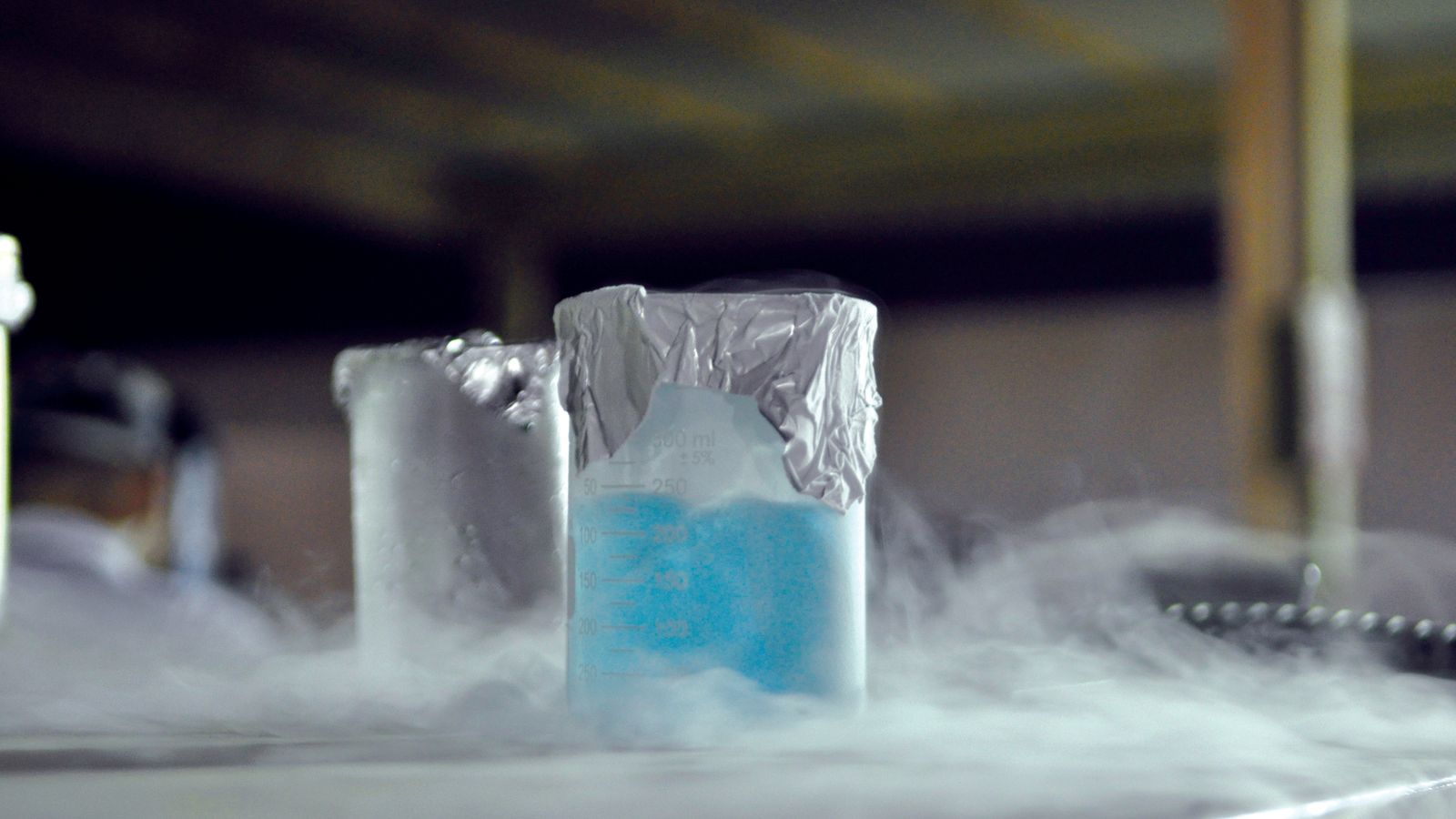
In its gaseous form, oxygen is colourless and thus invisible to the naked eye. This is true of most gases, though chlorine gas is a yellowish brown colour and iodine gas is violet. However, most elements also retain their colourless trait when they become liquids. Liquid hydrogen, helium, argon, neon, and most other liquid elements lack colour.
Even liquid carbon is colourless at standard temperature and pressure, though increases in temperature or pressure can cause liquid carbon to become black or brown. But of all the elements, liquid oxygen is one of the few that breaks this pattern. Even though we think of it as the invisible gas we breathe in to make life possible, liquid oxygen is a pale blue colour. It’s basically the same colour as the sky on a clear, sunny day.
Dragon Sex is Optional
Komodo dragons are the largest lizards in the world, and they’re a bit of an unusual species. They’re one of the few species of venomous lizards, and their venom is strong enough to kill a human. Dragons also are monogamous and will pair off for life, something rarely seen among lizards.
Like many other lizards, the male of the species also has two penises, though they can only use one at a time. While this may call into question if the male’s idea of monogamy involves a different exclusive mate for each of its two appendages, it turns out that the men aren’t even required. At least not in the short term.
Female komodo dragons are capable of asexual reproduction through a process called parthenogenesis. When they produce an egg, the process also creates something called a polar body which contains identical DNA as the egg cell. Usually these polar bodies break down and disintegrate, but in parthenogenesis the polar body instead acts as a sperm and inserts DNA into the egg to fertilize it.
Female dragons have ZX chromosomes, so the resulting egg will either be ZZ, which does not produce a viable offspring, or XX which produces a male offspring. It’s not a viable solution for long term propagation of the species as all children will be male and there will be very low genetic diversity, but since komodo dragons are often violent, isolated creatures, sometimes this form of reproduction becomes necessary.
A Cat Almost Became a University Professor
Jack Hetherington was a physicist and professor working out of the University of Michigan. In 1975 he wrote a paper discussing low-temperature physics, particularly as it pertained to helium in this case, but there was a problem. When Jack sent the paper to a friend to review before attempting to get it published, his friend pointed out that Jack had written the entire paper in the first person plural, using “we” instead of “I”.
Since Jack was listed as the sole author of the paper, this would have resulted in the journal immediately rejecting the paper for procedural reasons, regardless of how good it was. Rather than editing the entire paper to the first person singular, Jack decided it would be easier to list his best friend Chester as a co-author for the paper. But since many of his colleagues knew that Chester was Jack’s pet Siamese cat, the name had to be disguised.
Chester’s name was added to the paper as F. D. C.
Willard. The first initials came from felis domesticus, the scientific name for a housecat, and Willard was Chester’s father’s name. The paper was accepted, and it took three years for the truth about the co-author to finally be revealed.
Before that happened, Jack received a letter requesting that he offer his friend F. D. C.
Willard a job as a professor at the University of Michigan. Of course it’s possible that the chairman of the department who extended this invitation was in on the joke, but that remains unclear. Chester went on to be published again in 1980, this time as the sole author of a research paper.
Stars versus Trees
Watch the Video
Open Video
Video Briefing
50 Science Facts that Will Shock You
If we asked you to guess right now, which do you think is greater: the number of stars in the galaxy or the number of trees on Earth? It’s a strange question, but most people believe there is an obvious answer. The Milky Way galaxy is over 100,000 light years wide and 1,000 light years tall, and Earth is just Earth.
Surely there must be more stars than trees, right? That’s the more commonly guessed of the two answers, but it turns out that’s incorrect. At least we’re pretty sure.
According to our best estimates, there are 100-400 billion stars in our galaxy while there are 3 trillion trees here on Earth. Of course, these are just estimates using sample sizes and extrapolation and whatnot. Nobody has time to sit there and count every star or every tree, so it’s certainly possible the numbers are a little off.
However, since the estimates state that there is an order of magnitude more trees than stars, it’s unlikely that the margin of error in the estimates would swing the numbers back in favour of stars.
Stem Cells Can Be Manufactured
When stem cell research was first being explored, it created quite a bit of controversy. There are different types of stem cells, and some can only give rise to specific types of other cells. However, embryonic stem cells are known as pluripotent stem cells, which means they can turn into any type of cell in the body.
This made them the most important type of stem cells for research, though the source of such cells being embryos carried with it a fair amount of ethical concerns. Given the amount of public discourse that existed over the ethics of this research, you may be surprised to learn that scientists can just manufacture those cells now. Professor Shinya Yamanaka from Kyoto University won a 2012 Nobel Prize for his discovery that pluripotent stem cells can be created from mature cells.
By injecting a specific cocktail of viruses into skin cells, Professor Yamanaka discovered that they transform into what he called induced pluripotent stem cells. These stem cells can then be cultivated, meaning that every person can have an unlimited supply of stem cells coded specifically with their DNA. This research has huge implications, and it is currently being used in attempts to grow replacement organs using a person’s own stem cells so that the organ won’t be rejected, while also eliminating the need for donors.
Random Walking Photons
It takes about 8.5 minutes for a photo to travel from the surface of the Sun to the Earth, but how long does it take a photon to travel from the center of the Sun to the surface of the Sun? The Sun may be big, but it’s nothing compared to the distance between it and the Earth. Based on the radius of the sun, you would probably assume that it takes about 2 seconds for a photon to make the journey.
However, it actually takes 100,000 years or longer, possibly millions of years. At least sort of, it’s a bit more complicated than that. The core of the sun is extremely dense plasma, so dense that photons are constantly bouncing off of things.
This forces them to take a probabilistic path known as a random walk towards the surface. The fact that it’s all based on probability is why there isn’t an exact number for how many years it will take. But it’s also never the same photon, either.
Photons are constantly being absorbed and new ones created, so it is really the change in heat that is traveling to the surface rather than a specific particle. If the Sun’s core were to let out a burp of photons, metaphorically speaking, it would take 100,000 years or longer for the corresponding burp to escape from the Sun’s surface. But none of those escaping photons would be the same ones that created by the initial burp.
Most Life on Earth is Unknown
How many species of animals do you think exist on our planet? The first things that come to mind are likely humans and other large mammals, but animals include birds, insects, fish, and more. There is a staggering diversity of life, so much so that we don’t actually know how many species there are.
The one thing scientists seem to agree on is that most of them have yet to be identified. Estimates for the total number of animal species once ranged from 3 million to 100 million, though that range has shrunk dramatically. The estimates are based on extrapolations of observations of biodiversity, but we still aren’t sure.
Currently, the best guess is that there are about 8.7 million different species of animals, give or take 1.3 million. It’s still a large range, but it’s not nearly as wild as the old range was. However, even taking the low end of that estimate, which would be 7.4 million species, we still haven’t identified even one third of them.
As of 2022, only 2.16 million species of animals have been described and identified. But even if there are millions of species yet to be discovered, there’s still already over 2 million animal species we know of living on Earth, and that’s before adding in plants and bacteria.
Marie Curie’s Nobel Legacy
There are few awards that are as well known or prestigious as the Nobel Prize, especially when it comes to science. Given the notoriety of some scientists, you may assume that somebody like Albert Einstein won numerous Nobel Prizes in physics for his seemingly countless contributions to the field. However Einstein only won once, and that was after a decade of failed nominations because his work had yet to produce experimental results.
Despite individuals who seem to have made numerous important advancements in their fields, only five individuals have ever won the Nobel Prize twice. When Marie Curie won the Nobel for physics in 1903 for her work on radiation, she became the first woman to ever win a Nobel Prize. Just eight years later in 1911, she again made history by winning the Nobel in chemistry for discovering radium and polonium.
Not only did she become the first person, man or woman, to win two Nobel Prizes, she remains the only person to ever win for two different scientific disciplines. Of the other four double winners, three received duplicate prizes in either physics or chemistry, and Linus Pauling received Nobels for both for chemistry and peace.
Banana Peels Are No Joke
We’re going to jump now from the Nobel Prize to the Ig Nobel Prize. You’ve seen it a million times in cartoons or in Mario Kart: someone steps on or drives over a banana peel and spins wildly out of control. While this isn’t realistic for cars, at least not when driving over a single banana peel, it is true for a person.
Researchers showed that the coefficient of friction between normal surfaces and a banana peel was just 0.07 on average. That is close to being a frictionless surface, and the average coefficient of friction of a sneaker on the same surfaces was 0.4. The researchers discovered this slipperiness was because of the sacs of polysaccharide under the banana’s skin, which they referred to as “polysaccharide follicular gel”.
However, unlike other Ig Nobel research which is often genuinely useless, this may actually have a benefit. The slippery polysaccharide substance is similar to the synovial fluid that lubricates our joints. This discovery could potentially have implications for the creation of better artificial joints.
A Strawberry by Any Other Name
Speaking of bananas, did you know that bananas are berries but strawberries are not? Blackberries and raspberries aren’t berries either, at least not botanically speaking. There are three key elements required for something to be considered a berry.
First, it must contain three distinct layers: an outer skin, a middle fleshy part, and a somewhat mushier center that contains the seeds. The next requirement is that each berry must contain at least two seeds. This means that fruits like cherries cannot be considered berries, as they have only one seed at the center.
Finally, the berries must grow from a flower that has a single ovary. While the other requirements are things that anybody could easily look at and identify, this requires a bit more knowledge. Essentially, the bumps you see on raspberries and strawberries each come from a separate ovary, making them considered aggregate fruits rather than berries, since they were grown from so many different ovaries.
This scientific classification wasn’t created until centuries after strawberries and blackberries got their names, so the berry misnomer will be attached to those fruits forever. Of course, the fact that strawberries aren’t berries but bananas, eggplants, and watermelons are is unlikely to affect or even be accepted by the general public. People are no more likely to consider bananas a berry than they are to consider tomatoes a fruit, though tomatoes are technically also berries.
Museums Are Getting it Wrong
There are a lot of different types of museums and museum exhibits, and these are a great place to learn about the world around us. At least they’re supposed to be, but a recent study conducted by Oxford University and the Royal Botanical Garden Edinburgh tell a different story. They examined plants from the natural history exhibits at 40 museums in 21 different countries, and they found that over half of the specimens were labeled incorrectly.
Even if they weren’t completely incorrect, the labels were often incomplete, listing only a genus or family but no species. However, there isn’t really any one person or organization to blame for this. As we said earlier, there are over 2 million species of animals that have been identified, then there’s all the plants as well.
It’s a staggering number, and there’s only estimated to be about 10,000 working taxonomists in the entire world. Things are reclassified all the time as well, and an entire genus may suddenly be changed without warning. Beyond all that, sometimes it’s just hard to tell.
A specimen in a museum might only be labeled by its family because local experts are in the midst of a yearslong argument over exactly which species it actually is.
Turning “Lead” Into Gold
Alchemy was essentially the prototype for chemistry. It used a lot of the same techniques and knowledge, and much of modern chemistry was derived from alchemy. However, alchemists had a nasty habit of working backwards.
Instead of studying elements to understand them and figuring out how they reacted with other elements, alchemists would often start with an almost arbitrary goal then try to find a way to make that possible. The most famous example of this was the alchemical quest to turn lead into gold. The two elements are both heavy metals, and they’re really close to each other on the periodic table, not that the table existed when alchemists were prominent.
Despite spending centuries as one of the most common goals of scientists and pseudo-scientists alike, nobody was ever able to turn lead into gold. However, in 1980, Nobel winning chemist Glenn Seaborg turned bismuth into gold. Bismuth is another heavy metal, directly next to lead on the periodic table.
Mercury has also been turned into gold, though the bismuth was transmuted into a stable isotope while the mercury became a radioactive isotope of gold. Of course, while possible, neither of these processes are remotely practical. Both required using a particle accelerator to strip protons and neutrons from the nucleus of the atoms, and they are extremely slow and expensive processes.
For all the effort, Seaborg’s experiment only produced a few thousand atoms of gold.
Green Leaf Volatiles
There’s nothing quite like the smell of freshly cut grass. For humans it elicits a nostalgic response, bringing back memories of lazy summer vacations or sporting events. It’s even been shown that the smell can create an increased sense of trust and reduce stress.
And yet, for the grass, this scent is actually a desperate cry for help. The smell is caused by green leaf volatiles, a type of organic compound used as a means of communication between plants. The smell you detect after cutting grass is a plant distress call being used as a warning to other plants of impending danger.
Obviously the plants, being immobile, are powerless to defend themselves. However, neighbouring plants can detect the defense mechanism being triggered and release their own green leaf volatiles to amplify the scent. Again, the grass can’t save itself from the power of a lawnmower, but this is an evolutionary tactic developed to defend against herbivorous insects.
The scent emitted by the plants not only triggers other plants to follow suit, but it attracts predatory insects that will prey on the ones that are eating the plants.
Smells Like Teen Memories
As we just mentioned, the scent of freshly cut grass usually has a nostalgic response from humans. This is because your sense of smell is the sense most closely linked to memory. It’s long been known that smell and memory were heavily linked, but it’s only through more recent studies that scientists have begun to understand this link better.
New research shows that the link is merely the result of simple brain anatomy. The portion of the brain that processes olfactory signals just happens to be the closest sensory input to the limbic system, the part of the brain that regulates emotion and memory. Since smells reach the limbic system first, they essentially get to call dibs on being associated with that memory.
Of course this works best with specific types of memories, particularly episodic memories from a first person perspective. The scent of fresh baked cookies may make you vividly remember being in your grandmother’s house, or the smell of a dead body may take your mind back to that thing you said you’d never talk about. Not only are the memories associated with smells usually scenes from a first person point of view, but they are typically very emotionally evocative as well.
As such, dousing flashcards with different perfumes is unlikely to help you remember the material better for your next exam. For that matter, it’s worth noting that memories associated with smell aren’t intrinsically better in any way. Human memory is very fallible, and while memories linked to scents are much more emotionally evocative, they are by no means more accurate.
Whodunit?
Everybody knows that no two people have the same fingerprints, not even identical twins. At least we assume this is true, anyway; it hasn’t been scientifically proven, but it is considered a statistical impossibility that two people would have identical fingerprints. However, because they are so heavily associated with humans and particularly human criminals, we often neglect the fact that other animals have fingerprints as well.
Many other primates have fingerprints, though few are as elaborate as human prints. Only the other great apes (gorillas, chimpanzees, bonobos, and orangutans) have fingerprints that are similar to humans. At least that’s what we all thought until the mid 1990s, when Polish-Australian anthropologist and comparative anatomist Maciej Henneberg was working with some koalas and happened to look at their fingers.
Somehow nobody had noticed before that day, but koalas are the only non-primate animals to have fingerprints. Not only that, but their fingerprints are completely indistinguishable from that of a human. This raised some initial concerns since police would have no way to differentiate between a human and a koala fingerprint, but it’s unlikely that koala prints would show up at the scene of a crime.
Pruney Fingers Are One of Science’s Greatest Mysteries
If you’ve ever spent too long in a bath, pool, or the ocean, which is undoubtedly everyone, then at some point you noticed that your fingers started to look all pruney. The obvious assumption is that your skin absorbed water, and the extra water has caused your fingers and toes to temporarily look swelled. Indeed this is what scientists believed as well for a long time, though it’s not actually the case.
While some substances are capable of being absorbed through the skin, our skin is impermeable for most foreign substances, including water. Individual cells on the outermost layer of skin may absorb some amount of water, but it can’t get deeper than the first cell layer. Since the outermost layer of skin, the stratum corneum, is basically just a stack of 15-20 dead skin cells, it was believed that these dead cells absorbed water resulting in the pruning effect that we are all familiar with.
However, newer research has shown that your fingers become pruned from a decrease in mass rather than an increase. When submerged in water, the blood vessels shrink, decreasing the volume of blood in your fingers. This drop in mass causes the skin to fold over the blood vessels, creating the prune effect.
We also know this is some sort of involuntary process controlled by the nervous system rather than a physical effect of the water itself, as test subjects who had nerve damage in their fingers did not experience pruning. That just leaves the question of why the Hell this happens, and we really have no idea. It was widely theorized that pruned fingers may increase friction and make it easier to grip wet objects, but experimental evidence has shown it to have the complete opposite effect.
A 6 Billion Ton Teaspoon
Stars are giant balls of hydrogen and helium that act as natural nuclear fusion reactors. Hydrogen atoms are fused into helium atoms resulting in a massive release of energy. Once one of these giant stars has run out of hydrogen in its core, the intense pressure and heat will be enough that it can continue the fusion process, now turning helium into carbon.
As lighter elements are depleted, the star will work down the periodic table fusing heavier elements, until it is fusing silicon atoms into iron. The iron builds up in the core until the core reaches what is known as the Chandrasekhar limit, which is 1.4 times the mass of our Sun. Once the core reaches this mass, the fusion taking place is unable to overcome the force of gravity and the core implodes, violently collapsing in on itself.
The intense gravity causes it to superheat, kickstarting a runaway nuclear reaction. This results in a massive shockwave that ejects the outer layers of the star, leaving behind either a neutron star or a black hole. Neutron stars are incredibly dense, so much so that a single teaspoon of a neutron star would weigh 6 billion tons on Earth.
That’s 1,000 times more than the Great Pyramid of Giza. Unfortunately there’s no comparable calculation for black holes, since most of the volume beyond the event horizon of a black hole is empty and the entire mass of the black hole is located at its infinitely dense singularity.
Humans as Neutron Stars
If a parent or teacher ever called you a waste of space, it may not have been an angry display of disapproval. They may have just been trying to teach you about the nature of atoms. What makes neutron stars so heavy and dense is that, as the name might suggest, they are made up almost entirely of neutrons. The star is essentially just one giant nucleus.
But that’s not how atoms are composed. The atoms that your body is composed of have a tiny nucleus orbited by electrons, and the vast majority of that atom is empty space. In fact, only four ten-trillionths of an atom is actually matter rather than empty space. So what if we were to take a person and remove all of that wasted space?
The result would obviously be tiny. It would be so tiny that, if you were to do the same thing to every human on the planet, the entire human race could fit in the volume of a single sugar cube.
Space Is Empty Too
It’s not just atoms that are comprised almost entirely of empty space, it’s the entire universe. This is somewhat counterintuitive, because of how many celestial bodies are estimated to exist. There are potentially 2 trillion galaxies in the universe, and each galaxy averages at least 100 billion stars.
Each star averages 1-2 planets, so that’s another 100-200 billion planets in each of the 2 trillion galaxies. These are extraordinarily large numbers on a scale we can’t properly comprehend, so it certainly seems like the universe has crap floating around everywhere. But these numbers don’t tell the full story, which is the unimaginable vastness of space.
If you were to fire off a rocket in any random direction and travel for billions of years at the speed of light, the chances that you would ever collide with a planet, star, asteroid, or anything besides errant particles is effectively 0%. You could fly off into space in a straight line for all of eternity and never collide with anything, just because of how far apart everything is. This isn’t some mathematical trick or illusion exploiting the fact that rockets are small and we’re only using one of them, either.
To give an even wilder example, the Milky Way galaxy is currently on a collision course with our nearest neighbour, the Andromeda galaxy. In about 5 billion years these two galaxies will crash into one another and merge into a new galaxy. However, despite what sounds like it would be a massive, catastrophic event, scientists predict that no stars will actually collide with one another when this happen.
But It’s Also Full of Booze
Even though the universe is mostly empty space, that doesn’t mean there isn’t still plenty of cool stuff out there. For example, just 6,500 light years away is a region of space known as W3(OH). It’s a section of the larger W3 region, an area of space that is heavily studied due to the large number of massive stars being formed there.
In W3(OH), scientists noticed a massive cloud, though it wasn’t a cloud of gas, dust, or water. It was a giant cloud of alcohol. It’s not the only one, either.
Near the constellation Aquila, about 10,000 light years away, is a cloud of alcohol 1,000 times the diameter of our solar system. It contains 400 quintillion liters of alcohol, far more than humanity could ever figure out what to do with. To give some sense of scale, if every single person drank 300,000 liters of alcohol every single day, it would take us a billion years to consume the entire cloud.
Unfortunately this would never be possible, and not just because nobody could drink 3,000 times their body weight each day. The alcohol in these clouds is methyl alcohol, or wood alcohol, rather than ethyl alcohol; it would basically be like drinking antifreeze. Disappointing as that may be, observing these clouds of forbidden alcohol may still help scientists better understand the process by which massive stars are formed.
Venus Spins Backwards
As we mentioned at the top of the episode, our solar system was formed from a spinning cloud of primordial dust. When viewing the solar system top down from directly above the Sun’s north pole, the Sun and all of the planets rotate in a counterclockwise direction. Or at least we believe that they used to, but Venus and Uranus are a bit different.
Uranus is rotating sideways, while Venus is rotating counterclockwise. Since the Sun and planets all formed from the same spinning cloud of dust, it’s assumed that they all formed spinning in the same direction that the initial cloud was. We can’t say for certain what happened with Venus and Uranus, but we do have some guesses.
It’s believed that very early in the solar system’s life, all the planets were rotating the same direction. However, if Uranus collided with something roughly the size of Mars, that could have knocked it onto its side, causing the sideways spin we observe today. Similarly, if Venus collided with an object roughly the same size as it, the force of that collision could have been enough to cause it to rotate in the other direction.
Interestingly, this mostly uniform rotation is not consistent throughout the universe. Relative to our Sun, other stars and planets rotate in every direction imaginable, and the universe does not appear to have any preferred orientation for this rotation.
The Days Keep Getting Longer
On the topic of planetary rotation, there’s also the matter of Earth’s rotation. It currently takes the Earth 23 hours and 56 minutes to completely rotate on its axis. Of course, it was also moving in its orbit around the Sun during that time, so it takes another four minutes before the same spot on Earth is tangential to the Sun again.
These two factors combine to give us the 24 hour day. However, it hasn’t always been that way. Earth used to spin much faster, and just 600 million years ago one day was only 22 hours.
Go back a few billion years, and one Earth day was only 6 hours. So why is our planet’s rotation slowing down and making the days longer? It’s because of our oldest nemesis, the Moon.
The tides created on Earth by the moon are slowing down the rate at which it rotates by about 1.7 milliseconds every century. That doesn’t seem like a lot, and in terms of how it will affect any one person’s life it isn’t, but over time this adds up. In fact, given long enough, the Earth will become tidally locked with the moon, the same way it is tidally locked with us.
When that happens, one Earth day would be extended to 29.5 days, the amount of time it takes the Moon to orbit the Earth. Luckily, the Sun will swallow us whole long before that is expected to happen.
Fleas Outperform Space Shuttles
Acceleration is generally measured in meters per second squared, and the numbers are often surprisingly low. For example the average car can only accelerate at 3-4 m/s², which is actually the same range as your typical commercial jet. The difference is that a jet can maintain that acceleration for longer.
However, once things start accelerating more quickly, they stop being measured in m/s² and are just measured in G’s. One G is the acceleration due to Earth’s gravity, and it is roughly equal to 9.8 m/s². Humans rarely experience accelerations greater than 1 G, and there’s little need to.
It might be convenient if everything could be a little faster, but the only time experiencing multiple G’s is really necessary is when trying to escape Earth’s gravity all together. Even then the numbers don’t get that crazy, with space shuttles maxing out at about 5 Gs. But that brings us to the mighty (and mighty annoying) flea.
Fleas have a special, elastic protein above their hind legs that are able to store large amounts of energy and release it all at once. Once a flea has primed itself, it can leap 8 cm (3 inches) in a single millisecond. That is 100 G’s worth of acceleration, and though the fleas remain unfazed by the pressure caused by it, this would likely prove fatal to a human.
The 100 Gs a flea routinely experiences is the same that a human body would be faced with in a particularly severe car crash.
Babies Have Extra Bones
Barring things like amputations, it’s safe to assume that an adult human will have 206 bones in their body. This number is the same for virtually everyone, and since teeth aren’t actually bones you are unlikely to see that number change as you age. However, while the number of bones people have doesn’t change once we’re adults, you were actually born with about 50% more bones than you currently have.
Babies have about 300 bones in their body, some of which are made entirely of cartilage. These bones are softer and more malleable than adult bones, which is important for the fetus being able to be curled up in the womb. Being extra bendy also makes it easier for the baby to be delivered through the birth canal, though it’s still hardly a trivial task.
The difference in adult bones and babies’ bones is also one of the reasons that children often appear to be made out of rubber, able to bounce off things without getting injured. That all answers why babies have 100 more bones than adults, but the question still remains: where did they all go? Did they all pass into a diaper unnoticed?
Well no, it turns out the extra bones didn’t go anywhere. As humans age, the bones become more calcified, making them harder and more rigid. During this process, many of the smaller bones also fuse together into larger, singular bones, dropping the number down to the 206 bones we are familiar with.
You Are Full of Plastic
Plastic was first invented in 1907, and while the total production numbers dating that far back can’t be ascertained for certain, what we can tell you is that over 8 billion tons of the stuff has been produced since the 1950s, and production keeps increasing year after year. Plastics are not biodegradable, so while they do break down, they don’t actually decompose. They just break down into smaller and smaller pieces.
This can take decades or probably even centuries depending on the environmental conditions, but the resulting tiny pieces of plastic are known as microplastics and nanoplastics. And they are absolutely everywhere. Microplastics have been found in the snow atop Mount Everest, deep in the Mariana Trench, and even in the air we breathe.
In recent years they have also been found in the lungs, bloodstream, and digestive tracks of humans. So just how terrified of this revelation do we need to be? Well, we actually don’t know.
It’s certainly not a good thing, but we don’t yet know whether or not it is actively bad. Microplastics are tiny and can easily pass through our digestive systems without causing harm, though they could also carry with them bacteria or other toxins. Numerous studies involving animals show that there could be potential dangers from microplastics in the body, but research involving humans is virtually nonexistent at this point.
Of course, given the ubiquity of microplastics, good luck finding a control group for future studies.
Icy Hot
In 2004, NASA’s Spitzer Space Telescope discovered an exoplanet just 33 light years away from us. The planet, known as Gliese 436 B, was the first ever hot Neptune discovered. A hot Neptune unsurprisingly is a planet of similar size to Neptune or Uranus, but orbiting close enough to its star to be hot.
In this planet’s case, its orbital radius is only 30% that of Earth’s, meaning it is closer to its star than Mercury is to our Sun. Because of this, the giant planet has a surface temperature of about 800 Kelvin, which makes its composition all the more interesting. Based on our observations, the planet is too small to be mostly made of gas like Jupiter, but it’s too big to be a rocky planet like Earth.
As far as researchers can tell, the planet seems to be covered in burning hot ice. It’s believed that the planet consists of an exotic form of water formed into ice by pressure rather than temperature, preventing it from melting and boiling under the extreme heat.
You Can Milk Anything With Nipples
In the comedy Meet the Parents, after Ben Stiller said that you could milk anything with nipples, Robert De Niro defiantly asked, “I have nipples. Can you milk me?” But surprisingly, the answer to that question is yes.
Mammals are the only animals to have nipples, and they are present on all mammals, male or female, except for monotremes like the duck-billed platypus. In utero, all mammalian fetuses begin as females. It isn’t until about two months along, in human development anyway, that the SRY gene on the Y chromosome will trigger, essentially turning the ovaries and vagina inside out to create a penis and testicles, which will then release testosterone to further effect fetal development.
But because we all started off as females, nipples and the inner mechanisms required to make them produce milk are already in place. That said, it’s still rare for men to be able to breastfeed. The ability to lactate is controlled by the hormone prolactin, which is usually only released as a response to having been pregnant.
But prolactin production is controlled primarily by the pituitary gland, so tumors in that area of the brain can cause unregulated release of prolactin and stimulate milk production in men. There are also numerous examples, both modern and historical, of men becoming able to breastfeed after the mother has either died or become too sick to nurse their baby.
A Life in Review
It’s a saying you’ve probably heard a thousand times in film and television: “I saw my life flash before my eyes”. This phenomenon, known as a “life review”, is widely reported among people who have near-death experiences. But is there actually any scientific basis for this, or do people believe they experience it because of a shared, cultural expectation about what happens when we die?
For a long time there was no way to answer this, because it was difficult to study. You can’t just hook up a bunch of sick or elderly people to EEG scans and wait for them to die, and if the researchers killed the test subjects it would call into question the ethics of the experiment. As a result, it wasn’t until 2021 when a group of researchers accidentally stumbled upon the answer to this question.
An 87 year old epilepsy patient was hooked up to an EEG as part of a study seeking to detect and treat seizures, when he suddenly suffered a heart attack. Because the patient had a do-not-resuscitate order, the researchers continued the brain scan while he died. What the scan showed was that for 30 seconds before the heart stopped beating, and continuing until 30 seconds after the heart stopped, the brain seemed to be rapidly replaying memories.
So yes, your life really does flash before your eyes while you die.
Everything Wants to Be Crabs
In biology, there’s something known as convergent evolution. As part of the process of evolution and natural selection, there are certain traits that have evolved in different, unrelated species multiple times thanks to similar environmental pressures. For example, our planet is covered in sunlight during the day, so the development of photoreceptor cells that use this light to generate a sense of vision provided a major competitive advantage.
This led to eyes developing on Earth at least 40 different times, all completely unrelated to one another. There are countless examples of convergent evolution across our planet, but one of the most striking is crabs. For reasons known only to them, all crustaceans seem to want to evolve into crabs.
It’s so common that there’s a word for the process: carcinisation. Creatures on Earth have independently evolved into crabs no less than five times, or six if you count pubic lice.
Password Protected Mafia Birds
The brown-headed cowbird is a species of bird native to North America, particularly the southern portion as it prefers warmer climates. They’re also assholes. The cowbirds are brood parasites, meaning that they lay their eggs in the nests of other birds so that those birds will raise their nestlings, at the expense of their own offspring.
Of course, cowbird eggs rarely look anything like the other eggs in the nest, so host birds will often try to remove the parasitic eggs, bury them in the nest so that they never hatch, or even kick the cowling nestlings out of their nests after hatching. It’s hardly an unreasonable response, but it’s not one that the adult cowbirds take kindly to. The adult birds will periodically check on the nests where they have deposited eggs to make sure the eggs or nestlings are doing okay.
If the parasitic eggs have been removed, the adult cowbirds may resort to what ornithologists have dubbed “mafia behaviour”. They will ransack nests to remove eggs or kill their intended host bird’s offspring, and even destroy the nests entirely, forcing them to be rebuilt. After teaching the host bird a lesson, the cowbirds lay eggs in the rebuilt nests 85% of the time.
Cowbirds also use what is referred to as a species-recognition password, preprogrammed into the brains of all nestling cowbirds at birth. When the nestlings hear other cowbirds vocalize the secret password, it triggers them to abandon their host nest and join the flock of their own species.
Two Hearts Beating As One
Have you ever felt really in sync with another person? Maybe it was a romantic partner, relative, or close friend. It turns out that you might be in sync with that person not just on an emotional or intellectual level, but on a physiological level as well.
Numerous studies have been conducted on the topic, but the most famous was conducted at the University of California, Davis, making headlines leading up to Valentine’s Day in 2013. A bunch of couples were each seated at a table, with the partners sitting across from each other while their breathing and heart rates were monitored. They were instructed to look into each other’s eyes, but not to speak or move.
The experiment was then repeated with the couples mixed up and paired with strangers. What the research showed was that couples would match their heartbeats and respiration, while strangers did not. Similar studies have replicated these results, demonstrating the same effect also exists in mothers playing with their babies or people having a really good blind date.
Unfortunately for the ladies, while your husband or boyfriend’s body may be in sync with yours, you still can’t expect them to compromise. The changes measured in the heart rates and respiration were predominantly made by women’s bodies adjusting to match their partners.
A Child Accidentally Discovered a Molecule
Back in 2012, Kenneth Boehr handed his classroom of 5th grade students the standard ball and stick models used to build representations of molecules. Most students built simple molecules like CO2 or H2O, as would be expected. However, 10 year old Clara Lazen put together an extremely complex molecule with the formula C5N4O12.
Clara asked Kenneth whether what she built was a real molecule or not, and like any good teacher in a situation like this, he gave the honest answer that he didn’t know. Rather than just ignoring Clara’s complex model, he instead took a photo of it and sent it to a chemist friend of his at Humbolt State University to ask the same question. The surprising answer was that it wasn’t a molecule yet, but it certainly could be.
The molecule, now known as tetranitratoxycarbon, is perfectly viable, despite having never been observed in nature. There is another compound with the same chemical formula, but the atoms are arranged so differently that this would qualify as a new molecule. Computer simulations showed that it potentially has multiple interesting properties, such as the possibility of being used either as an explosive or for energy storage, and both Clara and Kenneth were listed as coauthors on the eventual research paper that was published.
Humans Are Still Evolving
When we think of evolution, it’s easy to think on a large scale. Fish crawled out of the ocean and evolved into mammals, which then branched off and evolved into all sorts of different creatures. Chimpanzees are humanity’s closest living relative (though not the closest relative we’ve ever had), and we are clearly extremely different.
But evolution works slowly over time; the fish that is the common ancestor of all mammals didn’t just suddenly give birth to a giraffe one day. There are numerous examples of humans’ continued evolution, many of them in fairly recent history. Over the past 10,000 years, since we started living in permanent civilizations, our brains have gotten smaller.
Some time between then and 6,000 years ago, blue eyes evolved. Since blue eyes allow more light to pass through and thus blue eyed people have better night vision, this may have been an evolutionary adaptation to the long, dark winters of northern Europe. All mammals drink milk from their mothers as babies, but by adulthood they become lactose intolerant.
But in areas where dairy farming was common, particularly in Europe, humans evolved to have lactose persistence, allowing us to drink milk into adulthood. Although it can have serious negative health consequences, sickle cell evolved in Africa to provide a competitive advantage as it provided natural resistance to malaria. Even living in a city like Denver required humans to evolve, as we were not naturally suited for high altitudes where there is less oxygen.
The list goes on and on, and while each individual example of human evolution may be a small change in a somewhat localized population, that’s how evolution on our planet has always worked. Most of it just happened before we were around to watch.
Key Takeaways
- Ants outnumber humans by a ratio of 2.5 million to 1.
- Humans have slightly more bacteria cells than human cells in their bodies.
- Metallic hydrogen is theorized to exist in the cores of gas giants like Jupiter and Saturn.
- Bananas produce antimatter particles through the decay of radioactive potassium.
- Humans share 99.9% identical DNA, with the remaining 0.1% accounting for individual differences.
SideProjects Editors
The SideProjects editorial team researches, fact-checks, and structures explainers about the lesser-known tales, side narratives, and spin-offs behind major historical and contemporary subjects.
Frequently Asked Questions
How many ants are there for every human?
There are 2.5 million ants for every person.
What percentage of cells in the human body are bacteria?
Slightly more than half of the cells in the human body are bacteria.
What is metallic hydrogen and where might it be found?
Metallic hydrogen is a theoretical form of hydrogen that exists under extreme pressure and temperature, potentially found in the cores of gas giants like Jupiter and Saturn.
Do bananas produce antimatter?
Yes, bananas produce antimatter in the form of positrons due to the radioactive decay of potassium-40.
What percentage of human DNA is identical among all humans?
Humans have 99.9% identical DNA.
How intelligent are crows compared to humans?
An adult crow is as smart as a seven-year-old human child.
What is diamond rain and where does it occur?
Diamond rain is a phenomenon where diamonds form and fall through the mantle of ice giant planets like Neptune and Uranus due to extreme pressure and temperature.
How much does a typical cumulus cloud weigh?
A typical cumulus cloud weighs approximately 500,000 kg, or about the same as four adult blue whales.
How many different ways can a deck of cards be shuffled?
There are roughly 8.1 * 10^67 different ways to shuffle a deck of cards.
Can pets be allergic to humans?
Yes, pets can be allergic to humans due to human dander acting as an allergen.