
It’s only been around 100 years since humanity cracked the secrets of powered flight, but in that time, we’ve pushed our newborn ability to fly to its absolute limits. Especially throughout the competitive experimentation of the Cold War, airplane design was top priority for militaries around the world, with new models being made to fly higher than ever before, to be faster than ever before, and, the subject of today’s article, to be larger and heavier than ever before.
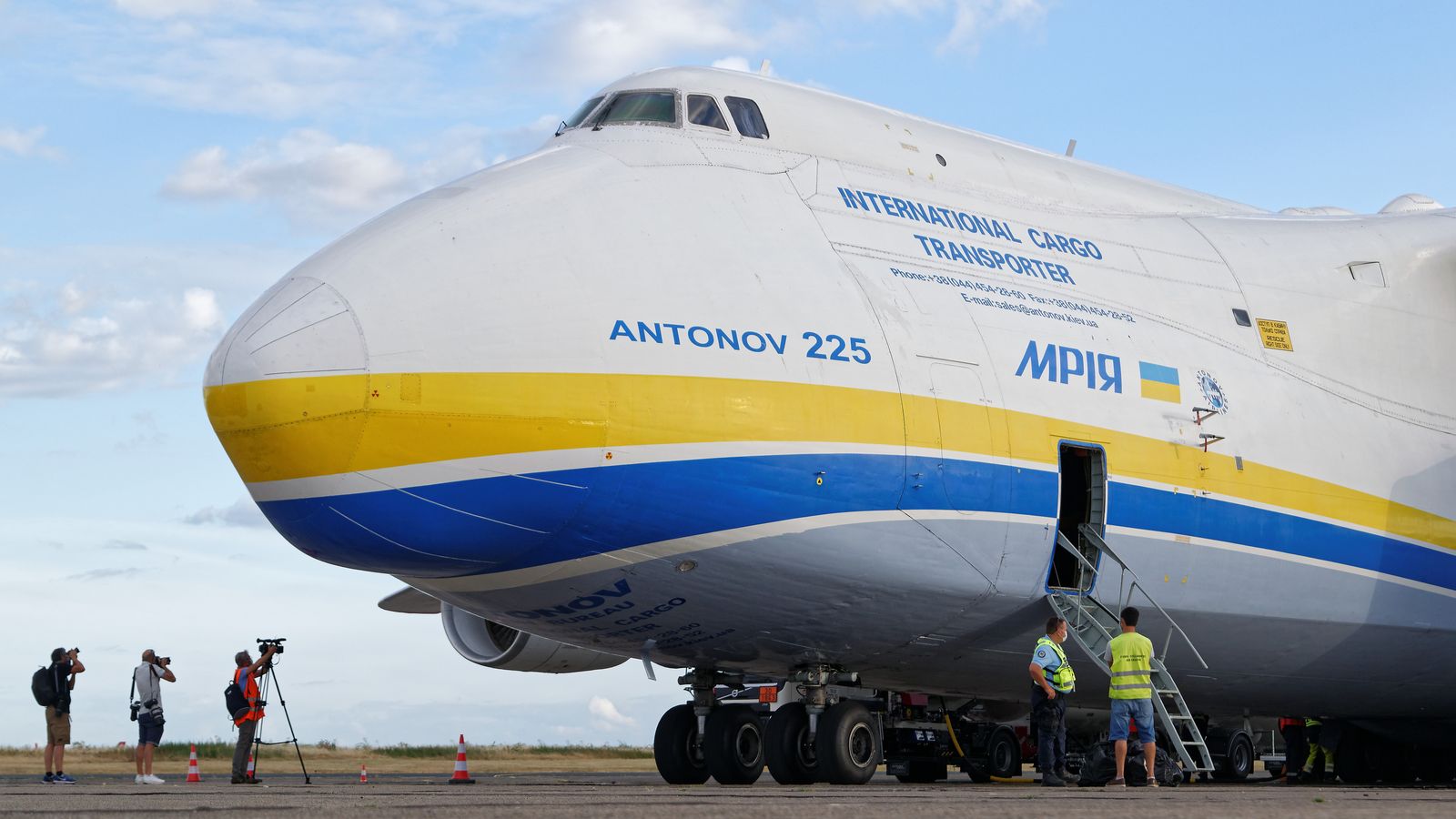
Some absolute behemoths have been invented over the years, from the C-5 Galaxy to the gargantuan Antonov An-225 Mriya, which has sadly been destroyed. But even these monstrous aircraft pale in comparison to some super-large designs that were so extreme they didn’t even make it to production. Today we’re going to bring you the blueprints from the giants of the sky that, had they become a reality, would have dwarfed every other aircraft in existence.
Boeing RC-1
As humanity has industrialized over the last couple centuries, our dependence on crude oil, and the products we can make from it, has grown exponentially. One consequence of this, as it often is with natural resources, is that as our usage of oil has climbed, we have depleted most of the oil reserves that were the easiest to reach, meaning that over the years, securing a new oil source either meant developing a new method of extracting it, such as fracking, or by sourcing it from a less convenient location.
Key Takeaways
- The Boeing RC-1 was designed to transport oil and ore from remote regions, featuring 12 engines and wing-mounted pods.
- Lockheed’s CL-1201 was a nuclear-powered aircraft intended to serve as an airborne aircraft carrier during the Cold War.
- The Beriev Be-2500 and Be-5000 were massive amphibious aircraft designed to utilize the wing-in-ground effect for lift.
- Boeing’s Pelican ULTRA aimed to carry heavy cargo like tanks, utilizing ground-effect for efficient flight over water.
- These super-large aircraft designs never made it to production due to high costs and technical challenges.
One of the most inconvenient places on earth with lots of oil reserves is the far north of Canada and Alaska, where natural resources lie in abundance but the remoteness and year-round freezing temperatures mean there are no ice-free ports to use, and so there isn’t a clear-cut, simple way to transport said resources back to civilization.
Specifically, in the 1960s, the Alaska North Slope was discovered, a region with an insane amount of crude oil, but there was no existing infrastructure to retrieve it at the time, and a lot of economic and social issues complicating the construction of the Trans-Alaska Pipeline System.
It was this problem that got the attention of Boeing engineer Marvin Taylor, who was asked by some acquaintances in the oil and gas industry if there was any economically feasible method of airlifting the oil out of the region.
It sounds absurd at first, but transporting the oil barrels on cargo aircraft actually had some merit. There would be no need to build any extra, extensive infrastructure in such a remote area, and the oil wouldn’t need to be flown all the way to its final destination, just to southern Alaska where it could then be loaded on traditional oil tankers.
The problem, however, was that the aircraft carrying the oil needed to be able to do so in a cost-efficient way, and there didn’t seem to be a plane at the time that met these criteria, meaning some new ideas had to be cooked up.
The first proposal was a cargo-extending modification of the Boeing 747, with the designs eventually settling on a modified Boeing 747F. In theory, this aircraft could make more than ten daily trips from the oil fields down to the tankers, but the price for the barrel of oil it would deliver was just outside the range of most investors, especially considering how novel and risky the idea was, and so the project was tossed.
But the plan to airlift oil was suddenly revived when Canada stepped in a few years later. In 1970, the Canadian government began investing in projects and planning committees to take advantage of their vast wealth of natural resources in the north. One committee was particularly interested in the minerals in the Canadian Arctic Archipelago, and, realizing that extracting this ore would require hundreds of miles of train tracks across largely uncharted territory, contacted Boeing to inquire about their 747F plans, only this time, with the intent of flying ore instead of oil. Boeing spent some time on their inquiry, and the result was the concept of the massive Boeing RC-1.
The RC-1 was nothing short of humungous. With a wingspan of 478 feet and a length of 338 feet, it was more than double the size of the 747, and had a staggering theoretical maximum takeoff weight of 3.5 million pounds. To get all of this mass into the air, the aircraft needed not two, not four, but 12 engines, which were specified as Pratt & Whitney JT9D turbofans.
One interesting thing about the RC-1 is that the previous versions, which were intending to carry oil, were planning to keep all of the cargo in the fuselage, but because ore would be much more time consuming to place inside the plane, a new loading solution was invented: wing-mounted pods. These pods would be about the length of a typical semi-truck trailer, and there would be four of them attached to the wings of the aircraft to allow for ease of loading and unloading, which would be as simple as attaching the pod before takeoff and dropping it off right after landing. To make this transition seamless, it was envisioned that a parallel set of rails could be designed on the sides of the runway for the cargo containers to be rolled right up to the wing.
Overall, this design was originally believed to economically viable, but it never made it off the drawing board, and for a few good reasons. The first was that during the early 70s, there was a global oil crisis, and the cost of jet fuel essentially doubled, making it much harder for these heavy airlift concepts to be profitable. But the broader issue was that this air-based pipeline was a massive risk, and with no guarantee of it paying off, most of the parties involved were hesitant to start pumping billions of dollars into production. And thus, the RC-1 was doomed to forever remain nothing more than a concept.
Lockheed CL-1201
Even in the ambitious realm of aviation, few projects have ever come close to the sheer scale of the Lockheed CL-1201. Conceived during the 1960s, this flying titan was designed to not only challenge conventional aircraft design, but to also redefine limits of what could be achieved in the skies.
At the height of the Cold War, the United States was investigating new ways to gain and assert dominance over the skies, and some engineers at Lockheed came back with a crazy idea: a single, gigantic airborne platform that would be capable of performing a wide array of military functions, the CL-1201.
Now, when we say gigantic, we mean it. The proposed wingspan was an unbelievable 1,120 feet, almost three times that of the already ridiculous RC-1 we just discussed. Paired with a length of over 560 feet and a takeoff weight of up to 6 million pounds, it would have been the largest aircraft in human history by a large margin.
To power such an insane concept, traditional jet fuel wasn’t going to get the job done. Instead, Lockheed’s design included eight nuclear reactors, providing enough combined power to keep the aircraft in the sky for up to 41 days at a time, granting the United States a constant strategic airborne presence anywhere in the world for more than a month at a time.
As for its primary mission, the CL-1201 was equipped with versatile cargo options that could serve a variety of purposes, but perhaps the most interesting option was that it could hold up to 22 fully equipped fighter jets, allowing it to serve as an airborne aircraft carrier, projecting American power on a global scale with unprecedented force. However, in other circumstances, the cargo bay could also be transformed into a troop transport brig, with an internal dock capable of holding two transport aircraft to quickly deliver men and supplies to and from the ground.
But while its size and strength and potential are certainly impressive, they were also its Achilles’ heel. Such an enormous aircraft would require up to 800 on-board personnel and simply unspeakable man-hours of maintenance and repair. The costs to design and produce the thing would have simply been astronomical.
Watch the Video
Open Video
Video Briefing
These are the Biggest Aircraft that Were Never Built
And even if this all would have worked out, the other major criticism was that it was putting all of America’s eggs in a single basket. An asset of this size would be incredibly helpful in times of war, sure, but it would also be the largest imaginable military target in history, and would be the constant subject of anti-aircraft weapons and the top priority of any adversary. And in the event that an enemy attack was successful, a single critical missile strike or even one catastrophic accident could easily result in the deaths of hundreds of men and women on board.
So, although it never progressed beyond the blueprints, the ambitious CL-1201 will forever remain one of the most fascinating “what ifs” in engineering history.
Beriev Be-2500/5000
But let it be known, the Americans weren’t the only ones cooking up some wild designs in the 20th century. In the 1980s, the Russian Beriev Aircraft Company proposed their designs for a heavy transport aircraft that they called the Be-2500. With a length of over 400 feet and a wingspan of 511 feet, it would have been the largest aircraft not only in the Soviet Union but in the entire world.
What sets apart the Be-2500 though, is that it was actually an amphibious aircraft, intended to be able to takeoff from any normal, warm water sea-port without the need for extensive, new infrastructure or large runways.
Because of this design, it was believed to have a simple integration into use in the modern world, and thus, would be able to quickly become competitive in the global transportation industry. Over the years, ideas were still coming together, and by the 90s, there were four different variants of this aircraft, and while the Be-2500 was largest of the bunch, all of them would have been substantially heavier and larger than anything else previously flown.
But by the 2000s, it became known that even the Be-2500 wasn’t the biggest of its family. In the depths of development hell, some Russian engineers sat down and essentially doubled everything on the aircraft’s design, creating the Be-5000, an aircraft of unparalleled size with a theoretical takeoff weight of over 10 million pounds.
This king of the seaplanes would have had enough space to carry essentially any cargo to any destination, but it wasn’t exactly clear if it was even remotely possible, or what ridiculous engines would be needed to power such a craft.
What’s also interesting to note is that some people don’t even classify these designs strictly as aircraft, as they heavily rely on something called the wing-in-ground effect, a sort of added lift that arises when an airplane’s wings get close to the ground. Without this cushion, many of these designs are unable to stay airborne. In the Soviet Union, these ground-effect planes were called ekranoplans, and there were many similar designs that would have used this ground lift effect to allow heavier and heavier vehicles to achieve takeoff.
To this day, both of these aircraft, the Be-2500 and the Be-5000, are still technically in development, as they’ve yet to be officially canceled, but it’s been many years since their programs have received any funding, and unless there’s a major breakthrough in aerospace propulsion, these designs don’t seem likely to resurface any time soon.
Boeing Pelican ULTRA
In the early 2000s, the US Department of Defense requested contractors to design a vehicle that would be capable of pushing the boundary on troop and cargo transport for use on land, air, and at sea. At Boeing, the Phantom Works division was assigned the task, and their first concept was a large airship-airplane hybrid, potentially with the ability to land on water.
But this idea was scrapped pretty quickly, and instead, the engineers started looking at ultra-heavy aircraft utilizing the ground-effect, similar to the Soviet ekranoplans we just covered, and the Boeing Pelican was born.
Patents were filed, internal teams were hard at work, and by 2002, the first designs of the Pelican were shown to the public, and they made jaws drop around the world. With a proposed wingspan of over 500 feet and a theoretical maximum payload of over 6 million pounds, it was believed to have the space and power to carry up to 18 M-1 Abrams tanks at a time. To power this monstrosity, eight turboprop engines would be used, but these weren’t any old engines. The design called for each engine to be about five times as powerful and efficient as anything else in use at the time, something that they were in talks with General Electric for possible production in the event that the Army was interested.
To fly as efficiently as possible, the Pelican would fly at just 20 to 50 feet above the surface of the water to stay in the proper range for the ground effect, but then, differentiating it from other ground-effect planes, as it approached land, it would climb several hundred feet into the sky before descending onto the runway like a traditional aircraft. However, if necessary, it also came with the capability to climb to altitudes of more than 25,000 feet, making it able to clear every potential mountain range on earth, besides the Himalayas. On average, it was believed to have sufficient fuel efficiency to fly non-stop from New York to London.
The motto from Boeing at the time was that the Pelican could “beat ships across the ocean”, revolutionizing wartime transport and taking military cargo delivery to a whole new level, but there were simply too many issues preventing it from becoming the Army’s top choice. It took 7th place in the competition of 11 proposed aircraft, and it was believed that even if full design and production had begun immediately, it wouldn’t have been able to enter service until 2016.
Despite the drawbacks, Boeing continued to file for patents related to the aircraft for several years, such as a specialized automatic altitude adjustment system for maximized fuel efficiency, and maintained their stance that if given a government contract, the aircraft could be ready in just a decade, with perhaps up to a thousand units in service by 2020. The company was giving regular technical updates on their website, and even claimed that the craft’s wings had entered wind-tunnel testing. There were even talks of expanding the project into the civilian domain, as the Pelican could potentially be converted into a passenger jet that could hold between three and four thousand people at a time.
But the Army didn’t pay much attention to these grand promises, and as US military priorities took a new turn throughout the 2000s, the interest in the Pelican quickly diminished. By 2005, even Boeing seemed to have quietly given up on the beast, with internal documents showing a new focus on passenger aircraft, and no further mention of the massive Pelican.
Key Takeaways
- The Boeing RC-1 was designed to transport oil and ore from remote regions, featuring 12 engines and wing-mounted pods.
- Lockheed’s CL-1201 was a nuclear-powered aircraft intended to serve as an airborne aircraft carrier during the Cold War.
- The Beriev Be-2500 and Be-5000 were massive amphibious aircraft designed to utilize the wing-in-ground effect for lift.
- Boeing’s Pelican ULTRA aimed to carry heavy cargo like tanks, utilizing ground-effect for efficient flight over water.
- These super-large aircraft designs never made it to production due to high costs and technical challenges.
SideProjects Editors
The SideProjects editorial team researches, fact-checks, and structures explainers about the lesser-known tales, side narratives, and spin-offs behind major historical and contemporary subjects.
Frequently Asked Questions
What was the Boeing RC-1 designed to transport?
The Boeing RC-1 was designed to transport ore from the Canadian Arctic Archipelago.
What was the wingspan of the Boeing RC-1?
The Boeing RC-1 had a wingspan of 478 feet.
How many engines did the Boeing RC-1 have?
The Boeing RC-1 was designed with 12 engines.
What was the proposed wingspan of the Lockheed CL-1201?
The proposed wingspan of the Lockheed CL-1201 was 1,120 feet.
How long could the Lockheed CL-1201 stay in the air?
The Lockheed CL-1201 was designed to stay in the air for up to 41 days at a time.
What was the primary mission of the Lockheed CL-1201?
The primary mission of the Lockheed CL-1201 was to serve as an airborne aircraft carrier, capable of holding up to 22 fully equipped fighter jets.
What was the Be-2500 designed by the Beriev Aircraft Company?
The Be-2500 was an amphibious aircraft designed to take off from any normal, warm water sea-port without the need for extensive infrastructure.
What was the theoretical takeoff weight of the Be-5000?
The theoretical takeoff weight of the Be-5000 was over 10 million pounds.
What was the Boeing Pelican ULTRA designed to carry?
The Boeing Pelican ULTRA was designed to carry up to 18 M-1 Abrams tanks at a time.
What was the proposed wingspan of the Boeing Pelican ULTRA?
The proposed wingspan of the Boeing Pelican ULTRA was over 500 feet.