EXPLOSIONS! Who doesn’t love a big boom? Any fan of action films will tell you that the explosion is always the best part. Blasts ringing out as the hero makes their intrepid escape just in time. But that’s the movies. What you’ll find in real life is a whole lot bigger and a whole lot scarier.
Yes, explosions are not just for appearing cool if you don’t look at them, they’re a fact of everyday life on earth. This is no action movie or 4th of July firework show. Today we want to show you some of the biggest explosions that have ever been recorded for the world to see. Not just so we can stare in wonder at the devastating capabilities they have, but so we can learn a bit about them. Why did they happen? Where did they come from? And just how damaging were they really?
But let’s be honest, more than anything it’s just an excuse to see some things go “boom”.
Key Takeaways
- The Beirut Port Explosion of 2020 was caused by 3,000 tonnes of poorly stored ammonium nitrate, resulting in widespread destruction and over 200 deaths.
- The MOAB, or ‘Mother of All Bombs,’ is the most powerful conventional weapon in the U.S. arsenal, with a blast radius over a kilometer and a half.
- The Tsar Bomba, tested in 1961, was a 50-megaton nuclear bomb, causing devastation over a vast area and leaving lasting environmental impacts.
- The Hunga-Tonga volcanic eruption in 2022 was the largest underwater explosion ever recorded, affecting global climate and causing widespread destruction in Tonga.
- Documenting major explosions helps illustrate their destructive power and the importance of safety regulations and environmental preparedness.
The Beirut Port Explosion of 2020
On the 4th of August 2020, a large fire broke out at a warehouse in the capital port city of Beirut in Lebanon. Large plumes of white smoke billowed from the warehouse which was believed to have been storing almost 3,000 tonnes of ammonium nitrate. The chemical is a popular fertiliser but also moonlights as a powerful explosive.
After the fire had broken out, it didn’t take long for a violent explosion to rip through the heart of the capital. An enormous fireball rose as a devastating shockwave tore through the city, and the damage left behind was like something out of Apocalypse Now.
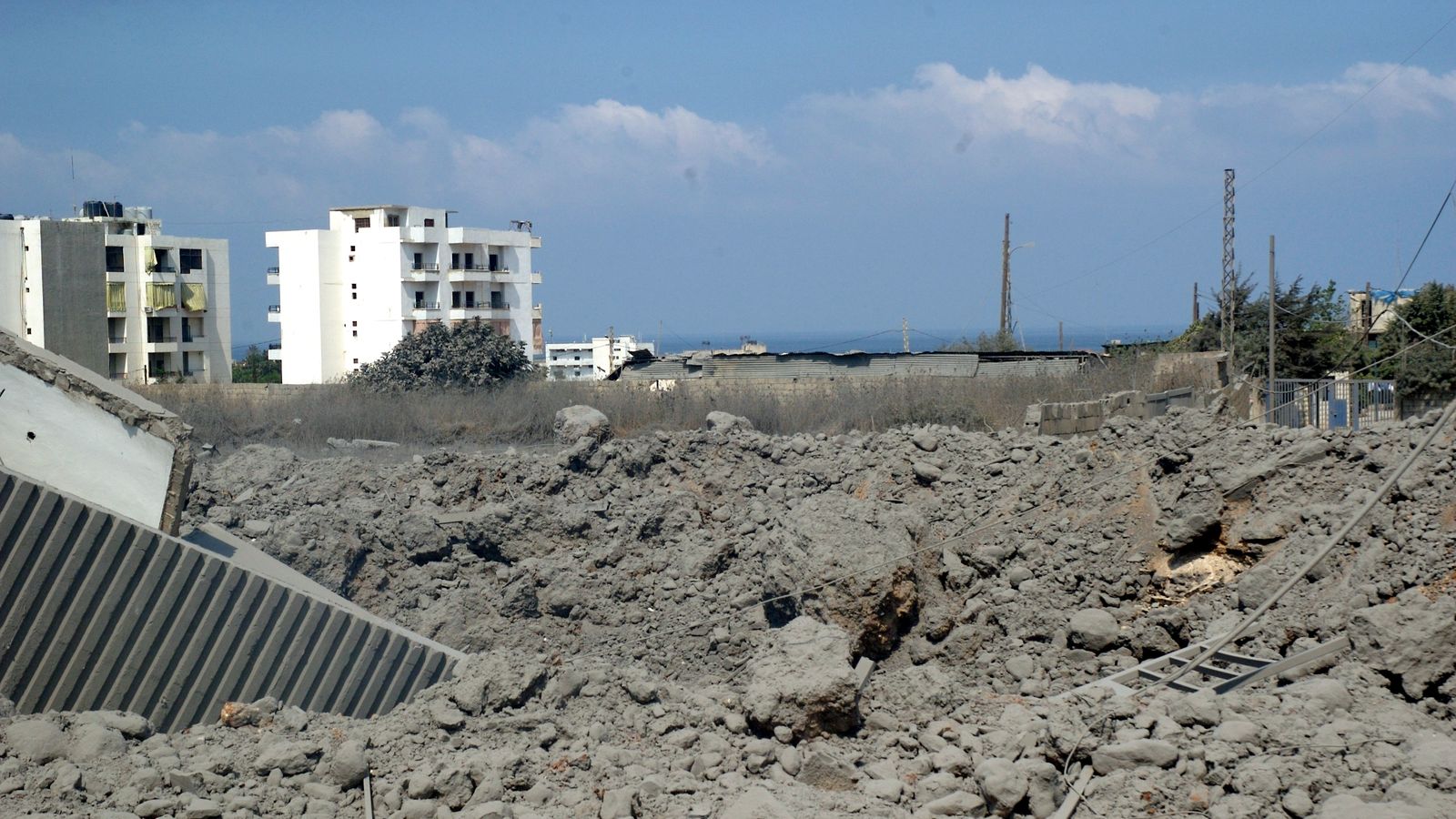
For starters, the explosion left a 140-metre-wide crater where part of the port used to be. Other warehouses in the immediate vicinity were reduced to rubble. According to the BBC, the blast could be heard 200 kilometres away in Cyprus. Beirut International Airport’s windows over five miles away were blown out, a ship was lifted out of the water and seismologists registered readings equivalent to a 3.3 magnitude earthquake.
The financial cost to the city lies in the billions. For a non-nuclear explosion, that is obscenely powerful.
Worse still were how it affected the Lebanese people. 300,000 people in Beirut were made temporarily homeless, hospitals were quickly inundated with patients as over 5,000 people were injured and 200 sadly lost their lives. In the aftermath the people were angry. How could this have happened? How did almost 3,000 tonnes of poorly stored explosives find itself at a port in Beirut?
Well unbelievably, this story actually began an entire seven years before the actual explosion itself.
Way back in 2013, a cargo ship registered to Moldova carrying 3,000 tonnes of ammonium nitrate suffered technical issues and needed to dock. The fertiliser on board was confiscated after the vessel was then abandoned by its owners. It was supposed to be sold or disposed of, but for whatever reason this never happened. Large amounts of ammonium nitrate stored poorly is highly dangerous as it breaks down over time, posing a fire hazard, which is never a good thing for an explosive substance.
So once one broke out, the rest was inevitable.
The blast truly shocked the world and the Lebanese government is still cleaning up the mess today. Subsequent investigations have found that Lebanese officials were criminally negligent in the way that the chemicals were stored, but other reports suggest that the catastrophic risk was simply accepted. It’s a stunning example of why we have health and safety regulations and the genuinely horrific consequences of not adhering to them.
The MOAB
Yes, the MOAB actually exists, it’s not just a kill-streak you might get while playing Call of Duty. The so called “mother of all bombs” actually stands for “Massive Ordinance Air Blast”.
This bomb got its start in 2003, just in time for the start of the Iraq war and was developed by Albert Lee Weimorts Jr, an engineer at the Air Force Research Laboratory. It is considered the most powerful conventional weapon in the US’s vast arsenal.
But just how powerful is the MOAB? Well, a MOAB weighs around 10,000 kilograms, with around 8,500 kilograms of that being high-grade explosives, which gives it a blast radius of over a kilometre and a half. For reference, a common bomb used by US forces, the Mark 82, weighs around 230 kilograms with close to 90 kilograms of high explosives with a radius in the tens of metres. That equals a much bigger boom. And that actually presents something of a problem.
You see, the MOAB is so large that the use case for it is actually kind of limited. Rules of war tend to mean that you can’t drop a bomb with a radius of a kilometre and a half without some major collateral damage. Many of the places that the US has found itself fighting in lately have been in urban areas where civilian casualties would be too high to ever even consider using it.
So, we haven’t actually seen it in combat all that much. But we have seen it, and we have the video to prove it. In 2017, the US Air Force dropped a MOAB on ISIS hiding in Afghanistan’s mountain tunnels, representing a good example of when this kind of weapon can be used. The bomb would have collapsed the tunnels inside, which alongside the explosion would have ensured everybody inside was never getting out again.
The view from the aerial infra-red footage is grainy but it gets the point across of just how large a conventional weapon explosion this is. Test footage from 2003 is also available in full colour and paints a similarly destructive picture.
One thing’s for sure when it comes to the MOAB, you do not want to be anywhere near this thing when it goes off.
The Tsar Bomba Nuclear Test of 1961
Watch the Video
Open Video
Video Briefing
Some of the Biggest Explosions Ever Recorded on Camera
Now onto the largest man-made explosion ever recorded. To break the record, it had to be a nuclear weapon. But not just any nuke, the Tsar Bomba, the largest ever. Although, the Tsar Bomba is actually the Western nickname for the device, labelled the RDS-220 by the Soviet Union. This isn’t just the mother of all bombs, it’s the mother of all nuclear bombs.
So how big was it? As you can imagine, it was, to use the scientific term, flipping enormous. At around 8 metres in length, it was roughly as long as a London bus, with a diameter seven times that of a standard dinner plate.
It was designed to be a 50-megaton bomb, about 1,600 times the power of the bombs dropped on Hiroshima and Nagasaki combined. And you know what, its test on October 30th 1961 really showed that. It was dropped at around 11:30, local Moscow time, at the Mityushikha Bay Nuclear Testing Range in the northern Arctic Circle.
There are not enough superlatives to describe the size of the blast. It is so large that it seems to happen in slow motion, your eyes need time to adjust to the footage to even assess what you’re looking at. Aerial views from Soviet jets monitoring the situation from very far away show a bright flash that lingered for an eternity before a gigantic mushroom cloud could be seen erupting a full 64 kilometres into the atmosphere.
The aftermath of the explosion showed the true scale of the devastation. It was calculated that a person would experience third degree burns even at a full 100 kilometres away from the epicentre. It represented 10% of the yield of all nuclear devices ever tested at the time. In Soviet districts hundreds of kilometres away, wooden houses were completely demolished and the shock wave was felt almost 700 kilometres away from ground zero.
That’s like setting off a nuke in Basel, Switzerland and feeling a shockwave in central London. Windows were shattered in Norway and Finland and seismic sensors continued to measure the shockwave even after it had travelled around the entire planet three times. In terms of raw power, its effects were unprecedented. Even the plane that dropped it barely escaped the blast.
There is simply nothing like it and there may never be ever again, which makes the rare footage we do have of the enormous blast even more special and even more harrowing. If a device of this size was ever dropped on a large population centre, or even just near one, it would be cataclysmic.
The Hunga-Tonga Volcanic Explosion
Finally, we have a powerful explosion that managed to be captured on film in January of 2022, just off the coast of the small pacific island nation of Tonga. 60 kilometres North of Tonga’s main island, the Tonga-Hunga Ha’apai underwater volcano erupted. And as volcanic eruptions go, it was a doozy.
You see, some volcanic eruptions can actually be explosive. Gas can build up inside the super-hot magma, and given how heavy and thick magma is, it can be hard to escape. As a result, the pressure builds until eventually it’s released all at once. This is believed to be what happened on a massive scale at Tonga-Hunga, which explosively erupted for a full eight minutes.
The footage shows huge plumes of ash being catapulted into the atmosphere, with satellite views displaying the sheer size of the eruption. Those in Tonga said they had never seen anything like it.
The volcano had been flaring up for a while, so an eruption was expected. But the true force of the eruption could not be. The eruption itself was the largest underwater explosion ever recorded. Communication lines to Tonga were severed, cutting it off from the rest of the world and the Red Cross reported that two islands had to be evacuated owing to the destruction of all homes. Not some homes, not half, all of them. 99% of Tongans were affected in some way by the volcano. A tsunami caused by the eruption itself then hit the pacific island nation resulting in the deaths of five people, but many more were displaced by the disaster.
The eruption also caused a powerful shockwave that emanated outwards and travelled around the world, resulting in large waves washing inland as far away as Peru, California, and even Europe. To get an understanding of the force we are talking about here: the BBC reported that 10 cubic kilometres of material was displaced by the eruption, equivalent to 4,000 Egyptian pyramids and the explosion was heard in Alaska 6,000 kilometres away. It was so violent and beyond volcanologist’s estimations that it actually reshaped the sea floor.
But that’s not all, as this was an underwater explosion, a huge amount of H₂O was ejected in the blast. Experts have stated that almost half a million tonnes of water vapour was sent into the stratosphere, enough water to fill 58,000 Olympic-sized swimming pools, and raising the water vapour content in the stratosphere by between 10% and 15%. As water vapour is a greenhouse gas, this eruption actually contributed to rising global temperatures in the short term. It was an explosion large enough to affect the whole planet months after the fact.
That’s a big boom.
Conclusion
Those were just four of some of the most powerful and devastating detonations ever captured on film. There are plenty more out there, but these ones show the range of explosions that can happen on our little blue dot. Beyond the truly massive destruction that come as a result of these disasters – both man-made and natural – the fact that we were able to get these events on camera is a good thing. Whilst it can be shocking, these videos are highly important references illustrating what we and our planet are truly capable of.
Whether it’s ensuring that there will forever be the safe storage of hazardous materials, a warning to how we can deal with environmental disasters as the planet changes or in just how big a boom we can make while blowing each other to bits, having these recordings can hopefully be a lesson for future generations to do things differently. Because, you can see the consequences of what will happen if they don’t.
Key Takeaways
- The Beirut Port Explosion of 2020 was caused by 3,000 tonnes of poorly stored ammonium nitrate, resulting in widespread destruction and over 200 deaths.
- The MOAB, or ‘Mother of All Bombs,’ is the most powerful conventional weapon in the U.S. arsenal, with a blast radius over a kilometer and a half.
- The Tsar Bomba, tested in 1961, was a 50-megaton nuclear bomb, causing devastation over a vast area and leaving lasting environmental impacts.
- The Hunga-Tonga volcanic eruption in 2022 was the largest underwater explosion ever recorded, affecting global climate and causing widespread destruction in Tonga.
- Documenting major explosions helps illustrate their destructive power and the importance of safety regulations and environmental preparedness.
SideProjects Editors
The SideProjects editorial team researches, fact-checks, and structures explainers about the lesser-known tales, side narratives, and spin-offs behind major historical and contemporary subjects.
Frequently Asked Questions
What caused the Beirut Port Explosion of 2020?
The Beirut Port Explosion of 2020 was caused by a large fire at a warehouse storing approximately 3,000 tonnes of ammonium nitrate, which had been confiscated from a cargo ship in 2013 and poorly stored.
How powerful was the Tsar Bomba nuclear test?
The Tsar Bomba was designed to be a 50-megaton bomb, about 1,600 times the power of the bombs dropped on Hiroshima and Nagasaki combined. It was the largest nuclear weapon ever tested.
What is the MOAB and how powerful is it?
The MOAB, or ‘Massive Ordinance Air Blast,’ is the most powerful conventional weapon in the US arsenal. It weighs around 10,000 kilograms, with 8,500 kilograms of high-grade explosives, and has a blast radius of over a kilometer and a half.
What was the impact of the Hunga-Tonga volcanic eruption?
The Hunga-Tonga volcanic eruption in January 2022 was the largest underwater explosion ever recorded. It displaced 10 cubic kilometers of material, caused a tsunami that resulted in deaths and displacement, and sent a significant amount of water vapor into the stratosphere, contributing to short-term global temperature rise.
How did the Beirut Port Explosion affect the city and its people?
The Beirut Port Explosion left a 140-meter-wide crater, destroyed nearby warehouses, and caused extensive damage across the city. It resulted in 200 deaths, over 5,000 injuries, and made 300,000 people temporarily homeless. The financial cost was in the billions.
What was the historical context of the ammonium nitrate stored in Beirut?
The ammonium nitrate stored in Beirut was confiscated from a cargo ship registered to Moldova in 2013. The ship suffered technical issues and was abandoned by its owners. The chemical was supposed to be sold or disposed of but was poorly stored for seven years.
What are the limitations of using the MOAB in combat?
The MOAB’s large blast radius makes it difficult to use in urban areas due to the high risk of civilian casualties. Its use is limited to situations where significant collateral damage is acceptable, such as destroying enemy tunnels.
What were the global effects of the Tsar Bomba test?
The Tsar Bomba test created a mushroom cloud 64 kilometers high and a shockwave felt almost 700 kilometers away. It caused third-degree burns at 100 kilometers from the epicenter, shattered windows in Norway and Finland, and was detected by seismic sensors after traveling around the Earth three times.
How did the Hunga-Tonga eruption affect the environment?
The Hunga-Tonga eruption sent almost half a million tonnes of water vapor into the stratosphere, raising the water vapor content by 10-15%. This contributed to short-term global temperature rise due to water vapor being a greenhouse gas.
What was the significance of capturing these explosions on film?
Capturing these explosions on film is important for illustrating the destructive capabilities of such events and serving as a reference for future generations. It highlights the consequences of poor safety regulations and environmental disasters, encouraging better practices.