

The universe is a massive, possibly infinite, space full of mysteries. But it’s also full of misinformation. There are a lot of commonly held misconceptions about the universe, many of which are even taught in schools. These could stem from a lack of understanding, poor communication on the part of scientists, or misinterpretation of facts by the public.
Sometimes it’s even a concept that was previously thought to be fact, and the new data contradicting that belief simply failed to garner the public’s attention. From black holes to the center of the universe, today we’ll be looking at five of these misconceptions.
Dead Stars in the Night Sky
Everybody knows that looking at distant celestial bodies is like looking into the past. When you look at a star in the night sky you aren’t seeing the star as it exists in the present, rather you are seeing the light emitted from it many years ago. For all we know the star could have gone supernova a hundred years ago, and it could be hundreds of years more, if not longer, before we found out it happened. This, combined with frequent news stories of new, distant stars discovered billions of light years away has led to a common misconception.
Key Takeaways
- Most stars visible in the night sky are likely still alive, despite appearing as they were hundreds to thousands of years ago.
- Earth’s proximity to the Sun does not determine the seasons; axial tilt is the primary factor.
- The observable universe is a small part of the entire universe, which may extend infinitely beyond our view.
- Black holes are relatively small and mostly harmless, with a tiny event horizon and detectable accretion disks.
- Sound can travel in space where there is a dense enough medium, such as in the Perseus galaxy cluster.
It’s a commonly held belief that many of the stars in the night sky could already have died, and we just don’t know it yet. This is sometimes even taught in schools as the likely state of affairs. However, while it is technically true that this is possible, it is exceedingly unlikely.
When people talk about the night sky, they are referring to the roughly 9,000 stars that are visible from Earth with the naked eye. Though we are observing those stars as they existed at some point in the past, it’s actually a very short length of time, at least on a cosmic scale. The stars that we see in the night sky are generally the ones closest to Earth, contained within our own galaxy.
On average, these stars are only about 1,000 light years away, with the absolute furthest star that is visible with the naked eye only being about 16,000 light years away. But that star is barely visible, and its distance is very much an outlier within the context of our night sky.
But even going by the average star rather than an outlier like that, 1,000 years sounds like a long time. How can we be so confident that all of those stars are still alive and well in their own corners of the galaxy? The life span for stars typically ranges from 50 million to 20 billion years. In the case of a blue supergiant it can drop down to about 10 million years, but those are exceedingly rare.
If we’re extremely generous and assume that every star in the night sky will only live for 50 million years instead of extending into the billions, realistically they’re still probably all fine. The time it takes for their light to reach Earth is only two thousandths of a percent of their entire life, meaning there’s only about an 18% chance that even one of the 9,000 visible stars has actually died off. That’s just a probability and not a guarantee, but it is more likely than not that none of the stars in our night sky have died off yet.
Of course, if we extend this thinking to all stars that scientists have observed with high powered telescopes, then yes, many of those have reached the end of their life cycle already; this is likely the source of the confusion. But the commonly held belief about the night sky, which consists only of stars visible with the naked eye, is not accurate.
The Earth is Closest to the Sun in the Summer
It’s well known that Earth doesn’t travel around the sun in a perfectly circular orbit. Indeed all orbits are elliptical, though some are more circular than others. This is called an orbit’s eccentricity, the measure of how far from circular it is. But because we orbit the Sun in an ellipse rather than a circle, that means there is a time of year that the Earth is closest to the Sun and a time of year when it is farthest from the sun.
This has led to the common misconception that our planet is closest to the sun in summer and farthest away in winter. At first glance this makes intuitive sense. After all, the distance from a star is the most important factor in determining the temperature of a planet. At second glance, however, you might realize that if every person on Earth assumed that we were closest to the Sun in the summer, by default half of the planet would have to be wrong.
The perihelion is the point when Earth is closest to the Sun, and this occurs some day each year between January 2nd and 5th. That all checks out for the southern hemisphere, but for the northern hemisphere this happens in the dead of winter. The aphelion, when we are farthest from the Sun, takes place between July 3rd and 6th.
So what is really going on here? Earth is just over 5 million km closer to the Sun in January than in July, or about 3% of our total distance from the Sun. That’s not a negligible amount, but it’s also not enough of a variation to cause the seasons we experience. Though our previous statement about distance from a star being the most important factor in a planet’s temperature was accurate, it’s not the only factor.
For example, Venus is actually a little bit hotter than Mercury despite being almost twice as far away from the sun. This is because Venus has an incredibly dense atmosphere of greenhouse gasses that trap heat on the planet, whereas Mercury has essentially no atmosphere to trap heat at all.
In the case of Earth, the seasons we experience are caused by Earth’s axial tilt. Our planet is tilted towards the sun at 23.5 degrees with respect to the orbital plane, which means that one hemisphere is more directly facing the sun at a time than the other. The more sunlight a hemisphere gets the warmer it will be, regardless of the variations in distance from the Sun.
The Observable Universe is the Universe
This misconception stems largely from inexact explanations from literature and science communicators. The universe is supposed to be everything, excluding any sort of multiverse, so the assumption whenever a person hears discussions about the universe is that it is the entire universe that is being discussed. However, there are actually different ways we can define the universe.
There is the observable universe, the causal universe, and the entire universe. Most things you learn about are referring to the observable universe, though such a distinction is rarely articulated. The observable universe, as you might suspect, is the part of the universe that we can observe. This extends 46.1 billion light years from Earth in all directions, but it is also somewhat of a misnomer.
Take GLASS-z12 as an example. This is the furthest galaxy that has been observed, and it is currently calculated at being 33 billion light years away from Earth.
However, because the universe is expanding faster than the speed of light, light emitted from that galaxy today will never reach Earth. We can observe the light it emitted 13.6 billion years ago that has finally reached Earth now, thus it is considered part of the observable universe, but its current location is further than we are able to see.
Beyond the observable universe is the causal universe. This is the area of the universe that could theoretically have some sort of causal relationship with us on Earth, because photons from that distance could reach our planet. Think of it as the upper bound of the observable universe. As technology advanced and we built more powerful telescopes, the observable universe expanded.
It is believed that future technological advancements will allow us to see even further, and the causal universe is essentially the maximum size that the observable universe can ever reach, no matter how much our technology improves.
But beyond both of those is the entire universe. At least we assume so. Technically we have no way to prove that the universe extends beyond the observable universe yet, but all of our best cosmological models indicate that the entire universe extends well beyond what we can see, quite likely to infinity. As such, it is assumed that our infinite universe has no actual center.
And yet, if you look at a diagram of the universe, it has a very clear center: Earth. It is major differences like these that make the distinction between the observable and the entire universe so important, even if it is often misunderstood or poorly conveyed. Of course, this could arguably be another misconception about the universe as well: that Earth is not the center of the universe.
Watch the Video
Open Video
Video Briefing
The Biggest Misconceptions About The Universe
We can see the same distance in all directions, and that sphere around Earth makes up the observable universe. All of the observable, scientific data indicates that Earth is in fact at the center of the universe, we have just chosen to assume that this can’t be true. Granted this assumption is based on very sound logic and extrapolation, but it’s also more of a philosophical argument than a scientific one.
After the switch from geocentric models of the solar system to heliocentric, it became very important for scientists at the time to take the default viewpoint that Earth was an average, mediocre planet that was not special in any way. That remains the default stance of scientists, and with good reason, but there isn’t any evidence it is actually true. It is assumed that the entire universe is either infinite or is some massive closed shape like a sphere, and in the latter case that Earth isn’t located anywhere special within that sphere. Again, there is very sound logic for these assumptions and they’re probably accurate, but the currently available physical evidence suggests that Earth really is the center of the universe.
Black Holes Are Terrifyingly Dangerous
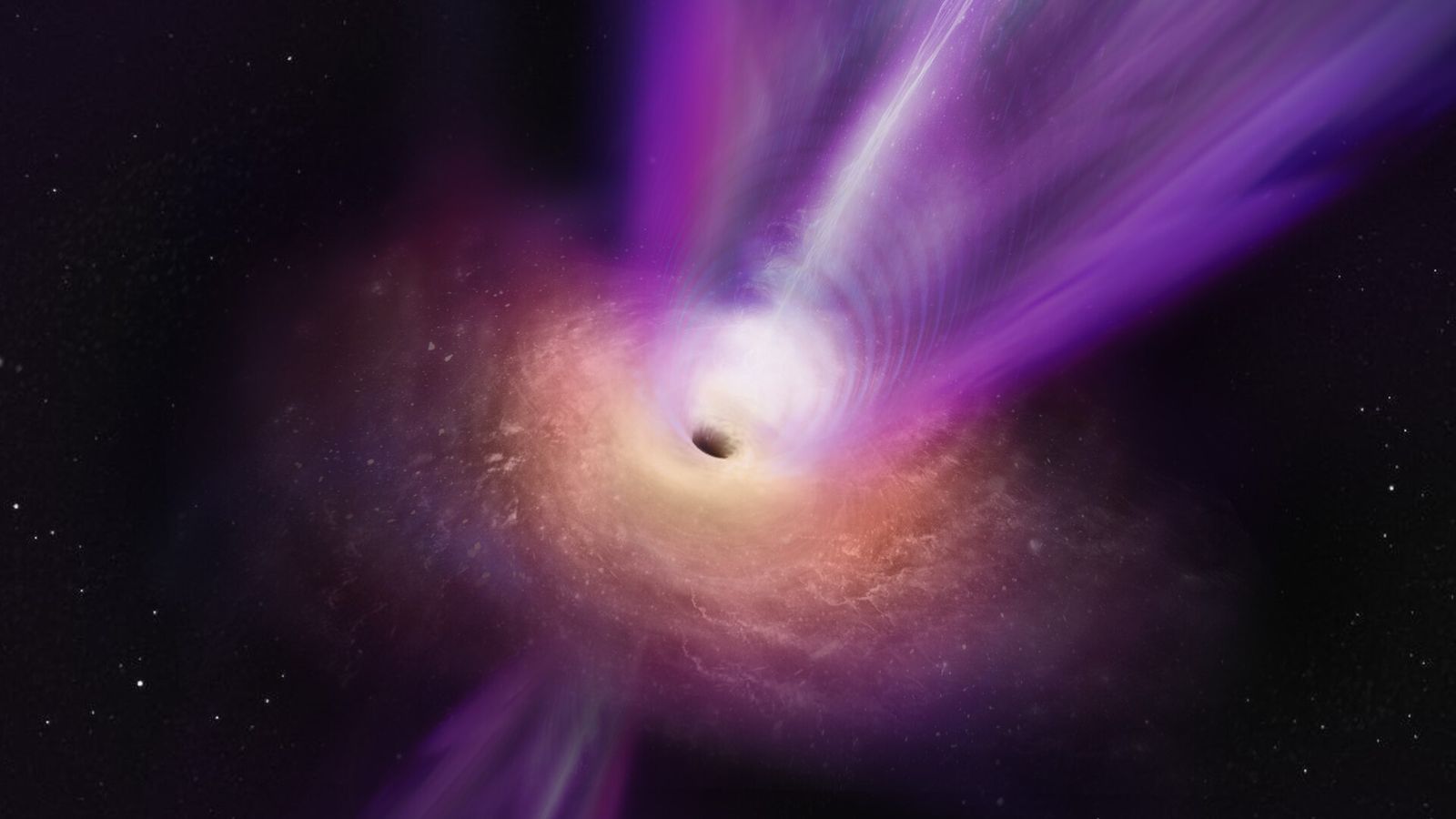
Black holes are one of the most interesting things in the universe to scientists and laypeople alike. People often think of them as terrifying monsters, sucking up anything that dares to get too close to them. After all, the gravity from a black hole is so strong that not even light can escape, so it seems obvious that they must be the most dangerous objects in the universe. In reality, however, black holes are mostly harmless.
To start, black holes are relatively tiny. We’ll focus on stellar black holes, as they make up the vast majority. It is believed that supermassive black holes only exist in the centers of large galaxies, while those same galaxies could have hundreds of millions or even billions of stellar black holes each. A typical stellar black hole has about 20 times the mass of our sun, but it is only about 16 km in diameter. On a cosmic scale, that’s essentially nothing.
That’s all well and good, but what about their gravity? Once you enter the event horizon of a black hole there is no escape, so surely you need to stay far away from these things, right? Well for a stellar black hole of that size, the event horizon would only be about 60 km from the black hole itself. The entire dangerous area is less than 150 km in diameter, which again is tiny. The whole thing is only about the size of New Jersey.
Compare that to the stars that formed these black holes, which were millions of km in diameter, and black holes are actually a lot safer to travel around. Even planets, moons, and many asteroids pose a more serious threat to space travel than black holes, as they are much larger targets that need to be avoided.
And even if you fail to completely avoid a black hole, it’s not going to suck you in. To start, black holes don’t suck anything, objects fall into them because of the force of gravity. That may seem like a needless, semantic correction, but it’s actually a very important distinction. Since black holes aren’t actively sucking things up, it’s extremely difficult to fall into one. In fact, it’s borderline impossible. If it was easy, then they wouldn’t have accretion disks.
A black hole’s accretion disks are essentially the same thing as the rings around a planet, except they tend to be made up of tiny particles rather than rocks and ice (though some planetary rings are just dust particles as well). These particles orbit the black holes, which would be the most likely fate of any spaceship that passed too close to a black hole as well. Unless it happened to have a perfectly straight trajectory directly at the black hole’s center of mass, the result would almost always be a highly eccentric elliptical orbit around the black hole.
Not only is this not that dangerous yet, it could be extremely useful for long distance space travel. Because of the intense gravity, the orbital speed would be incredibly high, making them far more attractive than stars or planets for use as gravitational slingshots. This brings up another misconception that it’s impossible to escape a black hole’s gravitational pull. That is true to an extent, but it only applies once you pass the event horizon.
It would be possible to escape from the accretion disk, and the orbital speed caused by gravity would actually aid a ship in doing so.
There are other factors at play such as particles in the accretion disk slowing down the ship or the radiation the disk emits killing everyone, but we’ll ignore those problems for the moment. Between the speed provided by orbit and any ability to thrust that a spaceship had, it would definitely be possible to escape from a black hole even from inside the accretion disk. We know this is true, because particles do it all the time.
When particles in the accretion disk collide, it sometimes results in them achieving escape velocity and flying free of the black hole entirely. Other times, it changes their trajectory and causes them to fall into the black hole, and this is the main way that matter enters a black hole. It’s a slow process, and very different from how being sucked into a black hole is commonly portrayed.
And while it is true that the black holes themselves are invisible, they are hardly undetectable. The accretion disks are heating to high temperatures, resulting in massive amounts of easily detectable radiation and visible light. Between their small size and how easy they would be to detect from a reasonable distance away, black holes pose very little threat to interstellar travel. Assuming they have an accretion disk, at least.
Some black holes don’t, but even then it would be difficult to crash into something that was both tiny and invisible on purpose, let alone by accident.
In Space No One Can Hear You Scream
It’s one of the most iconic movie taglines of all time, and it’s grounded in scientific fact. Despite both acting like waves, sound and light use different mechanisms to travel. With light waves, it is the light itself that is traveling in the form of photons. However, sound travels through a medium by transferring energy from one particle to the next.
The particles themselves aren’t moving like photons, instead they are interacting with other particles around them. And since there are no particles in the vacuum of space, there is obviously no way for sound to travel.
That’s the commonly held belief, and it is mostly true. Even the so-called “vacuum” of space isn’t completely empty, but there isn’t a high enough density of errant particles for sound to propagate either. But not all of space is so empty. Sure, it may be true for the vast majority of deep space, but it is incorrect to say as a universal truth that there is no sound in space; it really depends on where you are.
As an example, let’s take the Perseus galaxy cluster, also known as Abell 426. It’s a cluster of galaxies in the constellation Perseus, and it is one of the most massive objects thus far discovered in the universe. The cluster contains thousands of galaxies and is over 11 million light years in diameter. Most importantly, the entire cluster is enveloped in a cloud of gas dense enough to carry sound. And it does.
In 2022, NASA recreated sound waves that were recorded emanating from the supermassive black hole in the center of the galaxy cluster. The sounds were 57 octaves below middle C, well below the range of human hearing, so NASA raised the frequencies to be audible to us. Although the pitch was adjusted so that we could actually hear it, these are still the authentic sounds of a black hole. The audio was originally posted on an official NASA Twitter account, and it is still freely available to the public.
The sounds coming from the black hole at the center of the Perseus galaxy cluster sound a bit like trillions of souls wailing in sorrow as they languish in Hell for all eternity. But we promise, black holes really aren’t that scary.
Key Takeaways
- Most stars visible in the night sky are likely still alive, despite appearing as they were hundreds to thousands of years ago.
- Earth’s proximity to the Sun does not determine the seasons; axial tilt is the primary factor.
- The observable universe is a small part of the entire universe, which may extend infinitely beyond our view.
- Black holes are relatively small and mostly harmless, with a tiny event horizon and detectable accretion disks.
- Sound can travel in space where there is a dense enough medium, such as in the Perseus galaxy cluster.
SideProjects Editors
The SideProjects editorial team researches, fact-checks, and structures explainers about the lesser-known tales, side narratives, and spin-offs behind major historical and contemporary subjects.
Frequently Asked Questions
Are the stars we see in the night sky likely to be dead?
It is exceedingly unlikely that the stars visible with the naked eye in the night sky have died. These stars are generally within 1,000 light years and have lifespans ranging from 50 million to 20 billion years, making it statistically improbable that any have died.
Is the Earth closest to the Sun during summer?
No, the Earth is closest to the Sun, a point known as perihelion, between January 2nd and 5th, which is winter in the Northern Hemisphere. The seasons are determined by Earth’s axial tilt, not its distance from the Sun.
What is the difference between the observable universe and the entire universe?
The observable universe is the part of the universe that we can observe, extending 46.1 billion light years from Earth. The entire universe is assumed to extend well beyond what we can see, possibly to infinity.
Are black holes extremely dangerous?
Black holes are mostly harmless. They are relatively tiny, and it is extremely difficult to fall into one. Objects typically orbit around black holes rather than being sucked in, making them useful for long-distance space travel.
Is it true that in space, no one can hear you scream?
While it is mostly true that sound cannot travel in the vacuum of space, there are exceptions. For example, the Perseus galaxy cluster contains a dense cloud of gas that can carry sound waves.
How far away are the stars we see in the night sky?
The stars visible with the naked eye in the night sky are generally within 1,000 light years from Earth, with the furthest being about 16,000 light years away.
What causes the seasons on Earth?
The seasons on Earth are caused by the planet’s axial tilt of 23.5 degrees, which means one hemisphere is more directly facing the Sun at a time than the other, resulting in temperature variations.
What is the causal universe?
The causal universe is the area of the universe that could theoretically have some sort of causal relationship with Earth, because photons from that distance could reach our planet. It is the upper bound of the observable universe.
How big are typical stellar black holes?
Typical stellar black holes have about 20 times the mass of our Sun but are only about 16 km in diameter, making them relatively tiny on a cosmic scale.
Can sound travel in space?
Sound cannot travel in the vacuum of space due to the lack of particles to carry the sound waves. However, in areas with dense gas clouds, like the Perseus galaxy cluster, sound can propagate.