

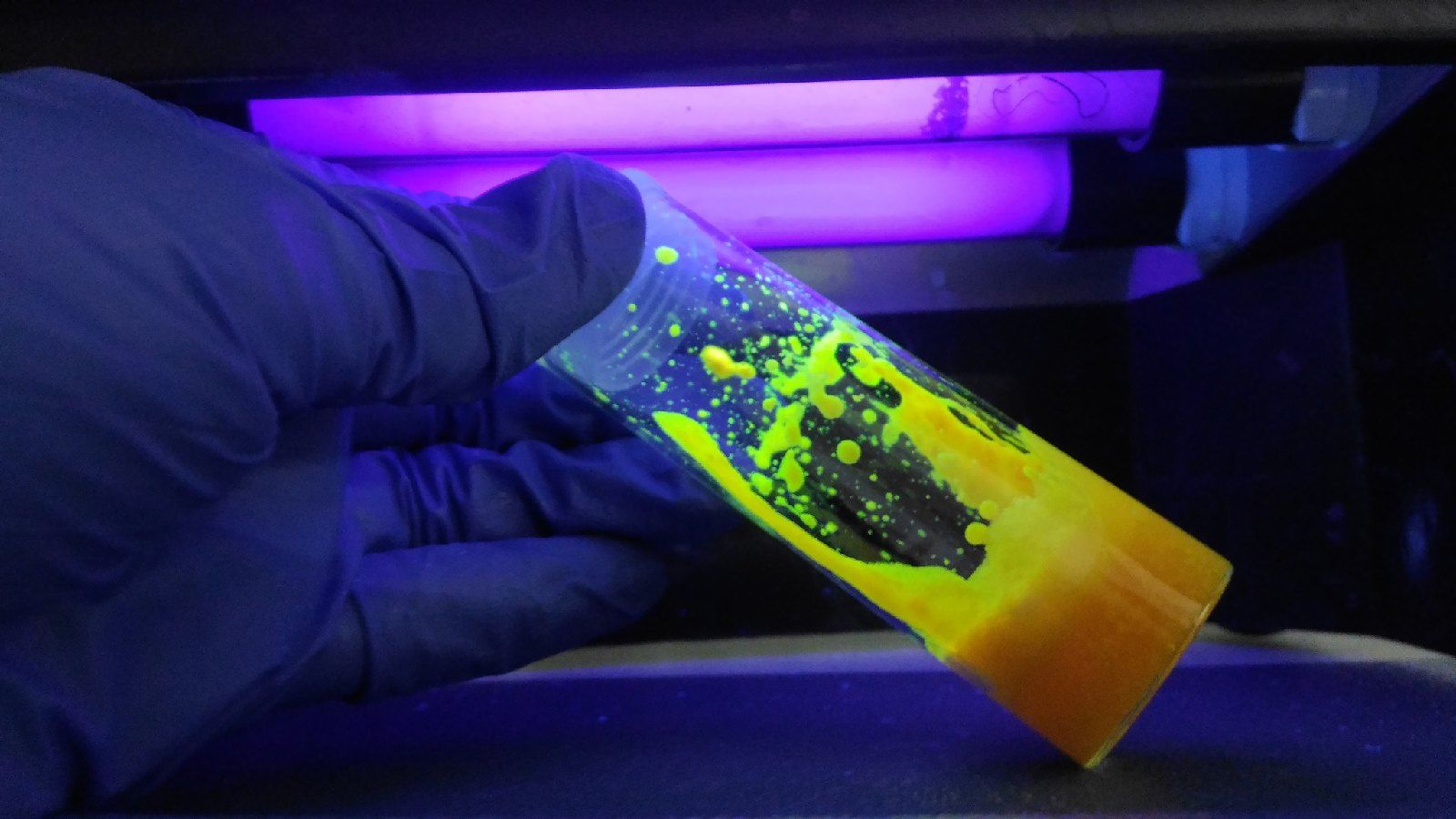
Another year is almost in the books. That means another year of internet memes, political upheaval, and forgettable network sitcoms. But more importantly, it’s another year of scientific achievement. Whether it’s major medical advances, wearable technology, or the search for extraterrestrial life, 2025 has seen some truly exciting breakthroughs.
Night Vision Contact Lenses
Have you ever wished that you could see in the dark, or maybe that you could see with your eyes closed? Okay, you probably haven’t given that second one much thought, outside of having a sneezing fit while driving down the highway. But this is precisely what researchers at China’s University of Science and Technology unveiled back in May.
The invention is called upconversion contact lenses, named because of the upconversion nanoparticles that power this innovation. These particles take near-infrared light and convert it into the visible light spectrum, allowing humans to see infrared. They even had the nanoparticles convert different wavelengths into different colours, allowing for a fuller image than traditional night vision goggles which operate in monochrome.
Key Takeaways
- Night vision contact lenses convert near-infrared light to visible light, enabling infrared vision.
- A new gene therapy, Lyfgenia, cured sickle cell anemia in a patient, offering a safer alternative to bone marrow transplants.
- A pancreatic cancer vaccine showed promising results in preventing cancer recurrence by targeting KRAS mutations.
- Intrarectal perfluorodecalin, or ‘butt breathing,’ was deemed safe in human trials, potentially offering a gentler ventilation method.
- Rock samples from Mars showed leopard spots containing vivianite and greigite, suggesting possible past microbial life.
Another potential advantage of the contact lenses is that they don’t require any sort of power source, being worn directly on the eye like any other contact lenses. Of course, there are a number of limitations with the technology as it currently exists.
When infrared light hits the upconversion nanoparticles, it is scattered into visible light. However, because this is happening directly above the retina, the scattered light results in blurry images that no longer provide proper depth perception. Users were still able to identify the direction an infrared signal was coming from, but the distance to the light source was anyone’s guess.
One solution to this was the creation of eyeglasses containing three layers of material, one of which was the upconversion nanoparticles. By using multiple layers slightly further from the eyes, the glasses were able to redirect the scattered light and restore depth. The tradeoff for this was that these glasses only worked with the wearer’s eyes open, whereas the contact lenses actually showed improved detection of infrared signals when the wearer closed their eyes. Our eyelids are better at blocking visible light than infrared, so closing the eyes allowed reduced the “noise” created by visible light that might have otherwise distracted the wearer from the infrared signal.
Currently there are a lot of limitations to this technology, some of which we’ve touched upon. The contact lenses produce blurry images without depth perception, they can only see near infrared, and the light source needs to be relatively bright. This means they won’t yet be useful for any sort of thermal vision, as heat is mostly emitted in the far infrared range. The main thing these were good for was detecting signals from LEDs emitting near-infrared signals, which, while limited, isn’t entirely useless.
Some of the proposed uses include security, encryption, and anti-counterfeiting.
But the team behind these contact lenses has ambitions beyond just night vision. For example, by using nanoparticles tuned to different wavelengths of visible light rather than infrared, they hope to be able to improve the vision of colourblind people. The current contact lenses exist mainly as a proof of concept, and that concept appears to be working; it just needs a number of improvements before it will be commercially viable.
Of course, one limitation to the technology may be human cowardice. Initial experiments with mice involved injecting the nanoparticles directly into their retinas (with positive results), but the researchers didn’t think humans would go for that, so they had to create contact lenses instead.
New Cure for Sickle Cell Anemia
Back in 1983, eight year old Kimberlin Wilson-George accidentally became the first person to be cured of sickle cell disease. Not only had she been suffering from sickle cell for her entire childhood, she was then diagnosed with acute myeloid leukemia. As part of her leukemia treatment, Kimberlin received a bone marrow transplant from her brother. This was meant to replenish bone marrow destroyed by the chemotherapy, but it had another, unexpected result: it cured her of sickle cell.
Since then, bone marrow transfers have remained the cure for sickle cell disease. Unfortunately, only about 20% of sickle cell patients ever find an eligible donor. Even when they do, there are a lot of risks associated with the procedure. These can become life threatening even before the transplant takes place, and mortality rates for bone marrow transplants are relatively high. So while there was a cure, scientists have spent decades looking for a better, safer alternative.
And scientists may have finally found it in the form of lovotibeglogene autotemce, sold under the brand name Lyfgenia. Lyfgenia is a type of gene therapy that uses the patient’s own blood stem cells, modifying them to create hemoglobin that prevents blood cells from taking on the sickle shape.
This treatment was first approved for use by the FDA in 2023, and in December of 2024 the treatment was administered to 21 year old Sebastian Beauzile of New York. In March of 2025, Sebastian’s doctors announced that his sickle cell had been cured.
That said, this isn’t a simple treatment. While the use of a patient’s stem cells eliminates the need to find a donor and removes the risk of transplant rejection, the patient still needs to undergo high-dose chemotherapy to kill their bone marrow before receiving the IV of Lyfgenia to replace that bone marrow. So the treatment certainly isn’t without its risks, but it likely is still a safer alternative than traditional bone marrow transplants.
Unfortunately, there’s another issue that arises with many novel medical treatments, which is the cost. While this gene therapy is a one-time, single dose treatment, the cost for that treatment currently sits at $3.1 million. That’s obviously well out of reach for 99% of the population, but hopefully further advances in this technology will bring that price down to something vaguely attainable for the average person.
Pancreatic Cancer Vaccine
Pancreatic cancer is among the deadliest forms of cancer. It’s also resistant to treatment and has a high rate of recurrence, so the survival rate has not improved as much as survival rates for other cancers. As such, any advancements in helping fight pancreatic cancer in particular are highly sought after. And in August 2025, researchers out of UCLA published the results of the Phase 1 trial for a new vaccine targeting pancreatic and colorectal cancer.
To start, it’s important to temper expectations by stating that this vaccine does not prevent an initial occurrence of pancreatic cancer. It did, however, show a marked increase in protection against recurrences of cancer.
The new vaccine targets KRAS mutations, a specific gene mutation that occurs in about 25% of all cancer cases, but notably occurs in up to 90% of pancreatic cancer cases and 40% of colorectal cases. The vaccine teaches the immune system to fight these mutations, which is crucial for preventing pancreatic cancer from returning.
Pancreatic cancer often doesn’t present symptoms in the early stages, when it would be easier to treat. It can also be difficult to see in images because of the pancreas’s location deep in the abdomen. By the time pancreatic cancer is detected, it is often difficult to remove with surgery because of its location. And because it usually isn’t detected until late, cancer cells have had plenty of time to spread.
This results in residual, microscopic cancer cells being left behind, areas so small they wouldn’t show up on any scan. That is why using a vaccine to have the immune system target those cells before they can spread and grow into new tumors is so important.
And the results of this Phase 1 trial were incredibly promising. Although the sample size was small, only 25 people, 84% of them developed immune cells that targeted the KRAS mutation. Surprisingly, 67% of patients developed an additional immune response that targeted other cancer cells as well.
Watch the Video
Open Video
Video Briefing
The Biggest Recent Scientific Discoveries.
Patients were followed up on for 20 months after the vaccine was administered, in an attempt to calculate the median survival of the patients. The normal median values for pancreatic cancer patients are 3 months of relapse-free survival and 16 months of overall survival. However, the median values among those that received the treatment could not be calculated, because too many of them were still alive and relapse-free. So there was clearly a major increase in the survival rate, even if it’s too soon to put exact numbers on how effective it is.
This new vaccine is not the only pancreatic vaccine in development, and research regarding another mRNA vaccine was also published this year. However, what makes the UCLA study much more exciting to many people is that this would be an off-the-shelf vaccine to prevent cancer from recurring. The other vaccines need to be personalized for each individual patient, which, as we saw with the sickle cell cure, can drive prices way up.
Again, this was just the first phase of testing with a small sample size, but the results are extremely promising thus far. And anything that can increase the survival rate for pancreatic cancer patients is a welcome innovation.
Intrarectal Perfluorodecalin for Enteral Ventilation
There’s a good chance that the title for this entry sounded like word salad, luckily this new innovation has a much simpler colloquial name: butt breathing. And no, we’re not talking about how dogs make new friends, rather this is an innovative (albeit bizarre) method of providing oxygen to patients with compromised airways.
It’s possible you may have heard about this emerging technology before, as the team behind this research won the 2024 Ig Nobel Prize for physiology for their initial animal testing with this technology. The research was built upon the world of Leland Clark, an American biochemist who worked at the Cincinnati Children’s Hospital.
In the 1960s, Clark invented the compound perfluoro tert-butylcyclohexane, which he named Oxycyte. Because it is able to carry oxygen five times better than hemoglobin, Oxycyte was intended to be used as a form of synthetic blood. It never became commercially available, but potential uses for this oxygen-rich solution have been explored for decades.
A team led by Takanori Takebe of Cincinnati Children’s Hospital and The University of Osaka discovered that a certain formulation of Oxycyte, perflurodecalin or PFD, may be able to provide oxygen to a person rectally by having the compound absorbed into the bloodstream through the intestines, so-called “enteral ventilation”. While the concept of butt breathing may seem strange, boofing has been around for decades, so it’s hardly a stretch to believe the same might be possible using oxygenated liquid.
The 2024 Ig Nobel prize was for successful tests involving mice and pigs, but 2025 was a major step forward as it saw the first human trials. However, the phase 1 human trials were not meant to test the efficacy of this treatment, they were just testing that the treatment would be safe, nontoxic, and tolerable for the patient. As such, the human trial used non-oxygenated PFD.
Patients were given increasing doses of PFD, starting at 25 mL and maxing out at 1,500 mL. The results showed that there were no adverse effects to systemic exposure to PFD, and that there was no systemic absorption of PFD; the compound was all excreted from the body. The only noted side effect was mild abdominal cramping, which was only present at the maximum dose used in the experiment. As such, the use of PFD was shown to be a safe and feasible form of treatment.
The next step will be to use oxygenated PFD to show whether or not it is effective at systemic oxygenation of a person.
That’s all neat, but it does raise the important question of why? Why does science need to find a way for people to breathe through their butts? The idea for pursuing this technology came during the Covid pandemic when there was a shortage of ventilators worldwide. Using oxygenated PFD to help people with respiratory issues would help alleviate issues like that.
But there’s more to it than just supply and demand of ventilators. Intubation is an invasive procedure that can potentially cause additional damage to the lungs. Mechanical ventilation also doesn’t really give lungs the chance to rest and heal. While most people might consider having a doctor shove something up their ass to be invasive, it’s still less invasive than having a tube inserted into your throat and left there.
And providing oxygen to a person through their rectum would give the lungs a much needed break to heal.
Takebe also believes this treatment could be particularly beneficial for newborns with respiratory issues, as their lungs are more fragile and face greater risk from harsh intervention. So while we still need to wait for the next phase of testing to find out if oxygenated PFD is an effective treatment, it has now been shown to be safe for humans. And based on the results from the animal trials, there’s a good chance this could be an effective treatment that is gentler than mechanical ventilators.
Possible Proof of Life on Mars
We end today with what is not only the potential biggest breakthrough of 2025, but of all of human history. Ever since humanity began sending spacecraft to Mars, there has been one primary goal: to search for signs of life on the planet. There were other goals too, like creating a map of the planet’s surface, but trying to establish whether there is or ever has been life on the planet has remained a key element of every mission.
Over the decades there have been a number of discoveries that were exciting at the time, but in every instance scientists were able to come up with an alternative explanation for what was found that didn’t require life. That is, until this year.
In 2024 the Perseverance rover collected a rock sample from what is believed to be a dried up lake. The rock was covered in white spots with black rings, referred to as leopard spots. These leopard spots, which can be found on Earth rocks as well, are often considered a biosignature, evidence that bacterial life was once active in the area. The Perseverance ran experiments on the rock, and over the next year the data was examined by NASA and peer reviewed before being published in September of 2025.
The short version is that different bacteria use iron and sulfur to power their metabolism, and the resulting byproducts are vivianite (iron phosphate) and greigite (iron sulfide). Those are the two compounds that the leopard spots on Mars were made of, which could potentially be proof that life once existed on Mars.
Of course, we know from analyzing these same substances on Earth that there are other ways for these leopard spots to form. If the area had either been extremely hot or extremely acidic, the same chemical reactions could have taken place without the need for bacteria to have existed. However, all of the other evidence suggests that the area was neither hot nor acidic, which leaves bacteria as the only way these leopard spots could have been formed. That, or some alternate mechanism that scientists are completely unaware of.
While all other possible evidence of life found over the decades was deemed inconclusive, as there were other ways to explain what we found, we have finally found something that scientists can’t explain without life having existed.
Unfortunately, the Perseverance rover’s testing capabilities are limited. If we could get that rock back to Earth, it would be really easy to tell whether or not the leopard spots were created by bacteria, because it’s the sort of testing we do with rocks on Earth all the time. Although NASA and the European Space Agency had a proposed mission to retrieve the samples, it is currently on hold and may be canceled entirely due to NASA budget cuts.
But if we can retrieve that sample and our tests confirm that Mars was once home to microbial life, it would confirm what people have long suspected: that we are not alone in the universe.
Key Takeaways
- Night vision contact lenses convert near-infrared light to visible light, enabling infrared vision.
- A new gene therapy, Lyfgenia, cured sickle cell anemia in a patient, offering a safer alternative to bone marrow transplants.
- A pancreatic cancer vaccine showed promising results in preventing cancer recurrence by targeting KRAS mutations.
- Intrarectal perfluorodecalin, or ‘butt breathing,’ was deemed safe in human trials, potentially offering a gentler ventilation method.
- Rock samples from Mars showed leopard spots containing vivianite and greigite, suggesting possible past microbial life.
SideProjects Editors
The SideProjects editorial team researches, fact-checks, and structures explainers about the lesser-known tales, side narratives, and spin-offs behind major historical and contemporary subjects.
Frequently Asked Questions
What are the upconversion contact lenses?
Upconversion contact lenses are a type of contact lens that uses upconversion nanoparticles to convert near-infrared light into the visible light spectrum, allowing humans to see infrared.
What are the limitations of the upconversion contact lenses?
The current limitations include producing blurry images without depth perception, only seeing near-infrared light, and requiring a relatively bright light source. They are not useful for thermal vision.
What is Lyfgenia and how does it work?
Lyfgenia is a gene therapy treatment for sickle cell disease. It uses the patient’s own blood stem cells, modifying them to create hemoglobin that prevents blood cells from taking on the sickle shape.
What is the cost of the Lyfgenia treatment?
The cost for the Lyfgenia treatment currently sits at $3.1 million, making it well out of reach for most people.
What does the new pancreatic cancer vaccine target?
The new pancreatic cancer vaccine targets KRAS mutations, a specific gene mutation that occurs in about 90% of pancreatic cancer cases and 40% of colorectal cases.
What are the results of the Phase 1 trial for the new pancreatic cancer vaccine?
The Phase 1 trial showed that 84% of participants developed immune cells targeting the KRAS mutation, and 67% developed an additional immune response targeting other cancer cells. The median survival values could not be calculated because too many participants were still alive and relapse-free.
What is intrarectal perfluorodecalin for enteral ventilation?
Intrarectal perfluorodecalin for enteral ventilation, colloquially known as ‘butt breathing,’ is a method of providing oxygen to patients with compromised airways by absorbing an oxygen-rich compound through the intestines.
What were the results of the Phase 1 human trials for intrarectal perfluorodecalin?
The Phase 1 human trials showed that intrarectal perfluorodecalin was safe, nontoxic, and tolerable for patients, with the only noted side effect being mild abdominal cramping at the maximum dose.
What is the significance of the leopard spots found on Mars?
The leopard spots found on Mars are made of vivianite and greigite, which could potentially be proof that life once existed on Mars, as these compounds are byproducts of bacterial metabolism.
What is the current status of the mission to retrieve the Mars rock samples?
The proposed mission to retrieve the Mars rock samples is currently on hold and may be canceled entirely due to NASA budget cuts.