

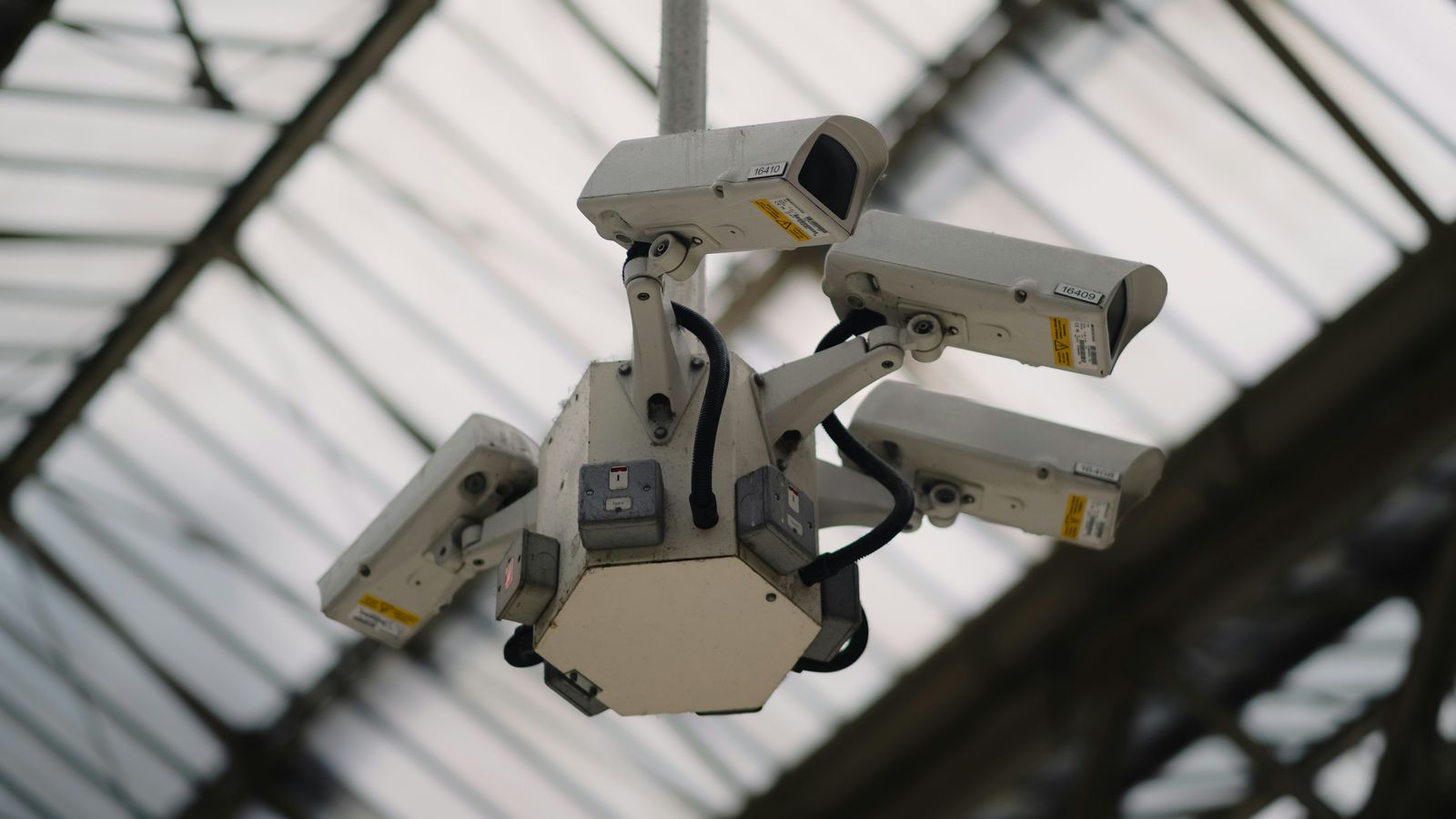
Fifty years ago, if you wanted to live off the grid in a cabin in the woods for your whole life, away from the prying eyes of governments trying to peer into your business, it certainly wasn’t easy, but at least it was possible. But nowadays? It’s close to unthinkable. With the advent of digital technology, of security cameras, and of databases linked to government departments, and of course, the internet, you can never truly be disconnected from the world.
And today we’re going to talk about five countries who take that premise to the extreme. If spying on your own citizens and the rest of the world was an Olympic sport, these five would win the gold hands down. So, tape over your webcams and turn on your VPNs, you’re about to learn some truly horrifying truths.
Number 5 – North Korea
North Korea’s extensive surveillance network enhances its longstanding dictatorship and police state. But its active surveillance efforts have only increased in the 21st century. Within just four years during the 2010s, it’s reported that Pyongyang purchased 100,000 extra security cameras to watch over its citizens, but by now it may have many more.
Key Takeaways
- North Korea’s surveillance includes extensive use of cameras, informants, and state-controlled technology to monitor citizens and defectors.
- India employs facial recognition and biometric ID programs for widespread surveillance, raising privacy concerns.
- Israel uses advanced technologies like facial recognition, spyware, and drones for extensive surveillance, particularly in Palestinian territories.
- The USA’s surveillance programs, such as PRISM and ShotSpotter, monitor citizens and global communications extensively.
- China leads in invasive surveillance with 416 million cameras, AI integration, and strict internet censorship, notably in Xinjiang.
North Korea has also operated an extensive network of human intelligence through its use of informants, who monitor their fellow citizens and report them to the authorities if they notice anything suspicious. Having citizens effectively watch and police themselves does a lot of the Kim regime’s work for it, but Pyongyang still has its own institutions to keep a watchful eye on things.
North Korea’s Ministry of State Security, or MSS, is the counterintelligence services that exists within the nation to monitor the lives of citizens and visiting foreigners and secret police operate throughout the hermit kingdom to weed out potential dissidents and defectors. The state’s monitoring even extends outside of its own borders to monitor defectors with the aim of one day forcefully returning them home. Not many do succeed in escaping North Korea today, as the border with China was slammed shut during the COVID-19 pandemic and communications at the border are extensively monitored for activity to tighten the net.
Technology is still an entirely state-controlled and monitored commodity in the North. Smartphones have spyware that randomly takes screenshots that can’t be deleted, meanwhile the internet is almost totally inaccessible. Only 28 websites are available for citizens with them all being entirely owned and watched closely by the government.
As North Korea continues to modernise, it will begin to develop more advanced kinds of surveillance technologies like AI and drones, with facial recognition technology already being present. In the last few years several digital advances in North Korea have been made, like smartphones that can facilitate payments, electronic cards that provide access to transportation and even additional TV and streaming options. But if anything, these advances, all entirely controlled by the state, will only serve as a vehicle to monitor the lives of its more well-off citizens even more closely.
Number 4 – India
India is new to the surveillance game but has adopted new surveillance strategies as it’s grown into its superpower status, like facial recognition software. This technology has grown in India over time, despite it only having an initial accuracy rating of just 2%.
Khadeer Khan was an Indian citizen arrested in Hyderabad because he looked like the perpetrator of a crime filmed on CCTV. After being released a few days later, he died when being treated for injuries he allegedly sustained while in police custody. Meanwhile municipal workers are made to wear smart watches that record their conversations, take screenshots and record GPS location data. Other government departments have apps which require pictures be uploaded as proof of attendance to facilitate getting paid.
India has also become a world leader for the size and scope of its biometric ID program. More than a billion people have been given a 12-digit personal identification number directly linked to their fingerprints and their photograph. It originally started as a volunteer system to protect against benefit fraud but has since evolved into a huge database of citizens. The BBC reports that comprehensive surveillance profiles of Indian people are already being offered to Delhi by private companies.
The Modi government isn’t just using surveillance tech to spy on its own workers and have everyone’s fingerprint though, it has also used drone mapping, video analytics, and geo location to conduct what the government calls “free and fair” investigations during protests.
In India’s more fringe regions where dissent is more common such as Kashmir, drones have been used to constantly monitor the area for trouble. Further inland, Amnesty International has deemed that Hyderabad has been turned into a “surveillance city”, with over 50% of the metro areas covered with cameras feeding back data to a command-and-control centre. In the capital, there are now 1,500 security cameras per square mile, making it the most camera covered city in the world outside of China.
Indian citizen’s data is regularly being left vulnerable as the state peers into their lives with surveillance technology. A new data protection law was passed in 2023, but India has remained on a concerning trajectory, especially in relation to the housing of citizen’s biometric data and the huge red flags that could be raised if this data was stolen.
Number 3 – Israel
Israel has a longstanding history of surveillance, especially over the Palestinian territories. It, much like the US and China, have devised a range of strategies to ensure that its surveillance network leaves as few gaps in intelligence as possible.
Israel has rolled out facial recognition software in its Red Wolf program as revealed by Amnesty International in 2023. The larger surveillance program “Wolf Pack” is designed to house information on Palestinian citizens, often taken from them without their consent. In the West Bank Red Wolf has been used to scan the faces of Palestinians at checkpoints to compare to existing databases, whilst CCTV cameras throughout Tel Aviv, Jerusalem, Hebron and Palestine can read number plates, recognise objects, and are connected to servers that can analyse the images in real time.
Meanwhile the Israeli spyware Pegasus has been used to hack into the phones of journalists, activists and politicians all over the world to gather intel. Pegasus can extract messages and photos, record calls, and activate microphones, all without the operators’ knowledge.
Israel has also expanded its fleet of quadcopter drones since the conflict in Gaza began not just to use them for combat roles but for on-the-ground surveillance monitoring. Higher in the sky are the larger UAVs Israel operates including the Heron, the Orbital 4, and the Hermes variants among others. Go higher still and you reach the Israeli satellites sending a constant feed of information to command centres and security forces in Tel Aviv. These satellites aren’t just sending images either, but also channelling social media data, internet traffic, and telephone communications, all long before the conflict in Gaza began.
Much like other countries, Israel has started to roll out AI technology as part of its surveillance monitoring. Human Rights Watch reports “Lavender” is a project that uses AI to give Palestinian residents a score relating to the suspected likelihood that a person is a member of an armed group, whilst geolocation services can ping the IDF when those people enter certain areas.
Watch the Video
Open Video
Video Briefing
The Biggest Surveillance Networks in the World
On the ground the human surveillance is just as impressive. The Israeli version of the CIA, known as Mossad, is one of the most effective clandestine organisations in the world at gathering information and monitoring Israel’s enemies abroad, whilst domestically, the IDF kick down doors in Gaza and the West Bank during raids to conduct searches. As far as Israeli surveillance goes, it is thorough from top to bottom. No stone goes unturned.
Number 2 – The USA
The USA, despite being known as the land of the free, has a rocky history when it comes to monitoring its own people. Edward Snowden blew the whistle that the NSA was spying on US citizens all the way back in 2013 via the Patriot Act, and even since then, the US’s level of surveillance across the world has only increased.
The US’s PRISM program gives the government access to the internal systems of the largest technology companies including internet giants like Apple, Microsoft, Google, and Facebook. This gives Washington access to all the messages, emails, and internet calls any person has ever made through these companies. US ISPs even monitor communications flowing into and out of the US for key terms that may affect national security like names and phone numbers groups they wish to monitor. Meanwhile organisations like the FBI can conduct backdoor searches of US citizen’s information without warrants on reasonable suspicion alone.
In local communities, technology like ShotSpotter has sensors placed in neighbourhoods across the US designed to detect gunshots, triangulate location data and help emergency services arrive on the scene quicker. But critics have argued it’s a violation of privacy and is built to overpolice ethnic minority areas. Predictive policing has also been trialled where algorithms were used to anticipate and prevent future crimes based on masses of collected data.
It doesn’t end there, even in 2024 the House judiciary committee released a report on law enforcement using financial institutions to spy on Americans citizen’s transactions. Again, without warrants.
But US surveillance isn’t limited to its own borders. The US also leads the five eyes network alongside the UK, Canada, Australia, and New Zealand, where programmes like WINDSTOP aim to develop a framework to access communications going into and out of both Europe and the Middle East. Whilst RAMPART-A is a program that directly facilitates access to the internet’s backbone including the interception of data from undersea cables that the entire internet relies on. The US and its allies basically have had the internet hooked into them like an IV since the program was founded in the early 90s.
And that’s not all, US Satellites control or assist most of the planet’s GPS systems, and US reconnaissance satellites can take a picture of almost anything on earth as long as it’s above ground. The US doesn’t just have itself under surveillance, but near enough the entire world.
Number 1 – China
However, of all modern mass surveillance systems, there could only ever be one who could take the top spot for being the most invasive. The People’s Republic of China. Whilst every nation we’ve discussed today has a talent for surveillance in one or several areas, the PRC’s talent is putting is all together. When Beijing’s “Golden Shield” program began in the late 90s, nobody could possibly have imagined the level to which the Chinese state could monitor the lives of its citizens.
Today China boasts a mind-boggling 416 million security cameras around the nation. And while, lots of countries have a lot of cameras, this accounts for an enormous percentage of the globe’s CCTV. It’s also the technology combined with those cameras that creates such a web of surveillance around the middle kingdom.
China’s “safe city model” relies on integrating data from sources like utility companies, retail stores, and banks, interwoven with AI facial and automobile recognition software matched against national databases to monitor the entire country in real time. This also includes predictive algorithms that aim to identify masses of people loitering together or gathering in unauthorised areas in protest.
The internet is highly censored through the great firewall of China, where websites like Google are inaccessible over domestic alternatives that are constantly watched by the government. Although given that the US has access to all of it, it’s not hard to see why. But that doesn’t mean China doesn’t use its own version for even more sinister purposes. One example would be in 2024, when followers of liberal bloggers using VPNs were interviewed by the police over their internet activity.
Then you have the social credit system, which deeply monitors the lives of citizens through a score of how well they adhere to laws and social norms. Then abroad you have extensive spying networks, surveillance drone programs, and satellites, ensuring that China has eyes all over the world.
But for the dystopian nightmare that this appears to be, in the Xinjiang region where the Uyghur Muslims live, it is much, much worse. Checkpoints are set up all over the region housing metal detectors with facial recognition cameras and mandatory ID checks. And Human Rights Watch asserts apps are used to monitor Uyghur activities like electricity use and even how much people use their front doors.
Local officials are tasked with staying in local homes under the guise of introducing “new relatives” to Uyghur families and Beijing has even ensured mandatory health checks to collect three-dimensional portraits, voiceprints, DNA, and fingerprints of Uyghur citizens. The ongoing genocide of the Uyghur people encapsulates the true scope of the technological nightmare that is the modern Chinese police state. The US might have a bigger reach and more effective technology, North Korea and Israel may have more control, but in terms of the depth to which people’s individual lives are witnessed, catalogued, and policed, nowhere does it more effectively than Beijing.
Conclusion
Feel better? I’m sure none of you are now petrified of nation states spying on us all and using data to coerce us into behaving ourselves. We are living in frightening times. Owing to having very little accountability, governments will continue to lean on these kinds of surveillance solutions under the premise of a more secure future as the technology continues to develop.
Many will argue that if a person has nothing to hide then there is nothing to fear. But it’s never quite so simple. With states now able to investigate everything about a person from their location in real time, to their internet history, to their text messages, to their bank accounts, to even their own face and fingerprints, there is a lot of scope for governments to deliberately overstep their authority and violate the privacy of everyday people, because they can.
We may not have anything to hide, but there is certainly a lot to fear.
Key Takeaways
- North Korea’s surveillance includes extensive use of cameras, informants, and state-controlled technology to monitor citizens and defectors.
- India employs facial recognition and biometric ID programs for widespread surveillance, raising privacy concerns.
- Israel uses advanced technologies like facial recognition, spyware, and drones for extensive surveillance, particularly in Palestinian territories.
- The USA’s surveillance programs, such as PRISM and ShotSpotter, monitor citizens and global communications extensively.
- China leads in invasive surveillance with 416 million cameras, AI integration, and strict internet censorship, notably in Xinjiang.
SideProjects Editors
The SideProjects editorial team researches, fact-checks, and structures explainers about the lesser-known tales, side narratives, and spin-offs behind major historical and contemporary subjects.
Frequently Asked Questions
Which country has the most extensive surveillance network?
China has the most extensive surveillance network, with 416 million security cameras and a comprehensive system that integrates data from various sources using AI and predictive algorithms.
How does North Korea monitor its citizens?
North Korea uses a combination of security cameras, human informants, the Ministry of State Security, and secret police to monitor its citizens. Additionally, smartphones have spyware that takes random screenshots, and the internet is highly restricted.
What is India’s biometric ID program?
India’s biometric ID program, known as Aadhaar, assigns a 12-digit personal identification number linked to fingerprints and photographs of over a billion people. It started as a voluntary system to prevent benefit fraud but has evolved into a vast database for surveillance.
How does Israel use surveillance technology?
Israel employs facial recognition software, drones, satellites, and spyware like Pegasus to monitor both its own citizens and Palestinians. The Red Wolf program and Wolf Pack are used to gather and analyze data from various sources.
What is the PRISM program in the USA?
The PRISM program allows the U.S. government to access the internal systems of major technology companies like Apple, Microsoft, Google, and Facebook, giving them access to messages, emails, and internet calls.
How does China’s social credit system work?
China’s social credit system monitors citizens’ adherence to laws and social norms through a scoring system. It affects various aspects of life, including access to services and travel.
What is the ‘Golden Shield’ program in China?
The ‘Golden Shield’ program, initiated in the late 1990s, is China’s extensive surveillance system that integrates data from various sources, including utility companies, retail stores, and banks, using AI and facial recognition technology.
How does the USA monitor financial transactions?
The USA uses financial institutions to spy on citizens’ transactions without warrants, as revealed in a 2024 report by the House judiciary committee.
What is the ‘safe city model’ in China?
China’s ‘safe city model’ integrates data from various sources like utility companies, retail stores, and banks, using AI facial and automobile recognition software to monitor the entire country in real-time.
How does India use facial recognition technology?
India uses facial recognition technology for surveillance, despite initial accuracy issues. It has been used in cases like the arrest of Khadeer Khan in Hyderabad, who was mistakenly identified as a criminal.