

One drop is all it takes.
Whether it’s snuck into a drink in the middle of a fancy cocktail party, quietly administered into a hospital IV or sprayed through a perfume bottle, poisons have been a sneaky way to kill since forever. And yet we use them every day; whether in traps for pests, weed killer for gardens or even medicines for our sick; poisons are something we simply cannot escape. They are a fact of life.
But that doesn’t mean they’re not also highly dangerous. Even in small quantities some toxins are as nasty as they are fatal, capable of ravaging the body until their host suffers a cruel, painful and miserable demise.
Key Takeaways
- Cyanide is a versatile and fast-acting poison found in plants and used historically in warfare and poisonings.
- Ricin, derived from castor beans, is highly lethal with no known cure, causing rapid cell death and organ failure.
- Arsenic, a heavy metal, is toxic in both acute and chronic exposures, leading to various cancers and organ damage.
- Botulinum toxin, produced by bacteria, is extremely potent and causes progressive muscle paralysis leading to respiratory failure.
- Tetrodotoxin (TTX) is a biotoxin found in animals, causing rapid paralysis and respiratory failure with no known antidote.
But which ones are they? Where do they come from? And which ones are at the top of the food chain?
So, sit down, grab a drink and let’s find out.
Actually, you might want to leave the drink.
Number 5 – Cyanide
When it comes to poisons you don’t get much more effective or older than cyanide. As a naturally occurring chemical found among plants, it has been used in warfare and poisoning for more than two millennia. You can even get trace amounts of cyanide from the seeds of fruits like apples. It’s also almost undetectable, with its only giveaway the distinctive smell of bitter almonds, but it’s not always present.
Cyanide in all its various forms has a lot of uses, but everyone knows it as a poison. We say “various forms” because one of the key elements of cyanide that makes it so effective is its versatility. It can be found in solid, liquid or gas forms, and it can enter the body via water, air or through food. The other important thing to note about cyanide is it’s fast, like an F1 car on the autobahn fast.
Cyanide can kill a person incredibly quickly. The John Hopkins Bloomberg School of Public Health stipulates that a lethal dose of cyanide gas can be fatal in seconds whilst the ingestion of a solid cyanide salt takes mere minutes. It mainly affects the heart and central nervous system in some very nasty ways. Headaches, agitation, confusion, lethargy, nausea, and vomiting are all common minor symptoms.
More serious symptoms include fluid build-up in the lungs, seizures, comas, red discoloration of the skin, and of course, death.
There are antidotes to it, however if you receive a fatal dose that’s not likely to matter as you won’t make it to the hospital in time to test it. But there are countermeasures to non-lethal doses that will help the symptoms. But if a person does survive cyanide poisoning, they may develop psychiatric symptoms that are similar to those in survivors of heart attacks.
One of the most infamous incidences where cyanide was used was the Jonestown massacre of 1978, where Jim Jones coerced members of his cult to drink flavour-aid laced with cyanide. In total over 900 people including children would die. Another was the Tylenol poisonings of 1982, where Tylenol capsules laced with potassium cyanide originating in Chicago killed seven people and caused panic throughout the USA.
Number 4 – Ricin
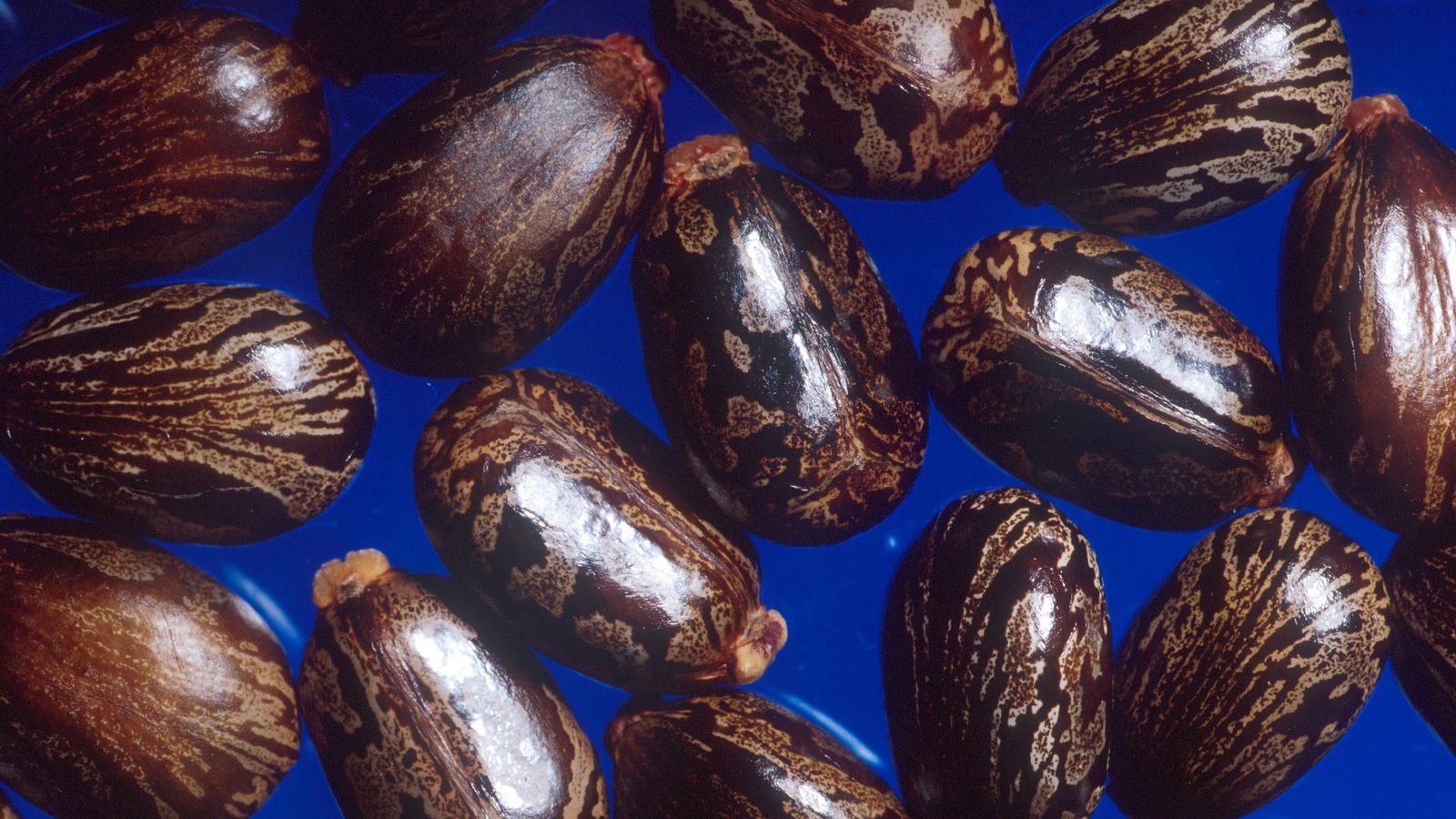
You may have heard of ricin in the past, but just because this highly potent toxin comes from castor beans doesn’t mean that it’s any less deadly. In fact, ricin is considered one of the deadliest poisons on earth. It’s also pretty common because the plant it comes from is used to make castor oil, ricin is simply a byproduct.
The way that ricin works is pretty unique. When it enters a cell, it stops them from generating the proteins they need, which kills them. But ricin causes a chain reaction of this kind of cell death, which affects the whole body. Ricin is so deadly because you don’t need much of it to cause this cascading effect. In fact, it’s reported that one milligram of ricin is enough to kill an adult. There is no cure and it kills quickly, with death occurring within 36-72 hours.
Symptoms range depending on how ricin enters the body. If breathed in, symptoms often hit within four to eight hours. They include a fever, cough, nausea and chest tightness which worsens into sweating, fluid building up in the lungs, low blood pressure, and respiratory failure, which kills you. If ingested instead, a slightly different kind of horror awaits, including vomiting, diarrhoea, dehydration, seizures, and organ failure, which kills you again.
If you survive for three days after first coming into contact with ricin it’s likely that you will live. But those three days will be some of the worst of your life.
Ricin is often considered a common weapon used by terrorists because it’s easy to make, abundant and cheap. It can be aerosolised in its powdered form, doesn’t smell and you don’t need much of it. In many ways it is the perfect bio-weapon. In 2014, a Mississippi man plead guilty to attempting to mail powdered ricin to at-the-time US president Barack Obama. He was sentenced to 25 years in prison, showing how seriously the authorities take it when ricin is involved.
Number 3 – Arsenic
Arsenic is a heavy metal that occurs naturally on earth, but whilst it comes in an organic form, its inorganic form is highly toxic to humans, with its most dangerous form coming from industrial use. The run-off from factories where arsenic is used to make things like glass, electronics and alloys can get into water sources, which then hurts communities downstream. The acute dangers of arsenic are well-known today but it wasn’t always, owing to its utility in a bunch of different products, it saw extensive use in Victorian households. It was used as a poison, yes, but also for medicine, wallpaper, and even makeup.
The real danger when it comes to arsenic is that it’s so toxic, that it can kill you in about 100 different ways. Around 140 million people in 70 countries today are drinking arsenic-contaminated water that is above the World Health Organisation’s safe limit. People every year suffer from quick arsenic poisoning when they ingest a lot of highly contaminated water, with symptoms showing within 30 minutes.
The most common ailments include abdominal pain, diarrhoea and vomiting. This can be followed by a numbness or tingling feeling, muscle cramps, chest pain, fluid in the lungs, damage to the brain, seizures, liver necrosis, and death.
It is no better to be poisoned by arsenic over time. Long-term exposure to lower but still dangerous levels of arsenic lead to all kinds of medical complications. Firstly, there is the effects on the skin, which can change colour, form lesions or hard patches and even cause skin cancer. But skin cancer isn’t the only cancer arsenic will give you, as it can also result in cancers of both the lungs, bladder, and kidneys.
It can also contribute to heart conditions, pulmonary diseases, diabetes, and developmental issues. It is even worse for young children, infants and foetuses as long-term exposure can disproportionately affect them too, leading to debilitating health conditions early in life.
There are effective medical treatments for short-term arsenic poisoning, but the long-term conditions are extremely difficult to reverse. In arsenic’s case, an ounce of prevention is worth a pound of cure. Ensuring that people have access to clean drinking water is the most important measure to take, but with many millions of people suffering every year from arsenic-induced ailments, it has a very long way to go.
Watch the Video
Open Video
Video Briefing
The Deadliest Poisons Known to Man
Number 2 – Botulinum
There isn’t a scientific consensus on which substance is the most toxic, but they all agree on one thing, Botulinum is up there with the worst of the worst. Botulinum toxin is produced by the bacteria Clostridium botulinum and often leads to a form of poisoning known as “botulism”.
It’s no joke, being 10,000 times more potent than the Sarin nerve agent that Saddam Hussein used on his own people. The way that Botulinum gets you is also pretty gruesome. It’s a neurotoxin first and foremost so it directly targets the central nervous system once in your body, stopping your muscles being able to contract.
Believe it or not, this has its uses, as when it’s used in plastic surgery, it’s known as Botox. When the toxin is injected by a medical professional into the face, it paralyses those muscles. This is why people who get Botox have smoother features but also sometimes have trouble making expressions. But this can happen across your whole body if you happen to be one of the unfortunate handful of cases every year that contract the pathogen.
It starts with fatigue, weakness, blurred vision, and vertigo. Soon comes difficulty swallowing or speaking, then a progressive paralysis of the muscles which eventually causes respiratory paralysis and death. You suffocate inside your own body. A truly horrid way to go. Thanks to modern medical treatments, the CDC reports that fewer than 5 of every 100 people die when they contract botulism, but that’s only if it’s caught early.
Even with substantial hospital time, many never fully recover, even passing away from related conditions later. There is an antitoxin, but it can only stop the toxin spreading further, it can’t reverse damage already done. That means the moment somebody gets it, they’re on a timer.
But how do people and animals even get the bacteria in their systems in the first place? Well botulism is usually associated with unsafe food production practices, but it can be contracted through wounds, inhalation or in water.
And it takes its toll every year. In 2023, there were 112 cases of botulism across Europe. In June of 2024 the largest botulism outbreak in Russia for 30 years left 145 people hospitalised. An outbreak in California among its avian population has led to the deaths of nearly 100,000 birds. It’s a serious toxin that leads to a serious death.
Number 1 – TTX
Our final poison is another that paralyses you first. Tetrodotoxin, more commonly known as TTX. Remember cyanide? TTX makes it look like baby aspirin. TTX is a biotoxin 1,200 times more toxic to humans than cyanide and there is no known antidote. You either get better, or you die.
And like cyanide, it’s pretty fast. Death can occur in as little as 20 minutes after it is first introduced to the body, depending on the person and the amount. As a general rule though, death follows on average between four and eight hours after exposure. However, if you do make it through the first 24 hours, you’re likely to make a full recovery. So at least there’s that.
Where does it come from? Animals. For a long time, it was believed to be only present in certain species of pufferfish like the fugu, you know that one that people in Japan die every year trying to eat. But it’s been found in other land and water-based animals since like molluscs, worms, frogs, and arthropods. This has led researchers to theorise that the toxin is acquired by animals over time through the food chain, as animals with high levels of the toxin saw it diminish when fed on diets that contained no TTX.
But how does it kill you? Like the others, it’s pretty grizzly. It’s most commonly introduced to the body through ingestion, like from that delicious-sounding fugu so many can’t seem to say no to.
The first stage is characterised by a tingling and numbness in the mouth, which then spreads to the face. Common symptoms then include sensations of lightness or floating, headaches, dizziness, weakness, difficulty moving or speaking, and abdominal pain. Other symptoms are the body’s way of attempting to expel the toxin through sweating, vomiting, and diarrhoea. But it’s stage two where this goes from a case of fugu food poisoning to fatality.
It targets the nervous system, slowly paralysing a person starting with their extremities and eventually leading to respiratory failure. But it could just as easily give you a seizure, put you in a coma, and cause abnormal heart rhythms, which could all kill you before that. Next time, just have the sushi.
Conclusion
Poisons are vicious and horrible substances that ensure that the last minutes, hours and days of a person’s life will be filled with agony. What’s the most impressive thing about all of these poisons is the sheer variety on display, being administered or contracted through any number of different means. They also come from a vast array of different places, organic, inorganic, animals, plants, bacteria, metals and more. And you have to remember, some of these have no cure, meaning that the second it enters your body, you’re on your own.
And maybe that’s one of the scariest things of all about poisons, that despite all of our innovative medical technology, for all our advances in science at the end of the day it is a one on one. The body versus the poison.
And the body doesn’t always win.
Key Takeaways
- Cyanide is a versatile and fast-acting poison found in plants and used historically in warfare and poisonings.
- Ricin, derived from castor beans, is highly lethal with no known cure, causing rapid cell death and organ failure.
- Arsenic, a heavy metal, is toxic in both acute and chronic exposures, leading to various cancers and organ damage.
- Botulinum toxin, produced by bacteria, is extremely potent and causes progressive muscle paralysis leading to respiratory failure.
- Tetrodotoxin (TTX) is a biotoxin found in animals, causing rapid paralysis and respiratory failure with no known antidote.
SideProjects Editors
The SideProjects editorial team researches, fact-checks, and structures explainers about the lesser-known tales, side narratives, and spin-offs behind major historical and contemporary subjects.
Frequently Asked Questions
What are some common ways poisons have been used historically?
Poisons have been used in various ways historically, such as being snuck into drinks at parties, administered into hospital IVs, or sprayed through perfume bottles.
How does cyanide enter the body and how quickly can it kill?
Cyanide can enter the body via water, air, or through food in solid, liquid, or gas forms. A lethal dose of cyanide gas can be fatal in seconds, while ingestion of a solid cyanide salt can be fatal in minutes.
What are the symptoms of cyanide poisoning?
Symptoms of cyanide poisoning include headaches, agitation, confusion, lethargy, nausea, vomiting, fluid build-up in the lungs, seizures, comas, red discoloration of the skin, and death.
What is ricin and how deadly is it?
Ricin is a highly potent toxin derived from castor beans. It is so deadly that one milligram is enough to kill an adult. There is no cure, and death can occur within 36-72 hours.
How does arsenic poisoning occur and what are its effects?
Arsenic poisoning can occur through ingestion of contaminated water or long-term exposure to lower levels. Symptoms include abdominal pain, diarrhoea, vomiting, numbness, muscle cramps, chest pain, fluid in the lungs, brain damage, seizures, liver necrosis, and death. Long-term exposure can lead to skin cancer, lung cancer, bladder cancer, kidney cancer, heart conditions, pulmonary diseases, diabetes, and developmental issues.
What is botulinum toxin and how does it affect the body?
Botulinum toxin is produced by the bacteria Clostridium botulinum and targets the central nervous system, preventing muscles from contracting. Symptoms include fatigue, weakness, blurred vision, difficulty swallowing or speaking, progressive paralysis, and respiratory failure leading to death.
What is TTX and where does it come from?
TTX, or tetrodotoxin, is a biotoxin found in certain species of pufferfish, molluscs, worms, frogs, and arthropods. It is acquired by animals through the food chain.
How does TTX poisoning manifest and how quickly can it be fatal?
TTX poisoning starts with tingling and numbness in the mouth, spreading to the face, followed by sensations of lightness, headaches, dizziness, weakness, difficulty moving or speaking, and abdominal pain. It can be fatal in as little as 20 minutes, with an average time to death of four to eight hours after exposure.
What are some historical incidents involving cyanide poisoning?
Historical incidents involving cyanide poisoning include the Jonestown massacre of 1978, where over 900 people died after drinking cyanide-laced Flavor Aid, and the Tylenol poisonings of 1982, where seven people died after ingesting Tylenol capsules laced with potassium cyanide.
What makes ricin a potential weapon for terrorists?
Ricin is considered a potential weapon for terrorists because it is easy to make, abundant, cheap, can be aerosolised in its powdered form, and does not smell. It requires only a small amount to be deadly.