Have you ever wondered why people act the way they do? Why do some decisions seem automatic, or why do we sometimes say one thing but do the complete opposite? Most of us think—almost certainly incorrectly—that we’ve got human behaviour figured out. But psychology has uncovered truths about our minds that are so counterintuitive they’ll make you question almost everything you thought you knew about yourself and others.
The Power of the Unconscious Mind
How much of what you do, say, or think daily do you believe is intentional? Most people would say almost all of it. We like to imagine ourselves as rational beings who consciously decide what to eat, how to act, and even what to feel, but actually, that’s not always the case. Much of what we do is controlled by forces we’re barely aware of or not at all.
Take implicit bias, for example. This is the idea that we unconsciously associate certain traits with people based on race, gender, or background. And it doesn’t matter how open-minded you believe you are—those biases are still there, buried deep in your subconscious.
Key Takeaways
- Unconscious biases and priming can significantly influence decisions and behaviors.
- The brain may initiate actions before conscious awareness, challenging the notion of free will.
- Environmental factors and social influences can drastically alter behavior, as seen in the Stanford Prison Experiment.
- Cognitive dissonance leads individuals to adjust beliefs to align with actions, often without realizing it.
- The bystander effect shows that the presence of others can inhibit helpful behavior in emergencies.
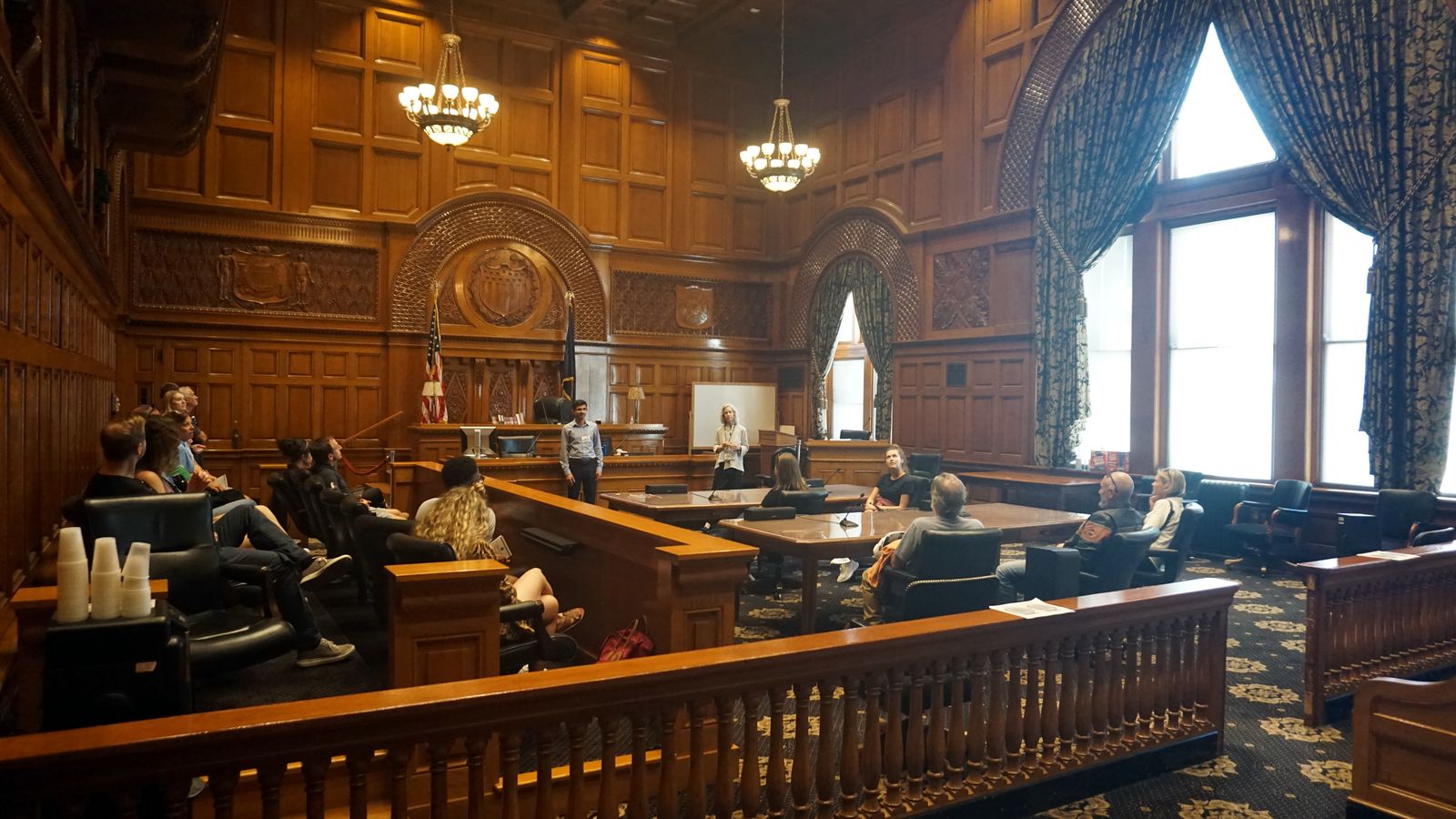
A study titled “Does ‘Jamal’ Receive a Harsher Sentence Than ‘James’? First-Name Bias in the Criminal Sentencing of Black Men” examined the impact of racially stereotypical names on sentencing outcomes. Researchers analysed sentencing data of Black male inmates in Florida, correlating the distinctiveness of their first names with the severity of their sentences.
They found that Black men with more stereotypically Black names received longer sentences compared to those with less distinctive names, even when controlling for factors like the nature of the crime and prior criminal history. And these were judges that are supposedly trained to avoid bias.
In a follow-up experiment, participants assigned sentences to hypothetical defendants with either stereotypically Black or White names. The results indicated that defendants with stereotypically Black names were given harsher sentences, highlighting the influence of implicit biases in judicial decisions.
But it’s not just about prejudice. The unconscious mind also tricks us in more subtle ways. Priming is a phenomenon where subtle environmental cues can influence your behaviour without you realising it. In one famous study, researchers left a jar of money in the corner of a room and found that people became less generous and more self-focused just because the idea of money was in their peripheral vision. They weren’t even aware, but that simple visual cue triggered self-interest-related behaviours.
Another example was a supermarket experiment where researchers alternated between playing French and German music in the wine section. On days when French music played, sales of French wine spiked. When German music played, German wine flew off the shelves. When asked, most customers said the music didn’t influence their choices. But their actions told a very different story.
These discoveries show us that the unconscious mind is constantly at work, steering our decisions in ways we can’t even detect. And here’s where it gets uncomfortable: if so much of our behaviour is shaped by factors we don’t control, how much of it is truly ours? Are we really as independent as we like to think?
The Illusion of Free Will
William Blake’s iconic poem Invictus ends with the famous and rousing lines, “I am the Master of my fate. I am the Captain of my soul.” Inspirational words, but how true are they? What if some of your decisions are made before you’re even aware you’ve made them?
This brings us to one of psychology’s most famous—and thought-provoking—experiments. In the 1980s, a neuroscientist named Benjamin Libet tested when the brain makes decisions versus when we think we make them. He hooked people up to a machine that measures brain activity and asked them to press a button whenever they felt like it. Meanwhile, they had to note the exact moment they pressed the button.
Libet found that the brain’s decision-making activity started about 300 milliseconds before the participants were even aware of their intention to press the button. In other words, their brains chose first, and their conscious minds caught up afterwards.
This raises a big question: if our brains decide before we do, do we really have free will? Or is it more like we’re passengers in a car, thinking we’re driving when we’re really just along for the ride?
Now, before we spiral into an existential crisis, let’s clarify. Libet himself didn’t think this experiment proved free will doesn’t exist. He argued that while the brain might initiate actions unconsciously, we still have the ability to veto them at the last moment—a kind of “free won’t” instead of free will.
However, other studies have added even more complexity to this debate. Researchers have used brain scans to predict decisions participants make up to seven seconds before making them. Your brain knows whether you’ll pick chocolate or vanilla before you even realise you’re craving ice cream.
This doesn’t just challenge our sense of autonomy—it has enormous implications for how we think about morality and responsibility. If unconscious processes partly drive our actions, how much blame or credit do we really deserve for them?
Philosophers and neuroscientists are still wrestling with this question, forcing us to look at human behaviour in a completely new way. As it turns out, free will might be less “free” than we’ve always believed.
The Role of Environment in Shaping Behavior
Think about the last time you blamed someone’s actions on their personality. Maybe you said, “Oh, that’s just the way he is,” or, “She’s always been like that.” It’s an easy explanation, but psychology tells us there’s way more at play. Our environment often has more influence on our behaviour than our personality ever could.
Take the infamous Stanford Prison Experiment. In 1971, psychologist Philip Zimbardo set up a mock prison in the basement of Stanford University. He randomly assigned participants to be either guards or prisoners. Within days, the “guards” started humiliating the “prisoners,” using psychological abuse and even physical intimidation, while the prisoners began to rebel, break down, or fully submit to the guards’ authority.
These were regular people—students, just like you’d see on any college campus. So, what happened? The environment itself transformed them. The roles, the uniforms, and the sense of power or powerlessness created a situation where people acted in ways that shocked even themselves.
And this isn’t just some one-off experiment. Similar patterns emerge in studies of obedience. The Milgram Experiment, conducted in 1961 by psychologist Stanley Milgram, aimed to explore human obedience to authority, particularly in contexts that conflicted with personal conscience. Milgram was motivated by the Holocaust and the trial of Adolf Eichmann, a high-ranking Nazi official who claimed he was “just following orders” in orchestrating the extermination of millions.
The experiment sought to understand whether ordinary people could commit harmful acts under authoritative pressure.
Participants were instructed to deliver increasingly severe electric shocks to a “learner” (an actor) whenever they gave incorrect answers. Despite hearing cries of pain and pleas to stop, most participants continued administering shocks up to lethal levels when prompted by an authority figure, wearing a lab coat and insisting, “The experiment requires that you continue.” The study revealed that 65% of participants obeyed commands to deliver the maximum voltage despite their visible distress.
But it’s not just extreme examples like this. Environmental factors shape our everyday decisions more than we realise. The “nudge theory” is that small changes in our surroundings can drastically influence our choices. For example, placing healthier foods at eye level in a cafeteria can lead people to make better dietary decisions without them even noticing.
Watch the Video
Open Video
Video Briefing
Discoveries in Psychology that Will Change Your Opinion on Human Behavior
This is an area of psychology that we still know very little about, but it has become clear that sometimes, when someone acts out of character, it’s not necessarily who they are—it’s where they are.
Cognitive Dissonance and How We Justify Our Actions
Ok, now, let’s talk about one of the most uncomfortable truths about being human: we’re really, really good at lying to ourselves. And no, I’m not just talking about telling yourself you’ll hit the gym tomorrow. I’m talking about the mental gymnastics we perform to justify actions or beliefs that don’t align with who we think we are.
This is called cognitive dissonance, and it’s one of the most fascinating discoveries in psychology. When your actions and beliefs clash, your brain doesn’t like it. That tension feels uncomfortable, so it works overtime to resolve the conflict. And more often than not, it does this by changing your beliefs to match your actions—rather than vice versa.
Let’s look at a classic experiment. In the 1950s, psychologist Leon Festinger asked participants to perform an incredibly boring task—turning wooden pegs on a board for an hour. Afterwards, some participants were paid $1 to tell the next group that the task was fun, while others were paid $20 to do the same thing.
When asked later if they actually found the task enjoyable, the $1 group was far more likely to say yes because they had to justify lying for such a small reward. Their brains couldn’t handle the inconsistency of “I told a lie for $1, and I’m not a liar,” so they changed their belief to: “Maybe it wasn’t so bad after all.”
This phenomenon isn’t just limited to tedious tasks. It’s everywhere. Think about the times you’ve doubled down on a bad decision just because admitting you were wrong felt worse than sticking with it. Or when you convinced yourself a purchase was worth it—even when deep down, you knew it wasn’t.
Cognitive dissonance helps explain many aspects of human behaviour, from political polarisation to brand loyalty. It’s why we dig in our heels during arguments, even when presented with clear evidence that we’re wrong. Because accepting that we made a mistake is often even harder.
The Fragility of Memory
You probably think of memory as a mental filing cabinet, neatly storing all your life experiences so you can access them whenever necessary. Not quite. In fact, your memory is more like a messy artist, constantly editing, erasing, and redrawing parts of your past without you even realising it.
One of the most famous discoveries about memory’s fragility comes from psychologist Elizabeth Loftus. She conducted a series of experiments showing how easily memories can be manipulated. In one study, participants were shown a video of a car accident and then asked questions about what they saw. Some were asked, “How fast were the cars going when they smashed into each other?” Others were asked, “How fast were the cars going when they hit each other?”
The word choice made a huge difference. Those who heard “smashed” estimated the cars were going faster and were more likely to “remember” seeing broken glass—even though there wasn’t any in the video. Just a single word planted a false detail in their minds.
It gets even weirder. In another study, Loftus and her team successfully implanted entirely false memories. They asked participants to recall a childhood event that never happened—like getting lost in a shopping centre. With a little suggestion and encouragement, many participants started to “remember” the fake event, even adding vivid details of their own.
This has profound real-world implications. Eyewitness testimony, for example, is notoriously unreliable. People swear they saw a suspect at a crime scene, but what they’re really recalling could be a mix of what they saw, what they were told later, and what their brain filled in on its own.
And it’s not just big, dramatic memories that are unreliable. Everyday ones are too. Have you ever sworn you left your keys on the counter only to find them in your bag? Or argued with a friend about something you both “remembered” differently? That’s your brain at work, rewriting history in real-time.
The Bystander Effect
If you were walking down a busy city street with people everywhere and someone suddenly stumbles and collapses right in front of you. What would you do? Most people think they’d stop and help immediately, but here’s the uncomfortable truth: the majority wouldn’t.
This phenomenon is called the Bystander Effect and is one of psychology’s most uncomfortable discoveries. It became widely known after the 1964 murder of Kitty Genovese in New York City. Kitty was attacked outside her apartment building, and despite her screams for help, dozens of neighbours heard but didn’t intervene. This tragedy sparked widespread outrage and raised a chilling question: why didn’t anyone do anything?
Psychologists John Darley and Bibb Latané decided to find out. They conducted experiments where participants believed they were overhearing someone in another room having a medical emergency. When people thought they were the only ones who could help, most took action. But their willingness to act dropped dramatically when they believed others were also listening. The more bystanders there were, the less likely anyone was to help.
So why does this happen? It’s not because people are uncaring or cruel—it’s psychological. First, there’s the diffusion of responsibility—the assumption that someone else will step in. Then there’s social proof—we look to others to gauge how serious a situation is. If no one else acts, we hesitate, thinking it might not be an emergency after all.
The Bystander Effect isn’t just a historical or theoretical concept—it plays out daily. Think of videos on the internet where people walk past someone clearly in need or moments when crowds witness injustices but remain silent. It’s uncomfortable to admit, but any of us could fall into this trap under the right circumstances.
The Untamed Mind
Human behaviour is far more intricate than we often give it credit for. We like to believe we’re logical, independent, and in full control of our choices. But the truth is, our actions are shaped by a complex web of emotions, instincts, and social influences that operate beneath the surface of our awareness. It’s a fascinating reminder that we’re not just rational decision-makers—we’re deeply influenced by context, environment, and even the people around us.
What makes this all so compelling is how it shifts our perspective on everyday life. Why do people freeze in emergencies? Why do we stick to beliefs even when they’re proven wrong? Or why does a seemingly small act of kindness ripple into something much bigger? Human behaviour is far from predictable, but when you understand these psychological factors that we’ve looked at, we can begin to paint a rough image of how human beings operate. But that image is often completely different from what we imagine it to be.
Olivier Guiberteau
Key Takeaways
- Unconscious biases and priming can significantly influence decisions and behaviors.
- The brain may initiate actions before conscious awareness, challenging the notion of free will.
- Environmental factors and social influences can drastically alter behavior, as seen in the Stanford Prison Experiment.
- Cognitive dissonance leads individuals to adjust beliefs to align with actions, often without realizing it.
- The bystander effect shows that the presence of others can inhibit helpful behavior in emergencies.
SideProjects Editors
The SideProjects editorial team researches, fact-checks, and structures explainers about the lesser-known tales, side narratives, and spin-offs behind major historical and contemporary subjects.
Frequently Asked Questions
What is implicit bias?
Implicit bias is the idea that we unconsciously associate certain traits with people based on race, gender, or background.
How does the unconscious mind influence behavior?
The unconscious mind influences behavior through phenomena like implicit bias and priming, where subtle environmental cues can steer our decisions without us realizing it.
What is the Bystander Effect?
The Bystander Effect is a phenomenon where individuals are less likely to offer help to a victim when other people are present. The presence of others diffuses the sense of responsibility and can lead to inaction.
What did the Stanford Prison Experiment reveal about human behavior?
The Stanford Prison Experiment revealed that the environment can significantly influence behavior. Participants assigned to roles of guards or prisoners quickly adopted behaviors consistent with their roles, demonstrating the power of situational factors over personality.
What is cognitive dissonance?
Cognitive dissonance is the mental discomfort experienced when holding two or more contradictory beliefs, values, or ideas. To reduce this discomfort, individuals often change their beliefs to align with their actions.
How does the environment shape our everyday decisions?
The environment shapes our everyday decisions through subtle influences, such as the placement of healthier foods at eye level in a cafeteria, which can lead people to make better dietary choices without conscious awareness.
What did Benjamin Libet’s experiment reveal about free will?
Benjamin Libet’s experiment suggested that the brain initiates actions unconsciously before the conscious mind is aware of the decision, raising questions about the extent of free will.
How reliable is eyewitness testimony?
Eyewitness testimony is notoriously unreliable due to the fragility of memory. Memories can be manipulated and altered by suggestions and environmental cues, leading to inaccurate recollections.
What is the Milgram Experiment?
The Milgram Experiment was conducted to explore human obedience to authority. It revealed that a significant majority of participants would obey commands to deliver harmful electric shocks to others when prompted by an authority figure.
How does priming influence behavior?
Priming influences behavior by using subtle environmental cues to trigger specific responses. For example, the presence of money can make people more self-focused, and playing French music in a supermarket can increase sales of French wine.