
History is rife with rituals and ceremonies that weren’t exactly a wholesome night of eating, dancing, or prayer. Some were much, much darker, focused on pain, blood, and even sacrifice. Coming from every corner of the world, here are some of the creepiest rituals in history that will make you feel relieved to live in the 21st century.
Skeletons in the Closet
Human sacrifice as a ritual was performed to some degree on every continent in the world. In the majority of cases, especially in central and south America, sacrifices were performed by religious figures in places of cultural significance, like an altar or a temple. But a peculiar practice that was surprisingly common until recent centuries was the sacrifice of one or more people for the blessing of the gods on a construction project, and there are examples of this from all around the globe.
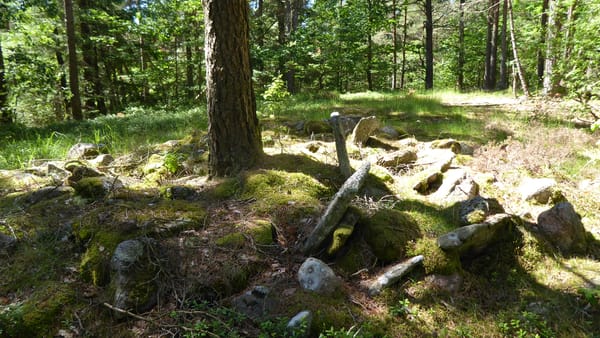
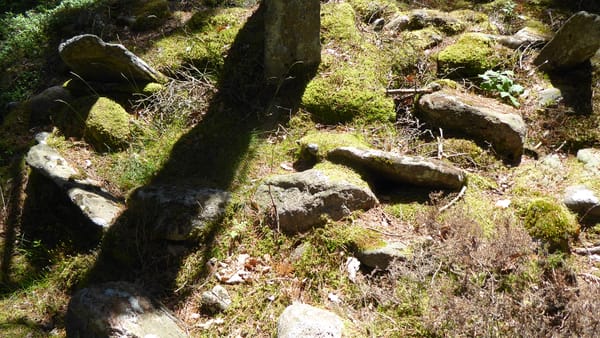
In Europe, for example, we have evidence of the practice from The Building of Skadar. The Building of Skadar is a poem, written in old Serbian, that records the construction of a fortress in the early 14th century near the river Bojana in what is today Albania. It was believed at the time that building such a large structure had to be accompanied by human sacrifice, or else the project would anger a vila, a powerful type of fairy or nymph from Slavic Mythology. According to the epic, one of the noble brothers, Gojko Mrnjavčević, buried his wife alive in the walls of the fortress to avoid any wrath from said vila.
Key Takeaways
- Human sacrifice was used in construction projects across various cultures to appease gods.
- The Aztec New Fire Ceremony involved ritual bloodletting and human sacrifice every 52 years.
- The Sati ritual, where widows were burned alive, persisted until the 19th century and saw a notable case in 1987.
- The Nazca people of ancient Peru collected and prepared trophy heads from enemies for rituals and ceremonies.
- Hitobashira, the practice of burying people alive in construction foundations, was common in Japan until the 17th century.
A similar belief was also prevalent in several cultures throughout Asia. In Japan, it was known as Hitobashira, or ‘human pillar’. The idea of Hitobashira was that a sacrifice to the gods would protect the building from natural disasters or accidents during construction. One of the earliest examples of this takes place in the 4th century AD, when Emperor Nintoku was struggling to find a solution to the overflowing of two rivers, making construction on their banks impossible.
He then allegedly had a dream which told him that a sacrifice to each river god would end the flooding. After throwing a woman into one of the rivers, embankments were completed without problem.
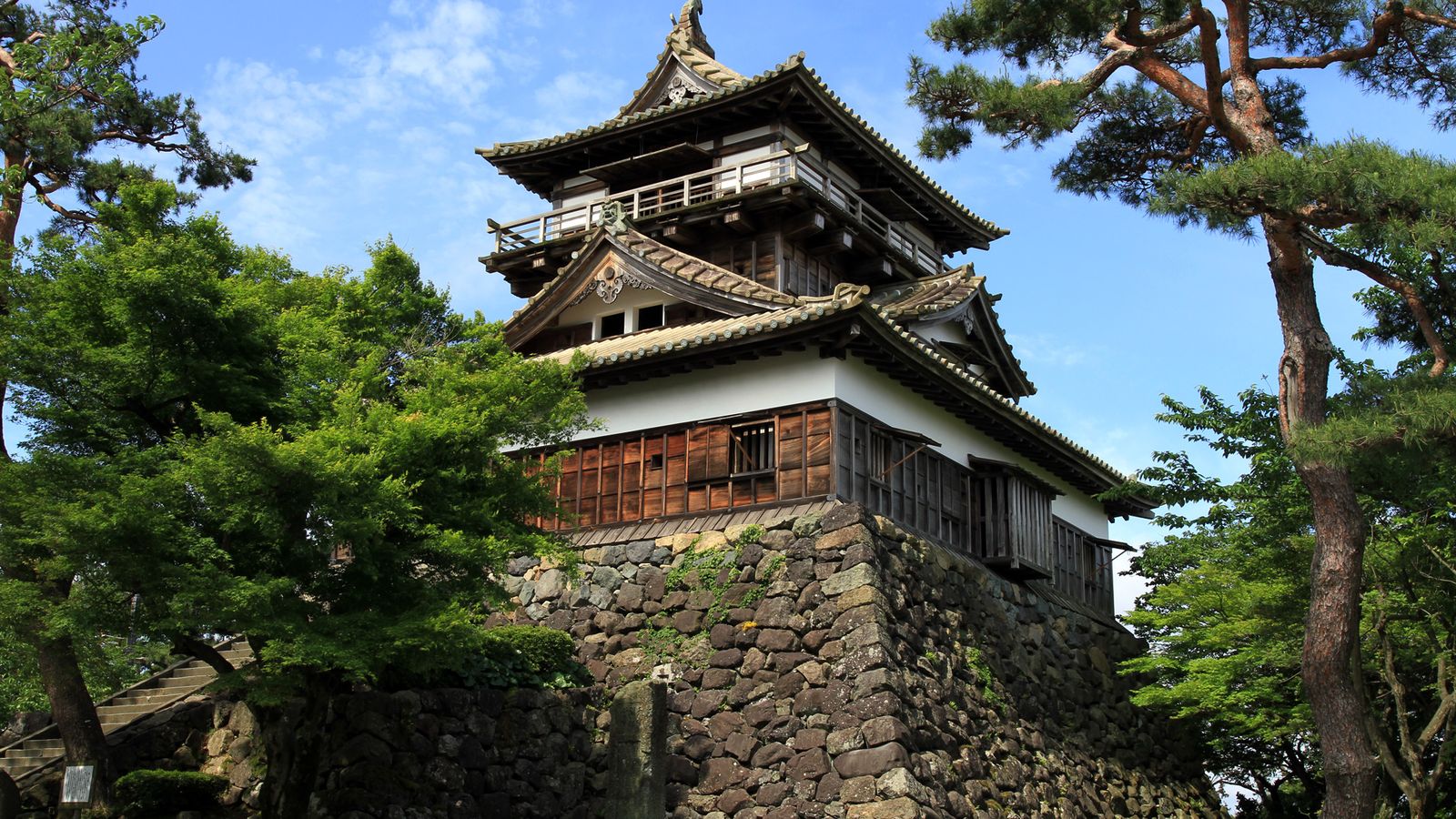
Hitobashira was still present in Japan nearly a thousand years later, when the walls of Maruoka Castle kept crumbling during construction. An advisor suggested that a sacrifice could appease whatever god was angry with the castle, and a search began for a willing victim. A poor, one-eyed woman named O-shizu agreed to be sacrificed on the condition that her sons became Samurai after her death and was buried alive under the central pillar.
Soon after, the construction finished, but her sons were never made Samurai, angering her spirit. This was the explanation for the seasonal flooding of the moats, as is referred to as ‘the tears of o-Shizu’s sorrow’.
In China, the remains of infants have been found in the foundations of old structures as it was believed that moving too much soil would anger spirits, and Korea has its own history with similar sacrifices. When Chunghye of Goryeo, king of the Goryeo Dynasty of Korea, was planning the construction of a new, massive palace for himself, rumor got out that he planned to bury dozens of infants in the foundation, and thousands fled the city out of panic.
Similar ideas were spread throughout the islands in the Pacific as well. Hawaii, New Zealand, and Fiji all have oral histories detailing the burial of a sacrificial victim at the base of an important structure. Sometimes these were men who were buried alive and upright in a stance of holding one of the building’s pillars, forever holding it in place, and sometimes the victims were killed before being placed underground. The practice wasn’t very widespread in the Pacific, usually only for royal houses, and some places used lizards or birds in place of actual people.
Sometimes it can be difficult for archaeologists to determine whether or not someone was buried with the structure or murdered just before being placed with it, making the exact numbers of the practice hard to nail down. There are also some claims that the telling the tale of the horrifying practice was used by Hong Kong parents in the 1930s to scare disobedient children… just imagine being told you’d be buried alive if you didn’t eat your asparagus.
All Fired Up
Dozens of cultures around the globe have attributed a special meaning to fire. In Greek mythology, for example, Prometheus stole fire from the gods and shared it with humans, and in the Old Testament fire has several meanings, ranging from holiness to divine intervention, or even representing God himself.
But the Aztec civilization of Mesoamerica took things to the next level with their beliefs surrounding fire. Worship of the god of Fire, Xiuhtecuhtli, was common in the area for centuries, and as the Aztec Empire grew, they continued and added to the tradition. As he was also the god of volcanoes, day, heat, and was the literal personification of life after death, he became central part of the religion, and in his honor, a small fire was kept permanently burning in a sacred hearth in each Aztec home.
The complex Aztec calendar was split into 18 ‘veintenas’ or months, each consisting of 20 days, with 5 extra days added on to make it the even 365 we all know. The final month, which fell between our January and February, was completely dedicated to fire. Quails, lizards, and fish would be sacrificed on the night before the tenth day, when a huge feast would be prepared. This was an annual event and was fairly mild by Aztec, but twice a century this ceremony gained special importance, and a deadly twist.
When the 365-day solar calendar and the shorter 260-day sacred calendar ended on the same day, the Aztecs celebrated what was known as ‘the Binding of Years’. This happened every 52 years, and the celebration featured some gruesome activities. In addition to temporary vows of silence, fasting, and destroying household objects, thousands would participate in ritual bloodletting, which included slicing your tongue with an obsidian blade, or your genitals with a stingray’s spine. But this was only the opening act - the Binding of Years was believed to be a time when the gods could abandon humanity, and so, to appease them, the tradition mainly focused on the New Fire Ceremony.
As the sun set on the final day, every flame in the houses and the city was snuffed out, and the people would gather at what is known as the Hill of the Star near the Aztec capital Tenochtitlan and wait for certain stars to be directly overhead. Once the stars were in place, priests would then tear out the heart of a sacrificial victim who had been placed on the altar and, if that wasn’t already disturbing enough, would start a fire in the open hole left in the victim’s chest.
When the flame began to flicker inside the sacrifice, the new calendar had begun, and a bonfire was lit. The fire was then carried on sticks by runners throughout the city, and the whole countryside would light up as each hearth would begin its new cycle with a fresh flame. After all the temples and the main buildings had their new flame, individual households would light their new fire, accompanied by more bloodletting, often from the parents’ and children’s ears.
Some people would even throw themselves into the fire to blister themselves. After the self-mutilation was complete, and every fire was lit, the feasting and celebration began, and no one would sleep throughout the entire night.
Surely no one from any other culture would willingly throw themselves into fire… right? Well, disturbingly, the Aztecs weren’t alone in their fascination. It’s time to turn our attention to the other side of the world – southeast Asia.
Hinduism is often regarded as the world’s oldest religion, with some scholars arguing that customs date as far back as 5000 years ago. And despite being so unbelievably old, the religion is still one of the world’s largest, with an estimated 900 million followers. But, as with anything so ancient, it’s customs and traditions have changed and evolved over time. Some of these changes were merely gradual cultural adaptations with time, but some, like Sati, were outright banned in recent times.
Watch the Video
Open Video
Video Briefing
Disturbing Ancient Rituals
Sati is the name given to a ritual in which a recently widowed woman throws herself onto the funeral pyre of her husband, joining him in death. Sometimes the woman was laid down next to her husband or would leap into the flames after the cremation had already begun. And in rare cases, the woman was simply buried alive. The earliest mentions of this brutal practice come from Greek historians Strabo and Diodorus, meaning the tradition is well over 2000 years old, and possibly much older.
The idea of self-immolation after losing your husband was so deeply rooted in some places that mentions of it from both local sources and written accounts from western eyewitnesses continued all the way until the 1800s, at which point the British were occupying India and began noticing the horrifying practice. And to make matters worse, Sati wasn’t always voluntary. François Bernier, a French physician, recorded his experience when he saw a young woman forced to be burned with her husband:
“At Lahore I saw a most beautiful young widow sacrificed, who could not, I think, have been more than twelve years of age. The poor little creature appeared more dead than alive…but three or four of the Brahmans, assisted by an old woman who held her under the arm, forced the unwilling victim toward the fatal spot, seated her on the wood, tied her hands and feet, lest she should run away, and in that situation the innocent creature was burnt alive.”
Attempts to ban Sati in some places were being put in place in the early 19th century, but there wasn’t serious enforcement of the rules and hundreds of self-sacrifices were still being performed per year in the cities, in fact, between the years 1815 and 1819, the number of Sati events doubled. Baptist missionaries began writing essays to the Governor General of India, begging for a complete ban on the practice, and Ram Moham Roy, a Hindu reformer, began lobbying for the end of Sati after his sister-in-law was forced to burn against her will. Finally, in 1829, Sati was officially banned and became punishable in court.
But thousands of stubborn widow-murderers were upset, and petitions began piling for the return of their freedom to practice their religion. Counter petitions against these also began piling up, until finally a decision back in London was made to permanently uphold the ban. But even with the ban in place, some places that were out of British reach continued ritual burning for several decades, even though public support almost everywhere was steadily dwindling.
You might be shocked to learn that the one of the most well-known Sati happened just over 30 years ago in 1987. The woman was named Roop Kanwar, and she was only 18 years old when she was forcefully, or voluntarily, depending on who you ask, set on fire in the Indian state Rajasthan, with thousands of locals in attendance. This led to a new law reaffirming the criminalization of Sati, and dozens of people were arrested for participating in the ceremony, but they were all later acquitted. Sati is definitely one ritual that we can all be grateful is finally out of style.
It’s All In Your Head
The Nazca people of ancient Peru are well known for their impressive ceramic textiles, pottery, and the famous Nazca Lines – huge drawings of over 70 plants and animals preserved in the desert, some of which are nearly 400 meters long. But the Nazca people, like many civilizations from the Americas, were constantly at war, and depictions of their warfare on excavated pottery were covered with one peculiar thing: trophy heads.
Keeping the head of your enemy as a trophy is a tradition that dates back basically as far as researchers can tell, possibly 4000 years or older, but in the final few centuries of the Nazca civilization, severed heads skyrocketed in popularity. Nazca art shows that one of the main purposes of their war wasn’t resources or food, it was to obtain the head of your opponent, and supporting this, decapitation was one of the most common themes in their pottery. Along with plenty of graphic evidence provided by art, archaeologists have also uncovered over a hundred mummified trophy heads, and each were prepared in the same way.
First, the head was removed with an obsidian blade. Then, the base of the skull was smashed off with a club or a rock, creating a hole through which the brain and eyes were removed. The lips and sometimes eyes were then pinned shut with a couple thorns, and a hole was drilled in the center of the forehead. When all this was finished, the skull was stuffed with cloth, and the head was now ready to be worn on a belt or threaded and attached to a cloak.
There is some debate as to exact details, but evidence suggests that the head of an important figure could also be removed as an honor, and a ceramic one would be buried with his body in place of the real head. Various rituals involving dancing, music, and, of course, hallucinogens, also featured trophy heads being held by shamans during ceremonies. Strangely enough, large numbers of trophy heads were also ritually buried, something that puzzles researchers to this day, but their best guess is that these were offerings to a god, or maybe a mass burial after war.
The Nazca civilization ended around the year 750 AD as a result of severe flooding and other environmental damage, but their grisly fascination with turning heads into trophies ensures that they will never be forgotten.
Key Takeaways
- Human sacrifice was used in construction projects across various cultures to appease gods.
- The Aztec New Fire Ceremony involved ritual bloodletting and human sacrifice every 52 years.
- The Sati ritual, where widows were burned alive, persisted until the 19th century and saw a notable case in 1987.
- The Nazca people of ancient Peru collected and prepared trophy heads from enemies for rituals and ceremonies.
- Hitobashira, the practice of burying people alive in construction foundations, was common in Japan until the 17th century.
SideProjects Editors
The SideProjects editorial team researches, fact-checks, and structures explainers about the lesser-known tales, side narratives, and spin-offs behind major historical and contemporary subjects.
Frequently Asked Questions
What was the purpose of human sacrifice in construction projects?
Human sacrifice in construction projects was believed to bless the project and avoid the wrath of gods or spirits. For example, in Europe, a nobleman buried his wife alive in the walls of a fortress to appease a vila, a type of fairy or nymph from Slavic mythology.
What is Hitobashira and where was it practiced?
Hitobashira, or ‘human pillar,’ was the practice of sacrificing a person to protect a building from natural disasters or accidents during construction. This practice was prevalent in Japan, with examples dating back to the 4th century AD.
What was the significance of the New Fire Ceremony in Aztec culture?
The New Fire Ceremony was a crucial ritual in Aztec culture that took place every 52 years when the solar calendar and the sacred calendar ended on the same day. It involved extinguishing all fires, sacrificing a victim, and starting a new fire in the victim’s chest to begin the new calendar cycle.
What is Sati and when was it banned?
Sati was a ritual in which a widowed woman would throw herself onto her husband’s funeral pyre. This practice was banned in 1829 by the British in India, although it continued in some areas for several more decades.
What were the Nazca Lines and what else is the Nazca civilization known for?
The Nazca Lines are huge drawings of over 70 plants and animals preserved in the desert of Peru. The Nazca civilization is also known for their ceramic textiles, pottery, and their practice of keeping trophy heads from their enemies.
How were trophy heads prepared by the Nazca people?
Trophy heads were prepared by removing the head with an obsidian blade, smashing the base of the skull to remove the brain and eyes, pinning the lips and eyes shut with thorns, drilling a hole in the forehead, and stuffing the skull with cloth.
What was the purpose of the Binding of Years ceremony in Aztec culture?
The Binding of Years ceremony was believed to be a time when the gods could abandon humanity. To appease the gods, the Aztecs performed ritual bloodletting and the New Fire Ceremony, which involved sacrificing a victim and starting a new fire in the victim’s chest.
What was the role of fire in Aztec religion?
Fire was central to Aztec religion, with a small fire kept permanently burning in a sacred hearth in each home in honor of the god of Fire, Xiuhtecuhtli. The New Fire Ceremony was a crucial ritual that took place every 52 years to begin a new calendar cycle.
What was the significance of the Hill of the Star in Aztec culture?
The Hill of the Star was a significant location near the Aztec capital Tenochtitlan where the New Fire Ceremony took place. The Aztecs would gather there to wait for certain stars to be directly overhead before starting the new fire.
What was the practice of burying infants in the foundations of structures in China?
In China, the remains of infants were found in the foundations of old structures. This practice was believed to appease spirits that might be angered by moving too much soil during construction.