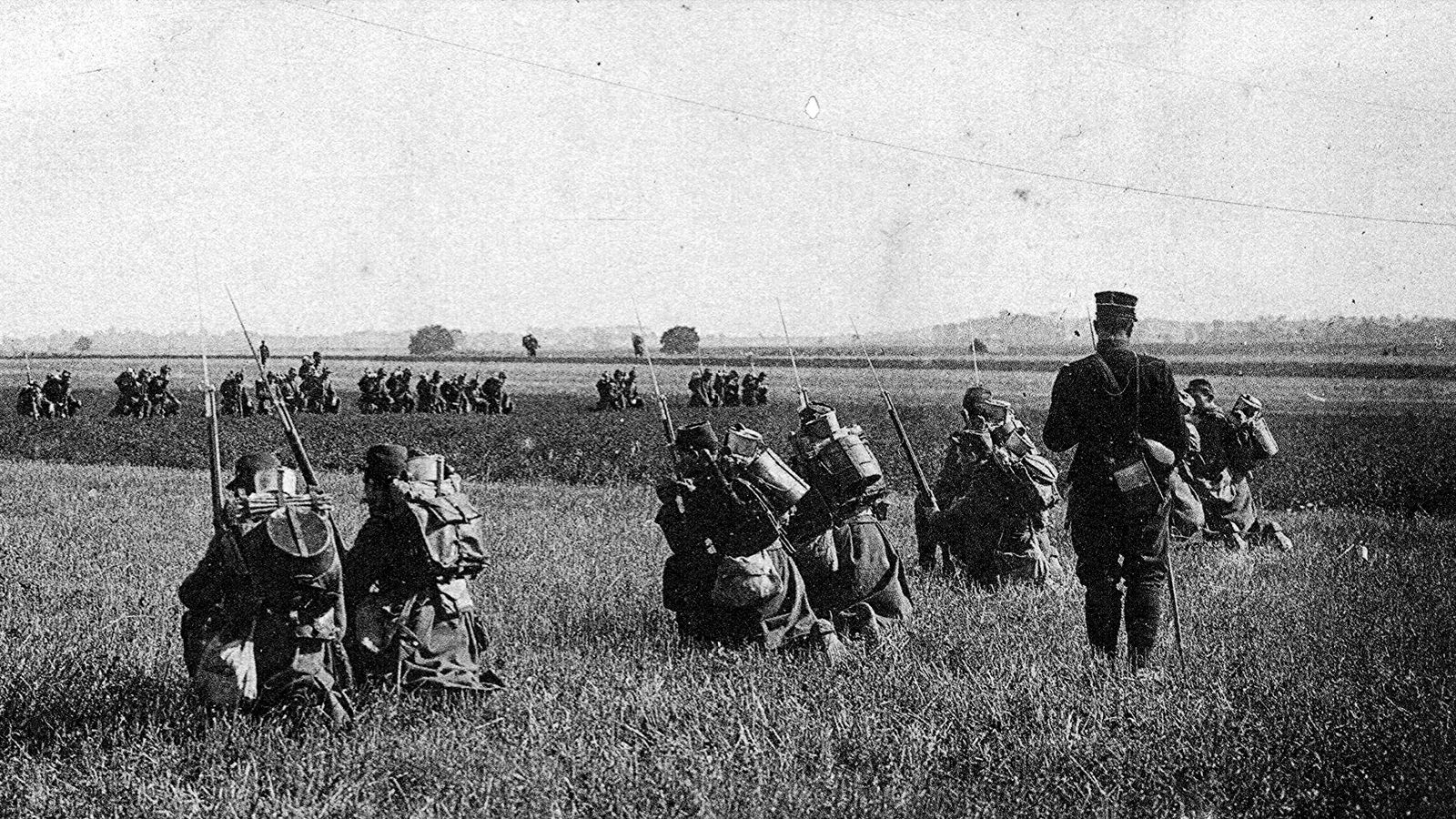
A question: which is the most militarily successful nation on earth? Hint: it isn’t the UK, it isn’t Germany, it isn’t China, and neither is it the US. It is in fact, France.
A bold thing to claim for sure, given, you know, stereotypes, but we swear it’s true. To explain: France has not only participated in 50 of the 125 major European wars that have been fought since 1495, but it has also won 109 of the 168 significant battles that it has participated in since 387BC; a record that makes it easily the most military successful nation on earth – and that’s according to historian Niall Ferguson too, a chap whose brain has many wrinkles indeed.
That certainly stands in stark contrast to the stereotype, doesn’t it? And, to help further put it to bed, today we’re taking a look at five incredible French military victories that show what the nation is really capable of when its forces are firing on all cylinders… so let’s begin!
Key Takeaways
- France has participated in 50 of 125 major European wars since 1495, winning 109 of 168 significant battles.
- The Battle of Stonne in 1940 showcased French resilience against Germany, with Captain Pierre Billotte’s heroic actions.
- Napoleon’s victory at the Battle of Austerlitz in 1805 demonstrated his tactical genius against numerically superior forces.
- The Battle of Rocroi in 1643 was a decisive French victory that helped turn the tide in the Thirty Years War.
- The Hundred Years’ War ended with France decisively defeating England, marking a significant shift in European power dynamics.
1. The Battle of Stonne
Let’s begin by addressing the elephant in the room: WWII. The Battle of France, as we’re sure you all know, wasn’t exactly one that went well for its titular country, and is almost certainly the battle that contributed to France’s undeserved reputation more than any other, with its army being thoroughly decimated and routed in a mere six weeks, leading to their defeat, and subsequent occupation by the Nazis.
What is less well known, however, is that the notion of the French simply giving up and spreading their cheeks for the Bad Moustache Man and his Panzers during the battle, which is only too common in popular media, is actually complete and utter twaddle.
In reality, while yes, they were defeated, the French put a bloody brave show on nonetheless, losing 73,000 men killed and a further 240,000 wounded in the defence of their homeland, and even managing to give their opponents a bloody nose and pause for thought from time to time.
And no battle exemplifies that better than the Battle of Stonne, where, for a few days in May 1940, 42,500 French soldiers, supported by 130 tanks, faced off against 90,000 German soldiers and 300 of their tanks; and although the battle ended with the swastika flying over Stonne, historians typically regard it as a defensive victory for the French.
The village itself changed hands seventeen times over the course of just two days of fighting as the Wehrmacht and the French Army collided in brutal, close-range combat. Despite being outnumbered and subject to relentless aerial bombardment by the Luftwaffe, however, the French defenders fought doggedly, forcing the Germans to divert significant resources to capture the tiny, but strategically well positioned village.
Leafing through a tome on the battle reveals many stories of individual French heroics in this battle, to be sure, but even among such gallant company, the actions of one man in particular stand head and shoulders above the rest, and that would be Captain Pierre Billotte, Commander of Char B1 tank Eure.
The Char B1 itself was a peculiar thing, despite very much being a WWI tank in its design philosophy, something which is quite evident if you just have a look at one, it was, despite all the younger upstart tanks that Germany threw at it, quite the capable thing, having heavy armour, plenty of firepower thanks to its two gun arrangement, and, unlike 80% of French tanks at the time, radios.
Billotte was well aware of this, and so, on the morning of the 16th of May, he decided a right and proper shoeing was in order.
Driving straight into a German armoured column, Billotte, in the commander’s seat and in full control of Eure’s 47mm turret gun, and one Sergeant Durupt, who was both the driver and gunner for the hull mounted 75mm howitzer – the B1’s design was weird, don’t worry about it – opened up, with Billotte picking off the Panzer III at the rear of the column, and Durupt doing the same for the one in the lead position.
From there, with the column boxed in and unable to floor it, they took their time in destroying the whole damned lot, with a total of 13, specifically 11 Panzer III’s, and two Panzer IV’s, being destroyed in that single action. They also later pushed on, and added a further two PaK-36 anti-tank guns to their kill tally deeper in the village.
In response to that, what was left of the ever-shrinking German column did exactly what you would expect when they were boxed in so: they swivelled their turrets and started putting everything they had into Eure. Unfortunately for them, however, the thick armour they struck was having none of it, and all 140 rounds that impacted failed to penetrate, instead simply denting the armour a tad at best, or scratching the paint up at worst.
When all was said and done, Billotte had sent the Germans packing from Stonne, and the village would remain in French hands for the rest of the day.
So, yeah, while the Battle of France may have ended in defeat for the defenders, they gave plenty of reminders that the invaders were still tangling with the most militarily successful nation on earth.
2. The Battle of Austerlitz
Let’s keep the theme of ‘victories within the jaws of defeat’ going in this chapter, by having a look at another phenomenal specific victory, within a conflict that France lost overall: the Battle of Austerlitz.
Fought on the 2nd of December 1805, in what is now the Czech Republic, this battle saw Napoleon Bonaparte face the combined forces of the Austrian and Russian empires, with his ‘Grande Armée,’ as he called it, of 73,000, being outnumbered by the 85,000 that his opponents had mustered.
The Austrians, reeling from earlier defeats, had regrouped with Russian reinforcements under Tsar Alexander I, and were determined to crush Napoleon’s forces before he could consolidate power in the region further.
Napoleon, for his part, had marched his army across Europe at breakneck speed, covering nearly 1,000 miles in less than two months. By the time he reached the battlefield near the town of Austerlitz, his troops were exhausted, and the Allies believed they were primed to capitalize on both that, and their numerical advantage, in order to send their adversary packing.
Napoleon, however, a master at setting battles up in ways that would be tactically advantageous to him, even when facing seemingly insurmountable odds, had no intention of fighting on their terms.
And so, as the Allied commanders deliberated over their plan of attack, he masterfully manipulated them into thinking his army was on the brink of collapse, a genius move that played up to the assumptions they had already formed, and encouraged them to do something stupid when they assumed an easy win was within grasp.
As for what he did specifically in pursuit of this, he weakened his right flank, even abandoning the strategically important high ground of the Pratzen Heights, which he knew would really send the message.
This feigned vulnerability worked a treat too, baiting the coalition into committing to a frontal attack on the French centre, supported by a sweeping flanking manoeuvre to cut off Napoleon’s retreat. A whiff of grapeshot, and a liberal application of the cold steel, they reasoned, and the battle would be in the bag.
What the Allied commanders didn’t realise, of course, was that Napoleon had been setting the stage for a trap all along.
As dawn broke, a thick fog blanketed the battlefield, concealing French movements, and then, at 9:00AM, as the fog began to lift, the trap was sprung. Marshal Soult’s corps, hidden in the valleys, stormed the Pratzen Heights, routing the Allied center and tearing their forces apart. The Allies, already disorganized, found themselves overrun.
Meanwhile, on the French right, Marshal Davout’s corps held firm against the Allied flanking manoeuvre. His troops, though outnumbered, endured hours of relentless attacks, preventing the Allies from turning Napoleon’s flank. On the left, similarly, Marshal Lannes’ forces blocked further attempts to outflank the French, aided by devastating cavalry charges that shattered the Allied momentum.
With the Allied centre collapsing and their flanks neutralised, Napoleon unleashed his Imperial Guard and cavalry reserves to finish the job. Thousands of coalition troops, panicked and in retreat, were funnelled into chaos. Some fled onto frozen lakes, only for French artillery to shatter the ice, sending hundreds to a freezing death.
By mid-afternoon, the battle was over. The Allies suffered over 36,000 casualties, including 15,000 captured, while Napoleon’s losses numbered fewer than 9,000. The victory was total, and the Third Coalition crumbled, with Austria suing for peace, and Russia retreating eastwards in humiliation.
For Napoleon, it was a triumph that cemented his reputation as one of history’s greatest commanders, and for France, it was just yet another victory that demonstrates why they are the most militarily successful nation on earth.
3. The Battle of Rocroi
Let’s go further back still now, specifically to the 17th Century, and the Battle of Rocroi, which saw the armies of France and Spain lock their horns, or rather, their pikes.
Fought on the 19th of May, 1643, it was a battle that was not only a stunning French victory, but also one that helped to usher in their, along with their allies’, overall victory in the Thirty Years War, which the battle was fought as a part of.
It was a conflict most brutal, one that had ravaged Europe for over two decades by that point, and pitted Catholic and Protestant powers against each other in a struggle that became as much about politics as it was about religion.
Watch the Video
Open Video
Video Briefing
Five (Stereotype Breaking) French Military Victories
No better is the duality of both politics and religion in drawing up the battle lines demonstrated than with France, because, despite being a Catholic Kingdom, they entered the war in 1635 on the side of the protestants, hoping to curb the influence of the Habsburg Monarchs, who controlled both Spain and the Holy Roman Empire.
Come 1643, the war, which would ultimately last from 1618 to 1648, was at a critical juncture: coffers Europe over were starting to run dry, and hundreds of thousands had died. Such a thing just couldn’t be sustained for much longer, and so, the war was coming to an end one way or another – with the victor being decided by whoever seized those critical final victories.
And that brings us to the Battle of Rocroi, which, thanks to the overwhelming nature of the French victory, would prove to be exactly one of those deciding engagements. However, it being a French victory was only made all the more impressive by the fact it really did not land at a great time for the Kingdom, as, mere days before, King Louis XIII had died, leaving the throne to his eventual absolute unit, but currently barely out of ye olde nappies son, Louis XIV. This left France, both on the battlefield and at home, in the command of Louis (the younger’s) regent, Cardinal Mazarin, who found himself under immense pressure to deliver results.
The fragile situation back in Paris was also exactly what convinced the Spanish to make a move, as, to them, it was the perfect opportunity to send in their Spanish Army of Flanders, long since regarded as one of finest fighting forces in Europe, and deliver a crushing blow to French ambitions; and so 26,000 Spanish soldiers found themselves besieging the French town of Rocroi – the first action of what was intended to be a deep penetrating and devastating campaign.
Despite the troubles at home, however, the French reaction was swift. A 22-year-old general, Louis II de Bourbon, the Duke of Enghien, was given 23,000 men, and told to relieve the town. He was facing near insurmountable odds to be sure, but fortunately for him, he had the very three things a man needs to triumph in such situations: competence, cunning, and a can-do attitude.
And so it was that the battle began at dawn on May the 19th.
Enghien divided his forces into three groups, with cavalry on the flanks and infantry in the centre. The French cavalry on the right, led by Enghien himself, launched a ferocious assault on the Spanish left flank, and after an intense struggle, they succeeded in breaking the enemy lines, sending Spanish cavalry fleeing in disarray. This manoeuvre exposed the Spanish infantry’s flank, and Enghien wasted no time exploiting it.
On the French left, however, General La Ferté-Senneterre’s cavalry faced a much harder fight. The Spanish right flank held firm under repeated French assaults, but, crucially, the cavalry managed to tie down their opponents, ensuring they could not reinforce the crumbling left or support the embattled centre.
Similarly dicey was the middle of the line, where the French infantry were bearing the brunt of the fighting. Spain’s famed tercio formations, with their mix of pikemen and musketeers, had been Europe’s most feared infantry for over a century, and to the men in the thick of it then and there, it appeared as though their imminent deaths were going to be but another notch on their belts.
They were spared their early meeting with fate, however, because remember when we said Enghien wasted no time in exploiting the gap he made? Yep, he was coming, and he, quite literally, brought the cavalry with him – smashing right into the exposed Spanish line, right in the centre.
The Spanish line totally collapsed in a near instant, and so began a retreat that quickly descended into chaos, with the French cavalry running down and killing, wounding, or capturing, thousands of their opponents.
When time was finally called on the battle, the Spanish, for their loss, had suffered catastrophic losses of over 8,000 killed and 7,000 taken prisoner. The French, by contrast, lost fewer than 5,000 men.
4. The Second Battle of the Marne
Let’s fast forward now, to WWI, and the Second Battle of the Marne, which was fought between the 15th and 18th of July 1918.
France was on the winning side in WWI, as we’re sure you all know, and it was this very battle, after years of brutal and stagnant quagmire on the Western Front, which was one of the key ones in securing that overall victory.
Come mid-1918, Germany was on the offensive, desperate to end the war before the arrival of millions of fresh American troops tipped the balance decisively in the Allies’ favour. Their Spring Offensive, launched earlier in the year, had pushed Allied lines dangerously close to collapse in some sectors, and the Germans, now sniffing victory, prepared for one great and final push to shatter their opponent’s line, and set them on a course for capturing Paris.
Facing such an existential threat, the French army, under the command of General Ferdinand Foch, coordinated a defence that would prove both ingenious and devastatingly effective.
Foch, recognising the importance of the Marne as a last-ditch defensive line, worked closely with his Allied counterparts to construct a trap for the advancing Germans, withdrawing just enough troops to create the illusion of weakness, and baiting the Germans into overextending themselves as they crossed the river.
The battle proper began when over 500,000 German troops launched a massive assault against French positions along the Marne. The French, supported by British, Italian, and American forces, met the attack with fierce resistance. In the east, German forces did actually manage to push through French lines for a time, but they were soon bogged down by determined counterattacks and very, very heavy artillery fire. On the western side of the battlefield, the Germans fared even worse, simply smashing up against the thickly reinforced French line, and meeting their end.
This continued for a few days, with the Germans feeding ever more of their troops into the meat grinder, but then, on the 18th, the time came to deliver the coup de grâce, with the French Army taking point on an enormous Allied counterattack which would become known as the Battle of Soissons.
Led by Foch, over 350 tanks rolled into battle, breaking through the now battered and exhausted German line and forcing their troops into a hasty retreat. French infantry, backed by artillery and air support, were hot on their tails, pressing forward relentlessly, and soon recapturing lost ground and driving the Germans back across the Marne.
The speed and coordination of the Allied counteroffensive stunned the Germans. Their supply lines, already stretched to breaking point by their rapid advance, simply could not keep up with the demands of the front, and so, exhausted, outnumbered, and facing overwhelming firepower, the German army crumbled under the pressure. Entire units were encircled and destroyed, while thousands of soldiers surrendered rather than face annihilation.
The Battle of Soissons finally came to an end on the 22nd of July, with the French Army and its allies firmly in control of the battlefield. The two concurring battles, which are really difficult to fold into a single flowing narrative, cheers historians, had wrecked a devastating toll on the German forces, with it having suffered 168,000 casualties all in. The French, for their part, had taken just over 95,000 casualties.
And though the cost was high, the victory was a clear turning point in the war. Strategists had long since talked about the ‘one big push that would bring the war to an end,’ to the point that it became a point of mockery and derision even during the war, never mind after it, but the Second Battle of the Marne, and the Battle of Soissons that it immediately flowed into, really were that push; and before the year was out – the war would be over.
5. The Hundred Years’ War
Let’s mix it up a bit for our final chapter by not looking at a specific battle that the French won, but an entire war – specifically the Hundred Years’ War, which saw (mostly) France face off against (mostly) England.
And in getting things started, we cannot stress enough that this war wasn’t ‘just’ a victory for France, folks, it was a near complete and abject decimation of England, both as a military force, but also, consequentially, of its geopolitical position in Europe.
Oh, it also didn’t last for 100 years. Since it dragged out from 1337 to 1453, it actually lasted for 116 years – cheers again historians!
The origins of the rather inaccurately named conflict can be traced back to dynastic claims and territorial disputes. In 1328, the French king Charles IV died without a male heir, leaving the French throne contested. The English king, Edward III, as the son of Charles’s sister, Isabella, claimed the throne of France through his maternal lineage. The French rejected this claim in favour of Philip VI, a member of the French royal house of Valois.
Such scuffles of lineage were not a new thing, however, thanks to Europe’s royal family trees pretty much being circular. Some historians explain it by going all the way back to William the Conqueror, who, when he became King of England in 1066, while also having holdings in France, laid the groundwork for future tensions. Others point to 1154, when Henry II of England married Eleanor of Aquitaine. Eleanor was a powerful French duchess you see, who brought with her the vast territories of Aquitaine, making Henry not only the King of England but also a significant French landholder.
Whenever it actually goes back to, however, is a moot point for us today, just know that the Hundred Years War broke out amidst a backdrop of back and forth tussling over shiny hats, and you’ve got the general idea.
As for the war itself, to bring it back to the matter at hand, it broke out when Philip VI seized Aquitaine in 1337, which had remained a holding of the Kingdom of England since back in Henry II’s day.
Eager to get his hands back on it, Edward III sent in the troops, and to begin with, things went really well. For example, at battles like Crécy in 1346 and Poitiers in 1356, English longbowmen devastated French armies, allowing the smaller and less wealthy Kingdom of England to punch far above its weight. These early defeats culminated in the Treaty of Brétigny in 1360, which granted England vast territories in France and left the French Crown humiliated. France, fractured and demoralized, seemed poised for total defeat.
But the French would not go quietly. Under the new leadership of Charles V, known as Charles the Wise, France shifted its strategy. Avoiding direct confrontations where English longbowmen could dominate, the French focused on attrition warfare. They harassed English forces, reclaimed territory bit by bit, and rebuilt their military. By the late 14th century, France was clawing back its position, and the tide seemed to be turning.
Then came the Battle of Agincourt in 1415, a disaster for France that once again put English dominance on full display. The English, led by Henry V, annihilated a much larger French army, leaving thousands of French knights dead in the mud. The victory led to the Treaty of Troyes in 1420, which disinherited the French dauphin, Charles, and recognized Henry V as the heir to the French throne. England seemed on the verge of conquering France outright.
So, where did it go all wrong for England, then?
The turning point came with the arrival of Joan of Arc, a peasant girl who claimed divine guidance. Joan’s leadership in 1429 lifted the Siege of Orléans, a critical victory that reinvigorated French morale. Under her influence, the dauphin was also crowned King Charles VII at Reims, rallying the French behind him and legitimizing his rule. Though Joan was captured and executed by the English in 1431, her impact endured.
Charles VII, now firmly in power, implemented sweeping military reforms. He created a standing army and invested heavily in artillery, which proved decisive in the final stages of the war. French forces began to push the English out of their territories, culminating in the Battle of Castillon in 1453. This engagement, often regarded as the first modern battle due to the heavy use of artillery, saw the English forces decisively defeated and their last stronghold in Gascony lost. The Hundred Years’ War was over, and the English were mostly driven out of continental Europe, retaining Calais as their only foothold.
Key Takeaways
- France has participated in 50 of 125 major European wars since 1495, winning 109 of 168 significant battles.
- The Battle of Stonne in 1940 showcased French resilience against Germany, with Captain Pierre Billotte’s heroic actions.
- Napoleon’s victory at the Battle of Austerlitz in 1805 demonstrated his tactical genius against numerically superior forces.
- The Battle of Rocroi in 1643 was a decisive French victory that helped turn the tide in the Thirty Years War.
- The Hundred Years’ War ended with France decisively defeating England, marking a significant shift in European power dynamics.
SideProjects Editors
The SideProjects editorial team researches, fact-checks, and structures explainers about the lesser-known tales, side narratives, and spin-offs behind major historical and contemporary subjects.
Frequently Asked Questions
Which nation is considered the most militarily successful on earth according to the article?
France is considered the most militarily successful nation on earth, having won 109 of the 168 significant battles it has participated in since 387BC.
What is the significance of the Battle of Stonne during World War II?
The Battle of Stonne is significant because it demonstrated the French military’s resilience and capability, despite being outnumbered and facing relentless aerial bombardment. It is regarded as a defensive victory for the French.
Who was Captain Pierre Billotte and what did he achieve during the Battle of Stonne?
Captain Pierre Billotte was the Commander of Char B1 tank Eure. During the Battle of Stonne, he and his crew destroyed 13 German tanks and 2 anti-tank guns, playing a crucial role in defending the village.
What was the outcome of the Battle of Austerlitz?
The Battle of Austerlitz resulted in a decisive victory for Napoleon Bonaparte’s Grande Armée over the combined forces of the Austrian and Russian empires. The Allies suffered over 36,000 casualties, while Napoleon’s losses were fewer than 9,000.
What was the significance of the Battle of Rocroi in the Thirty Years War?
The Battle of Rocroi was a significant French victory that helped usher in their overall victory in the Thirty Years War. It was a decisive engagement that demonstrated the French military’s competence and cunning, despite internal political turmoil.
How did the Second Battle of the Marne contribute to the end of World War I?
The Second Battle of the Marne was a key battle that secured France’s overall victory in World War I. It marked a turning point in the war, leading to the eventual end of the conflict before the year was out.
What was the outcome of the Hundred Years War for England and France?
The Hundred Years War resulted in a near-complete decimation of England’s military and geopolitical position in Europe. France emerged victorious, driving the English out of most of their continental territories.
How did Joan of Arc influence the Hundred Years War?
Joan of Arc’s leadership lifted the Siege of Orléans and led to the coronation of Charles VII, reinvigorating French morale and legitimizing his rule. Her impact was crucial in turning the tide of the war in favor of France.
What was the significance of the Battle of Castillon in the Hundred Years War?
The Battle of Castillon was the final engagement of the Hundred Years War, where French forces decisively defeated the English, marking the end of the conflict and the expulsion of the English from most of their continental territories.