Believe Paul Revere shouted “The British are coming!” during his midnight ride? Think the Titanic was doomed from an iceberg alone? History isn’t always what it seems. Today we dive into iconic moments that played out differently than the tales we’ve been told! And wait for the last one where we unveil the surprising truth behind the fall of the Berlin Wall.
Paul Revere’s Midnight Ride
It was the night of April 18, 1775, and American colonists had caught wind of a British search and destroy mission to take out arms caches in the town of Concord and to take Samuel Adams and John Hancock into custody. This mission was being planned for weeks, which gave the colonists time to prepare a much more effective plan of defense than the previous year’s Powder Alarm, which saw a large cache of gunpowder seized from near Boston.
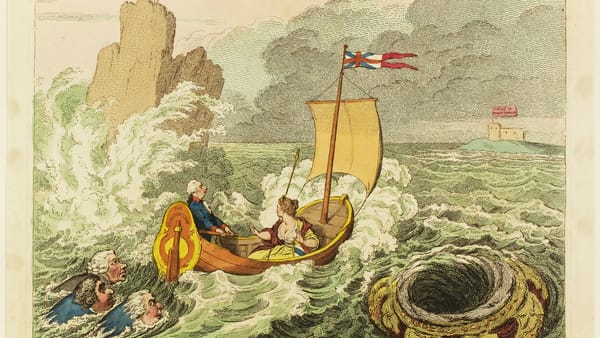
The story goes that Paul Revere made his midnight ride by horse from Boston to Concord, shouting “The British are coming” the entire way. However, this is more myth than fact, popularized largely by the 1860 poem “Paul Revere’s Ride” by Henry Longfellow. Though the poem was historically inaccurate, Longfellow had written it that way by design. The United States was experiencing more than a little bit of turbulence in the lead up to the Civil War, and this was part of a series of poems written to create American legends that he hoped the nation might be able to unite behind.
Key Takeaways
- Paul Revere did not shout ‘The British are coming!’ during his midnight ride.
- The Titanic’s sinking was due to a series of errors, not just the iceberg.
- Lincoln’s Emancipation Proclamation was a strategic military decision, not an abolition of slavery.
- The fall of the Berlin Wall was an accident caused by poor communication.
- The Berlin Wall fell due to a miscommunication during a press conference.
But the real story is much more interesting, as the British troops didn’t blindly walk into a surprise attack they didn’t see coming. There was an intricate alert system that Revere had helped develop involving lanterns, church bells, and alarm guns. Thanks to this system, alarms in Concord had almost certainly already gone off before the British had finished disembarking from their ship.
Per Revere’s request, Boston’s North Church hung two lanterns to signal the British army’s method of approach, the famous “one if by land, two if by sea” signal. Once the signal had been given, William Dawes left Boston by horse to start warning the colonists while Revere took the faster but more dangerous water route. He rowed down the Charles River towards Cambridge, having to sneak past an anchored British warship. Even if they didn’t have any idea what Revere was up to, it was still illegal to be on the river that late at night.
Revere safely landed his boat in Cambridge and began riding towards Menotomy to meet up with Dawes before traveling to Lexington. However, he wasn’t shouting “The British are coming”, because doing so would have been a profoundly stupid idea. To start, this was a secret mission. There were still a lot of British loyalists in the colonies, so you couldn’t just run around yelling that sort of thing.
But even if he could, it would have been a rather confusing warning. While we now generally refer to them as the American colonists, they were very much still British at the time, and they identified themselves as such. The message passed by Revere was instead, “The Regulars are coming out”, something that was being told to key individuals rather than shouted indiscriminately at bystanders. Some of these people were other riders, and by the end of the night there were as many as 40 men riding throughout Middlesex County to warn of the British army’s advance.
Revere and Dawes reached Lexington at around midnight, and they met with Samuel Adams and John Hancock who were staying together with Hancock’s family. It had initially been believed that capturing the two colonial conspirators had been the army’s main goal rather than continuing on to Concord, but Revere reported that that army column was far too large just to take in two men; they had to be pressing onward. After discussing the best course of action, Revere and Dawes left to warn Concord. Accompanying them was Samuel Preston, a doctor from Concord who just happened to be “returning from a lady friend’s house at the awkward hour of 1 am.”
The three men continued towards Concord together, but they encountered a roadblock placed by the British army just outside the town of Lincoln. Preston was able to jump the blockade on his horse and continue on to Concord to warn of the incoming military force. Dawes escaped, but he fell from his horse shortly after and returned to Lexington by foot. But Paul Revere was captured by the British that night.
Revere was interrogated at gunpoint, and he told the army exactly what had happened. He said that a large army force was heading towards Concord, and that they would be met by a hostile and armed militia. The soldiers began marching Revere and their other prisoners back to Lexington, when they were startled by the sound of gunfire. They demanded an explanation from Revere, who informed them it was an alarm meant to warn the county of what was coming.
When they neared Lexington, warning bells were loudly ringing throughout the town. One of the other captives told the soldiers, “The bell’s ringing. The town’s alarmed, and you’re all dead men.” Rather than risking bringing the captives to Lexington, the British soldiers instead let them go free after confiscating Revere’s horse.
The soldiers then left to intercept the army column and warn them of what they were marching into, while Revere walked back to Hancock’s house to assist him and Adams in their flight from Lexington. Adams and Hancock escaped, but the British army did not heed the warnings.
The Sinking of the Titanic
For decades, the prevailing belief was that the Titanic crashed solely because of its collision with an iceberg. It was believed that the iceberg left a 300 foot long gash in the hull of the ship, causing it to fill with water until it eventually sank bow first and fully submerged, almost completely intact. According to some tellings of the story, the captain even charged directly at the iceberg, believing it to be rather small. However, accounts of survivors, official documents, and the 1985 discovery of the Titanic wreckage, which was completely broken in half, have painted a much different picture.
The true story of the sinking of the Titanic is more of a comedy of errors rather than the singular fault of the iceberg. To start, the ship was sailing at close to its maximum speed through the icy waters. This wasn’t necessarily uncommon when crossing the Atlantic Ocean. The water was completely still that night, and passenger vessels often travel at high speeds under those conditions.
Delays due to weather are all but an inevitability, so taking advantage of calm waters when they presented themselves would allow the ships gain time and arrive on schedule. While the Titanic’s selling point was luxury rather than speed, it would still have been a bad look for the maiden voyage to arrive late.
Of course, while high speeds in calm waters is normal, it meant ignoring warnings from other ships about all of the ice in the area. It may have been advisable to slow the ship down, but none of the reported ice was directly in their path so the captain decided it was fine. However, another important message came in later from the ocean liner Mesaba. The message warned of large icebergs directly in the Titanic’s path, but it contained a rather unfortunate typo.
The warning was signed “MXG” rather than “MSG”. At the time, MSG was a maritime abbreviation for “master must sign”, which meant that a commanding officer was required to review and sign off on the message. Because of this typo, the navigation officer never saw the message.
Less than an hour before the crash, the passenger ship Californian was radioing a warning that it had stopped moving and was completely surrounded by ice. Unfortunately, because the ship was so close to the Titanic at this point and had such a powerful radio, it was interfering with the Titanic’s radio. Rather than heeding the warning, the radio officer on the Titanic replied, “Shut up! You’re jamming my signal!”
The Californian proceeded to turn off its radio and stop trying to warn of the icebergs that it was surrounded by.
Even with these breakdowns in communication, there were two lookouts posted in crows nests that night who should have been able to see the iceberg coming. Unfortunately, because it was a calm, moonless night, this was nearly impossible. Calm waters are normally great for sailing, but slightly choppy waters make obstructions like icebergs more visible, as the lookouts would have been able to notice the waves breaking against the bottom of the iceberg.
Oh, and it also probably would have helped if the lookouts actually had some binoculars. The binoculars were kept in a locked storage box to which only the second officer had the key, but the Titanic’s second officer was transferred just before the maiden voyage. When that happened, he forgot to return the key.
The lookouts did eventually notice the iceberg, and the first officer ordered for the engines to be cut and to make a sharp turn to avoid a collision. It’s argued that if the engine was merely throttled down rather than cut entirely, the water passing over the rudders would have allowed it to turn faster and successfully avoid the iceberg entirely.
But once the iceberg struck the right side of the Titanic, well a lot of people didn’t even notice. It was hardly the devastating blow that is often portrayed, instead being more of a bump. Some passengers came out of their rooms to see what had happened, but many didn’t even wake up. And when they discovered what had happened, many passengers and crew alike didn’t take the problem seriously.
The Titanic was one of three Olympic-class liners, and the Olympic had already crashed into a British warship and completed its journey without difficulty. As such, a glancing blow from an iceberg didn’t seem like a major concern. It also didn’t help that many passengers opened the portholes in their rooms to see what had happened, creating an easy way for even more water to enter the ship faster.
There was also the quality of materials used to build the Titanic. The steel was relatively brittle compared to modern steel, and the rivets are considered to have been of particularly poor construction. Many of the rivets were iron, not steel, which was exceptionally brittle in these cold temperatures. According to some accounts, these rivets were already leaking seawater even before the collision with the iceberg.
Watch the Video
Open Video
Video Briefing
Historical Events that Didn't Happen Like You Think
And of course, it’s probably worth mentioning that the Titanic had been on fire for days. It’s unclear exactly when the fire started, but it was almost certainly sometime when the ship was stopped in Southampton. These sorts of fires were actually relatively common at the time, as coal stores were prone to spontaneous combustion. However, the fire raged in the Titanic’s coal stores for anywhere from 3-10 days, not being extinguished until the day before the crash.
The fireman onboard the ship described very visible warping resulting from the prolonged fire, and some reports stated that the warped bulkhead was leaking water before the collision. Regardless of whether it started before or after the collision, the wreckage of the Titanic didn’t show major structural damage in the area, indicating that the flooding of that section was the result of the fire rather than the iceberg.
The final results were also much worse than they needed to be as well. It’s well known that there weren’t enough lifeboats onboard the Titanic for everybody, but many of these boats weren’t even filled to capacity. Many passengers believed there was no danger and that they would be safer on the Titanic than in a lifeboat, and the crew was equally unalarmed. Had they recognized the severity of the situation, the crew never would have allowed the early lifeboats to leave with so many empty seats still available.
Abraham Lincoln’s Emancipation Proclamation
History has portrayed President Abraham Lincoln as the freer of the slaves and a champion of black rights, though the truth is actually much more complicated. It’s true that Lincoln gave the Emancipation Proclamation on January 1, 1863 which freed many slaves, but let’s take a look at an excerpt from one of Lincoln’s most famous speeches:
“I am not, nor ever have been, in favor of bringing about in any way the social and political equality of the white and black races—that I am not nor ever have been in favor of making voters or jurors of negroes, nor of qualifying them to hold office, nor to intermingling with white people; and I will say in addition to this that there is a physical difference between the white and black races which will ever forbid the two races living together on terms of social and political equality. And inasmuch as they cannot so live, while they do remain together, there must be the position of superior. I am as much as any other man in favor of having the superior position assigned to the white race.”
That quote is obviously not from the Emancipation Proclamation, but it was from less than five years earlier during Lincoln’s debates in the Illinois senate race against Stephen Douglas. Lincoln may have been morally opposed to slavery and felt that all men were created equal in so far as they should be allowed to enjoy the fruits of their labour and improve their general condition, but he didn’t believe they were genuinely equal.
And more to the point of the proclamation itself, Lincoln wasn’t actually trying to end slavery. The Emancipation Proclamation was a strategic military decision, which is why it only freed slaves in the Confederate states that were in open rebellion against the Union. The point was to bring all of these freed slaves to the north where a large portion of them would ideally take up arms against their former owners. For any slaves that happened to already live in the Union states, well they were out of luck.
Slavery in the United States wasn’t abolished until the 13th Amendment, which wasn’t ratified until over 8 months after Lincoln’s assassination. Another often neglected fact of all of this is that slavery wasn’t ever completely abolished in the United States. Anyone who has been convicted of a crime may still be forced into slavery and involuntary servitude as part of their punishment, which is why most jobs available to inmates pay around 25 cents per hour.
The Fall of the Berlin Wall
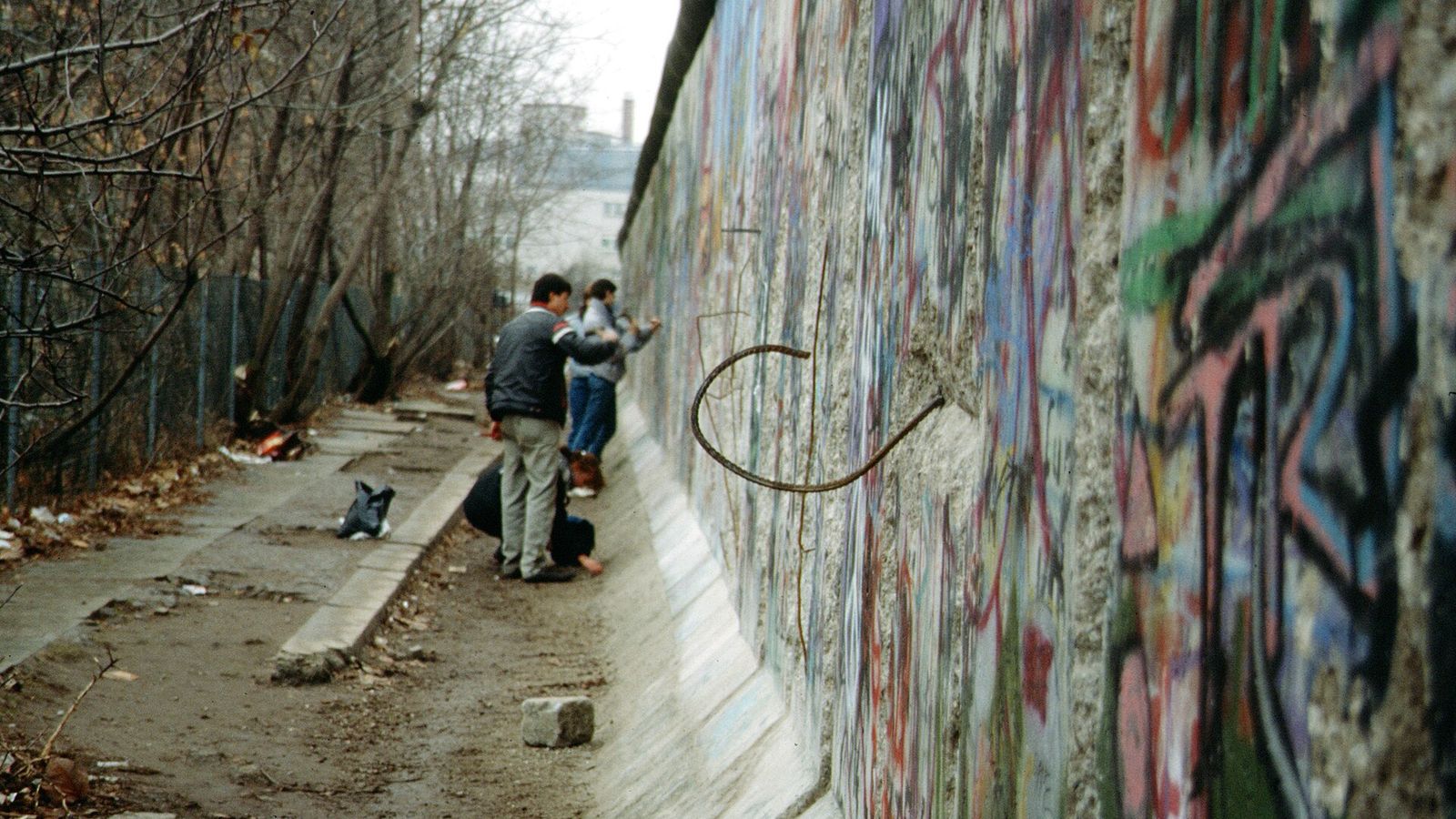
To many, the fall of the Berlin Wall evokes images of large groups of aggressive protestors charging the wall and overpowering guards, forcing it to fall. To the most patriotic of Americans, it evokes an image of President Ronald Reagan emphatically declaring, “Mr. Gorbachev, tear down this wall!” Of course, Reagan’s speech took place over two years before the wall actually fell.
But when it did, it was not an inspiring show of the populous overpowering their oppressors, it was a complete accident caused by poor communication.
Though there were countless peaceful protests leading up to the fall of the Berlin Wall, with the largest ones exceeding half a million people, the actual events that would bring about the wall’s end began in June of 1989. The Hungarian government dismantled the electrified fence between Hungary and Austria, though this was mostly for show. They had invited Western camera crews to film the dismantling, but the border remained heavily guarded.
The following month, one of the gates between Austria and Hungary was opened as a way to test Gorbachev. There was no reaction by the USSR, so thousands of East Germans began escaping to Austria via Hungary. It was so many people that Hungary had to close off its border to East German tourists, and the East German government banned travel to Hungary.
But this didn’t actually stop anything, as the East Germans just continued traveling to Austria via Czechoslovakia instead. Czechoslovakia wasn’t part of the USSR, but it was considered a Soviet satellite state. As such the border between the two nations had long remained open, so no restrictions were initially placed on this travel. However, the mass exodus of East Germans eventually became too much for both countries to adequately deal with.
East Germany’s longtime leader, Erich Honecker resigned on October 18, and later that day he had been replaced by Egon Krenz. Trying to handle the exodus was one of Krenz’s first orders of business, and he came up with a plan to ease the strain on both East Germany and Czechoslovakia. Since the East German tourists were all just trying to either cross into West Germany or to go to the West German embassy in Prague, Krenz decided to allow people to travel directly from East Germany into West Germany, including from East to West Berlin through the wall.
The decision was made on November 9th, and the changes were meant to take place the following day so that the border guards could be informed. Günter Schabowski, a leader and spokesman of the Socialist Unity Party of Germany, had a scheduled press conference that day. It was decided that this would be the perfect time to announce the new travel regulations between East and West Germany.
However, Schabowski had not been involved in the discussions to create the new regulations. Just before the press conference began, he was handed a note containing the new information, but he was not given any other instructions. Schabowski was also not informed that these changes, which had only been agreed upon a few hours earlier, weren’t intended to go into effect until the following day.
Schabowski completed his press conference as planned, and at the end of his prepared remarks he pulled out the note he had been handed and read it aloud. He announced that anyone could apply for private travel outside of the country without any of the previously needed prerequisites, much to the shock of everyone in attendance. When a reporter asked him when the changes were taking effect, Schabowski looked through the note he had been given, then told them that as far as he knew, it was effective immediately. After some more questions from a bewildered press, he confirmed that these new travel rules applied to the border crossing at the Berlin Wall as well.
This was by no means what the new policy was supposed to be, but it was too late. The statements had been broadcast across the entire country, and tens of thousands flocked to the wall to leave East Berlin. The guards hadn’t heard the announcement, so they had no idea what was going on.
When they called their superiors, they were given orders to handle the most aggressive people by essentially revoking their citizenship, but that still left thousands of peaceful people trying to leave. As far as the people were concerned, one of the most powerful members of the political party in power had given them permission to leave, and they wanted out.
In a situation like this it would have normally been standard practice to subdue the crowd using lethal force, but there were too many civilians at the wall and nobody was willing to take personal responsibility for issuing the kill order. Thanks to some poor communication between the nation’s leaders, the guards had no choice but to step aside and let November 9th go down in history as the day the Berlin Wall fell.
Key Takeaways
- Paul Revere did not shout ‘The British are coming!’ during his midnight ride.
- The Titanic’s sinking was due to a series of errors, not just the iceberg.
- Lincoln’s Emancipation Proclamation was a strategic military decision, not an abolition of slavery.
- The fall of the Berlin Wall was an accident caused by poor communication.
- The Berlin Wall fell due to a miscommunication during a press conference.
SideProjects Editors
The SideProjects editorial team researches, fact-checks, and structures explainers about the lesser-known tales, side narratives, and spin-offs behind major historical and contemporary subjects.
Frequently Asked Questions
What was the actual message Paul Revere shouted during his midnight ride?
Paul Revere did not shout ‘The British are coming.’ Instead, he said, ‘The Regulars are coming out,’ which was communicated to key individuals rather than shouted indiscriminately.
What was the real cause of the Titanic’s sinking?
The Titanic’s sinking was due to a combination of factors including high speed through icy waters, ignored ice warnings, communication failures, lack of binoculars for lookouts, poor quality materials, and a fire in the coal stores.
What was the primary purpose of Abraham Lincoln’s Emancipation Proclamation?
The Emancipation Proclamation was a strategic military decision aimed at freeing slaves in Confederate states to weaken the enemy and bring freed slaves to the North to fight against their former owners.
What was the actual event that led to the fall of the Berlin Wall?
The fall of the Berlin Wall was an accident caused by poor communication. A spokesman announced new travel regulations that were meant to take effect the next day, leading to a mass exodus of East Germans.
What was the significance of the lanterns in the North Church during Paul Revere’s midnight ride?
The lanterns in the North Church signaled the method of the British army’s approach: ‘one if by land, two if by sea.’ This signal was part of an intricate alert system involving lanterns, church bells, and alarm guns.
Why did the Titanic’s lookouts struggle to see the iceberg?
The lookouts struggled to see the iceberg due to the calm, moonless night, which made it difficult to spot obstructions. Additionally, they did not have binoculars, which were locked away in a storage box.
What was the impact of the fire on the Titanic?
The fire in the Titanic’s coal stores caused warping and leaks, which contributed to the ship’s sinking. The fire had been burning for days before the collision with the iceberg.
How did the East Germans escape to Austria via Hungary?
East Germans escaped to Austria via Hungary after the Hungarian government dismantled the electrified fence between Hungary and Austria, allowing thousands to flee through the border.
What was the role of Günter Schabowski in the fall of the Berlin Wall?
Günter Schabowski announced new travel regulations during a press conference, stating they were effective immediately, which led to a mass exodus of East Germans to the Berlin Wall.
Why did the British soldiers let Paul Revere go free?
The British soldiers let Paul Revere go free after hearing warning bells and gunfire, realizing that the town was alarmed and that they were outnumbered. They confiscated Revere’s horse and released him to avoid further conflict.