
History has been full of child rulers, though often times these reigns were incredibly short lived and of little consequence. Because children lack the necessary wisdom and experience to govern an entire empire, more often than not these child rulers were merely puppets of their relatives and advisors, people who took advantage of their trust for personal gain rather than seeing to effectively rule.
But that wasn’t always the case, and some of history’s most notable leaders ascended to their positions of authority as children. Today we’ll be looking at some of the most important, longest reigning, and of course controversial child rulers from throughout history.
Ivan the Terrible
Ivan IV Vasilyevich, better known as Ivan the Terrible, was the eldest son of Vasili III and grandson of Ivan III. Upon Vasili’s death, Ivan inherited the title of Grand Prince of all Moscow and Russia at the age of only three. This was a time of great political instability in Russia, and Ivan’s early reign was guided by a group of advisors seeking to reform the country.
Key Takeaways
- Child rulers often served as puppets for advisors seeking personal gain.
- Ivan the Terrible’s reign was marked by territorial expansion and cultural advancements, but also by cruelty and political instability.
- Shapur II, crowned in utero, had a long and successful reign, known as the First Golden Era of the Sasanian Empire.
- Christina of Sweden abdicated after ten years, prioritizing personal and religious reasons over governance.
- John I of France’s brief reign sparked controversy due to suspicions of poisoning and disputed succession.
These close advisors became known as the Chosen Council, and in 1547, when Ivan was 16, the council crowned Ivan the first Tsar of all Russia. This newly created Tsardom of Russia had a much more centralized and autocratic government, consolidating an increasing amount of power with Ivan. Two weeks after the coronation, Ivan married his first wife, Anastasia Romanov.
Since he was a child, the Chosen Council sought to guide Ivan and help him make the best decisions possible. However, Ivan was a complicated person. Contemporary sources often described him as being both incredibly intelligent and mentally unstable. He was paranoid and prone to violent fits of rage, and this only got worse following the death of Anastasia in 1560.
Ivan had been deeply infatuated with Anastasia, and he never wanted to be with any woman except for her. Their marriage was described as a loving and mutually supportive relationship, and most importantly Anastasia was seen as a calming influence on the otherwise volatile tyrant. When she died it broke him mentally, and he became even more unpredictable. Ivan quickly became suspicious of his Chosen Council, paranoid that they may be plotting against him, and so he dismissed them to rule on his own.
This was already a difficult time for Russia, as they were being ravaged by drought, famine, and war, albeit a war that Ivan had started himself. But this chaotic time was also an opportunity for Ivan to strengthen his autocratic rule even further. He created Russia’s first political police, the oprichniki, and purged his political enemies in the Russian aristocracy.
Over the course of Ivan’s 50 years as the ruler of Russia, he led successful military campaigns across Europe and Asia. Though the Livonian War was a decades long stalemate that ultimately saw Russia ceding some of the territory he had gained, overall Russian territory expanded by about 1 million square miles under Ivan’s rule. That’s roughly the size of Argentina, and it nearly doubled the territory controlled by Russia.
In addition to the territorial gains, Ivan made cultural advancements as well. He established trade with England and in the East, imported the first printing press to Russia, and established schools to further the education of the Russian people. When he was younger and being advised by the Chosen Council, Ivan created a new, modernized code of laws for Russia that sought to reduce corruption. He did also try to create diplomatic relationships with other European nations, but since he was a cruel, volatile warmonger, it wasn’t possible to build lasting alliances.
Unfortunately, any good that Ivan did or may have tried to do was overshadowed by his cruel reign of terror, purges, and the resulting political instability. Even his own family wasn’t safe from his temper, as three years before his own death Ivan is believed to have killed his eldest son in a violent fit of rage. This left Ivan’s middle son, Feodor, as the next Tsar of Russia, but Feodor had no interest in politics and may have been developmentally challenged as well.
Feodor’s ineffectual rule, especially amidst the chaos and instability left behind from Ivan’s brutal reign, led to Russia’s catastrophic Time of Trouble.
Shapur II
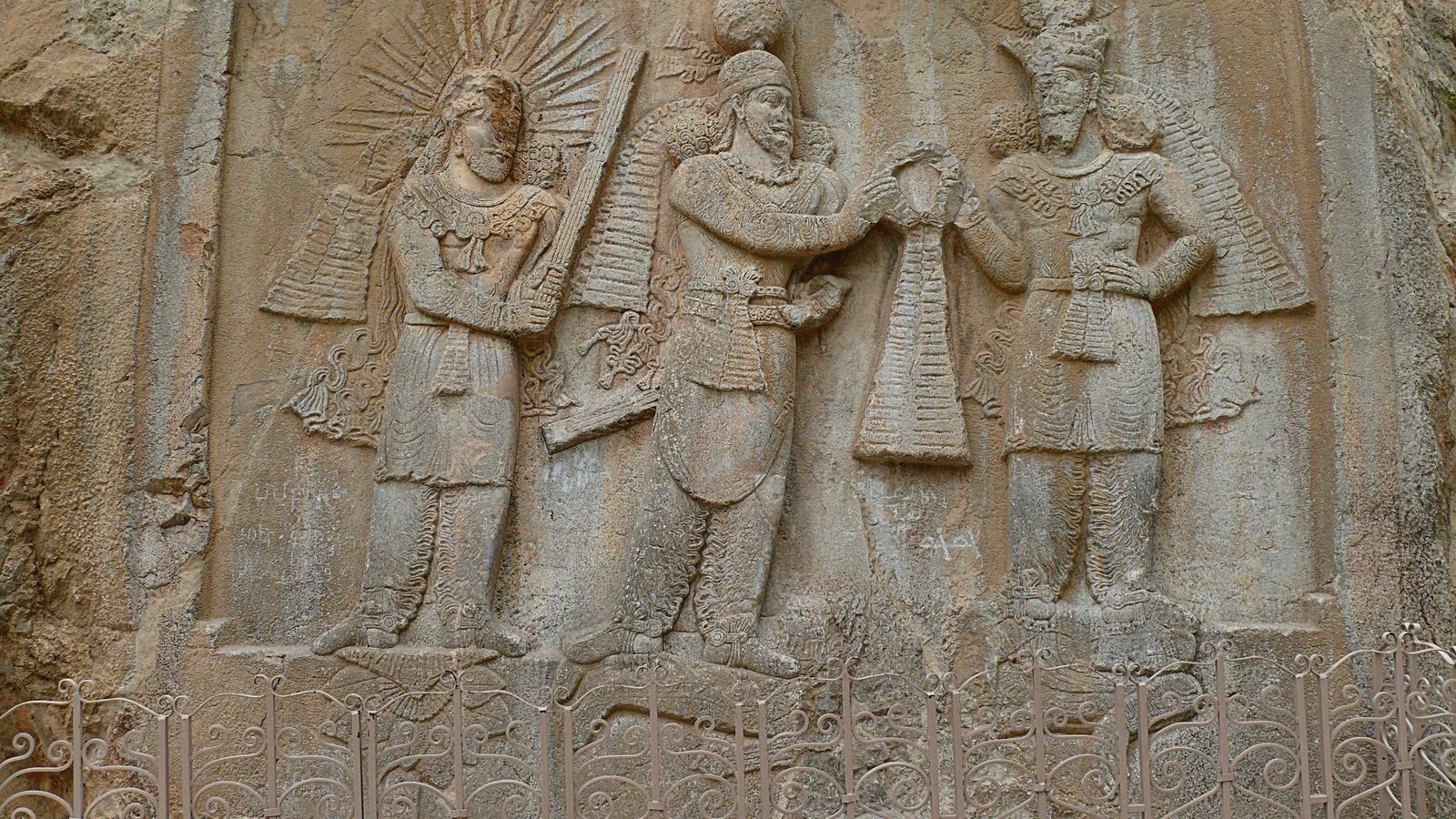
Born in 309 AD, Shapur II, also known as Shapur the Great, was the son of Hormizd II. Following Hormizd’s murder by a nobleman, his first son Adur Narseh became king. But within a few months, the nobility murdered Adur, blinded Hormizd’s second son, and caused his third son to flee Persia for the Roman Empire. That just left Hormizd’s unborn child, Shapur.
He may hold the distinction of being the only king in all of recorded history to have been crowned in utero. Though the story goes that the crown was placed atop his mother’s womb while she was pregnant, this may be an apocryphal tale. It’s been argued that Shapur would not have been crowned in utero as the sex of the baby would have been impossible to determine, though this is countered with the idea that the magi had prophesized that the child would be a boy.
Regardless, if Shapur was not crowned king in utero he was still crowned as soon as he was born. And since he went on to live for 70 years, he was Persia’s longest reigning king, and among the longest reigning monarchs in history.
Given what happened to his father and brothers, it’s fair to assume that Shapur was born into a period of great political turmoil. Despite this, the young king was largely shielded from all of the political strife in the Sasanian Empire as his regency sought to navigate the difficult political climate and ensure the stability of the empire.
And while his regents were able to shield Shapur and the Sasanian Empire from internal strife, there were still external forces to contend with. Throughout Shapur’s childhood, Arab tribes, specifically those in the Arabian Peninsula, raided the Sasanian homeland. When Shapur reached the age of maturity and took over his role as acting king at the age of 16, his first order of business was to go teach those Arab tribes a lesson.
In 325, he handpicked 1,000 cavalrymen to join him on what would be a wildly successful campaign against the Arab tribes. In just one year he crushed all of the opposing tribes with reckless cruelty, killing civilians and destroying their water supplies. He became known amongst the Arabs as Dhū al-Aktāf, or “he who pierces shoulders”. After his successful conquest, he ordered the construction of a large wall near al-Hira in modern day Iraq to prevent further invasions from the tribes.
Shapur’s reign was not only one of military dominance and massive expansion, but also one of religious persecution. Originally he was tolerant of other religions, and he never had problems with the Jewish population in Persia. But when the Roman Emperor Constantine I converted to Christianity, he no longer trusted the Christian population. Shapur saw them as foreign spies, and they were severely persecuted.
This attitude went back to the Peace of Nisibis from 299, agreed to by Shapur’s grandfather and Roman Emperor Diocletian. The terms of the treaty were heavily favourable to the Romans, with the Sasanian Empire ceding much territory to the Roman Empire. This was seen as a great humiliation, and it resulted in Shapur having a great deal of animosity towards the Romans. With Constantine’s conversion to Christianity, it was only natural that this animosity would extend towards all Christians.
Natural in a completely paranoid and irrational sort of way, that is.
Emboldened by his victories against the Arab tribes, Shapur’s next order of business was to take on the Roman Empire and nullify the terms of the Peace of Nisibis. Shortly after Shapur began his war against Rome, Constantine died and was replaced by his son Constantius II. The Sasanians and the Romans waged war for 24 years, with Shapur making significant advances early on, aided by knowledge from the Roman traitor Antoninus.
With Constantius losing ground to Shapur, his cousin Julian attempted to usurp the throne and alter the course of the failing war. It looked like the two Romans were about to go to war with one another for the role of emperor, but instead Constantius died of natural causes while traveling to confront Julian. Before he died he declared Julian his successor, and Julian was ready to avenge Rome and stomp out Shapur and his army.
Watch the Video
Open Video
Video Briefing
History's Most Controversial Child Rulers
Julian was an experienced commander and was able to push back Shapur, who had attempted to negotiate peace after learning of Julian’s military accomplishments. However this was short lived. After successfully defeating a larger Sasanian force, Julian’s column was attacked on their way back to Roman territory. The emperor made the tactical decision to ditch his armor for speed and flee only carrying his sword, but his unprotected torso was struck with a spear, piercing his liver and intestines.
He was succeeded by the weak and ineffective Emperor Jovian, and Jovian was quick to negotiate peace with Shapur. The treaty ceded most of the land Rome had gained in the Peace of Nisibis back to the Sasanians, and it was viewed by the Romans as being just as humiliating as the initial treaty had been to the Sasanians.
Despite being born into a lineage that the rest of the Persian nobility seemed very intent on eradicating, Shapur II’s long and successful reign, beginning on the day he was born (and possibly earlier), is now known as the First Golden Era of the Sasanian Empire.
Christina, Queen of Sweden
Christina Augusta was the daughter of the king of Sweden, Gustavus Adolphus. In 1632, she became Christina, Queen of Sweden at the age of only six, when her father died at the Battle of Lützen during the Thirty Years War.
Although she was officially queen, the government was controlled by a regency headed up by Chancellor Axel Oxenstierna, one of her father’s most trusted advisors. Christina’s early years were a bit tumultuous due to the conflict over who would raise her.
Although Gustavus was very attached to Christina, her mother, Maria Eleonora, had little interest in the girl. When Christina was born, the midwives initially believed the baby to be a boy because of its loud, coarse screams. King Gustavus was amused by this, saying, “She’ll be clever, she has made fools of us all”, but Maria never got over the disappointment and embarrassment of having a daughter instead of a son.
It had been Gustavus’s wish that, should something happen to him, his half-sister Catherine should be the one to raise Christina. However Maria didn’t care for this at all, and barred Catherine from the castle. Oxenstierna decided that Maria had been a neglectful mother and was a bad influence, so he removed her parental rights and sent her into exile.
Things were much better for Christina once her aunt took over, but Catherine died in 1638 while Christina was still only 11 years old. Oxenstierna felt that the best course of action was to split the duties of a new foster mother amongst four women to prevent Christina from becoming too attached and dependent on any of them.
As she was growing up, Christina received the same education that a male royal heir would have, and it turned out that her father was correct about her being clever. Oxenstierna wrote that she was very intelligent and “not at all like a female”. That comment extended well beyond just her intelligence also.
She had been an avid reader and enjoyed studying for ten hours a day or more. Christina would continue studying well into the night, only sleeping three to four hours each day. But because she was so preoccupied with learning and barely slept, her clothes were unkempt, she never remembered or cared to comb her hair, and she wore men’s shoes as a matter of convenience.
At the age of nine, Christina had read a biography of Elizabeth I of England, also referred to as the virgin queen, and it had a profound impact on her. She was deeply interested in the merits of both celibacy and Catholicism. Although she was secretly engaged at 16 to her first cousin, Charles Gustav, who was infatuated with her, they never wed. Despite the wishes of her advisors, Christina never married anyone.
She wrote in her autobiography that she had “an insurmountable distaste for marriage” and “for all the things that females talked about and did”.
Once she turned 18, Christina began acting in her official capacity of Queen of Sweden. Oxenstierna had done his best to help ensure that she would be an educated and capable leader, but in doing so he failed to recognize that she had drastically different political opinions than him.
It took less than a year for Christina to begin undermining Oxenstierna’s wishes, as she argued for an end to the Thirty Years War and for peace at any cost. Note that Sweden was already on the winning side of the war and had made significant territorial gains, Oxenstierna just felt that they could get even more if they kept fighting.
Following the Peace of Westphalia, Christina began diminishing Oxenstierna’s role in government and named her cousin Charles as her presumptive heir. Over the years that followed, Christina turned Sweden into a hub of culture and scholarship. She brought prominent artists, philosophers, and scientists to Sweden, and her impact on culture and education was monumental.
As a diplomat, however, she didn’t really care. She was far more interested in the pursuit of culture and knowledge than she was in political affairs, and her initial popularity soon died down since she was seen as being both indifferent and erratic when it came to politics. It also didn’t help that she kept spending all of Sweden’s money on parties, expensive art, and gifts of land and money to newly appointed nobles. In just ten years, she doubled the number of noble families from 300 to 600, and was doing so with such reckless speed that sometimes the same piece of land was gifted twice.
Although she had a huge positive cultural impact, Christina’s spending had pushed Sweden to the verge of bankruptcy. Considering that issue, her apathy towards governance, and her desire to convert to Catholicism, there was only one choice left. After only ten years acting in her role as queen, Christina abdicated the throne, making her cousin Charles Gustav the new king. It was a shock to all of Europe, as most found it inconceivable that a reigning monarch would voluntarily give up all of her power for personal and religious reasons.
John I of France
John I of France, also referred to as John the Posthumous, was both the youngest and shortest lived king in the history of France. John’s father, Louis X, died at the age of 26 under suspicious circumstances. He is believed to have died as a result of either pneumonia or pleurisy, but rumours quickly circulated at the time that his wine had been poisoned. There is no historical evidence to support the idea he was poisoned, but seeing as he was also known as Louis the Quarreler, it’s fair to say that he did have enemies.
Five months after Louis’s death, John was born and named king. Though John was the first monarch in France to be given the title of king at birth, making him king wasn’t what resulted in controversy. After all, the monarchy had passed from father to son within John’s family for the previous 300 years. The controversy began four days later when the infant king suddenly died.
Although infant mortality was exceptionally high back in the 1300s, John’s death quickly brought with it rumours that he had been poisoned, aided by the suspicions that already surrounded the death of Louis X. Immediately following John’s death, Louis’s brother Philip crowned himself king. This was a controversial decision, as Louis still had a four year old daughter, Joan, who also had a claim to the throne.
Thanks to some political maneuvering and insinuations that Joan was an illegitimate child, Philip was able to retain the French crown, though Joan did later become Queen of Navarre.
Key Takeaways
- Child rulers often served as puppets for advisors seeking personal gain.
- Ivan the Terrible’s reign was marked by territorial expansion and cultural advancements, but also by cruelty and political instability.
- Shapur II, crowned in utero, had a long and successful reign, known as the First Golden Era of the Sasanian Empire.
- Christina of Sweden abdicated after ten years, prioritizing personal and religious reasons over governance.
- John I of France’s brief reign sparked controversy due to suspicions of poisoning and disputed succession.
SideProjects Editors
The SideProjects editorial team researches, fact-checks, and structures explainers about the lesser-known tales, side narratives, and spin-offs behind major historical and contemporary subjects.
Frequently Asked Questions
Who was Ivan the Terrible and how did he become the ruler of Russia?
Ivan IV Vasilyevich, known as Ivan the Terrible, was the eldest son of Vasili III and grandson of Ivan III. He inherited the title of Grand Prince of all Moscow and Russia at the age of three upon his father’s death.
What was the Chosen Council and what role did it play in Ivan the Terrible’s reign?
The Chosen Council was a group of advisors who guided Ivan the Terrible during his early reign, seeking to reform the country. They crowned Ivan the first Tsar of all Russia in 1547 when he was 16.
How did Ivan the Terrible’s reign impact Russia’s territory?
Under Ivan the Terrible’s rule, Russian territory expanded by about 1 million square miles, nearly doubling the territory controlled by Russia.
What significant cultural advancements did Ivan the Terrible make during his reign?
Ivan the Terrible established trade with England and the East, imported the first printing press to Russia, and established schools to further the education of the Russian people.
Who was Shapur II and how did he become the king of Persia?
Shapur II was the son of Hormizd II. He was crowned in utero or immediately after birth, following the murders of his father and older brothers, and went on to become Persia’s longest reigning king.
What military campaigns did Shapur II undertake during his reign?
Shapur II led successful campaigns against Arab tribes and the Roman Empire. He crushed Arab tribes with cruelty and built a wall to prevent further invasions. He also waged a 24-year war against the Romans.
What was the impact of Shapur II’s reign on the Sasanian Empire?
Shapur II’s reign is known as the First Golden Era of the Sasanian Empire, marked by military dominance, territorial expansion, and significant cultural and religious changes.
Who was Christina, Queen of Sweden, and how did she become the queen?
Christina Augusta, daughter of King Gustavus Adolphus, became Queen of Sweden at the age of six upon her father’s death in 1632. She was officially queen, but the government was controlled by a regency headed by Chancellor Axel Oxenstierna.
What educational background did Christina, Queen of Sweden, receive?
Christina received the same education as a male royal heir, studying for ten hours a day or more. She was described as very intelligent and not at all like a typical female by her advisor, Oxenstierna.
Why did Christina, Queen of Sweden, abdicate the throne?
Christina abdicated the throne after ten years due to her spending habits pushing Sweden to the verge of bankruptcy, her apathy towards governance, and her desire to convert to Catholicism.