
The study of archaeology is surprisingly ancient. For example, the son of Ramesses II, Prince Khaemwaset, is often referred to as the first Egyptologist because of his work in restoring and identifying ancient Egyptian monuments. And this was taking place in the 13th century BC.
However, while archaeology in some form has existed since ancient times, it wasn’t until the mid to late 1800s that it was refined into a careful, scientific endeavour. From the Medieval Period until that shift to a scientific method, archaeology was generally carried out by antiquarians.
Some antiquarians were scholars, but most were just rich dudes who wanted cool, old stuff for their personal collections. Their efforts were less about preservation and more about finding the most beautiful, ancient pieces of art they could get their hands on. They essentially were just glorified treasure hunters who focused only on finding the most beautiful and potentially expensive artifacts and pieces of artwork they could find, discarding or destroying the more mundane items that would actually help historians understand the lives of past civilizations.
Key Takeaways
- Archaeology evolved from ancient practices to a scientific discipline in the late 1800s.
- Early archaeologists, often wealthy individuals, prioritized personal collections over preservation.
- Jacques de Morgan’s construction of Shush Castle destroyed ancient ruins for his base of operations.
- Heinrich Schliemann’s aggressive excavation methods damaged the ancient city of Troy.
- Arthur Evans reconstructed ancient sites with modern materials, altering historical accuracy.
Given that, it’s no surprise that many of these earlier archaeologists employed some pretty terrible methodology that permanently erased valuable knowledge about the past from the face of the Earth.
Jacques de Morgan
Jean-Jacques de Morgan was born in France in 1857. The son of a geologist, Jacques also took an interest in geology, as well as studying entomology and prehistory. But, it was as a mining engineer that he initially made a name for himself, particularly for his work with tin mines.
However, he maintained an interest in ancient history and prehistory, and this lead Jacques to travel to Persia in the 1890s. His goal was to retrace the routes used by the Assyrian Campaigns in Elam, though he did get distracted a bit after discovering huge petroleum reserves that he felt could be profitable.
Eventually Jacques arrived at the small village of Shush, located near the ruins of the ancient city Susa. Susa had been the capital of Elam for over 2,000 years, after which it spent another couple centuries as the winter capital of the First Persian Empire. Atop a hill surrounded by castle ruins, Jacques discovered some old flints and pieces of ceramic.
Realizing this might be of archaeological interest, Jacques contacted Gabriel de Mortillet, curator of the Museum of National Antiquities in Saint-Germain (whom he had already become acquainted with through his father). Susa had already been the site of a British excavation in the 1850s and a French one in the 1880s, but clearly some things had been missed. France was eager to establish a monopoly of archaeological research in Persia, so they cut a deal with the Persian government for Jacques to lead excavations at the location.
As Jacques saw it, though, there was just one problem with all of this. The castles that had formerly stood in Susa were in ruins, so there was no suitable base of operations for himself and his team. The logical solution would have been to take up lodging in the village of Shush, or perhaps to build temporary residences nearby. And if you thought either of those seemed like a reasonable solution, clearly you were not born into the French aristocracy.
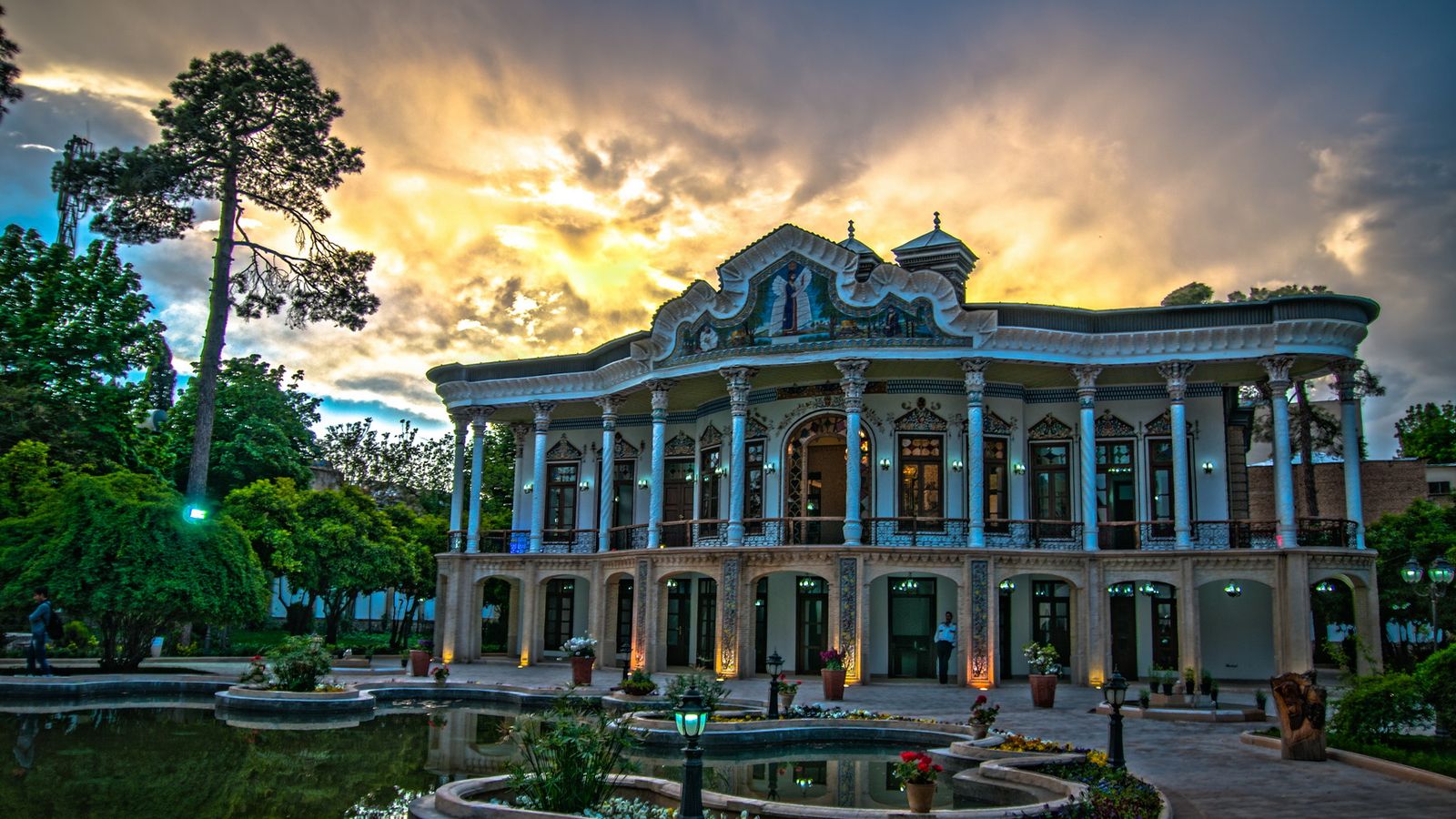
Jacques ordered the construction of Shush Castle, a castle built atop the very site they planned on excavating. That sounds like a disruptive and time consuming project, but they were able to shortcut the process quite a bit. After all, it’s not like they had to transport a bunch of freshly cut stone to the location, not when there was already plenty of it lying around going unused.
Shush Castle was built by dismantling and reassembling the ruins of Darius the Great’s Apadana Palace and the Chogha Zanbil Ziggurats of ancient Elam. This would serve as a base of operations for French archaeologists all the way until World War I, and all they had to do to build it was mutilate the existing ruins. To be fair, the excavations in Susa did result in a number of major historical finds, most notably the Victory Steele of Naram-Sin from the 23rd century BC.
In 2015, Susa was declared a Unesco World Heritage Site. While this was done to preserve Susa in general rather than the castle Jacques built, the castle is now ironically protected from the exact sorts of activities that led to it being built in the first place.
Heinrich Schliemann
Heinrich Schliemann wasn’t like most antiquarians. While they were typically born into wealth, Heinrich was born into poverty in Neubukow, Germany in 1822. His mother died when he was a child, so his father sent him to stay with his uncle, who was a pastor. He attended school until he was 14, but the family was too poor to send him to university. Instead he became an apprentice grocer, working for five years before he injured himself from too much heavy lifting.
Following that, Heinrich became a cabin boy on a boat bound for Venezuela. Just 12 days into the voyage, the boat was destroyed at sea. He and the other survivors washed up in the Netherlands, so he just stayed in Amsterdam for a few years, working his way up from being a messenger boy to becoming a representative for an import/export firm.
In 1850, Heinrich learned that his brother Ludwig had died, but not before becoming extremely wealthy in the California gold rush. He left for California and used the inheritance from his brother to start a bank in Sacramento, buying and selling gold dust. However, when complaints started coming in that the gold dust he sold them came in under weight, he went back to Germany, sold off his American business, and moved to Russia. Heinrich used the money he had made to live the high life, making wealthy friends and then marrying the wealthy niece of one of those wealthy friends.
From there he became a profiteer, cornering the market in saltpeter, sulfur, and lead, then selling them to the Russian government who needed those items to make ammunition for the Crimean War. After selling off all his reserves, Heinrich had made enough money to retire at the age of 36. This left him with the time and money to pursue his true passion: the lost city of Troy.
This was where Heinrich was actually different from most antiquarians of the day. As we mentioned earlier, they were predominantly treasure hunters searching for artifacts to either increase their personal wealth or fill out the British Museum. But Heinrich wasn’t after riches, he wanted to prove the historicity of Homer’s Troy, as it appeared in the Odyssey and Iliad.
Heinrich identified what he believed to be the location of Troy, located in modern day Hisarlik, Turkey. The site had previously been excavated once already and Heinrich’s initial examinations left him unimpressed. But a local expert (who also happened to own the land Heinrich would be digging on) convinced him to keep going. This time, however, Heinrich decided to take a much more forceful approach.
He dug a trench 17 meters (56 feet) deep, revealing nine buried cities. Unfortunately, creating this trench was done with absolutely no care for what they were digging through, to the point that Heinrich heavily employed the use of dynamite to get his trench completed. While he did successfully find the ancient city of Troy, Heinrich also blew up a large portion of it in the process. The aggressive digging and explosions also disrupted and shifted some amount of the remaining ruins, ruining the timeline that a more careful excavation would have preserved.
Arthur Evans
Sir Arthur John Evans was born in 1851 into a wealthy and well connected family. His father, John, had made a fortune thanks to the family’s paper mill business. The business had actually been founded by John’s uncle, but John became a partner in the company after marrying his uncle’s daughter, which is to say his first cousin.
But John’s reputation wasn’t built purely on the family fortune. He was also a well respected scholar of geology, archaeology, and numismatics (the study of currency). John was even knighted in 1892 for his work as an antiquarian, with his personal collection totaling over 12,000 artifacts.
While Arthur did inherit his father’s interest in archaeology and ancient artifacts, it seems he may not have been so lucky when it came to intelligence. In a letter written by Arthur’s grandmother, she referred to him as being “a bit of a dunce”, particularly compared to his father. He was still able to attend Brasenose College, part of the University of Oxford, and he graduated in 1874 with a first-class degree that he very much did not earn.
Arthur was supposed to be studying modern history, but he ignored all of his university work to pursue matters of ancient history instead. Despite failing his exams, the school was convinced to give him a degree anyway, in large part because of his father’s social standing.
After graduation, Arthur traveled around the Balkans. Part of this was for networking and scholarly research, but he also wanted to act as a spy in the revolutionary upheaval that was taking place. When he returned to England, he became a journalist for the Manchester Guardian. Initially he wrote about his experiences in the Balkans, then he became a correspondent in the region.
Watch the Video
Open Video
Video Briefing
History's Worst Archaeologists.
This career ended in 1882 after he was arrested as an agent provocateur for writing anti-Austro-Hungarian propaganda. Though he wasn’t convicted, he was sent back to England. There, he became keeper of the Ashmolean Museum, which was in the process of converting from a natural history museum to an art and archaeology museum.
For years he remained the museum’s keeper, while also traveling the world with his wife to explore archaeological sites. Following her death, however, he fell into a deep depression. Before his wife’s death he had purchased some ancient stones at a flea market with unidentified writing on them, so he decided to travel to Crete where he believed the writing may have originated.
A couple decades earlier a Cretan archaeologist, Minos Kalokairinos, had began excavations of a Bronze Age palace on the island. In 1900, Arthur undertook extensive excavations of the site, revealing what he claimed to be evidence of the Minoan Civilization.
The palace had a maze-like quality to it, so Arthur believed this had been the palace of King Minos, and home to the minotaur of Greek myth. This belief was reinforced by the discovery of frescos on the palace walls depicting bulls, and some other bull-related artwork. But there was a huge problem for Arthur. The palace, originally constructed around 1900 BC and destroyed around 1350 BC, was in ruins.
You might understandably be thinking that this sort of thing is to be expected in archaeology. The remains of an ancient palace that had been destroyed and buried underground for centuries was obviously going to be in rough shape. Sure, the wooded supports were rotted away and the palace was being held up by the surrounding rubble, but that’s just how it goes sometimes, right?
Well Arthur disagreed. The palace was currently in shambles, but what if it wasn’t? What if he could restore it to its former glory by rebuilding the damaged and rotting parts of the palace using steel-reinforced concrete?
Chances are that already sounds like a bad idea. It’s one thing to perform careful restoration of ancient sites using contemporary methods, but rebuilding it with modern materials and techniques is quite a bit different. Also, Arthur wasn’t basing his reconstruction on evidence of how the palace had originally looked, much if it was based on vibes. He added pieces to the construction that had not originally been there, redesigned things that were there, and repainted the palace in colours of his choosing.
Entire frescos were added pretty much entirely by the imaginations of Arthur and his painters. Some of the paintings had been preserved well enough that they could be restored at least somewhat faithfully, but many were so damaged that there was little to no original work to base the new paintings on.
Although much of the history of the palace was irreparably destroyed thanks to Arthur’s decision to renovate the building, he has remained a popular figure in the area for bringing attention and tourism to Crete. He is also credited with discovering the writing systems Linear A and Linear B in tablets found during the excavation, though examples of Linear B had been seen prior to this.
Thomas Bruce, 7th Earl of Elgin
Thomas Bruce, of the formerly royal House of Bruce, was born in 1766. His older brother died at the age of seven, making Thomas the new male heir and thus the 7th Earl of Elgin. He received the sort of education one might expect of a nobleman, followed by a brief military career.
Although Thomas’s time in the Scots Guard was limited, he continued to receive honorary military ranks by virtue of being part of the aristocracy, eventually rising all the way to lieutenant general in 1812.
Following his actual time in the military, Thomas was elected as a Scottish representative peer for the House of Lords in 1790. He remained a member of Parliament for 17 years, though he was rarely able to attend Parliament due to his other professional duties.
In 1791 he became a temporary ambassador for Austria while the permanent ambassador was sick. He was then sent as the ambassador in Brussels until the French conquest of the region. Thomas then served as ambassador to Prussia for a few years, before becoming the ambassador to the Ottoman Empire in 1798.
So far, nothing in his life indicated that Thomas would have had any interest in archaeology. Although he was certainly rich, he didn’t share the lust for treasure hunting that defined your typical antiquarian. But what Thomas did have was an embassy that he felt would look a whole lot cooler if it had a bunch of ancient Greek artwork in it. This decision was prompted by a discussion with archeologist and fellow diplomat Sir William Hamilton, though the idea still seems to have originated with Thomas.
Anyway, in the summer of 1800, Thomas dispatched several skilled draftsman, modelers, and the renowned painter Lusieri to Athens. And the original plan wasn’t anything too crazy. At his own expense, Thomas had hired these men to make paintings of the ancient monuments and create plaster molds of sculptures and artifacts. His stated goal was to make his embassy “beneficial to the progress of the Fine Arts in Great Britain”.
At the time, there was nothing wrong with any of this. The paintings were obviously fine, and plaster molds were relatively common back then, though we now know how damaging they can be to the original pieces. Regardless, none of this was out of the ordinary.
However, late in the summer of 1801, over a year after this project had begun, Thomas presented a royal decree allegedly from the central government of the Ottoman Empire, who controlled Athens at the time. According to the document he presented, not only was Thomas allowed to make casts of the sculptures, but he could remove any stones or sculptures he wanted.
What followed was an unrepentant looting of Athens, with Thomas’s men breaking off about half of the Parthenon frieze, portions of the temple of Nike Apteros, and dozens of other ancient sculptures and artifacts, including a marble throne. When it was time to send the first shipment back to Great Britain, Thomas’s brig became shipwrecked during rough weather. All of the crew members were saved, but the cargo sunk to the bottom of the Mediterranean.
After two years most of it was recovered, and it eventually made its way to England where it was put on display at the British Museum. Even at the time, this was all highly controversial. Many around the world, including in Great Britain, decried Thomas’s acts as nothing but vandalism and theft. Lord Byron even wrote a poem about how awful Thomas’s actions were.
There was also the matter of the decree Thomas had produced to justify this theft. While the British Museum has the Italian translation made by Thomas’s embassy, no official copy of this alleged edict has ever been found. Almost as if it was a lie. The British government did purchase the stolen goods from the Ottoman Empire in 1816 for £35,000 (less than half of what Thomas spent acquiring them), but Britain’s ownership of the Elgin Marbles remains highly controversial and is disputed by Greece.
Giovanni Battista Belzoni
Giovanni Battista Belzoni was born in Padua, Italy in 1778. He was the son of a barber, and one of 14 children. He moved to Rome at the age of 16 and studied hydraulics, though his initial plan was to join a monastery. The French invasion of Rome put an end to those plans, though, so in 1800 he moved to the Batavian Republic (now the Netherlands) where he became a barber like his father.
It’s said that he fled to England in 1803 to avoid going to prison, though it’s unclear exactly what charges he was facing. Some sources describe him as a sort of political agitator, while others say that it was legal troubles over debts and financial disputes. Regardless, he moved to England where he married an Englishwoman named Sarah Banne.
Being a barber wasn’t cutting it in England though, so Giovanni made the only logical career choice for a 6’7 man in the early 1800s: he became a strongman in a traveling circus. This lasted for about 10 years, with Giovanni and his wife traveling around England and much of Europe.
In 1815 he left the circus and traveled to Malta, where he met a diplomatic emissary of Muhammad Ali, the de facto ruler of Egypt. Muhammad was working on agricultural reclamation projects for Egypt, so Giovanni traveled there to demonstrate a hydraulic machine he had created that he believed could raise the waters of the Nile for irrigation. The machine worked, but Muhammad ultimately did not go ahead with the project.
Once again Giovanni found himself unemployed in a new country, so he met with the British consul to Egypt, Henry Salt. Seeing what a big, strong man Giovanni was, Henry sent him to the temple of Ramesses II to go fetch a 7.25 ton bust of Ramesses so that it could be shipped back to the British museum. Thus began Giovanni’s career as an archaeologist.
While he did make a number of important archaeological discoveries, his career was largely defined by brute force rather than scholarly precision. Temple doors were opened with battering rams, fixtures were ripped off walls with crowbars, and massive holes were broken into walls to allow Giovanni and his team to pull large sculptures and sarcophagi through. When he became the first person in modern times to discover the interior of the temple at Abu Simbel, he and his companions carved their names into the wall of the ancient structure like graffiti.
Admittedly, that last bit was shockingly common at the time. Early archaeologists didn’t have much of a concept of preservation (as evidenced by everything we’ve discussed today), so it was all about personal glory and fame. Archaeologists would carve their names into structures to show that they were the first person to discover it, ensuring their place in history.
Although Giovanni’s contributions to the British Museum were enormous, so too was the damage he did to ancient Egyptian temples. But while he may have caused irreparable damage to the history of the ancient locations, at least any future generations who visit Abu Simbel will know “Giovanni wuz here”.
Key Takeaways
- Archaeology evolved from ancient practices to a scientific discipline in the late 1800s.
- Early archaeologists, often wealthy individuals, prioritized personal collections over preservation.
- Jacques de Morgan’s construction of Shush Castle destroyed ancient ruins for his base of operations.
- Heinrich Schliemann’s aggressive excavation methods damaged the ancient city of Troy.
- Arthur Evans reconstructed ancient sites with modern materials, altering historical accuracy.
SideProjects Editors
The SideProjects editorial team researches, fact-checks, and structures explainers about the lesser-known tales, side narratives, and spin-offs behind major historical and contemporary subjects.
Frequently Asked Questions
Who is considered the first Egyptologist?
Prince Khaemwaset, the son of Ramesses II, is often referred to as the first Egyptologist because of his work in restoring and identifying ancient Egyptian monuments.
What were antiquarians primarily interested in?
Antiquarians were generally rich individuals who wanted cool, old stuff for their personal collections. Their efforts were less about preservation and more about finding the most beautiful, ancient pieces of art they could get their hands on.
What did Jacques de Morgan build in Susa?
Jacques de Morgan ordered the construction of Shush Castle, built atop the very site they planned on excavating, using the ruins of Darius the Great’s Apadana Palace and the Chogha Zanbil Ziggurats of ancient Elam.
What was Heinrich Schliemann’s goal in excavating Troy?
Heinrich Schliemann wanted to prove the historicity of Homer’s Troy, as it appeared in the Odyssey and Iliad, rather than seeking riches like most antiquarians.
What method did Heinrich Schliemann use to excavate Troy?
Heinrich Schliemann dug a trench 17 meters (56 feet) deep, revealing nine buried cities, using dynamite to speed up the process, which caused significant damage to the site.
What did Arthur Evans believe about the palace he excavated in Crete?
Arthur Evans believed the palace he excavated in Crete was the palace of King Minos and home to the minotaur of Greek myth, due to its maze-like quality and bull-related artwork.
What controversial actions did Thomas Bruce, 7th Earl of Elgin, take in Athens?
Thomas Bruce dispatched men to Athens to remove about half of the Parthenon frieze, portions of the temple of Nike Apteros, and dozens of other ancient sculptures and artifacts, which he then sent to the British Museum.
What was Giovanni Battista Belzoni’s initial career before becoming an archaeologist?
Giovanni Battista Belzoni was a strongman in a traveling circus before becoming an archaeologist, known for his brute force methods in excavations.
What significant damage did Giovanni Battista Belzoni cause to ancient Egyptian temples?
Giovanni Battista Belzoni used battering rams, crowbars, and other forceful methods to extract artifacts, causing irreparable damage to ancient Egyptian temples, including carving his name into the walls of the temple at Abu Simbel.
Sources
- Original Side Projects video: History’s Worst Archaeologists.
- Hero image source by PersianDutchNetwork / openverse, by-sa.