
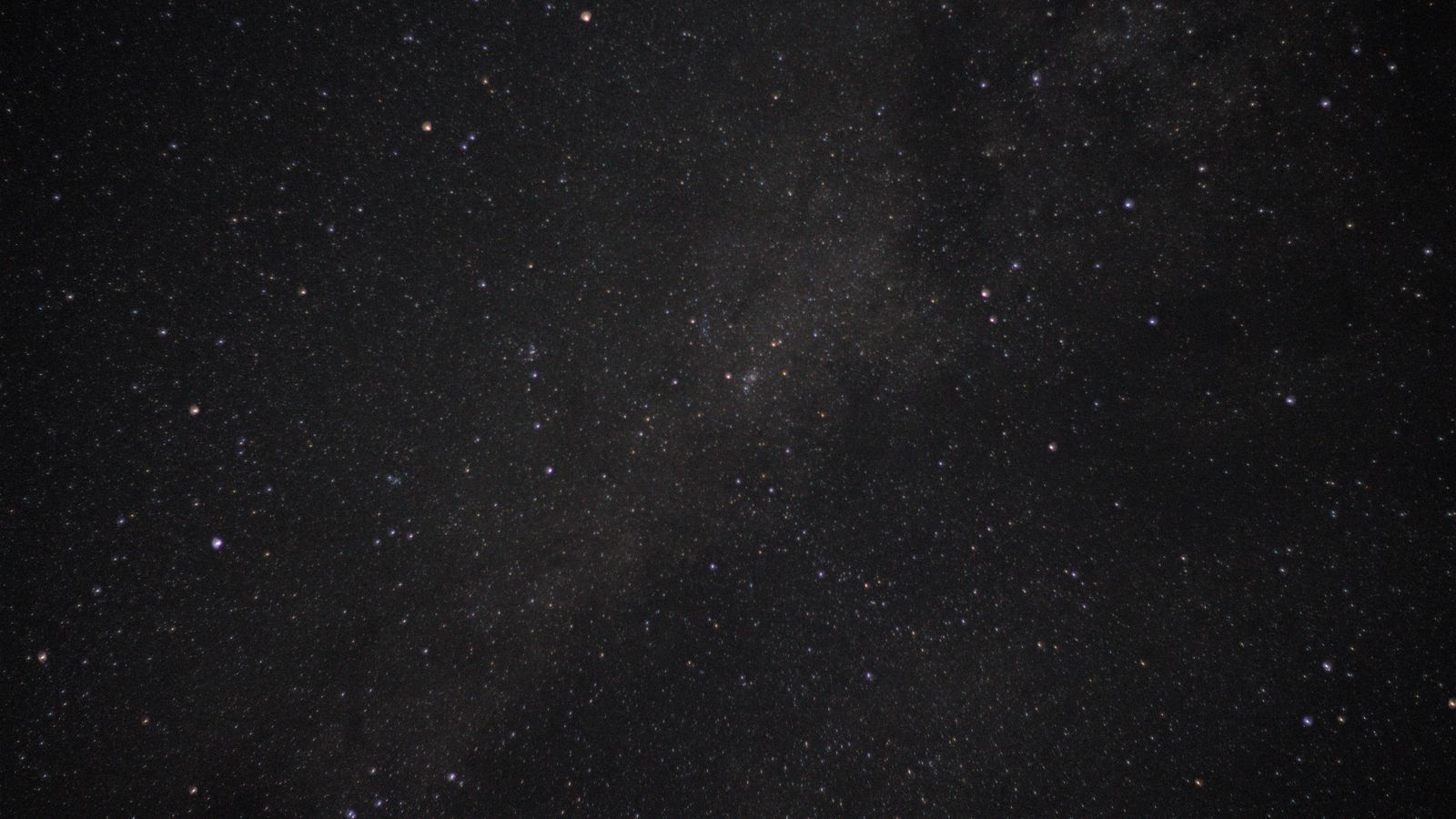
We’re all familiar with the concept of stars. The massive, nuclear-fusion-fueled balls of plasma that populate the galaxy, filling the night sky with their luminescence. If you’re a fan of all things space, you might already be aware that there are actually several different types of stars – our sun is a yellow dwarf star, but there are also the dimmer red dwarfs, the gargantuan hypergiants, the incredibly dense neutron stars, and many more.
But the universe is a strange place, and it’s been hypothesized that these types of stars, the ones that we can see, are but one piece of the stellar pie. Welcome to the mysterious realm of hypothetical stars, the bizarre astronomical objects whose existence has been predicted by physics, but has yet to be confirmed.
The Early Universe
Conditions in the early universe were very different from what we see around us today. To start with, it was much hotter, and the big bang had only produced three stable elements – the first three on the periodic table – hydrogen, helium, and a teeny bit of lithium. Because heavier elements make stars a bit cooler and more stable, a lack of them in the early universe would have allowed the first stars, Population III stars, to grow to unbelievable sizes, perhaps hundreds of even thousands of times the size of our sun. This also meant that they would burn through their fuel much more quickly, and reaching the end of their lifespan after just a few million years or so, they would be doomed to explode in one of the universe’s first supernovae – but that’s where things might have gotten even stranger.
Key Takeaways
- Hypothetical stars are astronomical objects predicted by physics but not yet confirmed.
- Quasi-stars, with black holes at their centers, may have been among the first stars.
- Quark stars and strange stars are dense neutron star variations with unique properties.
- Thorne–Żytkow objects form when a neutron star merges with a supergiant star.
- Iron stars, if they form, would appear after an unfathomably long time, around 10^1500 years.
When the core of a large star goes supernova, the force of the explosion blasts the outer shell of the star into space, which can create a beautiful nebula, and if the star was of a sufficient mass, a black hole is left in the center from the collapse of the former star’s core. However, it’s been hypothesized that if some of these Population III stars were large enough, their outer layers could have actually withstood and absorbed the blast, remaining intact, all while the core collapses into a black hole. What we’re left with is a massive star with a black hole at its center – known as a quasi-star.
You might think that the black hole would quickly pull in the remaining parts of the star, but this isn’t the case. While it’s true the black hole would have a strong gravitational pull inward, it would also exert a significant outward pressure in the form of radiation as it ate up matter that fell into it. This balance of forces would result in equilibrium, allowing the star to be somewhat stable for around 7 million years before finally succumbing to the singularity at its core.
During their relatively short lifespans though, these behemoths would have been quite the sight to behold, coming in with an estimated radius of at least 67 astronomical units. An astronomical unit, by the way, is the distance from the earth to the sun. So, for reference, Neptune is about 30 astronomical units from the sun, and Pluto’s average distance is 39, meaning that a quasi-star with a radius of 67 astronomical units would be so large it would swallow up all the planets in our solar system with plenty of room to spare, all while being so luminous that it could outshine a small galaxy.
It’s believed that if these monstrosities truly existed, their black holes could have been some of the first to have ever formed, and might be the origins of supermassive black holes found around the universe today, including the one at the center of our own galaxy.
What astronomers are certain about though, is that even if quasi-stars once existed, they certainly aren’t around today in the Milky Way, as conditions simply wouldn’t allow their formation, so to actually find one we would have to look back in time, at galaxies so far away that their light is reaching us billions of years after it was emitted. The only issue is that these galaxies are so incredibly distant that it’s virtually impossible to study the composition of individual stars. We do actually have some candidates for a distant group of large Population III stars, spotted by the European Southern Observatory in a galaxy known as Cosmos Redshift 7, one of the oldest known galaxies at an estimated 12.9 billion years old, but, unfortunately, it’s unlikely that we’ll ever be able to identify an individual quasi-star.
The Present Day
So that was the distant past, and times have changed, but there’s a whole category of hypothetical stars that could both form and exist in the current era, during our little slice of time, and some of them may even be hiding in our own galaxy. Many of these are variations of a neutron star – which, for a brief review, is the collapsed core of a star that was roughly between 10 and 25 solar masses. At the end of the star’s life, the core wasn’t quite dense enough to become a black hole, but was still so dense that the force of gravity crushed protons and electrons together into neutrons, giving the star its name. Even without getting into the hypothetical variations of them, neutron stars on their own are already some of the most bizarre things we’ve ever discovered, rotating hundreds of times per second and having a magnetic field up trillions of times stronger than the earth’s.
The pure-neutron substance that makes up the star is really, really dense, with just a teaspoon of the stuff weighing at least 10 million tons. But, it’s been hypothesized that some neutron stars could be even more dense than this, and things start to get pretty weird as a result.
If the density becomes high enough, it’s possible that the neutrons could be crushed into their constituent particles, up and down quarks, resulting in pure quark matter. This would then be known as a quark star, which would be an incredible discovery and brings with it some odd predictions for the behavior of free quarks, which we can’t produce on earth. Surprisingly, there are quite a few candidates for quark stars, stemming from observations of so-called “overdense neutron stars”, neutron stars that have more mass than expected, and there’s even one candidate that has its own solar system, with at least two exoplanets revolving around it.
Some researchers have hypothesized that if the conditions in a quark star are just right, it can also give rise to something known as strange matter. Strange quarks are one of the 6 ‘flavors’ of quarks, and under normal conditions they are highly unstable, quickly decaying into an ‘up’ quark. But, once again, under the immense pressures of a quark star, the laws of physics start to bend a little, and it’s possible that strange quarks could form a stable matter within the core that doesn’t decay. The theories go on to suggest that this strange matter could actually be more stable than ordinary matter, and would therefore convert ordinary matter into strange matter upon interaction. If this is true, it would mean that once strange matter forms within a star’s core, the entire star would soon be converted into a strange star. And if you follow the trail of assumptions, it means that if a piece of this star were to be ejected into the cosmos, and come in contact with, say, our planet, then it would convert the entire planet into strange matter.
These little chunks of doom are called strangelets, and while it’s possible that millions are floating out there in space, just waiting to turn our planet into an uninhabitable, unrecognizable blob, they’re still entirely hypothetical, so don’t lose any sleep over it.
End of the universe aside, what would happen if a quark star’s density became even higher, moving closer and closer toward the brink of becoming a black hole? Well, this would hypothetically form what is known as a Q-star, also called a grey hole. They’re called grey holes because they don’t quite have the gravitational strength of a black hole, which allows no light to escape, but instead allow just some light to escape their pull. The idea for these arises from what’s known as the Schwarzschild Radius, a formula that predicts just how dense a certain amount of matter would have to be in order to collapse into itself and form a black hole. For example, if you crunch the numbers, the Schwarzschild Radius of the mass of the earth is about 9 millimeters, so if you could condense the entire planet to fit into someone’s belly button, it would be dense enough to collapse into a black hole.
A grey hole is a neutron star that is so dense it is somewhat near its Schwarzschild Radius, but didn’t quite reach it, and is still far enough from it to remain stable. The immense gravitational pull would mean that only a fraction of light is able to escape its presence, and would therefore make them nearly impossible for us to see. In fact, if they do exist, they may be indistinguishable from smaller black holes because from our perspective they would appear to behave in a nearly identical way.
The last hypothetical star that we might be able to spot in our galactic backyard is the Thorne–Żytkow object. This is formed when a neutron star collides with a larger star, typically a supergiant, which swallows it entirely. As the neutron star slowly makes its way through the giant’s interior, it spins ever closer to the star’s core. Once it collides and merges with the core, which can happen after potentially hundreds of years, the star’s life would end and a black hole would form as the combined mass collapses in on itself. If the mass is insufficient to create a black hole, then a new neutron star will be formed instead, born from the mass of both stars that preceded it.
Watch the Video
Open Video
Video Briefing
Hypothetical Stars: Exploring the Bizarre Giants That Could Exist in the Universe
To spot one of these while the neutron star is still floating around inside the supergiant, we would need to examine the composition of the star in question. This is because the initial collision between the two stars would likely create isotopes that wouldn’t be detected in an average star. Using this, along with analysis of gravitational waves, we may be able to spot whether or not a massive red giant is harboring a neutron star within. There are a few candidates for these as well, including U Aquarii, a star found in the constellation Aquarius, but nothing concrete has been discovered thus far.
The Far, Far Future
Our final group of hypothetical stars are the ones that we haven’t seen not because they’re invisible, difficult to distinguish, or otherwise hidden from our view, but simply because they won’t even come into existence for a very, very long time.
If you remember our mention of the early universe, you’ll recall that in the beginning, there was an abundance of hydrogen and helium, and a near complete lack of heavier elements. But, as time has marched onward, stars have continued to recycle elements, fusing them into heavier and heavier forms and spreading the matter across the universe. This is why stars today contain so many more elements than their ancestors, and also why we can find so many interesting materials on our planet. If we follow the trend forward in time, perhaps trillions of years into the future, we could reach a point where stars contain so many impurities of heavier elements that they are able to burn at much lower temperatures. And when the core is burning at a cooler temperature, the surface temperature drops as well. It’s been hypothesized that the surface of these cooler stars could potentially reach 0 degrees Celsius, allowing for ice clouds to form on the surface – a frozen star. What’s really fascinating about these is that it’s not hard to imagine microscopic life surviving in such ice clouds if the conditions are just right.
Trillions of years into the future sounds like a really long time to wait for frozen stars to appear, but this is just a metaphoric drop in the ocean compared with how we would have to wait to see our final hypothetical star – the iron star.
As the universe ages on, perhaps quadrillions of years from now, even the resilient dwarf stars will begin to cool down, with white dwarf stars, for example, becoming a hypothetical black dwarf, completely exhausted of all heat and any energy producing reactions. But even once their light has gone out, the story isn’t over – random interactions through a process called quantum tunneling still have the potential to fuse heavier elements together, ultimately resulting in iron. These types of interactions take so long to play out that they are essentially meaningless from the perspective of a human lifespan, but, given an absolutely unfathomable amount of time, the iron generated in these old stars would slowly add up, atom by atom, until the entire sphere is a solid, cold hunk of metal – an iron star. There is one caveat though – we aren’t sure if protons decay – if they do, then the universe will free of any solid matter long before iron stars have a chance to form, but, if they don’t decay, wait long enough and iron stars will likely begin appearing around the universe.
But just how long, you might ask? To see an iron star, it is estimated that you would need to wait an astonishing 101500 years.
That is a number so big we can’t even really put it into perspective, and really wouldn’t do it justice if we tried – it’s so large that it’s almost insulting to compare it to something as relatively tiny as the total number of atoms in the observable universe. In fact, 101500 years is such a long time from now, that the heat death of the universe will already be in full swing, with even black holes having already evaporated. So by the time they formed, iron stars would likely be the among the only remaining objects in a cold, dark, empty universe, devoid of light.
Key Takeaways
- Hypothetical stars are astronomical objects predicted by physics but not yet confirmed.
- Quasi-stars, with black holes at their centers, may have been among the first stars.
- Quark stars and strange stars are dense neutron star variations with unique properties.
- Thorne–Żytkow objects form when a neutron star merges with a supergiant star.
- Iron stars, if they form, would appear after an unfathomably long time, around 10^1500 years.
SideProjects Editors
The SideProjects editorial team researches, fact-checks, and structures explainers about the lesser-known tales, side narratives, and spin-offs behind major historical and contemporary subjects.
Frequently Asked Questions
What are Population III stars?
Population III stars are the first stars that formed in the early universe. They were massive, potentially hundreds or thousands of times the size of our sun, and lacked heavier elements, making them hotter and less stable.
What is a quasi-star?
A quasi-star is a hypothetical type of star with a black hole at its center. The outer layers of the star absorb the supernova blast, remaining intact while the core collapses into a black hole. They are estimated to have a radius of at least 67 astronomical units.
How long could a quasi-star exist?
A quasi-star could be stable for around 7 million years before finally succumbing to the singularity at its core.
What is a quark star?
A quark star is a hypothetical type of neutron star where the density is so high that neutrons are crushed into their constituent particles, up and down quarks, resulting in pure quark matter.
What is strange matter?
Strange matter is a hypothetical form of matter that contains strange quarks, which are usually unstable but could become stable under the immense pressures of a quark star. If it forms within a star’s core, it could convert the entire star into a strange star.
What are strangelets?
Strangelets are hypothetical chunks of strange matter that, if they exist, could potentially convert ordinary matter into strange matter upon interaction.
What is a grey hole?
A grey hole, also known as a Q-star, is a hypothetical type of neutron star that is so dense it is near its Schwarzschild Radius but hasn’t collapsed into a black hole. It allows some light to escape, making it nearly impossible to see.
What is a Thorne–Żytkow object?
A Thorne–Żytkow object is a hypothetical type of star formed when a neutron star collides with and is swallowed by a larger star, typically a supergiant. The neutron star merges with the core of the supergiant, potentially leading to the formation of a black hole or a new neutron star.
What are frozen stars?
Frozen stars are hypothetical stars that could exist trillions of years in the future. They contain so many impurities of heavier elements that they burn at much lower temperatures, allowing ice clouds to form on their surface.
What are iron stars?
Iron stars are hypothetical stars that could form quadrillions of years in the future. They are solid, cold hunks of metal formed from the accumulation of iron through quantum tunneling in old, cooled-down stars.
Sources
- Original Side Projects video: Hypothetical Stars: Exploring the Bizarre Giants That Could Exist in the Universe
- Hero image source by Emily McLean / openverse, by-sa.