
Movies and books often portray being an inventor as a glamorous, well-paid occupation. And indeed, sitting in your high-tech, well-equipped laboratory, tinkering with things and creating shiny new gadgets every day is an opportunity that few people would pass up. Sadly, the mundane reality is somewhat different.
Most real inventors will tell you that spending months and months looking for a gap in the market, designing a product, securing financial backing, and going through rigorous rounds of testing only to have your product fail when it hits the shelves is a much more likely scenario than people would have you believe. However, sometimes, in fact more often than you might think, those failed design ideas are given a new lease of life when it is discovered that they are, in fact, extremely useful. Just not in the way that was originally intended.
In this article, we’re going to have a look at some of these. So, please join us as we discover some of the most awesome everyday items that were discovered by accident.
Key Takeaways
- Inventing is often portrayed as glamorous, but real inventors face many failures.,The microwave oven was accidentally invented when Percy Spencer’s candy melted near a radar magnetron.,Wilson Greatbatch’s mistake led to the creation of the modern implantable pacemaker.,George de Mestral’s observation of burdock burrs inspired the invention of Velcro.,James Wright’s accidental creation of Silly Putty became a popular toy and aided NASA.
Percy Spencer and the Microwave Oven
From the culinary challenged to the busy working family, there are few people who haven’t benefited in some way from the microwave oven. They are relatively cheap, they are easy to operate and, in spite of what quite a few people still insist on believing, they are perfectly safe. In today’s modern world where these devices are ubiquitous, it is hard to believe that if it were not for a happy accident, we would all still be cooking things the old-fashioned way and, once your coffee had gone cold, it would have to stay cold.
So, what happened?
Whilst working for the Raytheon Manufacturing Company (formerly the American appliance company), Percy Spencer was tasked with simplifying the production of radar magnetrons, helpfully described by Popular Mechanics as “a sort of electric whistle that, instead of creating vibrating sound, creates vibrating electromagnetic waves.”
Spencer happened to put his hand into his trouser pocket and discovered that his peanut cluster bar had melted. Curious as to just why this might be, he decided to run a few non-work related tests. After placing an egg under the machine and turning it on, he was astonished when, after just a few seconds, the egg exploded. More tests followed and, according to his grandson, the very next day he was using his machine to make the very first version of microwavable popcorn.
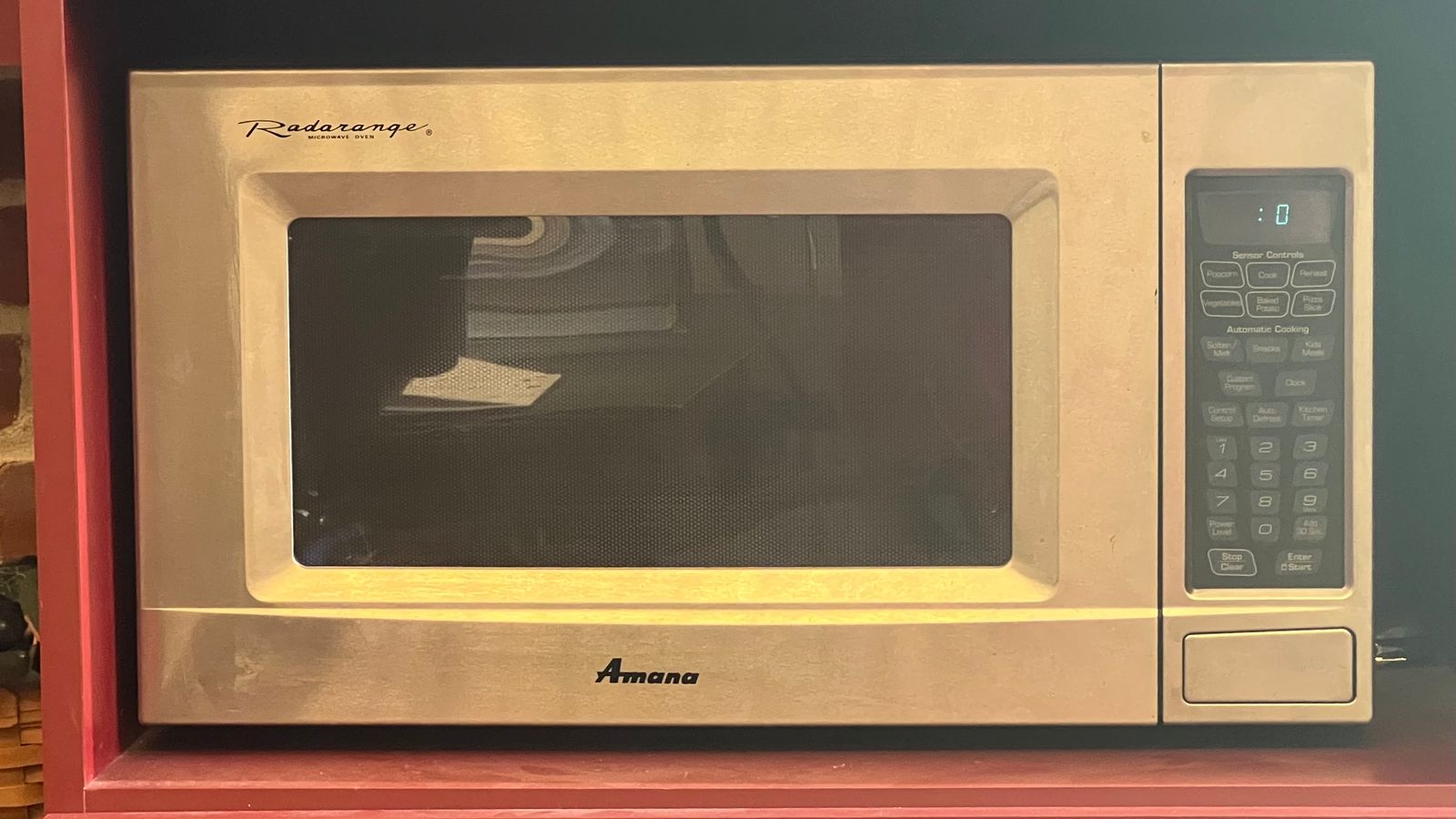
Once the alternative use of the magnetron had been fully established, it was only about a year later that the “Radarange,” the original commercial microwave oven, became available. The technology has improved considerably over the years, and the “Radarange” certainly wasn’t the sort of gadget that your average homeowner could stick in the corner of the kitchen counter or place on top of the fridge. Apart from the fact it cost nearly $2,000—about $28,500 today—it also weighed nearly 750 lb (or 340 kg), so it could only really be used in industrial kitchens. Nevertheless, it was the first incarnation of the lightweight, practically silent machine now sitting in your kitchen.
Wilson Greatbatch and the Pacemaker
Statistically, almost everybody reading this article will have met someone who relies on a pacemaker.
These devices, which emit precisely timed electrical impulses, help to both improve and prolong the lives of people suffering from various heart conditions. While this information is fairly common knowledge, it is less widely known that the modern-day implantable version of this remarkable device was invented entirely by accident. Although Canadian inventor John Hopps is widely credited with the invention of the first-ever pacemaker, this version was about the size of a shoebox, required mains power, and could only be used to restore a regular heartbeat after the heart had stopped pumping. While this was undoubtedly an incredibly useful device, it had, shall we say, certain limitations.
Wilson Greatbatch and his poor attention to detail when selecting electrical components changed all that. While working on a machine which would, had it been successful, have been able to record the beating of a heart, Greatbatch accidentally added the wrong capacitor and, instead of recording electrical impulses, his machine began to produce them. Clumsy though he may have been, our inventor still possessed an exceptional analytical brain, and he soon got to thinking that, given his accidental invention produced these electrical impulses at regular intervals, coupled with the fact that it required very little power to operate, if he could only make it small enough then it could be implanted inside a person and be used to regulate an irregular heart rate. In 1960, four years after his original mistake and following much technical tinkering, the first of his new pacemakers was implanted in a human with spectacular results.
Although he would go on to receive well over 300 more patents throughout his lifetime, working on, among other things, treatments for HIV and renewable energy projects, he is quoted as saying: “I seriously doubt if anything I ever do will ever give me the elation I felt that day when my own two-cubic-inch piece of electronic design controlled a living heart.”
George de Mestral and Velcro
If you’ve ever owned a bag, a jacket, a tent, a pair of child’s shoes, or just generally did not grow up in a cave hundreds of miles from anywhere with no interactions involving the outside world, then the chances are you’re probably fairly familiar with what most people know as Velcro. Interestingly, or not, depending on your point of view, what we all know as Velcro is in fact called hook and loop fastening. Velcro is just the name of the original company and registered trademark set up by its inventor.
So, how did we come to be stuck with it?
George de Mestral was no stranger to inventions; in fact, he registered his first patent at the age of 12. Some 20 years later, when out hunting with his dog, he became aware that the burrs of the burdock plant had some rather interesting properties. More specifically, for some unknown reason, they seemed to be able to stick to almost anything.
Being in possession of both an inquisitive mind and a microscope, he collected some samples from both his trousers and his dog, took them home, and analyzed them. The results of his casual curiosity would change the world of fasteners as we know it. All over the burrs, Mestral discovered minuscule hook-like structures.
It was these structures which allowed the burdock seeds to be carried far and wide by pretty much anything that brushed up against the plant. Hoping to add another patent to his list, Mestral began to wonder if this naturally occurring phenomenon could be used in real-world applications and eventually hit upon the idea of the hook and loop system.
Initially, the idea did not appear to be all that promising. Mestral travelled all over Europe looking for fabric manufacturers who could create his product and, even when he was successful in this, nobody seemed to be particularly interested in what it could do. That was, until NASA came along.
Whilst searching for ways to prevent objects from floating around in a weightless environment, NASA came across Velcro and the hook and loop system and, once it became the stuff that astronauts used, it took off in a big way! From that point onwards, the idea really did stick, resulting in Mestral’s accidental discovery being used on countless products to this day.
James Wright and Silly Putty
Watch the Video
Open Video
Video Briefing
Incredible Every Day Items that were Discovered by Accident
Whilst war is undoubtedly a terrible thing, it does create a very real need for technological innovation and advancement. Some of these advancements, such as nuclear weapons, the world could very well have done without. However, others, such as say the invention of Silly Putty, have served to make the world an ever so slightly more enjoyable place for children everywhere. So how did this childhood staple come to exist?
During World War II, Japan was causing America some not inconsiderable problems. One of the least widely known of these was the interruption of rubber imports to the United States from Asia. Obviously, rubber is important for making anything from boots to tires, and so the chemists of General Electric set about attempting to develop a synthetic version.
One day, whilst experimenting with different chemicals, one of these chemists, James Wright, dropped some boric acid into silicon oil and the resultant compound was somewhat surprising. Wright’s creation was stretchy, resistant to decay, could bounce 25% higher than rubber, and when left undisturbed would take the shape of whatever container it had been placed in; when struck with force, it would break into pieces. Unfortunately for Wright, the US government was not interested in his rubber substitute and, if it were not for the intervention of Peter Hodgson, it may have been forgotten entirely.
Hodgson, a renowned toy marketer, was introduced to the “nutty putty” and decided to add it to his catalogue. Even this may not have been enough to make it as popular as it became if it had not been for a stroke of marketing genius and yet another adoption by NASA. Hodgson began selling small pieces of the putty in plastic eggs during the run-up to Easter, and after the novelty was covered by an article in The New Yorker, more than 250,000 units were sold in three days. If that wasn’t enough to put this accidental glue on the map, NASA would further popularize it when they gave it to astronauts to stick down small tools in zero gravity. So there you have it, the same stuff you bounced around as a kid actually played an important role in the first moon landing mission.
Wilhelm Conrad Roentgen and the X-Ray
Ever gone to the hospital with a broken bone? Or, perhaps more accurately, ever gone to the hospital with a suspected broken bone but because it’s not sticking out of the skin or bent at a funny angle no one is entirely sure? If the answer to this question is yes, then, as part of the attempt to diagnose your problem, you more than likely underwent an X-ray. For those of you who have lived sensibly enough that you have never required one of these scans, X-rays are used because they penetrate the skin but are reflected by hard surfaces such as bone.
This provides a handy way of getting a detailed picture of the skeleton beneath. But who figured this out and how?
Well, that honor goes to Wilhelm Conrad Roentgen who, while carrying out some experiments with cathode ray tubes, noticed that although the tube was completely covered, objects on the other side of his office were fluorescing. Curious, he spent the night experimenting with this phenomenon and, by the morning, he had discovered that although his invisible rays passed unimpeded through things like books and paperwork, they could not pass through metal or the bones of his hand. Knowing that he was onto something, he wrote and released a paper within about 36 hours and, very shortly after that, the existence of the X-ray was confirmed.
Although his discovery arguably led to one of the greatest medical innovations of the time and, had he chosen to do so, he could have made untold amounts of money through patents, Roentgen chose not to do so on the grounds that he wanted everybody to be able to benefit from this technology. But wait, it gets better. After being awarded the Nobel Prize in Physics for his work, he donated the prize money to his university. Although this is perhaps a little off topic, we would just like to take this opportunity to say, “Roentgen, you were a legend!”
John Walker and Matches
Matches, in one form or another, have been around for thousands of years. We’re not exaggerating here; it is widely believed that the first people to use a form of this technology were the ancient Egyptians. Although referred to as matches by historians, these were basically chemically infused strips of wood which would burst into flames when exposed to heat. Unfortunately, if you didn’t already have a fire, these weren’t particularly useful.
If you wanted to move fire from one place to another though, these were for you. The invention of matches as we know them was much more recent.
As the story goes, in 1826, British pharmacist John Walker was attempting to develop a new explosive paste for use in guns. After doing this for a while, his mixing stick had become coated in the paste and, when he tried to scrape it clean on his fireplace, he was presumably somewhat surprised when it burst into flames. This unexpected incident heralded the birth of the friction match. According to an article in The Pharmaceutical Journal: “Walker produced a flammable paste made with antimony sulfide, potassium chlorate, and gum arabic, into which he dipped cardboard strips coated with sulfur.” He started selling his “friction lights” to locals in April 1827 and they quickly took off.
Although he undoubtedly became somewhat of a hero locally, especially to anybody whose job it was to ensure that fires were lit and stayed lit, Walker, although allegedly advised to do so on several occasions, never applied for a patent for his remarkable invention, and so made far less money than people like Samuel Jones who went on to invent, or at least market, the Lucifer match.
Sadly, unlike most of the inventions we covered today, the success of matches is bittersweet. Labor-saving and convenient as they were, it would not be long before the recipe was adapted to include white phosphorus which, as you may know, had horrific consequences for the mostly young women who worked in match factories. Prolonged exposure to white phosphorus caused a condition called “phossy jaw.”
Simply, the constant inhaling of white phosphorus fumes caused the jawbone to crumble and the teeth to fall out. In the most serious instances of this condition, the lower jaw would often have to be completely removed. This particular invention demonstrates quite clearly that, although something might seem incredible at the time, no matter how well-intentioned the inventor, the potential to create unknown horrors really does exist in the lab.
Key Takeaways
- Inventing is often portrayed as glamorous, but real inventors face many failures.,The microwave oven was accidentally invented when Percy Spencer’s candy melted near a radar magnetron.,Wilson Greatbatch’s mistake led to the creation of the modern implantable pacemaker.,George de Mestral’s observation of burdock burrs inspired the invention of Velcro.,James Wright’s accidental creation of Silly Putty became a popular toy and aided NASA.
SideProjects Editors
The SideProjects editorial team researches, fact-checks, and structures explainers about the lesser-known tales, side narratives, and spin-offs behind major historical and contemporary subjects.
Frequently Asked Questions
Who invented the microwave oven?
Percy Spencer invented the microwave oven by accident while working for the Raytheon Manufacturing Company.
What was the original purpose of the magnetron?
The magnetron was originally used to simplify the production of radar.
Who invented the pacemaker?
Wilson Greatbatch invented the modern-day implantable pacemaker by accident while working on a machine to record heartbeats.
How did George de Mestral invent Velcro?
George de Mestral invented Velcro after noticing the hook-like structures on burdock burrs that allowed them to stick to various surfaces.
What was the original purpose of silly putty?
Silly putty was originally created as a synthetic rubber substitute during World War II due to the interruption of rubber imports to the United States.
Who discovered X-rays?
Wilhelm Conrad Roentgen discovered X-rays by accident while experimenting with cathode ray tubes.
What was the original purpose of the friction match?
The friction match was originally invented by John Walker as a new explosive paste for use in guns.
How did Percy Spencer discover the microwave oven?
Percy Spencer discovered the microwave oven when he noticed that a peanut cluster bar in his pocket had melted while he was working with radar magnetrons.
What was the first commercial microwave oven called?
The first commercial microwave oven was called the Radarange.
What was the original size of the first pacemaker?
The first pacemaker invented by John Hopps was about the size of a shoebox and required mains power.