
The prehistoric period of human history is a bit of a nebulous term. There’s no doubt that 200,000 years ago would be considered prehistoric, but things get a bit murkier when we only go back a few thousand years. Since prehistory is defined as being the time before people developed writing with which they could record the events going on around them, that period of time would have ended at drastically different times across the world.
Around 3400 BC, the Sumerians developed the earliest known form of writing. By about 3200 BC the Egyptians were also using writing to record history. But these were the early adopters, and it would take thousands of years for writing to either spread or be independently developed by other people.
What this means for us practically is that any discovery will be considered prehistoric if writing had not yet been developed in that region. For example, people in other parts of the world had already been writing for nearly 1,000 years by the time Stonehenge was built in 2500 BC, but it is still considered a prehistoric monument since written language had not yet developed in England.
Key Takeaways
- Prehistory ends at different times across the world based on writing development.
- Ötzi the Iceman, found in 1991, provided extensive insights into European Copper Age life.
- Lascaux Cave paintings, discovered in 1940, feature thousands of animal and human figures.
- Olmec colossal heads, carved from basalt boulders, are believed to represent specific rulers.
- Prehistoric artifacts offer limited but valuable information due to the lack of written records.
Of course we won’t actually be discussing Stonehenge today. It’s come up on this channel before and there are plenty of other fascinating remnants from prehistoric times to look into.
Ötzi the Iceman
On September 19, 1991 two German tourists were climbing the east ridge of the Fineilspitze in the Ötzal Alps when they spotted something sticking out of the ice. When they realized it was a body, they contacted the authorities believing it was a mountaineer who had died recently as the result of an accident. Because the majority of the body was encased in ice, along with some inclement weather, it took three days before it could be fully excavated.
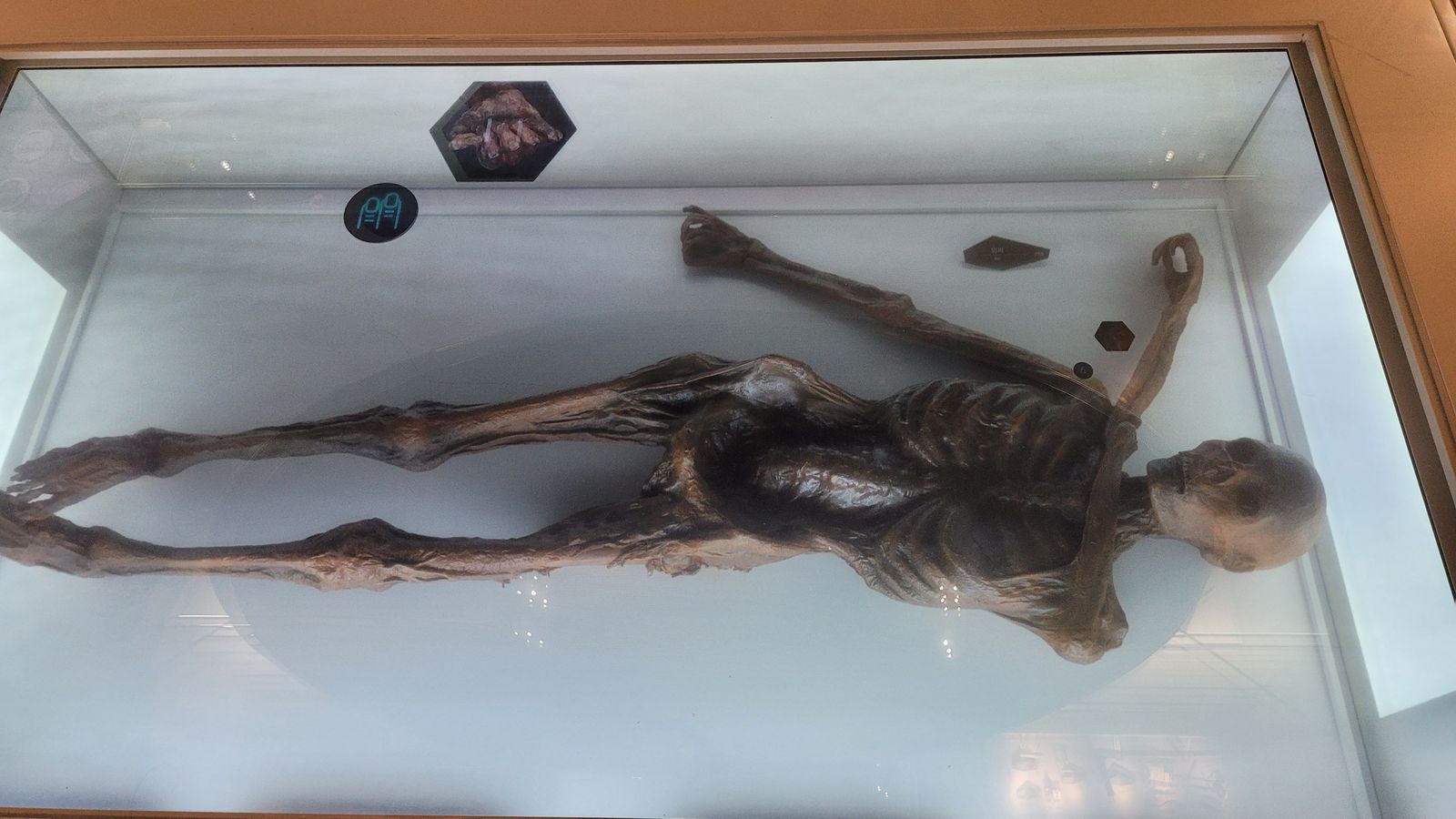
What was first believed to be a recently diseased climber was in fact the oldest naturally mummified body of a European ever found. Based on the tools and other supplies that were excavated alongside the body, archaeologists estimated that the man, who they named Ötzi the Iceman, was at least four thousand years old. Scientific testing would later confirm that he was in fact about 5000 years old, having lived somewhere between 3359 and 3105 BC.
This was an incredible archaeological find as it gave a lot of insight into life in the European Copper Age. Everything about Ötzi was intensely studied, all the way down to an analysis of his hair to determine what his diet had been several months before his death. However, Ötzi’s death was no accident.
For about ten years it was believed that he had died either as a result of exposure or as part of a form of ritualistic death like the bog bodies of Europe. But in 2001, a CT scan revealed that there was an arrowhead lodged in his left shoulder when he died. Upon closer examination, it was determined that Ötzi had been shot with an arrow, and the shaft of the arrow had been removed from his body before he died, breaking the arrowhead off inside his shoulder. He also had bruising and cuts to his hands and had suffered a severe blow to the head.
So was Ötzi murdered? Well, in a manner of speaking. He was certainly killed intentionally, but there is heavy speculation that his death may actually have been the result of warfare rather than an isolated murder. DNA analysis of Ötzi’s belongings found traces of blood from at least four other people on his effects. There was one person’s blood on his knife, the blood of two different people on a single arrowhead from his quiver, and blood from a fourth person on the coat he had been wearing.
The proposed series of events is that Ötzi had killed two people with the same arrow, successfully retrieving the arrow from their bodies each time. The blood on his coat may have been from a wounded ally who he had carried over his shoulder. Based on the position his body was found in, it is likely that whoever shot him forced him onto his stomach in an attempt to retrieve the arrow from his body, though the arrowhead broke off instead.
But there’s a lot more to Ötzi than just his time in battle. His axe’s blade was nearly 100% pure copper and there were heavy traces of both copper and arsenic in his hair, leading some to speculate he was involved in copper smelting. Based on the skeletal structure of his legs and pelvis, there is alternate speculation that he may have been a shepherd in hilly, high altitude areas.
Then there was the man’s diet. At first it was assumed that Ötzi may have been a vegetarian, but meat from ibex, deer, and a type of wild goat were all found in his stomach and intestines. There was also a large amount of grains and legumes found. But one thing they were not going to find in his stomach was any dairy products, as DNA analysis revealed that Ötzi was lactose intolerant.
That detail may almost seem needlessly thorough, but it was supporting the theory that lactose intolerance was still common 5,000 years ago.
Every possible detail of Ötzi’s body and belongings has been heavily analyzed to tell us as much as we can about what his life would have been like. From the clothing made of different types of leather to the 61 tattoos with possible ties to acupuncture, every single detail provides hints as to what life was like during this period of Europe’s prehistory.
Lascaux Cave Paintings
The oldest pieces of art date back hundreds of thousands of years. But when it comes to prehistoric art, there is quite possibly no larger or more impressive collection than the cave paintings in Lascaux Cave near Montignac, France. Paintings that were first discovered in 1940 by a robot.
Okay, so it wasn’t a robot so much as it was a dog named Robot. Eighteen year old Marcel Ravidat’s dog ran into a hole that had been left by an uprooted tree to enter the Lascaux Caves, so Marcel went to grab three of his friends to come into the hole and look for Robot. Once inside, they discovered that the hole led to a network of caves covered in thousands of paintings of animals and humans, with some more abstract pieces as well.
About a week and a half later, they returned to the caves with Abbe Henri Breuil, a French Catholic priest and archaeologist. The paintings were dated as being about 17,000 years old, and different sections of the caves were named based on either the artwork depicted or the layout of the caves themselves, resulting in names like “The Great Hall of the Bulls”, “The Chamber of Felines”, or simply “The Shaft”.
Breuil made extensive sketches of the paintings held within the caves, and it’s a good thing that he did. Archaeological investigations didn’t begin until 1949, a year after the site had been opened to the public. The caves received roughly 1,200 visitors each day, and the heat, humidity, and carbon dioxide produced by this amount of human traffic quickly began damaging the paintings that had survived unnoticed for millennia. It only took a few years for the damage to become obvious, and by 1963 the caves were closed to the public and heavily monitored for intruders.
Of the nearly 6,000 different figures present throughout the cave paintings, over 900 have been identified as animals and over 600 as specific species of animals. The largest number of these identified animals are equines like horses, with a large number of stags as well. There is also one bear and one rhinoceros, along with a megaloceros, an extinct species of deer. The paints were made using red, yellow, and black pigments from mineral compounds such as ochre, hematite, and goethite.
Watch the Video
Open Video
Video Briefing
Intriguing Archaeological Finds from Prehistoric Times
As for the meaning of these images, that’s really hard to say. Our analysis of ancient art is often biased by our own beliefs and interpretations, but there’s no reason to believe that people 17,000 years ago would have had the same thought process we do. Still, there are attempts to discerning possible significance that these images could have held.
It’s possible that many of the animal paintings were meant to depict successful hunts. Many of the animals have symbols and embellishments surrounding them that could suggest either weapons used or wounds to the animals. Alternatively, these symbols could be meant to represent the level of danger that particular animal posed. There’s really no way to know for sure.
One interesting thing about the images is that they are in fact either animals, humans, or geometric shapes. There are no paintings of plants or of the landscape. Though such paintings would have had tremendous value, their notable absence is intriguing in and of itself.
Ever since the caves were closed to the public, it has been restricted to only a few visitors per week, mostly archeologists, anthropologists, and other sciencey folk. Though you can’t see the original caves, just a few hundred meters from the original cave is Lascaux II, an exact recreation of the Great Hall of the Bulls and The Painted Gallery. It is meant to be as faithful a recreation of the paintings as possible, right down to the types of mineral paints that were used.
There are also Lascaux III, built in the exact same style as Lascaux II but showing different portions of the cave, and the more advanced Lascaux IV. Lascaux IV is a recreation of the entirety of the original caves, but the images are larger than the originals and were recreated with the aid of digital technology.
Olmec Colossal Heads
If you were born in the United States in the 1980s, there’s a good chance that you remember the children’s game show Legends of the Hidden Temple that featured Olmec, a colossal talking stone head. There’s also a good chance that the American education system failed you and that you watched this show without having any idea that the Olmec are considered the first major civilization in the Americas, and that they really did create these colossal stone heads.
The first of these heads was discovered in 1862 at the Tres Zapotes archaeological site in Mexico, but it was not well known or documented outside of Mexico. It wasn’t until 1938 when an American archaeologist uncovered the exact same head the Mexicans had already known about for over 75 years that widespread archeological interest and investigations into the Olmec culture began.
In total, 17 colossal heads have been discovered thus far with 10 of them found in the San Lorenzo Tenochtitlán archeological site. These heads had already been buried by 900 BC so they had to have been manufactured earlier than that, but there is no way to precisely determine when they were manufactured. Even if the exact age of the rock could be determined, there’s no way for us to know how many years or centuries it was merely a rock before being turned into a sculpture.
There is a large disparity in the heights of the heads, with the smallest being only 1.17 meters (3.8 feet) tall and the largest being 3.8 meters (11.2 feet) tall. It’s unclear whether the different heights have any specific significance or if it was just based on the materials that were available at the time.
Each head was carved from a single basalt boulder that was dragged from the Sierra de Los Tuxtlas mountains of Veracruz to their final destinations up to 150 km (nearly 100 miles) away. This would have been no small task, as each of these stones weighed up to 40 tons, and they would have weighed more before being sculpted into the colossal heads.
The faces depicted by the heads are all distinct while also having facial characteristics that are still common in modern day Tabasco and Veracruz. Each head is wearing a unique headdress, and they are all decidedly male adults. This has led to speculation that the colossal heads are in fact meant to represent specific people.
While artwork from the Olmec does feature both male and female representations, a significant amount of their artwork features androgynous figures. Among their most famous iconography are sculptures of werejaguars that had a mix of both masculine and feminine physical traits. Though the high levels of androgyny and gender fluidity present in Olmec art open a lot of questions about the Olmec civilization that we are unlikely to ever be able to answer given the lack of written sources, it also raises the question of why those common artistic characteristics are absent from the colossal heads.
And as with most things, the answer is probably very simple. The leading theory is that these heads were meant to depict Olmec rulers, and that is why they are all adult males with distinct facial characteristics and unique headdresses. While another theory is that the colossal heads were meant to represent specific deities or supernatural beings, this is remarkably less likely. Polytheistic religions all have a pantheon of both gods and goddesses, so to only sculpt male depictions would be unusual.
The sheer magnitude of such an undertaking further supports the idea that these sculptures were created by and in honour of the ruling class. In addition to the sculptors and other artisans that would be needed for the finished product, the Olmec had neither wheels nor beasts of burden. Though boats and waterways would be used as much as possible, to transport a 40 ton basalt boulder 150 km would have taken a massive amount of brute force from countless labourers.
But as with all of our entries today, there’s only so much we can know. The whole thing with prehistoric archeology is that it’s before written history. We can do our best to guess at what seems most likely and hope to make further discoveries that support those ideas, but there are limits to exactly how much we can know for certain.
Key Takeaways
- Prehistory ends at different times across the world based on writing development.
- Ötzi the Iceman, found in 1991, provided extensive insights into European Copper Age life.
- Lascaux Cave paintings, discovered in 1940, feature thousands of animal and human figures.
- Olmec colossal heads, carved from basalt boulders, are believed to represent specific rulers.
- Prehistoric artifacts offer limited but valuable information due to the lack of written records.
SideProjects Editors
The SideProjects editorial team researches, fact-checks, and structures explainers about the lesser-known tales, side narratives, and spin-offs behind major historical and contemporary subjects.
Frequently Asked Questions
What is the prehistoric period?
The prehistoric period is the time before people developed writing to record events. This period ended at different times across the world, with the Sumerians developing the earliest known form of writing around 3400 BC and the Egyptians around 3200 BC.
What is Ötzi the Iceman?
Ötzi the Iceman is the oldest naturally mummified body of a European ever found. He lived between 3359 and 3105 BC and was discovered in the Ötzal Alps in 1991. His body and belongings have provided extensive insights into life in the European Copper Age.
How did Ötzi the Iceman die?
Ötzi was killed intentionally, likely as a result of warfare. He was shot with an arrow, and the shaft was removed, breaking the arrowhead off inside his shoulder. He also had bruising, cuts, and a severe blow to the head.
What can we learn from Ötzi’s diet?
Analysis of Ötzi’s stomach and intestines revealed that he consumed meat from ibex, deer, and wild goats, as well as grains and legumes. He was also lactose intolerant, supporting the theory that lactose intolerance was common 5,000 years ago.
What are the Lascaux Cave Paintings?
The Lascaux Cave Paintings are a collection of prehistoric art found in Lascaux Cave near Montignac, France. Discovered in 1940, these paintings are about 17,000 years old and depict animals, humans, and abstract shapes using red, yellow, and black pigments.
What is the significance of the Lascaux Cave Paintings?
The significance of the Lascaux Cave Paintings is uncertain, but they may depict successful hunts or represent the danger posed by certain animals. The absence of plant or landscape paintings is also noteworthy.
What are the Olmec Colossal Heads?
The Olmec Colossal Heads are large stone sculptures created by the Olmec civilization, the first major civilization in the Americas. These heads, carved from single basalt boulders, depict distinct male adults wearing unique headdresses and are believed to represent specific rulers.
How were the Olmec Colossal Heads transported?
The Olmec Colossal Heads were transported from the Sierra de Los Tuxtlas mountains of Veracruz to their final destinations up to 150 km away. This involved a massive amount of brute force from countless laborers, as the Olmec had neither wheels nor beasts of burden.
Why are the Olmec Colossal Heads all male?
The Olmec Colossal Heads are all male because they are believed to depict Olmec rulers. This is supported by the distinct facial characteristics and unique headdresses of each head, as well as the sheer magnitude of the undertaking, which suggests it was created by and in honor of the ruling class.
What challenges do archaeologists face when studying prehistoric artifacts?
Archaeologists face the challenge of interpreting prehistoric artifacts without the benefit of written records. They must rely on guesswork and further discoveries to support their ideas, as there are limits to what can be known for certain.