

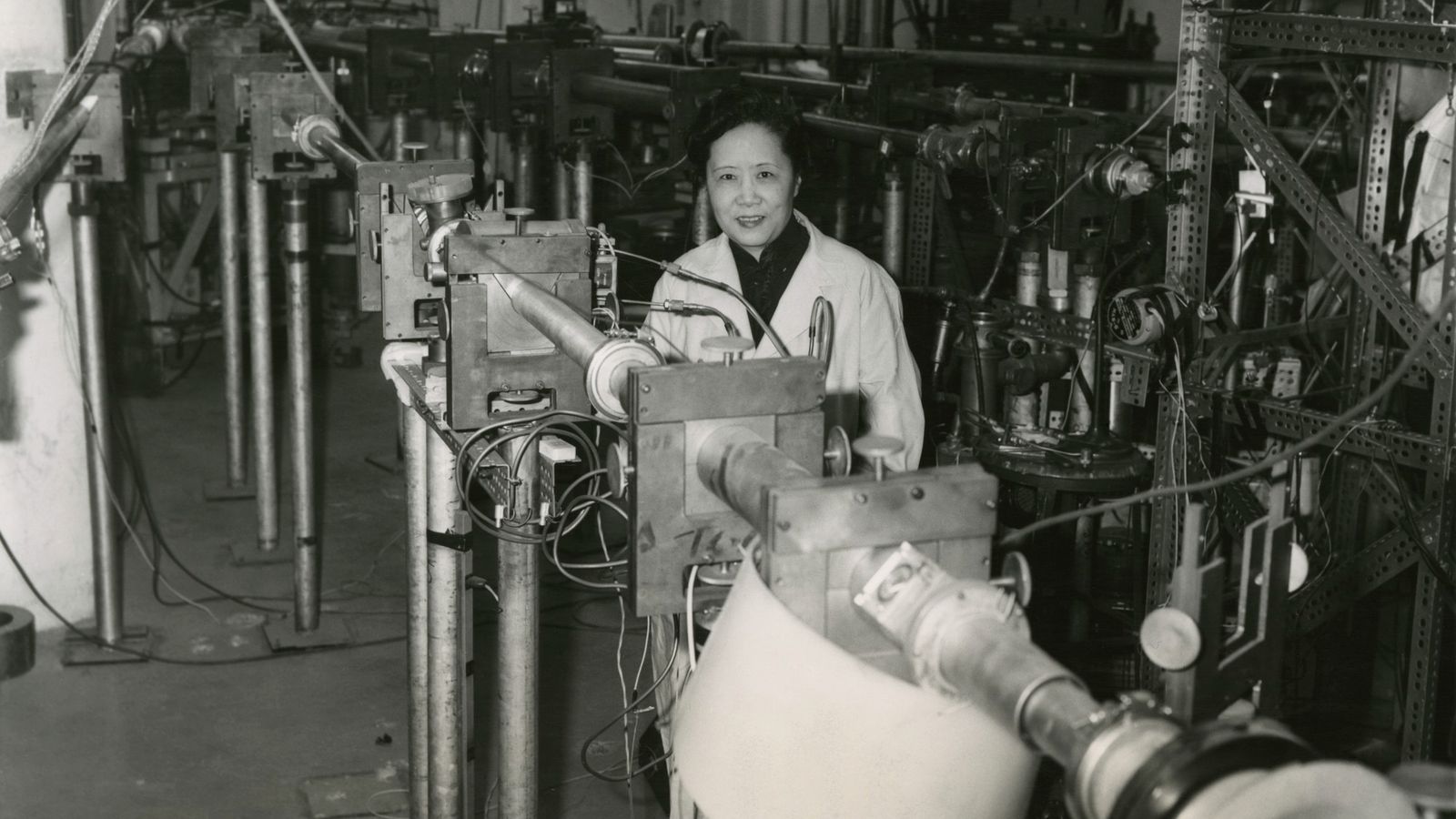
It’s a sad fact that women are hugely underrepresented with regards to recognition at the highest level in the world of science. The Nobel Prize website states that 57 individual women have been awarded Nobel prizes since 1901, however, only 23 of these were in the science and medical fields. Men have won…a lot more. Like 900 more.
So why is this? Are women just really crap at science? No, of course not. There were some schools still not teaching science to girls in the UK, for example, until well into the latter half of the 20th century; it’s tough getting your foot in the door when the door’s locked from the inside.
And what of those early female pioneers? Did they just hang on to men’s lab coattails or make the tea? Again, of course not. They were busy making contributions and discoveries of their own but many times were not given the credit.
Key Takeaways
- Women have been significantly underrepresented in Nobel Prize recognition in science.
- The Matilda Effect refers to the phenomenon of female scientists’ achievements being overlooked.
- Nettie Stevens identified chromosomes determining sex, but Edmund Wilson received more credit.
- Lise Meitner’s crucial work on nuclear fission was overshadowed by Otto Hahn’s Nobel Prize.
- Jocelyn Bell Burnell discovered pulsars but was not recognized in the Nobel Prize awarded to her supervisors.
There’s a name for this: The Matilda Effect. No, it doesn’t mean you can suddenly levitate bits of chalk with the power of your eyeballs, although that would be pretty cool. It’s named after American suffragist and activist Matilda Joslyn Gage and basically refers to when a female scientists’ achievements are overlooked by or even attributed to their male colleagues.
Let’s take a look at just a few of the women who made it through to become real life scientists but for whatever reason cough sexism cough didn’t quite get the recognition they deserved.
Nettie Stevens — Chromosome pioneer
Nettie Stevens was born in 1861, a time when women were not encouraged to pursue much in the way of higher education. Nevertheless, it became clear that she was one brainy individual and supported herself as a teacher while saving up to study science at university. She made it to Stanford at the age of 35 and studied for a BA and then a Masters in biology. During this time she specialized in the microscopic study of cell and organism anatomy and in 1903 at the age of 42, she completed her PhD thesis at Bryn Mawr College where the head of biology was one Thomas Hunt Morgan.
At the beginning of the 20th century, scientists hadn’t yet worked out how the gender of offspring was determined and it was thought that environmental and external factors played the biggest part. Through her research on aphids in 1904, Stevens theorized that “sex is determined in the egg” but could not confirm how. By 1905, she had concluded, correctly, that chromosomes determined sex and had identified the now familiar XX as female and XY as male, although these letters were not given at the time.
Unfortunately for Stevens, this theory was also arrived at by another scientist, Edmund Wilson. Because of his larger reputation and the fact that he was a man, his name overshadowed hers in work going forward, despite the fact that his research had not been as thorough.
Nettie Stevens died in 1912 at the age of 50. Now, remember Thomas Hunt Morgan from Bryn Mawr College? Building on research by Stevens and even confirming in textbooks that she made the link to chromosome sex determination without actually officially crediting her, Morgan won the Nobel Prize in Physiology or Medicine in 1933 “for his discoveries concerning the role played by the chromosome in heredity.” Stevens might have got the last laugh, though, as in 2016 she finally hit the big time when she was immortalised as a Google doodle.
Lise Meitner — Nuclear fission
With a whopping 48 scientific Nobel Prize nominations and zero wins is Austrian physicist, Lise Meitner. Born in 1878, she was only the second woman in the whole world to have a doctorate in physics and was the first ever female professor of physics in Germany where she worked at the Kaiser Wilhelm Institute and frequently collaborated with chemist Otto Hahn. As the Nazis started gaining ground in the 1930s, Meitner, a Jew, left Germany for Sweden in 1938.
She continued to work with Hahn remotely, and after he conducted an experiment where barium was seemingly produced after uranium was hit with neutrons, he wrote to her asking for help in explaining what had happened. Meitner and her colleague and nephew Otto Frisch ultimately discovered that the uranium itself was breaking apart and that the nuclei of atoms can be split. This was nuclear fission, the foundation for the atomic bomb and a term Frisch came up with in a paper published in February 1939, naming both him and Meitner in it.
Otto Hahn, however, published his findings without mentioning Meitner at all, despite having worked together for decades and without who’s input, would have had no paper to publish. In 1944, although it was not actually awarded until 1945, Otto Hahn received the Nobel Prize in Chemistry “for his discovery of the fission of heavy nuclei.” There have been many reasons given for Meitner’s exclusion, including that the panel had not realised the weight of her contributions after she left Germany and that Hahn had left her name off his research due to wartime sensitivities, but it definitely came across as a snub rather than a genuine mistake at the time. Meitner went on to receive many other awards and the element Meitnerium was named after her in 1997 but as she died in 1968, it didn’t really mean much to her.
Chien-Shiung Wu — Upending the law of parity
As a Chinese woman in 1940s America, Chien-Shiung Wu had more than one obstacle to overcome when it came to getting recognition for her work. A brilliant physicist, she worked on the development of nuclear weapons as part of the Manhattan Project by separating uranium into two different isotopes and working on improving methods of radiation detection.
After the war, Wu became an expert on beta decay, confirming Enrico Fermi’s formally disproved theory of electron behaviour by proving that previous researchers had made errors and inconsistencies in their experiments.
In 1956, she was approached by theoretical physicists Tsung-Dao Lee, who she already knew, and Chen Ning Yang. They wanted to test the law of parity which is basically what it sounds like and stated that identical mirror-image systems must behave in the same way. Because of her work with beta decay, Wu devised and carried out an experiment to test this using cobalt-60 atoms and lo and behold, the two systems did not react identically. At first the physics community refused to accept the results but by 1957 it was confirmed that conservation of parity was not a given in all circumstances.
For, and I quote: “their penetrating investigation of the so-called parity laws which has led to important discoveries regarding the elementary particles,” Lee and Yang received the 1957 Nobel Prize for Physics. And Wu, who had actually done the experiment that proved their theory? Nary a mention. Definitely no parity was achieved there.
Esther Lederberg — Microbial geneticist extraordinaire
Watch the Video
Open Video
Video Briefing
The Invisible Women of Science: Discoveries the Nobel Prize Ignored
Microbiologist Esther Lederberg was crucial to our current understanding of bacteria and microbial genetics. Having graduated with a Bachelor’s degree in genetics by the age of 20, she went on to marry fellow biologist Joshua Lederberg in 1946 and finished her PhD 2 years later at the age of 28. In 1951, she discovered the Lambda bacteriophage, a virus that infects bacteria. It was easy to produce cultures of this phage and it is still a mainstay research tool for microbiologists and geneticists today.
Working as a team, the Lederbergs, Esther and her husband Joshua, developed “replica plating” which was a reliable way of moving bacteria from one petri dish to another without changing the configuration or basically messing it up. This had been an issue for years prior to the Lederbergs coming up with using a sterilized velveteen fabric to pick up and stamp the colonies onto new plates. Colleagues of the Lederbergs at the time have confirmed that it was Esther who came up with the fabric to use and the method to sterilize it.
Contemporary sources have also claimed that Joshua was not a particularly gifted or thorough researcher but that Esther was. While it cannot be said definitively who was responsible for what, there is no doubt that this was a team effort with both Lederbergs contributing to the process. They also worked together on specialized transduction to study bacterial resistance to antibiotics using Esther’s previously discovered Lambda phage.
While winning other awards for her work, how did the 1958 Nobel panel recognise Esther? It didn’t. Joshua Lederberg received the Nobel Prize for Physiology or Medicine “for his discoveries concerning genetic recombination and the organization of the genetic material of bacteria” with no mention of his research partner who was also his wife. Unsurprisingly, the couple divorced in 1966.
Jocelyn Bell Burnell — The discovery of pulsars
In 1967, 24 year old postgrad student Susan Jocelyn Bell Burnell, then known as Jocelyn Bell, was looking at readings provided by the Interplanetary Scintillation Array, or IPS Array. This was, and is, a radio telescope originally constructed to survey the sky at a high time resolution to study random fluctuations in radio waves. Among the group who had set this telescope up were Sir Martin Ryle, Anthony Hewish and the aforementioned Jocelyn Bell.
In November 1967, Bell was looking through readings taken from three months previously and noticed a regularly pulsing signal in the data. It had taken so long to find it as all the paper data was reviewed by hand and she was sometimes checking up to 96 feet (29 m) of paper a night! Her supervisor, Anthony Hewish, thought this must be a man-made signal that was interfering with their data and even shut Bell out of meetings he held with Martin Ryle about their research.
Bell persisted in researching the signal, which was originally known as “LGM-1”, short for “Little Green Man 1” as a nod to a potentially alien origin and after a couple more years of team research, it was discovered that the pulsing signal was not man-made and was, in fact, coming from a neutron star. Now known as “pulsars”, they have been very useful to astronomers for things like calculating time and distance in space. At the time of the discovery, Bell’s male counterparts were interviewed about the science side of things and she’d be asked riveting questions about her love life.
So what happened to Jocelyn Bell Burnell and her spotting of and persistence in pursuing the pulsar signal? Well, in 1974, Martin Ryle and Anthony Hewish were awarded the Nobel Prize for Physics with Hewish’s contribution stated as “his decisive role in the discovery of pulsars”. Bell Burnell was not credited or mentioned and while she has since said that as a mere research student at the time, she felt that she didn’t deserve the prize, most of the science community believes she was very hard done by.
Honorable Mention — Rosalind Franklin
If you were expecting to hear Rosalind Franklin’s name on this list, then here it is. Probably one of the better-known snubees, it was she who discovered the now instantly recognisable double-helix structure of DNA. She died a few years before Crick, Watson and Wilkins received their Nobel Prize for Physiology or Medicine in 1962 so, like Nettie Stevens, would not actually have been eligible as Nobel prizes are not awarded posthumously.
The fact that her image of the structure of DNA was taken by Maurice Wilkins and shared without her knowledge and she barely received a passing mention for it at the time is just one more example of the Matilda Effect in full swing. At least now we’re able to look back and give credit to these women for the discoveries they made but for a lot of them, it’s too little, too late.
Key Takeaways
- Women have been significantly underrepresented in Nobel Prize recognition in science.
- The Matilda Effect refers to the phenomenon of female scientists’ achievements being overlooked.
- Nettie Stevens identified chromosomes determining sex, but Edmund Wilson received more credit.
- Lise Meitner’s crucial work on nuclear fission was overshadowed by Otto Hahn’s Nobel Prize.
- Jocelyn Bell Burnell discovered pulsars but was not recognized in the Nobel Prize awarded to her supervisors.
SideProjects Editors
The SideProjects editorial team researches, fact-checks, and structures explainers about the lesser-known tales, side narratives, and spin-offs behind major historical and contemporary subjects.
Frequently Asked Questions
What is the Matilda Effect?
The Matilda Effect refers to the phenomenon where a female scientist’s achievements are overlooked or attributed to their male colleagues.
Who was Nettie Stevens and what was her significant discovery?
Nettie Stevens was a pioneer in the study of chromosomes. She correctly theorized that chromosomes determine sex, identifying XX as female and XY as male, although these letters were not given at the time.
What was Lise Meitner’s contribution to nuclear fission?
Lise Meitner, along with her colleague Otto Frisch, discovered nuclear fission, the process where the nuclei of atoms can be split. This foundation for the atomic bomb was based on experiments conducted by Otto Hahn, with whom Meitner had collaborated for decades.
Why did Chien-Shiung Wu not receive the Nobel Prize for her work on the law of parity?
Chien-Shiung Wu devised and carried out the experiment that proved the law of parity, but the 1957 Nobel Prize for Physics was awarded to Tsung-Dao Lee and Chen Ning Yang for their theoretical work on the subject.
What was Esther Lederberg’s significant discovery in microbiology?
Esther Lederberg discovered the Lambda bacteriophage, a virus that infects bacteria, which is still a mainstay research tool for microbiologists and geneticists today.
What role did Jocelyn Bell Burnell play in the discovery of pulsars?
Jocelyn Bell Burnell was the postgraduate student who first noticed the regularly pulsing signal that turned out to be pulsars. Despite her crucial role, she was not credited or mentioned in the 1974 Nobel Prize for Physics awarded to her supervisors Martin Ryle and Anthony Hewish.
How many women have won Nobel Prizes in the science and medical fields?
Only 23 women have won Nobel Prizes in the science and medical fields since 1901.
What is the Interplanetary Scintillation Array (IPS Array)?
The Interplanetary Scintillation Array (IPS Array) is a radio telescope originally constructed to survey the sky at a high time resolution to study random fluctuations in radio waves.
What is the Lambda bacteriophage?
The Lambda bacteriophage is a virus that infects bacteria. It was discovered by Esther Lederberg in 1951 and is still a mainstay research tool for microbiologists and geneticists today.
What was the contribution of Rosalind Franklin to the discovery of DNA?
Rosalind Franklin discovered the double-helix structure of DNA. Her work was crucial, but she did not receive recognition for it during her lifetime, as her image of the DNA structure was used by others without her knowledge.