
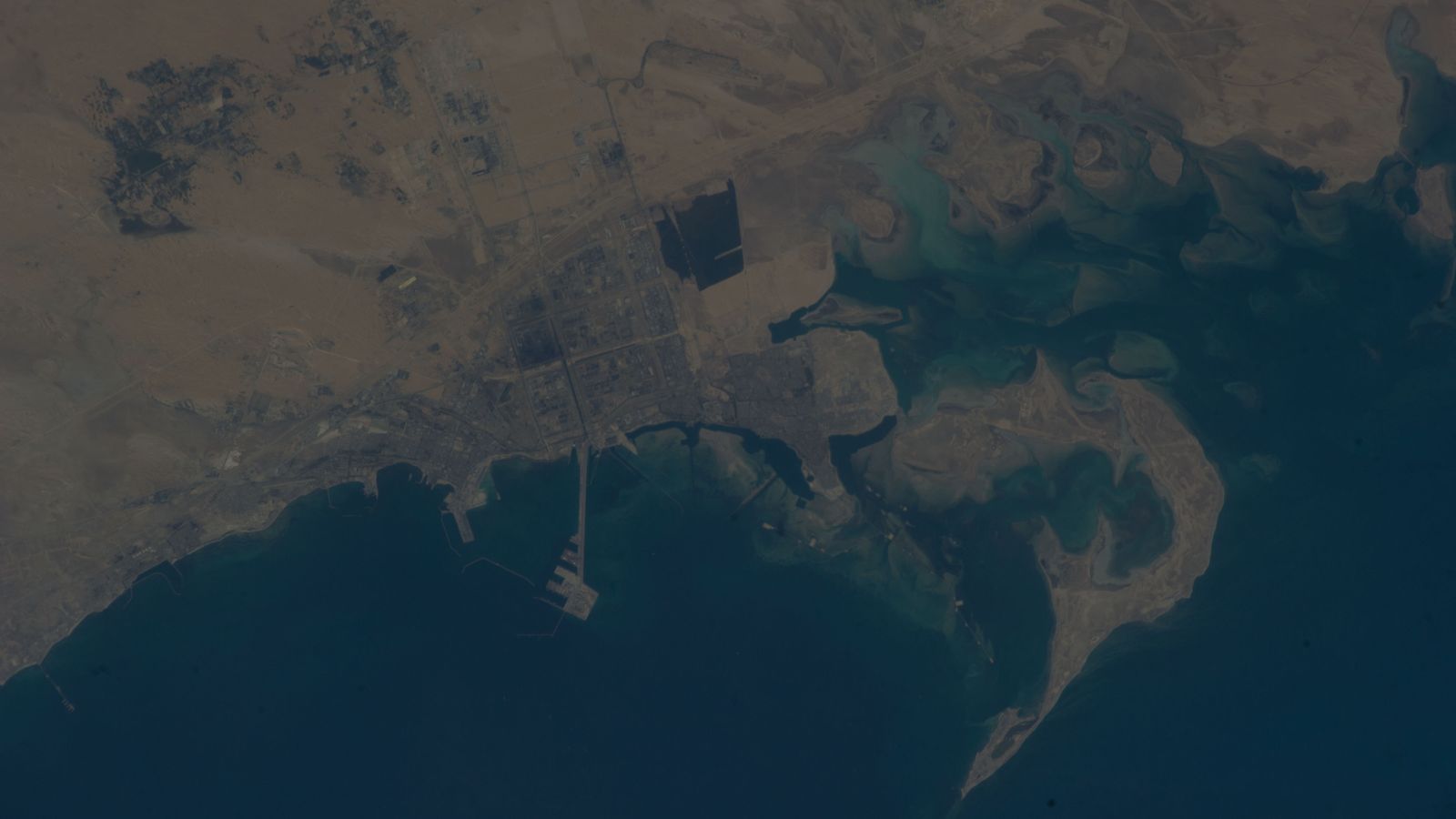
Al Jubail is a planned industrial city located in the eastern Ash Sharqiyah province of the Saudi Arabian gulf coast. It is the largest industrial city ever built, and home to the Saudi Basic Industries Corporation (SABIC), the fourth largest petrochemical company on earth.
Moreover, Jubail Industrial City features some world-class infrastructure, including one of the largest desalination plants on the planet, an oil refinery, a steel mill, and two huge seaports that support a total annual cargo volume of 52,658 tons. This has made Jubail one of Saudi Arabia’s most important ports.
Petrochemical products such as fertilizers and plastics and refined oil products like gasoline, kerosene, and diesel fuel are some of the primary exports of Jubail. Steel is another product that the city manufactures and exports in large quantities. Some other manufacturers of consumer goods also function in Jubail to support the primary oil- and gas-based businesses.
Key Takeaways
- Jubail is the largest industrial city globally, housing SABIC, the fourth-largest petrochemical company.
- The city features extensive infrastructure, including massive seaports, a desalination plant, and an oil refinery.
- Jubail’s history dates back over 7,000 years, evolving from a fishing village to a major industrial hub.
- Saudi Arabia offers significant investment incentives in Jubail to promote economic diversification and self-sufficiency.
- Jubail Industrial City II, a $60 billion expansion, aims to create over 55,000 jobs and further boost industrial production.
The Ascendance of a Fishing Village – A Brief History of Jubail
Despite being a bright and modern city with every conceivable amenity, Jubail has ancient roots and a rich, interesting history. More than 7,000 years ago, the people of Dilmun established a settlement in the area. Their civilization blanketed the coast of the Persian Gulf and was part of a trade route between Mesopotamia and the Indus Valley Civilization.
The trading and commercial ties between Mesopotamia and Dilmun were so strong that Dilmun featured as a major setting in the Sumerian creation myth. It is described in the legend of Enki and Ninhursag as a blessed land where pain and diseases don’t exist, predators don’t kill, and people do not get old.
Before the mid-twentieth century, Jubail served as a caravan junction on the outskirts of an important fishing and pearling village. It gained a measure of fame in September 1933, as the very first landing site for a team of American geologists – employed by the Standard Oil Company of California – who had arrived in Saudi Arabia to explore for oil.
The partnership between Standard Oil and the Saudi government later became known as Aramco, short for the Arabian American Oil Company. Conveniently located near important oil fields, Jubail was chosen (in the early 1970s) as the site for one of the largest petrochemical complexes in the world. In the mid-1970s, the Saudi government commissioned the Bechtel Company of San Francisco to engineer the construction of the new industrial city – which grew into one of the largest and most successful civil engineering projects in the world.
Investment Benefits and Incentives
For decades, Saudi Arabia’s economy has relied almost exclusively on the production and export of crude oil and petroleum. This is because more than 17 percent of the known petroleum reserves in the world can be found in Saudi Arabia. However, in recent years, the government has recognized that crude oil is a finite resource and its market value is affected, to a great extent, by international political and economic factors. Plus, it has an uncanny tendency to inspire bloody wars in its vicinity.
As a result, the Saudi government has begun making plans to build an integrated industrial base in the country, that will utilize local natural resources to manufacture both intermediate and consumer products. The Jubail Industrial City was constructed to further the cause of Saudi Arabia’s economic self-sufficiency. Hence, the government provides a wide range of incentives and investment benefits to companies wishing to set up a base of operations in Jubail.
Medium to long-term, interest free loans are extended by the Saudi Industrial Development Fund to businesses that want to establish their offices or factories in Jubail. Businesses that already have offices in the city can also avail these loans if they want to upgrade their facilities or expand their operations in and around Jubail. World-class infrastructure and proximity to affordable fuel sources are some of the other benefits that enable the city to draw investors from all corners of the earth.
To potential investors looking to expand their businesses, Jubail offers well-developed locations with cutting-edge infrastructure that allow for rapid growth, long-term lease agreements at extremely affordable prices, and effective technical training programs covering a variety of professions and industries.
Modern residential facilities and community centers in the city enable businesses to attract the best talent from various countries around the world. Jubail also offers various recreational facilities for tourists and residents alike, such as luxurious shopping malls and picturesque, well-maintained beaches. If you’re a woman, however, you probably wouldn’t be able to use the beaches and their facilities as much as you’d like, because Saudi Arabia imposes major restrictions on women at the beach. Most beaches will only allow males, over the age of fifteen, to enter the water.
The Most Massive Civil Engineering Project in the World
Bechtel Corporation, an American company specializing in engineering, construction, and project management, was chosen by the Saudi Royal Commission in 1975 to work on the planning and design of Jubail Industrial City. Three years were spent developing a master-plan for the city, which helped builders determine which projects needed to be prioritized to make Jubail habitable and functional with maximum efficiency.
To this day, the original plan continues to evolve as the city keeps growing and expanding with every passing year. The Guinness Book of World Records lists Jubail as the most massive construction engineering project on earth. Covering a total area of 1,016 square kilometers, this one city is responsible for more than 7 percent of Saudi Arabia’s total GDP. Together with its twin city on the western coast, Yanbu, Jubail accounts for two-thirds of the country’s annual industrial production.
The city can be divided into five zones, including the industrial zone, the residential area, the picnic zone, the airport area, and the Al-Batwah Island, which features a park and a zoo and serves primarily as a recreational area. Covering a total area of 80 kilometers or 8,000 hectares, the industrial zone comprises 19 main factories and over a hundred ancillary establishments.
The residential area, on the other hand, is located on an adjacent island and comprises no less than eight neighborhoods. With 29,130 housing units, it is inhabited by more than 100,000 residents, both locals and workers who have arrived from other parts of the world. At full capacity, it can potentially accommodate 375,000 people in smart, modern houses equipped with the latest appliances and technologies. The picnic zone provides verdant playgrounds, amusement parks, and facilities for water games, making it ideal for children of all ages.
Infrastructure in Jubail
There can be no doubt that the world-class infrastructure in Jubail is the cornerstone of all its commercial, industrial, and social development. So let’s touch upon some of the most impressive pieces of infrastructure in the city.
Independent Water and Power Project
Watch the Video
Open Video
Video Briefing
Jubail, Saudi Arabia: The World's Largest Industrial City
Jubail industrial city is home to the largest Independent Water and Power Project (IWPP) in the world. It produces 800,000 m3 of water and 2744 MW of electricity on a daily basis. Built at a cost of USD $650 million, the project became commercially operational in 2010. The facility makes use of reverse osmosis technology to meet the power and water needs of the city.
Natural gas is the primary fuel used by the plant, though diesel can also be used as a backup. One steam turbine and three gas turbines are used by each of the four water desalination units. The excess heat produced by the gas turbine generators is redirected into the heat recovery steam generators to enhance the efficiency of the plant by generating additional electricity.
King Fahd Industrial and Commercial Ports
Situated north of the industrial zone, the King Fahd Industrial port is one of the largest seaports in the world. Nine kilometers in length, it comprises two storage yards, thirty-four berths, and multiple service platforms. Additionally, it contains a four kilometer long marine loading station for tankers, as well as a specialized berth reserved for petrochemical products.
The Jubail Commercial Port features 125 storage hangars, a 170 feet control tower, and a 1,800 square meter internal warehouse for dangerous goods. It is used for exporting industrial products such as chemical fertilizers and petrochemicals, as well as for importing the raw materials required by local industries. The commercial port occupies an area of 44 square kilometers and handles more than four million tons of cargo every year.
Mega Recycling Initiative
A mega-recycling initiative was implemented across all 50 contract sites in the industrial zone. Annually, it is used to recycle about 200 tons of wooden pellets, more than 480 tons of scrap metal, 87 tons of oil, 15 tons of cardboard, 7,000 tons of demolished asphalt, and 5 tons of plastic. This project has helped reduce waste generation in Jubail by more than 8,000 tons.
The initiative also helps recycle Jubail’s waste water, which is then used for landscaping purposes. Saudi Aramco has recently started using recycled plastic to construct roads and highways in the city. The recycled plastic is mixed with asphalt to increase the strength of the concrete mix being used for construction. This helps minimize the cost of road construction by reducing the amount of bitumen required in the asphalt mix by 10 percent.
Satorp Mega-Refinery
The Jubail refining and petrochemicals platform is one of the most efficient integrated crude oil refineries in the world. With a production capacity of 440,000 barrels of crude oil per day, the refinery facilitates the production of high-value-added goods made from heavy crude oil. To enhance efficiency, the refinery makes use of three different types of processing units.
The two distillate hydrocrackers process heavy petroleum fractions to produce light, ultra-low-sulfur products. A fluid catalytic cracking unit produces numerous products such as liquefied petroleum gas, polythene, and other very light hydrocarbons. Lastly, a coking unit makes use of a thermal process to convert heavy fractions into a type of fuel known as petcoke.
The East-West Pipeline
To conserve and exploit the enormous reserves of natural gas in the eastern region of Saudi Arabia, the Royal Commission has invested heavily in an East-West natural gas and oil pipeline extending from Jubail to Yanbu. This pipeline was designed to avoid the Strait of Hormuz between Oman, Iran, and the UAE, as the Strait can potentially be closed by Iran, thus cutting off the supply of oil and gas.
The double pipeline, which originates in the eastern part of the country, transports the natural gas gathered and processed in the Jubail industrial zone to the western city of Yanbu. This natural gas facilitates the export of energy products from the Red Sea coast as well as supporting many of the industrial projects in Yanbu. The pipeline, which was completed in 1982, connects two cities at a distance of 1,170 kilometers.
Jubail Industrial City II
The success of Jubail Industrial City prompted the Saudi authorities to begin work on the second phase of the project, nicknamed Jubail II. In 2005, the late King Abdullah laid the foundation stone of Jubail II, which drew in investments totaling $60 billion. This expansion project is expected to create more than 55,000 new jobs.
Jubail II was originally envisioned as a four-phase project covering an area of nearly 900km2. Phase one contains various factories and plants, including a joint venture between Saudi International Petrochemicals and Korea’s Hanwha Chemicals Corp, which began operations in 2013. Phase two comprises the massive Satorp refinery that we discussed earlier. Phase three houses the Sadara chemicals complex, a joint venture between the Dow Chemical Company and Saudi Aramco.
Only the fourth phase of the project, which will contain four blocks for aluminum and smelting plants, is yet to be completed.
Over 35 million cubic meters of soil had to be excavated and moved for the construction of Jubail II. It has so far provided accommodation for 120,000 new residents, educational facilities for 18,000 students in the form of a ‘greenfield’ university, as well as medical centers, waste management centers, and much more.
Huge pipelines had to be installed under the city’s corridors to serve the industries with seawater, which is used as coolant in many factories and plants. As before, Bechtel Corporation has been chosen to design and manage this new expansion of the ever-growing Jubail Industrial City.
Key Takeaways
- Jubail is the largest industrial city globally, housing SABIC, the fourth-largest petrochemical company.
- The city features extensive infrastructure, including massive seaports, a desalination plant, and an oil refinery.
- Jubail’s history dates back over 7,000 years, evolving from a fishing village to a major industrial hub.
- Saudi Arabia offers significant investment incentives in Jubail to promote economic diversification and self-sufficiency.
- Jubail Industrial City II, a $60 billion expansion, aims to create over 55,000 jobs and further boost industrial production.
SideProjects Editors
The SideProjects editorial team researches, fact-checks, and structures explainers about the lesser-known tales, side narratives, and spin-offs behind major historical and contemporary subjects.
Frequently Asked Questions
What is Jubail known for?
Jubail is known for being the world’s largest industrial city and is home to the Saudi Basic Industries Corporation (SABIC), the fourth largest petrochemical company on earth.
What are the primary exports of Jubail?
The primary exports of Jubail include petrochemical products such as fertilizers and plastics, refined oil products like gasoline, kerosene, and diesel fuel, and large quantities of steel.
What is the history of Jubail?
Jubail has ancient roots dating back over 7,000 years when the people of Dilmun established a settlement there. It served as a caravan junction and gained fame in 1933 as the landing site for American geologists exploring for oil.
What incentives does the Saudi government offer for businesses in Jubail?
The Saudi government offers medium to long-term, interest-free loans, world-class infrastructure, proximity to affordable fuel sources, well-developed locations with cutting-edge infrastructure, long-term lease agreements at affordable prices, and effective technical training programs.
What is the Independent Water and Power Project in Jubail?
The Independent Water and Power Project (IWPP) in Jubail is the largest in the world, producing 800,000 m3 of water and 2744 MW of electricity daily using reverse osmosis technology and natural gas.
What are the King Fahd Industrial and Commercial Ports?
The King Fahd Industrial Port is one of the largest seaports in the world, featuring multiple berths and storage yards. The Jubail Commercial Port handles over four million tons of cargo annually and is used for exporting industrial products and importing raw materials.
What is the mega-recycling initiative in Jubail?
The mega-recycling initiative in Jubail recycles various materials annually, including wooden pellets, scrap metal, oil, cardboard, demolished asphalt, and plastic. It also recycles wastewater for landscaping and uses recycled plastic in road construction.
What is the Satorp Mega-Refinery?
The Satorp Mega-Refinery in Jubail is one of the most efficient integrated crude oil refineries, with a production capacity of 440,000 barrels of crude oil per day. It uses various processing units to produce high-value-added goods from heavy crude oil.
What is Jubail Industrial City II?
Jubail Industrial City II is an expansion project that includes various factories, plants, and a chemicals complex. It is expected to create over 55,000 new jobs and has provided accommodation for 120,000 new residents, along with educational and medical facilities.
What is the East-West Pipeline?
The East-West Pipeline transports natural gas from Jubail to Yanbu, facilitating the export of energy products from the Red Sea coast and supporting industrial projects in Yanbu. It was designed to avoid the Strait of Hormuz.