
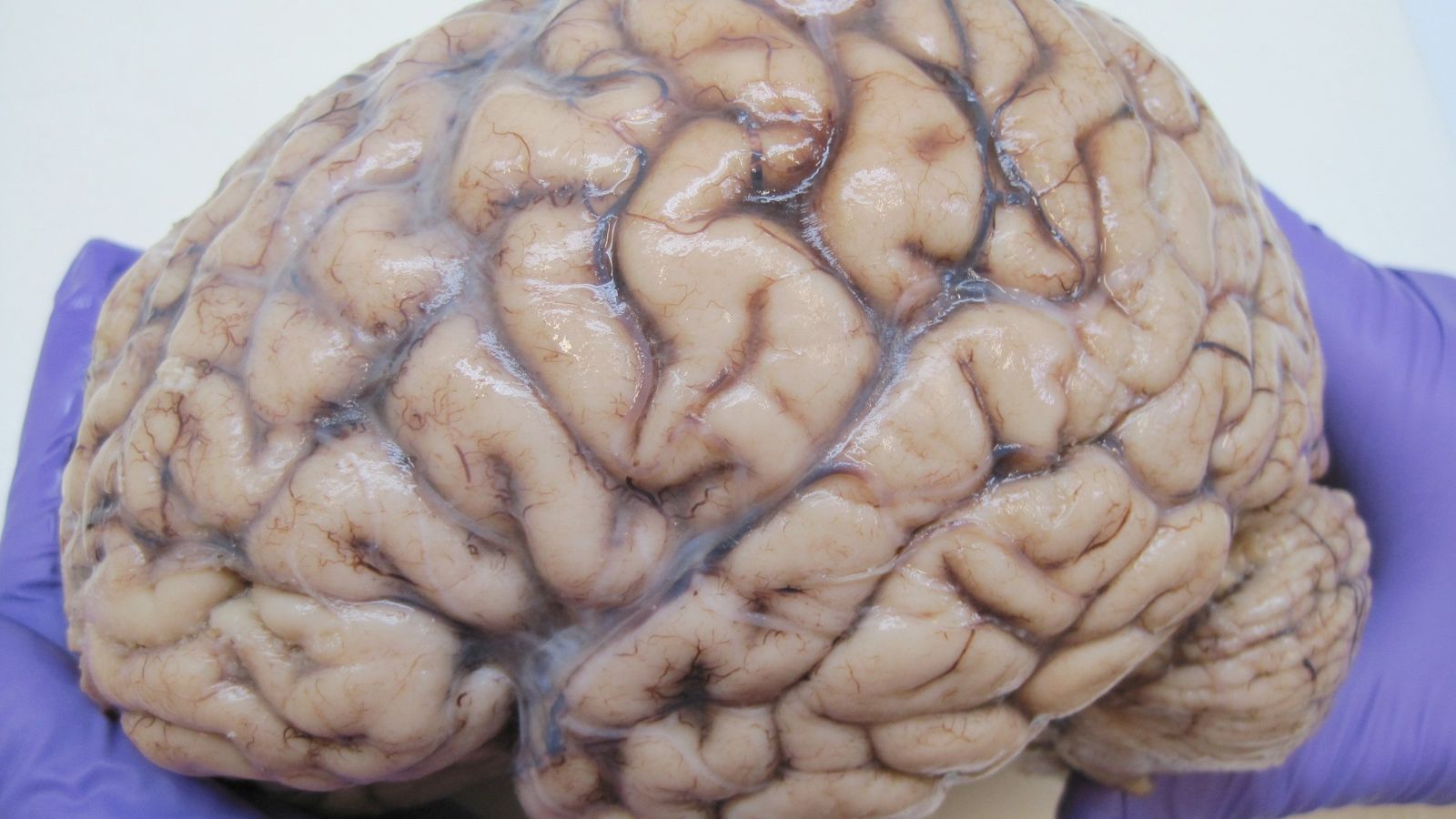
Despite weighing only about 3 pounds and made mostly of fat and water, your brain is one of the most fascinating and complicated objects in the entire universe. It’s so full of mysteries and surprises that it’s earned the title of the final biological frontier, a frontier that humanity has only really been able to study for the last century or so. But just in that short time, we’ve uncovered some truly spectacular things about the brain, and today we’re going to go over a few of these strange and wild discoveries.
Unbelievable Complexity
It’s no surprise that the brain is incredibly complex. As we mentioned at the beginning, it’s the most complex object that we know of in the entire universe, but simply stating this fact doesn’t really do it justice, so let’s break it down.
The basic cells that the brain is composed of are called neurons, which are highly complicated on their own. Put simply, a typical neuron has spindly arms, called dendrites, that receive electrical or chemical signals from other neurons. These signals are received by the cell body, and then passed along by use of the neuron’s axon, which you can picture as a sort of cannon, which fires the signals onto the next neuron, continuing the cycle and sending signals around your nervous system. What’s utterly insane is that the human brain is composed of an estimated 86 billion of these neurons, almost as many stars as there are in the entire Milky Way Galaxy. And because each individual neuron can connect with up to a thousand others, the brain contains a staggering 60 trillion neural connections.
Key Takeaways
- The human brain contains approximately 86 billion neurons and 60 trillion neural connections.
- Memory is stored as neural pathways, with different brain regions handling various types of memories.
- Split-brain patients can experience difficulties verbally describing objects seen or felt by the disconnected hemisphere.
- Phantom limb sensations occur due to the brain’s somatosensory cortex adapting to the loss of a limb.
- The brain exhibits neuroplasticity, allowing it to adapt and repurpose areas for new functions when needed.
What’s even crazier is just how specialized many of these neurons are. The brain contains many different regions responsible for different functions in the body, such as the brain stem, which regulates automatic functions like blood pressure, digestion, and other things that you never have to think about, or the cerebellum, which controls your body’s balance. And yes, if you’re wondering, the myth that you only use 10% of your brain is utter bullsh*t, as you’re subconsciously using large portions of it almost constantly. In fact, you’re using nearly 50% of your entire brain at once to process various aspects of vision.
While most functions in the body can indeed be linked to a specific region in the brain, there is one that isn’t so simple: memory. Our incredible memory is what makes humans truly unique, as our ability to learn and adapt at a rapid pace is what allowed our species to advance to its current status. But where do all these memories get stored?
There isn’t exactly a straight answer. For starters, different types of memories are handled by different regions, such as the hippocampus, a seahorse-shaped structure which is mostly responsible for long term, informational memory, or the basal ganglia, which handles muscle memory. But it isn’t quite as simple as correlating a single neuron with a single memory. Memories are best thought of as neural pathways, or patterns of activation, meaning one neuron can participate in many different memories. The more often these pathways are activated, the stronger they become, making the memory sharper.
So with the insane amount of neurons in the brain, and the even more insane amount of total neural connections, just how much memory can be stored in our mind? According to psychology professor Paul Reber, the total capacity of our brain is somewhere in the ballpark of 2.5 petabytes, which is 2.5 million gigabytes. However, this estimate was given in 2011, and in the years since, several universities have published papers estimating that the total could be more than 10 times this previous estimate, a truly unbelievable amount of storage space that we could never hope to fill in a lifetime. And it manages this all while only running on about 20 watts of electricity, less than your average light bulb.
Split Brain
There’s a common myth that the left and right halves of the brain are responsible for different functions, such as a “left-brained” person being more logically oriented, and a “right-brained” person being more creative. This has absolutely no basis in reality, and people aren’t one-side dominant, but it is actually true that different sides of the brain handle very slightly different responsibilities.
For starters, each half of the brain controls the opposite half of the body, meaning that your left hemisphere sends and receives signals from your right arm, and the right half of your brain communicates with your left arm. The left half of your visual field from both eyes is processed by the right half of your brain, and vice versa. It’s a bit counterintuitive, but normally this strange asymmetry has no bearing on your day-to-day life, because each half of your brain actively communicates with the other through the corpus callosum, a network of neural pathways that connect the two hemispheres, combining the two halves into your single center of awareness that you’re accustomed to.
Things start to get interesting when we slice this connection right in half. And no, this isn’t just some sick experiment: severing the connection between the two halves of the brain is actually a legitimate medical procedure, a surgery known as a corpus callosotomy. This operation is performed as a last-ditch effort to treat severe epileptic seizures when no other treatments are effective. Preventing the two halves of the brain from rapidly sending epileptic signals to each other can be highly effective at eliminating the threat of seizures, but it comes with a few interesting side effects.
When split brain patients are shown an image only in the left half of their vision, they cannot verbally say out loud what it is that they see. This is because the image is sent from the eyes to the right half of the brain, but most people’s speech center is located in the left half. Without the ability to communicate with the half that’s actually seeing what’s there, the speech center has no clue what’s going on. The same thing happens if the left hand holds a familiar object out of sight, like a bottle of water, for instance. When asked what is in their hand, the split-brain patient will struggle to find the words.
However, because half of their brain did see or feel the object, if you wait a couple minutes and then ask the patient to pick out the object they were just holding from a list in front of them, they’ll have no problem deciding. They just can’t use their words.
But, if you perform these tests with the object in the right hand, or in the right visual field, the information will be present on the same side as the speech center, and the patient will have no problem answering questions and naming the objects out loud. It is important to note though, that this is the case in the majority of patients, but not all.
The most fascinating split-brain results thus far are those of patient Kim Peek, a savant, who, from a young age, demonstrated incredible cognitive abilities, such as memorizing nearly 10,000 books, including the entire King James Bible, knew basically everything about world history, geography, music, and could give you detailed directions for navigating every major American city. In fact, one of his hobbies was memorizing phone books. What set Kim apart from the rest of history’s geniuses though, was the fact that he was born with several brain abnormalities, including an enlarged head, sac-like cranial structures, and, critically, he was born without the corpus callosum, naturally disconnecting the two halves of his brain from birth. Because of this, he was able to utilize both hemispheres of his brain simultaneously, and could view and read the left and right pages of a book simultaneously. Strangely, he also had language centers present in both halves of the brain, something not often seen.
The effects of a split brain are certainly among the most interesting things we’ve discovered about our mind, and the field is still being actively researched to this day.
Phantom Limbs
Imagine this scenario. You’re a soldier celebrating the end of the Second World War, and you’re about to return to your home country now that the Allies have been victorious. Unfortunately, you aren’t returning in exactly the same condition in which you arrived, thanks to an explosion which damaged your right arm, leading to its amputation.
You’ve since come to terms with your now one-armed life, but pretty soon, something strange starts to happen. In the middle of the night, your missing arm begins to itch, and, soon, you feel like the missing hand is painfully squeezing its fist, digging your nonexistent fingernails into your palm.
But how could that be, if the arm is no longer there? This is what’s known as a phantom limb, a sensation in a body part that is no longer there. Around 80% of amputees report some form of phantom limb sensation, ranging from itching to twitching to painful muscle spasms, or having the feeling of a clenched fist that can’t be released.
The science behind phantom sensations took a long time to figure out. In the late 1800s, when the peculiar symptoms were first reported, it was believed to be a result of the remaining nerve tissue surrounding the amputation site, but we’ve since learned that it’s all in your head, and here’s how:
In a little strip of neurons called the somatosensory cortex, your brain has your entire body mapped out, with each body part corresponding to a specific place on this cortex. Scientists have mapped this out pretty accurately, and using electrical stimulation in the right spot they can actually elicit bodily sensations. When a part of your body is lost, say, your arm, this piece of the brain responsible for it is still there. Neuroscientist V.S. Ramachandran hypothesized that reorganization of the neurons in this location or the stimulation of the tissue surrounding it could be responsible for the phantom sensations, a theory supported by his shocking findings that touching certain parts of a patient’s face was felt in their missing limb. Turns out, this is because the neural map of the body has the hands and the face adjacent to each other, and when the map of the hand has nothing to do, it can begin activating along with its neighbor. You can think of areas of the brain as not wanting to be unemployed, and often quickly finding new tasks to keep themselves busy, something we’ll get into in a bit.
Treating phantom limb syndrome was regarded as a somewhat lost cause for quite some time. Ketamine, morphine, antidepressants, and electroshock therapy were tried, and it seemed like all treatments were doomed to be ineffective… except for one: the mirror box.
Watch the Video
Open Video
Video Briefing
Mind-Blowing Facts about the Human Brain
Designed by Dr. Ramachandran, the mirror box is a simple yet ingenious invention designed to trick your brain. To use the mirror trick on, for example, a missing left arm, the patient inserts their right arm into the box, which has a mirror on one side, blocking the view of the missing arm, but giving the brain the illusion that it is present in their vision.
The patient then does their best to imagine control over the missing limb, while performing movements that would require both hands to make symmetrical motions, such as clapping. Even though the patient consciously knows that the left arm is merely a reflection of the right, the brain itself is rather easily fooled, and the result is often the relief of phantom pain or discomfort as the brain perceives normal control once again.
What’s crazy about this trick is that it doesn’t just work on people missing a limb. It’s been shown to also be effective at helping stroke patients recover some of their control over the weakened half of their body.
But even if your body is completely without damage, you can still trick this part of your brain. In a classic experiment, subjects place their right arm on a table and their left arm underneath the table. In the place of their left arm, a prosthetic is placed on the table, vaguely seeming to attach to their body.
The experimenter will then gently touch both the prosthetic and the real hand with a paintbrush in an identical manner, giving the brain the illusion that the prosthetic arm is the real one. Then, when the experimenter casually swings a hammer at the fake arm, the patient will jump backward out of instinct, even though they are consciously aware that the arm is not real.
Brain Damage
Of all the great things we’ve said about the brain, it does have one major flaw, which lies in the fact that being so insanely complex means there’s a practically unending list of things that can go wrong. From concussions to strokes, any damage to your brain has the potential to change the way it or your body functions, and in some pretty peculiar ways.
Take, for instance, damage to the amygdala. The amygdala is an almond-shaped part of the brain responsible for a vast range of emotions, but, specifically, it is highly involved with the processing of fear. You might think that feeling no fear would be some sort of an advantage in your life, but it’s actually quite the opposite. People with damage to their amygdala may lose the sense of emotional restraint that prevents them from taking extreme risks. This can lead to things like excessive gambling, or, in more severe cases, highly dangerous activities like casually strolling across busy streets.
But things can get even stranger. It’s logical enough that if you receive an injury in the part of the brain responsible for processing vision that you could go blind, but it’s actually possible to lose only certain aspects of your vision.
For example, if someone suffers from a condition called optic ataxia, they have no problem seeing and understanding the world around them, but, the moment they try to reach for an object, they can’t seem to accurately grab it. One of the first patients to report these symptoms noted that his right hand was especially clumsy, and he would often light his cigarette in the middle instead of the end, or miss it altogether. However, with his eyes closed, he could point to parts of his body with perfect precision, meaning that, oddly enough, the issue only arose when the task required the combined efforts of both vision and muscle control.
Another unusual condition is called spatial neglect, which can occur as a result of a stroke. Patients with spatial neglect lack attention and awareness of half of their vision, usually on the side opposite where the damage occurred, and produce some peculiar results in experiments. For example, one famous case involves a patient who was asked to draw a clock, a house, and a flower, and was even given an example to copy. The result was this peculiar set of half-drawn images, with the left half of each object totally ignored. But the patient, of course, saw no issue.
Stranger still is a condition called akinetopsia, or motion blindness. Thankfully, it is an extremely rare condition, with only a few dozen cases ever reported. Symptoms range from seeing the world as if it were ‘choppy’, like viewing every other frame of a film reel, but in more extreme cases sufferers have a complete inability to perceive motion, and objects seem to appear and disappear out of their vision as they move past. This is all, of course, despite having completely normal vision if everything is stationary. You can quickly see how disruptive this would be in day to day life: when pouring water into a glass, it would appear empty, then half full, then suddenly overflowing. Or, when crossing the street, it would be difficult to judge how fast a car is moving toward you as it blinks from place to place, experiencing real life around them like an online video game with a bad internet connection.
Plasticity
While it is true that there are just about a million things that can go wrong in the brain, there is something to be said for how resilient it is. One of the brain’s most impressive abilities is called neuroplasticity, or the ability to adapt, learn, and rewire itself.
Plasticity is very high as an infant, and tends to decline with age. This is part of the reason children learn their first language or languages so quickly, and why it’s harder to learn new skills later in life. But it’s not only about learning new tricks.
In a Harvard study done in 2004, participants were completely blindfolded for 96 hours, meaning that the eyes were sending virtually no information to the brain. The area of the brain responsible for many aspects of vision, the occipital lobe had absolutely nothing to do. No signals to interpret, no motion to detect, nothing. After just a day, the majority of patients began experiencing vivid hallucinations in their dark world, with reports of terrifying green faces, lamps, numerous mirrors, and floating puzzle pieces. Brain scans showed that the occipital lobe was indeed active during these hallucinations, as it tried to grasp with the lack of stimuli. But as the study went on, the hallucinations subsided, especially as the subjects began participating in various tactile experiments, such as feeling for details on intricate clay structures and learning to read braille for four hours a day.
What shocked the researchers though, was that not only did the brain quickly cope with the lack of stimuli, but it began repurposing the visual center that was no longer being used. Brain scans showed that during tactile experiments and braille reading, participants’ occipital lobes were activating, helping them learn the tasks more quickly and perform them more effectively. As we mentioned before, areas of the brain don’t like to be unemployed, and quickly found a new job.
The experimenter noted:
“They were seeing with the tip of their finger … I was expecting changes, but not this rapid.”
Interestingly, after the blindfolds were removed at the end of the study, their eyes functioned just as they had a few days earlier, and everything on their brain scans returned to normal. However, many of the skills they learned during the trial, such as reading braille, were lost once this extra brain matter returned to its original purpose of visual perception.
This fascinating discovery showed that the brain was far from rigid, and that, even as adults, it has the ability to rapidly adapt to new circumstances.
All of these discoveries, and more, are being unraveled in the modern age, and there’s no telling what incredible findings are awaiting us about consciousness, cognition, and much more in the near future.
Key Takeaways
- The human brain contains approximately 86 billion neurons and 60 trillion neural connections.
- Memory is stored as neural pathways, with different brain regions handling various types of memories.
- Split-brain patients can experience difficulties verbally describing objects seen or felt by the disconnected hemisphere.
- Phantom limb sensations occur due to the brain’s somatosensory cortex adapting to the loss of a limb.
- The brain exhibits neuroplasticity, allowing it to adapt and repurpose areas for new functions when needed.
SideProjects Editors
The SideProjects editorial team researches, fact-checks, and structures explainers about the lesser-known tales, side narratives, and spin-offs behind major historical and contemporary subjects.
Frequently Asked Questions
How many neurons does the human brain have?
The human brain is composed of an estimated 86 billion neurons.
What is the total memory capacity of the human brain?
The total capacity of the human brain is estimated to be around 2.5 petabytes, though some studies suggest it could be more than 10 times this estimate.
What is a corpus callosotomy?
A corpus callosotomy is a surgical procedure where the connection between the two halves of the brain is severed to treat severe epileptic seizures.
What are phantom limbs?
Phantom limbs are sensations in a body part that is no longer there, experienced by around 80% of amputees.
What is the mirror box used for?
The mirror box is used to trick the brain into relieving phantom pain or discomfort by giving the illusion that a missing limb is present.
What is neuroplasticity?
Neuroplasticity is the brain’s ability to adapt, learn, and rewire itself, which is highest in infancy and declines with age.
What happens when the amygdala is damaged?
Damage to the amygdala can result in a loss of emotional restraint, leading to excessive risk-taking behaviors.
What is optic ataxia?
Optic ataxia is a condition where individuals have difficulty accurately grabbing objects despite having normal vision and muscle control.
What is spatial neglect?
Spatial neglect is a condition where patients lack attention and awareness of half of their vision, usually on the side opposite where the brain damage occurred.
What is akinetopsia?
Akinetopsia is a rare condition where individuals have difficulty perceiving motion, seeing the world as if it were ‘choppy’ or objects appearing and disappearing.