
It’s often been said that there’s no such thing as a coincidence. This is usually asserted either by detectives who believe every small piece of evidence is connected, by those who insist that every single thing that happens is the will of God, or by conspiracy theorists. But coincidences absolutely do happen, all the time. There are billions of people in the world living their lives, and sometimes weird stuff is just going to happen.
Sometimes these coincidences have lasting impacts on the world, while other times they’re just bizarre things that only really impacted a single person. But either way, they’re all pretty unbelievable stories.
The Man Who Survived Both Atomic Bombs
Tsutomu Yamaguchi was born in Nagasaki, Japan on March 16, 1916. In the 1930s he was hired by Mitsubishi Heavy Industries where he worked as a draftsman designing oil tankers. Yamaguchi lived an ordinary but successful life, until World War II broke out.
Key Takeaways
- Tsutomu Yamaguchi survived both atomic bombings in Hiroshima and Nagasaki, despite being present at both detonations.
- A tornado in Washington D.C. during the War of 1812 disrupted British forces, potentially ending their occupation prematurely.
- The Hoover Dam construction saw the first and last deaths, father and son Patrick and John Tierney, exactly 14 years apart.
- Joseph Figlock accidentally saved two children from falling windows within a year, both times avoiding severe injury himself.
- Violet Jessop, known as the ‘unsinkable stewardess,’ survived the sinkings of the Olympic, Titanic, and Britannic.
As the war raged on, Japanese industry took a serious hit due to the scarcity of resources; it certainly didn’t help that oil tankers were being routinely sunk. Yamaguchi was unhappy about the state of the country and believed Japan never should have gotten into a war, but he continued his work with Mitsubishi.
Although he was born and still lived in Nagasaki, in the summer of 1945 Yamaguchi was sent to Hiroshima for a three month business trip. The trip went as expected, and on August 6th he and a couple colleagues were traveling to the train station to return to Nagasaki. Unfortunately, Yamaguchi had forgotten something at the office and split from his colleagues to go retrieve it.
At 8:15 am, while walking back to work, he saw the Enola Gay flying in formation over the city. He also saw two small parachutes drifting down from the sky, later identified as carrying instrumentation to measure the explosion, before the entire sky lit up with the detonation of the nuclear bomb. Even though he was 3 km (1.9 miles) away, the blast was still enough to knock Yamaguchi over.
He was temporarily blinded, covered in burns, and his eardrums had been ruptured. He managed to find his colleagues and they spent the night in an air raid shelter, then returned to Nagasaki the next day.
After a couple days in the hospital, Yamaguchi decided to return to work on August 9th, despite being heavily bandaged. At 11 am he was having a conversation with his supervisor in which he described the atomic blast in Hiroshima. His supervisor told him that he was crazy for coming back into work so soon, at which point the second atomic bomb detonated in Nagasaki. Yamaguchi was again 3 km from the blast and this time the bomb was larger than the first, but he escaped uninjured.
Unfortunately, the blast, which had knocked over everyone in the office, had left Yamaguchi’s bandages in tatters. With all of the hospitals in Nagasaki destroyed, he was unable to replace his bandages and spent the next week extremely ill.
But despite being a victim of both atomic bombs, Yamaguchi survived into his 90s. He worked as a translator for Allied forces during the occupation of Japan, after which he went back to his job at Mitsubishi. In 1957 the Japanese government began officially recognizing survivors of the atomic bombs, and Yamaguchi was identified as a survivor of Nagasaki. It wasn’t until 2009, one year before his death, that he became the only person officially recognized by the government as having survived both atomic detonations.
Of course, Yamaguchi wasn’t alone. There are about 160 people identified as having survived both atomic bombs, Yamaguchi is just the most well known because of his official recognition by the government and his later advocacy for nuclear disarmament.
The Tornado that Saved Washington
In 1812, the United States declared war against Great Britain, largely over British blockades and the impressment of American sailors. This began the War of 1812, sometimes viewed by Americans as the “Second War of Independence.” The war ultimately ended in a draw, though both sides mythologized themselves as having been the victors for varying reasons.
On August 24, 1814, British forces laid siege to Washington DC after recognizing that it was largely undefended. There was a battle between the British military and an American force primarily made up of untrained volunteer militia, which resulted in an easy win for the British. They then marched on Washington where they set fire to the city, burning down the Senate House, the House of Representatives, the White House, the Treasury, and other government buildings.
A week after the attack, President James Madison described it as “a deliberate disregard of the principles of humanity and the rules of civilized warfare, and which must give to the existing war a character of extended devastation and barbarism.” Those were strong words, though Britain’s decision to burn down Washington DC was ironically made in direct retaliation for American forces burning down government buildings in Canada.
Regardless, after setting fire to much of the city, British forces began their occupation of the nation’s capital. But this occupation would only last for 26 hours. With the sky blackened from the pillars of smoke rising throughout the city, British soldiers seemed unaware of what residents had noticed: the sky was becoming filled with dark storm clouds.
The sky opened up as a torrent of rain, possibly a hurricane, began soaking Washington. In the center of the city, a tornado touched down. The weather wreaked havoc on the British forces, with one report saying that the tornado picked up two British cannons and dropped them on British soldiers, killing them. It was said that more British soldiers in Washington were killed by the tornado than by American bullets.
Seeing the devastation caused by the storm, the British quickly decided it was time to leave the city and retreat. The storm had also damaged several British ships, resulting in one death and half a dozen injured. Not only did the tornado bring an abrupt end to the British occupation, the heavy rainfall dowsed the fires that had been set throughout the city.
Of course, not all historians agree that the tornado actually saved Washington. The storm damaged civilian homes as well as the Post Office and Patent Office, none of which had been targeted by the British who sought only to burn specific governmental buildings. There are also claims that the British never intended a long term occupation of the city and planned on leaving soon anyway.
According to a story written by local meteorologists in the book Washington Weather: “As the British troops were preparing to leave, a conversation was noted between the British Admiral and a Washington lady regarding the storm: The admiral exclaimed, ‘Great God, Madam! Is this the kind of storm to which you are accustomed in this infernal country?’ The lady answered, ‘No, Sir, this is a special interposition of Providence to drive our enemies from our city.’ The admiral replied, ‘Not so Madam. It is rather to aid your enemies in the destruction of your city.’
Whether the tornado caused more damage than it prevented is up for debate, but it is worth noting that this was still an unusual occurrence. It wasn’t tornado season, and Washington DC isn’t in an area prone to tornados. Over the past 200 years, there have only been seven recorded tornados in the city, so it was certainly unlikely that one would hit Washington at the same time the British tried to burn the city down.
Hoover Dam Construction Deaths
The Colorado River runs through vast areas of desert, and since the turn of the 20th century people had been searching for the perfect place to build a dam on the river. Not only would a dam prevent flooding and allow water to be diverted for irrigation, making the arid region more hospitable, but it could be an incredible source of hydroelectric power.
It took decades before a project was finally approved, and the construction of this dam turned out to be a dangerous proposition. To start, the Colorado River is one of the deadliest rivers in the United States. It has intense rapids and is prone to flooding, making the river itself quite dangerous.
Construction of the dam would also be dangerous, as it was going to be the largest concrete structure ever built. Building such a large dam also involved utilizing techniques that, even if they appeared mathematically sound, had never been proven to work in the real world, which is always risky.
In total, over 100 people died in the construction of the Hoover Dam. The official list of deaths includes 96 people who died during the construction, but 112 deaths are known to be associated with the dam. It’s widely believed that the real number is higher than that as well.
The first death associated with the Hoover Dam came six years before the project was approved and 8 years before construction began. On December 20, 1921, John Gregory Tierney became the first fatality associated with the dam. He was a surveyor for the Bureau of Reclamation, and he was on a barge in the Colorado River searching for the ideal location to build the proposed dam.
The barge got caught in a flash flood and Tierney fell overboard. He presumably drowned in the river, though his body was never found. Tierney’s wife was heartbroken about the loss of her husband, and that she couldn’t give him a proper burial, so she moved away from the river and back to Missouri with her 12 year old son, Patrick.
Patrick grew up, got married, and had a son of his own, but by that point it was the Great Depression. The family moved west in the hopes of finding work, and Patrick decided to see if he could get a job working on the dam. The Hoover Dam was one of the largest public works projects of all time, so it was his best chance of finding a steady job.
Patrick was an aspiring writer, but since that was no way to make a living during the Great Depression, he was also learning to become an electrician. He got hired working at the dam in 1932 as an electrician’s helper.
By the end of 1935, the Hoover Dam was almost complete. Six Companies Inc., the contractor in charge of the project, had managed to finish the dam two years ahead of schedule, with the project being completed in March of 1936.
But on December 20, 1935, Patrick Tierney became the last person to die during the dam’s construction. He fell off one of the dam’s intake towers, falling 350 feet to his death. The father and son were the first and last deaths associated with the dam, and their deaths were exactly 14 years apart to the day.
Joseph Figlock Was a Real Babe Magnet
In the late 1800s and early 1900s, there was a belief that babies and small children should be exposed to cold air as a way to essentially inoculate them against the common cold. The idea then shifted away from explicitly cold air to just focusing on fresh air and ventilation. It was considered so important that, in 1922, the first patent was approved for portable baby cages, a cage that would be used to suspend babies outside of a window so they could get sunlight and fresh air, particularly in urban apartment buildings.
The fad of baby cages didn’t last long, due to safety concerns, but the practice of having babies and toddlers nap near open windows remained popular. Unfortunately, even if the babies aren’t being deliberately suspended outside of the window, keeping them near open windows still posed a safety risk.
That’s what Joseph Figlock, an elderly street sweeper for the Detroit DPW, discovered very accidentally one day at work. He was minding his own business sweeping the street, when a baby girl fell from a four story window. Some versions of the story claim that Joseph caught the falling baby, but in reality he was unaware of the girl’s presence until she landed directly on his head. Still, Joseph broke the baby’s fall and saved her life, though both sustained injuries and broken bones.
Joseph returned to work, and less than a year later the exact same thing happened. This time the boy who fell was a toddler, but again a small child fell from a fourth story window and landed directly on Joseph, who accidentally saved the child’s life by breaking its fall. The boy suffered several broken bones, but this time Joseph was uninjured.
While it’s often reported that it was the same child who fell from the same fourth floor window, the real story is a bizarre enough coincidence. In less than a year, Joseph twice saved the life of a small child, both times also avoiding his own potential death from head trauma.
The Unsinkable Violet Jessop
Born in Argentina in 1887, Violet Jessop was the first child of Irish immigrants William and Katherine. She spent much of her childhood taking care of her younger siblings, until she became very sick with what is believed to have been tuberculosis. Doctors assumed she would die from the disease, but Violet beat the odds and survived, something that became a recurring theme in her life.
When Violet was 16 her father died, so the family moved to England. She attended a convent school while her mother worked as a stewardess aboard ocean liners, but when her mother fell ill a few years later, Violet took a job as a stewardess to help support the family.
She began with Royal Mail Line in 1908, but in 1911 she began working for White Star Line aboard their flagship, the RMS Olympic. Later that year, the Olympic collided with the British warship HMS Hawke, though there were no fatalities.
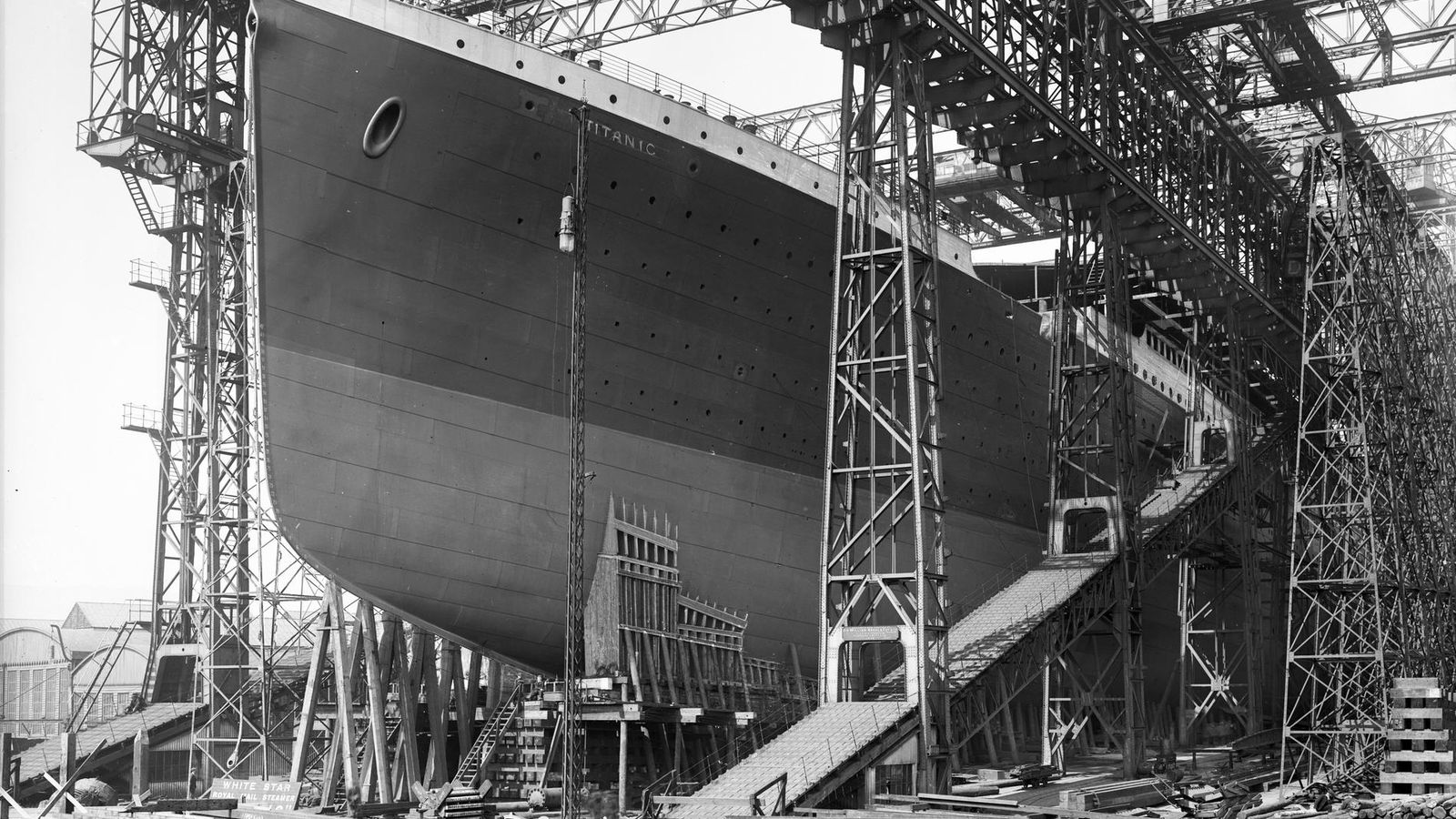
The following year, Violet was offered a job aboard the newly completed RMS Titanic. Aside from that little collision, she had quite enjoyed her time aboard the Olympic and didn’t really want to transfer, but a friend convinced her to take the job. And you can probably guess how that went.
Fortunately for Violet, she survived the sinking of the Titanic. She had been ordered to go above deck and act as an example of how to behave for the non-English speaking passengers who didn’t understand the instructions they were being given, and she was eventually boarded onto one of the lifeboats.
She continued working as a stewardess for White Star after the Titanic sank, but during the First World War she volunteered to serve as a nurse. She was assigned to the hospital ship HMHS Britannic. On November 21, 1916, the Britannic detonated a German naval mine and sank in less than an hour. Violet survived the shipwreck, though she did suffer a traumatic head injury while fleeing from her life boat as it was destroyed by the Britannic’s propellers.
Admittedly, of these three incidents it was only surviving the Titanic that was a real stroke of luck. In her own memoir, Violet didn’t even mention the Olympic’s collision, so she must have been really unbothered by it. But it was still a massive coincidence that she was aboard all three ships for their famous wrecks.
Only one other person was present for all the events, a ship stoker named Arthur John Priest. Known as “the unsinkable stoker”, Arthur not only survived the previous three incidents, he also survived the sinking of the HMS Alcantara and the SS Donegal. After the sinking of the Donegal, Arthur retired claiming that no one wanted to sail with him anymore. Honestly, it’s hard to blame them.
The Patient Bullet
In the interest of full transparency, the following story was probably just a hoax. It’s the sort of thing that sounds like it was inspired by The Picture of Dorian Gray, though it remains a fascinating story. It was also reported as news in over 100 different papers at the time, so even if it was a hoax, enough people believed it without ever finding out the truth.
Anyway, as the story goes, Henry Ziegland was living in the town of Honey Grove, Texas back in 1883. He was engaged to a woman named Maysie Tichnor, but for some undisclosed reason he decided to call off the engagement. This broke Maysie’s heart, so much so that she took her own life.
Her brother was understandably pissed off at Henry about what happened, so he grabbed his gun and tracked Henry down to the barn outside his home. The brother fired his gun and saw Henry’s body hit the ground and stop moving. Having enacted his vengeance and now being guilty of coldblooded murder, the brother turned the gun on himself and took his own life.
But Henry wasn’t actually dead. The bullet had glanced his cheek, but he was barely injured. He had simply decided to fall down and play dead in the hopes that his assailant would go away. The plan worked, and Henry went on with his life as normal.
It wasn’t until 20 years later that the story finally reached its conclusion. The bullet that had missed Henry had become lodged in a tree behind him, and in March of 1905, he and his son decided to cut that tree down for firewood. However, they quickly discovered that the tree was too hard to fell with an axe, so they took a more aggressive approach.
They drilled a few small holes into the tree and loaded them with dynamite, detonating it from about 50 feet away. The force of the explosion sent the bullet flying out of the tree and directly into Henry’s head, killing him instantly.
While this was reported on as fact in numerous newspapers back in 1905, it’s worth noting that the story again appeared in papers in 1913, with the later reports claiming that Henry had been killed by the bullet the same day the new stories were being printed. This discrepancy certainly suggests that the entire story may have been a hoax, but it’s difficult to say for sure.
The Jim Twins’ Parallel Lives
Twins have long been a source of fascination, especially for Nazi scientists. There have been a lot of experiments involving twins, many of which were highly unethical. A big reason for this is the “nature versus nurture” debate concerning how much of a person’s personality and abilities are related to genetics compared to their environment.
One of the most interesting studies into this was the Minnesota Study of Twins Reared Apart, a study at the University of Minnesota that was created after the discovery of the Jim Twins.
You see, in 1940, a woman in Ohio gave up her three week old twin boys for adoption. Ernest and Sarah Springer adopted the first boy. They probably would have adopted both, but for some unknown reason they were told that the boy’s brother had died during childbirth. Two weeks later, the other boy was adopted by Jess and Lucille Lewis.
Both boys were given the name James, though both preferred to go by Jim. And by itself, that’s not too unusual. There are always names that are more popular than others, so while not common, it’s not that crazy for twins separated at birth like this to be given the same name. But that was just the start of the similarities.
Growing up, both boys loved math in school, while spelling was their worst subject. They also both had a beloved family dog named Toy and an adopted brother named Larry. And it only got stranger from there.
Watch the Video
Open Video
Video Briefing
More of the Most Unbelievable Coincidences in History
When they grew up, they took similar jobs, one working as a security guard and the other working as a deputy sheriff. Both married a woman named Linda, divorced her, then married another woman named Betty. Each Jim had a single child. Jim Lewis named his son James Alan and Jim Springer named his son James Allan.
They both drove the same model Chevrolet, each took their family on vacation to the same small beach in Florida, and both chain smoked Camel cigarettes (as was recommended by 9 out of 10 doctors at the time).
Although they had grown up 40 miles apart in different cities in Ohio, the Jims appeared to have lived nearly identical lives. There was just one key difference. Jim Springer had been told as a teenager that his twin brother died during childbirth, as that’s what his parents had been told during the adoption process. However, Jim Lewis was told at the age of six that he had a twin brother out there somewhere.
His mother had suggested he try to track down his twin brother, and in 1977 Jim Lewis finally did so. He was able to obtain court records containing contact information for his brother, and they began talking on the phone. Two years later, at the age of 39, they finally met for the first time.
By the time the Jim twins met, their story was already well known. Their existence was the basis for the creation of the study out of the University of Minnesota, with researchers finding dozens of other pairs of twins who had been separated at birth. The study lasted for 20 years before finally publishing their results, though they revealed early on that various testing had shown the Jims to have nearly identical personalities and brainwave patterns.
While the entire study was as fascinating as it was unbelievable, perhaps the most relevant discovery from all of this was that both Jims suffered from “mixed headache syndrome”. Basically it’s a headache that combined symptoms of both migraines and tension headaches. It was widely believed not to have a genetic component, though the fact that both Jims suffered from the condition caused scientists to reconsider that assumption.
Twin Tragedies in Bermuda
Most Americans don’t think about mopeds very much, because they’re not common here. There was a brief period back in the ’70s when they exploded in popularity due to the energy crisis, but this only lasted for a few years. And even then, only about 250,000 Americans owned a moped. As it turned out, the problems mopeds were designed to solve didn’t really exist in the United States. The US had completely different problems that were better solved with cheap cars rather than mopeds.
As such, the average American is probably unaware that mopeds are extremely dangerous. There are a number of dangers associated with motorcycles, and all of those are present with mopeds as well. Sure, an unmodified moped generally caps out at about 30 mph (48 kmh) which is slower and presumably safer than motorcycle speeds, but there are additional disadvantages. Mopeds have less breaking power than other vehicles, requiring long distances to stop, and they aren’t able to turn and avoid danger as quickly.
Most moped injuries are caused by collisions with other vehicles, as drivers may not see someone on a moped. This is especially a problem on higher speed roads that mopeds aren’t intended to be driven on.
With all that context out of the way, that brings us to the night of July 30, 1974, in Hamilton, Bermuda. Seventeen year old Neville Ebbin was riding a moped when he was struck by a taxi driven by Willard Manders. Neville died in the collision.
Almost exactly a year later, on July 18, 1975, the same thing would happen again. Neville’s younger brother, Erskine, was now 17 years old himself, and he was driving the same moped Neville had died riding. That night, he was struck and killed by the same taxi being driven by Willard Manders. According to reporting, Willard even had the same passenger in his car at the time of both accidents.
A Surprising Dick Pic
In 2007, Michael Dick decided to try to track down his 31 year old daughter, Lisa. He and Lisa’s mother had separated when Lisa was just a baby, but he had remained part of her life until adulthood. Then, when she was 21, they lost contact. By 2007, it had been nearly ten years since they had spoken or seen one another.
Michael lived in East London, so he traveled to Sudbury in Suffolk, England where his daughter had moved. He and his two daughters from his second marriage searched the streets of Sudbury attempting to find her, but to no avail. He also tried scouring public records for any indication of where she might be living, but this too failed to yield any results.
Running out of ideas, Michael decided to contact the Suffolk Free Press to publish an article about his search. They agreed, and suggested that Michael and his other daughters take a family photo the newspaper could publish as a form of emotional manipulation to convince Lisa to reach out (though the newspaper worded it in a much more diplomatic way).
Anyway, they took a photo on the streets of Sudbury, and the story was published along with a phone number where Lisa could contact Michael. Just a few hours after the paper was published, Lisa called the number to reunite with her father.
But the coincidence isn’t that Lisa saw the newspaper and chose to respond. As it turned out, Lisa was in the photo with Michael, she just had no idea he was there or that he was looking for her. Lisa and her mother had been on the same street where the photo was taken, and they could be seen walking away together in the published image.
As if that wasn’t a big enough coincidence, Lisa didn’t even live in Sudbury anymore. She was only in town to visit her mother, and she just so happened to do so on the same day that Michael and his other daughters came looking for her.
Wilmer McLean
Wilmer McLean was a wholesale grocer by trade, and a retired major in the Virginia militia. When the Civil War broke out, he made his living primarily by selling sugar to the Confederate Army. But before the war had really started, he allowed his home to be used as the headquarters of Confederate general P. G. T. Beauregard, the man who had started the Civil War by attacking Fort Sumter.
Although Fort Sumter was the official start of the war, the first major battle began at 5:15 am when Union Colonel Israel Richardson fired artillery rounds at Wilmer’s house while he was eating breakfast. A cannonball fell through the roof and landed in the kitchen fireplace. That began the First Battle of Bull Run, and ended everyone’s dinner plans, as the cannonball had destroyed what was intended to be Beauregard and his men’s next meal.
The war would go on for four more brutal years, but that day had been enough for Wilmer. At the age of 47 he was too old to engage in active combat himself, and he wanted to move somewhere safer where cannonballs wouldn’t fall through his roof. Granted that happened because his home was being utilized by a Confederate general, but Wilmer still wanted to get out of there to keep his family safe.
Of course, Wilmer lived in Northern Virginia which had a strong Union army presence, something that would make his work selling goods to the Confederate army more difficult, so he had a financial motivation to move as well. But officially he did it to protect his family. He decided to move 120 miles south to Appomattox County, specifically the small village of Appomattox Court House.
His plan was to steer clear of the war itself, but it didn’t quite work. On April 8, 1865, a messenger knocked on Wilmer’s door. Robert E. Lee had chosen to surrender to Ulysses S. Grant, and he had sent a messenger to Appomattox Court House to find a place where the two generals could meet.
It’s worth noting that the village got its name because it was in fact home to the Appomattox County Court House, so why they decided to use a private residence for this event instead of the government court house is unclear. Regardless, while Wilmer was reluctant to offer up his home to the war again, he eventually agreed. The next day, Lee surrendered to Grant in Wilmer’s parlor, ending the war.
It’s reported that after the event, Wilmer said, “the war began in my front yard and ended in my front parlor.”
Sinking of the SMS Cap Trafalgar
The SMS Cap Trafalgar is famous for taking part in the world’s first battle between ocean liners, and against the most unlikely of enemies. The Trafalgar was first launched as a German ocean liner in 1913, but in 1914 it was converted into an auxiliary cruiser for World War I, as was the style at the time.
The ship was loaded with coal then traveled to the Brazilian island of Trindade to be refitted for battle. The Trafalgar was loaded with guns, ammunition, and German naval personnel. But they had bigger plans than just arming the existing ocean liner. The Trafalgar had been one of the most luxurious ocean liners created, featuring three prominent funnels. As it turned out, however, one of those funnels was a dummy, existing purely for aesthetic reasons.
The dummy funnel was removed, and the ship was repainted to look exactly like the HMS Carmania. The Carmania was a well known British ocean liner that had first launched back in 1905. By disguising themselves as the Carmania and sailing under a false flag, the Trafalgar and its crew was tasked with luring in British merchant vessels and attacking them to disrupt the British supply line.
On September 14, 1914, the disguised Trafalgar made contact with its first British ship, and the last ship in the world they had hoped to see. The real Carmania was traveling near Trindade Island, and its captain spotted the impostor vessel.
Both captains immediately understood the situation. Most obviously, one of the two ships needed to be destroyed. But in order to win they would also need room to maneuver, so both ships moved several miles from the island to get the necessary space.
The Carmania fired first, but it missed. Trafalgar struck first, and for the first two hours of the battle it appeared that the Trafalgar was going to win. The bridge of the Carmania had caught fire and most of the equipment was destroyed, and fires aboard the ship appeared like they were going to get out of control.
But as the distance between the two ships closed, the Carmania began to inflict heavy damage upon the impostor. They had begun the battle about four miles apart, but by the end they had come within a few hundred meters of one another. The Trafalgar was heavily damaged below the waterline, and it nearly keeled over as it began sinking quickly.
Fifty-one German sailors were killed during the encounter, with 279 survivors evacuating the ship. An armed German merchant cruiser was the first ship to arrive on the scene, having heard the SOS call from the Trafalgar. However, they had also heard messages broadcast by the Carmania and knew there were British warships in the area, so the captain decided the seemingly incapacitated and burning British vessel was a trap and decided not to engage, allowing the crew of the Carmania to eventually be rescued by British ships.
So not only was the Trafalgar the first armed ocean liner to be sunk by a ship of the same class, it was sunk by the very ship it had tried to disguise itself as.
The Original Kamikaze
Throughout its entire existence, Japan has never been fully conquered or colonized. The Allied occupation following Japan’s surrender in World War II was the only time Japan was occupied by a foreign power, though the Allies weren’t attempting to take control of the government. But there were a couple potentially close calls when Kublai Khan led two Mongol invasions of Japan.
The first invasion began in 1274. The Mongols successfully conquered several small Japanese islands, after which they arrived on the Japanese mainland. After having slaughtered thousands on the conquered islands, this was the Mongols’ first encounter with the real Japanese military. They conquered several miles inland before being defeated in a surprise attack, with samurai killing thousands of Mongol soldiers.
Between the increased resistance they were facing and their need to resupply, the Mongols decided to retreat back to their ships at Hakata Bay. The Japanese continued their tactic of sneak attacks at night, taking out as many soldiers as they could, so the ships began to withdraw from the bay. That’s when the kamikaze hit.
Kamikaze means “divinely conjured wind”, and it was used to describe the typhoon that sunk roughly a third of the Mongol fleet as they retreated.
The Japanese expected that the Mongols would return, so they lined the shore with walls and fortresses, complete with the personnel to defend them. Their assumption was correct, and seven years after the first Mongol invasion, they returned to Japan, this time with a much larger force. Or two forces, to be precise. One group approached from the west, while the larger force approached from the south.
The smaller force arrived first, but the newly constructed defenses made it difficult to find a place to land their ships. They were delayed in the water, with samurai spending their nights boarding the Mongol ships and killing as many soldiers as they could, retreating before the sun came up. Over 3,000 Mongol soldiers were killed this way before the invasion even began.
The Mongol army attempted to land at Hakata Bay again, but they were attacked by wave after wave of samurai, preventing them from forming a beachhead. Finally the larger fleet arrived as well, though it took a full month before they were prepared to attack.
By mid-August the full Mongol force was ready to make landfall and start their invasion in earnest. That’s when the second kamikaze came. It was a tremendously powerful typhoon that lasted for two full days, completely destroying the Mongol fleet. It was claimed that over 70,000 soldiers were captured, plus all those that had been killed or died in the storm. After having been twice thwarted by massive typhoons, the Mongols did not attempt a third invasion of Japan.
A Life Begins
The original Life magazine was founded in 1883, and it was very different than the magazine most people are familiar with. The original Life was primarily an American humour magazine, though it published other general interest stories as well.
Then in 1936, Henry Luce of Time Inc., publisher of Time, Fortune, and later Sports Illustrated, purchased Life. He had no interest in the magazine as it currently existed, he just wanted to own the name. The new Life magazine launched in November of 1936, and it was not only very different from the original magazine, but it was unlike any other publication of the day.
Traditionally, pictures had just been used to accentuate written works. But Henry was convinced that the pictures could tell a story on their own, so Life focused on images that were given just as much importance as the accompanying text. The magazine was a hit, and other publications began imitating the style of photojournalism employed by Life.
In the magazine’s first issue, there was a human interest piece titled “Life Begins”. The article featured a large image of a baby boy, George Story, being held by a doctor just after he was delivered.
The story of George’s life became a part of the magazine, as they would occasionally print updates on how he was doing. George became famous as Life’s baby, something he quite enjoyed. Over the decades, Life printed stories about George getting married, having kids, getting a job as a journalist, and eventually becoming a city planner. Eventually, George retired and moved to Hawaii.
Unfortunately, while it began as an incredibly popular magazine, Life wouldn’t last forever. The demand for a weekly illustrated magazine featuring large, colour images diminished following the adoption of colour TV, so in 1972 they stopped producing the weekly Life magazine.
It returned a few months later as a monthly magazine, but the issues that had forced them to cease weekly production didn’t go away. Things only got worse with the popularization of the internet, and the print magazine didn’t seem to have a place in the world anymore. The magazine was still profitable, but it was struggling to maintain its circulation numbers, which was going to make advertisers increasingly difficult to find.
In March of 2000, Time Inc. finally announced they would be discontinuing Life magazine. Less than a month later, on April 4th, George died of heart failure at the age of 63. The final issue of Life contained an article about George titled “Life Ends”, detailing the story of how George’s life and the magazine had been intertwined for the entirety of its production, with his birth and death marking the beginning and ending of the magazine’s existence.
The Hollow Nickel Case
Young boys selling newspapers has been a time honoured tradition in the United States for decades. Or at least it was before the majority of paper routes were taken over by adults driving cars instead of kids on bikes.
Regardless, Jimmy Bozart was a 14 year old paperboy for the Brooklyn Eagle back in 1953. On June 22 he was at a Brooklyn apartment building, delivering papers and collecting the weekly payments. After leaving the apartment building, he began jingling several coins in one of his hands. But one of the coins didn’t sound quite right.
Jimmy didn’t see (or at least didn’t remember) who had paid him with this particular nickel, but he balanced it on his finger and noted that it felt much lighter than a normal coin. He then dropped it on the ground. The nickel popped open on impact, revealing microfilm containing a series of five digit numbers.
After making the discovery, Jimmy told a girl he knew what he had found. Realistically he probably told a bunch of people, but this girl was the only one who mattered, because she told the story to her father, who worked for the NYPD. Two days after Jimmy first discovered the coin there happened to be a meeting between the FBI and the NYPD, and the officer mentioned the coin that his daughter had told him about.
The police tracked Jimmy down and obtained the coin from him, and they immediately got to work trying to figure out where it came from. They compared the typeface on the printed message to every model of typewriter manufactured in the United States, with no matches. They interviewed everyone in the apartment building, but with no results. It’s possible that the nickel wasn’t paid directly to Jimmy as two women had helped him make change for a dollar, so the nickel could have come into his possession through one of them after multiple transactions.
The FBI even went to magic and novelty shops, trying to see if the coin possibly might have originated there. However, one magic shop owner noted that the coin would be useless for any sort of magic trick, as the hollowed out area was too small to hide anything beyond a tiny piece of paper.
Unable to find the origin of the coin and the microfilm, the FBI instead got to work trying to decode the message. But this was unsuccessful. The message was likely ciphered using a one time pad, which would make it impossible to decrypt without finding a copy of the pad. They worked for four years trying to decode the message, but they were unable to solve it.
That was until May of 1957, when the US Embassy in Paris received a phone call from Eugene Nicolai Maki requesting help. Officially, Eugene had been born in Idaho, the son of a Finnish immigrant. His family moved to Estonia when he was 8 years old, after which he left his family and moved to Finland until he could find a way back to the United States.
That was the story, but in reality the real Maki family had never left Estonia. The identity was taken by the Soviets, and the man calling and subsequently being interviewed at the embassy in Paris was really Lieutenant Colonel Reino Häyhänen, a spy for the KGB. He had received a call from Moscow that he was to permanently return to the Soviet Union, but he didn’t want to.
Reino had lived in Finland for seven years to establish his identity as Eugene, and during that time he got married. He was now living in America with his wife, and he had no desire to return to life under communism. Instead, he was willing to defect and give US intelligence whatever information he could offer them.
And among the information he had was how to decipher the piece of microfilm they had obtained years earlier. Reino had received the hollow nickel from a drop location upon arriving in the United States, but he accidentally spent the coin. The message was just a set of instructions for setting up his false life in America, though Reino had plenty of other useful information as well, such as the identity of other KGB spies who were living in the United States, including his own partner (spy partner, not his wife).
Reino’s decision to defect may not have been a coincidence, but it certainly was a coincidence that the KGB spy who defected was the same one who had carelessly spent his hollow nickel years earlier.
A Man and His Gun
Private James Murphy was stationed in Korea back in 1951. He spent five years in the Army, serving in both occupied Germany and Korea. One day, during some downtime, he wrote a letter to his wife back home, then field stripped his rifle to clean it. On a whim, he grabbed the pencil he had used to write the letter to his wife and wrote his initials on the end of the wooden stock before reinstalling the butt plate.
He then forgot all about it. After all, while James primarily drove and serviced a tank hauler and retriever, this job brought him very close to the action. He was frequently in dangerous situations, so the fact that he had written his initials in pencil on his gun wasn’t going to be at the forefront of his mind.
But that all changed 50 years later, when James learned about the Civilian Marksmanship Program, or CMP. The CMP is a nonprofit organization chartered by the federal government, though it is not an official government agency, nor does it receive government funds. What it does receive, however, is surplus military weapons.
The main goal of the CMP is to train and educate US citizens in responsible usage and ownership of guns, with their emphasis primarily on youth programs. But because they receive military surplus guns, they make those available to the public for sale. Of course, it’s on a first come first served basis, and nobody gets to pick a specific gun to buy, just the model they want.
When James learned about this program and discovered they had M1 Garand rifles for sale, the same type he had used in Korea, he immediately had to buy one for target shooting. The box arrived at his home in Wisconsin in 2002, and he was excited to hold one of these old rifles again.
But these are old guns that have seen a lot of use. The Garand was primarily produced during World War II, and the same guns were recycled throughout that war, Korea, and Vietnam. As such, the box from the CMP recommended that all guns be stripped, cleaned, and inspected before use, as they were old and in varying conditions.
James field stripped his new rifle, something he had never forgotten how to do, and he removed the butt plate to check for rust. Much to his shock, he saw his own initials scrawled in pencil on the butt off the gun beneath the plate. The writing was worn, but it had survived all those years. By sheer coincidence, James now owned the exact gun he was issued when he served in Korea.
He wasn’t the only person to be reunited with his rifle from Korea either, as a somewhat similar story happened in Minnesota. In that case, however, the man in question knew the serial number of his gun from the war and had jokingly offered $1,000 to anyone who could find the exact gun. His son did manage to track down the gun for sale and buy it for his father, but that was a concerted effort to find a specific gun whereas for James, it was pure coincidence.
Lucky Lohrke
It’s fun having a cool nickname, but the thing with nicknames is that they have to happen naturally. The only time a person gets to choose their own nickname is when they become a grandparent, or that brief period when Grok decided to nickname itself Mechahitler. But our final story is about a man with an even more unfortunate nickname.
Jack Lohrke was a Major League Baseball player, so you might expect the name Lucky Lohrke to have something to do with his experiences on the field. Maybe he frequently made seemingly impossible catches, or had a tendency to hit balls that made unusual bounces, resulting in lots of fielding errors. Or the name could have been based on nothing other than the fact that the rhyming, alliterative nature of the name made it fun to say.
To Jack, those options would have been far better than the truth. In reality, he was known as Lucky Lohrke because he escaped death on at least six separate occasions.
Jack was a star baseball player in high school, and he immediately started playing in the minor leagues after graduation. But he was 18 years old and it was 1942, so Jack had to join the war effort.
The first instance of his luck came in 1943 when he was aboard a transport train that crashed. Three were killed with many others burned or injured, but Jack “emerged without a scratch”. He went on to fight as a member of the 35th Infantry, where he saw extensive combat throughout Europe.
Jack stormed the beaches of Normandy and fought at the Battle of the Bulge, just for starters. He was frequently in dangerous situations, but he survived the war unharmed. This, despite having the soldier next to him killed on at least four occasions.
But train crash aside, that’s just how war goes. Anyone who survives the front lines of combat has some amount of luck and undoubtedly similar stories. But Jack’s luck continued into peacetime as well.
When he arrived back in the United States, Jack was scheduled to take a military transport plane back home to Los Angeles. This was a really exciting moment for Jack, not just because he was returning home, but because it was going to be his first ever time on a plane. But at the last minute, he got bumped from the flight to make room for a higher ranking officer. The plane crashed and killed everyone on board.
The following year, Jack was back to playing minor league ball for the Spokane Indians. He was having an incredible season at the plate, so he got promoted to the Triple A team the San Diego Padres. However, this decision came down while Jack was already on the team bus heading to Bremerton, Washington for a game.
Since this was well before the invention of cell phones, the team owner made an unorthodox decision. He called the Washington State Police, explained the situation, and asked them to try to track down the bus. The police found the bus when the team had stopped to get food, and they explained what was going on to Jack. He was given the option to either finish the journey with the team and take another bus back to Spokane, or he could just hitchhike back.
Jack decided to hitch back, as it would obviously be much faster. Later that night, as the bus was traveling through the Cascade Mountains, the driver swerved to avoid a car that had crossed the median strip. The driver lost control of the bus on the slick roads, and it broke through a restraining wall, plummeting into a ravine 300 feet below before bursting into flames. Surprisingly, 6 of the 15 players aboard the bus actually survived the crash.
By the time he finally made the major leagues as a third baseman for the New York Giants, Jack had already been saddled with the nickname “Lucky”, a name that he didn’t really appreciate. As it turned out, being constantly reminded about all the people who died around him wasn’t particularly enjoyable.
But hey, in Jack’s rookie season for the Giants, he hit 11 homeruns. His 10th and 11th homers tied and then broke the record for most homeruns by a team in a single season, so at least not all of his luck was related to the violent deaths of others. Just most of it.
Key Takeaways
- Tsutomu Yamaguchi survived both atomic bombings in Hiroshima and Nagasaki, despite being present at both detonations.
- A tornado in Washington D.C. during the War of 1812 disrupted British forces, potentially ending their occupation prematurely.
- The Hoover Dam construction saw the first and last deaths, father and son Patrick and John Tierney, exactly 14 years apart.
- Joseph Figlock accidentally saved two children from falling windows within a year, both times avoiding severe injury himself.
- Violet Jessop, known as the ‘unsinkable stewardess,’ survived the sinkings of the Olympic, Titanic, and Britannic.
SideProjects Editors
The SideProjects editorial team researches, fact-checks, and structures explainers about the lesser-known tales, side narratives, and spin-offs behind major historical and contemporary subjects.
Frequently Asked Questions
Who was the man who survived both atomic bombs?
Tsutomu Yamaguchi was the man who survived both atomic bombs.
What was the name of the man who survived both atomic bombs?
Tsutomu Yamaguchi was the man who survived both atomic bombs.
What happened to Tsutomu Yamaguchi on August 6, 1945?
On August 6, 1945, Tsutomu Yamaguchi was in Hiroshima when the atomic bomb was dropped. He was 3 km away from the blast but was temporarily blinded, covered in burns, and had his eardrums ruptured.
What happened to Tsutomu Yamaguchi on August 9, 1945?
On August 9, 1945, Tsutomu Yamaguchi was in Nagasaki when the second atomic bomb was dropped. He was again 3 km away from the blast but escaped uninjured.
How many people are identified as having survived both atomic bombs?
There are about 160 people identified as having survived both atomic bombs.
What was the name of the tornado that saved Washington?
The article does not specify a name for the tornado that saved Washington.
When did the British forces lay siege to Washington DC?
On August 24, 1814, British forces laid siege to Washington DC.
What was the name of the ship that sank in the world’s first battle between ocean liners?
The SMS Cap Trafalgar was the ship that sank in the world’s first battle between ocean liners.
What was the name of the ship that sank the SMS Cap Trafalgar?
The HMS Carmania was the ship that sank the SMS Cap Trafalgar.
What was the name of the man who was reunited with his rifle from Korea?
Private James Murphy was the man who was reunited with his rifle from Korea.