When you think of high security, you’re probably associating it with items of extreme monetary value. Something along the lines of rare artifacts, artistic masterpieces, or stacked bars of gold. But you’d be surprised to know that some of the most heavily-guarded places on the planet don’t contain jewels or paintings but items of true value; like seeds and secrets.
Welcome to the most well-protected places on the planet. From frozen food security to body doubles to religious secrets in European vaults — these items are all on extreme lockdown, because when it comes to keeping what really matters safe — here’s the gold standard.
Svalbard Global Seed Vault
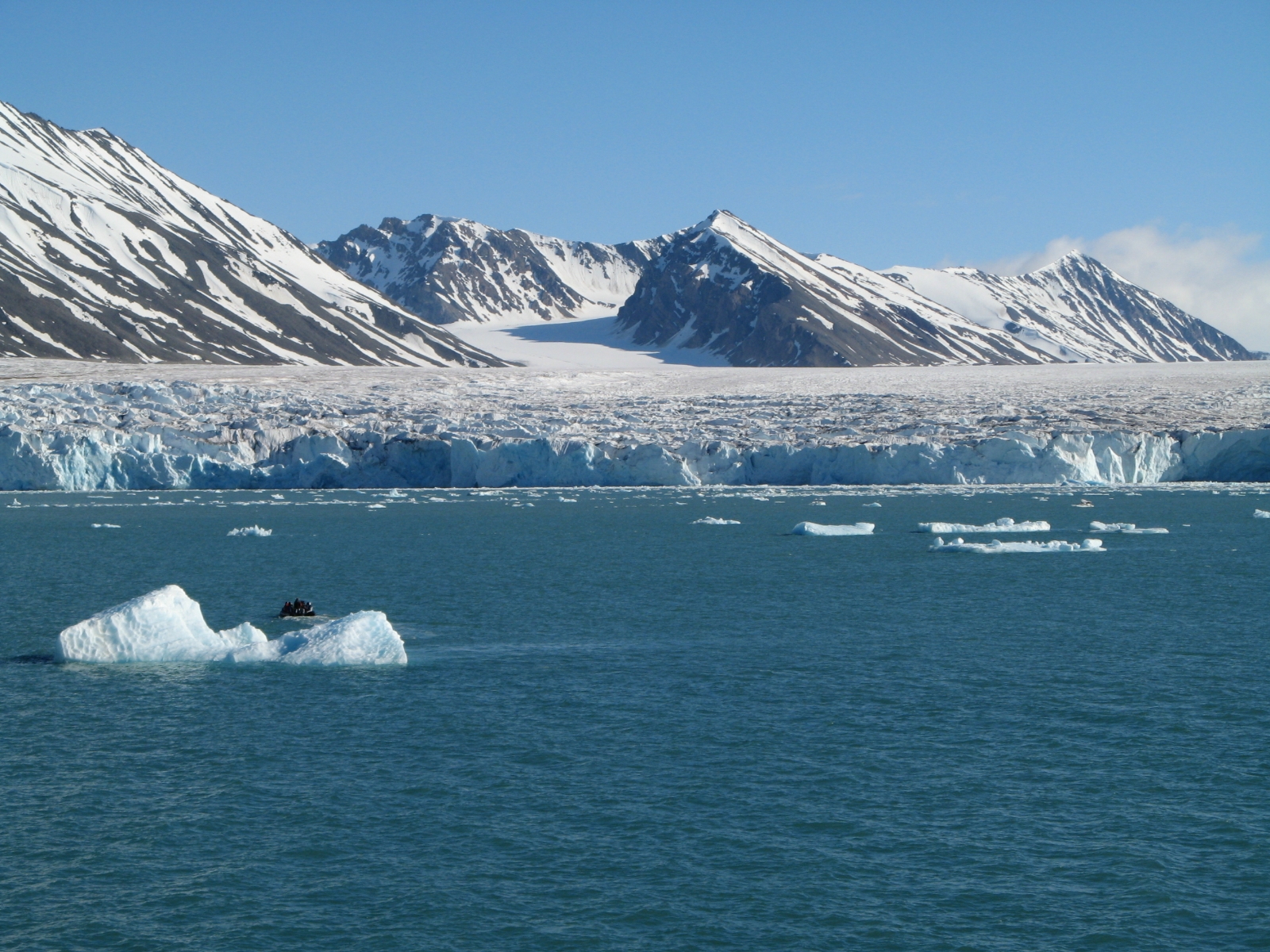
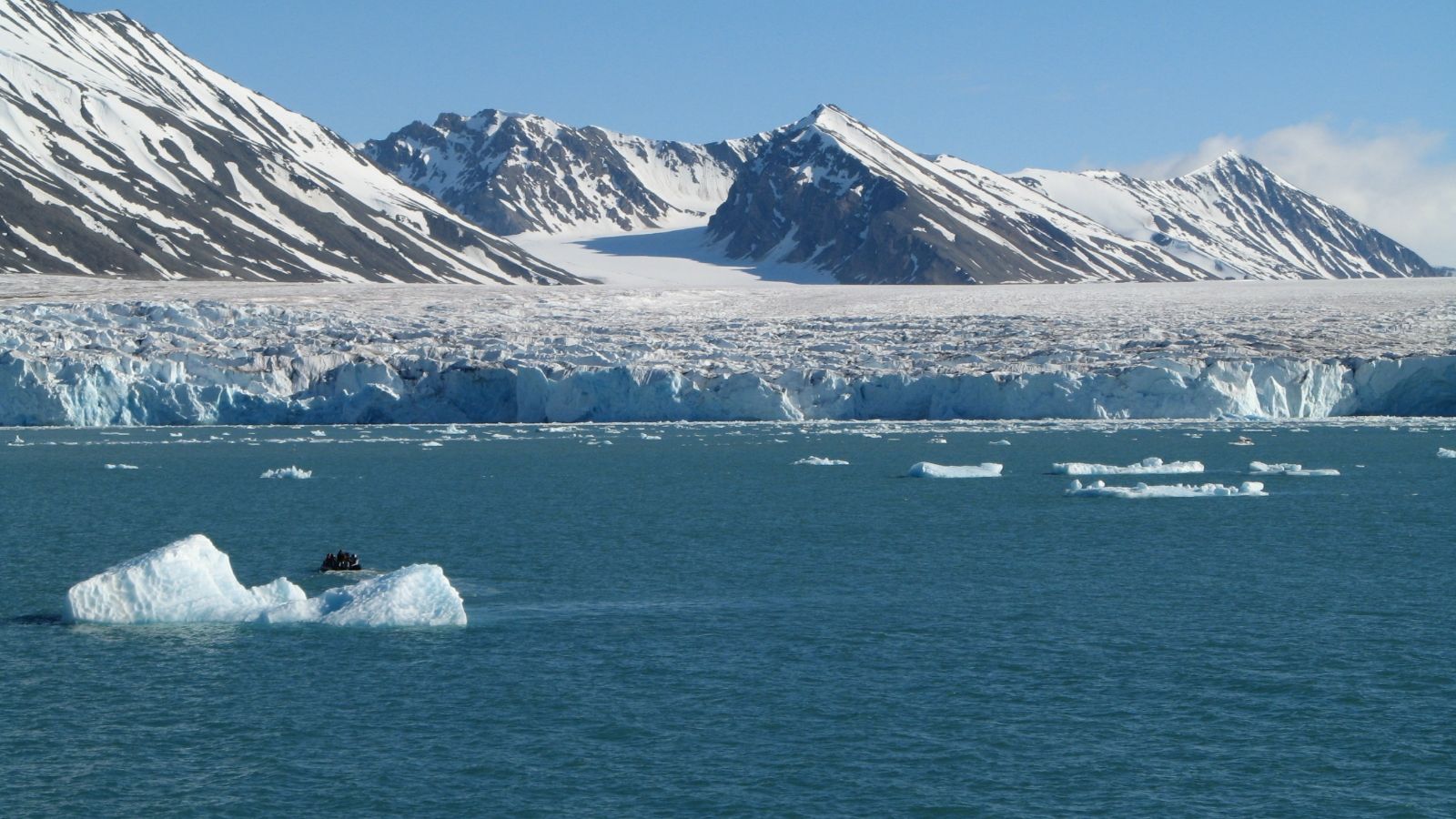
On a remote island at the northern tip of Norway rests one of the most well-guarded buildings in the world. It looks like a super villain’s hideout, a massive concrete and steel structure jutting out of an ice-covered mountain. But inside there’s not weapons of mass destruction or plans to sink Manhattan, it’s seeds. A lot of seeds.
Key Takeaways
- The Svalbard Global Seed Vault stores over 930,000 seed varieties for agricultural research and future food security.
- Vatican Secret Archives hold 12 centuries of documents, guarded by the Swiss Guard and Gendarmerie, with strict access protocols.
- Vladimir Putin’s security includes over 2,500 personnel, advanced transportation, and identical offices in secret locations.
- Fort Knox holds half of the U.S. gold reserves, secured by extensive measures including electrified fences and a 20-ton vault door.
- The Svalbard Seed Vault’s remote location and natural permafrost provide unique, stable protection for its contents.
There are over 930,000 varieties of food crop seeds stored here for humankind’s perseverance through scientific research. The collection comes from donations sourced from countries all over the world. All of these biological deposits are kept in specialty-sealed packets at -18 degrees Celsius (0 degrees Fahrenheit) and are guarded better than the Pentagon.
The Svalbard Global Seed Vault is located in Spitsbergen, Norway. Its main entrance is outside the mountain. The interior takes advantage of the geology as insulation, keeping the seeds at an ideally low temperature for long-term storage. Inside the complex are three large chambers, all fitted with different nuclear-proof doors. Behind those doors are the seeds that make up the global human food supply’s insurance policy.
Brian Lainoff, lead coordinator of the Crop Trust has said this in regards to keeping watch over humanity’s last hope:
“Inside this building is 13,000 years of agricultural history… The seeds don’t care that there are North Korean seeds and South Korean seeds in the same aisle. They are cold and safe up there, and that’s all that really matters.”
It’s not so much about replanting as it is about research. The seeds in this collection are extremely rare, some being the original source plants of grains we’ve genetically changed so much over the years for mass consumption, they don’t even resemble the original plants/produce. But by storing the ancestors of what we know today as corn, wheat, rye, etc, we have an invaluable link to a vegetation “Origin of the Species”— both for research and further genetic modifications, or, in a worst case scenario, to rebuild society after unthinkable global catastrophe.
So how is this vault so much more secure than places like the White House or Louvre? It’s all about location, location, location… It’s stationed on a frozen Norwegian island, far from human contact or conflict. The locale offers multiple layers of protection, as the mountain itself provides natural permafrost refrigeration, maintaining a naturally-low temperature to preserve the seeds inside. It’s also a region with stable geology: meaning the vault’s home experiences minimal threat of earthquakes, hurricanes, tornadoes, flooding, or other natural disasters.
Besides mountain protection, there’s plenty of advanced technological security: including armed guards, cameras, steel locking doors, reinforced concrete walls, and surveillance systems. There’s also minimal human visitation. You can’t visit, even if you want to. In fact the vault’s never been accessible to the public.
It’s only had items removed from inside six times since its founding in 2008. That’s because these non-GMO seeds are here mostly for research, think more of a genetic library than a gardening center. If we grow it and eat it, at any point in human history, a part of it is kept here for the research of the genes and biodiversity that make up the edible building blocks for humanity.
The Vatican Secret Archives
Vatican City may be the smallest country in the world (the entirety of it takes up less space than New York City’s Central Park) and home to just a couple hundred residents, but make no mistake; this country has its share of secrets to protect and it spares no expense in doing so.
Because inside the Vatican lies twelve centuries worth of secrets. They are scattered among 85 kms (53 miles) of shelved books and documents, a catalog spanning over 35,000 items, and unless you’re a religious academic over the age of 75, you are not allowed inside to have a poke around.
This is because the rumors of what lay inside are extreme, ranging from the ridiculous to damning. Some are supposedly controversial enough to damage the fabric of society as we know it. Despite rumors to the contrary, there is no proof that Christ ever existed inside the sanctum, but there are documents about everything from Nazi-collaborated time-travel machines (for a good time google “Chronovisor”) to a grand grimoire that includes instructions on how to summon Satan himself. There are also centuries of political, historic, and religious secrets that are far less sexy but probably more socially damaging…
The Vatican Secret Archives are a real life treasure trove of information the Pope and his peers feel is too much for the public to handle. And how seriously do they guard this museum of knowledge, confession, and intrigue? Really seriously.
The pope himself has a personal security force that travels everywhere he goes, thanks to the Swiss Guard, but Vatican City itself has what is adorably known as the “world’s smallest army” thanks to the service of the Corps of Gendarmerie. This is the Vatican’s own crew and includes roughly a hundred officers, 8 police chiefs, 16 police commissioners, 32 inspectors, 40 vice inspectors, and 94 gendarmes (soldiers). If you want to sign up to be a gendarme at the Vatican you have to be male, unmarried, between the ages of 21-24, and a practicing Catholic. And even then, as a member of the staff securing the city — you’re still over 50 years from being able to enter that church’s book bunker.
If you want to actually enter those secret archives, this is the protocol. You must apply in advance. If you meet all the necessary requirements and background checks, security will escort you to the archives. The entrance is guarded by armed members of the Swiss Guard.
If you are a scholar of appropriate age, you will be physically ushered to the three documents you already pre-requested. There is no lazy stack grazing like at a public library. You are not allowed to meander the aisles like a museum. Every moment you’re inside you’re monitored by chaperones, security cameras, armed guards, and (if you’re a believer) god himself.
And don’t try to sneak in your iPhone to snap some photos of what you saw. The Gendarmerie and Swiss Guard are both trained to confiscate any and all cell phones and personal devices from entering the sanctum. If you somehow manage to sneak in a phone, it doesn’t matter because under the floor is an electronic-jamming system, set to scramble and destroy any listening devices.
The church is paranoid of secrets escaping, because historically some do, like as recently as 2012 when an embarrassing leak from an anonymous cardinal got out, exposing scandals involving sexual bribery. Since then, every item and person, from delivered packages to heads of state that enter the conclave is meticulously searched, and they should be because the Vatican is constantly finding bugs planted by international spies.
Watch the Video
Open Video
Video Briefing
These are the Most Heavily Guarded Places on Earth
Wherever Vladimir Putin Is
Wherever Vlad is, there’s more security involved than possibly any other human being on the planet, and that includes Taylor Swift and the aforementioned Bishop of Rome. Vlad is constantly under the eye of the Presidential Security Service, the agency that traces its leadership and origins back to the USSR’s KGB. It employs over 2,500 people to do everything from body doubles to food tasting to security detail.
Most of the information we have about Putin’s security comes from the Beyond Russia website, which is run by TV-Novosti, a state-run media outlet. That website claims that Vlad’s bodyguards are hand-picked for their ability to not only handle operational psychology, but also possess superhuman abilities such as imperviousness to weather conditions. Vlad’s bodyguards are required to be unaffected by extreme cold or heat. You’re not allowed in if you break a sweat, ever.
Kremlin staff allegedly stake out places he will travel to months in advance, researching everything from locations for protective snipers and sweeping agents, to researching possible natural disasters that may occur during the timeframe he’ll be there.
His bodyguards have special bullet-proof briefcases they carry that both act as shields from possible assassination attempts and carry Russian-made 9mm pistols loaded with armor-piercing bullets. At least until they turn 35, at which point they are automatically retired from personal protection duty, but if they keep him alive as promised, they are often rewarded with government or military career posts.
Putin’s protection isn’t restricted to guards and research; his transportation might as well be a fort on wheels. Right now the current Presidential State Car is the Aurus Senat limousine. This car is custom-built to the Federal Protective Service’s needs, with plenty of offensive and defensive measures built in. Besides obviously being bulletproof, you can’t slash the tires, they are made of solid rubber.
And when he travels out of the country that same limo is air-lifted by transport aircraft to wherever he goes, so as to not risk driving in an insecure vehicle.
Possibly the most whimsical of all his security measures is his use of identical offices in multiple secret locations, because sometimes when he says he is in the Kremlin, he isn’t. But every office is furnished and decorated down to the smallest detail. If the Kremlin office has a new scratch on a picture frame or worn spot on a rug, everything is identical. Or so we have been told by defected officers.
Fort Knox
The first pieces of gold arrived at Fort Knox in 1937. Since then the Kentucky-based military complex has collected over 4 million kg (147+ million ounces) of gold, valued at over 300 billion dollars. This happens to be half of the United State’s bullion reserves, and the gold vault it’s located in is so heavily protected there aren’t any current photographs of inside it, the most recent is over 50 years old.
The fort’s security is unimaginable. The U.S. Treasury states that the fort is “equipped with the latest and most modern protective devices.” Which is a hilarious understatement, and the U.S. government has not shared what those protective measures are, but popular rumors include hidden land mines on the grounds, laser-triggered machine guns, and its own custom radar system that keeps tight tabs on the gold rush.
These security operations cost the US government over five million a year. The entire complex is surrounded by two separate electrified steel fences, both reinforced with a thick layer of concrete between them. Guards are posted at sniper posts in all four corners of the complex. The building itself is made with concrete-lined granite, which is also reinforced with steel to help withstand everything from natural disasters to direct missile attacks.
There’s also the added protection of the 40,000 soldiers, and their families that reside at the Fort Knox Army Post, making the fort complex the 4th largest city in the state of Kentucky, with its own emergency power plant, roadways, and water supply.
Now, if you did manage to get past the posted guards, trigger guns, landmines, and electric fences you’d be facing a vault door that weighs more than 20 tons of steel and concrete. And no single individual even knows how to get inside. Which is another layer of added security, meaning several people only know certain combinations, and they need to dial them in simultaneously in different locations to get inside. No other fort on US soil comes close to this level of security, which goes to show how serious the US government is about protecting its bottom dollar.
Key Takeaways
- The Svalbard Global Seed Vault stores over 930,000 seed varieties for agricultural research and future food security.
- Vatican Secret Archives hold 12 centuries of documents, guarded by the Swiss Guard and Gendarmerie, with strict access protocols.
- Vladimir Putin’s security includes over 2,500 personnel, advanced transportation, and identical offices in secret locations.
- Fort Knox holds half of the U.S. gold reserves, secured by extensive measures including electrified fences and a 20-ton vault door.
- The Svalbard Seed Vault’s remote location and natural permafrost provide unique, stable protection for its contents.
SideProjects Editors
The SideProjects editorial team researches, fact-checks, and structures explainers about the lesser-known tales, side narratives, and spin-offs behind major historical and contemporary subjects.
Frequently Asked Questions
What is stored in the Svalbard Global Seed Vault?
The Svalbard Global Seed Vault stores over 930,000 varieties of food crop seeds from countries all over the world. These seeds are kept in specialty-sealed packets at -18 degrees Celsius (0 degrees Fahrenheit) for long-term storage and research.
Why is the Svalbard Global Seed Vault considered one of the most secure places?
The Svalbard Global Seed Vault is considered one of the most secure places due to its remote location on a frozen Norwegian island, advanced technological security measures, and natural insulation provided by the mountain itself.
What kind of security measures are in place at the Svalbard Global Seed Vault?
The Svalbard Global Seed Vault has armed guards, cameras, steel locking doors, reinforced concrete walls, surveillance systems, and minimal human visitation. The vault’s main entrance is outside the mountain, and the interior takes advantage of the geology as insulation.
What is the purpose of the seeds stored in the Svalbard Global Seed Vault?
The seeds in the Svalbard Global Seed Vault are stored for scientific research and as an insurance policy for the global human food supply. They include rare varieties and the original source plants of grains that have been genetically modified over the years.
What is the Vatican Secret Archives and what does it contain?
The Vatican Secret Archives contain twelve centuries worth of secrets, including 85 kilometers of shelved books and documents, and a catalog spanning over 35,000 items. It includes political, historic, and religious secrets, as well as rumors of controversial documents.
How secure is the Vatican Secret Archives?
The Vatican Secret Archives is highly secure with armed members of the Swiss Guard, surveillance cameras, armed guards, and an electronic-jamming system under the floor. Access is strictly controlled and monitored, with visitors escorted and limited to pre-requested documents.
What security measures are in place for Vladimir Putin?
Vladimir Putin is protected by the Presidential Security Service, which includes over 2,500 people for body doubles, food tasting, and security detail. His security measures include hand-picked bodyguards with superhuman abilities, advanced transportation security, and identical offices in multiple secret locations.
What is stored in Fort Knox and how is it secured?
Fort Knox stores over 4 million kg (147+ million ounces) of gold, valued at over 300 billion dollars, which is half of the United States’ bullion reserves. It is secured with electrified steel fences, guards at sniper posts, a vault door weighing over 20 tons, and multiple layers of security combinations known only by different individuals.
How does the location of the Svalbard Global Seed Vault contribute to its security?
The location of the Svalbard Global Seed Vault on a frozen Norwegian island provides multiple layers of protection, including natural permafrost refrigeration, stable geography with minimal threat of natural disasters, and remote isolation from human contact or conflict.
What are the access protocols for the Vatican Secret Archives?
To access the Vatican Secret Archives, one must apply in advance, meet necessary requirements and background checks, and be escorted by security. Visitors are limited to pre-requested documents and are monitored by chaperones, security cameras, and armed guards. Personal devices are confiscated and an electronic-jamming system is in place.
Sources
- Original Side Projects video: These are the Most Heavily Guarded Places on Earth
- Hero image source by Paul / openverse, by-sa.