

Science is constantly evolving thanks to the hard work of dedicated researchers. It is important to test our assumptions and theories in an attempt to disprove them, thus providing stronger evidence that they are true. But sometimes, researchers go a little too far.
There are a lot of highly detailed scientific studies published every year, and there are a fair number of them that probably didn’t need to happen in the first place. Today we’ll be looking at some of the most pointless scientific studies that sought to prove things that didn’t really need proving.
Bullies Like Hurting People
In 2009, researchers out of the University of Chicago published a paper titled “Atypical empathic responses in adolescents with aggressive conduct disorder: a functional MRI investigation”. It’s an extremely accurate title, albeit not a particularly catchy one.
Key Takeaways
- Researchers sometimes conduct studies that confirm obvious facts, such as bullies enjoying inflicting pain.
- MIT’s Oreo study revealed that splitting the cream evenly is nearly impossible, confirming common experience.
- A study confirmed that people dress based on current weather, not past patterns, which was already widely known.
- Sword swallowing research concluded that it can hurt the throat, a fact already known to sword swallowers.
- The ‘universal law of urination’ study found that mammals over 3kg take about 21 seconds to urinate, but this has limited practical use.
The study consisted of two groups of adolescents. The first group had aggressive conduct disorder, which is a roundabout way of saying they were bullies. Their conduct included the sort of things you would expect, like starting fights and stealing from their victims. There was also a control group of similarly aged adolescents that did not have this condition.
Both groups were hooked up to an fMRI and showed various video clips of people being injured. It was an extension of previous research performed earlier that year by the same team that showed children are naturally empathetic towards people in pain. In that first study, when children aged 7-12 saw someone accidentally injured, the MRI showed activity in the portion of their brain that registers pain; they were essentially feeling that person’s pain. When they saw someone who was intentionally hurt by another person, their social interaction and moral reasoning centers lit up.
This is pretty much what you would expect from a person with some level of empathy, and it was the same response that the control group in the second study had when watching clips. The bullies, however, reacted in a completely different way.
When the bullies saw a video of someone being intentionally injured by another person, their amygdala and ventral striatum were activated. This is the part of the brain responsible for reward processing, indicating that the sight of pain being inflicted on another person was a pleasurable and rewarding experience for them.
The methodology was good and results are more than a little bit compelling, even if their sample size was small. However, what did we actually learn? All of that research leads to the final conclusion that bullies enjoy hurting other people, but we already knew that. If they had a typical empathetic response to seeing other people in pain instead of enjoying it, they probably wouldn’t go around hurting people.
MIT Researches the Perfectly Split Oreo
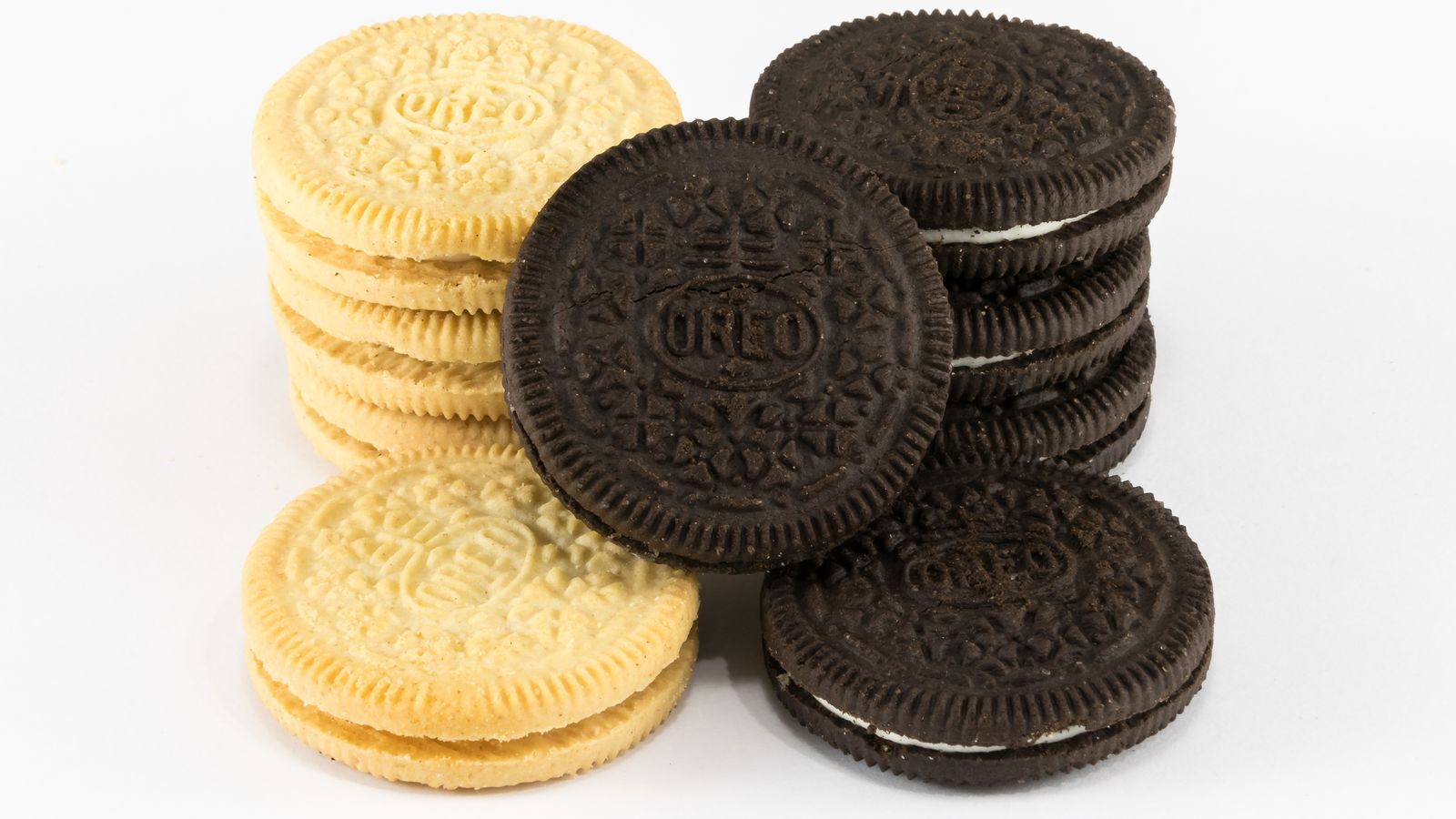
Cookie connoisseurs know that there are two popular ways to eat an Oreo. The first is to dunk it in milk. It’s simple, but effective. Possibly more common, and the method that Oreo cookie recommends, is to twist the Oreo apart leaving you with two chocolate wafers, each with some vanilla frosting on them.
At least that’s the idea, but in practice it doesn’t always work out that way. All too often, a person finds that all of the cream winds up on one cookie or the other once they are twisted apart. The vice president of Oreo claimed that there was no secret method to twisting apart their cookies, but researchers at MIT wanted to find out if that was really the case.
Sometimes you see the story of a scientific experiment, and it turns out that it was really an analog for something else. It sounded ridiculous at first, but they were just doing this seemingly silly thing as a simple means to test something more complicated. This was the total opposite of that, where someone got distracted from their actual research to work on something silly instead.
While working on her PhD, Crystal Owens regularly used a rheometer, a device with two metal plates rotating in opposite directions, to study how fluids respond to twisting forces. One day in 2021 she realized that this was exactly the same motion as trying to twist apart an Oreo cookie, so she and her colleagues got to work testing over 1,000 Oreos of various flavours to try to find the perfect settings to split the cream evenly between the two cookies.
Things with similar mechanical properties to Oreo’s cream filling like toothpaste and ice cream would always split down the middle when enough twisting force was applied, but the same could not be said for Oreos. No matter what speed or technique was used, in 80% of attempts all of the filling stuck to one cookie.
Following the research, a paper was published in Physics of Fluids under the title “On Oreology, the fracture and flow of ‘milk’s favorite cookie®’”. The name was meant as a pun, as the rheometer is used in rheology, the study of the deformation and flow of matter. Crystal and her team even developed plans for a 3D printed “Oreometer” that people can use at home to try twisting apart Oreos themselves, hoping it will help get people interested in physics.
So what did we learn from all this? From the initial study, we didn’t really learn anything. The phenomena of an uneven distribution of Oreo cream across the cookies that has annoyed millions of people for decades is entirely unavoidable, but we had all pretty much figured that out on our own.
However, a subsequent study out of the University of Groningen in the Netherlands did find something a bit interesting. Physicist Thomas Schlathölter had his students try to replicate the MIT experiment with a shocking result: they were easily able to split the filling evenly across both cookies. This means that either European Oreos have a different formula for the cream or some difference in the manufacturing process results in the cookies having different physical properties.
Of course, that still doesn’t really teach us anything. While most people may have been unaware that Oreos specifically were different in Europe, that these sorts of differences exist is broadly known. For example, most people in the United States can probably tell you that Mexican Coca-Cola uses sugar instead of high fructose corn syrup; many could even tell you what local stores stock Mexican Coke.
The twisting of 1,000 Oreos may have been a pointless distraction from the work Crystal was actually supposed to be doing, but it fortunately did not stand in the way of her completing her PhD the following year.
People Dress Warm in Colder Weather
In investment and commodities, there is a term known as “price memory”. The basic idea is that it is difficult for a price to be pushed above an established high or below an established low because people remember and associate that price as being either the floor or ceiling.
But in 2007, researchers sought to investigate whether or not people also have some sort of “weather memory”. Scientists from the University of Padova in Italy and the University of Denmark combined their efforts to investigate this potential phenomenon and track how people responded to the weather in a paper titled “People’s clothing behaviour according to external weather and indoor environment”. Previously collected data from across 30 cities worldwide was carefully analyzed in an attempt to solve this burning question.
The data included a few key observations: how much clothing a person wore, the outside temperature throughout the day, whether they were male or female, and whether or not they worked in a climate controlled building. After publishing their 10 page paper full of charts and graphs, the researchers were able to publish their conclusion: people dress themselves based on the current weather rather than making predictions based on previous weather patterns.
They found that there was no difference between men and women, and that the temperature at 6 am was the best indicator for how much clothing a person would wear that day. This meant that people were basing how much clothing to wear on a given day on how cold it was outside at the time that they got dressed; the indoor temperature was completely disregarded in their decisions.
Watch the Video
Open Video
Video Briefing
Most Pointless Scientific Studies
While people who worked in unventilated buildings would generally stick with their decision throughout the day as the indoor and outdoor temperatures were comparable, those that worked in climate controlled buildings would make “clothing adjustments” throughout the day.
This research provides strong evidence to support the theory that people dress warmer when it’s cold outside, but that they will also remove a layer or two throughout the day if they start to get too hot. Thanks, science.
Swallowing Swords Can Hurt Your Throat
First published in the British Medical Journal in 2006, Brian Witcombe’s paper titled “Sword swallowing and its side effects” was enough to earn himself the 2007 Ig Nobel Prize for medicine.
The first sentence of the introduction in Brian’s paper reads, “Sword swallowers know their occupation is dangerous.” Everybody else knows that too so the paper probably could have ended there, but he decided to take this research further.
To conduct this study, Brian sent letters to 110 members of the Sword Swallowers’ Association International. The letter requested access to SSAI’s data, though most of the information used in the study was from questionnaires filled out by the swallowers. No medical questionnaire was included, but respondents were invited to provide information about any medical issues that had arisen as a result of their sword swallowing.
In addition to any medical issues that were volunteered, the data being collected included the person’s height, maximum sword length they could swallow, how and at what age they learned the technique, and how many swords they had swallowed in the previous three months. Though Brian acknowledged that this research relied on the memories and honesty of those that responded, he believed it was more likely they would have downplayed any injuries rather than exaggerating them.
While there were a few instances of perforations involving the esophagus, the most common side effect reported was a sore throat. These side effects were most common when the sword swallower was inexperienced, performed too often in a short period of time, or was swallowing an oddly shaped sword. More serious injuries were most likely to occur when the performer was distracted or swallowing too many swords at once.
And none of this should be surprising. The conclusion was that swallowing a sword can hurt your throat, and it is more likely to do so if you are inexperienced. The most interesting observation to come out of this study is that there was no apparent correlation between a person’s height and the maximum length of a sword they could swallow. That’s still not particularly useful information, but at least it wasn’t something so obvious.
The Universal Law of Urination
Another Ig Nobel prize winner, this time for the 2015 prize in physics, was a study out of the Georgia Institute for Technology. The team of researchers sought to answer the burning question that has been on the forefront of everybody’s minds: how long does it take to pee?
While the data collected resulted in a lot of extremely complicated math involving gravity and fluid dynamics, their methodology was really simple. The research team went to the Zoo Atlanta with a high speed camera and filmed 16 different animals urinating. Another 28 different animals were observed through YouTube videos, and the mass of each animal was taken from their annual veterinary procedures.
Animals whose masses covered a range of five orders of magnitude were inspected, and the results were pretty surprising. It had previously been assumed that the rate of urination was somehow a function of mass and the amount of pressure that could be placed on the bladder, but this turned out not to be the case. According to the research, it takes all mammals with a mass of 3kg or more 21 seconds to empty their bladder.
The theory is that this is because larger animals have longer urethras. As the fluid enters the urethra from the bladder, the weight of the fluid acts with gravity allowing the overall flow rate to increase by the time it exits the urethra. While this is expressed through the use of a series of complicated physics equations, it is still just a conjecture.
It may have been shown that all mammals urinate in 21 seconds, but if we want to be sure why this is true then additional research will be required. Of course, that assumes that we really need to know why this is the case.
Oh, it’s probably not even worth mentioning, but there was one other small caveat in the findings of this study. While the researchers mostly used 21 seconds as the urination time throughout their paper, their actual findings were that the time to empty the bladder was 21 seconds give or take 13 seconds, meaning a range of 8 to 34 seconds. It was already unclear whether this study was going to be useful in any way, but given that tiny extra detail it seems almost certainly pointless.
Yawning Not Contagious Among Red-Footed Tortoises
Everybody knows that yawning is contagious amongst humans, but we still don’t know exactly why. While a lot of research has already been conducted to try to explain this phenomenon, in 2011 researchers from the University of Vienna decided to tackle the problem from another angle.
Originally published in Current Zoology, their research inspected the behaviour of another animal in the hopes it would help us better understand what’s happening with humans. You can probably guess how successful they were based on the title of the paper, “No Evidence of Contagious Yawning in the Red-Footed Tortoise”.
But the researchers wanted to be absolutely positive about that fact before publishing their paper, which is why they conducted three different experiments. In the first test, a tortoise was conditioned to yawn whenever it was shown a red square. They measured the frequency of yawns in the other tortoises but found there was no difference regardless of whether or not they were observing the tortoise that was conditioned to yawn on command.
That was fairly compelling evidence, but the researchers needed to be sure. After all, maybe the other tortoises hadn’t seen the trained tortoise yawning. They conducted the experiment again with a large increase in the number of times they had their trained tortoise yawn on command, but again there was no change in the frequency of the yawns in the other tortoises.
Okay, so they definitely saw the yawning taking place this time, but it was a fake yawn. Perhaps the other tortoises could tell that the yawn was fake and thus they weren’t mimicking the action, even though fake yawns from humans are generally regarded as still being contagious.
One final attempt was made, this time exposing the tortoises to videos of the fake yawning tortoise, videos of a tortoise yawning for real, and a blank background. Again, there was no meaningful difference in the frequency of yawns that occurred after being exposed to the three different categories of videos.
The conclusion was clear: yawning is not contagious among tortoises. Or at the very least, not among this very specific species of tortoise. Unfortunately, this doesn’t really tell us much of anything useful. It was already known that, within the Great Apes family, humans, chimpanzees, and orangutans all experience contagious yawning while gorillas do not. It was also known that dogs, who share far less DNA with humans than tortoises do, experience contagious yawning not only from each other but from humans.
So if we already knew that some animals yawn contagiously and some don’t, what was the point of this? That is a fantastic question, and one that we wish we could give you an answer to.
Key Takeaways
- Researchers sometimes conduct studies that confirm obvious facts, such as bullies enjoying inflicting pain.
- MIT’s Oreo study revealed that splitting the cream evenly is nearly impossible, confirming common experience.
- A study confirmed that people dress based on current weather, not past patterns, which was already widely known.
- Sword swallowing research concluded that it can hurt the throat, a fact already known to sword swallowers.
- The ‘universal law of urination’ study found that mammals over 3kg take about 21 seconds to urinate, but this has limited practical use.
SideProjects Editors
The SideProjects editorial team researches, fact-checks, and structures explainers about the lesser-known tales, side narratives, and spin-offs behind major historical and contemporary subjects.
Frequently Asked Questions
What did the study on bullies and empathy reveal?
The study found that bullies with aggressive conduct disorder activated the reward-processing parts of their brain when seeing others in pain, indicating they found it pleasurable. This contrasted with the control group, who showed typical empathetic responses.
What was the main finding of the MIT study on splitting Oreos?
The study concluded that it is nearly impossible to split the cream filling of an Oreo evenly between the two cookies, as 80% of the time all the filling sticks to one cookie.
What did the study on people’s clothing behavior in relation to weather find?
The study found that people dress based on the current weather, specifically the temperature at 6 am, and will adjust their clothing throughout the day if they work in climate-controlled environments.
What were the most common side effects reported by sword swallowers?
The most common side effect reported was a sore throat, particularly among inexperienced performers or those swallowing too many swords at once.
What did the study on urination in mammals reveal?
The study found that mammals with a mass of 3kg or more take approximately 21 seconds to empty their bladder, regardless of their size.
What was the outcome of the study on contagious yawning in red-footed tortoises?
The study concluded that yawning is not contagious among red-footed tortoises, as there was no increase in yawning frequency when exposed to other yawning tortoises.
What did the researchers find about the distribution of Oreo cream in European Oreos?
A subsequent study found that European Oreos could be split evenly, suggesting a difference in the cream formula or manufacturing process.
What was the purpose of the study on sword swallowing?
The study aimed to document the side effects and dangers of sword swallowing, confirming that it can hurt the throat and cause more serious injuries in some cases.
What did the researchers conclude about the universal law of urination?
The researchers concluded that all mammals with a mass of 3kg or more take about 21 seconds to urinate, due to the physics of fluid dynamics and gravity in longer urethras.
What was the significance of the study on people’s clothing behavior in relation to weather?
The study provided evidence that people dress warmer when it’s cold outside and adjust their clothing throughout the day based on indoor temperatures, particularly in climate-controlled environments.
Sources
- Original Side Projects video: Most Pointless Scientific Studies
- Hero image source by Jacek Halicki / openverse, by-sa.