

Our planet is chock full of weird and fascinating creatures that mystify and amaze us. Whether it’s the marvellous blue whale, the graceful deer or the humble dog, they provide us questions that we’ve spent millennia trying to answer.
And for all our human science and biology skill, there are still things about animals that we don’t know. And more than that, there’s things we think we know about animals, but that we actually get wrong all the time.
And that’s what we’re talking about today. We’re going to run through myths about animals that you may think are true. But in reality, they’re nothing more than the contents of a male cow’s behind. Get ready to have your mind blown.
Key Takeaways
- Elephants are cautious of small, sudden movements, not specifically afraid of mice.
- Mother birds do not abandon their babies if touched by humans.
- Camels store fat, not water, in their humps to regulate energy and temperature.
- Bears enter a state of torpor, not true hibernation, allowing for easier awakening.
- Daddy longlegs spiders are not venomous to humans and cannot bite through skin.
9. Elephants are Terrified of Mice
It’s one of the most common animal tropes ever. That the powerful elephant, the matriarch of the savannah, can stand up to rhinos, lions and all kinds of nasty predators, but they’re deathly afraid of these tiny little rodents.
The myth’s origins traces its way back to ancient Greece, where Pliny the Elder’s eighth book on the history of nature first mentions this now verifiably untrue phenomenon. When referencing elephants, it reads, quoting here; “Of all other living creatures, they cannot abide a mouse or a rat”. The story goes that mice are so small, that they could easily climb inside an elephant’s trunk or nibble at their feet, and that such discomfort causes them to be instinctually afraid of them.
But it’s actually the element of surprise they don’t like. Elephants are naturally cautious creatures and the shock of anything small darting out from the undergrowth, and scurrying around their feet would cause them to panic. Experts agree, Josh Plotnik, a researcher of elephant behaviour and intelligence at the University of Cambridge stated in an interview with Live Science that; “In the wild, anything that suddenly runs or slithers by an elephant can spook it.”
Elephants often share habitats with venomous snakes and uneven terrain, so they’re famously careful where they step. They’re also empathetic enough not to just step on an animal for no reason, especially if it poses them no harm.
So, elephants wouldn’t like to come across any small animal unexpectedly, but the idea that a single mouse could send an entire herd running for the hills is pure fiction.
8. The Baby Bird Myth
It’s the one you hear in schools and bars across the countryside, if you find a baby bird that’s fallen out of its nest, you must leave it alone, or it’s mother will reject it, dooming it to a life of orphanhood and potentially death. But this simply isn’t the case.
Most people think that the human scent is what will cause the mother bird to abandon its child, but according to Wildlife Biologist Elizabeth Manning who works at the Alaska Department of Fish and Game, most birds can’t even smell that well, so unless you REALLY stink, they might not have even known you were there.
To prove this, you don’t even need to look at birds. Manning reports that any baby animal in captivity, when handled by biologists doesn’t seem to bother its parents when returned to them. Mother birds will only abandon their nests if disturbed by humans or predators. The reason you should leave baby animals, including birds, alone is because of the chance of disease, or an overprotective mother waiting nearby, so if anything, the opposite logic is true.
In reality, touching a baby bird wouldn’t cause its mother to abandon it any more than your own mother would abandon you if a bird touched you.
7. Camels Store Water in Their Humps
You’ve all seen camels, the humped sand dwellers that roam across the vast deserts of earth, highly adapted to the arid environment in which they live. As such, many over the years have been led to believe that camel’s iconic humps are filled with water. This makes sense as having a large store of water is advantageous in such a dry climate. But this would be wrong.
In fact, a camel’s hump doesn’t hold water at all, but fat. Energy-rich fat deposits allow the camel to sustain its energy supply in a place without much food to go around. By placing all of it’s fat in a hump away from the rest of its body, it allows the camel to stay cool in a hot climate, as fat is really good at keeping things warm, and that’s not exactly what you want in the desert during the day. Having a big lump of fat on their backs also helps protect the rest of their bodies from the harsh sun.
So where do camels store their water if not in their humps? Camels can drink dozens of gallons of the stuff at a time, so it has to go somewhere, right? That’s right. It’s actually kept in their bloodstream. Camel’s red blood cells are specially adapted to hold water and ensure a continuous flow when dehydrated. This means they lose less water from sweating, which is advantageous in the desert.
So, camels’ bodies are designed to retain water, but think of a hump less like a waterbed, and more like a boob.
6. Bears Hibernate
Yep, you heard that right. The idea that bears hibernate is a myth. Whilst bears were previously thought to hibernate for all of winter, this simply isn’t true.
But the concept of a bear sleeping in its den during the winter months surely must come from somewhere? And it does. Hibernation involves an animal sleeping throughout the entirety of winter, relying on their reserves of fat built up during the year to see them through until the thaw in the spring, when food becomes more readily available again.
Instead of hibernating, bears enter a similar state known as “torpor”. Just like in hibernation, their body temperature decreases, their heart and breathing rates drop and thy don’t eat or pass any waste. So how is it any different?
Well unlike in hibernation, torpor allows for the animal to wake up much more easily, and its much shorter term, only lasting for hours, days or weeks, as opposed to months of sleep at a time. It can last longer for bears, even up to 100 days, but the sleep isn’t as deep and can be interrupted if the bear is disturbed, hurt or in danger, which doesn’t occur during hibernation. For example, a bear will exit its den during torpor if the opportunity to feed presents itself, whilst a mother bear would wake to give birth and take care of her cubs during torpor, which would be impossible for true hibernators. In short, hibernation is like a more intense version of torpor.
So yes, the idea that bears hibernate for all of winter in an unawakenable slumber isn’t true, but it’s not a million miles away. That’s why people always warn never to go near a hibernating bear, because it’s not hibernating at all and could actually wake up very quickly.
5. Daddy Longlegs are the Most Venomous Spiders in the World
Watch the Video
Open Video
Video Briefing
Myths about Animals You Probably Still Believe...
Yes, these tiny, spindly critters that you find in the corner of your bedroom are believed to be some of the deadliest spiders in the world. The myth goes that the humble daddy longlegs could kill a person, housing the most powerful venom on earth, but its teeeeeny tiny fangs aren’t long enough to pierce skin.
It might be something you believed to be true as a child, but the reality is the world’s deadliest spider isn’t living in your house… unless you live in Australia. Daddy longlegs actually describes three different species of creepy critter. The first, a harvestman, is not considered a true spider and has no venom of any kind. The second, crane flies, are deeply annoying but also carry no venom whatsoever.
The third are Pholcid spiders and like almost all true spiders they do carry venom, but according to the Burke Museum, their venom was found in a recent study to only have a weak effect on insects. It stands to reason then that it’s unlikely to kill a human.
According to the College of Natural and Agricultural Sciences, “There is no reference to any pholcid spider biting a human and causing any detrimental reaction”. And whilst their fangs are small enough not to be able to puncture human skin, Pholcid spiders wrap up their prey in webs rather than just poisoning those that wander too closely. You can sleep soundly at night knowing this one is pure nonsense from every angle.
4. Bats are Blind
You’ve probably heard the phrase “as blind as a bat” at least once in your life. Combine this with the fact many bats use echolocation to navigate, and often live in low light areas like caves, and you’d be led to believe that all bats are totally and utterly unsighted. But you’d be wrong.
In fact, the opposite is actually true. All bats can see and because they’re accustomed to low light conditions and are largely nocturnal, their eyes see better in the dark than humans’ do. The cells in our eyes, called rods and cones, help us to see. Rods in particular help us see in dark conditions. Humans have around 150,000 rod cells per millimetre squared in our eyes. According to Bat Conservation International, bats have between 300,000 and 800,000 depending on the species.
What’s more is that some bats can see parts of the light spectrum that we can’t, including ultraviolet light. It’s true that bats rely heavily on their other senses such as their sensitive hearing, to find food, avoid predators, and travel, but the notion that they can’t see is simply untrue.
So, you might want to tell someone the next time they call you “as blind as a bat”, that it’s actually a compliment.
3. Porcupines can Shoot their Quills
You’ve heard the warnings before, if you ever come across a porcupine in the wild, you should stand well back. As these spiny herbivores can fire their quills out like little missiles, impaling any creature unfortunate enough to get close.
Except… that’s just a myth. And when you understand a little more about porcupines and their quills you can see why. The conservation organisation Mass Audubon states that the myth may have arisen from when people saw porcupines’ shake off their loose quills and simply jumped to conclusions that they could fire them at things.
The reality is, that a porcupine’s quills are stiff, hollow hairs with microscopic barbs on them. Porcupines lay them flat most of the time, but when threatened, they stand them on end to appear larger and protecting them from becoming a meal. They’re loose by design, detaching easily into the face and paws of any potential predator who tries to eat them. The shock of being barbed will often surprise attacking animals, convincing them that the porcupine is not a worthwhile snack.
They’re defensively very effective, but a short distance is sufficient not to get barbed.
2. Pandas are too Lazy to Mate
Everyone’s heard it, scientists have been talking about it for decades. Giant pandas are dying out because they’re too lazy to get it on. They spend so much time eating bamboo and sleeping that they just don’t have the will to get busy. Although it can’t be easy with zookeepers watching you all the time.
However, this is actually something of a misconception. It’s true that pandas in captivity do struggle to mate, they have phantom pregnancies and can often become apathetic. And having an ideal environment apparently doesn’t help, but it’s not because they’re lazy. It’s because they’re picky.
Because there are so few giant pandas, when they’re selected to breed by conservationists, they’re often chosen on the lowest level of genetic similarity for health reasons, rather than attraction, but this often means only one mate is chosen for them, talk about a small dating pool. But when pandas are presented with a choice of mates, scientists have discovered that they’re almost twice as likely to mate with the one they showed more interest in, even if it had more similar genetics. And when male and female pandas presented attraction between each other, it resulted in a 75% success rate in producing cubs.
Problems do persist, as pandas are only fertile for a very short time each year, but it’s not down to laziness, as most female pandas do attempt to mate when fertile. It’s all about the laws of attraction.
Like with us humans, it just has to be the right partner.
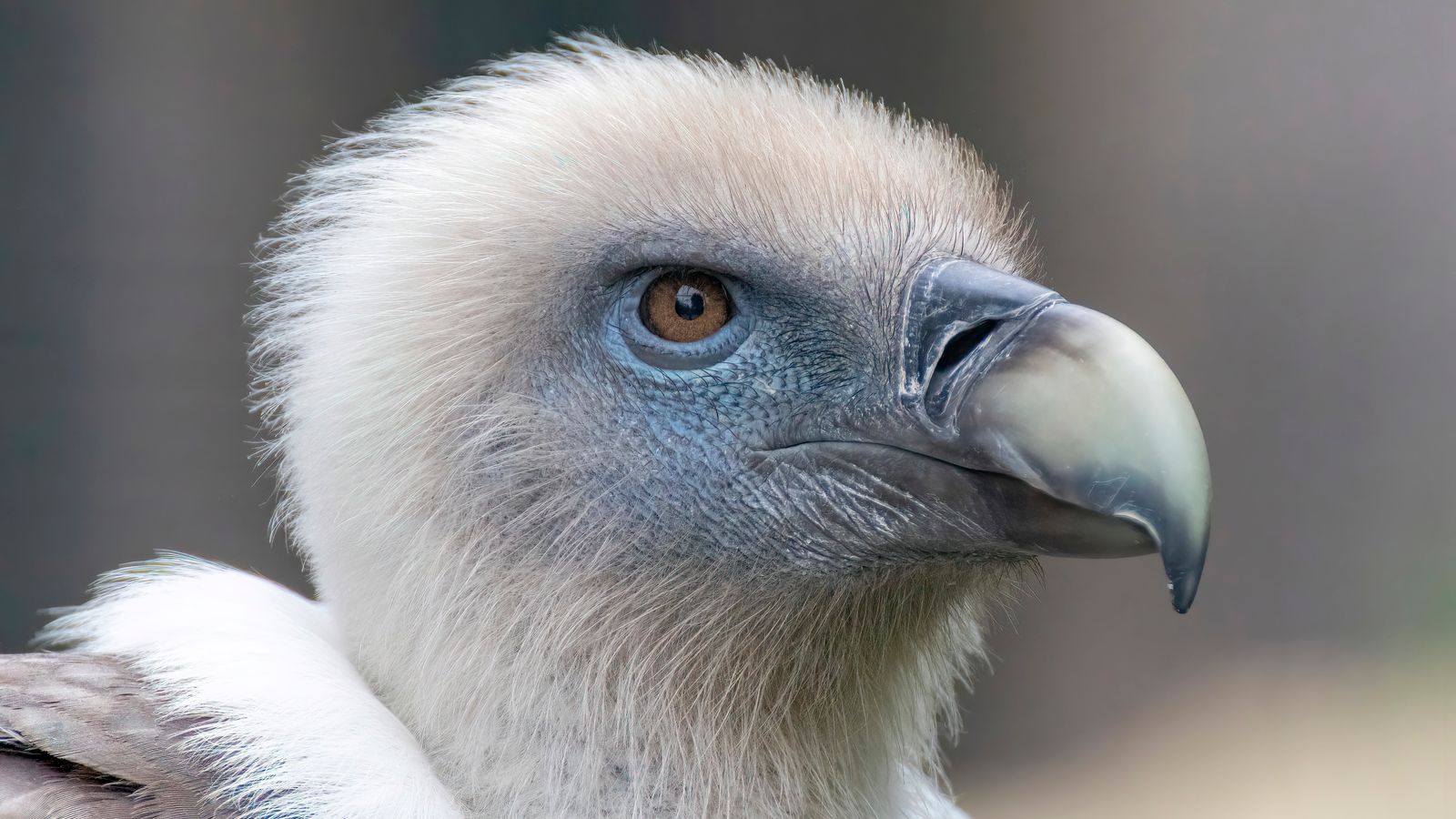
1. Vultures Know When You’re Going to Die
Picture this, you’re stranded in the desert, you’ve been walking for days, you’re almost out of water and there’s no end in sight. You look up and you see large birds circling above you. Vultures, just waiting for you to drop dead so they can feast on your carcass.
Except… that’s not what they’re doing.
It makes sense in theory, vultures feed off of dead animals and seeing a creature that looks like it may soon die could provide an easy meal if they just wait a while. But it’s not that vultures know when something is going to die, they know where they’re going to die. A study conducted by Columbia University outfitted 39 birds from three vulture species with GPS trackers to see where they went.
During the dry season, they followed herds of wildebeests, when they’re more likely to die from starvation. During the rainy season though they preferred to roam dry areas with little vegetation, as animals who stary into those areas are likely to die there.
So why do they menacingly circle overhead? Well vultures, as large birds who scavenge a lot, travel long distances and need to conserve energy. They use rising hot air columns to give them lift by circling within them, which allows them to soar for long distances. Basically, they’re not evil opportunists, they just go where the food is, same as any other animal.
Conclusion
And there you have it, some common and not so common myths about animals that you hopefully no longer believe to be true. Most of the time people learn these myths through word of mouth, and because they sound plausible at the time, there’s no real reason to assume they’re not, but now you know better.
So next time your mate Dave is telling you down the pub that he saw a porcupine shoot its quills, or that camels definitely store water in their humps because he saw it once (whatever that means) you can show him this article and assure him that he is sorely mistaken, and then laugh at him.
We hope you learned something today.
Key Takeaways
- Elephants are cautious of small, sudden movements, not specifically afraid of mice.
- Mother birds do not abandon their babies if touched by humans.
- Camels store fat, not water, in their humps to regulate energy and temperature.
- Bears enter a state of torpor, not true hibernation, allowing for easier awakening.
- Daddy longlegs spiders are not venomous to humans and cannot bite through skin.
SideProjects Editors
The SideProjects editorial team researches, fact-checks, and structures explainers about the lesser-known tales, side narratives, and spin-offs behind major historical and contemporary subjects.
Frequently Asked Questions
Are elephants afraid of mice?
Elephants are not specifically afraid of mice. They are cautious creatures and can be startled by small, sudden movements, but the idea that a mouse could send an entire herd running is a myth.
What is stored in a camel’s hump?
A camel’s hump stores fat, not water. The fat provides energy and helps the camel stay cool in hot climates.
Do bears truly hibernate?
Bears do not hibernate in the strict sense. Instead, they enter a state called torpor, which is similar but allows them to wake up more easily and for shorter periods.
Are daddy longlegs the most venomous spiders?
Daddy longlegs are not the most venomous spiders. The term refers to three different species, none of which are deadly to humans. Their venom is weak and their fangs are too small to pierce human skin.
Can bats see?
Yes, bats can see. They have excellent vision, especially in low light conditions, and some species can even see ultraviolet light.
Do porcupines shoot their quills?
Porcupines do not shoot their quills. The quills are loose and detach easily when a predator comes into contact with them, but they do not actively shoot them.
Why do pandas struggle to mate in captivity?
Pandas in captivity struggle to mate due to their pickiness and the limited selection of mates. They are more likely to mate with partners they show interest in, regardless of genetic similarity.
Do vultures know when someone is going to die?
Vultures do not know when someone is going to die. They circle overhead to conserve energy by riding thermal currents and are attracted to areas where animals are likely to die.
Will a mother bird abandon her baby if touched by humans?
A mother bird will not abandon her baby if touched by humans. Most birds have a poor sense of smell and are more likely to abandon their nests if disturbed by humans or predators.