
The Propaganda You Don’t See
When we hear the word propaganda, we picture state-controlled media, brainwashed citizens, and dictators who silence dissent. We think of North Korea, The Soviet Union, Russia, and Nazi Germany—places where the government controls every word, every thought, every belief.
It’s easy to roll your eyes at blatant propaganda and wonder how on earth people fall for it. In the West, we like to believe we’re free thinkers and that our opinions are our own. But what if they’re not? What if the things we believe—the wars we support, the products we buy, the leaders we trust—aren’t based on facts but on carefully crafted illusions?
The West has perfected propaganda. It’s more subtle, sophisticated, and far harder to recognise. It doesn’t scream at you from a dictator’s podium—it whispers from your TV, news feed, and favourite movies. And that’s what makes it so dangerous. The greatest trick of propaganda is making you believe you’re too smart to fall for it.
Key Takeaways
- Western propaganda is subtle, sophisticated, and often goes unnoticed.
- Governments and corporations manipulate media, advertising, and entertainment.
- Historical events like the Gulf of Tonkin and Iraq War were justified through propaganda.
- The financial system and education are designed to maintain control and compliance.
- Big Pharma and the news cycle exploit fear to shape public opinion and behavior.
1. Operation Mockingbird – The CIA’s Control Over the News
OK, in 2025, you don’t need to look too far for confirmation that governments play a key role in the media we’re shown, but back in the 1950s, things were very different. There was respect for the news—a trustworthiness.
During the Cold War, the CIA launched Operation Mockingbird, a covert program designed to infiltrate and manipulate the Western media. By the 1950s, the agency had placed hundreds of journalists on its payroll, embedding them in some of America’s most trusted news outlets—The New York Times, The Washington Post, Time Magazine, and many more. Their job wasn’t to report the truth. It was to shape it.
The CIA planted stories, controlled narratives, and filtered the information the public received—especially when it came to foreign policy, war, and political adversaries. Journalists who refused to comply? Blacklisted, intimidated, or quietly removed from the industry. Some media moguls were fully aware and complicit. Others had no idea that their newsrooms were compromised. Either way, the result was the same: a press that served the government, not the people.
When the program was exposed in the 1970s, public outrage forced the government to claim it had been shut down. But did it really end? Or did it just evolve? Today, former intelligence officials are fixtures on major news networks, presenting themselves as neutral “analysts” while subtly reinforcing government narratives. Press releases from government agencies are often repeated word-for-word by mainstream outlets, with little to no independent investigation.
Ever notice how every major news network pushes the same talking points at the same time? That’s not an accident. It’s a system designed to control public perception—not through outright censorship, but through carefully curated information. Because the most effective propaganda isn’t the news you’re forced to watch, it’s the news you trust without questioning.
2. The Gulf of Tonkin Incident – The Lie That Started a War
In the summer of 1964, tensions between the United States and North Vietnam were already on the rise. The U.S. had been quietly escalating its involvement in the region, supporting the South Vietnamese government in its fight against communist forces. But the American public wasn’t yet convinced that this was their war to fight. That changed on August 2, 1964, when news broke that a U.S. naval destroyer, the USS Maddox, had been attacked by North Vietnamese patrol boats in the Gulf of Tonkin.
Just two days later, another attack was reported—this time, a full-scale assault on both the Maddox and another U.S. destroyer, the USS Turner Joy. The Johnson administration wasted no time. The incident was framed as an unprovoked act of aggression, proof that North Vietnam was a direct threat to U.S. forces. President Lyndon B.
Johnson went before Congress, urging swift action. Within days, the Gulf of Tonkin Resolution was passed, granting him broad military powers to wage war in Vietnam without an official declaration. The war machine roared to life, and the U.S. was suddenly engaged in what would become one of the most brutal and divisive conflicts in American history.
There was just one problem. The second attack never happened. Years later, declassified documents and firsthand accounts exposed the truth. The initial confrontation on August 2 was a minor skirmish—not the outright assault it had been portrayed as.
And the second attack? A total fabrication. Radar operators had misread signals, mistaking phantom blips for enemy ships, but by the time doubts surfaced, the decision to go to war had already been made. Johnson himself privately admitted, “For all I know, our Navy was shooting at whales.”
The media played its role perfectly, running with the official narrative, drumming up national outrage, and turning a manufactured event into an undeniable justification for war. With headlines screaming about communist aggression, the American people were led to believe they had no choice but to respond with force.
What followed was nearly a decade of bloodshed. The Vietnam War claimed the lives of over 58,000 American troops and left millions of Vietnamese civilians dead. Towns were burned, forests were drowned in Agent Orange, and entire generations were scarred by a war built on a deliberate lie. By the time the truth was revealed, it was too late. The damage was done, and those responsible faced zero consequences.
3. The Weapons of Mass Destruction Myth – Selling the Iraq War
In the wake of 9/11, fear gripped the world. The United States, still reeling from the deadliest terrorist attack in its history, was looking for an enemy to strike back against. The Bush administration found its target in Iraq—a country ruled by Saddam Hussein, a longtime U.S. adversary. But there was a problem: Iraq had no connection to 9/11.
The American people wouldn’t support an invasion without a justification. So, a new threat was manufactured—one designed to spark terror, demand action, and make war inevitable.
The world was told that Iraq was secretly stockpiling Weapons of Mass Destruction (WMDs)—deadly nuclear, chemical, and biological weapons capable of wiping out entire cities. U.S. officials claimed that Saddam had an active nuclear weapons program, that he had acquired materials to build a bomb, and that if nothing was done, those weapons could soon be in the hands of terrorists. “We don’t want the smoking gun to be a mushroom cloud,” warned National Security Adviser Condoleezza Rice. The message was clear: act now or suffer the consequences later.
And it wasn’t just politicians selling this war. The media echoed every claim without question, plastering headlines with phrases like “Saddam’s Hidden Arsenal” and “The Iraq WMD Threat.” Television networks paraded so-called “experts” who all agreed that Iraq was a ticking time bomb. The phrase Weapons of Mass Destruction was repeated endlessly, to the point that it became synonymous with Saddam Hussein’s regime. Fear became policy, and policy became war.
In March 2003, the U.S. invaded Iraq. Shock and awe. Cities were bombed, government buildings reduced to rubble, and within weeks, Saddam’s forces collapsed. But when U.S. and coalition troops searched for these deadly weapons, they found nothing. No chemical stockpiles. No secret nuclear facilities. No evidence that Iraq had been anywhere close to developing WMDs.
The intelligence had been exaggerated, distorted, or outright fabricated. Later investigations revealed that the evidence had never been solid to begin with. The Bush administration had relied on dubious sources, cherry-picked intelligence, and outright lies to justify the war. By 2004, even the CIA’s own report confirmed that Iraq had no active WMD program.
By then, Iraq was already destroyed. The war led to the deaths of over 200,000 Iraqi civilians, with millions more displaced. The U.S. lost over 4,500 troops, and trillions of dollars were funnelled into a conflict that should never have happened. Meanwhile, corporations like Halliburton and military contractors made billions from defence contracts, profiting from the devastation.
Despite the truth coming out, no one was held accountable. The same media outlets that had aggressively pushed the WMD narrative simply moved on, never acknowledging their role in shaping public opinion. The war had already been fought, the damage already done. The WMD myth is a textbook example of how propaganda doesn’t just spread lies—it shapes history, manufactures consent, and justifies destruction. By the time people realised the truth, it was far too late.
4. The Advertising Industry – Engineering Your Desires
Propaganda isn’t just about war or politics—it’s about control. And in the West, nothing controls people quite like advertising. We like to believe we make our own choices and that the things we buy reflect our personal tastes. But what if most of those desires weren’t our own? What if they were carefully engineered—not by free will, but by corporations that have mastered the art of psychological manipulation?
Modern advertising isn’t just about selling products—it’s about selling emotions, identities, and lifestyles. It preys on our insecurities, whispering that happiness, success, and even love are things we can buy. Decades of psychological research have been weaponised to bypass rational thinking, targeting the deepest corners of our subconscious. Ads don’t just inform—they create a need, shaping our perception of what is essential and what isn’t.
Luxury brands don’t sell bags and watches—they sell status and exclusivity, convincing you that owning their products will elevate you above the crowd. Fast food chains don’t just sell burgers and fries—they sell nostalgia, childhood memories, and comfort. Beauty products don’t just promise clearer skin—they suggest that you’re not good enough without them. Every major brand attaches a feeling to its product, making sure that what you consume isn’t just an object but a piece of your identity.
And then there’s subliminal messaging and behavioural nudging—the more invisible, more insidious side of advertising. Ever wonder why your phone seems to know exactly what you’ve been thinking about buying? That’s because advertisers aren’t just selling to you; they’re tracking you. Every search, click, and pause on a post is analysed, feeding you ads at the perfect moment—when your emotions are most vulnerable.
Social media algorithms amplify this effect, surrounding you with content that nudges you, ever so slightly, toward making the decision they want you to make.
Perhaps the most disturbing part is that we often don’t even realise it’s happening. The most effective propaganda isn’t the kind that’s forced upon you—it’s the kind that makes you believe it was your idea all along. Advertising has evolved beyond persuasion; it has become a global system of psychological control, shaping not just our spending habits but our desires, our self-worth, and even our sense of reality itself.
5. Hollywood’s Military-Industrial Complex – Movies as Propaganda
Watch the Video
Open Video
Video Briefing
Not Just the Others: Brainwashing and Propaganda in the West
When we think of propaganda, we picture government broadcasts, state-run news, and censored information. But what if one of the most potent mind control tools doesn’t come from politicians or the press but from something far more entertaining? Hollywood.
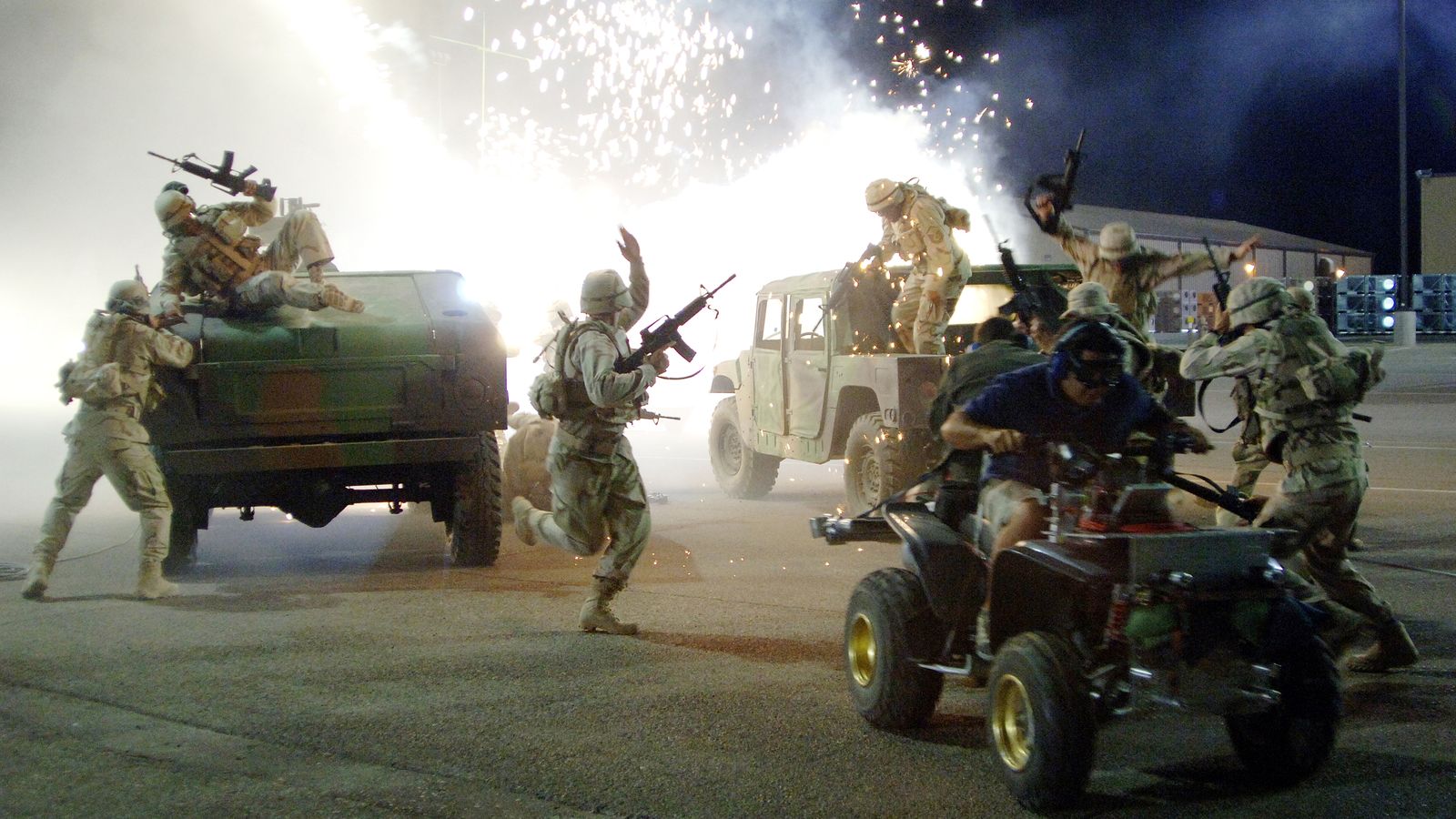
For decades, the U.S. military and intelligence agencies have directly shaped the films we watch. The Pentagon and CIA have worked behind the scenes on thousands of movies and TV shows, rewriting scripts, consulting on production, and deciding what does and doesn’t get made. In exchange for their cooperation, filmmakers get access to military bases, aircraft carriers, fighter jets, and advanced weaponry—but there’s a catch. If the military is involved, the script must be approved.
Any scene that makes the U.S. military look bad? It gets cut.
This is why American war movies almost always depict heroic soldiers, noble missions, and righteous battles. Think about Top Gun, Black Hawk Down, Zero Dark Thirty, and American Sniper—all heavily influenced, if not directly supported, by the Pentagon. Even superhero movies like Iron Man and Captain Marvel were military-approved projects designed to boost recruitment and public perception of the armed forces. These films don’t just tell stories; they manufacture consent, making war look necessary, justified, and even exciting.
But the real power of this system isn’t just making the military look good—it’s shaping public opinion on war itself. When a new conflict is on the horizon, Hollywood conveniently releases a wave of patriotic films, reinforcing the idea that military intervention is not just an option but a moral duty. After 9/11, American audiences were flooded with movies glorifying the War on Terror, subtly reinforcing support for real-life conflicts in the Middle East. The message was clear: war isn’t just necessary—it’s heroic.
And it doesn’t stop with movies. TV shows like Homeland, Jack Ryan, NCIS, 24, and The Last Ship all portray the CIA, FBI, and military as the good guys, always fighting the right fight. The deeper truth—the dark history of covert operations, government overthrows, war crimes, and intelligence failures—is rarely shown.
So next time you watch a war movie or a spy thriller, ask yourself: Whose story is being told? And whose story is being erased? Because if the Pentagon is signing off on the script, you can bet it’s not just entertainment—it’s recruitment, public relations, and propaganda at its finest.
6. The Financial System – The Illusion of Choice
We’re told that capitalism is about freedom, opportunity, and choice—that anyone can succeed if they just work hard enough. But step back, look at how the financial system truly operates, and a different picture emerges: the game is rigged, and most people are set up to lose before they even begin.
The 2008 financial crisis is a textbook example. Leading up to the crash, banks knowingly handed out risky subprime mortgages, gambling with people’s livelihoods while raking in record profits. Millions lost their homes, jobs, and savings when the system collapsed. But are the bankers responsible?
They weren’t punished—they were bailed out with taxpayer money. The very institutions that had crashed the economy were saved and made even richer, while ordinary people were left to rebuild from the wreckage. CEOs walked away with golden parachutes, and Wall Street continued as if nothing had happened.
And this isn’t a one-time event—it’s how the system is designed. Debt is the invisible chain that keeps people trapped. From student loans to credit cards to mortgages, the average person spends a lifetime working just to pay off debts that never seem to go away. Meanwhile, a tiny financial elite controls the global economy, influencing policies, lobbying governments, and ensuring that real wealth stays concentrated in the hands of the few.
Walk into a grocery store, and it looks like an endless variety of hundreds of brands and thousands of products. But at the top, just a handful of corporations control the entire industry. The same is true for media, pharmaceuticals, and finance. What looks like competition is really an oligarchy disguised as a free market.
And then there’s inflation—the silent thief. Year after year, the cost of living rises, wages stagnate, and your purchasing power shrinks no matter how hard you work. Central banks print money at will, fueling inflation while telling the public to “tighten their belts.” The rich get richer as assets are appreciated, while the working class finds that their paycheck buys less and less.
The reality is the system isn’t broken—it works exactly as intended. It creates just enough opportunity to keep people hopeful while ensuring that real power and wealth never leave the hands of the elite. The greatest trick of modern finance? Convincing the masses that they’re free—while keeping them chained to debt, rising costs, and an economic treadmill they can never escape.
7. The 24-Hour News Cycle – Manufactured Outrage and Fear
We turn on the news to stay informed, make sense of the world, and understand what’s happening around us. But modern news isn’t about informing—it’s about controlling emotions, shaping narratives, and keeping you glued to the screen.
The 24-hour news cycle thrives on one thing above all: fear. Fear keeps people engaged, distracted, and—most importantly—easily manipulated. Even when crime rates are falling, you’ll still see endless stories about murders, kidnappings, and violent attacks. Protests happen. Some networks glorify them as heroic acts of democracy, while others paint them as dangerous uprisings. It’s not about the facts—it’s about which version of reality best serves the agenda.
Ever notice how different networks report the exact same event in completely opposite ways? That’s not an accident. They aren’t just delivering information; they tell you how to feel about it. Some push left-wing propaganda, others push right-wing propaganda, but they all have one thing in common: they thrive on division. A divided, angry audience is an engaged audience. Engaged audiences mean higher ratings, more ad revenue, and more influence. The more outraged you are, the more you keep watching.
And then there’s manufactured consent—the process of making people demand things they would normally oppose. Want to justify a war? Fill the airwaves with stories about the enemy’s cruelty. Want the public to accept new surveillance laws? Flood them with fear about terrorism until they beg the government to step in. Before you know it, people aren’t just accepting government actions—they’re demanding them.
The worst part? It works. Studies show that people who watch more news are often more misinformed than those who don’t. Not because they aren’t smart but because they’ve been emotionally manipulated into believing narratives designed to control them.
Real journalism seeks truth. But modern news isn’t about truth—it’s about keeping you emotional, divided, and too distracted to question the bigger picture. The more time you spend glued to the screen, the less time you spend thinking for yourself.
8. The Education System – Indoctrination Disguised as Learning
From the time we’re children, we’re told that education is the key to success—that school exists to teach us how to think critically, analyse information, and prepare for the future. But what if the real purpose of the education system isn’t to create free thinkers but obedient workers?
Think about what we’re actually taught in school. We memorise facts, follow instructions, and take standardised tests—but we rarely learn how to question authority, challenge the system, or think independently. The curriculum is narrowly controlled, focusing on subjects that reinforce the status quo while ignoring uncomfortable truths. Schools teach us about wars and victories but rarely about the corruption and failures of governments.
We learn about economics but not about how banks manipulate markets or how the elite hoards wealth. We study history, but much of it is sanitised, whitewashed, or conveniently omitted.
The system is designed to produce compliant individuals who follow rules, meet deadlines, and accept hierarchies without question. Creativity, independent thought, and nonconformity? Those are discouraged. By the time students leave school, they’ve spent over a decade being conditioned to obey, conform, and not challenge authority.
And let’s not ignore the debt trap of higher education. College tuition has skyrocketed, leaving students with crushing debt before entering the workforce. Meanwhile, universities have become more about profit than education, churning out graduates who spend decades paying off loans while the corporate and financial elite reap the rewards. The end result? A population too burdened by debt, stress, and financial survival to ever question the system that put them there in the first place.
True education should empower people, challenge power structures, and encourage free thought. Instead, we have a system that trains people to fit neatly into society without ever realising they’ve been programmed. The best form of control is the kind you never even notice.
9. Big Pharma – Medical Propaganda & Fear-Based Marketing
And as we reach the bottom of this pit of brainwashing, what a surprise to find Bullshit artists supreme, Big Pharma. We’re told that modern medicine is about saving lives and improving health. But there’s a far more sinister reality behind the white coats and pharmaceutical ads: profit comes before people.
The pharmaceutical industry isn’t just about medicine—it’s about money, control, and psychological manipulation. Drug companies spend billions on advertising, convincing people that they need a pill for every problem. Feeling anxious? Depressed? Trouble sleeping? There’s a drug for that. And once you start, you’re a lifelong customer.
But here’s what they don’t tell you. Many of these drugs don’t cure anything—they just manage symptoms, keeping you dependent on medication for life. Conditions that could be treated through lifestyle changes, diet, or therapy are instead met with a prescription pad and a monthly bill. And when a drug’s side effects create new health problems, guess what? There’s another drug for that, too.
Take the opioid crisis. For years, pharmaceutical companies lied about the addictive nature of painkillers, pushing drugs like OxyContin onto the public. Doctors were told these medications were safe, patients trusted their prescriptions, and soon, millions were hooked. When addiction rates skyrocketed, and overdoses reached crisis levels, the same companies that caused the problem walked away with billions while the victims were left to suffer.
And then there’s the way fear is weaponised. Every year, we’re bombarded with new health scares, each one requiring a new vaccine, treatment, or drug. The media plays along, pushing stories that make people anxious about their health, leading them straight into the arms of Big Pharma. The result is a society that doesn’t just accept medication but demands it.
Western medicine has made incredible advancements, but the industry itself is not designed to create healthy people—it’s designed to produce permanent patients. The more sick people there are, the more money they make. And as long as the public trusts that pharmaceutical companies have their best interests at heart, the cycle of profit and dependency will never end.
The Propaganda You Never Noticed
Propaganda isn’t always loud. It doesn’t always come from dictators, military parades, or censored state media. Sometimes, it comes from the news you trust, the education you receive, the entertainment you consume, and the ads that shape your desires. The West has perfected propaganda—not by forcing people to believe something, but by making them think they arrived at their beliefs on their own.
The greatest trick of modern mind control is that it doesn’t feel like mind control. You’re not locked in a prison cell but in an invisible cage of carefully crafted narratives. The wars we fight, the money we chase, the media we consume are designed to keep us divided, distracted, and dependent. And the more we believe we’re immune to propaganda, the easier we are to manipulate.
Olivier Guiberteau
Key Takeaways
- Western propaganda is subtle, sophisticated, and often goes unnoticed.
- Governments and corporations manipulate media, advertising, and entertainment.
- Historical events like the Gulf of Tonkin and Iraq War were justified through propaganda.
- The financial system and education are designed to maintain control and compliance.
- Big Pharma and the news cycle exploit fear to shape public opinion and behavior.
SideProjects Editors
The SideProjects editorial team researches, fact-checks, and structures explainers about the lesser-known tales, side narratives, and spin-offs behind major historical and contemporary subjects.
Frequently Asked Questions
What is the main difference between propaganda in the West and other regions?
The West has perfected propaganda that is more subtle, sophisticated, and harder to recognize. It whispers from TV, news feeds, and favorite movies, making it more dangerous because it is not as overt as propaganda in other regions.
What was Operation Mockingbird?
Operation Mockingbird was a CIA program launched during the Cold War to infiltrate and manipulate the Western media. The CIA placed journalists in major news outlets to shape narratives, especially regarding foreign policy, war, and political adversaries.
What was the Gulf of Tonkin Incident?
The Gulf of Tonkin Incident was a fabricated event used to justify the Vietnam War. The U.S. claimed that North Vietnamese patrol boats attacked a U.S. naval destroyer, leading to the Gulf of Tonkin Resolution and the escalation of the war. However, it was later revealed that the second attack never happened.
How did the media contribute to the Iraq War?
The media echoed the Bush administration’s claims about Iraq’s Weapons of Mass Destruction without question, plastering headlines and parading experts who agreed with the narrative. This helped manufacture consent for the war, making it seem inevitable and justified.
How does the advertising industry influence consumer behavior?
The advertising industry uses psychological manipulation to create needs and shape perceptions of what is essential. It preys on insecurities, attaches emotions to products, and uses tracking to feed ads at the perfect moment, making people believe they made the choice themselves.
How does Hollywood contribute to propaganda?
Hollywood works with the U.S. military and intelligence agencies to shape films and TV shows, ensuring that the military is portrayed positively. This helps manufacture consent for war and military intervention, making it seem necessary and heroic.
How does the financial system maintain control over the population?
The financial system keeps people trapped in debt, ensuring that real wealth stays concentrated in the hands of the elite. It creates just enough opportunity to keep people hopeful while maintaining economic control, making people believe they are free while keeping them chained to debt and rising costs.
How does the 24-hour news cycle manipulate public opinion?
The 24-hour news cycle thrives on fear and division, keeping people engaged and easily manipulated. It shapes narratives to control emotions, pushing different agendas depending on the network, and thrives on manufactured outrage and consent.
How does the education system contribute to indoctrination?
The education system focuses on memorizing facts and following instructions rather than encouraging critical thinking and independent thought. It conditions students to obey, conform, and accept hierarchies without question, producing compliant individuals who fit neatly into society.
How does Big Pharma use propaganda to maintain control?
Big Pharma uses fear-based marketing and psychological manipulation to convince people they need medication for every problem. They create lifelong customers by managing symptoms rather than curing conditions, ensuring a cycle of profit and dependency.