Knowledge is power when used in the right hands, but knowledge can also be a death sentence when it threatens powerful forces. Across the world, reporters, whistle-blowers, activists, and opposition politicians all too frequently meet a grizzly end under deeply suspicious circumstances because of what they know. And what others fear might be revealed.
Many of these tales that we’re looking at today sound like they could be ripped from a John Grisham novel because of their outlandish storylines, but each is entirely true. Some sound like far-fetched conspiracy theories, while others are beyond a reasonable doubt. But they all share something in common. A life cut short because they were seen as a danger. A death that was preferable to information escaping.
Alexander Litvinenko
Alexander Litvinenko was a man whose fate hung in the balance from the moment he left Russia in 2000 and settled in the UK. A former officer with the FSB — the organisation spawned from the KGB — Litvinenko was born in the Russian city of Voronezh in 1962. His career began in the military before being recruited into the KGB’s military counter-intelligence section. His official title was ‘intelligence officer,’ but most people would have simply referred to him as a spy.
Key Takeaways
- Knowledge can be dangerous, leading to suspicious deaths of reporters, whistleblowers, and activists.
- Alexander Litvinenko’s public allegations against Putin led to his poisoning with polonium-210.
- Gary Webb’s ‘Dark Alliance’ series suggested CIA involvement in crack cocaine sales, damaging his career.
- Patrice Lumumba’s push for Congolese independence and resource control led to his assassination.
- Jamal Khashoggi’s criticism of the Saudi regime resulted in his murder inside the Saudi embassy.
In 1994, Litvinenko met Russian oligarch Boris Berezovsky and began an investigation into an assassination attempt on him earlier in the year. He later became part of Berezovsky’s security detail, and yes, apparently, it was OK in Russia to work for the intelligence services and moonlight for the rich.
But it was his connection with Berezovsky that set everything in motion. Firstly, he traced the assassination attempt back to high-ranking Russian officials who had been working in conjunction with the Solntsevo gang — a bunch of nasties involved in the cocaine trade, money laundering, kidnapping, murder — you name it.
At this point, Berezovsky was one of the richest men in Russia, and let’s just say that he knew things about things. He was privy to sensitive information about Russian privatisation deals, and also how state assets were divided when the Soviet Union collapsed. But let’s be honest, you don’t become a Russian oligarch without trampling a few people. It’s highly likely Berezovsky was involved in some of the early shady dealings, but when corruption and organised crime exploded, and he stood against them, he became a marked man.
Litvinenko’s investigation into the assassination attempt led to him going directly to Putin, then the Director of the FSB, to inform him of widespread corruption within the FSB and other intelligence services. Putin’s disdain and disinterest was clear. Litvinenko left the building with no doubt that the tangled mess went all the way to the top.
His response was bold — a press conference where he publicly named names linked with the Berezovsky assassination plot. He was fired the same day and ordered not to leave Russia. But the wily spy — sorry, intelligence officer—found a way, and he and his family snuck out of the country in October 2000 just as things were looking very bleak indeed.
He was eventually granted asylum in the UK and became a British citizen in 2006, while remaining a sharp thorn in Putin’s side, along with Berezovsky, who had also fled to Britain. The allegations Litvinenko made publicly were extraordinary.
The 1999 Russian apartment bombings were not carried out by Chechen terrorists, as officially stated, but rather by the FSB as a false flag operation.
Putin had personally ordered the assassination of Russian journalist Anna Politkovskaya in 2006.
And that Russian security services were behind numerous murders across the world, sometimes with the use of deadly poison.
And that last one, in this story at least, is important. On 1st November 2006, Litvinenko met several contacts in central London: one meeting took place at the Pine Bar of the Millennium Hotel in Mayfair with two Russian nationals, Andrey Lugovoy and Dmitry Kovtun, and the second with Mario Scaramella, an Italian academic who claimed to possess intelligence about threats to Russian dissidents.
Within hours, Litvinenko felt unwell and was eventually rushed to hospital. Doctors were baffled as his health declined dramatically. His hair began to fall out, his organs began failing, it seemd like only a matter of time. Litvinenko knew the Russian system and suspected poisoning, but instead of going quietly, he invited members of the media into the hospital, and images of the sickly, frail man fading away made front-page headlines around the world. It was a horrifying and very public death.
Litvinenko died on 23rd November 2006. Tests later confirmed he had been poisoned with polonium-210, a rare radioactive isotope that requires access to state-level nuclear facilities. This isn’t something you find on the black market. British police traced the poison at various locations across London, many of which correlated with the movements of Lugovoy and Kovtun.
Their report in 2016 accused the two men of his murder, most likely with the support of the FSB. People who know too much about Vladimir Putin often don’t live too long, and this wasn’t an isolated case.
Alexander Perepilichny, a Russian businessman who had fled to the UK and was assisting Swiss investigators in exposing a massive Russian tax fraud, collapsed and died while jogging near his Surrey home in 2012. Initial findings suggested natural causes, but later toxicology reports indicated traces of a rare plant toxin — Gelsemium — in his system. The coroner ultimately delivered an open verdict, but it was certainly suspicious.
There was nothing ‘open’ about what happened in Salisbury, UK, in 2018. Former Russian intelligence officer Sergei Skripal and his daughter were found unconscious on a park bench in the city. The weapon this time was a military-grade nerve agent known as Novichok. While both survived, a British woman later died after coming into contact with the discarded nerve agent container.
We can only begin to comprehend what’s actually going on behind the scenes in Russia, but it’s long been clear that those who know too much and who have a falling out with the ruling elite have a habit of meeting an untimely demise.
Gary Webb
From scandal and corruption in Russia, to exactly the same in the United States. Gary Webb, an award-winning reporter working for the San Jose Mercury News, was generally considered a man of great integrity. Born in California, he cut his teeth in journalism with various papers across the country before landing a job as an investigative reporter in San Jose, where he developed a reputation for firm, honest journalism.
All good so far, no trouble, but in 1996, he began working on a series of pieces that came to be known as the Dark Alliance series — and here’s a good place to inject a little history that the United States would rather we forget.
In the 1980s, Nicaragua was a mess. The Contras, a right-wing guerrilla movement, were locked in a fierce war with the left-leaning government. Ronald Reagan was not a fan of anything with a whiff of communism, and the United States was itching to help the Contras. However, Congress passed the Boland Amendments, which banned the U.S. from directly funding the Contras—and so it required some creative wheeling and dealing.
The other side of this story was in Iran. Now, at this point, the U.S. and Iran were mortal enemies, thanks mainly to the storming of the U.S. embassy in Tehran in 1979, after which 52 American hostages were held in captivity for 444 days.
But politics is nothing but complex. We’ll be coming back to this particular seedy tale in another story later, but there’s long been a theory that the Reagan campaign team was far cosier with the Iranian government in 1980 than we might think. If that piqued your interest, the October Surprise plan will blow your mind, so keep watching.
But back to Iran and the Contras. The U.S. actually wanted to sell arms to Iran as a way of greasing the wheel that they hoped would lead to American hostages in Lebanon taken by Hezbollah being released. Obviously, the U.S. couldn’t openly sell arms to Iran — so it required some creative wheeling and dealing.
These two seemingly disconnected stories came together in a bizarre way when Israel started ‘giving’ U.S. weapons to Iran, which were then quietly replenished. Iran, in turn, thanked the United States, very discreetly, of course, with above-market payments for the weapons, which were then used to fund Contra efforts in Nicaragua. Outrageous, and all absolutely true.
This actually all came to light in 1986 and caused a huge scandal that was quickly swept under the carpet, but ten years later, Gary Webb began looking at a different aspect. His series, The Dark Alliance, suggested that proceeds from crack cocaine sales were also being used to fund Contra efforts, with three men at the centre of it: Freeway Ricky Ross, Oscar Danilo Blandón, and Norwin Meneses. In Webb’s own words,
“For the better part of a decade, a San Francisco Bay Area drug ring sold tons of cocaine to the Crips and Bloods street gangs of Los Angeles and funneled millions in drug profits to a Latin American guerrilla army run by the U.S. Central Intelligence Agency.”
Explosive isn’t a big enough word for that kind of allegation. Strangely, other papers were slow to pick up on the story — there was no social media at this point, and news could travel slowly if it was news that many did want to see.
Eventually, big names, including The New York Times, Washington Post, and Los Angeles Times, waded in and essentially disparaged Webb’s reporting. Even his own newspaper eventually published a response saying the series may have been inflated, but that the core story remained accurate. Webb was quietly reassigned, then sidelined. He soon resigned but compiled all his research into a book, Dark Alliance: The CIA, the Contras, and the Crack Cocaine Explosion, published in 1998.
However, his career and reputation never recovered. On 10th December 2004, Webb was found dead in his Carmichael home with two gunshot wounds to the head. His death was ruled a suicide, despite the coroner admitting that two suicide shots were strange. Rumours quickly circulated that he may have been killed in retribution for his reporting.
Regardless of senate reports and internal government investigations that claimed there was nothing to see here in respect to the Dark Alliance series, there’s long been a suspicion that Gary Webb was on to something. Did the U.S. government, and in particular the CIA, know about these drug deals and either tolerated or facilitated them because the Contras were a key part of U.S. Cold War strategy in Central America? Was the whole crack epidemic simply a byproduct of the U.S. fear of communism?
Gary Webb certainly thought so.
Patrice Lumumba
In the 1960s, waves of independence were sweeping across Africa, and the Congo, which had long been under the vicious rule of the Belgian monarchy and then the Belgian State, was itching to spread its wings.
In 1960, it elected its first Prime Minister, Patrice Lumumba, a well-respected, intellectual man born in 1925 who had become a pillar of the independence movement. There was great hope, but there were also the dark tentacles of colonialism and the insidious stain of capitalism and greed that refused to leave quietly.
Belgium had given the Congo its independence, but let’s be honest, as with most of Africa, it was done begrudgingly. European countries were shattered shells of their former selves after World War II, and could no longer maintain colonies in an official sense. But they could maintain their business interests in a very unofficial sense.
Belgium retained deep economic interests in the country, particularly in the mineral-rich Katanga province, and plenty of others were sniffing around, hoping to get a slice of the great uranium, copper, cobalt, and diamond pie that was the Congo.
Lumumba, quite understandably, pushed for greater freedom for the young Congolese nation and made it clear that natural resources needed to be used to build a strong nation. Sounds perfectly fair, but tell that to the fat cats who had long been looting Africa.
To make this even more complicated for Lumumba, the United States was not a fan. Lumumba was far from a communist, but he also didn’t pander to the other side. He was actually fairly neutral and considered a centrist, but in the Cold War, you had to pick a side. And this is where Lumumba’s naivety cost him dearly.
He was an honest, kind-hearted person who genuinely wanted to help the Congolese people rather than enrich himself, but sadly, history is littered with such figures, often found with a knife in their back.
Problems exploded almost immediately, and these were initially described as localised issues within a newly independent nation, but there were almost certainly strings being pulled from abroad.
On 5th July 1960, just 4 days after the country’s declaration of independence, General Émile Janssens, a Belgian man and commander of the Force Publique, gathered his forces at Camp Léopold II. A feverish excitement was sweeping the Congo, but Janssens wanted his Congolese troops to retain their order, so he wrote something on the chalkboard at the front that ignited the entire conflict:
Before independence = after independence.
The wording enraged the soldiers who sacked the mess that evening. The following day, more soldiers joined the rebellion, and several Belgian officers were killed.
While Lumumba steadied the ship quickly, it was a catalyst that led to the Katanga region declaring independence, almost certainly with Belgium’s backing, and Belgian soldiers re-entering the country under the pretext of protecting European citizens. Lumumba appealed to the UN, got nowhere, and appealed to the Soviet Union for help, which infuriated the United States. He had now entered an unfortunate setting known as between a rock and a hard place.
In September 1960, President Joseph Kasa-Vubu dismissed Lumumba from office, and shortly after, army chief Joseph Mobutu seized power in a coup. The ex-prime minister was arrested but escaped shortly before being apprehended again. He was transferred to Katanga, savagely beaten, and then murdered by firing squad – reportedly in the presence of Belgian officers.
His body was later exhumed, dismembered, and dissolved in acid. Whatever the dark truth behind Lumumba’s death, some powerful people wanted them to never see the light of day. Declassified documents later revealed that Western intelligence agencies had discussed plans to remove Lumumba from power, which, in hindsight, was about as obvious as it gets. In the early 2000s, a Belgian parliamentary enquiry accepted that Belgium was morally responsible for Lumumba’s death, while the United States also acknowledged it had known of a plot against him, but wasn’t involved.
I’ll let you make your own mind up about that.
Either way, the Congo has since plunged into a kind of dark hell that few, if any, nations on the planet have experienced, all while multinational corporations continue to bleed the country dry. Lumumba knew exactly what was happening, and he paid the ultimate price.
Dorothy Kilgallen
The JFK assassination remains one of the great enigmas, although recent reports seem to have finally rubbished the theory that it was a lone gunman, Lee Harvey Oswald, who shot the President 81 metres (265 ft) from a window of the Texas School Book Depository. The exact details? We’re still not sure, but it is very murky indeed.
Questioning this traditional narrative is now a matter of common sense, but in the years after, and in the wake of the Warren Commission, which investigated the assassination, doing so was dangerous. Yet some still did so.
Dorothy Kilgallen was a reporter and TV personality known to millions. Born in Chicago, she and her family eventually settled in Brooklyn, New York, where she started working as a reporter. She was good, tenacious, hardworking, diligent, and a column that she wrote for the New York Journal-American was eventually syndicated in 146 newspapers across the country. Much of it was New York gossip, not exactly hard-hitting stuff.
But people loved it, and she moved into radio and eventually TV, with a long-term role as a panellist on the popular Whose Line Is It?
On 22nd December 1963, President Kennedy’s motorcade turned onto Dealey Plaza in Dallas, Texas, and those fatal shots rang out. JFK slumped forward. I’m sure you know the story. On the same day, Lee Harvey Oswald was arrested, and two days later, while being transferred, he was fatally shot by a man named Jack Ruby. JFK’s killer got what was coming to him. Justice? Or convenience?
Watch the Video
Open Video
Video Briefing
People Who Were Killed for Knowing Too Much
President Johnson ordered a full investigation, which became the sprawling Warren Commission, which concluded in 1964. And it basically set out the traditional narrative: Lee Harvey Oswald had acted alone, and had been a remarkably accurate shot. But while most drank the Cool-Aid, not everybody was buying it.
Dorothy Kilgallen began investigating the case and, in her opinion at least, some things just didn’t add up. She argued that key testimony had been ignored and that the official narrative left significant gaps.
She questioned how Lee Harvey Oswald could have fired three shots with such precision in such a short time, and whether the so-called “single-bullet theory” was physically plausible. Kilgallen was also sceptical about the ignored or downplayed witness accounts from Dealey Plaza that suggested shots came from multiple directions. In short, the Warren Report had more holes than a block of Dutch cheese. She felt that investigators had settled on a theory without adequately exploring others.
She was also able to interview Jack Ruby, and what he told her only further fanned the flames of her suspicions. Kilgallen later hinted that Ruby suggested he had not acted alone, and that powerful interests were at play, though she never published a full account of their conversation. She did, however, imply that Ruby feared for his life and believed the truth about the assassination would never fully surface through official channels.
Kilgallen wrote a series of articles on the topic, including excerpts from the sealed sections of the Warren Commission, where Ruby insisted he was not part of a conspiracy, yet contradicted himself repeatedly. She pointed out that the timelines just didn’t make sense, the angles were strange, and the whole story the Warren Commission was presenting to the U.S. public was shaky, at best.
The response was what you might imagine. Members of the government denounced her, her leaks and undisclosed sources, and the FBI visited her home for a little ‘chat’. From that point forward, she told friends and colleagues she was working on a book that would present new evidence about the assassination. And I bet you can guess what happened next.
On the morning of 8th November 1965, Kilgallen was found dead in her Manhattan townhouse, reportedly the result of alcohol and barbiturates – an accidental overdose. Yet, strangely, she was on a bed in a room that wasn’t her bedroom. Just as with the assassination she had spent so long reporting, things were very suspicious, but everybody quickly moved on. And that book she was working on? Well, that disappeared entirely.
Jeffrey Epstein
Of course, we could never make a video on this topic without mentioning the name everybody is currently talking about and the name many hope never gets connected to them – Jeffrey Epstein.
There is so much being said about this man that it’s difficult to separate fact from blatant loonism. You don’t need to go far to find theories linking him with Satan worship, the New World Order, and the mafia, so let’s try to stick to the facts as much as possible.
Jeffrey Epstein was born in New York in 1953, and his first proper job was – wait for this one – a school teacher. He soon moved into finance, first with Bear Stearns, before forming his own company, Intercontinental Assets Group Inc., in 1981, which eventually morphed into J. Epstein & Company.
Throughout the 1990s and into the 2000s, he made a huge amount of money, though it wasn’t always entirely clear how. There was a lot of financial advice for billionaires, there were some complicated deals, and a lot of bank trails that will take years to completely unravel.
But it was during this point that he began schmoozing celebrities, politicians, and the movers and shakers of this world. People were invited to his homes in Florida and New York, or to the now-infamous Epstein Island – also referred to as Pedo Island or The Island of Sin, depending on who you talk to.
What happened there, I suppose, is still technically debatable, but there are scores of testimonies that allege women and sometimes underage girls were abused there and effectively lent to visitors for their pleasure. They often talk about arriving there by private plane – nicknamed the Lolita Express, if things couldn’t get more cringe-worthy – often with little idea of where they were going, who was there, and indeed how long they would be away.
In 2006, Epstein was arrested in Florida on charges of sexual abuse and sex with minors, but quite remarkably, he reached a controversial plea deal that allowed him to serve minimal jail time while avoiding federal prosecution. Apparently, though never fully divulged, part of the plea was to keep other ‘co-conspirators’ out of the limelight.
Let’s just say how it is: if a man working a minimum wage job gets accused of sex with 36 underage girls, he’s going away for a long time. Epstein got just 13 months with extensive work release. It was a joke of a sentence that was preceded by a joke of a prosecution case that screamed, ‘I’ve got powerful friends.’
After he was released, things continued pretty much the same way until he was arrested again in 2019 on federal charges for the sex trafficking of minors, and his name began circulating widely. Suddenly, everybody was talking about Epstein and wondering who else was connected.
But then, he killed himself. There are plenty of theories about a body-swap out or even murder. However, the only proof seems to be the astonishing incompetence of prison staff and the odd coincidence that the cameras were shut off in that part of the prison. It’s fishy, but alas, inconclusive.
So what do we make of all of this? Who was Jeffrey Epstein, and what did he really know? In 2017, a former senior White House official reported that Alexander Acosta, the US Attorney for the Southern District of Florida, who had handled Epstein’s criminal case, told Trump’s first transition team:
“He was told Epstein ‘belonged to intelligence’ and to ‘leave it alone’”, and that Epstein was “above his pay grade.”
Other theories suggest it could have been a massive blackmail operation targeting some of the world’s biggest names. In 2018, Epstein implied to a New York Times reporter in an off-the-record conversation that he had a treasure trove of incriminating information about powerful people, including drug use and sexual activities. If that was the case, take your pick of any number of people who might have been perfectly happy for Epstein to get what was coming to him.
In recent months, we’ve had several announcements and large releases of documents that link a lot of names – you know them, we don’t need to go into it – but the real meat of the sandwich, if you will, is still missing. We don’t know how far the system spread, who was definitely involved, or how it was all done. Jeffrey Epstein took all of that to the grave.
Boris Nemtsov
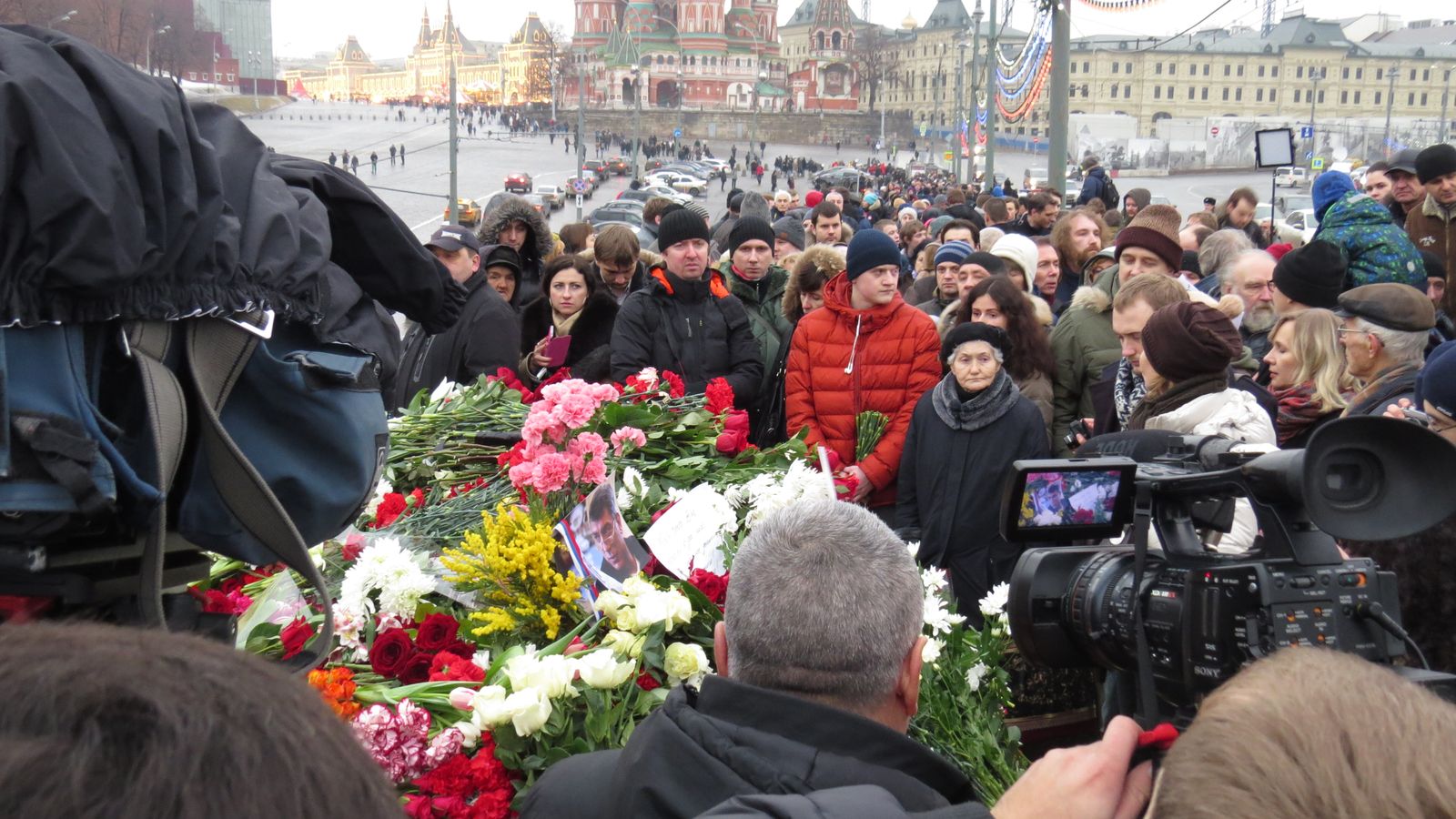
On the night of 27th February 2015, Boris Nemtsov, a prominent critic of the Russian government, who had, in fact, once been a confidante of Putin, walked across a bridge with his partner in Moscow, close to the Kremlin walls. Suddenly, a man appeared behind them. He pulled a gun and fired 4 shots into Nemtsov, who was dead by the time paramedics arrived.
In late June 2015, five Chechen men were found guilty of murder. They had, they claimed, been paid 15 million roubles (US$253,000) for the hit, though either they wouldn’t or couldn’t explain who had paid them. So who was behind the murder of Boris Nemtsov?
The official narrative was that it was done in retribution for Nemtsov’s criticism of Islam, with what had happened recently in France with the Charlie Hebdo murders paraded as obvious proof. But most saw this as unlikely. To many who looked into the case, the reason that Nemtsov was dead was much closer to home.
Boris Nemtsov was born in Sochi in 1959 and studied physics at the State University of Gorky. From an early age, he was political with a strong sense of activism. After the Chernobyl disaster in 1986, Nemtsov led a protest movement in his hometown against plans for a new nuclear power station.
During Russia’s first free elections in 1990, he ran for the Supreme Soviet of the Russian Republic, representing Gorky, and won. He became a firm favourite of Boris Yeltsin, and gradually worked his way up the government, eventually becoming the Deputy Prime Minister of Russia in 1998. During a meeting with Bill Clinton, Yeltsin referred to Nemtsov as his anointed successor and how differently the world would have played out had that been the case.
Instead, the Russian stock market crashed, tarnishing Nemtsov’s reputation and paving the way for the Putin era to begin. Nemtsov had since formed the Union of Right Forces, a new liberal-democratic coalition, and was elected deputy speaker in the State Duma, or lower house of Parliament.
Over the next decade, Nemtsov’s political career meandered, but he remained a staunch opponent of Putin and his anti-democratic actions. He attended public rallies, openly supported the political figures abroad that the Kremlin loathed, particularly in Ukraine, alleged that up to $30 billion had been stolen from funds allocated for the Sochi Olympics, and signed numerous documents denouncing the Russian president. He was arrested three times. If there was anybody walking a tightrope in Russia, it was Boris Nemtsov.
That Sochi Olympics allegation was incendiary across Russia. In the years following the 2014 Winter Olympics, Nemtsov and Leonid Martynyuk claimed it had all been a “monstrous scam.” The real reason for the colossal $50 billion cost, making them the most expensive Winter Olympics in history, was that $30 billion had been syphoned off through inflated contracts, no-bid deals, and companies linked to politically connected insiders.
The Kremlin denied systemic wrongdoing, but investigations and independent reports pointed to massive cost overruns and procedures that looked almost mafia-esque, which all fuelled suspicions of large-scale embezzlement. Nemtsov also pointed out that hosting the Winter Olympics in the subtropical environment that Sochi sits in was beyond absurd – and it’s difficult to argue with that one.
Doing all of this in Putin’s Russia is, frankly, either idiotic or heroic – or perhaps a combination of the two. In the months leading up to his murder, Nemtsov became increasingly paranoid and confided in an old friend, Yevgenia Albats, editor of The New Times, who later said:
He was trying to convince himself, and me, that they wouldn’t touch him because he was a former member of the Russian government, a vice premier, and they wouldn’t want to create a precedent.
He was scared because what he was investigating at the time was even bigger than Sochi. In March 2014, Russian forces moved into Crimea and annexed the region in response to President Yanukovych being forced from power in Ukraine – an act that Moscow believed had Western hands all over it. What followed was war in Eastern Ukraine, officially, armed separatists fighting against the Ukrainian government.
However, Nemtsov found more. His discovery that Russian soldiers were operating and dying in the region, despite the government’s clear denials, was seen as nothing less than treacherous. He began putting together a report that he intended to make public, and then he was shot in the back four times. Putin decreed the murder an outrage and pledged to lead the investigation personally – I bet he did.
Despite the convictions, there are still plenty of questions about Nemtsov’s murder. Nobody really believes that he was killed because of comments about Islam, but inside Russia, you have to be careful with those kinds of views. Many have a strong suspicion of who ultimately ordered the hit, but they dare not link his name to such an act.
Danny Casolaro
What if there was a vast interconnected conspiracy that linked major scandals – connecting governments, intelligence agencies, arms dealers, and even drug cartels? What if the U.S. government were really helping to sell crack to pay for weapons, and Iran agreed to hold off releasing the hostages in 1980 to improve the chances of Reagan winning the Presidential election at the behest of some unseen power?
It sounds outlandish, and either you’re watching this and tutting at the absurdity or nodding along like you’ve suspected that all along. This idea served as the basis for The Octopus, a research project and story compiled by independent reporter Danny Casolaro in 1990.
Now, let’s begin by saying the Octopus Conspiracy Theory is just that, a theory, and while we might all want to jump on the shadow organisation bandwagon, let’s just ease into this. Much of Casolaro’s work stated that a single, hidden power structure linked multiple major scandals of the 1970s and 1980s. And much of it started with the INSLAW scandal.
INSLAW was a small Washington-based company founded by William and Nancy Hamilton in 1981. Their flagship product, PROMIS (Prosecutor’s Management Information System), helped prosecutors track cases, defendants, evidence, and court activity in a single database.
It was actually pretty groundbreaking at the time, and it was leased to the Department of Justice (DOJ) in 1981. However, a dispute arose when INSLAW accused the DOJ of upgrading PROMIS illegally and then passing it on to other agencies. In 1987, a bankruptcy court ruled that the DOJ had acted improperly and awarded damages to INSLAW, but this decision was later overturned. But not because the opposite was proven. Because of a judicial loophole that said the case had gone through the wrong kind of court.
This doesn’t reflect particularly well on the DOJ, but it doesn’t really point to any conspiracy either until the ‘backdoor’ allegations surfaced. INSLAW and later witnesses claimed that PROMIS had been modified to the extent that it could be used to covertly access data far beyond its original purpose. To make matters worse, and this is partly what Casolaro was investigating, the U.S. then sold the modified PROMIS to governments around the world to be used in intelligence gathering, as well as monitoring financial systems.
But we’re still not quite finished. The last part of these allegations stated that the U.S. government had secretly installed a backdoor monitoring code so that they would receive all the data being gathered by countries that had bought it.
And from here, the scope spreads far and wide, hence the name Octopus. Casolaro tied the PROMIS scandal in with other scandals of the era, including the crack cocaine/Contra link and the October Surprise.
In the closing months of the 1980 U.S. presidential race, a rumour began to circulate that never quite went away. It was vague, but basically, that members of Reagan’s campaign team had secretly encouraged Iran to delay releasing 52 American hostages until after the election. Most believed that if Carter could secure the hostages before the election, he would win; if he couldn’t, Reagan would sweep into power.
And sweep he did after election day came and went without any hostage releases. Then what do you know, all 52 hostages were freed minutes after Reagan was sworn in. The timing was badly carried out, and has long fuelled suggestions that campaign intermediaries promised future concessions once Reagan took office, possibly tied to arms sales that later surfaced during the Iran–Contra affair.
Then there was the collapse of the Bank of Credit and Commerce International (BCCI), a scandal so murky that U.S. prosecutors later described it as “the Bank of Crooks and Criminals International.”
Founded in 1972, BCCI operated across more than 70 countries and, at its height, controlled tens of billions in assets. It looks legitimate, but behind the scenes, investigators uncovered a sprawling network of fraud, money laundering, arms trafficking, and bribery. We’re talking about funds used to pay drug cartels, intelligence services, terrorist groups, and corrupt officials, often through shell companies and secret accounts designed to evade regulators.
By 1991, regulators in the United States and the United Kingdom shut BCCI down, with losses estimated in the billions. This should be one of those mega-scandals that we hear all about, but strangely, it’s often buried beneath others. However, Casolaro was certainly looking into it, and had connected it with numerous other scandals.
He saw it all as a vast web, stretching around the world, and was said to be in the final stages of his research when he checked into the Sheraton Hotel in Martinsburg, West Virginia, on 8th August 1991. He was there to speak to a source he believed would blow everything wide open. But two days later, he was found dead in his hotel bathtub, with 10-12 deep cuts to his wrists. Next to him was a notepad with a message,
“To those who I love the most: Please forgive me for the worst possible thing I could have done. Most of all I’m sorry to my son. I know deep down inside that God will let me in.”
His death was ruled a suicide, but his family outrightly rejected those findings, finding it impossible that a man who was squeamish over blood would be able to inflict such damage.
Initial police reports stated that no one else had been to his room, and yet it later emerged that an eyewitness had seen a man enter the room that night. A police sketch revealed a face that closely resembled that of Joseph Cuellar, a U.S. Army Special Forces covert intelligence officer whom Casolaro had met a week earlier to gauge how much he knew.
But, as so often happens with these stories, the news cycle moved on, and people became fascinated by other scandals and other deaths. We were distracted by other things, and Danny Casolaro’s work faded from public interest, while much of his material conveniently vanished.
Jamal Khashoggi
Jamal Khashoggi was a major figure in Saudi Arabia, working as a respected journalist and an advisor to many of the country’s powerful figures. He was born in Medina on 13th October 1958 and began working in a bookshop as a young man, but there were gaps in his life that were, to say the least, mysterious. In the mid-1980s, he began work as an editor for the Saudi Gazette before writing for various Arab newspapers.
What isn’t so well explained is his days working for the Saudi Intelligence Service, during which he was said to work with the United States during the Soviet invasion of Afghanistan. He met Osama bin Laden and interviewed him several times from his cave hideout in the Tora Bora mountains – but remember, at that point, Bin Laden was the good guy fighting the Soviets.
As Bin Laden’s hatred swung towards the United States, Khashoggi was instructed by the Saudi government to travel to Afghanistan to try and persuade Bin Laden to renounce violence, but obviously didn’t get very far.
With the 2000s underway, Khashoggi became editor of the Saudi Arabian daily Al Watan, but was dismissed just two months later because he had allowed a columnist to criticise Islam. And this rebellious seeker of the truth became his hallmark.
Over the next ten years, he didn’t pull any punches, often niggling the Saudi government with columns or news pieces, but also, for a period, working as the Saudi ambassador to the United States. This was the contradiction of Jamal Khashoggi. A real pain in the ass, but a highly useful one.
He was appointed editor of Al Watan again, but was fired again for allowing, dare I say, a bit of free speech. Things were starting to get uncomfortable in Saudi Arabia for somebody like Khashoggi, especially when Crown Prince Mohammed bin Salman – commonly known as MBS – appeared on the scene. Not technically the ruler, but the ruler in all but title, MBS divides opinion in the country. He’s either the strong leader the nation needs or the despot that wants to drag the country backwards.
Khashoggi leaned towards the latter.
In 2017, Khashoggi fled Saudi Arabia and settled in the United States, where his reporting and criticism of the Saudi regime went up several levels. He declared that the country:
“Should return to its pre-1979 climate, when the government restricted hard-line Wahhabi traditions. Women today should have the same rights as men. And all citizens should have the right to speak their minds without fear of imprisonment.”
Bold and dangerous words. And there were plenty more. He opposed Saudi Arabia’s action in Yemen, called out corruption and widespread abuse, and criticised the treatment of women’s rights activists. He was also never afraid of singling out the man he ultimately held responsible for it – MBS.
On 2nd October 2018, Khashoggi walked into the Saudi Arabian embassy in Istanbul to collect some documents needed for him to marry. He never left.
His fiancée eventually reported him missing, but as the days passed without any sign, focus increasingly fell on the embassy. And there were nasty rumours already circulating. CCTV showed him entering, but not exiting, and after several more days of standoff, Turkish and Saudi officials moved into the building on 15th October.
Turkish authorities soon found evidence of Khashoggi’s murder, but also a cover-up by the Saudis. There was no body present. It later emerged that he had been strangled, then the body had been dismembered and removed from the embassy.
The Saudi government’s story flopped one way and then the other, initially saying that he had died in a fistfight, but finally admitting that it had been a premeditated murder. Five men were sentenced to death, but the Khashoggi family saw the investigation as nothing but a whitewash and pardoned the accused.
In 2018, TIME magazine posthumously made him one of their People of the Year, along with the Capital Gazette, Maria Ressa, Wa Lone, and Kyaw Soe Oo – all journalists who had long fought to bring injustice to light. Khashoggi wasn’t an outsider; he had deep knowledge of the system and understood where the country was headed under MBS. And for that, he had to go.
People Who Died for Knowing Too Much
And that wraps things up. Journalists, politicians, writers, activists – and whatever the hell Jeffrey Epstein was. They all went to the grave carrying information that others feared would be released. Knowledge and truth are both virtues that we love to talk about, but when it comes to the dark underbelly of society, crime, and the global struggle for power, knowing too much and being willing to talk is often deadly.
Olivier Guiberteau
Key Takeaways
- Knowledge can be dangerous, leading to suspicious deaths of reporters, whistleblowers, and activists.
- Alexander Litvinenko’s public allegations against Putin led to his poisoning with polonium-210.
- Gary Webb’s ‘Dark Alliance’ series suggested CIA involvement in crack cocaine sales, damaging his career.
- Patrice Lumumba’s push for Congolese independence and resource control led to his assassination.
- Jamal Khashoggi’s criticism of the Saudi regime resulted in his murder inside the Saudi embassy.
SideProjects Editors
The SideProjects editorial team researches, fact-checks, and structures explainers about the lesser-known tales, side narratives, and spin-offs behind major historical and contemporary subjects.
Frequently Asked Questions
Who was Alexander Litvinenko and why was he killed?
Alexander Litvinenko was a former FSB officer who fled to the UK in 2000. He was killed in 2006 after being poisoned with polonium-210, a rare radioactive isotope. His death is believed to be linked to his public allegations against the Russian government, including claims of widespread corruption within the FSB and involvement in various murders.
What was the Dark Alliance series by Gary Webb?
The Dark Alliance series, written by Gary Webb, suggested that proceeds from crack cocaine sales were used to fund Contra efforts in Nicaragua during the 1980s. Webb’s reporting implicated three men—Freeway Ricky Ross, Oscar Danilo Blandón, and Norwin Meneses—in a drug ring that supplied cocaine to street gangs in Los Angeles.
What happened to Patrice Lumumba?
Patrice Lumumba, the first Prime Minister of the Congo, was murdered in 1961. He was arrested, beaten, and executed by a firing squad. His body was later dismembered and dissolved in acid. His death is believed to be linked to his efforts to gain independence for the Congo and his opposition to foreign interference in the country’s natural resources.
What was Dorothy Kilgallen investigating before her death?
Dorothy Kilgallen was investigating the assassination of President John F. Kennedy. She questioned the official narrative presented by the Warren Commission and was working on a book that would present new evidence about the assassination. She was found dead in her Manhattan townhouse in 1965, reportedly from an accidental overdose of alcohol and barbiturates.
What was Jeffrey Epstein accused of?
Jeffrey Epstein was accused of sexual abuse and sex trafficking of minors. He was arrested in 2006 and reached a controversial plea deal that allowed him to serve minimal jail time. He was arrested again in 2019 on federal charges for the sex trafficking of minors and died in prison later that year, with his death ruled a suicide.
Who was Boris Nemtsov and why was he killed?
Boris Nemtsov was a prominent critic of the Russian government and a former confidante of Vladimir Putin. He was shot and killed in 2015 while walking across a bridge in Moscow. His murder is believed to be linked to his political activities and investigations into corruption within the Russian government.
What was Danny Casolaro investigating before his death?
Danny Casolaro was investigating a vast interconnected conspiracy known as The Octopus, which linked major scandals involving governments, intelligence agencies, arms dealers, and drug cartels. He was found dead in his hotel bathtub in 1991, with his death ruled a suicide, although his family disputed this finding.
What happened to Jamal Khashoggi?
Jamal Khashoggi, a Saudi journalist and critic of the Saudi government, was murdered in 2018 inside the Saudi Arabian embassy in Istanbul. He was strangled and his body was dismembered. The Saudi government initially denied involvement but later admitted to the murder, claiming it was a premeditated act.
What was the INSLAW scandal?
The INSLAW scandal involved a dispute between the Department of Justice (DOJ) and INSLAW, a small Washington-based company. INSLAW accused the DOJ of illegally upgrading and passing on their software, PROMIS, to other agencies. The scandal also involved allegations that the software had been modified to covertly access data and was sold to governments around the world for intelligence gathering.
What was the October Surprise plan?
The October Surprise plan was a theory that members of Reagan’s campaign team secretly encouraged Iran to delay releasing 52 American hostages until after the 1980 presidential election. The timing of the hostages’ release, which occurred minutes after Reagan was sworn in, fueled suggestions that campaign intermediaries promised future concessions once Reagan took office.