All across the world, there are numerous places where planes simply don’t fly. Many of these have been officially designated as prohibited airspace for a variety of reasons, such as safety concerns for those on the ground, areas of religious importance, or environmental factors. And sometimes an area hasn’t been officially deemed a no-fly zone, but planes will actively avoid it for their own safety.
Today we’ll be exploring a number of places where planes don’t fly for a wide array of different reasons.
Disney Parks
Disneyland and Disney World are respectively known as the happiest and the most magical places on Earth. Adults and children alike flock to the two theme parks, with each averaging over 50,000 visitors every day. During peak vacation times, Disney World’s daily attendance can even exceed 200,000 people each day. If you’re an American, there’s a 70-90% chance you have visited at least one of these parks at some point in your life.
Key Takeaways
- Disney parks and U.S. stadiums seating 30,000+ have restricted airspace requiring planes stay at least 3,000 feet above, a rule made permanent in 2003.
- Paris prohibits flights below 6,500 feet with additional no-fly zones over government buildings and the Eiffel Tower for security and cultural protection.
- Machu Picchu’s no-fly zone was established primarily to protect the fragile Andean ecosystem and rare species from noise, vibrations, and pollution.
- Mecca has a near-absolute flight ban due to religious significance, with rare exceptions for emergency medical evacuations of pilgrims.
- Multiple nations prohibit flights over North Korea due to unannounced missile tests, after a 2017 Air France flight narrowly avoided a missile splashdown.
But if you visited at any point in this century, one thing you likely didn’t notice while you were at the park was the presence of any airplanes. While flights over the parks aren’t entirely banned, there is still an area of prohibited airspace directly above the parks. This was put in place as a temporary restriction following the attacks on 9/11, and in 2003 the restriction was made permanent.
According to the regulations, any planes are required to remain at least 3,000 feet above the parks. The prohibited airspace extends 3 km in all directions beyond the park’s borders. While this no-fly zone is usually discussed in regards to Disney, and they are the only two theme parks with restricted airspace, the rule is not actually exclusive to the parks. The same rule applies when flying above any stadium in the United States with a seating capacity of 30,000 people or more.
This regulation also isn’t restricted just to planes, either. As with most restricted airspace, it is a blanket ban on any aerial craft, including drones. This actually proved to be problematic for Disney when they were thinking about replacing their nightly fireworks displays above the Cinderella and Sleeping Beauty’s castles with choreographed, light up drones. Disney had to seek approval from the Federal Aviation Administration in order to fly drones on their own property, a year-long process that finally resulted in them being approved in 2016.
The approval was good for four years, though the early drone shows were held at a separate part of the park rather than replacing the fireworks. Those early shows were bordering on just being tech demonstrations, but with advances in drone technology Disney has finally put together an exceptional illuminated drone show above one of their castles. Unfortunately, if you want to see that show you’ll have to either travel to Disneyland Paris or wait for the FAA to give Disney new approval to fly drones. But that brings us to our next no-fly zone.
Paris
While there is a fantastic drone show at Disneyland Paris, that’s only possible because the park isn’t actually located in Paris, it’s 32 km away in the suburbs. Similarly, Paris’s main international airport is also located in the suburbs. But just like the United States’ ban on air travel above crowded theme parks and stadiums, the prohibited airspace above Paris only extends to a certain height. In this case, 6,500 feet.
In addition to the overall height restriction, there are certain areas of Paris that are prohibited airspace at any height. These include government buildings, military installations, and of course the Eiffel Tower.
For the most part, these regulations were put into place by France as a safety precaution because of all of the important government buildings located within the city. And also because the Eiffel Tower is such an important cultural landmark. Though planes aren’t subjected to these sorts of restrictions above most nations’ capitals, it’s not unusual for them to be either.
Washington D.C. has similar rules centered around the Ronald Reagan Washington National Airport. The area in a 15 mile radius from the airport is known as the Flight Restricted Zone, where only government planes and certain, scheduled commercial flights are allowed, though there is a large section of the city that remains completely prohibited. Extending another 15 miles beyond the Flight Restricted Zone is the Special Flight Rules Area. Though not quite as restrictive as the inner zone, air traffic is still heavily limited in this area.
These zones were temporarily created in 2003 and made permanent in 2008, though unlike the rules regarding stadiums and parks, they were not created in the aftermath of 9/11. Instead, these zones were created as a preventative measure leading up to the United States’ invasion of Iraq.
Other countries have prohibited airspace above their capital cities for security reasons as well, such as Islamabad, Budapest, and Moscow.
Machu Picchu
For most people, Machu Picchu is the most well known relic of the Incan civilization. The historic ruins occupy an area of about 325 square km (125 square miles) atop the Peruvian Andes, situated between the peaks of Machu Picchu and Huayna Picchu. While there are numerous ruins across the large area of land, the three main structures have been named Intihuatana, The Temple of the Sun, and the Temple of the Three Windows.
The location first became known to Europeans after it was discovered by Spanish soldier Baltasar Ocampo in the 16th century, while it was still in use. However, while Ocampo described the magnificence of the buildings, presuming them to be occupied by Incan nobility, his description was relatively brief. No more Europeans bothered to go back to the site for another 300 years.
As a result, the exact purpose of the ruins has remained a mystery. The Incas didn’t have a written language, and Ocampo was part of the Spanish army that was waging war against the native people, so he couldn’t really hang around for a sightseeing tour of Machu Picchu. And since he’s the only European known to have seen the site while it was still in use, all we have to go on regarding the purpose of the various buildings is the findings of archaeologists.
But even if Machu Picchu remains shrouded in mystery, it also remains one of the most impressive and historically relevant Incan sites in the world. As such, it would stand to reason that the area was categorized as prohibited airspace in an attempt to protect the ruins. After all, a plane crashing or needing to make an emergency landing would undoubtedly cause a lot of damage to what remains of the Incan ruins. And while that certainly did factor into the decision, it actually isn’t the main reason that flights over Machu Picchu were banned.
In the 1980s, Peru had authorized helicopter tours of the ruins, a popular attraction. But in 1999, all air travel was banned over the 125 square mile area by Peru’s Culture Ministry in order to protect the fragile ecosystem of the area. There are numerous animal and plant species exclusive to the Andes, and the excessive noise and vibrations from helicopter propellers threatened to disrupt and damage the natural balance. In addition, air traffic over the area would increase pollution, just one more factor that put the indigenous flora and fauna at risk.
While the helicopter tour company tried to fight these restrictions, in 2006 Peru’s Civil Aviation Authority definitively declared the area a no-fly zone. This act helped protect rare, local species like the spectacled bear and the Andean cock-of-the-rock.
Of course, sometimes people still disregard the rules. In August of 2023, Peru’s President Ollanta Humala, who had just attended the dedication ceremony for a new school, was piloting a helicopter back from the event. Seemingly forgetting the rules of his own government, he decided to take a detour past Machu Picchu to enjoy the aerial view, with another government official riding alongside him posting aerial photos of the location to Twitter.
Mecca
Watch the Video
Open Video
Video Briefing
The Places on Earth Where Planes Don't Fly
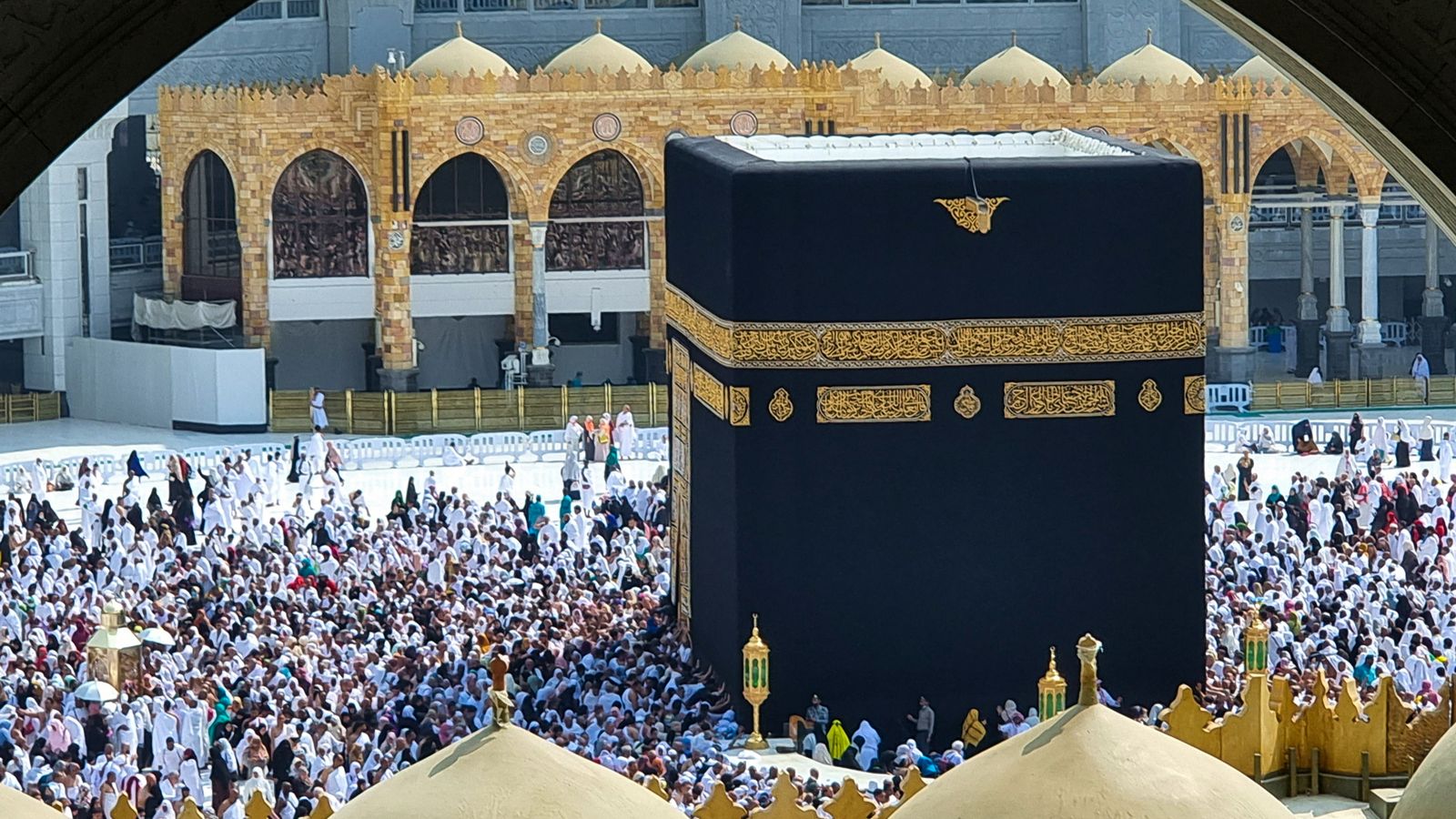
The earliest history of Mecca has remained shrouded in mystery thanks to a lack of definitive early sources. There are plenty of vague references that certainly might be about Mecca, but thus far it’s impossible to know for sure. Regardless, Mecca is the holiest site in Islam, particularly the Masjid al-Haram, or the Great Mosque of Mecca. This is home to the Ka’bah, a stone structure believed to have been built by Abraham and Ishmael.
Since the early 7th century, Muslims have been praying daily to Mecca, and it currently has a near absolute ban on flight. Exceptions are exceedingly rare, and usually are reserved for accidents in which pilgrims need to be airlifted to a hospital by helicopter.
As for why the ban exists, there are two popular theories. Only one of these theories has any basis in reality, but both remain popular anyway. The far less credible theory for why planes aren’t allowed to fly over Mecca is that they physically can’t. According to the theory, Mecca is the precise central point between Earth’s magnetic poles, and the resulting electromagnetic field makes it physically impossible for anything to fly directly over Mecca, including birds.
This theory persists despite countless pictures of birds flying over or perched atop the Great Mosque.
While not as entertaining, the other explanation for Mecca being prohibited airspace is much more reasonable. Planes are banned simply because of how religiously significant the location is to the Muslim people. The flight ban exists out of respect for the holy and historical landmarks, and to protect them from any damage that could result from a plane crash. It’s also so that the noise of airplanes flying overhead won’t disturb the pilgrims who have come to worship.
There is one other factor in play as well, which is that nobody is allowed inside Mecca unless they are Muslim. Tourists are required to provide documented proof they are Muslim if they wish to enter Mecca, and this strict Muslims only policy isn’t limited to just the ground. While it would be rather difficult to enforce, any non-Muslim passengers on a plane that flew above Mecca and the Ka’bah could technically be subjected to fines. Of course, it certainly makes more sense for the Saudi Arabian government to just ban flights entirely rather than try to enforce that policy.
North Korea
This is the most recent of all the bans we’ve talked about today, and it’s not actually instituted by the country where the no-fly zone exists. Instead, other nations have banned their planes from flying over North Korea for their own safety, thanks to North Korea’s rather erratic behaviour.
While tensions between North Korea and much of the world have been pretty high for quite some time, and various flight restrictions existed, things really went into full effect starting in 2014. It was then that North Korea began firing missiles into the Sea of Japan without warning, while also jamming navigation and communications networks. This meant a commercial flight could make its way directly into the path of one of these unannounced missile tests, and there would be no way to warn them.
In fact, that nearly happened. In August of 2017, North Korea fired an Intercontinental Ballistic Missile several hundred miles into the air while a commercial jet for Air France was flying across the Sea of Japan. When the missile splashed down, it passed through the precise location where the plane had been just 10 minutes earlier. Though Air France and the French government publically insisted that the plane had not been in any danger, France immediately prohibited all flight over North Korea and the neighbouring waters.
The United States was able to work out a deal with North Korea where the US would be informed of any upcoming missile tests so that they could continue commercial flights in the area, but this agreement didn’t last long. Within a year or two North Korea was back to throwing missiles into the air without any warning, so the United States and a constantly increasing number of other countries have decided it’s better to just not fly anywhere these missiles might be.
Tibet
So far, we’ve only talked about places that planes have been banned from flying by regulatory bodies. These are also mostly small areas. If you were to look at a map of live air traffic, these locations wouldn’t be immediately obvious. At time of writing, the tracker Flightradar24 shows nearly the entire landmass of the world covered in thousands of airplanes, and one sleigh currently headed towards Japan. There are only three areas of the world that are currently completely untouched by air traffic.
One of those is Antarctica, which shouldn’t come as a surprise. Planes can fly there depending on the weather conditions, but they rarely do as there’s almost no reason to. The next is Ukraine, but this lack of air traffic is due to the Russian invasion rather than being typical for the region. However, the third area that is completely devoid of air traffic is Tibet. The entire 2.5 million square km Tibetan Plateau does not have a single plane flying over it.
This is not because of any regulations put in place by the CCP or the Tibet Autonomous Region’s local government, and planes are theoretically welcome to fly there anytime they want to. But they would do so at their own peril.
Tibet is covered in multiple mountain ranges, including the Himalayas, and the average elevation of the Tibetan Plateau is a little over 14,000 feet. The average cruising altitude of a commercial plane is 33,000 to 42,000 feet, so at first glance it seems like this would be fine. However, in the event of certain emergency situations, such as cabin depressurization or an engine failing, the first order of business is to lower the plane’s altitude.
For depressurization in particular, this usually means dropping to an altitude of 10,000 feet or lower. Given the height of the Tibetan Plateau, this would simply not be an option.
Another issue is that flying over mountains has the potential for extreme turbulence caused by updrafts, often referred to as mountain waves. This can cause a form of clear-air turbulence, so named because it lacks any visual indication for the potential of turbulence, like clouds. While this is often seen as more dangerous because the lack of visual clues means that the pilot wouldn’t have the fasten seatbelts light on, in the case of Tibet there wouldn’t be any surprise factor as the turbulence is all but guaranteed. But even if it’s not a surprise, the severe turbulence would be reason enough to avoid the area whenever possible.
While it is extremely rare for turbulence to actually bring down a plane entirely, it still isn’t fun for anybody involved. Not only that, but severe turbulence can cause expensive damage to a plane. Usually not to anything structurally important, but luggage flying out of overhead bins can damage the interior of the plane. There’s also a higher risk of injury to passengers and crew, both from loose items in the cabin being thrown around or from the passengers themselves being thrown around if they aren’t buckled up.
Though this may be the largest area that planes actively avoid for fear of their own safety rather than because of restrictions from governmental agencies, it’s not the only place. For example, air traffic controllers are immediately updated with any reports of volcanic activity, as volcanic ash represents a very serious danger to plane engines.
However, despite the widely held belief that planes try to steer clear of the area for their own safety, one place you definitely will see planes flying on a daily basis is the Bermuda Triangle.
Key Takeaways
- Disney parks and U.S. stadiums seating 30,000+ have restricted airspace requiring planes stay at least 3,000 feet above, a rule made permanent in 2003.
- Paris prohibits flights below 6,500 feet with additional no-fly zones over government buildings and the Eiffel Tower for security and cultural protection.
- Machu Picchu’s no-fly zone was established primarily to protect the fragile Andean ecosystem and rare species from noise, vibrations, and pollution.
- Mecca has a near-absolute flight ban due to religious significance, with rare exceptions for emergency medical evacuations of pilgrims.
- Multiple nations prohibit flights over North Korea due to unannounced missile tests, after a 2017 Air France flight narrowly avoided a missile splashdown.
SideProjects Editors
The SideProjects editorial team researches, fact-checks, and structures explainers about the lesser-known tales, side narratives, and spin-offs behind major historical and contemporary subjects.
Frequently Asked Questions
Why is there a no-fly zone above Disney parks?
The no-fly zone above Disney parks was put in place as a temporary restriction following the 9/11 attacks and was made permanent in 2003. Planes are required to remain at least 3,000 feet above the parks, with prohibited airspace extending 3 km in all directions beyond the park’s borders. The same rule applies to any stadium in the United States with a seating capacity of 30,000 people or more.
What was the main reason flights over Machu Picchu were banned?
While protecting the ruins from potential crash damage was a factor, the main reason flights over Machu Picchu were banned was to protect the fragile ecosystem of the area. In 1999, Peru’s Culture Ministry banned all air travel over the 125 square mile area because the excessive noise and vibrations from helicopter propellers threatened to disrupt and damage the natural balance, and air traffic would increase pollution putting indigenous flora and fauna at risk.
Why do planes avoid flying over North Korea?
Other nations have banned their planes from flying over North Korea for their own safety due to North Korea’s erratic behavior. Starting in 2014, North Korea began firing missiles into the Sea of Japan without warning while also jamming navigation and communications networks. In August 2017, a North Korean ICBM passed through the precise location where an Air France plane had been just 10 minutes earlier, leading France to immediately prohibit all flights over North Korea and neighboring waters.
Why don’t planes fly over Tibet?
Planes avoid flying over Tibet due to safety concerns rather than regulations. The Tibetan Plateau has an average elevation of over 14,000 feet, which would make emergency altitude drops impossible (planes typically need to drop to 10,000 feet or lower for depressurization). Additionally, flying over the mountain ranges creates extreme turbulence from updrafts (mountain waves), which can cause clear-air turbulence, potential damage to aircraft interiors, and injury risk to passengers and crew.
What are the two theories for why planes don’t fly over Mecca, and which one is credible?
The less credible theory claims Mecca is the precise central point between Earth’s magnetic poles, creating an electromagnetic field that makes flight physically impossible (despite evidence of birds flying there). The credible explanation is that the flight ban exists out of respect for the holy and historical landmarks, to protect them from potential crash damage, and to prevent airplane noise from disturbing worshipping pilgrims.
What are the flight restrictions around Washington D.C.?
Washington D.C. has a Flight Restricted Zone in a 15-mile radius from Ronald Reagan Washington National Airport where only government planes and certain scheduled commercial flights are allowed, with a large section of the city completely prohibited. Extending another 15 miles beyond is the Special Flight Rules Area, where air traffic is heavily limited. These zones were temporarily created in 2003 and made permanent in 2008 as a preventative measure leading up to the U.S. invasion of Iraq.
Why did Disney need FAA approval for drone shows?
Because the no-fly zone above Disney parks is a blanket ban on any aerial craft including drones, Disney had to seek approval from the Federal Aviation Administration to fly drones on their own property. This was a year-long process that resulted in approval in 2016 for four years. The early drone shows were held at a separate part of the park rather than replacing fireworks, and current illuminated drone shows above castles are only available at Disneyland Paris.
What are the flight restrictions above Paris?
Paris has a height restriction of 6,500 feet for flights over the city. Additionally, certain areas are prohibited airspace at any height, including government buildings, military installations, and the Eiffel Tower. These regulations were put in place by France as a safety precaution because of important government buildings located within the city and because the Eiffel Tower is an important cultural landmark.
What happened when Peru’s President Ollanta Humala flew over Machu Picchu in 2023?
In August 2023, President Ollanta Humala, who had just attended a school dedication ceremony, was piloting a helicopter back and decided to take a detour past Machu Picchu to enjoy the aerial view, seemingly forgetting the rules of his own government. Another government official riding with him posted aerial photos of the location to Twitter.
What are the three areas of the world currently completely untouched by air traffic according to Flightradar24?
According to Flightradar24 at the time of writing, the three areas completely untouched by air traffic are: Antarctica (planes can fly there depending on weather but rarely do as there’s almost no reason to), Ukraine (due to the Russian invasion rather than typical conditions), and Tibet (the entire 2.5 million square km Tibetan Plateau has no planes flying over it due to safety concerns).