
Although the life of a genius may appear to be rather excellent—constantly being in the news for your latest fantastic idea, having lavish parties thrown in your name so that you can be awarded Nobel Prizes, and always knowing every answer during those interminable family Christmas games of Trivial Pursuit—in reality, it can be rather stressful.
You see, once you’ve come up with one groundbreaking idea, people expect you to continue producing ideas of the same, or even greater, calibre. While some people handle this very well, constantly bounding from achievement to achievement, soaring ever higher, and never putting a foot wrong, others do not deal so well with the pressure. In their rush to get the next great idea out to the adoring public, they crash and burn in a spectacular fireball of idiocy. In today’s episode, we’ll be discussing the latter as we take a look at some terrible ideas from genius people.
Steve Jobs and iTunes Ping
Whether you like him or hate him—and there really does appear to be very little middle ground—it is difficult to deny Steve Jobs the title of one of the most creative visionaries in modern-day computing.
Key Takeaways
- Geniuses often face immense pressure to consistently produce groundbreaking ideas.
- Steve Jobs’ iTunes Ping was a failed attempt at a music-based social network.
- Alexander Graham Bell’s experiment with six-nippled sheep resulted in inferior livestock.
- Tesla’s thought camera concept was impractical and far ahead of its time.
- Leonardo da Vinci’s mega crossbow was impractical despite mathematical soundness.
Not only is Jobs responsible for the creation of some truly innovative products, such as the iPhone and the iPad, but under his leadership, Apple designed and included in every product they sold an unrivaled suite of accessibility features for people living with various disabilities.
He was, in short, a bona fide genius. However, as we mentioned in the introduction, very few geniuses have an unblemished record, and Jobs was no exception. Among his spectacularly bad ideas were the original iMac mouse, described by Gizmodo as:
“Seemingly designed purely for looks, Apple’s one-button monstrosity is possibly the least ergonomic peripheral I’ve ever used.”
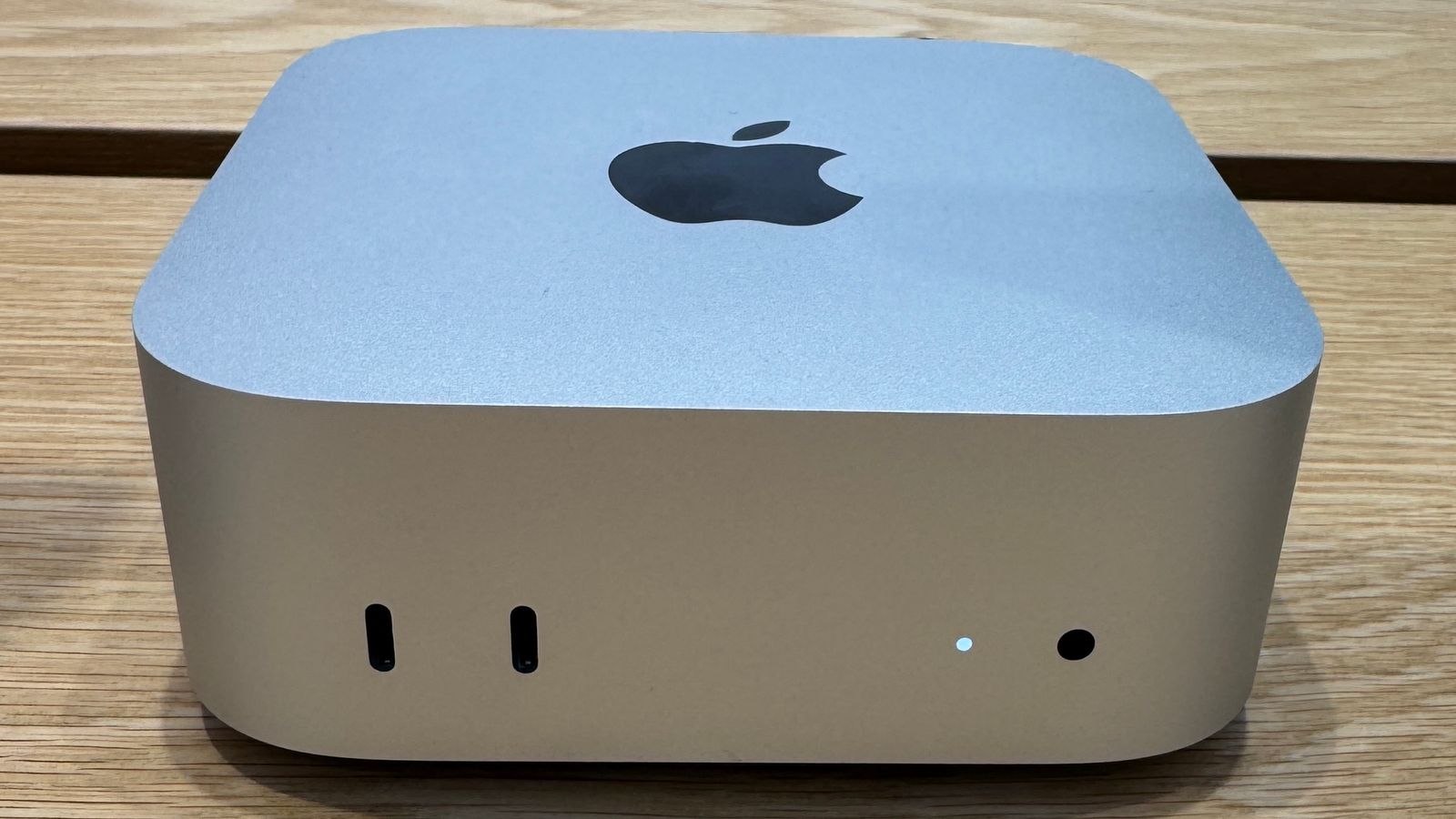
Then there was AirPower, a multi-product wireless charging mat that, although a good idea, was never released because it would have been a serious fire hazard, and iTunes Ping.
To give you a rough idea of just how much of a failure Ping was: despite it being a feature of iTunes for about two years, many people still have no idea what it was.
So, what was it?
According to advertising material from Apple:
“Ping lets you follow your favorite artists, such as Lady Gaga, Coldplay, U2, Jack Johnson, Yo-Yo Ma, and more, to see what they’re up to, check out photos and videos they’ve posted, see their tour dates, and read comments about other artists and albums they’re listening to. In addition, you can post your thoughts and opinions, your favorite albums and songs, the music you’ve downloaded from iTunes, and the concerts you plan to attend.”
Initially, people seemed eager to register with this new platform to take advantage of features that had largely been available on MSN Messenger years before, and over 1 million signed up in the first 48 hours.
Unfortunately for Apple, this success was short-lived. Even though, in some respects, a music-based social network was the next logical step for Apple—both the iPod and iTunes had been hugely successful, and due to the nature of Apple’s ecosystem, they tend to have a much more loyal customer base than other companies—Ping failed to hit the big time.
Why Did Ping Fail?
While this certainly isn’t the worst idea anybody has ever had—it’s not even the worst idea that Steve Jobs ever had—coming on the heels of a decade that had seen the birth of the iPad, the iPod, and the iPhone, it goes to show that the next bad idea can be just around the corner if you let down your guard.
Alexander Graham Bell and the Six-Nippled Sheep
When you think of the name Alexander Graham Bell, the first thing that ordinarily springs to mind is the invention of the telephone. Yes, yes, we know this is a somewhat contentious issue for some, but whether the invention was truly his or not, both the telephone and Alexander Graham Bell have become almost synonymous.
However, it transpires that the father of the technology which would eventually become the device on which you are most likely watching this video had a few other ideas that have not been so widely publicised.
One of these ideas involved the modification of sheep. So, apart from being the top contender for the most peculiar sentence ever to come out of side projects, what exactly are we talking about?
Well, outside of his work with the telephone, it transpires that Bell was rather interested in genetics and heredity. After purchasing a flock of Vermont Merinos (a type of sheep), he noticed that although almost all of the females had two functioning nipples, quite a few of them had residual, non-milk-producing, extra nipples. Furthermore, he observed that the ewes with these extra nipples appeared to be far more likely to birth twins than the normal, two-nippled ewes.
How, he wondered, could he capitalise on this to increase meat production?
Through a program of selective breeding, Bell was eventually able to produce an entire flock of ewes, all with at least four, and sometimes as many as six, milk-producing nipples.
His reason for doing this appears to have been to discover whether or not there was actually a genuine correlation between the number of milk-producing nipples and the likelihood of twins being born. This experiment failed spectacularly—or, at least, failed spectacularly if we assume that his primary goal was to greatly increase twin production and cut down on costs.
The Results
Firstly, his many-nippled ewes actually appeared to birth fewer twins than their two-nipple counterparts.
Secondly, the sheep that were born to these ewes were certainly not winners at market. According to Bell’s biographer, Catherine Mackenzie:
“The mutton was tough, the wool inferior, and a farmer once complained that local butchers declined to take them even as gifts.”
All in all, we think it is pretty safe to say that this idea was a baaaaaaaaad one.
Tesla and the Thought Camera
Ever been struck with an idea of such utter brilliance that you know—absolutely know—it has the potential to change the world forever, but when you try to remember it later, the details are, at best, hazy?
The trouble with such ideas is that they never seem to occur to you when you’re sitting on the sofa with a laptop in front of you, or even when you have ready access to a piece of paper and a pen. We all lead exceptionally busy lives, and it’s just not always practical to act on our best ideas when they are fresh. Tesla and his thought camera could have made this problem a thing of the past.
What if, upon having this world-changing idea, you could simply take a photograph of it for future reference?
This was basically what Tesla had in mind. His hypothetical device would allow the user—be it someone at home or a medical professional hoping to gain a better understanding of someone’s mental state—to snap a quick picture of exactly what was going on in the brain at that moment. We’re not talking about your average brain scan here; we’re talking about looking directly into the thoughts of the individual.
Now, we would be the first to admit that if he had actually been capable of creating such a device, it would have been truly remarkable! Not only could it be used for trivial matters, such as remembering the details of a dream, but imagine how much easier it would be for the police to discover whether or not someone was guilty. Lie detector tests are incredibly inaccurate, but asking someone whether they committed a specific crime and taking a photograph of their thoughts at that moment could almost guarantee an accurate response.
Watch the Video
Open Video
Video Briefing
Terrible Ideas from Genius People
Unfortunately, there was just one problem. Although Tesla spoke about his device at great length and reportedly spent quite a lot of time working on the concept, he appears to have had absolutely no idea how it could be practically achieved. Even now, some 80 years after his death, we are still nowhere close to being able to capture genuine images from people’s brains.
Whether or not this was a terrible idea is somewhat divisive. While some people claim his idea helped to pave the way for brain-scanning technology—an idea with little to no supporting evidence—others argue that the concept was completely ridiculous and that such things will never be possible. We suppose we’ll just have to wait and see on this one.
Isaac Newton and the Philosopher’s Stone
For most people—at least most people outside of America—the words “the Philosopher’s Stone” are usually preceded by the words “Harry Potter.” As all Harry Potter fans can tell you, the Philosopher’s Stone is a mythical elixir with the power to turn any metal into pure gold.
Although a surprising number of people believe that the Stone is a creation of J.K. Rowling, it turns out that, before she started campaigning against the rights of LGBTQ people, she spent her time filling her most popular creation with other people’s ideas—and the Philosopher’s Stone is just one of them. The idea that lead, or indeed any other base metal, could be turned into gold goes back so far that its origins have been lost to time. However, over the years, a number of notable geniuses have picked up this project and run with it, and perhaps the most notable of these was Isaac Newton.
That’s right—the same man who invented calculus and helped to unify the theory of gravity believed that, with the right blend of chemicals, it was possible to convert any metal into gold.
The thing is, believing this during the 17th century was entirely normal, and we could perhaps forgive Newton his folly if it weren’t for the fact that he dedicated so much time to it. According to a trove of documents that has been discovered over the years, including one which appears to contain a recipe for “Philosophic Mercury” (a chemical that would allegedly break down metals into their molecular components before the Stone reassembled them as gold), Newton spent almost as much time working on alchemy as he did on his more fruitful projects.
Imagine, if you will, just how much more he could have given to the human race had he not been dragged into this mystical pseudoscience.
Gottfried Leibniz: We Live in the Best of All Possible Worlds
Gottfried Leibniz was, without question, a true genius whose ideas—well, most of his ideas—were truly revolutionary. Among his greatest achievements were co-inventing calculus alongside Isaac Newton, coming up with an idea for a mechanical calculator, and bringing the binary numbering system—without which computers simply could not work—into reasonably common usage.
Sadly, Leibniz had what some might argue was an exceptionally limiting scientific handicap: an unquestionable and unshakeable faith in God. This belief led him to the “best of all possible worlds” theory, an answer to a question many people who have questioned the existence of an omnipotent deity often ask, “If God is so great, why is there so much suffering in the world?”
The answer put forward by Leibniz, and later borrowed and expanded upon by philosopher Alvin Plantinga, is that “God can actualize any possible world He desires, and it would be inconsistent with His nature to actualize a world that is not as good as another possible world He could have actualized.”
What this means in practice is that if we take the perfection of God as a given, then it would have been genuinely impossible for Him to create a world that was not the very best it could possibly be.
Perhaps after being pressed a little harder on this point—possibly on the grounds that it doesn’t actually answer the question—he added [and we are paraphrasing here] that in order for people to feel things such as joy, love, or contentment, the converse must logically exist. Otherwise, people would have nothing to compare it to and therefore would not know that they felt happy, content, or loved.
If we carefully lay to one side the whole issue of whether or not there actually is any sort of God, the argument has, using the kindest phrasing possible, a few minor flaws.
At least to us, the sheer amount of suffering throughout history seems somewhat disproportionate. While you might be able to form a cogent argument around the idea that depriving people of food for a week would certainly make them appreciate it when it came back, depending on whose statistics you believe, about 9 million people die from starvation every year—and to us, that seems excessive.
Similarly, although the occasional murder might provide the necessary feelings of grief required to make people appreciate times without murder, the idea is stretched far beyond breaking point if you try to argue that suffering during, say, the Holocaust is absolutely unavoidable in a perfect world.
And what about animals? In 1 Corinthians 15, it is stated that everything with a natural body has a spiritual body, but nowhere in the Bible does it say that there is a place for animals in heaven or some sort of alternative version for them. If we take this as an indication that animals are not truly sentient beings, then why would suffering outside the human race be necessary?
Even taking into account the inevitable flaws of any argument about something which cannot fundamentally be proven or disproven, this idea seems to be particularly terrible.
Leonardo da Vinci and the Mega Crossbow
The basic idea of the crossbow is, quite literally, older than Jesus! Believed to originate from ancient China, the fundamental principles of this weapon haven’t changed much from its inception to today.
For those of you unfamiliar with this remarkable invention, the basic crossbow uses the same concept as its more traditional counterpart: a string is drawn back, and when released, the stored energy is transferred to a bolt or quarrel (rather than an arrow). However, the design itself is different. Firstly, the bow is held parallel to the ground rather than perpendicular.
Secondly, it has a stock, somewhat similar to that of a rifle, allowing it to be held against the shoulder while firing. Thirdly, instead of drawing back the string and holding it until ready to shoot, it clips into a mechanism that can be released via a trigger on the stock.
Although a crossbow is slower to reload and usually less accurate than a traditional bow, it is more powerful and requires far less skill to use. This made it exceptionally popular at several points throughout history. So popular, in fact, that it achieved the globally recognized stamp of all things fun and/or excellent: being banned by the Catholic Church.
One reasonably famous historical figure who was a big fan of the crossbow was Leonardo da Vinci. However, he was not entirely satisfied with the design, so he set about improving it. The result? A 27-yard (about 24.7 meters) siege weapon, which would have required a team of men to operate.
Mathematically at least, da Vinci’s ultimate crossbow would likely have worked. He took great pains in calculating the predicted stresses and choosing materials capable of withstanding them. The problem was, it just wasn’t practical. Not only would it have required a large team to operate, but it would also have been exceptionally heavy, difficult to maneuver and aim, would have taken an inordinate amount of time to reload, and would not have been very accurate.
Yes, it would undoubtedly have struck fear into the hearts of any group of soldiers advancing toward it and would likely have been capable of inflicting serious damage on various fortifications. However, armies already had cannons for that purpose, and they had had them for quite some time.
Now, we’re not saying that da Vinci’s crossbow doesn’t sound amazing, nor that we would decline the opportunity to go and play with one if someone built it, but if we use da Vinci’s other inventions as a yardstick to measure this one, it unfortunately falls into the category of terrible.
Key Takeaways
- Geniuses often face immense pressure to consistently produce groundbreaking ideas.
- Steve Jobs’ iTunes Ping was a failed attempt at a music-based social network.
- Alexander Graham Bell’s experiment with six-nippled sheep resulted in inferior livestock.
- Tesla’s thought camera concept was impractical and far ahead of its time.
- Leonardo da Vinci’s mega crossbow was impractical despite mathematical soundness.
SideProjects Editors
The SideProjects editorial team researches, fact-checks, and structures explainers about the lesser-known tales, side narratives, and spin-offs behind major historical and contemporary subjects.
Frequently Asked Questions
What was Steve Jobs’ iTunes Ping?
iTunes Ping was a music-based social network feature introduced by Apple. It allowed users to follow their favorite artists, see what they were up to, check out photos and videos they posted, see tour dates, and read comments about other artists and albums. Users could also post their thoughts, favorite albums and songs, and concerts they planned to attend.
Why did iTunes Ping fail?
iTunes Ping failed despite initial success because it did not hit the big time. While it seemed like a logical step for Apple given the success of the iPod and iTunes, it did not sustain user interest beyond the initial sign-ups.
What was Alexander Graham Bell’s idea involving sheep?
Alexander Graham Bell experimented with modifying sheep by selectively breeding them to have multiple milk-producing nipples. He hypothesized that this would increase the likelihood of the sheep birthing twins, thereby increasing meat production.
What were the results of Alexander Graham Bell’s sheep experiment?
The results were unsuccessful. The many-nippled ewes actually birthed fewer twins than their two-nippled counterparts, and the sheep born to these ewes were of inferior quality, with tough mutton and inferior wool.
What was Nikola Tesla’s thought camera?
Nikola Tesla’s thought camera was a hypothetical device that would allow users to take a photograph of their thoughts for future reference. Tesla envisioned it as a way to capture ideas and memories, but he had no practical idea of how to achieve this.
What was Isaac Newton’s involvement with the Philosopher’s Stone?
Isaac Newton spent a significant amount of time working on alchemy, including the idea of the Philosopher’s Stone, which was believed to have the power to turn base metals into gold. He dedicated nearly as much time to this as he did to his more scientifically fruitful projects.
What was Gottfried Leibniz’s ‘best of all possible worlds’ theory?
Gottfried Leibniz’s ‘best of all possible worlds’ theory suggested that God, being perfect, could only create the best possible world. This theory aimed to explain why there is suffering in the world, arguing that it is necessary for the experience of joy and other positive emotions.
What was Leonardo da Vinci’s mega crossbow?
Leonardo da Vinci designed a massive crossbow that was about 27 yards long and required a team of men to operate. While it was mathematically sound, it was impractical due to its size, weight, difficulty in maneuvering, and slow reloading time.
Why was Leonardo da Vinci’s mega crossbow considered a terrible idea?
The mega crossbow was considered a terrible idea because, despite its potential power, it was impractical for use in battle. It was too heavy, difficult to aim, slow to reload, and not very accurate, making it less effective than existing weapons like cannons.
Sources
- Original Side Projects video: Terrible Ideas from Genius People
- Hero image source by Seasider53 / openverse, by.