
Technology that by all rights should be gathering dust in museums, but instead, is still part of our everyday lives to some degree. These technologies have survived technological revolutions, digital transformations, and still, they persist, providing valuable, often unappreciated services to our modern world.
So, buckle up as we take a journey into the past to understand five pieces of incredible outdated technology that we still use today.
Fax Machines
Few devices have shown as much tenacity as the seemingly archaic fax machine. A blast from the past that continues to survive in our ultra-modern, hyper-connected world, the fax machine offers a fascinating testament to the surprising longevity of certain technologies.
Key Takeaways
- Fax machines persist in healthcare, legal, and governmental sectors due to security and reliability.
- Steam power remains crucial in power generation, industrial processes, and maritime applications.
- Windows XP is still used in military systems, ATMs, and legacy industrial equipment for reliability.
- Floppy disks are used in aviation, industrial systems, and educational settings for their reliability and simplicity.
- Pagers are valued in healthcare and emergency services for their reliability and interference-free operation.
Fax machines themselves have a longer history than you may initially imagine. They were invented all the way back in 1843, when Scottish inventor Alexander Bain created a groundbreaking device capable of reproducing images sent through electrical transmission—the “Facsimile machine.” But don’t get carried away—we don’t want you picturing a shiny new Epson on Queen Victoria’s desk. Bain’s machine was a very, very crude thing, and seemingly didn’t even really work that well—but still, a fax machine it was!
It wasn’t until the mid-20th century that fax machines as we know them today came to prominence, with them eventually being an indispensable office tool by the 1980s. For their time, they were revolutionary, allowing near-instantaneous transmission of documents over considerable distances, and thus shrinking the world and fostering a new era of global connectivity.
But all good things must come to an end, and right as the fax machine stood at the apex of its glory—the undisputed champion of direct document distribution, it was mercilessly cut down by a new contender, the internet.
Yet, despite all but total decimation and obsolescence thanks to the internet, the dinosaur-like fax machine persists, holding onto a niche but vital position. Two questions naturally arise from this: who is holding onto them, and why?
One of the staunchest fortresses of fax machine use is the healthcare sector. Despite the advent of new technologies, fax machines continue to be extensively used across hospitals, clinics, and pharmacies to transmit sensitive patient records and prescriptions. A faxed document, being less vulnerable to hacking, is considered safer than an emailed one. This adherence to fax machines fulfils stringent regulations like the Health Insurance Portability and Accountability Act in the U.S., which recognizes faxing as a secure method of conveying patient information.
Furthermore, legal and governmental domains, known for their slow pace in adopting new technologies, also continue to rely heavily on fax machines. This is in part because a fax transmission includes a confirmation page, which serves as a robust legal proof of delivery. These sectors often prefer sticking with tried-and-true methods until the new ones prove to be unequivocally more advantageous, thus giving the fax machine an extended lease of life.
On the cultural front, Japan, a country famous for its technology, ironically, still holds the fax machine in high regard. The ability to send handwritten notes and original documents is valued immensely, reflecting the society’s preference for a personal touch in communication. Despite the increasing presence of modern digital communication alternatives, this cultural perspective allows the fax machine to thrive in Japanese homes and businesses.
Further still, many small businesses, despite having access to digital options, still rely on fax machines for their low cost, ease of use, and immediate confirmation of receipt. Also, in regions where internet connectivity is unstable or unpredictable, fax machines provide a more reliable and accessible alternative.
So, there we have it—despite the fact you probably haven’t seen one since 2007, it turns out that fax machines are still everywhere. Apparently!
Steam Power
When you think of steam power, what springs to mind? We hazard to guess it was probably burly men of the black and white days, frantically shovelling coal into one of these great beasts like their lives depended upon it. Certainly, this is nothing if not a fair representation of the technology, but like the fax machine before it, steam power is still everywhere!
But first—some background. The steam story starts with Thomas Savery, an English military engineer, who patented the first crude steam engine all the way back in 1698. This early machine, primarily used for pumping water from mines, was the spark that ignited the future of steam power.
The technology came of age in the 18th century, with the improvements brought by Thomas Newcomen and, more famously, James Watt. Watt’s enhancements to the Newcomen engine ushered in the Industrial Revolution, fundamentally altering the socio-economic fabric of society. The steam engine, the beating heart of this revolution, powered everything from factories and mills to locomotives and steamships, fostering trade, travel, and urbanization.
However, as the 20th century rolled in, and internal combustion engines and electricity became dominant, steam power receded into the backdrop, taking on a perception of “outdated technology”—an outdated relic that now is the preserve of steampunk fiction and rose-tinted period dramas the world over. But as we already know, this perception couldn’t be more wrong.
The most significant application of steam power today is in the realm of power generation. Whether it’s nuclear, coal, natural gas, or geothermal energy, steam power forms the backbone of most electricity production worldwide. These power plants heat water to create steam, which then drives turbines connected to electricity generators.
Nuclear power plants, in particular, utilize steam power to a massive extent. The nuclear fission process generates heat, which converts water into high-pressure steam. This steam spins turbines, which then generate electricity. As of now, nuclear energy accounts for around 10% of the world’s electricity, all thanks to our supposedly antiquated friend, steam power.
Geothermal power plants leverage steam power by tapping into the Earth’s natural heat. In regions with geothermal activity, steam produced underground is used to rotate turbines and generate electricity, providing a sustainable and eco-friendly energy source.
In industry too, the role of steam is irreplaceable. The food and beverage industry uses steam for a multitude of processes, including sterilization, cooking, and drying. Its ability to deliver heat at a constant and controlled temperature makes it an invaluable asset.
Moreover, the maritime industry, especially cruise ships and some icebreakers, continue to use steam power. These ships, often powered by nuclear reactors or LNG (Liquified Natural Gas) boilers, use steam turbines due to their reliability, durability, and high power-to-weight ratio.
Interestingly, steam power has also made a comeback in automotive applications… kind of… a bit. In an era where reducing carbon emissions is of paramount importance, steam-powered cars are being revisited as a potential environmentally friendly solution. Companies like Cyclone Power Technologies have developed modern steam engines that burn fuel more cleanly and efficiently than conventional internal combustion engines, and supposedly will make a great fit for automobiles one day. But as for whether or not this plays out, we’ll just have to wait and see.
Windows XP
Now let us delve into the digital world and discuss a real titan that many of you will no doubt remember fondly. The real OG of OSs, that old humble friend that always worked, had no integrated ads, and didn’t come with the litany of seemingly moronic user interface choices that define its younger descendants—we speak, of course, of Windows XP.
Short for eXPerience, Windows XP was launched on the 25th of October 2001, at a time when personal computers were becoming ubiquitous in homes and workplaces. By the mid-2000s, Windows XP was the most popular operating system worldwide, boasting over 400 million users. Its user-friendly interface, robust performance, and wide compatibility made it the preferred choice for businesses, government agencies, and individual consumers alike.
This wasn’t to last however, and with the evolution of technology, and Microsoft releasing newer operating systems like Windows Vista, 7, 8, and 10, Windows XP was officially retired in 2014. By this time, it had been many years since most of us had seen a copy of XP in all of its glory anyway, and no doubt, many of us had long since assumed it dead. The announcement of its official discontinuation generated little response besides a murmured “Oh, they hadn’t already done that?” But little did we know, Windows XP was still going strong then, and continues to go strong to this day.
Watch the Video
Open Video
Video Briefing
Terribly Outdated Technology that we Still Use...
The first modern use is, perhaps somewhat eyebrow-raisingly, military systems. Military systems often prioritize stability, security, and dependability over cutting-edge updates and features. Given that Windows XP is a thoroughly tested and reliable operating system, it therefore still finds use in critical areas within the defence sector. This could include on-board computers for various military vehicles or missile defence systems where the software has been proven to function correctly and reliably.
However, it’s important to note that the versions of Windows XP used in these systems are typically heavily modified to meet the specific needs of the military, including hardened security features to resist cyber-attacks—so no need to panic about Judgement Day being brought about by a neglected piece of software; it’s all very intentional, and very understood.
Beyond this, Windows XP is still prevalent in sectors beyond the military. It’s not uncommon to find this vintage operating system in ATMs, factories, and even hospitals. These industries often employ specialized equipment that was designed during the XP era and has proven difficult or prohibitively expensive to upgrade. Furthermore, in developing countries, XP remains popular due to its low system requirements and compatibility with older hardware.
In addition to this, many hobbyists and retro-computing enthusiasts continue to use Windows XP due to its cultural significance and the nostalgia it evokes. It’s not unusual to find communities online that share tips and tricks for keeping XP machines running smoothly, demonstrating the affectionate following this OS continues to enjoy.
So, while it’s undeniable that Windows XP is an outdated technology by today’s standards, it’s equally clear that it has managed to carve out a space for itself in our modern world. Its enduring use in sectors as demanding as the military testifies to the robustness and reliability of this two-decade-old operating system.
From running critical defence systems to powering nostalgic gaming rigs, Windows XP’s influence continues to permeate corners of our technological landscape. Despite the security concerns and logistical challenges associated with maintaining these aging systems, the cost, time, and potential risk of upgrading to newer systems often outweigh the downsides.
Floppy Disks
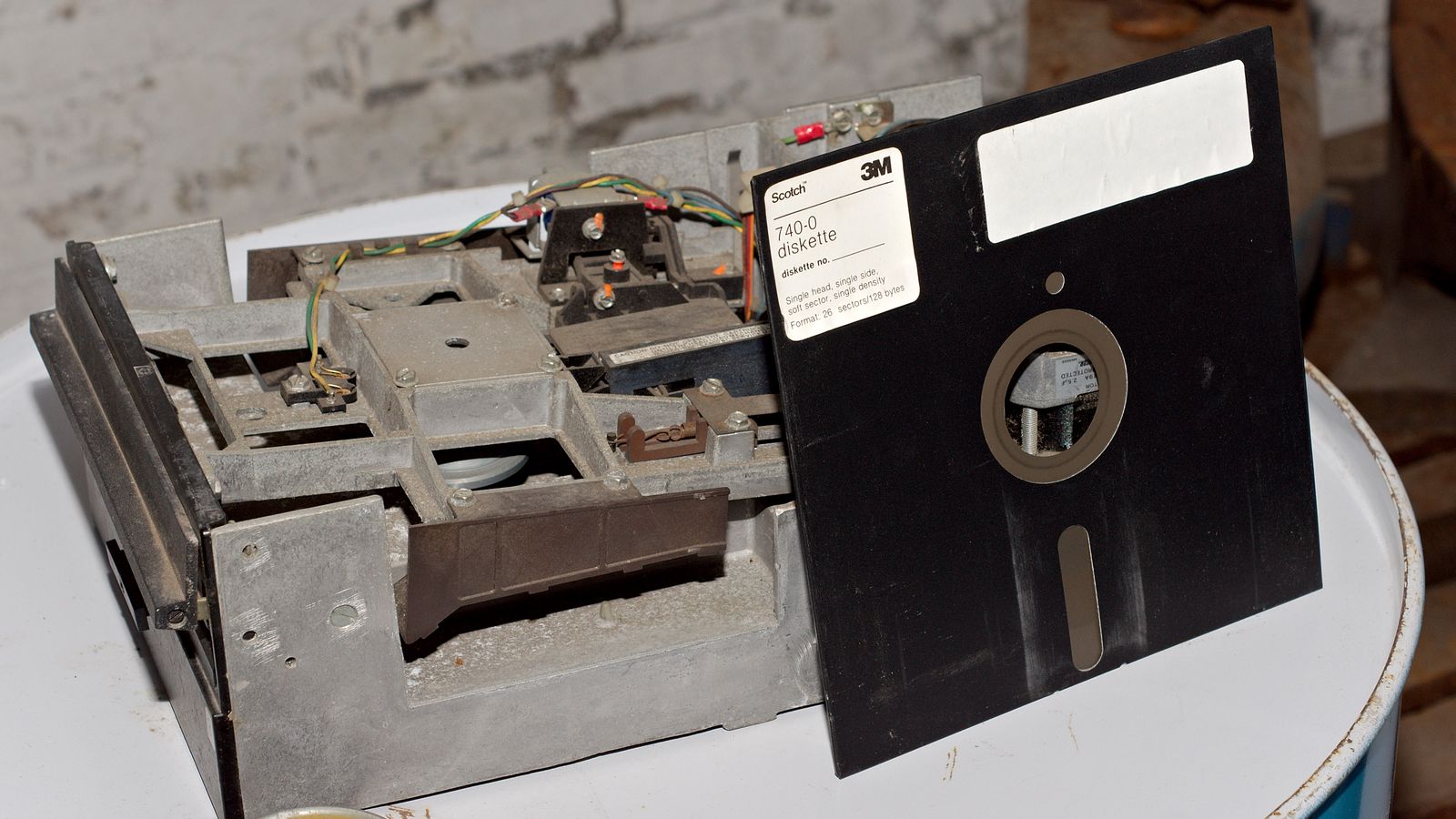
Let’s stick with computing technology for now, and take a look at an iconic symbol from the dawn of personal computing—the floppy disk, or as the Zoomers would call it, the save icon. Debuting in the late 20th century, these plastic squares of laughably small memory storage may seem like artifacts from a bygone era. Yet, surprisingly, their use endures in certain corners of the modern world.
The history of the floppy disk began in the 1970s, when IBM was looking for a method to load microcode into their System/370 mainframes. This led to the creation of the 8-inch floppy disk—a bendable, or “floppy,” magnetic storage medium that could hold a whopping 80 kilobytes of data.
By the 1980s, the floppy disk had shrunk in size but grown in importance. The 5.25-inch and later the 3.5-inch floppies became the primary means of software distribution, data transfer, and storage. Floppy disks were the standard for saving documents, transferring data, and installing software throughout the personal computer revolution.
However, with the advent of technologies such as CDs, DVDs, USB flash drives, and cloud storage, all of which could hold significantly more data, the floppy disk’s reign came to an end in the early 21st century. Yet, these little squares of magnetic storage refused to disappear entirely.
But where? And why? Windows XP made sense at least, but what possible need could there be for a storage device of such a small size when you can get a herculean sized USB stick for no more than the spare change in your pocket?
Well, one notable sector that continues to use floppy disks is aviation. The Boeing 747, for instance, uses 3.5-inch floppy disks to load critical navigation databases. The reason? These systems are incredibly reliable, and the cost and risk associated with updating such critical systems are high.
Furthermore, legacy industrial systems, such as those in manufacturing or power plants, often still use floppy disks—these systems were built to last and updating them is not always straightforward or economical. Floppy disks are used for tasks like machine updates or transferring diagnostic information.
Incredibly, the U.S. nuclear arsenal relied on 8-inch floppy disks for its strategic command and control system until as recently as 2019. The logic was that these older systems, disconnected from the internet, were more secure against cyber threats, which, in full context, actually makes a lot of sense.
It’s not just in niche industrial or aviation sectors that floppy disks persist. Musicians and music producers often use them for vintage synthesizers or drum machines that rely on these old storage mediums. There’s also apparently a certain charm to the tactile experience of inserting a floppy disk and the unique sound they produce.
Moreover, floppy disks are also used as a learning tool in some computer science classes to teach students about the fundamentals of data storage. Their simple, easily accessible design makes them excellent educational resources.
Ultimately, in our high-speed, high-capacity, digital world, the humble floppy disk stands as a remarkable vestige of the early days of personal computing. Despite being overshadowed by newer storage technologies, floppy disks have clung to relevance in various sectors, driven by factors such as system reliability, security, economic considerations, and even a sense of nostalgia.
Pagers
For our final piece of gone but not forgotten technology, let us turn to the humble pager—a device synonymous with the 1990s, and one we are willing to bet you haven’t seen in pushing twenty years.
Some background—back before smartphones dominated our pockets and wrists, personal communication was championed, of course, by the mighty pager. Also known as beepers due to the beeping sound they emitted (how ever did they think of that), pagers were born in the 1950s, initially intended as a communication tool for doctors in busy hospitals.
By the 1980s and ’90s, they had broken out of the hospital wards and found their way into the mainstream, becoming an essential tool for businesspeople, emergency services, and even teenagers wanting to stay connected. At their peak in the mid-’90s, there were around 61 million pagers in use worldwide.
However, the advent of the cellular phone and, subsequently, the smartphone led to the pager’s decline in popularity among the general public. So who still uses them today? The answer to that question takes us right back to where the story of the pager began—in hospitals and medical facilities, both of which remain some of the largest users of pagers.
Despite seeming technologically primitive compared to modern smart devices, pagers offer distinct advantages in a healthcare setting. Chief among which is the fact that they operate on a different frequency than mobile phones, which means they’re less likely to interfere with sensitive medical equipment.
Pagers are also more reliable in areas where cellular reception is poor or non-existent, such as in basements or within thick-walled buildings often found in hospital environments. Unlike smartphones, which can run out of battery within a day, pagers have a much longer battery life—often lasting a week or more—which is crucial in emergency situations.
In addition, pagers are often more efficient for communication in hospitals. A page to a doctor or nurse can deliver a concise, immediate message, allowing healthcare professionals to better triage requests based on urgency.
Beyond hospitals and paramedics, pagers also find usage with the other emergency services. Fire departments and search and rescue teams use pagers due to their reliability; again, particularly where cellular coverage is unreliable. Furthermore, the pager network also often remains functional even when natural disasters knock out cell towers, providing critical communication capabilities.
Even outside these sectors, pagers are used in restaurants for customers waiting for a table, in schools for teachers on playground duty, and in various other places where quick, reliable communication is required.
Ultimately, in a world where we can video call someone on the other side of the globe from a device that fits in our pocket, the humble pager might seem hopelessly antiquated. Yet, as we have seen, this idea couldn’t be further from the truth. Their usage in healthcare, emergency services, and various other sectors is a testament to their reliability, simplicity, and directness—qualities that sometimes outshine even the most advanced smartphones. Their endurance in our fast-paced, technologically advanced world underlines an essential truth: there’s often significant value in the seemingly outdated, particularly when it continues to fulfil its purpose so effectively.
Key Takeaways
- Fax machines persist in healthcare, legal, and governmental sectors due to security and reliability.
- Steam power remains crucial in power generation, industrial processes, and maritime applications.
- Windows XP is still used in military systems, ATMs, and legacy industrial equipment for reliability.
- Floppy disks are used in aviation, industrial systems, and educational settings for their reliability and simplicity.
- Pagers are valued in healthcare and emergency services for their reliability and interference-free operation.
SideProjects Editors
The SideProjects editorial team researches, fact-checks, and structures explainers about the lesser-known tales, side narratives, and spin-offs behind major historical and contemporary subjects.
Frequently Asked Questions
What is the history of the fax machine?
The fax machine was invented in 1843 by Scottish inventor Alexander Bain. It became prominent in the mid-20th century and was an indispensable office tool by the 1980s.
Why are fax machines still used in the healthcare sector?
Fax machines are still used in healthcare because a faxed document is considered safer than an emailed one, fulfilling stringent regulations like the Health Insurance Portability and Accountability Act in the U.S.
What are some modern applications of steam power?
Steam power is used in power generation, including nuclear, coal, natural gas, and geothermal energy. It is also used in the food and beverage industry, maritime industry, and even in some automotive applications.
Why is Windows XP still used in military systems?
Windows XP is used in military systems because it is a thoroughly tested and reliable operating system, prioritizing stability, security, and dependability over cutting-edge updates and features.
What is the history of the floppy disk?
The floppy disk was created in the 1970s by IBM for loading microcode into their System/370 mainframes. By the 1980s, the 5.25-inch and 3.5-inch floppies became the primary means of software distribution and data transfer.
Why are floppy disks still used in aviation?
Floppy disks are used in aviation for loading critical navigation databases because these systems are incredibly reliable, and the cost and risk associated with updating such critical systems are high.
What are the advantages of pagers in a healthcare setting?
Pagers offer distinct advantages in healthcare settings, such as operating on a different frequency than mobile phones, being more reliable in areas with poor cellular reception, and having a much longer battery life.
Why are pagers still used by emergency services?
Pagers are used by emergency services due to their reliability, particularly in areas where cellular coverage is unreliable, and because the pager network often remains functional even when natural disasters knock out cell towers.
What is the cultural significance of fax machines in Japan?
In Japan, fax machines are valued for their ability to send handwritten notes and original documents, reflecting the society’s preference for a personal touch in communication.
Why do some small businesses still rely on fax machines?
Small businesses still rely on fax machines for their low cost, ease of use, and immediate confirmation of receipt, especially in regions where internet connectivity is unstable or unpredictable.