
Studying the universe as a whole has always come with a lot of uncertainty. Humans have only existed for just a short period on earth, with civilization only really appearing in the last few thousand years, while the Universe, as far as we can tell, is around 13.7 billion years old. When astronomers peer out into the blackness of space, what they’re really looking at is just snippets of those billions of years, depending on how far away the object is. Analyzing these moments and how they differ over time, astronomers can then infer things about the history of the universe.
But when it comes to the future of everything, the picture isn’t quite so clear, and currently, there are a handful of different hypotheses about what the end of the universe could look like. Today we’re going to break these down one by one, explain the arguments for and against the various options, and leave you with your own thoughts about what might happen at the end of time itself.
The Big Crunch
As a young physicist, Einstein, along with the majority of his contemporaries, believed in what is called a static universe. This model depicts everything as essentially unchanging, with nearly every object we can see inhabiting the place in the universe that it always has, for, well, forever. That all started to change though by the time Edwin Hubble came around, and published his findings that the universe was not static, but actually expanding, a discovery based off the red shifting light of stars in distant galaxies.
Key Takeaways
- The universe’s future is uncertain, with several hypotheses about its end.,The Big Crunch suggests the universe will collapse back into a singularity.,The Big Chill, or heat death, envisions an ever-expanding, cold, and empty universe.,The Big Rip proposes a violent end where the universe expands so fast that it tears apart.,Many unknowns exist, including dark energy’s behavior and the universe’s shape.
This discovery shook everything up, because with the universe now in motion, scientists had to grapple with two new problems: its beginning, and its end.
Figuring out the beginning was rather straightforward. The logic goes that if galaxies are all expanding away from each other, then all matter must have all originated from a common point. This, of course, is the Big Bang theory, which by this point has a mountain of evidence supporting it. So, we’re fairly confident in what happened before, or, at least, the alternate theories would need to make up their own separate video.
But peering forward into the far future is where things get really muddy, and there isn’t a single scientific consensus, so let’s go through the various options.
Up first we have the Big Crunch, aptly named because it is quite literally the opposite of the Big Bang. In this scenario, the universe continues to expand long into the future, with galaxies and their stars still cruising through space, propelled forward from the force of the Big Bang. However, over a very long timeframe, say, hundreds of billions of years, their velocity begins to slow down, being counteracted by none other than the force of gravity. On these immense distances, it’s true that gravity is incredibly weak, but it is still present, meaning that given enough time it could slowly lower the speed of all these galaxies and stars until they are no longer moving away from each other.
But the pull continues. Soon, all the matter in the universe begins to reverse course, slowly being pulled back inward as the force of gravity grows ever stronger as distances between objects grow smaller. Interestingly, in this phase, a civilization peering out into the vastness of space would see that nearly everything is blue-shifted, instead of the red-shifting that we see today.
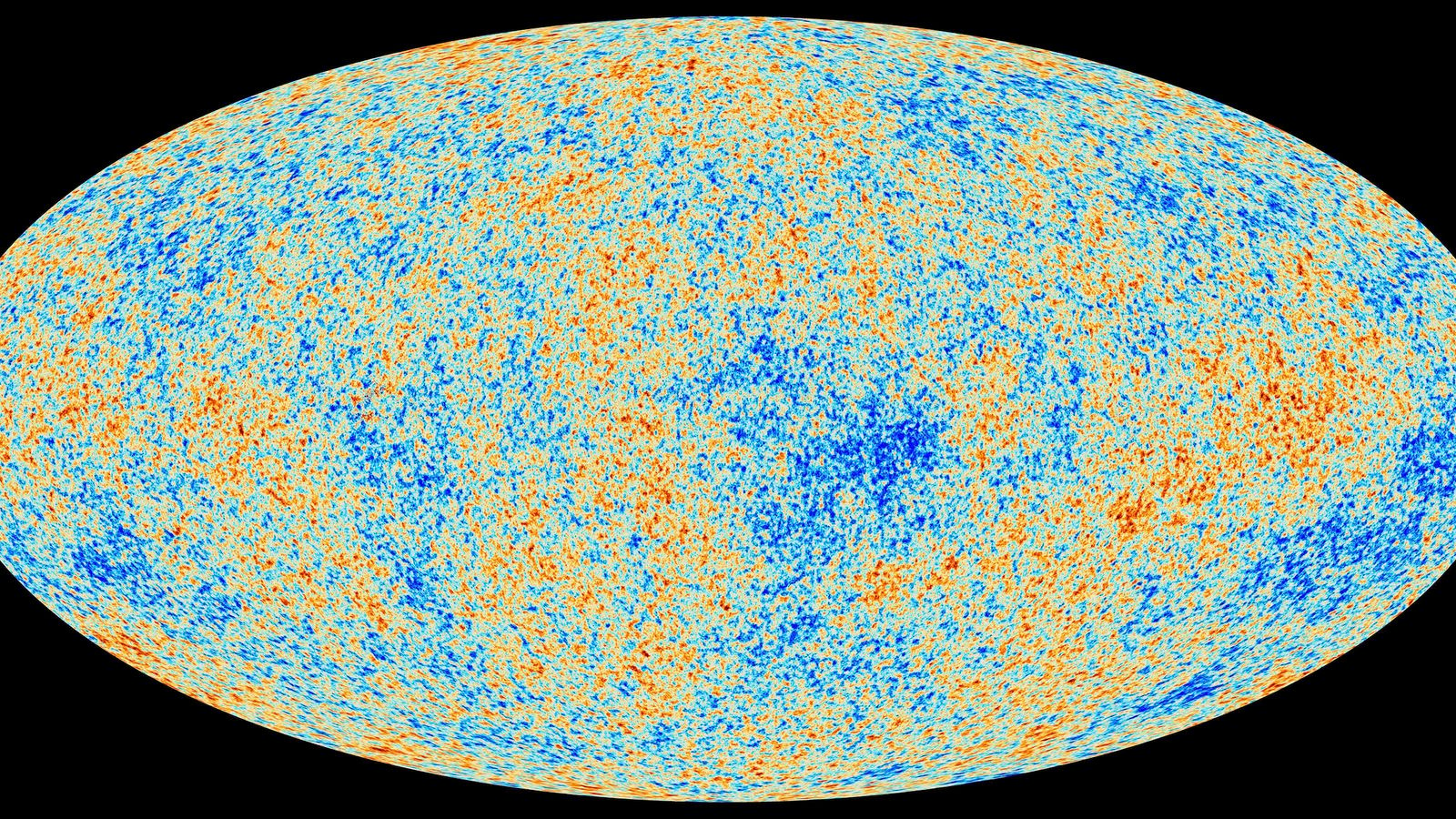
And as time goes on, the universe would begin to change in even more ways than this. For example, the Cosmic Microwave Background Radiation, or CMB, would begin to heat up. Put simply, the CMB is a fairly uniform distribution of microwave radiation that fills the entire universe.
You can think of it as a remnant of the Big Bang, and it’s so faint and cool today that only the most sophisticated radio telescopes can detect it. However, if the universe continues to shrink under the force of gravity in the Big Crunch scenario, the CMB would begin to heat up. About a million years before the end, as galaxies are beginning to merge, the CMB would start to get so hot that increasing temperatures of stars would no longer be able to radiate their heat into space, and would start to essentially cook themselves until they run out of fuel at a much faster rate than normal.
In the final moments, everything would be colliding, and there would no longer be any semblance of structure as everything collapses into a single point, where it would be crushed into an infinitely hot and infinitely dense singularity. The Big Crunch has concluded.
If this final, hypothetical singularity containing the entire mass of the universe sounds familiar, that’s because it’s oddly reminiscent of the one that supposedly preceded the Big Bang. This obvious comparison has led to the idea that this final crunch could then explode in a second Big Bang. Continuing down this train of thought, it would only make sense that our universe was not the first to have such a big bang, and that the repeating birth and death of the universe is stuck in an infinite, self-sustaining cycle. This is called a cyclic model of the universe, or the Big Bounce if you prefer, and it’s a pretty fascinating idea that leads to a whole other rabbit hole of concepts.
However, as fascinating as it might be, the Big Crunch doesn’t have a ton of support in the modern scientific community. Most of the doubt comes down to dark energy, and the current observations that the expansion of the universe is speeding up due to the repelling force of dark energy, as opposed to gradually slowing down as we would expect if a Big Crunch were in the future. Of course, it does still have some supporters with alternative models, they just have a bit of an uphill battle to fight.
The Big Chill
Next up is the Big Chill, also called the heat death of the universe, one of the more widely supported theories in the present day.
In this scenario, the expansion of the universe never slows down, in fact, it accelerates, and continues forever. Because the total amount of matter in the universe is finite, over time, it slowly begins to exhaust all of its resources. 800 billion years from now, assuming people are still around, they will no longer be able to observe galaxies outside of our local cluster. In a hundred trillion years, star formation will come to an end.
Fast forward 100 quintillion years, and interactions between stars or dead stellar remnants will lead to the gradual collapse of the entire galaxy into the supermassive black hole at its center. By now, the universe is beginning to get quite dark, with most light only coming from accretion disks around black holes.
As we get into the incredibly far future beyond even this point, there are two possible paths, depending on whether or not protons decay. As far as we can tell, protons are a perfectly stable particle, but there is a chance that given an enormous, unfathomable amount of time they could decay into lighter subatomic particles.
Essentially, if protons do decay, the process of heat death will happen a bit quicker. If not, we’re going to be looking at time scales well beyond human comprehension. In 101500 years, the remnants of stars will begin gradually transforming into solid spheres of iron, atom by atom, through quantum tunneling. Some elements will take longer to tunnel into iron than others, with some estimates for silicon taking as long as 10 to the power of 32000 years. Yes, that’s a 1 with 32 thousand zeros after it.
Given enough time, quantum tunneling should also begin turning these iron stars into black holes, and by this point, black holes are really the only feature of this dark universe. But this still isn’t the end, because even black holes and their singularities aren’t eternal. Thanks to Hawking Radiation, black holes actually evaporate their mass very, very slowly, in the form of incredibly weak waves of light.
What’s eventually left after all black holes have evaporated is an ever-expanding universe containing nothing but a few subatomic particles and highly redshifted electromagnetic radiation. Almost no interactions take place by this point, with the universe’s size continuing to grow, its density continues to shrink, meaning that over the eons its average temperature will approach absolute zero.
Watch the Video
Open Video
Video Briefing
What is the Ultimate Fate of the Universe?
This is the heat death, and its honestly rather bleak. In fact, if it truly is the ultimate fate of everything we know, there is absolutely no way to avoid it.
The Big Rip
The Big Rip starts off similar to the heat death, with the universe continually expanding. This is, of course, a well-observed phenomenon. What’s also been observed is that this expansion is accelerating, which led to the idea that the power of dark energy itself may be increasing uncontrollably. If this is true, the end of the universe might not be a slow, drawn-out heat death, but rather a violent and cataclysmic disaster.
Imagine the far future, which, according to estimates, could be anywhere from 22 billion to nearly 200 billion years from now. As the universe continues to expand, structures will begin to be permanently separated from one another, as the distance between them will be growing so rapidly that even light itself can’t traverse it. This shrinking of interaction is called the Cosmological Event Horizon, the distance at which one can retrieve information.
As the universe expands, this horizon grows ever smaller. And no, this doesn’t break the rule that nothing can travel faster than light, even though the objects seemingly are, because this rule only applies to physical matter, not the fabric of spacetime itself.
From our vantage point, first, our galaxy cluster will be isolated, then, all that will be left is our galaxy, which, by the way, at this point in the future will have already collided with Andromeda and have become the Milkdromeda galaxy. As we sit in Milkdromeda, staring out into the empty vastness of space, it wouldn’t be long before the expansion of space time would begin to tear apart even our own galaxy as the force of gravity becomes powerless to hold its shape. A few million years later, planets would become separated from their stars, and it won’t be long until the expanding space time makes its way down the food chain to the planet itself.
Planets are then torn apart, then molecules, then atoms and subatomic particles. Some models say that it is at this point that the fabric of spacetime itself tears and time ends. But, even if that doesn’t happen, by this point, even if any particles still remain, there is no way for them to interact with one another as the distance between them approaches infinity, and time has essentially become meaningless.
As you can probably imagine, this catastrophic finale to our universe isn’t widely supported because it relies on specific properties of dark energy that we simply have no understanding of.
Unpredictability
The Freeze, Rip, and Crunch are generally considered the big three, but there’s a million more nuances that could affect all of these outcomes and this why this subject matter leans so heavily into speculation.
For example, there’s the curvature of spacetime. You can think of this as the shape of the universe itself, which can be described as either closed, open, or flat, but then even these are influenced by how powerful the force of dark energy is, and as a reminder, we’ve yet to confidently measure any of these things.
And there’s a few other things that could totally throw a wrench into the engine if true. Since we know so little about Dark Energy, even if we were to measure its strength and projection into the future, who’s to say it won’t randomly change? In fact, something similar may have already happened according to inflation theory.
Just after the Big Bang, in less than a trillionth of a trillionth of a trillionth of a second, the early universe increased in diameter by a factor of at least 1026, which is equivalent to growing from something the size of a water molecule to something more than 10 light years in length. This sudden growth spurt then abruptly ended, and the expansion of the universe continued at a much slower rate. As for WHY this happened, well, again, your guess is about as good as anybody’s, we just know that it probably did happen, which can you leave you wondering if there’s a chance something similar could happen once again.
We also have to factor in the possibility of a vacuum decay. This is a pretty complicated topic, but the basic idea is that quantum fields, specifically the Higg’s field, which permeate the entire universe, may not be in their most stable state, almost like a ball teetering on the edge of a slope. Hypothetically, this field could, at any moment, tunnel into a more stable state, as if the ball rolled down the hill to the bottom of the slope.
If this were to happen, the true vacuum would begin spreading throughout the universe. In some models, this happens everywhere instantly, and would mean the immediate end of everything we know. In other models this decay would spread at the speed of light, meaning there’s a chance that lots of galaxies and other structures actually escape it thanks to the expansion of the universe, if you remember the idea of the Cosmic Horizon.
Basically, if the vacuum decay starts far enough away, it might never catch up with us.
We must also consider the chance that our universe is just one of many in a larger multiverse, and if ours were to, say, collide with another, that would probably be catastrophic.
At the end of the day, there are just too many unknowns. The best we can do is continue researching the universe around us and make our best judgments. After all, it was as recent as the 1920s that most scientists believed the Milky Way galaxy constituted the entire universe, and learning about the existence of other galaxies opened humanity’s horizons to unimaginable distances. If that’s how different our worldview was just a hundred years ago, imagine what we might discover in the century to come, and how drastically it might change everything we think we know.
Key Takeaways
- The universe’s future is uncertain, with several hypotheses about its end.,The Big Crunch suggests the universe will collapse back into a singularity.,The Big Chill, or heat death, envisions an ever-expanding, cold, and empty universe.,The Big Rip proposes a violent end where the universe expands so fast that it tears apart.,Many unknowns exist, including dark energy’s behavior and the universe’s shape.
SideProjects Editors
The SideProjects editorial team researches, fact-checks, and structures explainers about the lesser-known tales, side narratives, and spin-offs behind major historical and contemporary subjects.
Frequently Asked Questions
What is the Big Crunch theory?
The Big Crunch theory suggests that the universe will eventually stop expanding and begin to contract due to gravity, leading to a collapse into a singularity.
What is the Big Chill theory?
The Big Chill, or heat death of the universe, proposes that the universe will continue to expand forever, leading to a state where all matter and energy are evenly distributed and no further work can be extracted.
What is the Big Rip theory?
The Big Rip theory suggests that the universe will expand at an accelerating rate due to dark energy, eventually tearing apart all structures, including galaxies, stars, planets, and even atoms.
What role does dark energy play in the fate of the universe?
Dark energy is believed to be causing the acceleration of the universe’s expansion, which influences theories like the Big Rip and the Big Chill. Its properties and future behavior are still not fully understood.
What is the Cosmic Microwave Background Radiation (CMB)?
The CMB is a uniform distribution of microwave radiation that fills the entire universe, considered a remnant of the Big Bang. In the Big Crunch scenario, it would heat up as the universe contracts.
What is the Cosmological Event Horizon?
The Cosmological Event Horizon is the distance at which information can no longer be retrieved due to the accelerating expansion of the universe. It grows smaller as the universe expands.
What is the significance of proton decay in the Big Chill theory?
If protons decay, the process of heat death in the Big Chill theory would occur more quickly. If protons do not decay, the timeline for heat death would be much longer.
What is the cyclic model of the universe?
The cyclic model, or Big Bounce, suggests that the universe goes through repeated cycles of expansion and contraction, with each Big Crunch leading to a new Big Bang.
What is vacuum decay?
Vacuum decay refers to the hypothetical scenario where the Higgs field tunnels into a more stable state, potentially leading to the immediate or gradual end of everything we know.
What is the multiverse theory?
The multiverse theory proposes that our universe is just one of many in a larger multiverse. A collision with another universe could be catastrophic.