
As the field of archaeology has advanced in the last couple centuries, we’ve learned a great deal about the history of the human race, and along the way we’ve solved several mysteries that had perplexed scholars for years. We’ve uncovered tons of evidence regarding who built the pyramids and how they did it, we recently figured out how the Romans made such durable concrete, and much more.
But for all we’ve learned, there are still several pieces of history whose secrets continue to elude even the most dedicated of researchers. Today we’re going to dive into four of the most popular unsolved mysteries of history, ones that despite our best efforts, still don’t seem to have a convincing answer.
What Happened to the Maya?
Sometime around the year 250 AD, a civilization known as the Maya began growing in central America. Centered around the Yucatan Peninsula and the modern-day nations of Mexico, Guatemala, and Belize, the Maya grew rapidly, with the development of many city-states, complex trade routes, alliances, and conflicts.
Key Takeaways
- The Maya civilization experienced a rapid political collapse and population decline around the 9th century AD, with over 80 theories proposed to explain this event.
- Alexander the Great’s tomb remains missing, with numerous theories and unsuccessful searches failing to locate his final resting place.
- The Late Bronze Age Collapse around 1200 BC saw the destruction of multiple civilizations, with theories ranging from natural disasters to invasions by the Sea People.
- Gobekli Tepe, discovered in the 1960s, is the oldest known human settlement, dating back to 9600 BC, challenging previous understandings of civilization’s origins.
- Despite extensive research, many historical mysteries remain unsolved, highlighting the complexities and gaps in our understanding of the past.
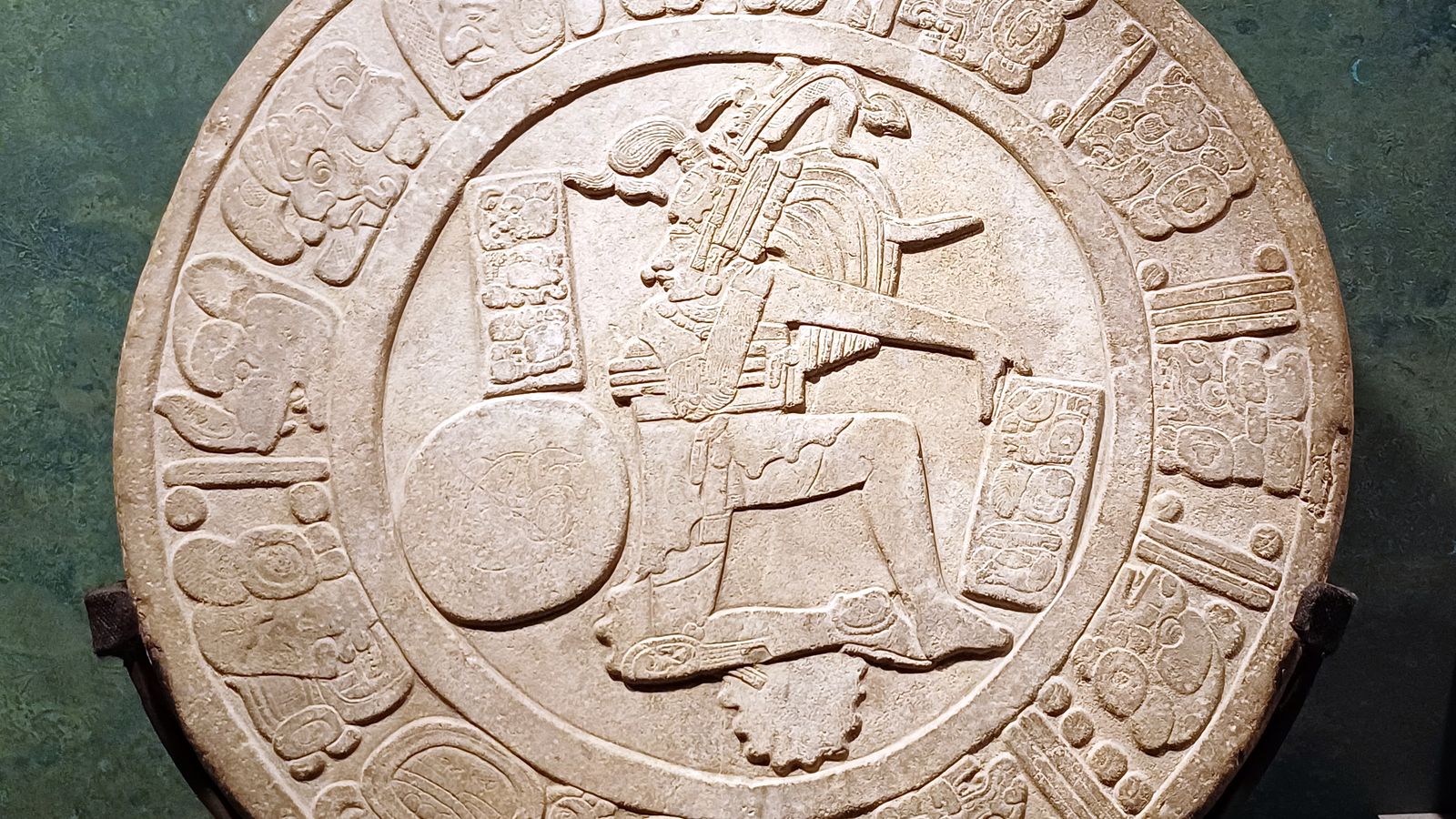
But there was a lot more to the Maya than just this. They were responsible for creating grand step pyramids, detailed sculpted monuments, and art from jade and obsidian. Perhaps most impressively, they were also excellent mathematicians and astronomers, able to make calculations about celestial bodies with high accuracy, and had a numbering system so advanced it even included a symbol for zero, already placing them a step above most of their contemporaries around the world at the time.
However, nearly all of this came to an end around the 9th century AD, in an event known as the Maya Collapse. According to the archaeological and scattered records, it was around this time that in a span of around 50 years, the entire civilization experienced a near complete political collapse, rapid population decline, and the abandonment of nearly every major city. This story can be seen through the decline of dated monuments, as the Maya were well-known to inscribe the year on many of the structures they erected. The archaeological record shows that cities one after another stopped putting up dated structures as organized society began to collapse, and the last date was inscribed on a stone tablet in the year 909.
The Maya didn’t completely die out, of course, and were still around hundreds of years later when Cortes arrived to conquer the Aztecs further north, and millions of their descendants are still alive today. However, they never came close to regaining the level of central organization and power that they’d held at their peak.
There have been over 80 different theories attempting to explain the collapse of the Maya, and there is no universally accepted theory among scholars, so we’ll go over the few that are the most likely.
The first is drought. According to the drought theory, many consecutive years of poor rainfall caused a decline in agricultural fertility, uprooting organized society as it became too difficult to feed a large population. This easily explains the abandonment of cities, as people moved back into the countryside to hunt, scavenge, and fish for themselves in smaller, more sustainable communities.
Evidence for this theory is the finding that for a period of about 200 years, coinciding with the collapse, it seems that Mesoamerica experienced a warming period, and analysis of geological layers from the time show that there was a decrease in rainfall in many of these years. It sounds pretty comprehensive, but critics of the theory point out that if there really was a devastating, civilization ending, decades long drought, it’s odd that the Maya seem to be the only ones affected, while other civilizations to the north and south continued their business as usual, or even flourished during this period of time.
Agricultural collapse also could have been the culprit, even without a drought. Despite having highly advanced farming methods, including the use of feces as fertilizer and man-made dams and reservoirs, it’s possible that the Maya could have expanded too quickly, leading to rapid soil erosion, deforestation, and the decline of biodiversity that took a toll on their food production.
There’s also the disease theory. Some have suggested that there may have been an epidemic of tropical parasites, such as the protozoan trypanosomiasis or intestinal roundworms like Ascaris. Parasites like these can cause a number of symptoms, but the most devastating of which likely would have been diarrhea, which would have hampered nutritional health and hydration of people at a young age, while simultaneously making them more susceptible to other illnesses or conditions.
And finally, there’s the war theory. There were certainly rival Maya states that regularly went to war with each other, but a major war between them is not usually implicated as a cause for the total societal collapse. Instead, several researchers have proposed that it was a foreign invasion that was responsible. The Toltec was a nearby civilization in Mexico that reached its peak right around the time of the Mayan collapse, and since there is already evidence that they raided and attacked a few places along the borders of the Maya, it’s a fair assumption that they may have led a large-scale campaign into Mayan territory, destroying and disrupting society there to the point where it never recovered.
But at the end of the day, we just don’t know which of these, if any, are true. It could easily be a combination of some of them or something else that we’ve yet to discover. On top of this, there are even researchers who don’t believe a collapse happened at all, with one prominent scholar outright saying
“…in my belief no such thing happened.”
It seems this is one archaeological mystery we aren’t going to solve any time soon.
What Happened to Alexander’s Tomb?
Alexander the Great is undoubtedly one of the most famous people in history. Tutored by Aristotle before inheriting the Macedonian throne from his dad, at just 20 years of age, he initiated a military campaign against the Persians. Ultimately, his incredible success on the battlefield would result in him ruling over one of the largest empires in history, stretching from Greece to India, though he would only rule over this vast territory briefly, as his untimely death from Malaria at age 32 would see the empire he’d constructed splintered and divided almost immediately after his passing.
Legendary leaders such as Alexander are generally given the most elaborate of tombs, and with his power and influence, you’d expect his to rival the Mausoleum of the First Qin Emperor and its terracotta army, or perhaps the Taj Mahal and its timeless beauty.
But actually, we have no clue what his tomb looks like, or where his body even is. Shortly before his death, he requested that he be buried in the temple of Zeus Ammon, at the Siwa Oasis in Egypt, as Alexander was widely perceived, even by himself, as a literal son of Zeus. After his death, his body was placed in an elaborate coffin of gold, but complications arose before his funeral could even begin.
Firstly, his wish to be buried at the Siwa Oasis was outright ignored. On the way back to Macedonia, the funerary caravan carrying his coffin was hijacked by one of his generals, Ptolemy I, who sent his body to Memphis, Egypt, where it was held on display for a few years. Then, after consultation with an oracle a few years later, it was moved to a more permanent mausoleum in Alexandria, where his tomb became a place of pilgrimage for believers in the Ptolemaic cult of Alexander the Great, who revered him as a god.
After this, the details get a bit murky, and it’s mostly due to the Romans. It’s said that in 61 BC, General Pompey the Great stole Alexander’s jewel-studded cloak, and that a few years after this, the tomb was visited and possibly looted by Caesar. It’s also alleged that Cleopatra stole gold from the mausoleum to finance her war against Octavian, after which the tomb was visited by Augustus, and then looted by Caligula, who stole his breastplate.
In the year 199 AD, the tomb was sealed to protect it. 200 years after this John Chrysostom asked to visit Alexander’s resting place and wrote,
“his tomb even his own people know not.”
Over the next few centuries, descriptions of his tomb got less and less clear, with perhaps the last somewhat reputable mention coming from Leo the African in 1494 who described a small chapel in the middle of the ruins of Alexandria.
Watch the Video
Open Video
Video Briefing
Unsolved Mysteries of History: The Questions Your Teacher Couldn’t Answer
But today, we have absolutely no clue where this is. The Egyptian Supreme Council for Antiquities have financed nearly 150 official attempts to locate the tomb, and they have all come up empty handed. There are theories and scattered evidence that he is secretly the true body in the tomb of Phillip II of Macedon in Greece, or that he did end up actually being buried in Siwa like he wanted to, but there’s no consensus and only circumstantial evidence at best for most theories. What’s unfortunate is that there’s a good chance it’s in the part of the ruins that are now underwater.
What Caused the Bronze Age Collapse?
The Bronze Age was a period of history lasting from around 3300 BC to about 1200 BC, characterized by the widespread use of bronze for tools and weapons. The posterchild of the Bronze Age were the civilizations in the Eastern Mediterranean, along the coasts of today’s Greece, Turkey, Egypt, and Cyprus. Here, trade flourished, cities were booming, and war was regular, all the things you’d expect to see in a historical record from a fairly populated region with lots of resources.
However, sometime around the 12th Century BC, much of this suddenly collapsed. In contrast to the Maya collapse we discussed showing the abandonment of cities and a declining population, the Late Bronze Age Collapse was a notably violent and intense event. In the 50 or so years between 1200 and 1150 BC, the Hittite Empire, the New Kingdom of Egypt, the Mycenean Kingdoms in Greece, and the Kassites of Babylon all suddenly and abruptly fell into a period of fragmentation, chaos, and destruction.
Archaeological records show dozens upon dozens of cities and settlements in the region that were leveled to the ground, many of which were never occupied again. Population levels dropped, reading and writing disappeared, and trade routes had to start from scratch. Now it should be mentioned that initial estimates of the scale of this destruction, which was originally cited as EVERY city in the area, have been found to be a bit exaggerated, but it was still a very significant amount. For example, nearly every site on the coast of Turkey shows a destruction layer corresponding to this time, a layer seen in sites in many other countries, with many also showing evidence of burning.
The mystery here is what could have possibly caused all of these great empires and trading kingdoms to suddenly crumble or enter a period of serious cultural upheaval and economic dysfunction.
We’ll start with the ones that blame natural disasters. The Hekla 3 volcanic eruption in Iceland has been dated by some to the time period we’re describing, and is believed to have caused a volcanic winter that could have easily led to the events of the Late Bronze Age Collapse. However, this date is a bit murky, with other estimates putting the eruption closer to the year 900 BC, long after the collapse had taken place, and it’s very possibly that it wasn’t as powerful as some think.
Another explanation is a large drought, which is almost always an explanation whenever an ancient society collapses. This drought could have not only harmed agriculture, but also led to large-scale migration that disrupted and destabilized population centers, leading to civil wars, invasions, you name it.
Other researchers have also suggested that an early strain of the bubonic plague could be responsible, a hypothetical precursor to the Black Death.
One interesting theory is that iron, and the new weapons that accompanied its invention, were ultimately responsible. Proponents of this theory claim that as ironworking spread in popularity from present day Bulgaria and Romania, small groups of Balkan raiders or mercenaries armed with higher quality spears and longswords could face off against the larger armies of the Mediterranean. This would be especially true if said warriors had developed techniques to counter chariot warfare, which was heavily relied on in the region. One historian posits that if numerous groups of fast-attacking mercenaries like this proved they could easily cut down chariots, people could begin to think that their army has no winning chance, leading to deserting, which would only make the raids more common and more deadly.
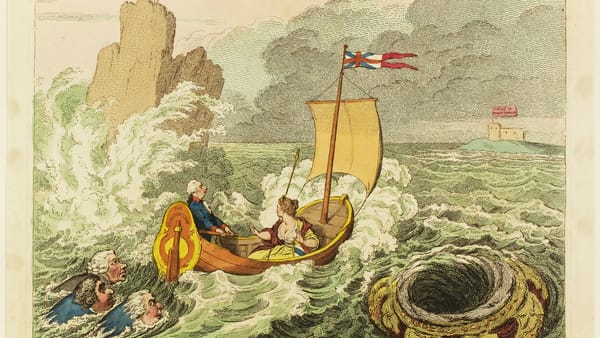
But most intriguing of all is the theory that the Late Bronze Age Collapse came as a result of the elusive Sea People. The Sea People are mentioned in several historical texts, including by Pharoah Ramesses II, and were known to be in the process of attacking the Mediterranean civilizations before and during the Bronze Age collapse. For example, one inscription reads,
“…they came boldly sailing in their warships from the midst of the sea, none being able to withstand them.”
Putting together these ideas, many historians came to the conclusion that the societal collapse may have been caused by these large-scale, organized invasions from some mysterious people, who likely originated from modern-day Libya and Morocco. While some tribes associated with the sea people, such as the Lukka, are named in historical texts, many of their origins are a complete mystery. Others interpret the Sea People theory as to not only include the attacks, but also the mass arrival of migrants traveling by boat, presumably after some natural disaster.
As for who the Sea People were, and what part they played in the Bronze Age Collapse, if any, is still very much unclear. The most likely culprit is probably several of the possible causes acting together. It doesn’t seem very likely that a single one of them could bring down an entire civilization, much less several at once, but two or three of them hitting at the same time would certainly have disastrous effects.
Who Built Gobekli Tepe?
For decades, it was taught that human civilization began around 6000 BC in the fertile crescent, a region in the middle east encompassing parts of modern-day Syria, Turkey, and Jordan, and then spread out from there. However, as we investigated more sites and as improved technology gave us access to more data, we now know that there were several places on earth where civilization arose independently. We refer to these beginnings as cradles of civilization, and there are currently believed to be six cradles, ranging from Mesopotamia to China to central America.
And just as were starting to really nail down a timeline for the development of cities, writing, and organized society, one discovery came along and threatened to shake up everything we thought we knew about our own history.
This was Gobekli Tepe, a site in southeastern Turkey which was first discovered in the 1960s, but whose true potential wasn’t fully realized until the 21st century. As of a report in 2021, less than 5% of the site has been excavated, and we’ve already uncovered some groundbreaking discoveries.
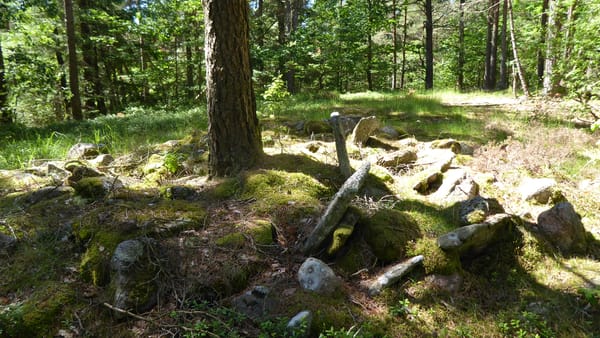
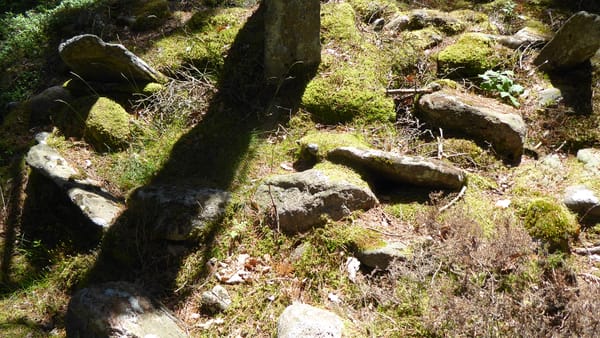
For starters, Gobekli Tepe appears to be the oldest known human settlement on earth, with its earliest inhabitants possibly setting up camp as long ago as 9600 BC, nearly 12,000 years ago. But it isn’t just a collection of old huts and tools. Gobekli Tepe features numerous megaliths, circular compounds, and intricately carved pillars.
Many of these pillars are decorated with detailed images of animals, such as lions, bulls, gazelles, ducks, and snakes, while other pillars seem to represent humanoid figures, with arms and loincloths carved onto them. In fact, a lionlike sculpture was found just outside the settlement, in an area filled with flint and limestone fragments, perhaps indicating that the people here had specific areas designated as a sort of sculpting workshop, showing just how important it was to the people living there. Human bone fragments have been located, and thousands of tools have been recovered, including many blades and projectile points, which were either for arrows or spears.
But all of this discovery has really led to more questions than answers. For instance, why were settlements of this scale coming together in Turkey 12,000 years ago? Were they the first to develop sustainable agriculture, or were they brought together by some ancient religion? And speaking of religion, what part does it play in the iconography of the site?
With no written language to even attempt to decipher, we don’t know much about the people who built this place. What’s more, is that we’re actually quite lucky to have found it in the first place. When it was inhabited, the area was wooded and filled with plants and animals, but it was fairly easy to locate in the modern era as its visible mounds now sit in the middle of an arid desert, which is what caught the attention of its first excavators in the 1960s. It makes you wonder what other sites from this time period, or perhaps even earlier, are hidden around the world in less fortunate environments, perhaps buried deep underground or covered by thick vegetation, holding the secrets to humanity’s distant past, just waiting to be unearthed.
Key Takeaways
- The Maya civilization experienced a rapid political collapse and population decline around the 9th century AD, with over 80 theories proposed to explain this event.
- Alexander the Great’s tomb remains missing, with numerous theories and unsuccessful searches failing to locate his final resting place.
- The Late Bronze Age Collapse around 1200 BC saw the destruction of multiple civilizations, with theories ranging from natural disasters to invasions by the Sea People.
- Gobekli Tepe, discovered in the 1960s, is the oldest known human settlement, dating back to 9600 BC, challenging previous understandings of civilization’s origins.
- Despite extensive research, many historical mysteries remain unsolved, highlighting the complexities and gaps in our understanding of the past.
SideProjects Editors
The SideProjects editorial team researches, fact-checks, and structures explainers about the lesser-known tales, side narratives, and spin-offs behind major historical and contemporary subjects.
Frequently Asked Questions
What are some of the most famous unsolved mysteries in history?
Some of the most famous unsolved mysteries in history include the collapse of the Maya civilization, the location of Alexander the Great’s tomb, the cause of the Bronze Age Collapse, and the origins of Gobekli Tepe.
What happened to the Maya civilization?
Around the 9th century AD, the Maya civilization experienced a near-complete political collapse, rapid population decline, and the abandonment of nearly every major city in an event known as the Maya Collapse.
What are some theories about the Maya Collapse?
Theories about the Maya Collapse include drought, agricultural collapse, disease, and foreign invasion, particularly by the Toltec civilization.
What happened to Alexander the Great’s tomb?
Alexander the Great’s tomb has been lost to history. After his death, his body was moved several times and eventually ended up in Alexandria, but its current location remains unknown despite numerous attempts to find it.
What caused the Bronze Age Collapse?
Theories about the Bronze Age Collapse include natural disasters like volcanic eruptions and droughts, the spread of disease, the introduction of iron weapons, and invasions by the Sea People.
Who built Gobekli Tepe?
The builders of Gobekli Tepe are unknown. The site, located in southeastern Turkey, is believed to be one of the oldest known human settlements, dating back to around 9600 BC.
What is significant about Gobekli Tepe?
Gobekli Tepe is significant because it challenges our understanding of the timeline of human civilization. It features megaliths, circular compounds, and intricately carved pillars, suggesting a level of organization and artistic skill much earlier than previously thought.
What are some of the artifacts found at Gobekli Tepe?
Artifacts found at Gobekli Tepe include detailed carvings of animals and humanoid figures on pillars, human bone fragments, and thousands of tools such as blades and projectile points.
What is the significance of the Maya’s mathematical and astronomical achievements?
The Maya were excellent mathematicians and astronomers, able to make accurate calculations about celestial bodies. They had a numbering system that included a symbol for zero, placing them ahead of many of their contemporaries.
What is the Sea People theory regarding the Bronze Age Collapse?
The Sea People theory suggests that the Bronze Age Collapse was caused by large-scale, organized invasions from mysterious people, likely originating from modern-day Libya and Morocco. These invasions, along with possible mass migrations, could have destabilized and destroyed Mediterranean civilizations.
Sources
- Original Side Projects video: Unsolved Mysteries of History: The Questions Your Teacher Couldn’t Answer
- Hero image source by José Luiz / openverse, by-sa.