War movies have been a staple of cinema since its inception, and over the decades they’ve raked in billions of dollars at the box office, with hits like Saving Private Ryan and Dunkirk making hundreds of millions on their own worldwide. But as well-made as many of these films can be, the constraints of making war movies viewable and entertaining to an audience often lead to more than a few inaccuracies in their portrayal. Today we’re going to dispel a few of the myths that have built up over the years, and set the record straight on some common inaccuracies many of these movies have in common.
Artillery as an Afterthought
One of the most common myths, especially in depictions of the world wars, is the idea that the majority of the combat consisted of gunfights between individual soldiers or even hand-to-hand combat as waves of soldiers rushed enemy trenches.
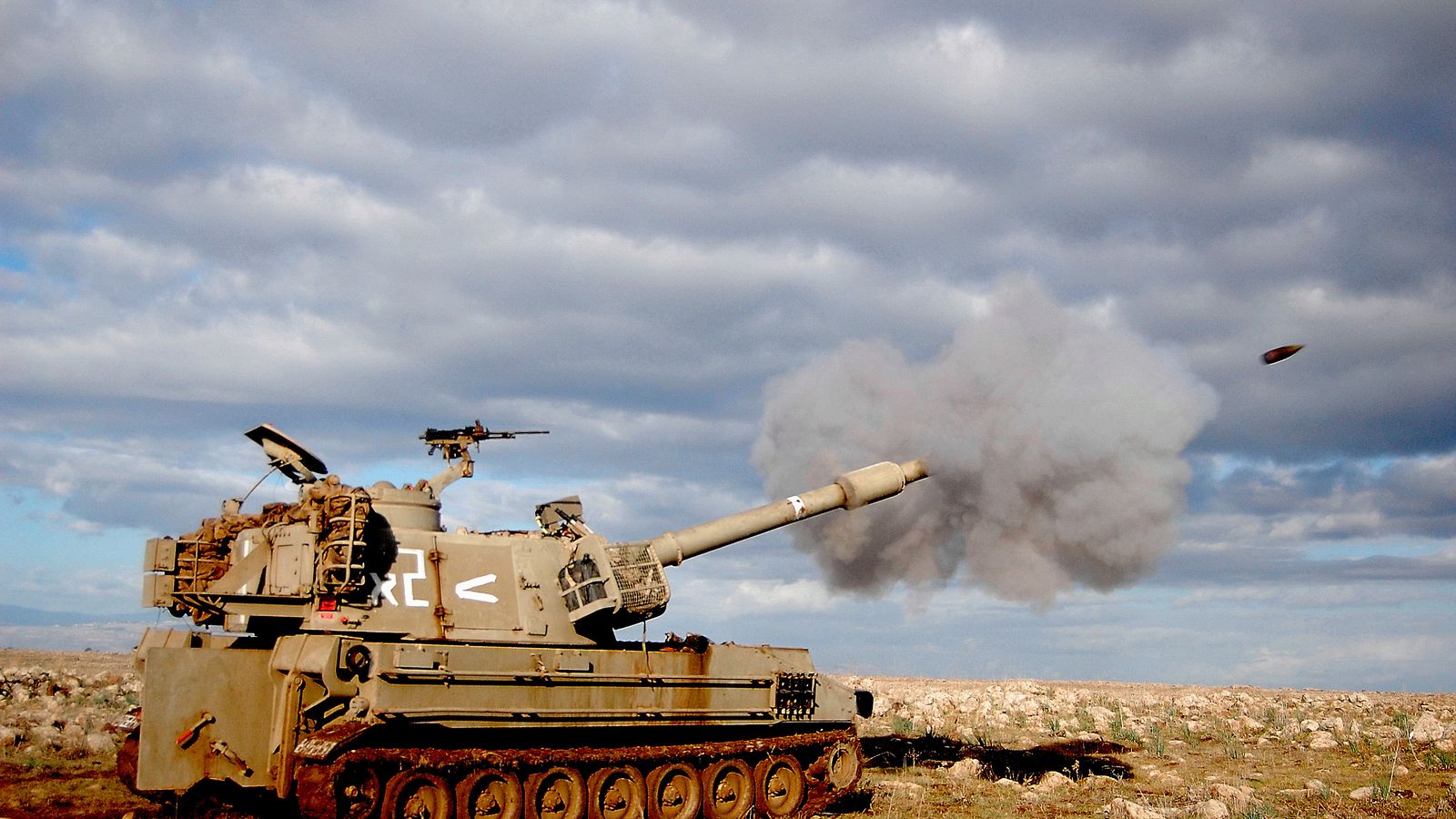
Make no mistake, this was definitely a large aspect of the fighting, but it pushes aside the immense role that artillery played in many of these conflicts. Often times artillery is depicted as a sort of background noise, a constant booming that kicks up dirt around the trenches while the troops and the main character charge forward.
Key Takeaways
- War movies often underplay the devastating impact of artillery, which caused most casualties in battles like Verdun.
- Gunfire in real combat is extremely loud, causing temporary hearing loss and making communication difficult.
- Films frequently misrepresent tank durability, either showing them as too weak or nearly indestructible.
- Soldiers carry limited ammunition, contrary to movies depicting non-stop, prolonged gunfire.
- Bullets do not travel effectively through water, contradicting many action movie scenes.
In reality, the unreal thundering of a true artillery barrage would have dwarfed everything else in sight, and in many instances artillery was actually responsible for more deaths than anything else. Take for instance the Battle of Verdun, the longest and arguably most famous battle of the First World War, fought between the Germans and the French on the Western Front. In total, there were about 800,000 casualties, surely a staggering number of deaths and injuries from just a single battle, but what’s less-known is that an estimated 70% of all of these casualties were from artillery alone. In their opening bombardment, the Germans fired an unbelievable 2 million shells, and over the course of the next 10 months each side would exchange roughly 50 million more.
It’s completely understandable why most movies don’t do much to show the true scale of artillery, as they’d much rather focus on characters and interesting action scenes instead of 12 straight hours of heavy shelling, but the point still stands.
And it’s not just depictions of World War 1 that are guilty of brushing artillery aside, but also World War 2. Movies featuring the Allies versus the Axis are some of the most common war films out there, but, in general, they also fail to show the power of artillery, and suffice to say this was a war with some serious bombardments. In fact, it contained what is regarded as the largest artillery bombardment of all time.
When the Soviets had reached German defenses dubbed ‘The Gates of Berlin’, centered around the city Seelow, they prepared one of history’s largest barrages to pave the way for their soldiers. Lined up across a frontline more than 18 miles long, the Soviets showed up with more than 9,000 artillery guns, which comes out to about a gun placed every 11 feet. When given the order to fire, around 500,000 shells were blasted at the German lines in just thirty minutes, absolutely obliterating everything in their way.
Though, it must be noted that this specific bombardment wasn’t as effective as it could have been, because the Germans had grown accustomed to the Soviet reliance on artillery across the eastern front and had already moved much of their men and equipment out of the way. But the fact that the Soviets were so reliant on it that the Germans had to adapt just drives home the point that artillery was the true backbone of many operations, and continues to be under-depicted in modern movies.
Perfect Hearing
It’s a common scene in many war movies: the squad is sneaking their way through a city or forest, scanning their surroundings for enemies. Suddenly, an explosion goes off, and the entire group comes under fire. As they all blast their automatic rifles back in the general direction of their enemy, one of the men begins yelling orders, organizing and rallying his comrades into a plan of action.
Except this wouldn’t be so simple in real life, and that’s because guns are way louder than they appear to be in movies. You might not know this if you’ve never shot a firearm in real life, but not only are they loud, they are dangerously loud. Even a 22 caliber rifle, one of the smaller ones, can produce sound reaching 140 decibels, the threshold that can cause permanent hearing damage. And keep in mind that people in militaries are generally using much louder rounds than this, and often firing them from automatic weapons.
Especially in close quarters or in a place where sound can reverberate easily, such as a scene inside of a car, the sound would be amplified. Your ears would painfully ring and you would have difficulty hearing anything at all for a bit, much less detailed orders being yelled by someone 20 feet away from you.
This is why modern militaries not only try to wear proper ear protection, but also link their comms to it, allowing them to communicate effectively on the battlefield even with the deafening booms of gunfire all around them. Despite this, hearing loss is still a huge issue in the world’s armies, and is one of the most common service-related injuries. A study performed on US soldiers returning from Iraq found that 87% reported some level of hearing disturbance, 75% reported tinnitus, a constant ringing in their ears, and that 50% had substantial hearing loss compared to peers their age.
The issue is even worse for people who commonly fire heavy weapons, such as rocket launchers, which can be much, much louder. And now think back to the World Wars, or even the Korean War, when such great ear protection was not nearly as commonplace as it is today, and you can see just how damaging the whole ordeal would have been to soldiers’ ears.
All of this is why it’s often said that the most unrealistic thing about the John Wick series is not the fact that he always survives impossible scenarios and escapes explosions unscathed, but the fact that he is not completely deaf by the end of the first movie.
Some Tank Issues
Movies love tanks: they’re big, intimidating, and heavily armed. Arriving on the scene to back up the good guys elicits cheers from the main characters, and showing up to fight the main cast means a tough battle is about to take place.
But as much as movies love these armored beasts, they get quite a few things wrong about them. The most glaring of these issues is obvious to anyone familiar with tanks, and that is the fact that producers will often try to replace historical tanks with more readily available models. Slap some WW2-era German symbols on whichever tank you can get your hands on and BAM, the Wehrmacht is rolling in. This is normally due to the fact that historical models are not always available, especially in large quantities for a big scene, but vehicle accuracy aside, Hollywood still tends to screw up several important things, leading to some pretty pervasive myths.
The first mistake is making tanks appear far too weak, giving audiences the impression that they aren’t really much of a force to be reckoned with. A great example of this is the scene from the movie White House Down, when a single rocket from an RPG destroys the approaching M1 Abrams. In reality, shooting the front armor on an Abrams is probably the worst place to aim, since it is the most protected, and secondly, there is no way that it would have even disabled the tank, let alone have blown the entire thing sky-high.
Watch the Video
Open Video
Video Briefing
War Myths You Believe Because of the Movies
On the flip side, there are some movies which give audiences the impression that tanks are essentially invincible, sustaining multiple shots from rocket launchers or even from other tanks, and continuing to trudge forward. In reality, how easy a tank is to destroy depends on many factors, such as which munitions are being fired at it, and where on the tank they are striking.
There’s also the common misconception that when a critical shot is finally landed, the tank explodes in a giant fireball. This is usually when the main character lowers whatever weapon they just used to save the day, and leaves the scene as the tank carcass burns in the background. But, while this is certainly a possibility, especially if the ammunition store is struck, these grandiose explosions are not always the end goal of a battle with a tank.
In the Second World War, many tanks were disabled by enemy fire, either by destroying one of their tracks or causing serious damage to their engine, and were subsequently knocked out of the fight, but never exploded in a massive detonation. During the Battle of Kursk in World War 2, one of the largest tank operations in history, it was difficult to estimate German tank losses from certain engagements, as they made a considerable effort to tow disabled tanks off the battlefield and repair them quickly enough to be back in the action in a short while.
All in all, there’s no doubt that it’s difficult to make a good tank scene in a movie, but there are quite a few things that producers could learn to make them a bit more accurate.
Infinite Ammo
By far the most prevalent inaccuracy across all war movies is the amount of ammunition expended by both sides in a firefight. You’ll often see a character taking aim and firing their automatic weapon for the entire duration of the scene, running out of bullets after around 30 seconds, only to switch to their sidearm and continue shooting for the remainder of the fight. This gives the impression that in a combat situation, the most effective thing to do is fire everything at your disposal in the general direction of the enemy and hope you hit them, but it completely ignores the fact that soldiers simply don’t have as much ammunition as many movies like to show.
The standard soldier in most western armies is issued 210 rounds for their rifle, carried in 7 magazines. This can vary depending on the weapon and the specific mission about to be embarked on, but this really isn’t as much firepower as you’d think, especially when you consider how fast these magazines can be used up. For instance, the M4A1, the standard issue rifle for both the US Army and US Marine Corps, fires at a rate of up to 900 rounds per minute, meaning if you just hold down the trigger without a care in the world, your magazine will be empty in just a few seconds. And because soldiers don’t want to have to reload 5 seconds into a firefight, they will generally fire in short bursts, also allowing for better accuracy if the engagement is at some distance.
This also goes for pistols, and can be much worse on the screen. One of the most commonly used pistols in movies and TV shows is the classic Colt M1911, which you’ll see being fired non-stop at whichever bad guys are deserving of some lead at that point. But the standard M1911 magazine only holds 7 rounds, giving you a total of 8 if you have one already loaded in the chamber.
It’s still a useful sidearm, and one of the most reliable in history, but it’s far from giving you 20 plus seconds of non-stop semi-automatic fire. The most egregious of these inaccuracies, though, is with revolvers. Next time you see a revolver on the silver screen, keep track of how many rounds it fires before reloading, because a surprising amount of times it will be a lot more than just 6.
The same even goes for aircraft. After all, the famous A-10 Warthog holds just under 1,200 total rounds, and with a blistering fire rate of 3,900 rounds per minute, pilots tend to fire in short, controlled bursts. The same goes for most other aircraft out there, with many even holding much less ammunition and having even higher rates of fire, which is definitely not the impression you’d get watching a 15 minute dogfight where both planes continuously spray bullets at the other as they twist around in the sky.
And this all ignores other myths movies perpetuate about firearms, such as the fact that bullets can easily travel through water. You’ll often see scenes of someone swimming with bullets cruising around them, tearing through the water as if it were air. But this isn’t how it would really go, proven by none other than MythBusters, who tested this exact scenario, and found that just 3 feet of water was sufficient to disintegrate most supersonic rounds, and that after just a foot or two the round will no longer be lethal.
But while movies may be guilty of perpetuating many of the myths we’ve covered today, let’s be honest, the creative liberties taken to make the films entertaining are, at the end of the day, probably worth it.
Key Takeaways
- War movies often underplay the devastating impact of artillery, which caused most casualties in battles like Verdun.
- Gunfire in real combat is extremely loud, causing temporary hearing loss and making communication difficult.
- Films frequently misrepresent tank durability, either showing them as too weak or nearly indestructible.
- Soldiers carry limited ammunition, contrary to movies depicting non-stop, prolonged gunfire.
- Bullets do not travel effectively through water, contradicting many action movie scenes.
SideProjects Editors
The SideProjects editorial team researches, fact-checks, and structures explainers about the lesser-known tales, side narratives, and spin-offs behind major historical and contemporary subjects.
Frequently Asked Questions
How accurate are war movies in depicting the role of artillery in battles?
War movies often underplay the role of artillery, depicting it as background noise. In reality, artillery was responsible for a significant number of casualties in battles like Verdun and Seelow.
What is the actual impact of artillery in historical battles?
Artillery was often responsible for more deaths than any other factor. For example, in the Battle of Verdun, about 70% of the 800,000 casualties were due to artillery.
How loud are firearms in real life compared to their portrayal in movies?
Firearms are much louder in real life. Even a small 22 caliber rifle can produce 140 decibels, which can cause permanent hearing damage. This is why soldiers often experience hearing loss.
How accurate are movie depictions of tank battles?
Movies often misrepresent the strength and vulnerability of tanks. For instance, a single RPG shot might not destroy an M1 Abrams as dramatically as shown in films like ‘White House Down’.
Do tanks always explode in a big fireball when hit?
No, tanks do not always explode in a big fireball. Often, they are disabled by damage to tracks or engines and can be towed away for repair.
How much ammunition do soldiers typically carry?
A standard soldier in western armies is issued about 210 rounds for their rifle, carried in 7 magazines. This amount can be used up very quickly, especially with rapid-fire weapons.
Can bullets travel through water as depicted in movies?
No, bullets cannot travel through water as depicted in movies. Tests have shown that water quickly disintegrates most supersonic rounds, making them non-lethal after a short distance.
How do soldiers communicate effectively in loud combat situations?
Modern militaries use ear protection linked to communication systems to allow soldiers to communicate effectively despite the loud noises of gunfire.
Why do movies often use modern tanks instead of historical ones?
Movies often use modern tanks instead of historical ones because historical models are not always available in large quantities for filming.
What is the most common service-related injury in the military?
Hearing loss is one of the most common service-related injuries in the military. A study found that 87% of US soldiers returning from Iraq reported some level of hearing disturbance.