
Whenever we modern viewers look back at ancient Egypt, a host of images, stereotypes, and assumptions often come to mind: an obsession with death, people dressed in little more than loincloths, and a general absence of modern comforts. And yet, despite the civilization spanning over three thousand years with numerous dynasties, one would be hard-pressed to visit any era of ancient Egypt without encountering at least a few familiar sights. In reality, much of what we think we know about ancient Egypt is shaped by misconceptions, passed down through word of mouth, outdated textbooks, and pop culture. So, today, we’re going to explore five surprising ways in which life in ancient Egypt wasn’t quite what you’d expect.
Fun & Games
One of the biggest misconceptions about ancient cultures is the assumption that they lacked a sense of fun. Despite being people just like us, we often imagine the ancients as a somber, survival-focused group with little time for leisure. But the ancient Egyptians were anything but dull. They valued games and festivities of all kinds, weaving entertainment into the fabric of daily life.
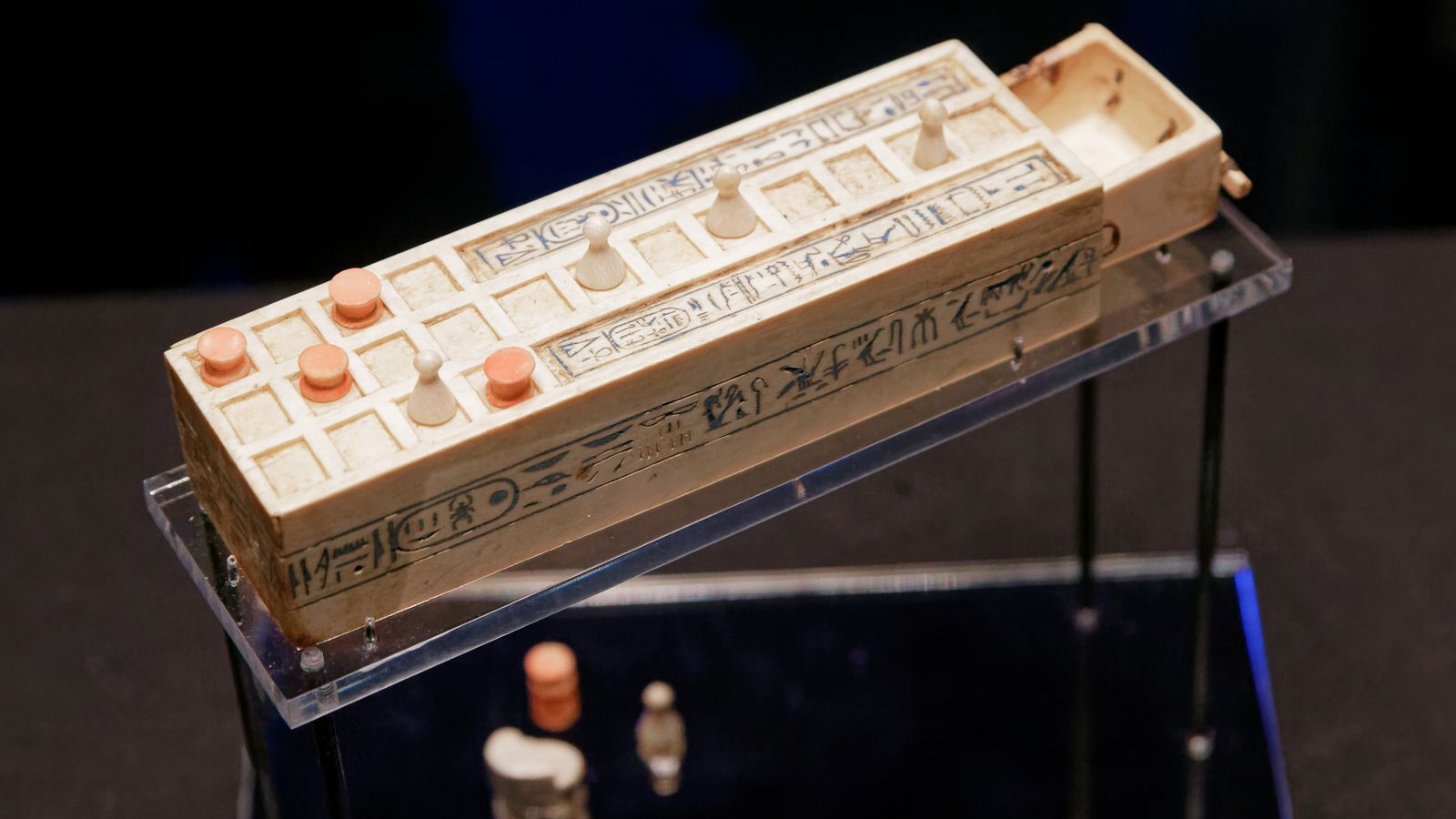
One of the most popular board games in ancient Egypt was called Senet. Played on a long board with 30 painted squares, Senet involved moving pieces based on the outcome of dice rolls or the throwing of sticks. While the exact rules are still debated by historians, the game’s popularity is unquestionable as pharaohs like Tutankhamun were even buried with their Senet boards.
Key Takeaways
- Ancient Egyptians valued games and festivities, integrating entertainment into daily life.
- Egypt had an organized police force with specialized units and animal assistants.
- Women in ancient Egypt had extensive rights, including property ownership and divorce initiation.
- Ancient Egyptian medicine was advanced, with specialized doctors and surgical tools.
- Slavery in ancient Egypt was complex, with slaves having varied roles and some earning citizenship.
But this wasn’t the only board game enjoyed by the Egyptians. Other games, such as Mehen and Hounds and Jackals, a game somewhat reminiscent of Chutes and Ladders, were widespread across Egypt and knowing how to play these games was practically essential for one’s social life.
Beyond board games, the ancient Egyptians also had a deep appreciation for sports. Swimming was perhaps the most popular, leading to a variety of water-related activities like rowing and even water jousting. Which, yes, is exactly what it sounds like. In addition, they also had an array of land games including gymnastics and tug-of-war, as well as contact sports like handball and a primitive form of field hockey that saw the use of sticks made from palm branches.
Still, all of these games paled in comparison to the festivals and celebrations of ancient Egypt. Much like today, the ancient Egyptians embraced almost any excuse to throw a party including birthdays, funerals, housewarmings, and everything in between. Festivals, on the other hand, were grander affairs, held to honor the birthdays of gods, their interactions with humans, the deeds of great kings, and other significant religious or cultural events.
The way each festival was celebrated varied depending on its purpose, as did the appropriate attire. Yet nearly all had two things in common: abundant food and alcohol. As the civilization credited with popularizing beer, the Egyptians made drinking a central part of any celebration. And there were many celebrations. Ancient Egypt officially recognized over 40 religious festivals, each lasting anywhere from one to fifteen days, not to mention countless personal and state-sponsored events.
Policing & Warfare
When we think of ancient warriors, Egypt is rarely the first civilization that comes to mind. Despite its extensive military history, including significant conquests and an innovative police force, Egypt is often overshadowed by more widely recognized warrior cultures such as the Spartans and Romans. During the Old Kingdom and well into the Middle Kingdom, Egypt’s military operated much like the feudal systems of medieval Europe: militias were raised during times of need by regional governors, known as nomarchs.
This structure changed dramatically at the beginning of the 12th Dynasty in the Middle Kingdom, when Amenemhat I (c. 1991–1962 BC) reformed the military. He established a standing army, reduced the influence of the nomarchs, and brought the military firmly under the Pharaoh’s centralized control.
Following these reforms, the Egyptian military developed into a structured system led by upper-class officers and composed of lower-class rank-and-file soldiers, though opportunities for advancement through service did exist. For many years, the primary focus of this reorganized force was defending Egypt’s borders and protecting vital resources. However, this changed dramatically with the expulsion of the Hyksos, foreign rulers who had occupied Lower Egypt for over a century.
Their defeat marked the beginning of the New Kingdom, a period unlike any before it, one born out of warfare. The Egyptians adopted and refined the military technologies left behind by the Hyksos, including scimitars, composite bows, and horse-drawn chariots. Armed with these innovations and a now-professional army, pharaohs such as Thutmose III (1458–1425 BC) and Ramesses II (1279–1213 BC) led numerous campaigns to expand Egypt’s territory and influence.
During this era, Egypt emerged as a formidable power on the international stage, engaging enemies like the Hittites and pushing into regions such as Mesopotamia.
While military expansion was expected in the ancient world, Egypt was also an early innovator in a far less anticipated area: law enforcement. Remarkably, the concept of policing in Egypt predates even the Old Kingdom, with evidence of organized law enforcement dating as far back as 3000 BC. At the time, the country was divided into administrative districts, each overseen by an official responsible for upholding law and security within their region.
These officials were supported by a “chief of hitters”, individuals tasked with duties such as tax collection and enforcing local regulations. In essence, these were primitive police chiefs managing teams of law enforcers, laying the foundation for some of the earliest forms of organized policing in human history.
As Egypt advanced into the Old Kingdom, pharaohs and nobles began employing Nubian warriors, who had already strengthened the military ranks, as personal guards for their estates, tombs, and valuables. Over time, these guards evolved into the famed Nubian Medjay, a group that has become deeply embedded in modern portrayals of ancient Egypt. Their reputation as elite protectors was cemented after Amenemhat I reformed both the military and police systems, transforming the Medjay into a highly trained security force.
At its head stood the Chief of the Medjay, under whose leadership officers received training in judicial procedures, combat, tracking, and much more. These officers oversaw public spaces, investigated crimes, apprehended suspects, and carried out many of the same responsibilities as modern police forces. In addition to bows, they were equipped with non-lethal weapons such as wooden staffs and slingshots, tools which proved particularly effective for crowd control.
Surprisingly, like today’s police forces, ancient Egyptian officers were also assisted by animal companions. Dogs were commonly used to guard royal tombs, sacred sites, and other sensitive areas. They aided in tracking suspects and stolen goods and appear frequently in tomb art, a testament to their significance.
Monkeys were also employed, particularly for market patrols, as their agility allowed them to move quickly through crowds and apprehend suspects. Remarkably, ancient Egypt not only pioneered one of the earliest known police forces, but also established a model for law enforcement duties that would echo through history. Officers were even responsible for safely transporting prisoners to court and served during legal proceedings as prosecutors, investigators, bailiffs, and more.
Slavery
Of all the misconceptions and preconceived notions about ancient Egypt, few are as widespread, or as hotly debated, as the issue of slavery. Biblical accounts suggest that the Israelites were enslaved almost exclusively by the Egyptians. Meanwhile, others claim that slaves built the pyramids, a belief often attributed to Herodotus, the so-called “father of history.”
Today, however, both of these theories are largely dismissed: the former as part of a mythologized origin story, and the latter as an attempt to explain how such monumental achievements were possible. Modern historians and archaeologists now believe the pyramids were constructed by a well-organized workforce of skilled laborers, architects, and builders who were highly valued and compensated. Still, given what we do know about slavery in ancient Egypt, it’s unlikely that they played no role at all in the construction of the pyramids.
The history of slavery in Egypt, like the origins of policing, predates the Old Kingdom and appears in various early forms of servitude. While one might consider the peasantry at the time, serfs who were bound to work the land for their nomarchs or the pharaoh, as a type of slavery, for now we will focus on the most overt and historically documented form: prisoners of war. During the Old Kingdom, captives from neighboring regions such as Nubia and Libya were brought back to Egypt and forced into lifelong labor.
However, enslavement was not limited to foreigners. Egyptians themselves could fall into bondage through financial mismanagement or insurmountable debt. Likewise, officials who abused their power could be subjected to servitude as a form of public punishment and humiliation.
At this stage in history, most slaves were considered state property, explicitly owned by the pharaoh, and were assigned duties accordingly, with some even conscripted into military service.
As Egypt transitioned into the Middle Kingdom, records show that the state increasingly relied on a broader range of labor sources, including fugitives, conscripts, and royal laborers, to carry out state projects. By this period, slaves were no longer limited to forced labor alone as they also served as household servants, fieldhands, cobblers, hairdressers, and in nearly every other occupation. While it’s unlikely that slaves were responsible for leading or managing the construction of the pyramids, the widespread nature of their roles makes it difficult to claim they had no involvement at all. Given the scale and complexity of such projects, it’s reasonable to assume that slaves contributed in some capacity, even if only at a minor or supporting level.
With the advent of the New Kingdom, Egypt’s approach to slavery began to shift. Slaves were no longer restricted to the service of the pharaoh or temple institutions; they became accessible to a broader segment of the elite and were employed on a much larger scale. During this period, Egypt became more actively involved in the slave trade, often purchasing slaves from Bedouins despite already acquiring many through military conquests.
Slaves could even be rented out like tools or livestock, and they were sometimes awarded to elites and dignitaries as a form of state-sponsored reward. It was also during the New Kingdom that slaves began to gain limited rights, such as the possibility of earning citizenship, typically through marriage to an Egyptian or extended service in a temple. While slavery was a widespread and deeply embedded institution in ancient Egypt, it never quite resembled the portrayals found in biblical narratives, the writings of Herodotus, or modern pop culture.
Watch the Video
Open Video
Video Briefing
Ways Living in Ancient Egypt Wasn't What You'd Expect...
Women’s Rights
Whenever the topic of women’s rights in history arises, one overarching consensus tends to emerge, regardless of time period, location, or culture: women generally had very few, if any, rights. While we could debate technicalities all day, the reality remains that, for women especially, the past really was the worse. However, ancient Egypt stands out as a notable exception. Women there, across all social classes, enjoyed rights and privileges that wouldn’t be seen again until the 21st century, and even then, not always to the same extent.
As expected, royal women were typically exempt from childcare and household duties, which were handled by slaves or servants. Instead, their roles often paralleled those of their husbands, involving responsibilities such as receiving foreign dignitaries, shaping policy, and participating in governance. While it was not common for women to rule as pharaohs in their own right, at least six did, with some historians suggesting there may have been as many as twelve over the course of ancient Egypt’s 3,000-year history.
Upper-class women, meanwhile, likely spent somewhat more time caring for their children, though their lifestyles still closely resembled those of royalty, complete with a household staff of slaves and servants. Although these women were often married off, it was considered disrespectful to send them outside of Egypt. As a result, while their husbands might be foreign men brought into Egypt, women themselves were rarely sent abroad, a stark contrast to the later practice in European royal circles.
Lower-class women, by contrast, were more directly involved in raising their children and managing the home. However, this division of labor did not necessarily reflect a more subservient role. Instead, it often signified a partnership with their husbands, who typically worked outside the home.
Although men held the formal title of “head of household,” women across all social classes were generally regarded as equals within the marriage. They had the option to work outside the home, and while most lower-class women did not, nearly all professions were technically open to them with equal pay to their male counterparts.
While there is no evidence that women served in the military, they did participate in nearly every other sector, including roles as priests and doctors. Women could own property, run businesses, and manage land. They had the legal right to initiate divorce, remarry at will, and enter into contracts independently, regardless of the other parties involved. Remarkably, ancient Egyptian women even had access to abortion, a common and accepted medical practice of the time.
Medicine
While many of us enjoy imagining what it would be like to travel back to ancient times and consider what kind of lives we might lead, there’s always one universal concern that gives us pause: medical care in the ancient world. After all, isn’t it only thanks to modern science that we can reset broken bones, understand the heart’s functions, perform safe surgeries, and more? Surprisingly, the answer is no. As it turns out, the ancient Egyptians were among the most skilled healers in history, rivaled only by today’s medical professionals.
At the time, most illnesses were believed to be divine punishments or lessons from the gods. As such, much medical knowledge was recorded in religious texts. However, literacy was limited, with modern scholars estimating that only 1–5% of the population could read, with some speculating that it’s possibly even less.
Before the New Kingdom, priestly duties rotated among educated civil servants who served for a few months at a time. But during the New Kingdom, a dedicated priestly class emerged. These priests were required to undergo scribal training, making them literate and capable of reading medical texts.
While not all scribes were priests, all priests were scribes from this point forward. This literacy allowed them to access writings on ailments, surgical procedures, dentistry, and more. By the time of Herodotus, Egypt had gained a reputation for exceptional medical expertise.
According to the man himself:
“The practice of medicine is so divided among [Egyptians], that each physician is a healer of one disease and no more. All the country is full of physicians, some of the eye, some of the teeth, some of what pertains to the belly, and some of the hidden diseases.”
By this time, Egyptian doctors had not only earned a reputation for their medical skill but had also begun to specialize in specific areas of study, much like modern physicians. While their understanding wasn’t perfect, such as their belief that the heart was the source of all bodily fluids, the medical advancements of ancient Egypt remain undeniably impressive. They correctly identified the heart’s function and its two types of blood vessels, and they were the first to document cerebrospinal fluid. Their detailed knowledge of the circulatory, nervous, and respiratory systems, as well as others, along with the diseases that ailed them, was remarkably advanced and wouldn’t be matched for thousands of years.
Perhaps most astonishing was their ability to apply this knowledge surgically. Using materials commonly available at the time, such as reeds, wood, and plant fibers, the ancient Egyptians developed and routinely used a variety of surgical tools that would still be recognizable today: scalpels, forceps, scissors, and more. With these instruments, they performed procedures ranging from basic wound cauterization and suturing to more complex operations like draining abscesses, boils, and infected wounds.
Their methods even included a technique similar to modern casting, where they wrapped broken limbs in linen soaked with a sticky substance that hardened to provide support. In a world where much of ancient life feels alien or harsh, ancient Egypt stands out as a place where a modern visitor might actually find surprising familiarity, especially when it comes to medicine.
Key Takeaways
- Ancient Egyptians valued games and festivities, integrating entertainment into daily life.
- Egypt had an organized police force with specialized units and animal assistants.
- Women in ancient Egypt had extensive rights, including property ownership and divorce initiation.
- Ancient Egyptian medicine was advanced, with specialized doctors and surgical tools.
- Slavery in ancient Egypt was complex, with slaves having varied roles and some earning citizenship.
SideProjects Editors
The SideProjects editorial team researches, fact-checks, and structures explainers about the lesser-known tales, side narratives, and spin-offs behind major historical and contemporary subjects.
Frequently Asked Questions
What were some popular board games in ancient Egypt?
Some popular board games in ancient Egypt included Senet, Mehen, and Hounds and Jackals. Senet was played on a long board with 30 painted squares and involved moving pieces based on dice rolls or the throwing of sticks. Hounds and Jackals was somewhat reminiscent of Chutes and Ladders.
What sports were popular in ancient Egypt?
Ancient Egyptians enjoyed various sports such as swimming, rowing, water jousting, gymnastics, tug-of-war, handball, and a primitive form of field hockey using sticks made from palm branches.
How did the Egyptian military change during the Middle Kingdom?
During the Middle Kingdom, Amenemhat I reformed the military by establishing a standing army, reducing the influence of regional governors, and bringing the military under the Pharaoh’s centralized control. This led to a structured system with upper-class officers and lower-class rank-and-file soldiers.
What role did the Medjay play in ancient Egyptian society?
The Medjay were an elite security force in ancient Egypt. They were responsible for public safety, investigating crimes, apprehending suspects, and maintaining order. They were equipped with both lethal and non-lethal weapons and were assisted by animals like dogs and monkeys.
Who were the primary builders of the pyramids?
Modern historians and archaeologists believe the pyramids were constructed by a well-organized workforce of skilled laborers, architects, and builders who were highly valued and compensated, rather than slaves.
What rights did women have in ancient Egypt?
Women in ancient Egypt enjoyed significant rights, including the ability to own property, run businesses, manage land, initiate divorce, remarry at will, and enter into contracts independently. They could also work in various professions, including as priests and doctors.
How advanced was ancient Egyptian medicine?
Ancient Egyptian medicine was remarkably advanced. They had a detailed understanding of the circulatory, nervous, and respiratory systems, and performed surgical procedures using tools like scalpels, forceps, and scissors. They also documented cerebrospinal fluid and correctly identified the heart’s function.
What was the role of priests in ancient Egyptian medicine?
During the New Kingdom, priests were required to undergo scribal training, making them literate and capable of reading medical texts. This allowed them to access writings on ailments, surgical procedures, dentistry, and more, contributing to their medical expertise.
What types of slaves existed in ancient Egypt?
Slaves in ancient Egypt included prisoners of war from neighboring regions, Egyptians who fell into bondage through financial mismanagement or debt, and officials who abused their power. They served in various roles, including household servants, fieldhands, and even in military service.
How did the concept of policing originate in ancient Egypt?
The concept of policing in Egypt predates the Old Kingdom, with evidence of organized law enforcement dating as far back as 3000 BC. The country was divided into administrative districts, each overseen by an official responsible for upholding law and security, supported by a “chief of hitters” and their teams.
Sources
- Original Side Projects video: Ways Living in Ancient Egypt Wasn’t What You’d Expect…
- https://www.worldhistory.org/article/933/daily-life-in-ancient-egypt/
- https://nilescribes.org/2019/04/13/common-misconceptions-egypt/
- https://www.history.com/articles/11-things-you-may-not-know-about-ancient-egypt
- https://www.khanacademy.org/humanities/ancient-art-civilizations/egypt-art/beginners-guide-egypt/a/egyptian-social-organizationfrom-the-pharaoh-to-the-farmer-part-2#:~:text=As%20most%20diseases%20were%20thought,the%20priests%20were%20also%20doctors
- https://www.ucl.ac.uk/museums-static/digitalegypt/literature/literacy.html
- [https://pmc.ncbi.nlm.nih.gov/articles/PMC8459052/#:~:text=Herodotus%20(The%20father%20of%20History,one%20disease%20and%20no%20more](https://pmc.ncbi.nlm.nih.gov/articles/PMC8459052/#:~:text=Herodotus%20(The%20father%20of%20History,one%20disease%20and%20no%20more)
- https://www.egypttoursportal.com/en-us/blog/ancient-egyptian-civilization/ancient-egypt-police/#:~:text=The%20police%20in%20ancient%20Egypt%20played%20a%20vital%20role%20in,specialized%20units%20like%20the%20Medjay
- https://www.britannica.com/topic/police/The-history-of-policing-in-the-West
- https://lsa.umich.edu/kelsey/education/public-programs/family-programs/family-week—ancient-health---wellness/ancient-sports---games.html#:~:text=In%20ancient%20Egypt%2C%20a%20kind,wrestling%20were%20also%20common%20competitions
- https://www.consandheritage.co.uk/articles/egypt-s-58-holes-the-ancient-board-game-called-hounds-and-jackals#:~:text=Hounds%20and%20Jackals%20is%20an,the%20Royal%20Game%20of%20Ur
- https://ejth.journals.ekb.eg/article_231808_467b2472512c9b1ef120b5263aa7271e.pdf
- https://www.egypttoursportal.com/en-us/blog/ancient-egyptian-civilization/slavery-in-ancient-egypt/
- https://www.hamilton.edu/news/story/egyptian-female-pharoahs-rule#:~:text=Fletcher%20recognizes%2012%20female%20pharaohs,for%20their%20more%20famous%20successors