
Finding lost, sunken treasure seems like it’s only something that happens in the most fantastical of movies or the forever elusive goal of a five-season History channel show, but in reality, finding sunken ships is of high priority for many nations and companies, and, especially in the last 50 years or so, improved technology and shipwreck-locating techniques have led to several historic discoveries.
And it’s no secret why these companies are willing to pour millions into these hunts. Over hundreds of years of piracy and naval warfare, so many ships have been sunk while carrying precious cargo and never recovered that they’ve left untold riches sitting at the bottom of the ocean, chests full of gold, silver, jewels, and invaluable historical artifacts. Today we’re going to bring you the richest shipwrecks ever discovered, some of which still haven’t been recovered if you fancy a bit of a swim.
HMS Sussex
The HMS Sussex was a British warship launched in the year 1693, intended to be the pride of the Royal Navy and the flagship of Admiral Sir Francis Wheler. Soon after her completion, she embarked on a mission of immense importance, delivering payment to soldiers that were fighting against France in the Nine Years’ War. Upon departing from Portsmouth, Sussex was armed with 80 guns and was escorting a fleet of 48 other warships and 166 merchant ships, representing both the military and financial prowess of the British Empire.
Key Takeaways
- Modern technology has enabled discovery of historically significant shipwrecks carrying billions in treasure over the last 50 years.
- The San Jose, found by Colombia in 2015, carries an estimated $4 billion in gold, silver, and emeralds, making it the most valuable wreck discussed.
- Odyssey Marine Expedition lost two major treasure recoveries to Spain due to territorial and ownership disputes, including the $500 million Black Swan Project.
- The Nuestra Señora de Atocha, recovered by Mel Fisher after 16 years of searching, holds the Guinness record for richest shipwreck ever recovered at $500 million.
- SS Central America’s discovery led to unique legal battles with 39 insurance companies, and its finder Tommy Thompson later hid millions from partners offshore.
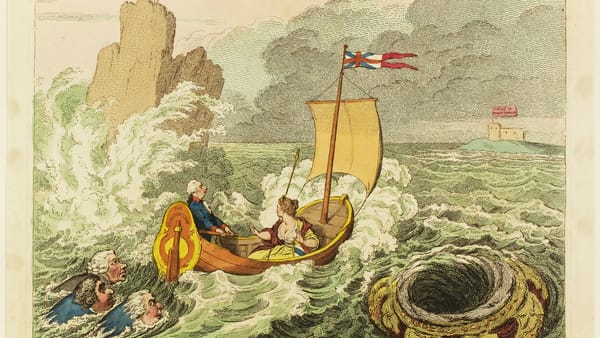
The fleet’s destination was the Mediterranean, and so, after a brief rest in Cadiz, the more than 200 ships began crossing the Strait of Gibraltar, where disaster struck. There, a storm of immense proportions met the fleet, smashing the ships with wind and tall waves in a maelstrom that seemed to have no end. On the morning of the storm’s third day, the Sussex sank, killing all but two of the 500 crew on board, including the Admiral.
Because there were basically no witnesses left, the exact reason for the ship’s failure and sinking hasn’t been determined, but there are speculations that the number of guns was too high for the ship’s size, leading future iterations of the ship to add a third armament deck to more evenly distribute the weight.
Because Sussex was only one of 12 ships to sink in the storm, with casualties totaling around 1,200, the event remains one of the Royal Navy’s worst disasters in history, but this isn’t the only reason it is still so widely known after all these years.
The payment that Sussex was carrying in her cargo consisted of an estimated 10 tons of gold coins, meaning that because the shipwreck has never been found, somewhere around 650 million dollars’ worth of treasure is still sitting at the bottom of the Mediterranean.
In 2001, an American company called Odyssey Marine Expedition claimed to have found the ship’s final resting place, and began negotiating a deal with the UK on how to split the proceeds from such a lucrative find, but excavations of the ship were delayed due to widespread complaints from the archaeological community about how it would set a dangerous precedent for a private company to ransack historical shipwrecks around the world. Odyssey eventually got around this, but Spanish authorities stepped in and stopped any further work before it could begin, as it was technically in their territorial waters.
To this day, what is suspected to be the Sussex is still sitting there, untouched, with millions of dollars’ worth of gold calmly resting at the bottom of the Mediterranean.
Black Swan Project
Odyssey Marine Expedition may have been blocked from diving down and recovering the treasure in the HMS Sussex, but while that whole debacle was going down, the ambitious company was already in the process of excavating a second shipwreck.
This second wreck was a ship of unknown origin, referred to only by the mission’s nickname of Black Swan Project. In the early 2000s, Odyssey announced that they’d recovered most of the treasure from this wreckage, which amounted to around 500 million dollars’ worth of gold and other precious metals, many of which were highly unique and likely uncirculated. This sent the archaeological community into a frenzy to figure out which ship it was that they’d found, and many speculated that it was the Merchant Royal, an English merchant ship that disappeared without a trace back in 1641. However, markings on the ship’s wood or were too worn down to be of any help in identifying its origin.
The recovery of the treasure and its analysis became heavily publicized, even getting an entire Discovery Channel documentary series, and though many of the details still a bit secretive, it’s believed that the entire operation took several years and millions of dollars’ worth of equipment and manpower.
But things went south for Odyssey very quickly. The Spanish government claimed that deeper analysis of the coins had revealed that the ship was the Spanish vessel Nuestra Señora de las Mercedes, who had been sunk by the British Navy off the coast of Portugal in 1804. The case turned into a legal nightmare, with Odyssey claiming international water salvaging rights, Spain claiming full ownership of the wreckage, and even Peru chiming in with a claim to the gold since it had been discovered that several of the coins were minted in Lima.
In 2009, two separate US courts ruled in favor of Spain’s legal claim, and when Odyssey’s appeals failed to gain any traction, they were forced to give up the treasure. In 2012, two C-130 Hercules transport aircraft from the Spanish Air Force arrived in Florida and picked up the hundreds of millions of dollars’ worth of treasure, at which point Odyssey even petitioned the US Supreme Court to intervene, but they declined, leaving the 14.5 tons of gold and silver coins to head back to Spain.
Much of the treasure to this day is on display in museums, but the controversy still hasn’t ended. In 2015, a US district court ordered Odyssey Marine Expeditions to pay the Spanish government a million dollars for legal abuse, stating, “Odyssey knew at all times that Spain, given the information pertinent to identification, possessed the historical information and the expertise to identify immediately whether the wreck in question was a Spanish vessel.”
Odyssey fired back with leaked documents indicating that the US State Department had been involved with assisting Spain in their half of the case in exchange for the return of a private citizen’s artwork, but the US government declined to comment on this.
Whydah Gally
Whydah Gally was a transport ship commissioned in the early 1700s, funded by member of parliament Sir Humphrey Morice, a man widely known as “the foremost London slave merchant of his day.” Indeed, she was even named after the Kingdom of Whydah, a region in West-Africa that was one of the most prolific slave exporters at the time.
In 1716, Whydah Gally embarked on her maiden voyage, traveling down the west African coast, before stopping in Benin and loading up a large shipment destined for the new world. She was packed with 500 slaves, gold, and ivory, all of which was intended to be sold in the Caribbean for goods that would then be shipped back to England.
The trip across the Atlantic went smoothly, and everything brought from Africa was traded for sugar, rum, ginger, and much more. However, in February 1717, at the beginning of the return trip to Europe, Whydah Gally was attacked by pirates while passing near Cuba. After a three-day chase, the two pirate ships captured Whydah Gally without a fight, and though they did steal the ship, they paid her captain today’s equivalent of 3,000 dollars as a gesture of goodwill for not violently resisting.
The pirates were led by Black Sam Bellamy, who turned Whydah Gally into his new flagship.
As a newly christened pirate ship, she was fitted with extra cannons and had her interior renovated. A crew was quickly put together, made partly of Bellamy’s men and former sailors on the Whydah Gally who accepted the employment offer of switching sides after the capture.
Over the next few months, Whydah Gally engaged in typical hooligan pirate behavior under her new captain, ending up off the coast of Massachusetts carrying booty that they’d raided from more than 50 ships along the way. Bellamy famously didn’t enjoy harming others, in fact he often returned ships after stealing their cargo without killing anyone on board, but this chaotic lifestyle would soon meet its end when a thick, dark fog rolled in. The ships in Bellamy’s fleet lost sight of each other, before the weather shifted into a violent storm with gale force winds. After being tossed back and forth for about 20 minutes, Whydah Gally was pulled dangerously close to shore, struck a sandbar, and overturned, sinking shortly after, her treasures getting spilled all along the coastline.
The location of this slave-transporter turned pirate ship remained a mystery for over 200 years, until it was discovered in 1984 by American explorer Barry Clifford, who, in true treasure-hunting fashion, found the site using an authentic 1717 map of the wreck site drawn up by a salvager who had found it the day after it sank. Since its discovery, more than 200,000 individual pieces of the ship have been uncovered, including chests full of gold, silver, and ivory, as well as historic jewels and human remains. In total, it’s estimated that the ship’s cargo is worth around 400 million dollars, but Clifford hasn’t made much at all in profit from the find, instead he’s remained committed to his promise to share the findings with public, and nearly all of the recovered artifacts are now displayed in museums and local learning centers for all to see.
Watch the Video
Open Video
Video Briefing
These are the World's Richest Shipwrecks
San Jose
San Jose was galleon of the formidable Spanish Armada, launched in the year 1698. For a decade, it served reliably as part of the Spanish treasure fleet, a group of ships whose job it was to transport riches and resources from colonial territories back to Spain. This was especially important during the creation of San Jose, as Spain was embroiled in the War of the Spanish Succession at the time.
In 1708, San Jose embarked on what would ultimately be her final voyage, sailing with 14 merchant ships and escorted by 3 warships. As they departed from Colombia, they were warned of British naval presence nearby, but decided to continue regardless.
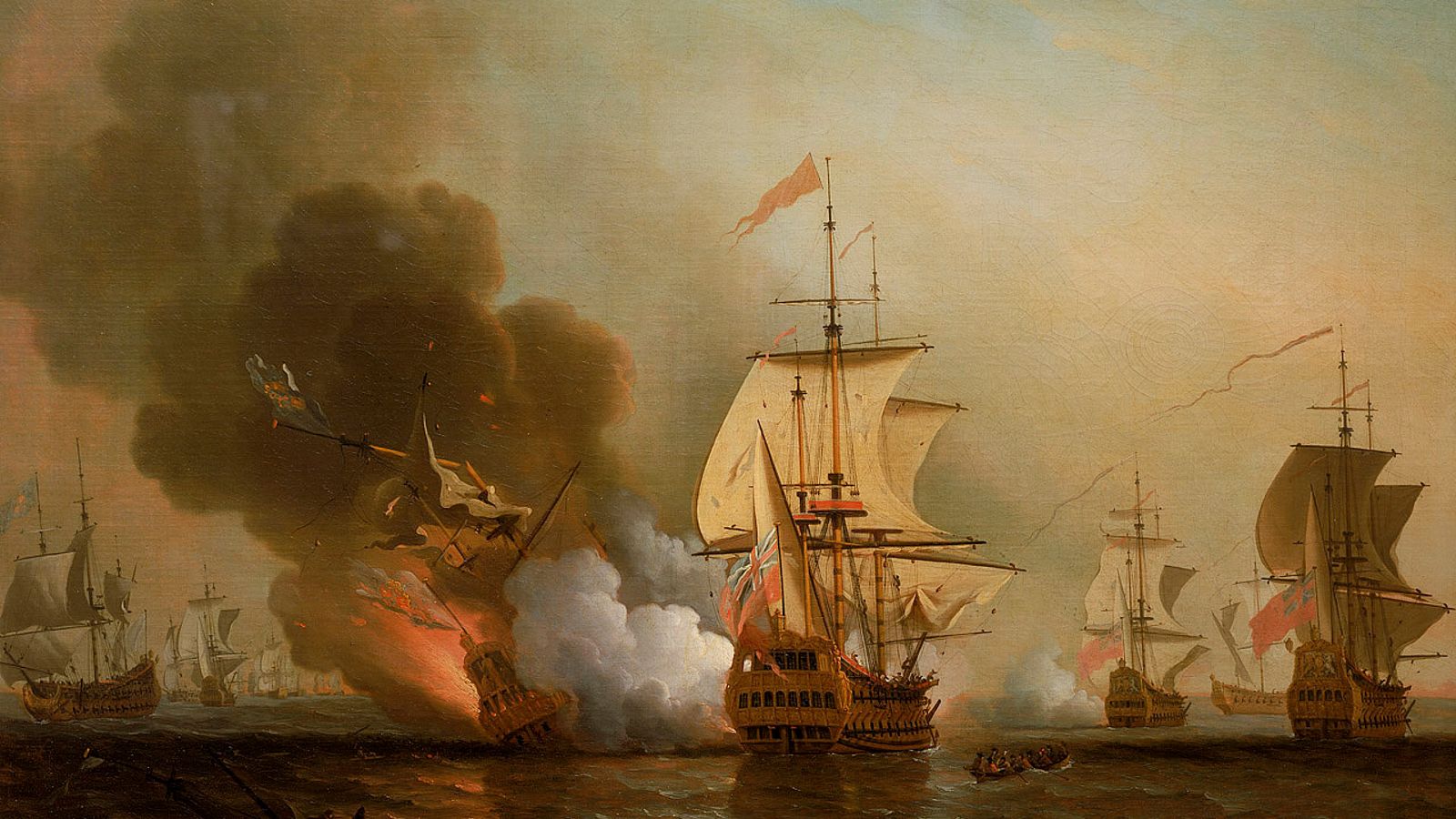
This would be a fatal mistake, as the Spanish fleet encountered said British ships near the island of Barú. Battle erupted the next day as the ships approached each other, with cannon fire being exchanged for several hours. The British squadron, consisting of four ships, decided to target the largest Spanish ships, knowing that they carried the most resources, and so San Jose was surrounded and bombarded.
After 90 minutes of fierce combat, San Jose suddenly exploded, and began falling under the waves almost immediately. Of the 600 crew on board, only 11 survived, pulled out of the water as the ocean swallowed up their ship and the precious cargo they’d been carrying.
The British would emerge victorious in the battle, and would even capture one of the other treasure ships, Santa Cruz, but she only carried a mere fraction of the treasure held on San Jose. San Jose was carrying gold, silver, and emeralds from South America today estimated to be worth 4 billion dollars, making it one of the most valuable shipwrecks on the entire planet.
After being lost for 300 years, the wreck of San Jose was miraculously located in 2015 by the Colombian Navy, though allegedly it had already been found 30 years earlier by, you guessed it, an American treasure-hunting corporation who had failed to come to an agreement with Colombia about how to split the proceeds.
Regardless, by 2015, the news was out that San Jose had been found, discovered using autonomous underwater vehicles, whose photos of the wreck helped investigators identify San Jose’s unique bronze cannons that had been engraved with dolphins. As of 2024, the government of Colombia plans to recover the treasure, and is currently in the processing of surveying the shipwreck using underwater drones.
Nuestra Señora de Atocha
In the early 1600s, the Spanish Empire was at its peak presence in the Americas, and was investing vast amounts of resources into finding and extracting the treasures of the New World. To achieve this goal, they needed the best navy money could buy, and were constantly adding new ships to their inventory. In 1620, Nuestra Señora de Atocha was launched in Havana, Cuba, a large, heavily armed galleon that was designed to serve as the rear guard of her fleet.
Because of her size and strength, in 1622 she was chosen to carry a large load of precious goods back to Spain, which would be loaded onto the ship in Panama City. This treasure consisted of riches from all over central and South America, including emeralds from Colombia, silver from Mexico and Bolivia, Venezuelan pearls, and Peruvian gold, not to mention tobacco and huge numbers of local artifacts and valuable crafted goods such as cannons and smaller firearms. Overall, the treasure loaded onto the Atocha is estimated to be worth today’s equivalent of up to 500 million dollars, and was so large that it took nearly two months just to load it all onto the ship and properly record every piece. The gold weighed in at around 40 tons, and the emeralds at about 71 pounds.
Unfortunately, this delay would not be the last. After rendezvousing with the rest of her fleet back in Havana, more issues delayed the departure even further, until finally, six weeks behind schedule, the 28-ship fleet departed from Cuba.
On just the second day of the journey back to Europe, the convoy began encountering fierce winds in the Florida Straits, and were soon in the midst of a powerful hurricane. This hurricane devastated the fleet, sinking the majority of the ships, including the Atocha. The few surviving vessels made their way back home and reported the incident to the Spanish crown, who immediately organized a salvaging mission, hoping to recover some of the endless riches that were laying on the seafloor just 56 feet below the surface.
Unfortunately, this proved a bit too deep for salvaging techniques at the time, which included lowering a slave inside of a brass diving bell down to the wreckage, where they would grab a single item and be returned to the surface, a process so lethal that the death of slaves was regarded as an expected business expense. This brutal technique allowed the Spaniards to salvage most of the treasures from the Santa Margarita, which had sunk in shallower water, but left the Atocha just out of reach.
A return party the following year arrived more prepared, but another hurricane made the site difficult to locate, and soon, the shipwreck had been completely lost.
It wouldn’t be until the 20th century that it would be found again, by American treasure hunters Mel Fisher and Finley Ricard, along with some diving sub-contractors all working under the joint venture Treasure Salvors Inc. Treasure Salvors searched the seabed for 16 whole years before finding the shipwreck in 1975, with much of its treasure easily retrievable. As with seemingly all shipwrecks in this video, soon after the announcement, litigation ensued when the state of Florida claimed the wreck of the Atocha and tried to force Treasure Salvors to hand over 25% of the treasure. This case ended up being ruled in Salvors’ favor by the Supreme Court after 8 years of legal battles.
In 2014, Guiness World Records granted the Atocha the title of the richest shipwreck to ever be recovered, but despite this, it’s believed that we still haven’t recovered all of the treasure. In fact, the part of the ship known as the sterncastle has never been found, and was likely where the most valuable gold trinkets and the highest quality Muzo emeralds were being held. In a hint of the treasures still awaiting discovery, in 2011 divers from Treasure Salvors found an emerald ring far from the shipwreck, estimated alone to be worth 500,000 dollars.
SS Central America
Our last treasure-filled shipwreck comes from the year 1852, when the SS Central America was launched by the United States. This steamship transported passengers and goods between the US eastern seaboard and central America, hence its name, though it would only operate for around 5 years before its career came to an abrupt end.
On September 3rd, 1857, the ship was docked in Panama and loaded with so much gold that its equivalent in 2024 would be around 750 million dollars, most of which had been recovered in California during the Gold Rush. Once she was fully laden, SS Central America began heading north, with a destination of New York City, when the ship was suddenly struck with a category 2 hurricane while off the coast of the Carolinas.
The ship was unable to withstand the forces of the hurricane, the heavy winds tore through her masts, took away all steering functionality, and damaged the hull so badly she began taking in water. After a day or so in the storm, the boiler failed, and the crew inverted their flag as a distress call to nearby ships, but no one was close enough to see them.
During the calm of the storm, the crew and all the passengers desperately tried to bail out as much water as possible, but it was futile, and before the boiler could be fixed, the second wave of the storm arrived, tossing the ship back and forth on the high waves and threatening to capsize it at any moment.
On the second day, two ships spotted the SS Central America, and were able to rescue about a hundred passengers, mostly women and children, before the ship sank. About 50 more people were rescued from the water after the sinking, but in total 425 lives were lost, and the ship was lost to the sea.
The wreck of SS Central America wouldn’t be found until 1988, when the Columbus-America Discovery Group of Ohio located the ship using an ROV, or remotely operated vehicle. After verifying the discovery, a second ROV was designed specifically with the capabilities to retrieve the gold, which it did, recovering an estimated 150 million dollars’ worth at the time, including one single gold ingot which weighed 80 pounds, and was sold for 8 million dollars.
The legal issues that ensued after this discovery were quite different from the rest of the shipwrecks we’ve discussed today, because this wasn’t treasure that had been looted from colonial territories or lost in a naval battle many centuries ago, this was gold that had only ever belonged to a single country, the United States. Unfortunately, it belonged to many different companies in the US, companies that had filed for insurance claims for the asset losses all the way back when the disaster occurred. In total, 39 insurance companies filed lawsuits, claiming that they had rights to the gold because they’d paid insurance damages almost 150 years prior. In the end, 92% of the gold was awarded to the treasure finding team.
But the leader of this treasure hunting firm, Tommy Gregory Thompson, didn’t exactly use this newfound wealth as he probably should have. In 2005, he was sued by several former business partners, who showed that they’d invested millions of dollars in the treasure finding and recovery and hadn’t received their share of the goods from Thompson, who it turned out had allegedly stashed away millions in an offshore bank account in the Cook Islands. Thompson went into hiding in 2012, but was found in 2015 by US Marshals, extradited back to Ohio, and forced to pay nearly 50 million dollars in damages to various former partners.
Key Takeaways
- Modern technology has enabled discovery of historically significant shipwrecks carrying billions in treasure over the last 50 years.
- The San Jose, found by Colombia in 2015, carries an estimated $4 billion in gold, silver, and emeralds, making it the most valuable wreck discussed.
- Odyssey Marine Expedition lost two major treasure recoveries to Spain due to territorial and ownership disputes, including the $500 million Black Swan Project.
- The Nuestra Señora de Atocha, recovered by Mel Fisher after 16 years of searching, holds the Guinness record for richest shipwreck ever recovered at $500 million.
- SS Central America’s discovery led to unique legal battles with 39 insurance companies, and its finder Tommy Thompson later hid millions from partners offshore.
SideProjects Editors
The SideProjects editorial team researches, fact-checks, and structures explainers about the lesser-known tales, side narratives, and spin-offs behind major historical and contemporary subjects.
Frequently Asked Questions
What was the HMS Sussex carrying when it sank, and what is the estimated value of its cargo?
The HMS Sussex was carrying an estimated 10 tons of gold coins as payment to soldiers fighting against France in the Nine Years’ War. The treasure is estimated to be worth around 650 million dollars.
Why was Odyssey Marine Expedition prevented from recovering treasure from the HMS Sussex?
Odyssey Marine Expedition was initially delayed due to complaints from the archaeological community about setting a dangerous precedent for private companies ransacking historical shipwrecks. They eventually got around this, but Spanish authorities then stepped in and stopped further work because the wreck was technically in their territorial waters.
What was the Black Swan Project, and what happened to the treasure that was recovered?
The Black Swan Project was Odyssey Marine Expedition’s excavation of an unknown shipwreck from which they recovered around 500 million dollars’ worth of gold and precious metals. Spain claimed the ship was the Nuestra Señora de las Mercedes, and after legal battles, two US courts ruled in Spain’s favor in 2009. In 2012, the 14.5 tons of gold and silver coins were transported back to Spain by Spanish Air Force C-130 Hercules aircraft.
Who discovered the Whydah Gally, and what is notable about how the treasure has been handled?
The Whydah Gally was discovered in 1984 by American explorer Barry Clifford, who found the site using an authentic 1717 map drawn by a salvager. Despite the cargo being worth an estimated 400 million dollars, Clifford has remained committed to sharing the findings with the public, and nearly all recovered artifacts are displayed in museums and local learning centers rather than being sold for profit.
What makes the San Jose shipwreck one of the most valuable in the world, and when was it found?
The San Jose was carrying gold, silver, and emeralds from South America estimated to be worth 4 billion dollars, making it one of the most valuable shipwrecks on the planet. It was located in 2015 by the Colombian Navy using autonomous underwater vehicles, though an American treasure-hunting corporation had allegedly found it 30 years earlier but failed to reach an agreement with Colombia.
What was the Nuestra Señora de Atocha carrying, and what record does it hold?
The Nuestra Señora de Atocha was carrying treasures from Central and South America including emeralds from Colombia, silver from Mexico and Bolivia, Venezuelan pearls, Peruvian gold, tobacco, and crafted goods, estimated to be worth up to 500 million dollars. In 2014, Guinness World Records granted it the title of the richest shipwreck to ever be recovered.
What happened to the SS Central America, and what was unique about the legal issues surrounding its discovery?
The SS Central America sank in 1857 during a category 2 hurricane off the coast of the Carolinas while carrying gold worth approximately 750 million dollars in 2024 value. The legal issues were unique because 39 insurance companies filed lawsuits claiming rights to the gold since they had paid insurance damages nearly 150 years prior. Ultimately, 92% of the gold was awarded to the treasure finding team.
What happened to Tommy Gregory Thompson, the leader of the team that found the SS Central America?
Tommy Gregory Thompson was sued by former business partners in 2005 who showed they had invested millions but hadn’t received their share. Thompson had allegedly stashed millions in an offshore bank account in the Cook Islands. He went into hiding in 2012, was found in 2015 by US Marshals, extradited back to Ohio, and forced to pay nearly 50 million dollars in damages.
How did Black Sam Bellamy acquire the Whydah Gally, and what was notable about his piracy?
Black Sam Bellamy captured the Whydah Gally in February 1717 after a three-day chase near Cuba. Notably, Bellamy didn’t enjoy harming others and often returned ships after stealing their cargo without killing anyone on board. He even paid the Whydah Gally’s captain the equivalent of 3,000 dollars today as a gesture of goodwill for not violently resisting.
What brutal salvaging technique did the Spanish use after the Atocha sank, and why did it fail for that particular wreck?
The Spanish used a technique of lowering a slave inside a brass diving bell to grab a single item at a time. This was so lethal that slave deaths were regarded as an expected business expense. This technique allowed them to salvage most treasures from the shallower Santa Margarita, but the Atocha was at 56 feet depth, which proved just out of reach for their techniques at the time.